Mobile Navigation

  • National
    • Policy
      • High Expectations
      • Quality Choices
      • Personalized Pathways
    • Research
    • Commentary
      • Gadfly Newsletter
      • Gadfly Podcast
      • Flypaper Blog
      • Events
    • Covid-19
    • Scholars Program
  • Ohio
    • Policy
      • Priorities
      • Media & Testimony
    • Research
    • Commentary
      • Ohio Education Gadfly Biweekly
      • Ohio Gadfly Daily
  • Charter Authorizing
    • Application
    • Sponsored Schools
    • Resources
    • Our Work in Dayton
  • About
    • Mission
    • Board
    • Staff
    • Career
Home
Home
Advancing Educational Excellence

Main Navigation

  • National
  • Ohio
  • Charter Authorizing
  • About

National Menu

  • Topics
    • Accountability & Testing
    • Career & Technical Education
    • Charter Schools
    • Curriculum & Instruction
    • ESSA
    • Evidence-Based Learning
    • Facilities
    • Governance
    • High Achievers
    • Personalized Learning
    • Private School Choice
    • School Finance
    • Standards
    • Teachers & School Leaders
  • Research
  • Commentary
    • Gadfly Newsletter
    • Flypaper Blog
    • Gadfly Podcast
    • Events
  • COVID-19
  • Scholars Program

The Education Gadfly Weekly

Sign Up to Receive Fordham Updates

We'll send you quality research, commentary, analysis, and news on the education issues you care about.
Thank you for signing up!
Please check your email to confirm the subscription.

The Education Gadfly Weekly: How charter supporters can win over Joe Biden

Volume 20, Number 40
10.22.2020
10.22.2020

The Education Gadfly Weekly: How charter supporters can win over Joe Biden

Volume 20, Number 40
view
Quality Choices

How charter supporters can win over Joe Biden

On paper, it seems like Joe Biden would champion the cause of expanding high-quality charter schools, given his identity as a longtime centrist Democrat. Yet he doesn't. Thankfully for charter supporters, there pragmatic ways to bring him around, should he win the election next month

Michael J. Petrilli 10.22.2020
NationalFlypaper

How charter supporters can win over Joe Biden

Michael J. Petrilli
10.22.2020
Flypaper

Restarting the “science of reading” conversation

Robert Pondiscio
10.22.2020
Flypaper

Strategies to help schools navigate the Covid-19 cash crunch

Frederick M. Hess | Brandon L. Wright
10.22.2020
Flypaper

Creating autonomous schools in traditional districts

Chester E. Finn, Jr.
10.22.2020
Flypaper

How states are measuring college and career readiness

Jessica Poiner
10.19.2020
Ohio Gadfly Daily

The Education Gadfly Show: The loathsome war on exam schools

10.21.2020
Podcast

What we're reading this week: October 22

The Education Gadfly
10.21.2020
Flypaper
view

Restarting the “science of reading” conversation

Robert Pondiscio 10.22.2020
Flypaper
view

Strategies to help schools navigate the Covid-19 cash crunch

Frederick M. Hess, Brandon L. Wright 10.22.2020
Flypaper
view

Creating autonomous schools in traditional districts

Chester E. Finn, Jr. 10.22.2020
Flypaper
view
College and career readiness tracking SR image

How states are measuring college and career readiness

Jessica Poiner 10.19.2020
Ohio Gadfly Daily
view

The Education Gadfly Show: The loathsome war on exam schools

Michael J. Petrilli, Chester E. Finn, Jr., David Griffith, Amber M. Northern, Ph.D. 10.21.2020
Podcast
view

What we're reading this week: October 22

The Education Gadfly 10.21.2020
Flypaper
view

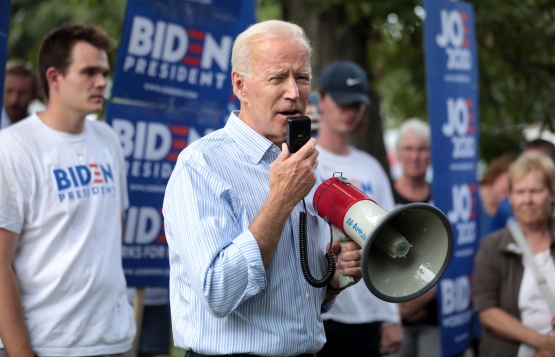
How charter supporters can win over Joe Biden

Michael J. Petrilli
10.22.2020
Flypaper

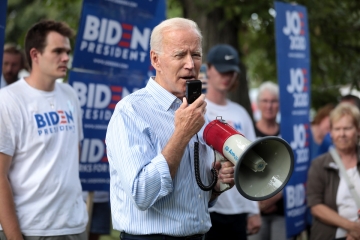
On paper, it seems like Joe Biden would champion the cause of expanding high-quality charter schools. He’s a longtime centrist Democrat, and centrist Democrats usually love charter schools, going back to Bill Clinton. He was Barack Obama’s vice president, and Obama has long loved charter schools. Biden was brought back from political near-death thanks to the support of Black voters, and Black voters love charter schools. On coronavirus, climate change, and much else, Biden says we should “follow the science.” And the science loves charter schools, especially those in urban areas.

Yet Biden’s official position—which would, among other problematic policies, give districts a veto over new charter schools in their geographic areas—is arguably the most antagonistic of any major party candidate since their creation in the early 1990s. Why is that?

One obvious answer: It’s the unions, stupid. Consider that he told the National Education Association, when competing for their support during the Democratic primary, that he is “not a charter school fan.” As hard as that was for us charter supporters to hear, we probably shouldn’t have been too surprised. Not only is his wife Jill a former classroom teacher, she’s also a card-carrying member of the NEA.

More fundamentally, beyond education, Biden is a union man, through and through. As E.J. Dionne wrote last week, Biden is bringing back a specific brand of liberalism: labor liberalism. “He is doing so rhetorically and with union hall visits,” Dionne writes, “but also through an agenda that seeks to spark economic growth through substantial public investments.” This still counts as centrist, Dionne continues, “because labor Democrats are often seen as old school, [and] Biden’s arguments are inherently reassuring and carry moderate resonances.”

“Labor liberal” certainly strikes me as more accurate than other labels that people have applied to him, from “neo-liberal” to “anti-neo-liberal” to “puppet of the radical left.” But maybe that’s all beside the point. Perhaps it’s a fool’s errand to try to flesh out his ideology. As a Democratic friend who spent years in elected office told me, Biden is an “instinctive” politician, a “feeler.” As such, ideology is not really his thing. Instead, compassion is his thing. Coalition-building is his thing. And bringing home the bacon for his constituents is his thing.

—

Education reformers should actually be heartened by this understanding of the vice president. If Biden wins in November, we won’t be dealing with a hardened ideological foe of charter schools, as we would have with, say, Bernie Sanders. And as mentioned above, Black voters are a central part of his base. Black Democrats favor charters 58 to 31 percent; for White Democrats that’s flipped at 26 to 62 percent.

Biden won’t want to do anything that divides his coalition, so as a skillful politician, surely he can find ways to placate the teachers unions without hurting charters and the Black families they serve. Rather than propose a cut to the federal charter schools program, for example, Biden seems more likely to please the NEA and AFT by pushing for a major relief bill for public schools, or by tripling Title I funding, or dramatically expanding pre-school. That’s a way to bring his coalition together instead of tearing it apart.

Let’s be clear, though, that some of the arguments in favor of charters that worked so well with Presidents Clinton or Obama—or, more recently, with centrist Democrats like Colorado Governor Jared Polis or former presidential candidate Pete Buttigieg—may fall on deaf ears with Biden. Those others understand that large, urban school systems have become bureaucratic, sclerotic, and creaky, and that charters are a form of “reinventing government” that allow social entrepreneurs to do things differently and get better results for needy kids. As President Obama proclaimed back in 2012, charter schools “give educators the freedom to cultivate new teaching models and develop creative methods to meet students’ needs. This unique flexibility is matched by strong accountability and high standards, so underperforming charter schools can be closed.”

But this sort of technocratic thinking seems unlikely to appeal to a man who loves Amtrak of all things. Biden looks at the rail system and doesn’t see a hopelessly broken white elephant on governmental life support, but thinks of (and loves) the passengers he knew on his commute back and forth from Wilmington to Washington, the conductors, the people. If it only had more resources...

So too, I suspect, when it comes to public school systems. Biden doesn’t seem to worry much about their governance structures or bogged-down decision-making processes. He sees hard-working teachers and parents who dream of a better life for their kids—parents who could never imagine sending their children to expensive private schools. He thinks of people like those he knew in Scranton or went to college with—public school people through and through.

Biden is a guy who has spent almost his whole life in the public sector, spending time around other public servants, including heroes in the military. And if our armed forces can be world-class despite their massive scale and the legendary Pentagon bureaucracy, he might wonder, why can’t our school systems be so too?

—

I don’t share Biden’s confidence that age-old institutions like urban public school systems can be made to work effectively or cope with new realities and challenges. Just as set-in-their-ways private corporations are (and should be) vulnerable to disruptive innovators, so should stodgy public-sector behemoths. Sometimes starting from scratch is what’s needed to meet the moment and solve a problem. But if Biden wins, that sort of rhetoric is unlikely to win the day. Thankfully, for charter supporters, there are other, more pragmatic approaches that should be able to get the job done, as long as we remind the new president and his team of the real-life people that charter schools serve, people who are a key part of his coalition. Building back better means, in part, continuing to build charter schools that are lifelines for the people Biden knows and loves.

view

Restarting the “science of reading” conversation

Robert Pondiscio
10.22.2020
Flypaper

Early childhood literacy advocacy has been a quiet casualty of our current annus horribilis. Back in the BCE years (Before Covid Era), considerable interest had been building among practitioners and policymakers in curriculum and instruction built on the “Science of Reading.” That critical conversation has been largely sidelined for obvious reasons as states, districts, and schools prioritize setting up and running remote and hybrid learning plans and focus on a return to in-person schooling with public health imperatives more than instructional ones, first and foremost. But a pair of recent events have re-energized literacy advocates and may help push the conversation about reading instruction back to the front burner in a way that’s been absent for the last several months.

Last week, my social media feeds and email inbox started filling up with messages asking, “Have you seen this?” “This” refers to a pair of videos posted to YouTube by a California mom and behavioral scientist who goes by “Berrinchuda” who developed some misgivings about the way her first grade daughter was being taught to “read” in school. The scare quotes are intentional. As the videos make clear, she was being taught to guess at words, not read them.

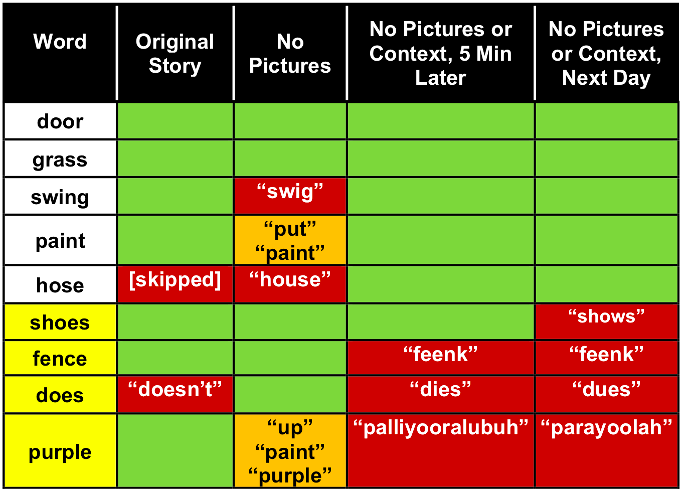
The first video, titled “Is My Kid Learning How to Read?” went up on YouTube just three weeks ago. The viewer follows along as the woman’s daughter reads a picture book on a laptop from RAZ-Kids, an online guided reading program, titled “Paint It Purple,” about a little girl who loves purple paint and uses it on a fence, a door, and by accident, on her mother. It’s “Level B,” a beginning reader book with words that kids at that nascent stage would be hard-pressed to decode, but no matter. As the video shows, phonics is only one strategy children are being taught alongside myriad “cueing” strategies, such as guessing a word that makes sense, looking at pictures to figure it out, or just skipping tricky words altogether. The little girl is far from fluent, but she reads the book reasonably well.

But when her mom has her read the same story with the illustrations covered—no pictures, no context clues, nothing to aid her in guessing—she struggles to decode the word “purple” which appeared in nearly every line (and every picture) of the book she had ostensibly read just minutes before—sixteen times in all. “It’s like, she’d never seen the word before in her life,” her mother narrates. “You can actually see the camera frame shaking because I'm so stunned.” She captures and charts her daughter’s attempts to decode various words with and without the visual aids, several minutes later, and the next day; a green box represents a successful effort:
1

I tracked down “Berrinchuda,” (she says it's a Spanish word used to describe a child having a tantrum) at home to learn more about what inspired her kitchen table experiment and the videos which have already garnered over 35,000 views. “As a clinical psychologist,” she tells me, “it never occurred to me that decoding wouldn’t be a part of reading.” As she discussed it with friends and fellow parents, she learned that “a lot of people have noticed these strange instructional techniques, but have gone along with it because they trust teachers.” But with children spending more time at home, it became obvious to her and many of her friends that something was amiss. Her daughter attends school in a reasonably well-off school district near Oakland, California, that uses Lucy Calkins’s Units of Study to teach English language arts.

This brings us to the week’s second big development. On Friday, Emily Hanford of American Public Media broke the news that Calkins is quietly conceding that materials produced and distributed by the Teachers College Reading and Writing Project at Columbia University, which she has led for decades, “need to be changed to align with scientific research.” Hanford, who deserves as much credit as anyone for driving the science of reading conversation over the last few years, got hold of internal TCRWP documents in which Calkins concedes that aspects of her approach “need ‘rebalancing.’” The issue is precisely the “cueing” strategies that are the subject of the “Berrinchuda” videos.

“Calkins’s published materials contain lessons and assessments that promote these cueing strategies,” Hanford reported. “Calkins’s group now says that beginning readers should focus on sounding out words and recommends that all children have access to ‘decodable’ books that contain words with spelling patterns students have been taught in phonics lessons.”

If true—and there are good reasons for skepticism—Calkins’s sudden shift could have a significant impact on how American children learn to read. Data from RAND’s American Educator Panels show that nearly one in five (18 percent) of American elementary school teachers report using the “Units of Study” curriculum; 31 percent of principals in schools serving K–5 students say they require or recommend Calkins. Even those figures understate her status as a reading practice superspreader. “Her curriculum and philosophy has had and continues to have an enormous influence on reading instruction, perhaps more so than almost any other curriculum out there,” explains RAND’s Julia Kaufman. “Any shifts to that curriculum to align it more with what we know about good reading instruction could improve reading among hundreds of thousands of children across the U.S.”

Here’s hoping. But like another famous Lucy with a habit of making promises and pulling away the football at the last moment, Calkins has a history of making earnest noises about respecting evidence or realigning her offerings to standards, but changing little. Thus news of Calkins’s change of heart has been greeted with a healthy dose of “I’ll believe it when I see it” from close observers. One insider describes the changes as “shuffling the MSV deck chairs on the Titanic to emphasize the V first,” a reference to “three cueing” strategies (Meaning, Structure, and Visual Systems) used in reading instruction; phonics falls under “V.” In other words, teachers would still be encouraged to teach children “multiple sources of information” to tackle tricky words. Calkins seemed to confirm as much in a “Dear Colleague” letter sent this week to schools who use Units of Study. She downplayed Hanford’s piece and a subsequent report in Education Week and claiming TCRWP has “long supported strong and systematic phonics instruction,” even while confirming that they plan to publish a series of decodable books and make other changes to the program. “What stays the same in our work with K–1 readers? 98 percent of it,” she wrote.

I don't believe it for a minute. @LucyCalkins will make some cosmetic changes and then she'll keep misleading teachers and children - just as she's done for the past 35 years. https://t.co/IUOLmJnzvN

— Stephen Parker (@ParkerPhonics) October 17, 2020

Hanford herself sounded a skeptical note in her piece, pointing out that Arkansas has a statewide rule in place preventing curriculum that uses “cueing strategies” from use in the state. Colorado has similarly kept Units of Study off its approved list of core reading curriculum. As states and districts have become increasingly sophisticated about curriculum, it doesn’t take a cynic to wonder if Calkins’s reversal isn’t less of a Damascus Road conversion than a commercial necessity.

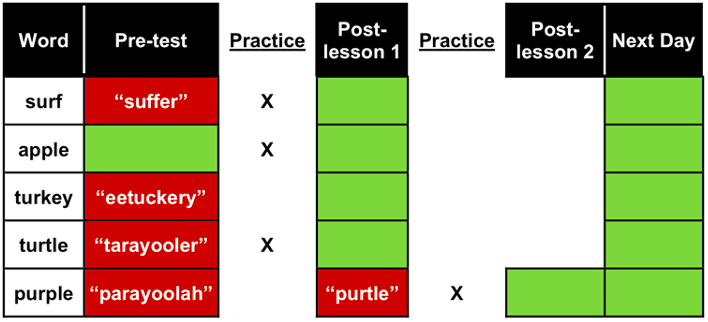
In the end, parental demand for effective reading instruction may be the most potent long-term lever for change. That’s what makes the Berrinchuda videos so effective. They open parental demand as another front in the push for scientifically-sound practice, demystify reading instruction, and make accessible the inherent weakness in “balanced literacy.” They also demonstrate a credible alternative. In the second video, after a brief phonics lesson, we see her daughter able to successfully decode words like turkey, turtle, and yes, purple. In many balanced literacy classrooms like the one her daughter attends, “kids don't get any [decodable books] at all,” Berrinchuda explains. “Soon after discovering decodables” and teaching her phonics at home “I noticed a change in my daughter.” She’s becoming a reader, not merely a word guesser.
2

“Berrinchuda” explained that one of the reasons she wants to remain anonymous is to not embarrass her daughter’s teachers. There’s a natural tendency to assume your child’s teacher is an expert. One of the blessings of the emerging science of reading moment is that it was empowering teachers to speak out about their poor preparation to teach reading and to demand better training. The Berrinchuda videos may bring parents along for the ride. If nothing else, they seem destined to become Must See Viewing before parent teacher conferences for mothers and fathers of struggling readers to demand their children be taught to read, and not merely to guess.

view

Strategies to help schools navigate the Covid-19 cash crunch

Frederick M. Hess | Brandon L. Wright
10.22.2020
Flypaper

In education, one of the more bizarre debates of the past quarter century has been over whether more money improves students’ outcomes. It’s tough to think of anywhere else in American life where we’d even have that discussion. Yet a remarkable amount of attention has been devoted to the notion that it doesn’t, as well as to the equally dubious idea that more money is the answer to all our educational ills.

Few school-spending skeptics argue that money can’t help; rather, they fear that funds will be spent on things that they deem unlikely to make a difference for students. And responsible champions of more spending concede that of course it matters how those funds are spent. In other words, nearly everyone agrees that spending is never just about “how much,” but also a matter of “how.” Yet there’s still a surprising lack of attention devoted to strategies for spending funds wisely and effectively. Our new book, Getting the Most Bang for the Education Buck, and this essay are meant to help with that.

The pandemic has, among many other things, tightened budgets, shifted learning online and to unfamiliar technologies and disrupted staffing models by upending enrollment and attendance patterns, causing teachers to opt out of various roles and forcing schools to experiment with hybrid and remote instruction.

Tight budgets may be unwelcome, but they can present leaders with opportunities that don’t exist during more fiscally flush times. As Karen Hawley Miles, president of Education Resource Strategies, a nonprofit that partners with school systems to help them transform how they organize resources, explains in our book: “Budget pressure always generates a call to reduce district office spending because it doesn’t immediately impact the classroom. This often leads to such stopgap measures as freezing hiring, drawing down reserves or deferring maintenance.”

But these are short-term patches. A better strategy, she says, is to use the unfortunate situation to “re-envision the district office role and focus district-level spending on a few powerful improvement strategies.” She urges district leaders to ask: “Where can the district find efficiencies?” “Are there opportunities to lower costs … without compromising quality?”  “What resources and decisions might [they] devolve from central to school level to foster stewardship and better match spending to school-specific needs?”

One such opportunity today emerges with regard to staffing. State laws and directives are littered with rules, regulations and routines that make this challenging for schools and districts. Bryan Hassel and Emily Ayscue Hassel, the co-presidents of Public Impact, an education policy organization that focuses partly on funding, note in our book that line-item budgets limit the reallocation of funds; that rigid class-size limits make it difficult for teams of teachers and paraprofessionals to collectively serve a group of students; and that certification requirements can inhibit cross-functional teams. As the Hassels explain, too many existing policies serve to “lock in one-teacher, one-classroom structures,” instead of opening up staffing approaches that are more cost-effective and more instructionally effective. The challenges of this year, with shrunken class sizes, a mixture of in-person and remote groups, and redefined teachers’ roles, make this the right time to explore these kinds of changes.

American schools have a long-running, unrequited love affair with education technology. Outlandish claims have been made that this next advance—from ballpoint pens to blackboards, from radios to desktop computers—will change everything, though it invariably doesn’t. And the dismal results of remote learning circa 2020 only reinforce how far ed tech is from delivering on these grand promises.

In our book, Scott Milam, Carrie Stewart and Katie Morrison-Reed of Afton Partners, a consulting firm that has helped schools develop long-term financial plans centered around a technology-based model, observe that while technology can make a big difference for learners, the crucial determinant is how it’s actually used. They write: “The smart incorporation of technology indeed will allow for increased ‘bang for the educational buck.’ But when incorporated poorly, technology can distract, detract and waste a lot of money.” They note that the districts that have the best experiences with technology start by asking, “What are the goals and objectives for technology-enabled classrooms?” They focus intently on how to gauge progress and measure success. The most important question should never be, “How much technology does a school or system have?” Instead, it must be, “What’s being done with it?”

Although no one could have foreseen last winter the financial crunch that so many schools face right now, these new challenges can also provide leaders with the rationale to make smart, needed and overdue decisions when it comes to school spending. However much money schools get, leaders have the opportunity to make the dollars go further by finding ways to get more bang for the education buck.

Editor’s note: This was first published by the Hechinger Report.

view

Creating autonomous schools in traditional districts

Chester E. Finn, Jr.
10.22.2020
Flypaper

The Progressive Policy Institute’s indefatigable David Osborne, a long-time student of and advocate for quality charter schools, now joined by Tressa Pankovits, has penned a valuable guide to the creation of autonomous “innovation schools” within traditional districts.

Neither petrified bureaucracy nor privatization, their report is a praiseworthy, classic, centrist approach to building better public schools by combining freedom with accountability. Yes, you may associate that formula with the original theory of public charter schools—and you wouldn’t be wrong. Innovation schools and charters are first cousins, if not siblings, and in places they resemble twins. But particularly in view of the political baggage attached to the charter label, there’s much to be said for promoting their close relatives.

Nor is this altogether a hazy think-tank fantasy. Recent years have brought a handful of examples of such hybrids, schools that remain within the district but are freed from some bureaucratic (and often union) micro-management. They’re called different things in different places, but the authors point to examples in Indianapolis, Denver, Boston, and elsewhere. They also point to a reasonably robust research base, both domestic and international, indicating that kids learn more in such schools. And they do a fine job of setting forth both the advantages of such schools and the essential elements that allow them to thrive. Convinced that this works best when legislators enact statewide enabling statutes, the final twenty pages of this ninety-six-page report is draft model legislation that contains all those elements and more.

It’s well worth the attention of serious education reformers and practitioners, especially those who see the advantages of finding a “third way” during this fraught time. 

That said, the institutional rigidities of districts and union collective bargaining agreements, combined with the resistance of innumerable established interests—inside those school-system bureaucracies, among other places—plus the fractious politics, protests, and sensitivities that surround us, mean that none of what they’re recommending will be easy to pull off in more than a handful of places. Even where it’s being tried, a number of constraints remain in place—few of these “innovation schools,” for instance, are truly free to staff themselves as they think best—and there’s a powerful tendency for the giant rubber band of public education to resume its previous shape as soon as the tension is released. Which is to say, the arrival of a new superintendent, a disruptive school board election, or building-level scandal can cause the decentralization engines to crash into reverse. Consider what’s happened in New York City under the de Blasio regime and may be happening in Denver today.

Even as we applaud true innovation schools—and thank David and Tressa for promoting them—we should beware of the ersatz kind and avoid putting too many eggs in a basket with holes in the bottom.

SOURCE: Tressa Pankovits and David Osborne, The Third Way: A Guide to Innovation Schools, Progressive Policy Institute (October 2020).

view
College and career readiness tracking SR image

How states are measuring college and career readiness

Jessica Poiner
10.19.2020
Ohio Gadfly Daily

Over the last few years, states have attempted to offer a clearer picture of how well high schools prepare students for the future by measuring college and career readiness (CCR), instead of just student achievement and graduation rates. In a recently published report, Lynne Graziano and Chad Aldeman of Bellwether Education Partners outline the pros and cons of several CCR measures. They also identify whether states are designing these measures to ensure equity and discourage funneling certain groups of students into less demanding pathways and restricting their access to more rigorous and potentially lucrative options.

First, the authors examine the “promises and perils” of several CCR measures that states currently incorporate into their accountability systems. They include:

  • Advanced course-taking. Advanced Placement (AP), International Baccalaureate (IB), and dual-enrollment classes offer students a sneak peek at the rigor of college courses and can, in some cases, offer an early start on earning college credit. Research shows that each course taken by a student increases his or her likelihood of postsecondary credit and bachelor’s degree completion.
  • Career and technical education (CTE) course-taking. CTE courses offer students career-aligned training. In the past, many CTE pathways were less rigorous than traditional academic tracks and only prepared students for low-wage and low-skill jobs. That’s increasingly not the case anymore, though low-quality programs still exist. Fortunately, research (including from Fordham) shows a strong payoff in college enrollment, earnings, and other outcomes for students who take three or more courses in specific CTE fields.
  • Industry credentials and work-based learning. Industry credentials offer students the chance to earn competency certificates in a specific industry or skillset. Work-based learning, such as apprenticeships, allows students to split time between classroom learning and hands-on work experience under the guidance of a mentor. While both pathways have plenty of promise, there’s research indicating that most of the credentials students earn are not aligned with high-demand jobs, which limits their long-term usefulness.
  • Postsecondary and employment outcomes data. Proxy measures like advanced course-taking can predict long-term outcomes for students, but actual outcomes data remain superior. However, states tend to avoid incorporating postsecondary outcomes data into their accountability systems because there are valid questions about how responsible high schools should be for long-term student outcomes, as well as logistical questions around privacy and data infrastructure.

To understand what CCR data states are collecting, the authors followed the “scavenger hunt” approach used by the Data Quality Campaign to evaluate state report cards. They focused on three main inquiries: 1) if the state reports a CCR indicator; 2) whether the CCR indicator is reported using a single measure or broken down into multiple subcomponents; and 3) whether results are disaggregated by race, gender, socioeconomic status, and other factors.

The most common CCR measure is advanced coursework, which is used by forty-one states. Thirty-nine states utilize a career-based measure, which could include CTE course-taking, work-based learning, industry credential completion, or apprenticeships. Twenty-seven states based at least a portion of their CCR indicators on college-admissions assessments like the SAT or ACT, and fourteen states rely on military measures like enlistment or scores on the Armed Services Vocational Aptitude Battery test. Thirteen states use post-graduation measures such as postsecondary enrollment or enrollment without remediation.

Only four states—Alaska, Maine, Nevada, and Oregon—are not currently reporting any form of CCR. However, although the majority of states track readiness, most do not disaggregate the results by specific pathways or demographic groups. Only sixteen states broke down the results of their indicators according to all the demographic categories required by federal education law. Unfortunately, without tracking these results, states have no way of identifying access and equity issues.

Thirty-four states and the District of Columbia incorporate CCR measures into their formal accountability systems. Fifteen of those states break their indicators down into subcomponents. For example, South Carolina has nine criteria for its CCR measure—five components for college readiness and four for career readiness—and they account for 25 percent of a high school’s rating. Another nine states also utilize subcomponents, but do not weight each one for accountability purposes. The specific weight given to the CCR indicator varies by state, and ranges from as low as 5 percent in Michigan and Iowa to 40 percent in New Hampshire.

The report closes with several recommendations. First, the four states that lack a CCR measure and the twelve that have a measure but omit it from their formal rating systems should shift immediately toward tracking readiness and holding schools accountable for it. Next, information about which pathways are most helpful for improving postsecondary readiness and success should be made more readily available to students and families. Finally, states should provide more opportunities for researchers and policymakers to explore data in a systematic way. Doing so would allow advocates to determine whether certain student subgroups are being tracked toward, or away from, certain CCR pathways, and could help policymakers make better decisions going forward.

Source: Lynne Graziano and Chad Aldeman, “College and Career Readiness, or a New Form of Tracking?” Bellwether Education Partners (September 2020).

view

The Education Gadfly Show: The loathsome war on exam schools

10.21.2020
Podcast

On this week’s podcast, Fordham’s Checker Finn joins Mike Petrilli and David Griffith to discuss the growing, misguided war on selective-admissions high schools. On the Research Minute, Amber Northern examines how community college credentials affect graduates over time.

Amber's Research Minute

Veronica Minaya & Judith Scott-Clayton, “Labor Market Trajectories for Community College Graduates: How Returns to Certificates and Associate’s degrees Evolve Over Time,” Education Finance and Policy (August 12, 2020).

The Education Gadfly Show is available on Google Podcasts, Libsyn, Spotify, iHeartRadio, Apple Podcasts, TuneIn, The Podcast App, PodBean, Podbay, Chartable, Castbox, and myTuner Radio.

view

What we're reading this week: October 22

The Education Gadfly
10.21.2020
Flypaper
  • During the pandemic, Kaneadsha Jones and her husband went seven months without steady work while caring for three daughters, one of whom is immunocompromised. —USA Today
  • Kaneadsha’s story inspired hundreds of donors to come together and send her family meals, gift cards, and groceries—enough for her to share with neighbors in need. —Hechinger Report
  • According to the data, schools should less spend time and money on deep-cleaning surfaces and more of it on improving indoor ventilation. —Wired
  • Urban charter schools are dealing with the same obstacles to reopening as district peers, such as apprehensive parents and teachers. —Chalkbeat
  • U.S. schooling failed students during the early stages of the pandemic. Let’s look to good data, not partisanship or fear, to make better decisions moving forward. —Washington Post
  • A Salt Lake City suburb saw a dramatic spike in infections after its community insisted on reopening schools despite failing to contain infection rates. —New York Times
  • Demonstrators organize in memory of a schoolteacher in France who was beheaded by a Chechen man for teaching about free speech and Charlie Hebdo. —Wall Street Journal
  • Pandemic schooling is worsening inequities for students in Peru, which has the world’s highest Covid morality rate and where impoverished families are woefully unequipped for virtual learning. —Washington Post
  • The late David K. Cohen made waves with his research on classroom instruction and equity, but also by his mentorship of many other scholars. He will be missed. —Chalkbeat
  • After months of preparation and deliberations, “large school districts across the country are reopening campuses to students.” —Washington Post

Sign Up to Receive Fordham Updates

We'll send you quality research, commentary, analysis, and news on the education issues you care about.
Thank you for signing up!
Please check your email to confirm the subscription.
Fordham Logo

© 2020 The Thomas B. Fordham Institute
Privacy Policy
Usage Agreement

National

1016 16th St NW, 8th Floor 
Washington, DC 20036

202.223.5452

the[email protected]

  • <
Ohio

P.O. Box 82291
Columbus, OH 43202

614.223.1580

[email protected]

Sponsorship

130 West Second Street, Suite 410
Dayton, Ohio 45402

937.227.3368

[email protected]