Mobile Navigation

  • National
    • Policy
      • High Expectations
      • Quality Choices
      • Personalized Pathways
    • Research
    • Commentary
      • Gadfly Newsletter
      • Flypaper Blog
    • Events
    • Scholars Program
  • Ohio
    • Policy
      • Priorities
      • Media & Testimony
    • Research
    • Commentary
      • Ohio Education Gadfly Biweekly
      • Ohio Gadfly Daily
  • Charter Authorizing
    • Application
    • Sponsored Schools
    • Resources
  • About
    • Mission
    • Board
    • Staff
    • Career
Home
Home
Advancing Educational Excellence

Main Navigation

  • National
  • Ohio
  • Charter Authorizing
  • About

National Menu

  • Topics
    • Accountability & Testing
    • Advanced Education
    • Career & Technical Education
    • Charter Schools
    • Curriculum & Instruction
    • ESSA
    • Evidence-Based Learning
    • Facilities
    • Governance
    • Personalized Learning
    • Private School Choice
    • School Finance
    • Standards
    • Teachers & School Leaders
    • Think Again
  • Research
  • Commentary
    • Gadfly Newsletter
    • Flypaper Blog
    • Gadfly Podcast
  • Events
  • Scholars Program

The Education Gadfly Weekly

Sign Up to Receive Fordham Updates

We'll send you quality research, commentary, analysis, and news on the education issues you care about.
Thank you for signing up!
Please check your email to confirm the subscription.

The Education Gadfly Weekly: A generation that doesn’t know what time it is

Volume 26, Number 1
1.8.2026
1.8.2026

The Education Gadfly Weekly: A generation that doesn’t know what time it is

Volume 26, Number 1
view
Wall clock

A generation that doesn’t know what time it is

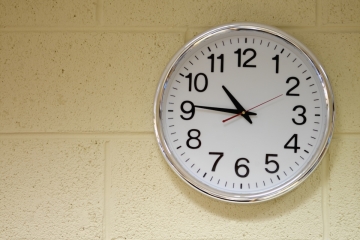
In New York City schools, the recent ban on smartphones has brought attention to some students' inability to read analog clocks. Meanwhile, the phrase “knowing what time it is” has circulated on the right as a kind of political shibboleth meant to distinguish self-described post-liberals from more traditional conservatives. Considered together, the figurative and literal “time” problems feed each other and signal a worrisome trend in America.

Dale Chu 1.8.2026
NationalFlypaper

A generation that doesn’t know what time it is

Dale Chu
1.8.2026
Flypaper

How charter schools should approach innovation

Thibaut Delloue
1.8.2026
Flypaper

The education research handbook that never closes

Bruno V. Manno
1.8.2026
Flypaper

Impacts of student-teacher gender matching in elementary grades

Jeff Murray
1.8.2026
Flypaper

Summer school as an effective post-pandemic academic intervention

Julia Hayes
1.8.2026
Flypaper

An Education State of the Union | Episode 1000 of The Education Gadfly Show

1.7.2026
Podcast
view
Students with hands raised

How charter schools should approach innovation

Thibaut Delloue 1.8.2026
Flypaper
view
Open book

The education research handbook that never closes

Bruno V. Manno 1.8.2026
Flypaper
view
Teacher and student

Impacts of student-teacher gender matching in elementary grades

Jeff Murray 1.8.2026
Flypaper
view
Students in a classroom

Summer school as an effective post-pandemic academic intervention

Julia Hayes 1.8.2026
Flypaper
view

An Education State of the Union | Episode 1000 of The Education Gadfly Show

Frederick M. Hess, Tom Loveless, Michael J. Petrilli, Amber M. Northern, Ph.D., David Griffith, Ph.D. 1.7.2026
Podcast
view
Wall clock

A generation that doesn’t know what time it is

Dale Chu
1.8.2026
Flypaper

For years, “knowing what time it is” has circulated on the right as a kind of political shibboleth, coming into sharp relief with the “Flight 93 election” and later popularized by figures like Russell Vought, the current director of the Office of Management and Budget. The phrase is meant to distinguish self-described post-liberals from more traditional conservatives (i.e., those aligned with Reagan and Bush) who are seen as still believing that the old rules of American politics apply, that institutions can be trusted to muddle through incrementally, and crucially, that the country is not on the brink of existential collapse. To “know the time” implies an aggressive antipathy toward federal bureaucracy and a belief that the left wields vast, entrenched power. In education policy, that posture has made the U.S. Department of Education a recurring target.

Those who “know the time” often view schools as beyond salvation, demand an all-or-nothing purge, and are fixated on preempting perceived ideological threats—whether a pro-trans agenda, controversial campus policies, or other culture war flashpoints—rejecting the slow, painstaking work of gradual reform.

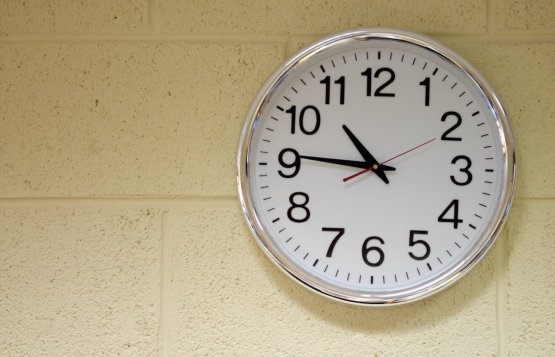
In an uncanny parallel, not knowing what time it is now finds a literal expression in New York City schools. The recent ban on smartphones has brought attention to the fact that some students cannot read analog clocks. As one high school English teacher in Manhattan lamented:

The constant refrain is “Miss, what time is it?” It’s a source of frustration because everyone wants to know how many minutes are left in class… It finally got to the point where I started saying, “Where’s the big hand and where’s the little hand?”

Could there be a more glaring indictment of our education system’s failure to instill rudimentary skills or to keep students engaged in learning? Versions of this story have surfaced repeatedly over the past decade, including reports involving college students. There have been many shifts since Millennials and Gen Xers were in school—away from mental arithmetic, timed math drills, and memorized multiplication tables and toward looser, less structured approaches—but too often these routines faded without a serious reckoning over their value. Telling time looks less like an outdated relic than a casualty of a broader drift away from rigor and mastery.

It would be easy to dismiss this as trivial or just treat it as a proxy for larger cultural battles. But the more important lesson is about priorities. Schools today face immense external pressures—from technology, AI, and other societal changes—but those forces do not absolve them of the responsibility to be clear about what students must know and be able to do.

When students emerge from school without basic competencies, parents naturally begin to wonder what schools are prioritizing and whether the fundamentals are being inculcated at all. The analog clock is simply the latest emblem of these gaps. Just as the Constitution places our most cherished liberties on a high shelf, difficult to damage during moments of populist passion, so too should education place foundational skills beyond the reach of dubious trends or even well-intentioned experiments.

Taken together, the figurative and literal “time” problems feed each other. A populace that lacks basic competencies is more vulnerable to polarization, mistrust, and civic breakdown, but the damage is not confined to what people know. It also shows up in how they speak. The language of “knowing what time it is” does more than signal urgency. It licenses coarseness. It encourages a style of politics in which disagreement is treated as moral failure, institutions are seen as enemies, and restraint is equated with naïveté. Over time, that posture hardens into habit. Profanity, derision, and cruelty become normalized not because they persuade, but because they cease to shock and are accepted as routine.

As Ismar Volić, a professor of mathematics at Wellesley College, explains:

Misleading statistics, sham metrics, cooked numbers, and erroneous alternative science herald a precipitous decline of rigorous thinking, starting with the erosion and weaponization of that rigor’s foundation—mathematics… Whether these numbers are manipulated, fabricated, or real, both sides of the aisle deploy them to elicit an emotional response from us… Greater numeracy leads to greater agency in political decision making and can make us better consumers of democracy.

At the same time, a political movement convinced that institutions are beyond repair becomes more susceptible to social upheaval and less committed to the temperance, continuity, and procedural norms that protect liberal democracy itself. In K–12 education, the same impulse treats innovation as a virtue and traditional competencies as obstacles to progress rather than prerequisites for it. America’s education system does not suffer from a lack of ambition; it suffers from a lack of competence.

If anything, the clock story is best read as yet another warning. Foundational skills can erode quietly, and the consequences are easy to dismiss—until it’s too late. Many young staffers in Washington today have never known a world outside of performative politics, where their bosses preen on social media, squabble on TV, or stage spectacles rather than doing the dull, tedious work of legislating. That muscle memory—the discipline, patience, respect for process, and even for one another—has already atrophied. If schools fail to instill the fundamentals—numeracy, literacy, decency, integrity—the vicious cycle of decline will continue, leaving an entire generation habituated to civic callousness and contempt.

view
Students with hands raised

How charter schools should approach innovation

Thibaut Delloue
1.8.2026
Flypaper

Speaking on The Education Exchange podcast recently, 50CAN president Derrell Bradford argued that charter schools have lost sight of their early promise as a “vehicle for experimentation” in public education. We have “lost the spirit to try new things,” Bradford contends, calling on the charter sector to recommit itself to innovation.

I agree with Bradford that innovation is important, in that we should continually seek to innovate how we operate the public schoolhouse—which charter schools are perfectly positioned to do. In charter terms, innovation can rescue us from the archaic way school districts operate—the “grammar” or “invisible architecture” of schooling: how students are grouped into classrooms, how those classrooms are physically organized, or how assessments are designed and delivered.

But when it comes to pedagogy, the charter movement should be careful not to confuse “innovative” with “experimental.” Against the backdrop of our students’ veritable academic crisis, now is not the moment for charters to experiment with educational models. Instead, charter operators and authorizers should commit themselves to what we know will steer students toward academic recovery.

There are many examples of programs designed to attract “innovative” schools to districts across the country, from Indiana’s Innovation Network Schools to New York City’s Innovation Zone. Yet these are rarely a panacea for improving educational outcomes. I worked at a Public School of Innovation myself in North Charleston, South Carolina. Like many “innovation” schools under increased pressure to produce academic results, we resorted to the familiar reform playbook: a high-expectations culture, frequent teacher coaching and professional development, more testing, and the relentless pursuit of student data.

These measures were certainly not innovative, but for administrators facing the budgetary and operational constraints of all low-income public schools, sticking to what works is the more sensible path. I doubt my principal would have sought more “experimental” solutions to improving our students’ outcomes.

Bradford is right to suggest that charters aren’t living up to their potential for innovation, but is that such a bad thing? When it comes to the education they deliver, the best charter schools can hardly be said to be “experimental.” Instead, they generally stick to the tried and true, such as strong teacher development and high-quality curricula. Rick Hess put it more bluntly, suggesting that “students would benefit if we simply banned adults involved in education from using the term ‘innovation’ and insisted they be specific about what’s not working and what needs to change.”

In fruitful charter environments, “specialization” might be a better watchword than “innovation.” Classical charter schools, for example, aren’t “innovative” in an experimental sense—they harken back to a once-ubiquitous pedagogical approach that emphasizes knowledge-rich curricula rooted in the Western literary canon. The leader of a Florida classical charter school recently winced when I referred to district schools as “traditional.” “We’re the ones who are traditional,” she told me. Yet classical charters have exploded in popularity and have been enormously successful in states like Florida and Texas.

Florida also has the largest number of specialized charter schools for students with disabilities in the country. I have yet to meet a parent of a student with special needs, however, who is seeking a more experimental school for their child. Like with all parents, they want the best education and the best services for their children—something many feel they are not getting in district-run schools.

Indeed, the problem with American education is not that it hasn’t been “innovative” enough in the education it delivers to students. American public schools, E.D. Hirsch has long argued, have pursued a pedagogical model loosely descended from the “child-centered” and very much untraditional ideas of John Dewey. The pursuit of faddish approaches to education—such as the abject failure of the whole language theory of literacy instruction—contributed to the decline of American public education in the first place. Paulo Freire, who authored one of the favorite texts of professors of education, never had to run his own school, after all.

Although charters should always innovate how schools are operated, innovation as “experimentation” is not the remedy for America’s pedagogy problem. Education is, at its core, a backward-looking institution—the transmitting of knowledge and skills from one generation to the next. In fact, what’s old is frequently new again in education, be it the rediscovery of phonics, of background knowledge, or of vocational education. If policymakers and charter authorizers want to look for the “next big thing,” they would be better advised to read E.D. Hirsch or Booker T. Washington than to take a chance on the latest experiment.

view
Open book

The education research handbook that never closes

Bruno V. Manno
1.8.2026
Flypaper

If you’re a policymaker, district leader, or reporter trying to follow education research, it can feel like drinking from multiple fire hoses at once. One week brings a bold new claim about dual enrollment. Next week, there’s a re-analysis of charter school impacts or a skeptical take on short-term workforce credentials. Meanwhile, state and federal leaders are making billion-dollar bets on exactly these programs, often guided by partial evidence, dated syntheses, or the loudest advocates.

Into that gap steps a new tool with an ambitious mission. It’s called the Live Handbook of Education Policy Research, a digital, constantly updated reference edited by Tulane economist Douglas Harris and published by the Association for Education Finance and Policy (AEFP). It’s been described as a “Wikipedia of K–12 research.” But this one is written and vetted by leading scholars and aimed squarely at practitioners and policymakers.

The handbook’s purpose is straightforward but overdue. It will provide comprehensive, rigorous, objective, and useful reviews of research on major education policy topics. Comprehensive means the chapters pull together the most relevant work across methods and disciplines, rather than relying on a few favored studies. Rigorous means not all studies are treated as equal; authors weigh the strongest causal evidence more heavily. Objective means considering multiple perspectives and connecting the outcomes that researchers study with the educational values they embody, including the level of confidence one can have in the conclusions reached. Finally, useful means the chapters are written for a broad audience—policymakers, journalists, and practitioners—not just other academics.

The handbook is only online and is designed to be “live.” Chapters are meant to be updated as new research comes out, rather than sitting on a shelf for a decade while the field moves on. AEFP has built a review process that includes a board of policymakers and practitioners, ensuring the work is aligned with the questions real decision-makers are asking.

It reflects an approach to research advocated by the economist Tyler Cowen in a recent piece entitled “Which Published Results Can You Trust?,” building on the views of his colleague Bryan Caplan. Cowen writes this about his first principle:

…trust literatures, not individual research studies. By a “literature,” I mean the collective work conducted by many researchers, acting in decentralized fashion, to publish and circulate the results that will best persuade other researchers.

Literatures are more trustworthy than individual articles because they reflect a collective effort to establish reliable results. A supposed correlation gets refereed and scrutinized. If you have a new hypothesis, other researchers have a chance to make their names by knocking it down. There are also more eyes watching, in case real-world experience delivers results at odds with what a particular theory had been postulating.

In its first edition, the Live Handbook of Education Policy Research already includes roughly 50 chapters spanning early childhood, K–12, and higher education. Topics run the gamut from teacher preparation, licensure, and compensation to charter schools, rural education, FAFSA complexity, college majors, and more. It is intended to become the first place people go when they type “research” plus a familiar education buzzword into a search bar.

Each chapter follows a standard, user-friendly structure. On the left side of the page, a menu lets readers jump quickly between:

  • Key findings: Short, plain-language takeaways (usually four to five) that answer “tell us what we know right now.”
  • Introduction: Definitions, scope, why this topic matters, and the primary debates on the subject.
  • Evidence: A deeper tour of particular studies, with attention to research design and where findings are strongest or weakest.
  • Conclusion and areas for future research: What’s still uncertain and what new work is needed.
  • Endnotes and references: A complete bibliography on the subject.
  • Suggested citation and provide feedback: This ensures the work can be appropriately cited and improved over time.

For those who want to print or mark up a copy, each chapter is also available as a downloadable PDF. The homepage guides new users on how to navigate, engage, learn, share, and cite—signaling that this is a working tool, not a static archive.

To see the model in action, let’s look at one chapter that cuts across K–12 and higher education: “Early College Credit (ECC) Courses,” by Dylan Conger and Steven Hemelt. Topics include dual enrollment, Advanced Placement (AP), International Baccalaureate (IB), and early college high schools, all of which allow students to earn college credit while still in high school. It defines ECC courses as college-level work taken in high school that can affect both admissions and the number of credits students need upon enrollment.

The introduction walks readers through the landscape: AP’s nearly 40 courses and exams, dual enrollment offered by colleges and community colleges, IB programs, and highly structured early college high schools that aim to deliver up to two years of college credit by graduation. The chapter notes that ECC enrollment has exploded. The number of high school graduates taking at least one AP exam grew from roughly 452,000 in 2002 to over 1.1 million in 2022—about one-third of all graduates—and by 2017–18, about 80 percent of U.S. high schools offered at least one dual-enrollment course.

The key-findings section both affirms and complicates the prevailing narrative.

  • Key finding 1: ECC courses are more rigorous than most other high school classes. Students who are moderately to highly prepared tend to have stronger outcomes. Additionally, teachers receive additional training; students report heavier workloads and deeper engagement; and experimental and quasi-experimental studies link ECC participation to more advanced course-taking in high school, higher rates of four-year college enrollment, and for those who earn high scores on AP exams, faster time to earning a degree and a greater likelihood of majoring in the tested subject. At the same time, less-prepared and less-supported students often experience higher stress, lower confidence, and lower grades. They are also much less likely to actually secure the college credit that is supposed to be the payoff.

  • Key finding 2: Access and participation are unequal. ECC courses are less likely to exist in small, high-poverty, and rural high schools. Even when classes are offered, students from higher-income, white, Asian, and college-educated families are substantially more likely to enroll. One national cohort study cited in the chapter finds that 42 percent of ninth graders whose parents held a bachelor’s degree took college-credit courses, compared with just 26 percent of students whose parents did not complete high school. Controlling for prior academic preparation narrows some gaps, but cost barriers such as tuition, fees, and exam charges still loom large for low-income families.

  • Key finding 3: Policy design matters. State mandates that require schools to offer ECC courses or require students to take at least one can increase overall participation, as can accountability systems that track ECC offerings. These policies sometimes widen racial and socioeconomic gaps because they focus on equalizing course availability rather than on equalizing who actually enrolls and succeeds. In contrast, fee waivers and subsidies targeted to low-income students shrink participation gaps in AP exam-taking, even if they don’t automatically increase pass rates.

  • Key finding 4: More intensive models seem to work better for underrepresented students. One example is the early college high school model that bundles ECC with counseling, tutoring, and parental outreach. Another example is incentive programs that pay teachers and students for high AP scores. A third example is project-based AP courses, which improve exam performance for both low- and high-income students.

For state leaders wrestling with whether to expand dual enrollment, or district leaders debating open access versus prerequisites, this structure is invaluable: short key findings at the top, then the underlying studies, such as experimental designs in Tennessee dual credit, AP expansion in Michigan, and ECC on community college campuses for those who want to dig deeper.

Valuable as it is, the new handbook will not settle every argument. What it does is raise the floor under education debates. Instead of trading dueling anecdotes or single-study headlines, policymakers, advocates, and journalists can start with a shared summary of the best available evidence on topics affecting millions of students.

For a field like education that’s awash in claims about evidence-based reforms, that’s no small thing. Whether you’re weighing a new certificate program, designing an early college expansion, or just trying to explain these issues to families and voters, the Live Handbook of Education Policy Research offers a common reference point and a way to keep that reference point current as new studies emerge.

It’s a handbook that never closes. This means that it should become the go-to source for Google searches related to education research and a key resource for those who utilize artificial intelligence and large language models for research assistance. The challenge now is making sure the people who most need it know it’s there and start using it as their default first stop for serious education policy questions.

view
Teacher and student

Impacts of student-teacher gender matching in elementary grades

Jeff Murray
1.8.2026
Flypaper

The vast majority of teachers in K–12 public schools are female, including over 85 percent of those in the elementary grades. Amid ongoing concerns that boys are struggling in school, one proposed solution is to recruit more male teachers. But does gender matching of students and teachers really benefit kids? A new working paper aims to find out, focusing on elementary grade levels.

Theorizing that some previous research on the topic had been limited in scope—and thus unable to reach any concrete conclusions—a team of researchers led by Eric Hengyu Hu of the State University of New York at Albany worked to construct the strongest possible methodology. This included a nationally-representative sample of students, multi-year tracking, an examination of both academic and non-academic outcomes, and controls for a number of potential confounding variables. Data came from NCES’ Early Childhood Longitudinal Study, Kindergarten Class of 2010-11 (ECLS-K: 2011). Researchers observed this nationally-representative cohort of students—4,080 boys and 3,890 girls—through the end of fifth grade. For academic outcomes, data included individually administered, untimed, “psychometrically well-validated” measures of reading, mathematics, and science achievement. Non-academic outcomes were two-fold: behavioral ratings, as provided by teachers via the Social Skills Rating System (SSRS); and executive function ratings, assessed by NCES field staff as part of ECLS-K protocol. It is, unfortunately, not noted anywhere in the report how many male or female teachers were observed.

For the full sample, the researchers observed no statistically significant effect of student-teacher gender matching on students’ academic achievement, social-behavioral, or executive functioning. Girls taught by female teachers did receive higher ratings on interpersonal skills and approaches to learning, two subcategories of SSRS, but all other outcomes showed null effects. Boys taught by male teachers showed null effects across the board. Breaking down the findings by race and ethnicity revealed a significant boost in the area of cognitive flexibility (one aspect of executive functioning) for Black girls taught by female teachers and Asian boys taught by male teachers. However, significant negative effects were also found for Black girls (lower science achievement) and Asian boys (reduced interpersonal skills).

Study co-author Paul Morgan said in an interview that he was surprised by the findings. “I’ve raised two boys and my assumption would be that having male teachers is beneficial because boys tend to be more rambunctious, more active, a little less easy to direct in academic tasks.” Indeed, one well-known analysis focusing on eighth grade students showed that having a female teacher benefitted girls and disadvantaged boys in science, social studies, and English, and created a gender gap that was 8 percent of a standard deviation. However, the author concluded that some of this effect might have occurred in previous years, depending on the gender matching (or lack thereof) in early grades.

Morgan, Hu, and their fellow researchers conclude similarly in their report that, “rather than providing definitive evidence of ‘no effect,’” their findings highlight the need for even larger samples, more outcomes to measure, and even more controls for confounding variables such as changes in parental involvement over time, peer composition, or classroom assignment processes over time. The need for additional study is especially true since the mechanisms at work are likely indirect—such as role modeling and reduction of teacher perception bias. “We’re not saying gender matching doesn’t work,” Morgan added. “We’re saying we’re not observing it in K through fifth grade.” But they haven’t stopped looking.

SOURCE: Eric Hengyu Hu, et al., “Fixed Effect Estimates of Teacher-Student Gender Matching During Elementary School,” working paper, accessed via ResearchGate (November 2025).

view
Students in a classroom

Summer school as an effective post-pandemic academic intervention

Julia Hayes
1.8.2026
Flypaper

Public schools in the United States have struggled to boost student achievement in math and reading following the Covid-19 pandemic. Funding from the Elementary and Secondary School Emergency Relief Fund (ESSER) contributed to modest post-pandemic achievement gains in math—but we still don’t know how exactly these funds made a difference.

In a new brief titled “School’s in for Summer: A Scalable and Effective Post-Pandemic Academic Intervention,” researchers at the Center for Analysis of Longitudinal Data in Education Research (CALDER) assess findings from two studies of ESSER-funded summer school programs delivered in 2022 and 2023 across ten large school districts to evaluate the effectiveness of summer school relative to other post-pandemic interventions. These district-run, school-based summer school programs delivered instruction across several weeks in core subjects such as math and reading, rather than individualized tutoring. Programs also incorporated social-emotional learning and enrichment activities, including physical education, art, music, dance, and gardening.

To gauge the impact of this intervention, they use value-added models that control for prior achievement and other observable characteristics of students to estimate the effects of participating in summer school on students’ fall NWEA MAP Growth math and reading test scores.

Overall, they find that summer school increased students’ math scores by 0.027 SD in 2022 and by 0.024 SD in 2023. Interestingly, while students showed improvement in math, reading scores showed no measurable improvement following summer school. For math, these impacts translate into roughly 10 to 15 extra days of learning over the course of a 180-day school year.

Although these increases in math are statistically significant, they are notably smaller than the 0.10 SD gains associated with attending summer school in pre-pandemic studies. The post-pandemic programs considered in the studies also produced smaller math gains per instructional hour than pre-pandemic programs. There is no clear explanation for why summer school only produced gains in math, but these findings are consistent with pre-pandemic evidence suggesting that summer school and other school-based instruction can produce stronger gains in math than reading.

Researchers from CALDER also compared outcomes from post-pandemic summer school programs with tutoring interventions during the school year and found that summer school was more effective for district-wide academic recovery. A key reason for this difference appears to be implementation at scale. Large-scale tutoring interventions in similar districts produced no measurable gains in student achievement, largely because districts struggled to deliver sufficient tutoring hours. In contrast, effective tutoring programs served fewer students and delivered at least 30 hours of instruction, suggesting that tutoring can benefit small groups of students, but is challenging to implement effectively at scale.

Compared to tutoring interventions, the summer school programs were better able to deliver sustained instructional dosage at scale. Findings from CALDER indicate that the most successful pre-pandemic summer school programs lasted four to six weeks and provided 90 minutes of math and 120 minutes of reading per day, helping explain their stronger average district-wide impacts compared to tutoring, even though participation was limited to a subset of students. However, several programs examined in 2022 and 2023 fell short of these targets, highlighting that summer school’s effectiveness depends on maintaining sufficient instructional time.

Although school districts would ideally implement both small-scale tutoring and summer school to support post-pandemic academic recovery, cost-effectiveness is a key consideration. Small-scale tutoring is effective in producing academic gains but requires low student-teacher ratios, making it expensive to staff. Summer school has proven to be just as effective in producing academic gains in math while serving more students with higher student-teacher ratios, making it a less costly solution for large-scale academic recovery. If school districts want to boost achievement, especially in math, adopting a well-designed summer school programs can be a smart strategy.

SOURCE: Emily Morton, Dan Goldhaber, Thomas J. Kane, and Andrew McEachin, “School's in for Summer: A Scalable and Effective Post-Pandemic Academic Intervention,” CALDER Center for Analysis of Longitudinal Data in Education Research (December 2025).

view

An Education State of the Union | Episode 1000 of The Education Gadfly Show

1.7.2026
Podcast
 

This week, we’re marking a major milestone—Episode 1,000 of The Education Gadfly Show. Instead of focusing on a single topic, we’re branching out for a big-picture conversation about the state of education policy—past, present, and future— with Rick Hess and Tom Loveless, the original co-host of the show and its very first guest. In particular, we wonder whether we were too pessimistic back in the No Child Left Behind era, why education outcomes and other social indicators turned south in the 2010s, and how to kick start progress again.

Then, on the Research Minute, we’re thrilled to welcome Amber Northern back to the show after a long hiatus, as she reflects on what education research has taught us since we started podcasting in 2006—and how its use by policymakers has evolved.

Recommended content:

  • SCHOOLED: Learning from Rod Paige, Jim Hunt, and Lou Gerstner —Michael J. Petrilli, Thomas B. Fordham Institute

Now’s a perfect time to catch up on episodes you may have missed. From advanced education and measuring school quality to reducing chronic absenteeism, you can find past episodes here:

https://fordhaminstitute.org/national/resource-types/podcast

Feedback Welcome: Have ideas for improving our show in 2026? We would love to hear them. Send them to [email protected]

Fordham Logo

© 2026 The Thomas B. Fordham Institute
Privacy Policy
Usage Agreement

National

P.O. Box 110
Burke, VA 22009

202.223.5452

[email protected]

Ohio

P.O. Box 82291
Columbus, OH 43202

614.223.1580

[email protected]

Sponsorship

130 West Second Street, Suite 410
Dayton, Ohio 45402

937.227.3368

[email protected]