Mobile Navigation

  • National
    • Policy
      • High Expectations
      • Quality Choices
      • Personalized Pathways
    • Research
    • Commentary
      • Gadfly Newsletter
      • Flypaper Blog
    • Events
    • Scholars Program
  • Ohio
    • Policy
      • Priorities
      • Media & Testimony
    • Research
    • Commentary
      • Ohio Education Gadfly Biweekly
      • Ohio Gadfly Daily
  • Charter Authorizing
    • Application
    • Sponsored Schools
    • Resources
  • About
    • Mission
    • Board
    • Staff
    • Career
Home
Home
Advancing Educational Excellence

Main Navigation

  • National
  • Ohio
  • Charter Authorizing
  • About

National Menu

  • Topics
    • Accountability & Testing
    • Advanced Education
    • Career & Technical Education
    • Charter Schools
    • Curriculum & Instruction
    • ESSA
    • Evidence-Based Learning
    • Facilities
    • Governance
    • Personalized Learning
    • Private School Choice
    • School Finance
    • Standards
    • Teachers & School Leaders
    • Think Again
  • Research
  • Commentary
    • Gadfly Newsletter
    • Flypaper Blog
    • Gadfly Podcast
  • Events
  • Scholars Program

The Education Gadfly Weekly

Sign Up to Receive Fordham Updates

We'll send you quality research, commentary, analysis, and news on the education issues you care about.
Thank you for signing up!
Please check your email to confirm the subscription.

The Education Gadfly Weekly: Fixing IES

Volume 25, Number 22
6.5.2025
6.5.2025

The Education Gadfly Weekly: Fixing IES

Volume 25, Number 22
view
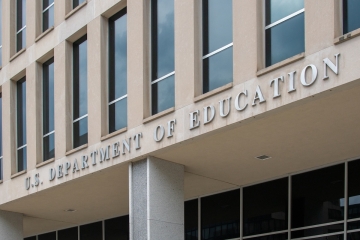
Department of Education building
High Expectations

Fixing IES

Dr. Amber Northern, Fordham’s longtime research chief, has been tapped to redesign the Institute of Education Sciences at the U.S. Department of Education. As she begins this important work, Checker Finn outlines the history of IES, highlighting progress, shortcomings, and the challenges she faces in this new role

Chester E. Finn, Jr. 6.5.2025
NationalFlypaper

Fixing IES

Chester E. Finn, Jr.
6.5.2025
Flypaper

Reimagining federal education R&D: Let’s fix the What Works Clearinghouse

Mark Schneider
6.5.2025
Flypaper

Conservatives, don’t let fighting DEI become a witch hunt

Robert Pondiscio
6.5.2025
Flypaper

The supply side of private school choice programs

Jeff Murray
6.5.2025
Flypaper

Are St. Louis high schools pushing out kids who misbehave?

Ali Schalop
6.5.2025
Flypaper

Cheers and Jeers: June 5, 2025

The Education Gadfly
6.5.2025
Flypaper

What we’re reading this week: June 5, 2025

The Education Gadfly
6.5.2025
Flypaper
view
Hands holding lightbulbs

Reimagining federal education R&D: Let’s fix the What Works Clearinghouse

Mark Schneider 6.5.2025
Flypaper
view
Textbook and money

Conservatives, don’t let fighting DEI become a witch hunt

Robert Pondiscio 6.5.2025
Flypaper
view
tuition and piggy bank

The supply side of private school choice programs

Jeff Murray 6.5.2025
Flypaper
view
Student sitting alone outdoors

Are St. Louis high schools pushing out kids who misbehave?

Ali Schalop 6.5.2025
Flypaper
view
Fordham Gadfly image

Cheers and Jeers: June 5, 2025

The Education Gadfly 6.5.2025
Flypaper
view
Fordham Gadfly image

What we’re reading this week: June 5, 2025

The Education Gadfly 6.5.2025
Flypaper
view
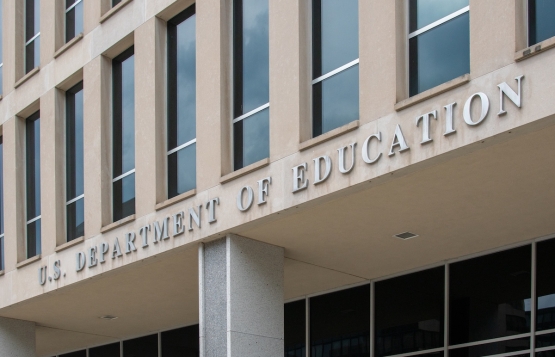
Department of Education building

Fixing IES

Chester E. Finn, Jr.
6.5.2025
Flypaper

My colleague and friend, Amber Northern, Fordham’s longtime research chief, joined the U.S. Department of Education this week as a “senior advisor to the Secretary with a focus on reforming the Institute of Education Sciences (IES).” She’s on leave from Fordham for six months while serving in this capacity—and we already miss her.

Reforming IES—just designing a reformed IES—is an immense challenge but also a great opportunity to renew and revitalize what I contend is the single most important part of the Department and single most fundamental and essential part of the federal role in education.[1]

First, a bit of history. IES’s antecedents go back to the 1860’s when Congress created what was (briefly) called a “Department of Education” and charged it with

collecting such statistics and facts as shall show the condition and progress of education in the several States and Territories, and of diffusing such information respecting the organization and management of schools and school systems and methods of teaching as shall aid the people of the United States in the establishment and maintenance of efficient school systems, and otherwise promote the cause of education throughout the country.

“Statistics and facts”! “Condition and progress”! “Diffusing such information”! “Establishment and maintenance of efficient school systems”! A grand, ambitious mandate that I construe as the charter of the National Center for Education Statistics (NCES), which is—or should be—the beating heart of IES and of the federal role itself, and which Bill Bennett and I did our best to revitalize when we had something to say about it back in the late 1980’s.

But controversy surrounded this work from the very start, often due to concerns about the size, scope, and intrusiveness of the federal government’s involvement in an activity that the Tenth Amendment left to the states. (As is well known, education is nowhere mentioned in the U.S. Constitution, though Jefferson wanted it to be.) Congressional nervousness about the risk of federal control led—within a year—to the new “department” being downgraded to a “bureau of education” and placed within the Interior Department, there to be headed by a “commissioner,” which remained the title of the top federal education official until the modern department was born in the waning years of the Carter Administration.[2]

By the time I joined the Department in 1985, multiple reorganizations had produced the “Office of Educational Research and Improvement” (OERI), in which NCES was one of five units, with the other four responsible for research, “improvement of practice,” dissemination, and the government’s various programs of assistance to public libraries. But innumerable reviews—including a major one by the National Academy of Sciences—found weaknesses in this structure and in due course it was reborn by Congress in 2002 as the Institute of Education Sciences (IES). Despite multiple efforts by both the Senate and House to reauthorize and revise the Education Sciences Reform Act (ESRA), no bill has made it through all the hurdles, meaning that “current law” for IES is now twenty-three years old.

The IES era

Over that period, much progress was made in strengthening the Department’s work in education research and evaluation, less in statistics and assessment. IES’s first director, Russ Whitehurst, almost singlehandedly pushed a level of rigor and objectivity into what had often been (and in non-government realms often still is) shoddy and impressionistic “studies.” IES also ramped up fellowships and such to train more ed-scholars in rigorous methodologies. But the improvements didn’t stop there; many products are timelier and dissemination methods are more modern. If the “What Works Clearinghouse” has been a bit of a disappointment, most of the “Practice Guides” it has produced are terrific. The National Assessment of Educational Progress has also widened its aperture (if not as much as I would like) and improved some procedures, including getting out timely data on reading and math scores at the state and national levels, per a separate mandate enacted as part of No Child Left Behind.

Yet weaknesses also surfaced and persisted, criticisms were leveled from many directions, and calls for reforming and redirecting IES multiplied, including a number of thoughtful critiques and proposals from former director Mark Schneider, who has been candid that the needed changes surpassed what he was able to do in six years.

But that was then, back when the government as we knew it was still trying, much of the time, to follow its long-term practice of periodically revisiting and updating its programs, agencies and activities. Back then, it made sense to reflect and recommend an IES overhaul, presumably joined with the overdue reauthorization of ESRA and perhaps including the much-touted idea of an “education DARPA.”

That now feels like a century ago. The Trump team’s desire to abolish the Department and shrink the federal role in just about everything (except maybe defense) led to DOGE’s assault on ED and particularly on IES, starting soon after Inauguration Day. It was, in fact, among DOGE’s first targets—and their aim was awful.

IES accounts for barely one percent of ED’s discretionary budget, meaning that DOGE’s marksmen missed far larger and juicier prey. For reasons not clear to anyone, they went first for the statistics operation, including much of the infrastructure of NAEP—both people and contracts—as well as sundry R&D grants and contracts, many of which were in the midst of their work or even nearing the end. By the time DOGE finished with IES, nearly 90 percent of the staff was gone and innumerable contracts were abrogated, paused, or perhaps left for recompetition.

The slashers subsequently reached much deeper into the Education Department, reducing the staff to about half of the previous 4100 employees at this smallest of Cabinet agencies when Trump was sworn in.[3] Little of this seemed to square with Secretary Linda McMahon’s commitment during her confirmation hearing to faithfully expend whatever monies were appropriated by Congress.

Even Schneider, a sage and veteran advocate for major changes in IES, was alarmed by the threats these cuts pose to the most basic activities of IES, while also viewing the destruction as opening the way to a far more thorough reconstruction than he had the scope to undertake when he was in charge.

IES reborn?

Developing a design for that reconstruction is now Amber’s assignment. Announcing her new role, the Department bluntly depicted its view of the problem she is supposed to tackle:

IES has failed to provide a clear and compelling research agenda that puts students at the center. Its research contracts often prioritized politically charged topics and entrenched interests over classroom best practices and tools, even while American students experienced historic levels of learning loss following the COVID-19 pandemic.

Nobody thinks she can do this alone—and the ED press statement goes on to say that she’ll tackle this challenge in league with those who remain at IES as well as “external experts and stakeholders.”

Ideas abound, from turning the entire thing over to a sort of state consortium to farming out sundry IES functions to other federal agencies—research to NSF, data to Census, etc.—to various versions of ESRA overhauls that never quite made it through the legislative process. Schneider also continues to suggest specific changes, ranging from overdue upgrades in technology (including AI) to a wholesale overhaul of the Department’s procurement operation, which now makes it nearly impossible to alter the many contracts with outside organizations that actually conduct most of IES’s work. (A particular bugaboo is a quasi-oligopoly of contractors calling themselves the NAEP Alliance that hikes the cost of NAEP, freezes antiquated practices into each successive round of contracts, and fends off potential competition.)

Plenty more challenges loom. Pending a congressional overhaul of ESRA, current law prescribes much of IES’s structure, how top staff are appointed, the existence of a presidentially-chosen policy board (that has seldom met), and many functions and activities. (One hopes that a comprehensive new plan includes a legislative strategy.)

Lobbyists and hungry interest groups also abound, associations and contractors—many of them large and well-connected—that want any plan for IES to ensure that their priorities are retained and their federal funds continue to flow. Good-government groups press to ensure the independence and integrity of the statistics unit. Visionaries—such as the Alliance for Learning Innovation—have far-reaching ideas about breakthroughs in education research. The American Educational Research Association (AERA) watches everything related to IES with hawk eyes, determined to secure the interests of its thousands of members. And on and on.

The opportunity is surely at hand to reconceptualize and revitalize this core function of the federal government in education—but whatever Amber and company develop will face huge difficulty getting from “report on shelf” to actual implementation. How solid is Secretary McMahon’s backing—and that of an administration that wants to get rid of the entire department? What about OMB budget slashers now taking over from DOGE? Is Congress capable of bringing an ESRA reauthorization across the finish line—is it capable of bringing anything across the finish line? And what would that look like after the lobbyists work their will? This isn’t the sort of thing that gets accomplished through single-party “reconciliation” methods. It actually requires a semblance of agreement across the usual dividing lines at a time when that happens less and less—and it’s hard to see education research as a top priority on Capitol Hill in the next couple of years.

In the near term, will Dr. Northern have the staff support and high-level cooperation that she’ll need both within the diminished remains of IES and in the upper reaches of ED? Any worthwhile overhaul of IES will reverberate across the entire department.

Big picture, is it truly possible to have constructive growth, much less rebirth, in an era of destruction? (As I write, OMB has proposed a $12 billion reduction in the ED budget—and an IES budget just one-third of the current appropriation.) And can it happen without the exceedingly rare combination of high-level commitment, external support and legitimacy, and congressional engagement?

I wish Amber well. It’s a mighty tall order, but she's determined. That's good because the stakes are huge, too.


[1] Properly protecting civil rights is an important newer function.

[2] Education—which had its name changed from “Bureau” to “Office” in 1929—lingered in the Interior Department until 1939, when FDR moved it to the new Federal Security Agency, where it remained until Eisenhower created the Department of Health, Education, and Welfare in 1953.

[3] Lawsuits are in the works regarding many of these cuts—as well as the White House quest to “dismantle” the Department itself, so the final outcome is far from clear.

view
Hands holding lightbulbs

Reimagining federal education R&D: Let’s fix the What Works Clearinghouse

Mark Schneider
6.5.2025
Flypaper

Introduced in 2002 as part of the Institute of Education Sciences (IES), the What Works Clearinghouse (WWC) was one of the best ideas in federal education policy—and one of its worst executions in recent memory.

Conceived as a digital library of high-quality research designed to help educators navigate the chaotic landscape of education R&D, the WWC has become a symbol of bureaucratic paralysis disguised as scientific rigor. Along with almost everything else in IES, the WWC is currently on indefinite hold. One can only hope that this will lead to its rebirth in a more useful form.

The WWC’s mission was simple, essential, and urgent: help educators and policymakers separate the evidence-based wheat from the pseudoscientific chaff of so much education research. The WWC was supposed to save schools and teachers time and money and protect students from snake-oil solutions masquerading as innovations.

That’s not what we got.

The WWC does not state whether any program is useful or likely to work. Instead, it summarizes the “strength of the evidence” of the research it reviews. Studies that use randomized control trials and quasi-experimental designs are favored over other types of research. In turn, the decision-making burden about whether something works gets pushed back onto already-overwhelmed educators, rendering the WWC effectively useless.

It gets worse. According to the WWC itself, a literacy intervention can receive a “promising” rating—even if the program’s only statistically significant result was in math. The WWC recommendation? Dig into the data yourself.

All too often, the WWC’s emphasis on the “quality” and the “rigor” of research leads readers astray more than it points them in the right direction. 

Take the case of “three-cueing,” a method of reading instruction that has been proven to be less effective than alternatives at raising childhood literacy rates. In 2023, while many states were abandoning three-cueing in favor of more evidence-based methods, the WWC published a positive report on an intervention that relied on three-cueing. The WWC’s analysis was based on two studies, only one of which met WWC standards without reservations.

The WWC’s conclusion? The three-cueing intervention had positive effects on reading achievement! No context. No caveats. No mention of the national shift away from this approach, or the fact that it had been discredited in large part due to decades of research funded by IES research centers. Given the centrality of reading and literacy to so much of IES’s work, this endorsement by the WWC is worse than useless—it’s dangerous.

Even the WWC’s “Practice Guides”—publications that do offer concrete recommendations to practitioners (and which are among IES’s most practical outputs)—suffer from the same wishy-washy positioning. Some recommendations appear disconnected from any solid evidence base, and most could easily be arrived at via common sense. Educators are left to wonder: Is this good advice or just the least controversial recommendations that a panel could agree on?

The WWC needs a reboot. It must evolve from a passive aggregator into an active arbiter designed for use by stakeholders, not just researchers. This should involve:

  • Communicating clear, evidence-informed recommendations that help teachers and schools find interventions that are most likely to improve outcomes for their students. Accordingly, a new and improved WWC should move away from a false “it works” standard toward ones that reflect conditional probabilities (based on different types of students, different learning environments, etc.), rather than certainties.
  • Translating findings into actionable insights, not academic hedging. This should include launching real outreach efforts, rather than hiding behind journal articles and dense PDFs that are impossible for educators to turn into informed action.
  • Prioritizing usability: Educators don’t need effect size tables; they need useful, understandable summaries and concrete guidance that they can act upon. WWC products should be useful, usable, and used.
  • Helping to shape the research agenda by flagging areas where evidence is weak or missing—and pushing IES’s research centers, the National Center for Education Research and the National Center for Special Education Research, to fund studies that address such gaps.

Above all, the WWC must stop pretending that neutrality is a virtue. Its unwillingness to take a position—even in the face of overwhelming evidence—isn’t scientific restraint. It’s institutional cowardice.

In a field desperate for clarity, the WWC has become a warehouse of irrelevant findings rather than the guide it was intended to be. If we want evidence to drive practice in education, we can’t settle for a clearinghouse that clears up nothing.

Editor’s note: This was first published by the American Enterprise Institute.

view
Textbook and money

Conservatives, don’t let fighting DEI become a witch hunt

Robert Pondiscio
6.5.2025
Flypaper

The conservative education watchdog group Defending Education has done important and often brave work exposing ideological overreach in K–12 schools. I’ve cited their reports and findings many times and consider them friends and compatriots, so I don’t say this lightly: they’ve badly misfired with their new report, Consultants in the Classroom: Making Big Money in K–12 Schools. So badly, in fact, that they should withdraw the report and issue a correction and apology.

The report’s central premise is sound—and important. It attempts to pull back the curtain on hundreds of millions of taxpayer dollars that school districts have spent on professional development and teacher trainings delivered by outside consultants under the banner of diversity, equity, and inclusion (DEI). Defending Ed is right to question the value of such trainings, their ideological bent, and the sheer volume of spending. Parents and taxpayers deserve to know whether these programs are improving student learning or simply enriching a cottage industry of vendors and social justice activists. But the report undermines its own credibility by painting a bullseye squarely—and erroneously—on Amplify Education, Inc., the curriculum and assessment publisher.

Defending Ed filed hundreds of public records requests and found over $123 million spent on “consultants” in 303 “school districts and public entities.” More than half of that total (over $70 million) was spent with Amplify. The report is not comprehensive or intended to be. “There are thousands of school districts throughout the country that have hired hundreds of DEI consultants not listed in this report,” Defending Ed notes. Its findings “should be taken as a small sample of how school districts spend taxpayer dollars.”

That’s all fine and fair, but there’s a problem and it’s a whopper: Amplify is not a DEI consultant at all. It has never conducted a single DEI training nor earned a dollar consulting on diversity, equity, and inclusion.

So why is it on the list?

The rationale is that Amplify, like nearly every education company in the country, once posted a corporate statement in support of diversity and inclusion. This came at the height of the George Floyd protests in 2020. Within days of President Trump’s executive order banning certain kinds of DEI training in federally funded programs, Amplify quietly removed that statement from its website, which merely expressed its hope to “make education, and thereby the world, more equitable and accessible.”

That’s it. There were never any Amplify DEI consultants parachuting into classrooms. No bias trainings. No racial affinity groups. No “anti-racist” pedagogy. Just a now deleted and, frankly, anodyne public statement.

This is not a minor oversight on Defending Ed’s part. It’s a category error with serious consequences. Amplify is not in the business of ideological indoctrination; they’re in the business of publishing curriculum—most notably the Core Knowledge Language Arts (CKLA) program, based on the work of E.D. Hirsch, Jr. 

I’ve written extensively about Hirsch’s work and consider him the most important thinker in American education of the last half-century. His central insight—that shared knowledge is the key to literacy and that a content-rich curriculum is the best mechanism to advance true educational equity—is, ironically, one of the most powerful rebukes to performative DEI initiatives that prioritize identity talk over academic competence.

To conflate Amplify’s work with DEI snake oil is to get the entire story backward. In state after state—especially red states like Mississippi, Louisiana, and Arkansas—CKLA has been adopted as part of science of reading reforms that have produced measurable gains in student outcomes, particularly for low-income and minority children. Moreover, the vast majority of school districts cited by Defending Ed aren’t spending lavishly on “equity consultants” at all. They purchased high-quality curriculum with a strong research base and track record of success.

That’s not just defensible—it’s admirable. And it’s working.

One of the ironies here is that Amplify, through its stewardship of Hirsch’s Core Knowledge curriculum, might be the most authentically “equity-driven” force in American education today. Not the equity of lower standards, lost opportunities, and anti-intellectual slogans, but of hard-won literacy and academic competence. Of giving disadvantaged children access to the background knowledge and vocabulary that affluent children seem to acquire by osmosis.

This is precisely the kind of equity that conservatives should embrace. And, in fact, many have. Republican-led states have led the charge in pushing for high-quality instructional materials, requiring evidence-based literacy training for teachers, and setting a higher bar for early reading proficiency. Amplify has become a trusted partner in that work—not because of any ideological leanings, but because its curriculum works and because it was championing the science of reading and knowledge-based curriculum long before these ideas became mainstream.

To include them in a report purporting to expose wasteful spending on ideological training is sloppy at best, and defamatory at worst. At a moment when the political fight over DEI has grown overheated and indiscriminate, such errors only serve to discredit the very real and urgent work of exposing activist overreach in public schools.

Defending Ed’s overreach illustrates the danger of letting ideology override evidence. It’s one thing to critique the growing influence of DEI consultants in schools. It’s quite another to lump together everyone with a passing mention of “equity” in their marketing materials and declare them part of the problem.

Without question, the fight for excellence and transparency in public education needs watchdogs like Defending Education. But it also needs rigor, fairness, and the willingness to admit when a mistake has been made. This report fails that test and should be withdrawn. The error should be acknowledged. And Amplify should be removed from any list of DEI consultants.

The fight against bad ideas in education is too important to be waged carelessly. Conservatives’ credibility depends on getting it right.


Erika Sanzi, Defending Education’s Director of Outreach, responds: “My team and I stand by this report. We reported on Amplify's public statements about DEI and their promises to integrate it into their services and products. We also reported that they have largely removed these statements from their website. Because they've done remarkable work in literacy in Louisiana and other southern states, it seems like the perfect moment for them to separate themselves by renouncing the public commitments they made to DEI on social media, in their materials and on their website. If they make such a statement, we will gladly add it to the report."


Author’s note: I worked for the Core Knowledge Foundation from 2007-12 when CKLA was in development and helped negotiate the contract with Amplify, then known as Wireless Generation, to publish and distribute it. I have no current role or financial interest in either.

view
tuition and piggy bank

The supply side of private school choice programs

Jeff Murray
6.5.2025
Flypaper

The nationwide push to create or expand private school access over the last few years—through vouchers, tax credits, or education savings accounts (ESAs)—has ignited parental curiosity in such choices. But has the supply side of the equation kept pace with that heightened demand (and opportunity)? A new report from EdChoice—formerly the Milton and Rose D. Friedman Foundation—digs into the data.

Hard numbers on private school supply have been lacking until recently. Kudos to EdChoice researcher Susan Pendergrass for her efforts to make sense of what’s out there. Data from the National Center for Education Statistics (NCES) Private School Survey (PSS) indicate there were about 30,000 private schools in the U.S. in 2020-21, with approximately 4.4 million students attending. Overall, it seems these numbers represent a decline in total schools between 2010 and 2020 (and, by inference, student enrollment), with some states likely bucking that trend. However, further certainty is not possible as PSS data are merely voluntary survey responses from a representative sample of schools. Tuition rates for 2020-21 are reported in ranges—from less than $3,500 to more than $15,000 per year. Approximately four-fifths of private schools charged less than $15,000 in tuition annually. The overall average was about $13,000.

From there, the data become more reliable, largely as a result of burgeoning publicly-funded private-school choice programs. While not every private school chooses to participate in its state’s voucher or ESA programs, publicly-available lists of those that do are kept and updated with fidelity by state education agencies or the third-party organizations that manage disbursement of funds. Fordham’s home state of Ohio has been an exemplar for many years, but this report mainly features Arizona, whose ESA program became universally-available in the fall of 2022. Detailed information is fully available on the numbers and types of schools participating (with lots of subcategories) as well as the number of students opting for each type, dedicating their ESA funds toward tuition payments. The number of participating schools in Arizona grew from 510 in 2022 to 661 in 2023; the number of students participating grew by nearly 10,000; and the tuition support provided to families grew from $195 million to more than $268 million. Even if every other non-participating private school in the state closed shop in that year (they didn’t), the net was still a big, concrete gain—no ambiguity, statistical sampling, or data modeling required. Ditto for non-school providers—tutors, therapists, curriculum publishers—all reimbursable expenses for Arizona ESA families and all on the rise from 2022 to 2023.

EdChoice’s report does not address the question of whether voucher and ESA support are leading to increases in tuition or other private education resources, although it references other recent research that does raise concerns in that regard. If the influx of public money into private-school programs leads to tuition increases over and above the value of the voucher, the intent of such programs to widen access for families would be undermined and support for private school choice could suffer. It’s a matter of basic economics and needs watching carefully.

The available data indicate that expanded private school support programs have led to an increased supply of private education options, at least in Arizona. Other states examined in this report are less clearcut, with eligibility levels determining how big programs grow and how fast. It is not a surprise, then, that EdChoice concludes from this snapshot that private school choice programs must include the widest-possible eligibility (universal would be best), minimal regulatory friction for provider entry, and a choice of administrative vendors to increase the supply side of the equation. One would expect nothing less of the disciples of Milton Friedman. Private school choice is on the rise, hastened by COVID-era chaos and learning loss. Programs need to ensure the supply side of the equation is favorable if they are to meet the demand for classroom seats and service providers. Solid data is the keystone to making sure that happens.  

SOURCE: Susan Pendergrass, “The Supply Side of ESAs: How Universal School Choice Programs Have Affected the Number of Private Schools and Home Education Vendors,” EdChoice (May 2025).

view
Student sitting alone outdoors

Are St. Louis high schools pushing out kids who misbehave?

Ali Schalop
6.5.2025
Flypaper

In a new study, researchers from Washington University in St. Louis use nine years of student-level data from public high schools in St. Louis and the surrounding suburbs to estimate the effects of in-school suspension (ISS) and out-of-school suspension (OSS) on a student’s probability of transferring to another school.

To assess this relationship, the researchers used public school data from the 2010-11 through 2018-19 school years from public schools within five counties that encompass the city of St. Louis and several surrounding suburbs. By combining student punishment data with transfer rates, the researchers built a regression formula to predict whether a high school student who was punished in one school year was likely to transfer to another school in the following year.

Overall, they find that suspensions increase the likelihood of a transfer: An in-school suspension increases a student’s probability of transferring by 64 percent, while an out-of-school suspension increases it by 77 percent. They also find disparities by race, class, ability status, and geography. Specifically, Black students, students who qualify for free lunch, and students with IEPs are more likely than their counterparts to transfer after being suspended—even after controlling for other characteristics such as gender, eighth-grade math and English proficiency levels, and English language learner status.

To the researchers, this is evidence of “pushout.” Yet, as they acknowledge, some unobserved factors may be at work. For example, the study doesn’t control for residential mobility, a circumstance that undoubtedly shapes school transfers and almost certainly correlates with student behavior. Moreover, even if the researchers could control for changes in residence, without the ability to compare similarly behaved students—that is, students who exhibit similar behavior but receive different consequences—they might overestimate the effects of suspension. After all, students may act out because they’re unhappy within the school’s environment and therefore might be more likely to change schools, all else equal. Without the ability to compare residentially mobile students who exhibit similar misbehaviors, we simply can’t draw any conclusions about “pushout.”

Disciplinary lines are blurry, and the data don’t differentiate between minor and major infractions—like a dress code violation versus a fight. Without knowing the nature of the misbehavior, it’s impossible to gauge whether a suspension was warranted or whether it crossed into overreach. Is an in-school suspension a fair response to chronic disruption? Is it better than sending a student home? Possibly. After all, in-school suspensions keep kids in a safe, supervised environment. But if the goal is to maintain order without losing kids in the process, then we need to be clearer about what we’re punishing—and why. The more you interrogate these practices, the more you’re left asking: Where, exactly, is the line between maintaining high standards for student behavior and pushing students out?

Pushout undoubtedly occurs in American high schools. Yet the question remains, how much of it is really caused by exclusionary discipline? Until we disentangle discipline from displacement, and pushout from choice or relocation, we risk misidentifying both the problem and its solutions—and losing students in the process.

SOURCE: Wallace, Margaret K., Jason Jabbari, Yung Chun, Takeshi Terada, and Somalis Chy. “Are School Discipline Practices Pushing Students Out…to Another School? A Longitudinal Analysis of School Transfers in Five Midwest Counties.” Annenberg Institute at Brown University (March 2025).

view
Fordham Gadfly image

Cheers and Jeers: June 5, 2025

The Education Gadfly
6.5.2025
Flypaper

Cheers

  • The Texas legislature runs out of time on its misguided attempt to eliminate the STAAR test. —El Paso Times
  • Meanwhile, the legislature approved changes to Texas disciplinary requirements in an effort to stem significant classroom disruptions and threats to safety. —The Texas Tribune
  • And the Texas Education Agency gave Mike Miles an extra two years to reform Houston’s schools. —The Texas Tribune
  • San Francisco walks back on a planned “grading for equity” approach amid widespread criticism from both parents and local officials. —CBS News Bay Area

Jeers

  • Boys struggle in kindergarten as increased academic expectations clash with their developmental needs. On nearly every measure of school readiness, gender gaps grow even as other readiness gaps like family income and race shrink. —The New York Times
  • The U.S. Department of Education missed a longstanding, congressionally mandated June 1 deadline for its annual statistical report on the condition and progress of education. —The Hechinger Report
view
Fordham Gadfly image

What we’re reading this week: June 5, 2025

The Education Gadfly
6.5.2025
Flypaper
  • Missouri adds “grade level” reporting to state test results, addressing parent and stakeholder confusion about proficiency scores. —Missouri Independent
  • Economist Noah Smith argues that service costs like health care and education are no longer rising uncontrollably, with recent trends showing slower growth and improved affordability. —Noahpinion
  • Is the AI apocalypse already here when it comes to entry-level white-collar jobs? —The New York Times
  • One hundred years ago, Pierce v. Society of Sisters upheld parents’ right to private schooling, paving the way for modern school choice. —Education Next
Fordham Logo

© 2026 The Thomas B. Fordham Institute
Privacy Policy
Usage Agreement

National

P.O. Box 110
Burke, VA 22009

202.223.5452

[email protected]

Ohio

P.O. Box 82291
Columbus, OH 43202

614.223.1580

[email protected]

Sponsorship

130 West Second Street, Suite 410
Dayton, Ohio 45402

937.227.3368

[email protected]