Mobile Navigation

  • National
    • Policy
      • High Expectations
      • Quality Choices
      • Personalized Pathways
    • Research
    • Commentary
      • Gadfly Newsletter
      • Flypaper Blog
    • Events
    • Scholars Program
  • Ohio
    • Policy
      • Priorities
      • Media & Testimony
    • Research
    • Commentary
      • Ohio Education Gadfly Biweekly
      • Ohio Gadfly Daily
  • Charter Authorizing
    • Application
    • Sponsored Schools
    • Resources
  • About
    • Mission
    • Board
    • Staff
    • Career
Home
Home
Advancing Educational Excellence

Main Navigation

  • National
  • Ohio
  • Charter Authorizing
  • About

National Menu

  • Topics
    • Accountability & Testing
    • Advanced Education
    • Career & Technical Education
    • Charter Schools
    • Curriculum & Instruction
    • ESSA
    • Evidence-Based Learning
    • Facilities
    • Governance
    • Personalized Learning
    • Private School Choice
    • School Finance
    • Standards
    • Teachers & School Leaders
    • Think Again
  • Research
  • Commentary
    • Gadfly Newsletter
    • Flypaper Blog
    • Gadfly Podcast
  • Events
  • Scholars Program

The Education Gadfly Weekly

Sign Up to Receive Fordham Updates

We'll send you quality research, commentary, analysis, and news on the education issues you care about.
Thank you for signing up!
Please check your email to confirm the subscription.

The Education Gadfly Weekly: Fair funding finally flows to charters—but the window won’t stay open forever

Volume 23, Number 31
8.3.2023
8.3.2023

The Education Gadfly Weekly: Fair funding finally flows to charters—but the window won’t stay open forever

Volume 23, Number 31
view
Quality Choices

Fair funding finally flows to charters—but the window won’t stay open forever

A remarkable increase in charter school funding across a number of states—and not just red—is finally addressing some of the deepest spending inequities in American education. But with Covid money drying up, declining student enrollment, and an aging population, tougher times lie ahead.

Michael J. Petrilli 8.3.2023
NationalFlypaper

Fair funding finally flows to charters—but the window won’t stay open forever

Michael J. Petrilli
8.3.2023
Flypaper

Virginia leads the way on conservative education reform

Daniel Buck
8.3.2023
Flypaper

Mississippi didn’t cheat. Its reading gains are real.

Todd Collins
8.3.2023
Flypaper

Impacts of school restarts and closures on students

Amber M. Northern, Ph.D.
8.3.2023
Flypaper

Assessing the operations and impacts of Teach For America in Indianapolis

Jeff Murray
8.3.2023
Flypaper

Cheers and Jeers: August 3, 2023

The Education Gadfly
8.3.2023
Flypaper

What we're reading this week: August 3, 2023

The Education Gadfly
8.3.2023
Flypaper
view

Virginia leads the way on conservative education reform

Daniel Buck 8.3.2023
Flypaper
view

Mississippi didn’t cheat. Its reading gains are real.

Todd Collins 8.3.2023
Flypaper
view

Impacts of school restarts and closures on students

Amber M. Northern, Ph.D. 8.3.2023
Flypaper
view

Assessing the operations and impacts of Teach For America in Indianapolis

Jeff Murray 8.3.2023
Flypaper

view

Cheers and Jeers: August 3, 2023

The Education Gadfly 8.3.2023
Flypaper
view

What we're reading this week: August 3, 2023

The Education Gadfly 8.3.2023
Flypaper
view

Fair funding finally flows to charters—but the window won’t stay open forever

Michael J. Petrilli
8.3.2023
Flypaper

Red-state breakthroughs in the battle for universal Education Savings Accounts have garnered much media attention, but a different string of recent school choice victories is likely to have an even bigger and better impact on disadvantaged children. To wit, a remarkable increase in charter school funding across a number of states—and not just red—which is finally addressing some of the deepest spending inequities in American education.

Ever since the emergence of public charter schools thirty years ago, these independent but tax-supported schools of choice have been underfunded compared to their district-operated peers. That’s because, in most states, districts don’t share locally raised tax dollars with charters, and most state policymakers decline to make up the difference. Back in 2005, when the Fordham Institute published the first national look at charter funding inequities, we found that charters received, on average, 78 cents on the per-pupil dollar compared with traditional public schools. In 2020, Patrick Wolf and his team at the University of Arkansas published the most recent analysis of charter funding, this time focused on metro areas—and the situation was even worse, with charters receiving only 67 cents on the dollar.

Such huge funding discrepancies are a real drag on charter performance. We know this from our own experience in Ohio. Consider the United Schools Network, a cluster of high-poverty schools in Columbus that our sister organization, the Fordham Foundation, authorizes. Launched by Andy Boy, a Building Excellent Schools fellow, the network has been able to offer its new teachers starting salaries of just $38,000, compared with $51,000 for Columbus City Schools. That’s what happens when Ohio charters get about 72 percent of what surrounding districts get. Needless to say, Boy has lost many great teachers to the district and others due to this big pay gap, even though he offers excellent working conditions and a sense of agency and efficacy.

Though I can’t prove a causal relationship, I don’t think it’s a coincidence that many of the states that show particularly strong charter achievement receive higher dollar amounts in per-pupil funding. That’s what’s happening in Massachusetts, New York, and New Jersey, to name three. (It also helps that these states don’t have virtual charter schools.) The evidence continues to mount that money matters in the traditional public school sector; it might matter even more in the charter sector, where real accountability for results encourages leaders to spend that money wisely—on people and strategies that build achievement, rather than across the board.

So it’s a big deal that several states are finally making real progress in closing the charter funding gap. A year ago, Missouri Gov. Mike Parson signed a bill that uses state funds to bring charter spending to parity with local districts, representing a boost of $1,700 per pupil in Kansas City and $2,500 in St. Louis—an overnight increase of 12 percent to 15 percent. Next door, in deep blue Illinois, advocates won $35 million for charter facilities. Other states, including New Mexico, Massachusetts, Florida, Tennessee, and Colorado, also enacted budgets with major investments in charter facilities.

The progress continued in recent weeks. A groundbreaking win in Indiana means that districts will now have to share local property tax and operating referendum dollars with charter schools, and creates policies to offset the cost of charter facilities through state bonds and other financing mechanisms. As Todd Ziebarth of the National Alliance for Public Charter Schools reports, plenty of other states made progress on funding, too, including Idaho, West Virginia, and Arkansas.

And then, at the end of June, Ohio lawmakers passed a sweeping reform bill that will boost funding for high-quality charter schools by a whopping $4,000 per child—a 40 percent increase—and for other brick-and-mortar charters by $2,300 per pupil, or 21 percent.

As a result, Boy is now offering starting teachers $49,000 a year—a game-changer for his schools and students.

Why is this happening now? I contend that this is a classic case of the Overton Window opening and policymakers and advocates being ready to go right through it. In other words, recent developments have created a window of opportunity for boosting charter funding, turning what was once politically difficult into the eminently do-able. Most critically, flush with tax revenue and pandemic-era stimulus dollars, states are in a mood to spend. The reason this is happening now is that state coffers are flush with tax revenue and pandemic-era stimulus dollars. There’s so much money to go around that legislators can boost funding for charters and for traditional public schools. (Ohio districts received an average dollar boost of 12 percent per pupil.)

But the window won’t remain open forever. With Covid dollars drying up, declining student enrollment, and an aging population, tougher times lie ahead. So advocates that want to close charter funding gaps where they still exist—that’s most of the country—need to act fast.

Which will mean, at times, not letting the perfect be the enemy of the good. Again, take Ohio. Funding high-quality charters—those that get strong marks on the state’s school report card—isn’t necessarily ideal policy. It could create a Matthew Effect, whereby the rich schools get richer and the poor schools get poorer, especially as those that are not yet high-quality struggle to compete for scarce teacher talent. But after decades of charter scandals in the Buckeye State, political leaders understandably wanted to focus most of their support on effective schools. It’s still a huge step in the right direction.

Given that charter schools disproportionately serve children of color and those from disadvantaged communities, equity advocates of all stripes should cheer the progress in closing longstanding funding gaps. It’s great for kids and great for the country. But we need to keep the momentum going because the window of opportunity will soon be slammed shut.

Editor’s note: A version of this article was first published by The 74.

view

Virginia leads the way on conservative education reform

Daniel Buck
8.3.2023
Flypaper

Not since former Governor Scott Walker bludgeoned the unions in my home state of Wisconsin has there been such national outrage over state-level education policies. Historically, state-scale education has been a secondary affair, rarely topping the list of people’s substantive or political priorities, and most decisions have been left to local decision-making. There, too, school board meetings had as much political intrigue as a local knitting group. Not so in recent years.

California recently adopted a contentious new mathematics framework that emphasizes a glorified choose-your-own-adventure approach to instruction. It has earned bipartisan opprobrium, including parental petitions and open letters with hundreds of scholarly signatories.

Far more controversially, Florida governor (and presidential contender) Ron DeSantis almost weekly kicks an education hornet’s nest—most recently with a revision of his state’s history curriculum that includes a line about the “personal benefit” some slaves drew from the “peculiar institution.” And while I’m sympathetic to previous DeSantis policies that banned the instruction of divisive concepts, they’re misdirected, too. Bans will accomplish little unless a robust curriculum takes its place.

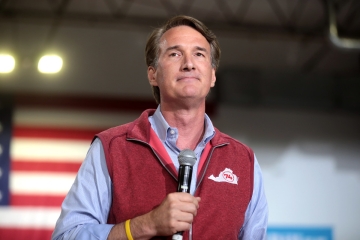
Consider, instead, Virginia Governor Glenn Youngkin, who has achieved some productive, bipartisan education wins that could provide guidance for other conservative governors, as well as real victories for American students.

Most notably, his state board of education voted in spring to approve new K–12 history standards. While the rest of the country is clutched in a mutual chokehold argument over how to frame American history, Youngkin’s administration updated the standards of the Old Dominion in a way that balances competing pressures. Advancing neither a blinkered idealism about the nation’s past, nor unrelenting criticism of it, the standards open with a commitment that “students will know our nation’s exceptional strengths, including individual innovation, moral character, ingenuity and adventure, while learning from terrible periods and actions in direct conflict with these ideals.”

After that, the new standards detail both the specific content and skills that students ought to know, clearly listing historical figures, from Frederick Douglass to Teddy Roosevelt, and specific events, such as the war of 1812 and the Louisiana purchase. Over sixty-one pages, it details clear goals for every student—everything from identifying the key components of the Declaration of Independence to the most important events and leaders of the Cold War, including the Bay of Pigs, President John F. Kennedy, Nikita Khrushchev, and much more. Any student graduating from Virginia's system with this knowledge would leave with a robust understanding of American history.

A comparison to flawed standards helps to explicate the strengths of this one. In place of concrete knowledge, Wisconsin lists wishy-washy skills and aptitudes. In place of events and figures, it names meaningless goals in inscrutable language: “[S]tudents will analyze, recognize, and evaluate patterns of continuity and change over time and contextualization of historical events.” That provides as much guidance to a teacher as map-less driving directions spoken in gibberish. Where it tries to identify concrete knowledge, it spends one page suggesting ambiguous concepts like “the modern era” or “the meeting of peoples and cultures” without any specifics or timing.

Such a “skills-based” approach to curriculum has obvious appeal. “Analyze primary source documents” is inoffensive if unhelpful. Conversely, concrete knowledge leads to controversy. There’s limited time in any school year. The inclusion of one historical event or figure necessitates the exclusion of another. Skills-based curricula are politically expedient, yet they leave students without the robust historical knowledge required to think critically. How could a student analyze a primary source document from World War II if they don’t know the countries at war, key leaders, weaponry involved, Pearl Harbor, or the horrors of the Holocaust? Simply put, you can’t think critically if you’ve got nothing to think about.

Alas, an argument over a knowledge-rich curriculum is one that we have to have. As renowned education researcher Mike Schmoker details at length in his excellent book Results Now 2.0, curricular reform is one of the most consequential, efficacious, and cost-effective school policies. He argues that curriculum is “the single largest factor that promotes equity and higher achievement.” Youngkin shows that bipartisan consensus can in fact construct a coherent, well-sequenced, knowledge-rich curriculum, even in the most fraught of subjects.

As for discussions of race—particularly salient as many activists accuse conservative governors of white-washing history—Wisconsin avoids controversy through yet more equivocations, exhorting students to “examine the effects of discrimination on identity” or “assess the impact of individuals, groups, and movements on the development of civil rights for different groups.” What would fit that description? Identify-your-privilege bingo?

The Virginia curriculum is clear and explicit on the race-related topics that students should learn. These include the Tulsa Massacre, Sojourner Truth, and plenty more concrete examples from history that will teach students far more about a critical consideration of race in America than a few kitschy activities. Even Florida’s much-maligned standards include 191 specific factoids and events in this realm for instruction, including the Middle Passage, the brutal conditions of plantation life, and countless abolitionists. Wisconsin avoids the controversy, but Florida actually has better standards.

In 2021, the Fordham Institute graded every state on its history and civics standards. Even before its revisions and improvements, Virginia earned a B+ in both subjects, with thirty-five states scoring lower. With its revisions, the state could receive yet higher marks. Understood so, the large majority of governors in America, both Democratic and Republican, could achieve a real bipartisan win that would benefit student learning and save teachers the difficulty of crafting curricula from scratch. It seems like there are few bright spots in American education at the moment. Three cheers to Youngkin’s administration for being one.

view

Mississippi didn’t cheat. Its reading gains are real.

Todd Collins
8.3.2023
Flypaper

Is Mississippi a cheater? Los Angeles Times business columnist Michael Hiltzik seems sure of it. Last month, the Pulitzer Prize–winning opinion writer published a column saying that Mississippi’s widely acclaimed reading improvement was just a mirage. Essentially, he accuses the state of cheating.  

Then, in a Tweet, he insulted former State Superintendent Carey Wright as a “shill for Mississippi’s fakery”:

This shill for Mississippi's fakery on reading scores unwittingly reveals the truth: Asserts first that state's racist social and health policies are "irrelevant" to educational achievement, but admits that social and health policies are a "challenge" for educators. Which is it?

— Michael Hiltzik (@hiltzikm) July 11, 2023

Such strong words should have solid backup. But Hiltzik hasn’t got it. His claims about Mississippi’s NAEP scores and retention policy are based on a debunked theory and are demonstrably wrong in ways that he should have known. In fact, he could have read about it in a Fordham piece I wrote in 2019! (More on that below.)

Hiltzik’s assertion, based on analysis by media bloggers Kevin Drum and, in more detail, Bob Somersby, is that Mississippi hasn’t actually improved reading instruction. Instead, it “gamed” its NAEP scores by holding back its lowest performing students. When the state brings these students back a year later, he argues, a year older and with a year more instruction under their belts, they do better and raise the state’s overall score, even without a single change to reading instruction.

The apparent gain, therefore, is just a “statistical illusion,” goes the argument, based on changing the mix of students, not actual improvement.

If true, this would be an important insight. I once thought so: In 2019, I published a piece based on the exact same premise and reached a similar, though less hyperbolic, conclusion.

But I was wrong, as I found when I dug in further. The assumption that I’d made, along with Hiltzik and the bloggers, was that Mississippi had just started retaining students. But the data show that it’s done so for at least twenty years, and at the same rates as under the current literacy law.

Retention by itself did nothing for them, mechanically or otherwise. Before 2013, Mississippi ranked forty-eighth for fourth grade reading, despite having one of the country’s highest retention rates. And after the reading retention law went into effect, the year-to-year rate changes had no discernible effect on NAEP results.

Moreover, the pandemic provided a clear natural experiment: What happens when retention stops? In 2021, Mississippi suspended its third grade retention requirement. When those students took the fourth grade NAEP in 2022, the “statistical illusion” should have worked in reverse, sending Mississippi scores tumbling, relative to other states.

Instead, although scores did fall, as they did in forty-four other states, Mississippi’s drop was less than the national average. And for low-income students—78 percent of Mississippi’s total enrollment, the highest in the country—the state’s rank improved from third to second in the country. In other words, relative to other states, the results held up with no reading retention at all.

I was happy to eat crow. I added a retraction to my 2019 piece explaining how I was wrong, and then wrote a new one with a better theory in these very pages: “Student retention and third-grade reading: It’s about the adults.”

But Hiltzik’s LA Times column did not mention any of this. Nor did the posts from the supporting blogs, one of which even quoted my original piece at length, ignoring my retraction. (Kevin Drum, to his credit, publicly reversed himself after reviewing the data.)

I, with others, have written to Hiltzik, sharing the data he didn’t seem to have and explaining the arguments he apparently hadn’t heard. He has not backed down. Indeed, he claims that California, where both he and I live, has nothing to learn from Mississippi. With California’s Black fourth graders a full year behind their peers in Mississippi, I can’t agree.

Hiltzik clearly has it in for what he calls “benighted” Mississippi. His column on reading takes a long detour to rail against the state’s health care policies. He ties it to reading with an almost glib non sequitur: Given the Magnolia State’s weak health care outcomes, “should we trust [its] statistics on reading scores?” He’s made up his mind in advance that the state can’t succeed.

Scrutinizing Mississippi’s NAEP results is a good thing, to be sure. Its experiment has huge significance. Today, it’s widely viewed as the leading national model for early reading policy, despite being a place that traditionally has struggled in student achievement. Skepticism is necessary—and so far, Mississippi has stood up to the test.

But Hiltzik’s skepticism isn’t constructive. It is uninformed smearing based on thin and debunked evidence. It is irresponsible and serves no one. We need to stand up with Mississippi against this kind of bullying and prejudiced rejection of what the data tell us. Mississippi can succeed, and kids everywhere deserve to benefit from what they are doing.


view

Impacts of school restarts and closures on students

Amber M. Northern, Ph.D.
8.3.2023
Flypaper

School closure is among the most heavy-handed interventions for turning around chronically underperforming schools. Although evidence suggests that the outcomes are positive for students, the disruption to communities and potential loss of local control can cast a shadow over the benefits. A recent study published in the Economics of Education Review by a trio of analysts from Tulane and Butler Universities revisits the effects of closing and/or restarting low-performing district schools as charter schools. They do this in two Louisiana cities, New Orleans and Baton Rouge.

The Pelican State makes a fine laboratory for testing the impacts of restarts and closures. After Hurricane Katrina devastated New Orleans in 2005, the state took over control of almost all its schools—eliminating union contracts, letting go of all teachers (for potential rehire), and rebuilding the entire education sector from the ruins. Most schools in the city became charters, and remain so today (although now they are run by New Orleans’ elected school board), with no defined attendance zones and parents responsible for choosing schools.

The analysts focus on any school that was restarted as a charter school or closed, regardless of the operator or authorizer. That means that the intervention under study could be a permanent closure, a district-to-charter restart, or a charter-to-charter restart. Although the study doesn’t define what exactly changes in schools that are restarted, it likely includes temporary closure, full re-staffing, and enrollment of new students or re-enrollment of existing students under new management and leadership.  

Analysts focus on the period 2009–2012 for elementary schools and 2009–2014 for high schools (when they were still directly accountable to the state). In New Orleans, that timeframe coincided with the identification of eleven elementary schools (seven of which were district-to-charter restarts and four were charter-to-charter) and four high schools (all district-to-charter restarts). Additionally, three elementary schools and six high schools that closed without restarting were included in the analysis for comparison purposes. Baton Rouge had just five high school restarts and closures during the periods under study (two charter-to-charter restarts and three outright closures).

Analysts use a matched difference-in-differences design (starting with 2006 data to provide baseline outcomes, match students, and test parallel trends) and a pooled regression model that increases the number of data points and utilizes a wide range of covariates. In another analysis, they also match treated students to individual students within the comparison schools, calculating effects for students who attended the treated schools at the time of the restart. They examine math and ELA test scores, graduation rates, and college attendance at two- and four-year institutions—although all outcomes aren’t examined in both cities (for instance, they only have ELA/English scores for high schools, since post-treatment math scores were unavailable due to changing the math test in Louisiana).  

For students in New Orleans, the effects of closures and restarts are generally positive or null. Two years following restart, test score trends in elementary school English language arts and math for treatment students are higher than for non-treatment students (specifically, math scores are 0.21 to 0.39 standard deviations higher). There were no effects on high school students’ test scores, which were derived from tenth grade ELA tests for students who started at a treatment school in ninth grade. There were also no clear effects on high school graduation or college entry in New Orleans.

It was a different story in Baton Rouge high schools (no elementary schools were included), where restarts and closures reduced both ELA test scores (by 0.07 to 0.21 standard deviations) and high school graduation rates (by 11–15 percentage points).

The analysts seek to determine possible reasons for their results and find that the variation in test score effects is positively related to increases in school-level value added. That is, changes in elementary school quality appear to be driving the results, such that the restarted schools in New Orleans were better at boosting student achievement than the closed schools that they replaced. That’s clearly what we like to see happen.

Why the different findings in New Orleans versus Baton Rouge? The authors believe the answer lies in the former’s unique post-Katrina governance structure, in which decisions were free from union constraints, giving leaders more flexibility to make changes. Baton Rouge, meanwhile, was hampered by its more traditional governance and stronger union influence. I’m not one for oversimplifying, but it’s hard to argue with that hypothesis.

SOURCE: Whitney Bross, Douglas N. Harris, and Lihan Liu, “The effects of performance-based school closure and restart on student performance,” Economics of Education Review (June 2023).

view

Assessing the operations and impacts of Teach For America in Indianapolis

Jeff Murray
8.3.2023
Flypaper

The Indianapolis branch of Teach For America (TFA Indy) was established in 2008, expanding the national organization’s mission—to build and deploy a corps of high-quality education leaders to support high-needs students—into the Hoosier State. Since that time, hundreds of TFA teachers have served students in district and charter schools in the area, assisted by local philanthropic entities, like the Richard M. Fairbanks Foundation. In 2021, the foundation commissioned RAND to assess the operations and impacts of the program and the resulting report was recently released.

The RAND team looked at academic outcome and teacher employment data from the Indiana Department of Education and specific information on TFA members’ employment trajectory during and after their participation, using data provided by TFA Indy. The analysis covers 2008 through 2022. While some TFA Indy members were placed in schools outside of Marion County, the report deals only with traditional district and charter schools located therein, an area of greatest interest to the Fairbanks Foundation. This sprawling county includes both the city of Indianapolis, whose public school student population is characterized by higher levels of household poverty and lower academic achievement than is typical statewide, and several smaller suburban and exurban districts. There are dozens of charter schools in the county, the vast majority of which are within the borders of Indianapolis Public Schools. TFA Indy teachers were more likely than other teachers to work in charter schools, in more-disadvantaged school contexts, and in schools serving more-diverse student populations.

Among the teachers themselves, TFA and non-TFA instructors during this period were similar on racial, ethnic, and gender dimensions (though non-TFA teachers were slightly more likely to be white). TFA Indy teachers were split almost evenly among elementary, middle, and high schools in the initial two-year cohort under study, but were far more prevalent in elementary schools by the final cohort.

The impact findings largely mirror previous TFA research across the country: TFA Indy teachers were, on average, more effective at increasing student achievement than their non-TFA peers. One year of instruction by a TFA Indy teacher was associated with 1- to 2-percentile increase in student performance in English language arts (ELA) and math, respectively (e.g., moving from the 50th percentile to the 52nd percentile).

The researchers also note that TFA Indy teachers who worked in schools with five or more TFA peers were even more effective at increasing student achievement, both overall and relative to non-TFA peers within the same school. Instruction by these TFA Indy teachers was associated with roughly 2- and 5-percentile gains in student achievement in ELA and math, respectively. More on this below.

While TFA Indy teachers left teaching earlier in their careers than non-TFA teachers, often as soon as their initial two-year commitment ended, more non-white TFA Indy teachers remained in the field (and in the county) than their non-TFA peers. Overall, TFA Indy teachers were promoted to school and district leadership roles at similar rates as non-TFA teachers, but non-white TFA Indy teachers were less likely to be promoted than non-white non-TFA peers. Among alumni who left teaching, non-white TFA Indy alumni were more likely to continue working in education-related careers than were white TFA Indy alumni.

The researchers note a couple of limitations, including the likelihood of unobserved variables around teachers entering and leaving the field, the geographic limitations imposed, and a simplified value-added model that imprecisely attributes student achievement to individual teachers. However, they note that “most of our findings tell a consistent story, and, in many cases, the effects we observe are highly statistically significant.” Thus, they conclude with reasonable confidence that hiring a TFA teacher in comparison to a non-TFA teacher results in a net-positive effect on student achievement. This includes negative effects from higher TFA Indy teacher turnover rates, which are far exceeded by the positive effects accrued by TFA teachers’ differential impacts on student achievement.

As to the finding that having more TFA teachers in individual schools led to even greater gains for students, TFA Indy staffers had some interesting thoughts. Among other hypotheses, they suggested that TFA teachers at these schools may be encountering school leaders and coaches who share similar mindsets and instructional strategies aligned with TFA training, or that TFA Indy teachers in these schools were part of larger incoming cohorts of novice teachers, and the camaraderie and collaboration generated more concerted effort. Very collegial of them not to suggest the simpler, more obvious possibility: TFA-trained teachers are better at serving students than are traditionally-trained teachers, and the more of them you have, the better the outcomes will be for kids.

SOURCE: Benjamin K. Master et al., “Teaching and Leading: An Evaluation of the Impacts and Professional Trajectories of Teach For America Participants in Indianapolis,” RAND Education and Labor (July 2023).

view

Cheers and Jeers: August 3, 2023

The Education Gadfly
8.3.2023
Flypaper

Cheers

  • The College Board held its first annual AP conference since the pandemic and shared strategies for how to make Advanced Placement courses accessible to all. —Ed Week

Jeers

  • Teachers in Montgomery County Public Schools  say that lenient grading policies are leading to higher rates of student absenteeism. —MoCo 360
  • Indianapolis Public Schools claims that two buildings, which the district is set to close and sell, are exempt from a law that requires the district to sell such buildings to charter schools for $1. —Chalkbeat
  • The California Department of Education has threatened to sue two professors, who had access to student data, to prevent them from testifying against the department. —EdSource
  • “Remote learning has left young people unprepared to join the workforce.” —Wall Street Journal
view

What we're reading this week: August 3, 2023

The Education Gadfly
8.3.2023
Flypaper
  • Contrary to popular belief, the SAT is indeed a good predictor of college success, but bad statistical analysis perpetuates the myth that it doesn’t. —Freddie deBoer
  • Polls continue to find the same result that they always have: Americans rate schools in general poorly but parents remained satisfied with their children’s education. —Matt Barnum
Fordham Logo

© 2026 The Thomas B. Fordham Institute
Privacy Policy
Usage Agreement

National

P.O. Box 110
Burke, VA 22009

202.223.5452

[email protected]

Ohio

P.O. Box 82291
Columbus, OH 43202

614.223.1580

[email protected]

Sponsorship

130 West Second Street, Suite 410
Dayton, Ohio 45402

937.227.3368

[email protected]