Mobile Navigation

  • National
    • Policy
      • High Expectations
      • Quality Choices
      • Personalized Pathways
    • Research
    • Commentary
      • Gadfly Newsletter
      • Flypaper Blog
    • Events
    • Scholars Program
  • Ohio
    • Policy
      • Priorities
      • Media & Testimony
    • Research
    • Commentary
      • Ohio Education Gadfly Biweekly
      • Ohio Gadfly Daily
  • Charter Authorizing
    • Application
    • Sponsored Schools
    • Resources
  • About
    • Mission
    • Board
    • Staff
    • Career
Home
Home
Advancing Educational Excellence

Main Navigation

  • National
  • Ohio
  • Charter Authorizing
  • About

National Menu

  • Topics
    • Accountability & Testing
    • Advanced Education
    • Career & Technical Education
    • Charter Schools
    • Curriculum & Instruction
    • ESSA
    • Evidence-Based Learning
    • Facilities
    • Governance
    • Personalized Learning
    • Private School Choice
    • School Finance
    • Standards
    • Teachers & School Leaders
    • Think Again
  • Research
  • Commentary
    • Gadfly Newsletter
    • Flypaper Blog
    • Gadfly Podcast
  • Events
  • Scholars Program

The Education Gadfly Weekly

Sign Up to Receive Fordham Updates

We'll send you quality research, commentary, analysis, and news on the education issues you care about.
Thank you for signing up!
Please check your email to confirm the subscription.

The Education Gadfly Weekly: Doing educational equity right – School closures

Volume 24, Number 6
2.8.2024
2.8.2024

The Education Gadfly Weekly: Doing educational equity right – School closures

Volume 24, Number 6
view
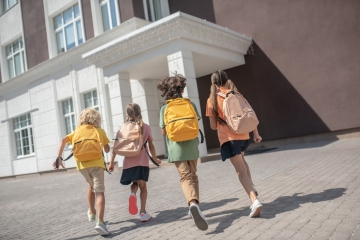
mp 2-8-24 blog image
High Expectations

Doing educational equity right: School closures

Shuttering under-enrolled schools is usually seen as a bad thing—for students and for neighborhoods. But that need not be the case. An equitable approach to school closures would commit to placing affected students in higher-performing schools.

Michael J. Petrilli 2.8.2024
NationalFlypaper

Doing educational equity right: School closures

Michael J. Petrilli
2.8.2024
Flypaper

Yes, read old books

Daniel Buck
2.8.2024
Flypaper

A reboot of the Institute of Education Sciences? Time will tell.

Chester E. Finn, Jr.
2.8.2024
Flypaper

Have students who left public schools during the pandemic returned?

Amber M. Northern, Ph.D.
2.8.2024
Flypaper

NCTQ analyzes how well states are using policy to promote the science of reading

Jessica Poiner
2.8.2024
Flypaper

Cheers and Jeers: February 8, 2024

The Education Gadfly
2.8.2024
Flypaper

What we're reading this week: February 8, 2024

The Education Gadfly
2.8.2024
Flypaper
view

Yes, read old books

Daniel Buck 2.8.2024
Flypaper
view
cefj 23-8-24 blog image

A reboot of the Institute of Education Sciences? Time will tell.

Chester E. Finn, Jr. 2.8.2024
Flypaper
view
an 2-8-24 SR image

Have students who left public schools during the pandemic returned?

Amber M. Northern, Ph.D. 2.8.2024
Flypaper
view

NCTQ analyzes how well states are using policy to promote the science of reading

Jessica Poiner 2.8.2024
Flypaper

view

Cheers and Jeers: February 8, 2024

The Education Gadfly 2.8.2024
Flypaper
view

What we're reading this week: February 8, 2024

The Education Gadfly 2.8.2024
Flypaper
view
mp 2-8-24 blog image

Doing educational equity right: School closures

Michael J. Petrilli
2.8.2024
Flypaper

This is the fifth in a series on doing educational equity right. See the introductory post, as well as ones on school finance, student discipline, advanced education, homework, grading, effective teachers, and a concluding post on doing educational equity wrong.

At the center of the modern framing around “educational equity” is the reality of racial and class disparities in virtually every aspect of the American school system. The “good stuff” disproportionately flows to White, Asian, and rich students (school funding, advanced education, high-quality career-tech opportunities) while the “bad stuff” disproportionately goes to Black, Hispanic, and poor students (exclusionary discipline, grade retention, special education identification).

One theme of this series on doing educational equity right is that we should work harder and smarter to make sure that more of the good stuff does indeed flow to Black, Hispanic, and poor students—by, for example, making our school funding system more progressive and using universal screening to identify more such students who could benefit from advanced education. I’ve also urged that we work harder and smarter to make sure less of the bad stuff goes to them, by, for example, finding alternatives to suspensions and expulsions while also reducing disorder in the classroom.

But another theme we must tackle is that sometimes what is seen as “bad stuff” isn’t actually so bad. Discipline is one example. To be sure, loads of studies link out-of-school suspensions with negative outcomes for affected students. We should declare that practice ineffective. But disciplining students can still be a good thing if it results in better behavior—in helping students learn how to comport themselves in a classroom setting, setting them up for future success, while (of course) also helping create classroom environments in which teachers can function and other needy kids can successfully learn.

Likewise with special-education placement. The conventional wisdom is that Black students are overidentified for special ed, and that label comes with stigma and lower expectations. That’s certainly been true at some times and places. But newer research indicates that Black students are actually underrepresented, at least in some special-ed categories such as “specific learning disabilities.” Were these students to be identified correctly and early, they would be eligible (legally entitled, really) to receive services to address their learning needs. Seen this way, being identified as a student with a disability isn’t necessarily “bad.”

Same with retaining students, especially those who reach the end of third grade but still can’t read (a topic we’ll cover in the weeks ahead). If mandatory retention policies mean that these students finally get the interventions they need (and should have had),  research indicates that a second year of third grade can be a valuable investment.

It is in that spirit that we now tackle school closures—not the temporary pandemic-era variety but the permanent shuttering of under-enrolled school facilities. Here, too, the conventional wisdom is that closures are bad—and that’s surely how parents and community members see them. Nobody wants to hear that the school board (or charter authorizer) is going to close “their” school, especially when the “they” always seem to be Black, brown, and poor neighborhoods.

So it’s little surprise that district leaders facing school closure decisions are under pressure to proceed equitably. Fair enough. But what should that mean? And what if school closures, though painful, can be made to be good—for students, at least? Let’s dig in.

America has too many school buildings, and some will need to close

This issue has been all over the media  of late. In short: Our schools are facing a dramatic enrollment decline driven mostly by the post-Great Recession Baby Bust, but also Trump- and pandemic-era declines in immigration. Some traditional public schools also lost students to charter or private schools during the Covid crisis, and not all came back. And some urban systems lost families to the suburbs (or to more distant environs) as the rise of remote work made urban living less attractive.

The recent surge across the southern border is blurring the picture a bit, but most school systems face long-term enrollment declines of ten percent or more—not surprising given that the number of babies born in the U.S. in a given year has dropped more than 15 percent since its 2007 high. In some districts it will be much worse—experts are predicting a decline of 30 percent for LAUSD!

I haven’t seen any demographers asserting that America’s birth rate is likely to bounce back anytime soon, if ever. In fact, as is the case for most of the developed world, it’s still heading down . Nor does there appear to be a national appetite for a large increase in immigration. All of which is to say that, outside of a handful of high-growth communities, districts must come to terms with shrinking enrollment for the foreseeable future. And that means closing schools.

The evidence on closures

Do students suffer when their schools are closed—either for low performance, as occasionally happened in the No Child Left Behind era, or for under-enrollment? This is a question that has been studied extensively over the past few decades, and the somewhat exasperating answer is: It depends. Specifically, it depends on whether the affected students land in higher-performing schools. If so, they tend to do better, at least in the long run. If not, they do worse. (That’s the case for charter school closures, as well.)

There’s also better-than-expected news for affected communities. While local residents understandably worry that a shuttered school will signal (continued) decline in their neighborhood, at least one study in Philadelphia found that crime,  especially violent crime, declined significantly when high schools with high rates of student misbehavior and low academic performance were closed.

Closing schools equitably

So what should the equity-minded school board member or superintendent do, in the face of this challenging and fraught situation?

Rather than promise that school closures won’t disproportionately affect low-income communities or communities of color, promise that all affected students will have access to higher-performing schools.

In other words, promise that, by closing schools, students will be better off than they are now, especially low-income students and students of color.

No doubt, keeping that promise will take considerable effort. It will mean:

  1. Identifying the right schools to close—generally meaning the lowest performing ones, those whose students are achieving at extremely low levels and aren’t making much progress from year to year.

  2. Ensuring an adequate number of seats in higher-performing schools nearby[1], while working out any transition or transportation logistics that might keep students from accessing them. That might include enrollment preferences for displaced students, including in nearby charter schools.

  3. Communicating effectively (and promptly) with students, families, educators, and the community, both about the process of identifying schools for closure and about how to ensure that students enroll in higher-performing schools. Tim Daly has lots of great suggestions on this front.

Closing schools is a wrenching process but ensuring that our most disadvantaged students land in more effective environments than they attend today is more than a silver lining. It should be the overriding goal, one that can narrow achievement gaps if done right. That’s real equity.


[1] For sure, this could be a HUGE lift if wide swaths of districts are full of nothing but extremely low-performing schools. But even if the not-closed schools are only marginally better than the closed ones, students should still benefit.

view

Yes, read old books

Daniel Buck
2.8.2024
Flypaper

My students caught me smelling an old book once. While they were silently reading one day, I noticed a tattered book on the shelf. So what did I do? Following deep instincts, I pulled it down, cracked the spine, and breathed deeply. “Mr. Buck, what are you DOING?!” I turned around to find the whole class staring at me. To explain myself, we passed around the haggard thing, everyone taking a sniff of that singular, old-book aroma. Some kids got it. Others didn’t. If you know, you know.

Unfortunately, old books have fallen out of favor. For example, the School Library Journal published a recommended list of books to remove from summer reading lists, including Shakespeare, 1984, To Kill a Mockingbird, and other classics. To replace them, the school librarians recommended modern young adult (YA) fiction. At its national conference, the National Council of Teachers of English (NCTE) boasted a slate of sessions on YA fiction and modern media literacy. Popular publications directed at teachers emphasize the need to do away with those stuffy old classics beloved by generation after generation and replace them with new, shiny books.

At the extreme end, books themselves are under attack, cast as relics. NCTE demands that we “decenter book reading and essay writing as the pinnacles of English language arts education,” opting instead for TikTok videos, memes, and gifs. Decades ago, Henry Giroux, deemed by some to be one of the most influential modern education scholars, advanced this same argument and implored teachers to criticize “official texts” and instead use “alternative modes of representation” such as video, photography, and pop culture imagery. The influential #DisruptTexts movement, which recently partnered with Penguin Random House to publish guides for teachers, goes so far as to call the “written word” itself an aspect of “white supremacy culture.”

There are, to be sure, countless considerations to weigh when choosing this or that book for inclusion on the curriculum: age appropriateness, difficulty, character complexity, historical significance, variety of topic and genre, among others. A book’s age is one such factor—but it’s essential that students have opportunities to read great old books not just because they’re great but also because they’re old.

First, old books provide teachers with more opportunities to teach historical knowledge. When I read Frederick Douglass’s autobiography with my students, they concurrently learned about chattel slavery, the Emancipation Proclamation, slave songs and spirituals, the Antebellum South, and the Civil War. A piece of young adult fiction, where the youthful protagonist cavorts around modern America, provides no such opportunity; students already know the context. As our understanding of the connection between content knowledge and reading comprehension grows, old books have a distinct benefit.

Second, old books also familiarize students with archaic language. Taking the time to parse through Shakespeare or Chaucer models for students the practices they need to parse through dense, unfamiliar prose. In college and the workplace, many students will face scientific abstracts, primary source documents, essential civic texts such as the Declaration of Independence, and dense formal reports. Old literature builds the stamina and habits students need to face these readings independently.

Third, if we value exposing our students to opinions and cultures different from their own, then there’s nothing quite as strange to us moderns as something old. Want to expose students to a thoughtful critique of the American system of government? Nothing would quite skewer our modern pretentions quite like excerpts from the monarchist Edmund Burke—providing us a better understanding of both the benefits and drawbacks of modern, liberal, democratic capitalism.

Despite the seeming cultural chasm between my inner-city students and myself, we actually shared many priors and unspoken dogmas about the rights of man and the purpose of government, and our cultures resembled each other’s far more than the Victorian aristocracy or soot-covered London of Brontë and Dickens. Old books can shake us from the bias of the present.

Finally—and here I slide from mere age to status as “classics”—old books have proven themselves worthy before the toughest critic there is: time. G.K. Chesterton famously quipped that “tradition is the democracy of the dead.” Classics and traditions last precisely because multiple earlier generations have agreed that this or that book is worth reading. What’s popular now may prove inferior with time. How many movies bust the box office only to fade into memory within a year? But class time is a precious commodity, allowing English teachers only a handful of books to read every year. Reading old books increases the odds that worthwhile books are chosen as time has largely sifted and winnowed the gold from the dross.

“What books should we read with kids?” is an important question and a storied argument. Writing The Republic back in the fourth century B.C., Plato spilled much ink discussing which tales are right and proper for a child to read. And underneath these quibbles over which books to read is a more fundamental question: Does the past have anything of value to teach the present?

The aforementioned #DisruptText movement suggests that what’s old is inherently “highly problematic.” We must wipe old books from our curriculum like we topple statues of everyone from Confederate generals to Abraham Lincoln. Age and antiquity are not valued but questioned. If teachers must read classics with students, they should do so through “critical lenses,” with a red pen in hand, deducting points from Harper Lee or Edgar Allen Poe for racism or sexism, scribbling over our past with the arrogance of the present.

This is utterly misguided. In old books we discover the great and beautiful literature that most eloquently distills the human experiences and expresses the ideas worth knowing, the heroes and villains of histories worth emulating and fearing, and the events that shaped our society. We discover that human nature hasn’t changed in centuries and the themes buried in Beowulf or the Gilgamesh—however fantastical the stories—aren’t so different from today. We may well also find some troublesome content, but it provides opportunities for discussion and instruction about how society has improved and can still. What’s more, if we judge the past by modern pieties, no one, not even Martin Luther King Jr. or Gandhi for goodness’ sake, will survive.

The argument over what books to read with students has raged from Plato through the canon wars of the ‘80s and ‘90s until now. I’m not suggesting we read only old books with students. But as they come under attack, it’s worth remembering that old books have far more to offer us than a unique olfactory experience, and so it’s imperative that we read and enjoy them with our students.

view
cefj 23-8-24 blog image

A reboot of the Institute of Education Sciences? Time will tell.

Chester E. Finn, Jr.
2.8.2024
Flypaper

It’s been more than two decades since Congress passed and President Bush (43) signed the Education Sciences Reform Act (ESRA), giving birth to the Institute of Education Sciences (IES) as we know it.[1] This happened just months after Congress passed NCLB but, as everyone knows, NCLB got overhauled in 2015 (ESSA). ESRA should have been reauthorized in 2008—its original authority had a six-year timeline—but despite multiple efforts over the years, including separate bills passed by House and Senate in 2014 and 2015, twenty-one and a half years have now gone by with no actual renewal or revision of this important law.

Two weeks before Christmas, the Senate HELP Committee tried again, mustering a near-unanimous (20-1), bipartisan vote to send to the floor S. 3392, the “Advancing Research in Education Act” (AREA). (Senator Rand Paul, who skipped the key mark-up session, voted no by proxy. All others—from Chairman Bernie Sanders through conservative Republicans like Markwayne Mullin and Ted Budd voted aye.)

Whether it goes farther in the present Congress, especially in this fraught election year, naturally hinges on myriad factors, so it would be wrong to overstate its prospects. But just getting it out of committee with broad-based support is noteworthy.

ESRA itself was a considerable accomplishment, a notable improvement over the previous set-up. Perhaps its four most significant reforms are summarized in an excellent December 2023 paper from the Foundation for American Innovation:

  • The creation of IES as the federal government’s independent education research arm. IES would be led by a president-appointed and Senate-confirmed director who would serve for six years. (There have been just three such directors to date: Russ Whitehurst, John Easton, and incumbent Mark Schneider, whose term ends a few weeks hence.)

  • The establishment of the National Board of Education Sciences (NBES) to advise and oversee the activities of IES.

  • The establishment of the National Center for Education Research, the National Center for Education Statistics, and the National Center for Education Evaluation and Regional Assistance within IES. (Another center for special education research was later established within IES.)

  • The establishment of “scientifically based research standards” including the application of “rigorous, systematic, and objective methodology to obtain reliable and valid knowledge relevant to education activities and programs.”

As the years passed, however, ESRA has been getting long in the tooth. Technology, for example, has become a vastly bigger deal in education since 2002—virtual schooling, AI, phone-addicted kids, etc.—and there’s mounting interest in creating a more venturesome realm of basic and experimental education R & D along the lines of the Defense Department’s DARPA. Mike Petrilli has visualized a “Mars rover for schools.” Schneider has been doing his best to improvise along similar lines but, especially considering the predictable pushback from IES’s long-time constituencies, plus omnipresent budget constraints, it’s been a slog.

It’s disappointing that the HELP committee bill does not include explicit authority for the “education DARPA” (known to its advocates as ARPA-ED)—and I can’t account for the omission. Yet the bill would modernize IES in a number of important ways, both in its substantive mission and mandates and in several worthy structural and housekeeping reforms. It would, for example, “right-size” the National Board for Education Sciences, lengthen and stagger members’ terms, and cause them to be appointed by the Education Secretary rather than the White House—this move likely prompted by a fiasco at the end of the Trump administration.

Other key changes include making education research “more responsive to students and teachers” and producing “more actionable evidence.” At the mark-up session, Chairman Sanders declared that the bill will improve the tracking of student data from pre-K through college while also assigning the NCES commissioner the overdue job of modernizing how student poverty is gauged (now that so many schools give free meals to all their pupils).

Some thoughtful education groups have reservations about specific features of the Committee bill, and not just the omission of ARPA-ED.. Ulrich Boser’s “Learning Agency,” for example, finds the bill’s definition of “evidence-based” research too confining though it’s no secret that a lot of what passes for education research nowadays (outside of IES) is more anecdotal, impressionistic, and subjective than scientific.

Because elected officials also follow the headlines and the Senate is famous for non-germane amendments, a few committee members threw curve balls during the mark-up. For instance, Senator Marshall picked up on two hot issues du jour by convincing his colleagues to prohibit IES dollars from going to entities that “promote” anti-Semitism on their campuses or to entities that also receive funding from China, Russia, or Iran. Worthy impulses, both, in my view, but one can begin to picture the complexities of defining, monitoring and enforcing them.

On balance, though, this was a pretty good day’s work by the HELP committee and—reminiscent of Lamar Alexander and Patty Murray working together on ESSA—a welcome example of constructive bipartisan action while rebooting an important but weary part of the nation’s education infrastructure. Recall that Uncle Sam’s primordial assignment in this realm, dating back to Andrew Johnson’s presidency, is “collecting such statistics and facts as shall show the condition and progress of education in the several States and territories, and of diffusing such information respecting the organization and management of schools and school systems, and methods of teaching, as shall aid the people of the United States in the establishment and maintenance of efficient school systems, and otherwise promote the cause of education throughout the United States.”

IES is the primary outfit that does those things. It needs to be good at them. What will happen next to this bill, however, is utterly unknowable.


[1] The federal government’s education R & D, statistics, and assessment activities had been organized and reorganized multiple times between 1867 and passage of ESRA, including an incarnation called the Office of Educational Research and Improvement (OERI), which I had the honor of leading for several years in the late 1980’s. It’s worth noting, though, that a number of other agencies besides the U.S. Department of Education, including NSF and NIH, also engage in education-related R & D and still other agencies, such as the Census Bureau and Bureau of Labor Statistics, gather education-related data.

view
an 2-8-24 SR image

Have students who left public schools during the pandemic returned?

Amber M. Northern, Ph.D.
2.8.2024
Flypaper

Examination of Covid-era impacts on students, families, and schools continues apace. Getting a full picture of the fallout, who was affected, and how helps education leaders better direct their resources to serve impacted students. A recent report from NBER and Mathematica dives deep into pandemic-driven disenrollment from public schools in one state (Michigan) and the ways in which it bounced back—or didn’t—in successive years.

In the first year of Covid, an estimated 1.5 million K-12 students left public schools nationally for alternatives such as homeschooling and private schools. Other national data suggest that public school enrollment did not recover in 2021-22, and remained about 3 percent below pre-pandemic enrollment levels, but these overall data mask important variations across states. This study, which takes place in The Wolverine State—and unlike national analyses uses student-level data—details how enrollment changed before and after Covid, how exit rates compared to pre-Covid rates, and whether students who exited during the pandemic re-enrolled after 2 years. Included are Michigan students attending grades K—12 from fall 2017 to fall 2021.

First, the analysts provide overall enrollment data and trends: Before the pandemic, total enrollment had been declining by just under 1,000 students per grade annually, totaling more than 10,000 students per year. In fall 2020, total enrollment dropped by 3.2 percent, or 4 times the historic trend, and represented a single-year decline of more than 40,000 students. The fall 2020 enrollment drop was largest in Kindergarten, which declined by 11.3 percent. In contrast, enrollment in high school grades remained roughly in line with pre-Covid trends (although the latest national data show it increased about 2 percent between 2019 and 2022).

In the second pandemic year (fall 2021), enrollment continued to decline. Overall enrollment was 3.6 percent below pre-pandemic levels in fall 2019, which corresponds to an additional loss of 0.4 percentage points on top of the 3.2 percent decline in fall 2020. Kindergarten enrollment partially recovered from its steep decline in fall 2020, but remained substantially below fall 2019 enrollment. Other grade levels continued to decline only modestly, except for middle school, which saw enrollment drop by an additional 3 percent in fall 2021.

Next, the analysts describe exit rates in detail: Because only a small fraction of Michigan students enrolls in the public school system prior to Kindergarten, the declines in Kindergarten enrollment primarily reflect changes in initial enrollment. That is, the decrease is a result of parents holding back their kids from starting school during the depths of the pandemic rather than students exiting between pre-K and Kindergarten. In other grades, however, declines were largely driven by increased exit rates among students previously enrolled in public schools. But what proportion of those exits were subsequent reenrollments? 55 percent of those who exited before fall 2020 re-enrolled in public schools by fall 2021. This re-enrollment rate is highest among Kindergarten students: 62 percent who left the public school system (did not enroll in first grade) by fall 2020 re-enrolled in fall 2021. Return rates for other elementary and middle school grades are slightly lower at 56 percent, and the return rates are lowest among high school students, with only 40 percent returning. In contrast, re-enrollment rates in years prior to the pandemic were 24 percent lower on average and more stable across grades.

Digging further into re-enrollment by sector, analysts find higher return rates among those who left for homeschooling compared to those who left for private schools (the only sectors for which they have data). Approximately 50 percent of students who exited for homeschooling by fall 2020 returned to the public sector by fall 2021. In contrast, only 20 percent of those who exited for private schools returned. Both homeschooling exits and private school exits show the same pattern by grade level: relatively high returns among Kindergarten exits and relatively low returns among high school exits.

Compared to White students, Black students were more likely to return and Asian students were less likely. Low-income and special education students were also more likely to return in fall 2021, while English learners were less likely. The likelihood of returning decreased by grade level. Compared to Kindergartners who exited in fall 2020, students in grades 1-5 were 1.4 percentage points less likely to return in fall 2021. Middle school students were 4 percentage points less likely to return and high school students were 19 percentage points less likely to return.

As interesting as these findings are, they stop at fall 2021. Time has not stood still, so it is possible that more students have now returned to their public schools (in Michigan and elsewhere)—or not. Still, the trends documented in fall 2021 have bearing on where we now find ourselves in the 2023-24 school year. States and schools are responding to revised enrollments as they know them—and discussions about closures are ramping up. Coupled with the unavoidable fiscal cliffs, and the ongoing baby bust, numerous forces are bearing down on our public schools. Meeting the needs of both students who never left and those who returned is priority number one. Only then will the pressure let up.

SOURCE: Andrew Backer-Hicks et al., “The stickiness of pandemic-driven disenrollment from public schools,” Annenberg Institute at Brown University (August 2023).

view

NCTQ analyzes how well states are using policy to promote the science of reading

Jessica Poiner
2.8.2024
Flypaper

Many states are overhauling their early literacy policies to align with the science of reading, an evidence-based approach that emphasizes phonics and knowledge building. Effectively implementing these reforms is crucial, as high-quality reading instruction can improve both academic and life outcomes for children.

The National Council on Teacher Quality (NCTQ), a leader of the effort to align state policy with reading science, argues that the best way to ensure strong implementation is by focusing on effective teachers. In a recently published report, it outlines five key policy actions that state leaders should take to strengthen elementary teachers’ ability to teach reading. These include setting specific and detailed standards for elementary teacher preparation programs, reviewing those programs to ensure they train prospective educators in the science of reading, adopting a strong elementary reading teacher licensure test, requiring districts to select a high-quality reading curriculum, and providing professional learning and ongoing support for in-service teachers.

As part of its analysis, NCTQ identified eighteen indicators across these five policy areas. Then, it evaluated the degree to which states (and DC) met those indicators. Based on the results, states fell into four performance categories: strong, moderate, weak, and unacceptable. Twelve states—Arkansas, Colorado, Florida, Louisiana, Minnesota, Mississippi, Ohio, Rhode Island, Tennessee, Texas, Utah, and Virginia—sufficiently address the indicators of all five policy actions, and thus earn a “strong” rating. Three others—Maine, Montana, and South Dakota—have weak reading laws and are given an “unacceptable” rating.

The report offers a detailed analysis of each policy action, including applicable research and a closer look at states that are doing particularly well (or poorly). Below are six of the big picture findings.

First, although nearly all states have standards for teacher preparation, only twenty-six have standards that address in detail all five core components of reading (phonemic awareness, phonics, fluency, vocabulary, and comprehension). One in five states does not include in its standards strategies for addressing struggling readers, while twenty-one jurisdictions do not have standards for supporting English learners.

Second, most states lack specific review procedures designed to ensure that preparation programs are aligned with reading science. Fordham’s home state of Ohio earned kudos in this area, as it will soon audit preparation programs to ensure they’re training teacher candidates in reading science. Colorado and Indiana also earned mentions as states to emulate in this domain.

Third, only twenty states require a strong stand-alone reading test. Most others require a test that includes reading but is weak on the science of reading. Iowa is the only state without any licensure test that addresses reading.

Fourth, although research demonstrates that improving the quality of curriculum is a cost-effective way to boost student outcomes, only nine states require districts to select high-quality reading curricula. That means more than forty million students currently live in states that do not require districts to use high-quality reading materials.

Fifth, eighteen states make curriculum decisions transparent by publishing on state websites what each district uses or by requiring districts to publish the information themselves. Rhode Island is an exemplar in this realm, as it publishes a visualization tool that identifies which curriculum each school uses and whether the state considers it high-quality.

Lastly, thirty states require some type of professional learning on the science of reading for current teachers. Mississippi and Tennessee, in particular, offer excellent examples of professional learning and ongoing support via literacy coaches and district networks.

Overall, NCTQ finds that states are trending in the right direction regarding setting teacher preparation standards and providing professional learning opportunities. But many still have work to do with regard to embracing rigorous teacher preparation approval practices, requiring strong reading licensure tests, and ensuring that districts use high-quality curricula. For policymakers seeking to understand how their own state measures up against these model policies, the data profiles provided here are a great place to start. Some will have reason to cheer, while others may be spurred to action.

SOURCE:  Shannon Holston, “Five Policy Actions to Strengthen Implementation of the Science of Reading,” NCTQ (January 2024).

view

Cheers and Jeers: February 8, 2024

The Education Gadfly
2.8.2024
Flypaper

Cheers

  • With declining enrollment, school closures are coming, and it’s imperative that journalists cover them honestly. —Tim Daly, The Grade

  • Evidence continues to mount that charter schools outperform their traditional public school counterparts. —The Economist

  • From San Francisco to Boston, parents have successfully led the charge against policies that prevent eighth graders from taking algebra. —The Wall Street Journal

  • Oklahoma’s Union Public Schools added tutoring and non-test-based ways to boost the number and diversity of students qualifying for advanced math.—The Hechinger Report

Jeers

  • In elite circles, educational consultants charge up to six figures to help students shape their college applications into “Ivy bait.” —New York Magazine

  • 9,700 students across Illinois are reacting to the possible loss of their private school scholarships after legislators chose not to renew the Invest in Kids tax-credit program.—Chicago Sun-Times

view

What we're reading this week: February 8, 2024

The Education Gadfly
2.8.2024
Flypaper
  • A recent survey found that six in ten Black single mothers plan to vote for leaders who will expand their school choice options. —The 74

  • For the first time, more American students are getting to school by private vehicles, not the bus. —The Washington Post

  • “Unexacting secondary schools seed college campuses with students spoiled by unearned flattery. They bring to college a complacent sense of entitlement.” —George Will, The Washington Post

Fordham Logo

© 2026 The Thomas B. Fordham Institute
Privacy Policy
Usage Agreement

National

P.O. Box 110
Burke, VA 22009

202.223.5452

[email protected]

Ohio

P.O. Box 82291
Columbus, OH 43202

614.223.1580

[email protected]

Sponsorship

130 West Second Street, Suite 410
Dayton, Ohio 45402

937.227.3368

[email protected]