Mobile Navigation

  • National
    • Policy
      • High Expectations
      • Quality Choices
      • Personalized Pathways
    • Research
    • Commentary
      • Gadfly Newsletter
      • Flypaper Blog
    • Events
    • Scholars Program
  • Ohio
    • Policy
      • Priorities
      • Media & Testimony
    • Research
    • Commentary
      • Ohio Education Gadfly Biweekly
      • Ohio Gadfly Daily
  • Charter Authorizing
    • Application
    • Sponsored Schools
    • Resources
  • About
    • Mission
    • Board
    • Staff
    • Career
Home
Home
Advancing Educational Excellence

Main Navigation

  • National
  • Ohio
  • Charter Authorizing
  • About

National Menu

  • Topics
    • Accountability & Testing
    • Advanced Education
    • Career & Technical Education
    • Charter Schools
    • Curriculum & Instruction
    • ESSA
    • Evidence-Based Learning
    • Facilities
    • Governance
    • Personalized Learning
    • Private School Choice
    • School Finance
    • Standards
    • Teachers & School Leaders
    • Think Again
  • Research
  • Commentary
    • Gadfly Newsletter
    • Flypaper Blog
    • Gadfly Podcast
  • Events
  • Scholars Program

The Education Gadfly Weekly

Sign Up to Receive Fordham Updates

We'll send you quality research, commentary, analysis, and news on the education issues you care about.
Thank you for signing up!
Please check your email to confirm the subscription.

The Education Gadfly Weekly: The complicated interplay between race, poverty, and schooling

Volume 24, Number 34
8.22.2024
8.22.2024

The Education Gadfly Weekly: The complicated interplay between race, poverty, and schooling

Volume 24, Number 34
view
School exterior
High Expectations

The complicated interplay between race, poverty, and schooling

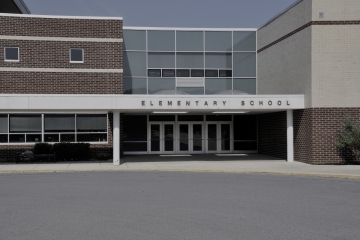
Fordham’s new study by Paul L. Morgan and Eric Hengyu Hu, "Explaining Achievement Gaps: The Role of Socioeconomic Factors," raises as many questions as it answers. Among them: How can we explain the different patterns for the Black-White achievement gap for reading, on the one hand, and math and science, on the other? Why does SES explain so much more of the Hispanic-White gap than the Black-White gap? And what’s the role of family structure in explaining the Black-White and Hispanic-White gaps?

Michael J. Petrilli 8.22.2024
NationalFlypaper

The complicated interplay between race, poverty, and schooling

Michael J. Petrilli
8.22.2024
Flypaper

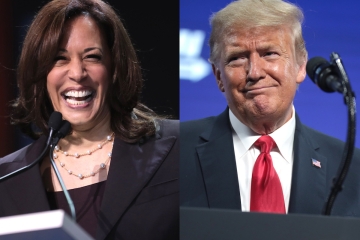
Will next month’s Harris-Trump debate even mention education?

Dale Chu
8.22.2024
Flypaper

Inside the classical school renaissance: An interview with Dr. Kathleen O’Toole

Daniel Buck
8.22.2024
Flypaper

How have teacher working conditions changed since the pandemic?

Heena Kuwayama
8.22.2024
Flypaper

RoadMAP to success: Using state assessment data to predict postsecondary success

Elainah Elkins
8.22.2024
Flypaper

#934: Reducing chronic absenteeism: Building trust versus getting tough, with Kelly James

8.20.2024
Podcast

Cheers and Jeers: August 22, 2024

The Education Gadfly
8.22.2024
Flypaper

What we're reading this week: August 22, 2024

The Education Gadfly
8.22.2024
Flypaper
view
Kamala Harris and Donald Trump

Will next month’s Harris-Trump debate even mention education?

Dale Chu 8.22.2024
Flypaper
view
Dr. Kathleen O’Toole

Inside the classical school renaissance: An interview with Dr. Kathleen O’Toole

Daniel Buck 8.22.2024
Flypaper
view
Frustrated school teacher

How have teacher working conditions changed since the pandemic?

Heena Kuwayama 8.22.2024
Flypaper
view
College graduation

RoadMAP to success: Using state assessment data to predict postsecondary success

Elainah Elkins 8.22.2024
Flypaper
view

#934: Reducing chronic absenteeism: Building trust versus getting tough, with Kelly James

Kelly James, Michael J. Petrilli, Adam Tyner, Ph.D., David Griffith, Ph.D. 8.20.2024
Podcast
view
Fordham Gadfly image

Cheers and Jeers: August 22, 2024

The Education Gadfly 8.22.2024
Flypaper
view
Fordham Gadfly image

What we're reading this week: August 22, 2024

The Education Gadfly 8.22.2024
Flypaper
view
School exterior

The complicated interplay between race, poverty, and schooling

Michael J. Petrilli
8.22.2024
Flypaper

In 2004, superstar economists Roland Fryer and Steven Levitt published a seminal paper, Understanding the Black-White Test Score Gap in the First Two Years of School. Using then-brand-new data from the federal Early Childhood Longitudinal Study, Kindergarten Class of 1998–1999 (ECLS-K), they found:

In stark contrast to earlier studies, the Black-White test score gap among incoming kindergartners disappears when we control for a small number of covariates. Real gains by Black children in recent cohorts appear to play an important role in explaining the differences between our findings and earlier research. The availability of better covariates also contributes. Over the first two years of school, however, Blacks lose substantial ground relative to other races. There is suggestive evidence that differences in school quality may be an important part of the explanation.

To say the findings were “mixed” dramatically underplays how good the good news was and how bad the bad news was.

The good news was twofold. First, as the authors wrote, Black kindergarteners at the time were making strong gains over previous cohorts. Indeed, child poverty dropped dramatically in the 1990s, especially for Black children, and this was showing up in stronger readiness for school.

It was also good news—great, actually—that Fryer and Levitt could completely erase the racial achievement gap when controlling for “a small number of covariates.” These included some traditional measures of socioeconomic status (SES), such as family income and parental education levels, but also health-related factors, such as the child’s birthweight and births to teenage moms.

These findings are hugely consequential for America’s longstanding debates around racial inequality. They directly rebut the hateful arguments of white supremacists who posit that achievement gaps are a sign of Black Americans’ genetic inferiority. And they throw cold water on the claims by some on the far left that bigotry and racism in schools are at the heart of all racial disparities in student achievement in the U.S.

Instead, the explanation for racial achievement gaps is much more straightforward, though still tragic: Vast racial disparities in socioeconomic conditions and prenatal and early-life health experiences explain the achievement gaps we see between racial and ethnic groups, at least at school entry. That suggests that universal, race-neutral interventions designed to improve the academic, social, economic, and health conditions of the poor would lift all boats and would also narrow racial gaps. (Not that those interventions are easy or always obvious.)

But the bad news was really bad, too. Namely, once children entered school, Black students started losing ground, likely because the schools they attended were lower quality than the ones attended by White students, even after controlling for SES. Changing that fact has, of course, been a major focus of education reform.

That was twenty years ago, and those of us at the Thomas B. Fordham Institute were curious to see if anything had changed. We knew that racial achievement gaps had continued to narrow until the early to mid-2010s. And we knew that the federal government had released a newer ECLS dataset, the ECLS-K: 2011. We wondered: Had the relationship between socioeconomic achievement gaps and racial/ethnic achievement gaps shifted? Was the Black-White gap still growing during elementary school? And how did all of this look for the White-Hispanic gap (also explored by Fryer and Levitt) and for subjects beyond reading and math?

To find out, we turned to the University at Albany’s Paul Morgan. Paul is one of the nation’s leading scholars on disparities in education and health care. He recruited Eric Hengyu Hu, another education policy researcher experienced in analyzing the two ECLS datasets. They got to work, diving into the data from the older and newer ECLS-K datasets. The result is our new study, released this week: Explaining Achievement Gaps: The Role of Socioeconomic Factors. What they found was largely consistent with Fryer and Levitt’s study, although they were able to add some new understandings as well.

Since we were most interested in understanding the relationship between socioeconomic status and racial achievement gaps, Hu and Morgan did not look at health-related covariates, such as child’s weight at birth or the age of the mother at first child’s birth, which Fryer and Levitt had included. As a result, the racial achievement gap did not “disappear,” as it had for Fryer and Levitt. But it did decrease significantly, just by controlling for the “SES-plus” factors.

Here’s what they found. (See the study for more details and lots of fascinating tables and charts.)

Taken together, family SES+ factors explain between 34 and 64 percent of the Black-White achievement gap (depending on subject and grade level) and between 51 and 77 percent of the Hispanic-White achievement gap.

Household income and mother’s education are the SES+ factors that best explain Black-White and Hispanic-White achievement gaps.

Family SES+ indicators, and the extent to which they explain racial/ethnic achievement gaps, are stable over time (1998–99 and 2010–11).

The inclusion of family SES+ also helps explain racial and ethnic excellence gaps.

These findings are generally consistent with Fryer and Levitt’s study from two decades ago. Socioeconomic factors can explain a large proportion of racial achievement gaps. But the current study adds a great amount of detail and nuance to our understanding of the relationships at play while raising new questions:

1. How can we explain the different patterns for the Black-White achievement gap for reading, on the one hand, and math and science, on the other? First grade reading is an outlier, given that it’s the only subject and grade combination where we see SES explaining a majority of the Black-White gap (about two-thirds). What might explain that—especially when we combine that pattern with the finding that the Black-White reading gap continues to grow as students make their way through school?

Here’s one hypothesis: As scholars, including E.D. Hirsch, Jr., have long argued, initial reading skills are more closely correlated to family SES than are math and science ones. This is likely because parents play a larger role, especially in a child’s first five years, in transmitting language abilities than they do for math and science. That can occur via behaviors, such as reading to their children, but also through their own use of verbal language. The advantages of high SES—and disadvantages of low SES—thus show up more for students’ initial reading skills than for their math and science ones. As students get older and benefit from classroom instruction, their relative advantages and disadvantages start to matter less.

That’s good news from an equity perspective, but let’s not forget that the Black-White achievement gap (including in reading) continues to grow as students age through elementary school. Consistent with Fryer and Levitt’s paper, that likely means that we still haven’t closed the “school quality gap” between Black students and their White peers.

2. Why does SES explain so much more of the Hispanic-White gap than the Black-White gap? One explanation might be that Hispanic children being raised in Spanish-speaking families have latent potential that is obscured by their lack of English skills (which become stronger as the grade level increases).

It may also be helpful to ponder what might be included in the “not SES” category. As explained earlier, possibilities include health-related factors, such as low-birth weight and being the child of a teenage mom—factors related to poverty that affect Black children more than their Hispanic peers. It might also include various forms and effects of racism and bias, which might affect Black children at higher rates.

This might also be why the Black-White achievement gap grows over the course of elementary school—because of the greater challenges Black students face outside of school, but also because of their inequitable access to effective schools.

3. What’s the role of household structure in explaining the Black-White and Hispanic-White gaps? Hu and Morgan find that “family structure explains between 1 and 22 percent of the gaps, but is more important for explaining the Black-White achievement gap (10 to 22 percent of the gap explained) than the Hispanic-White achievement gap (1 to 4 percent of the gap explained).” That makes sense, given that Hispanic students are far more likely than their Black peers to live in two-parent families (74 percent versus 40 percent, respectively)—a rate much closer to that for White children (84 percent).

But these findings likely understate the role of family structure, especially for Black children, given the relationship between the number of parents in the household and household income. As shown in Table F-2 of the report, there’s a correlation of 0.32 between these two variables for the latest ECLS cohort, which is quite strong. On top of the many non-material benefits of growing up with two loving parents, it’s clearly the case that two incomes are usually better than one when it comes to boosting families out of poverty. And increasing the proportion of two-parent, two-income families in the Black community would thus help to narrow the Black-White achievement gap, as well.

—

None of this lends itself to simple takeaways, but the authors’ recommendations in the report—especially their suggestions to invest in early childhood education and supplement families’ incomes, perhaps via an expanded child tax credit—deserve serious consideration.

As has been clear since the Coleman Report, when it comes to the interplay between race, poverty, and schooling, the honest read is that it’s complicated. What’s undeniable, though, is that much hard work remains, especially when it comes to providing effective schools to marginalized students, especially those who are Black. Let’s keep at it.

view
Kamala Harris and Donald Trump

Will next month’s Harris-Trump debate even mention education?

Dale Chu
8.22.2024
Flypaper

During the fateful presidential debate between Joe Biden and Donald Trump, there was nary a mention of education. No questions on the topic from the moderators. No acknowledgement of student achievement by either candidate. This despite historic declines in academic performance post-pandemic, to say nothing of the missed opportunity of calling Democrats to the mat for the toll of prolonged school closures. Granted, education has never featured prominently in these exchanges, but the goose egg in June was deflating nonetheless, given the daunting challenges schools are grappling with. But now that Kamala Harris has turned the campaign upside down, will the September 10 face-to-face between the Vice President and the former President be any different on the education scoreboard?

Some history is instructive here, insofar as education matters go in presidential debates. Twenty-four years ago, then Texas Governor George W. Bush and Democratic incumbent Vice President Al Gore arguably set the high-water mark. For a remarkable nine-minutes during the first of three debates, Bush and Gore went toe-to-toe on who offered the better vision for improving America’s schools. Foreshadowing NCLB, here’s how Bush said he planned to focus on high expectations and strong accountability:

Here is the role of the federal government. One is to change Head Start into a reading program. Two is to say if you want to access reading money, you can do so because the goal is for every single child to learn to read. There must be K–2 diagnostic tools, teacher training money available. Three, we’ve got to consolidate federal programs to free districts and free the schools to encourage innovators like [KIPP]. Let them reach out beyond the confines of the current structure to recruit [Teach For America] type teachers. Four, we’re going to say if you receive federal money, measure third, fourth, fifth, sixth, seventh, and eighth grade. Show us whether they are learning to read, write, add, and subtract, and if so, there will be bonus plans. But if not, instead of continuing to subsidize failure, the [federal] money will go to…the parents for public school or charter school or tutorial or Catholic school.

Gore responded that he agreed with Bush on the need for strong accountability, leaving moderator Jim Lehrer confused about the difference between the two candidates. In answer, Bush accused Gore of being weak-kneed on accountability, saying that the Vice President’s plan only called for voluntary testing. Not to be outdone, Gore shot back:

First of all, I do have mandatory testing. [My plan for] voluntary national testing is in addition to the mandatory testing that we require of states. All schools, all school districts, students themselves, and required teacher testing, which goes a step farther than Governor Bush has been willing to go... We have to make [schools] the number one priority... If it’s a failing school, shut it down and reopen it under a new principal with a turnaround team of specialists the way Governor Jim Hunt does in North Carolina…

This back-and-forth between Bush and Gore stands in stark and striking contrast to what's currently on offer on the presidential stage. Today, the notion of a presidential nominee from either of the major parties advocating an unapologetic focus on the progress of disadvantaged students feels both far-fetched and far beyond the realm of possibility.

Which brings us back to next month’s showdown between Harris and Trump. While one can always hope the former will tack to the center—as she has begun to do on some issues—it’s hard to see Harris making a similar move on education. Like Biden, there’s been no daylight for many years between her and the teachers unions. That bond was cemented when Harris tapped Tim Walz as her partner. Indeed, Minnesota’s governor once tried to put the kibosh on Bush’s NCLB himself. For his part, Trump is a one-trick culture war pony. He has never shown an interest in policy, education or otherwise. Some say his running mate could bode well for rural schools, but there’s little reason for optimism when it comes to the project of standards-based reform should Trump return to the White House.

Taken together, what this suggests is that K–12 education will continue to be missing in action during September’s debate—as it basically is from both party platforms. If it does make an appearance (in a non-culture-war way), it will be a fleeting reference to private school choice on Trump’s part or more spending and less accountability on Harris’s. Despite compelling evidence behind the federal government’s role in improving student learning, national politics will not favor standards, assessments, and consequences anytime soon. From feast to famine, the throughline from the Bush 41-Clinton-Bush 43-Obama era to, at present, Trump-Biden-Harris/Trump is that we’re mired in the throes of a twelve-year cycle—perhaps an even longer one—absent a robust commitment to educational improvement from Uncle Sam.

view
Dr. Kathleen O’Toole

Inside the classical school renaissance: An interview with Dr. Kathleen O’Toole

Daniel Buck
8.22.2024
Flypaper

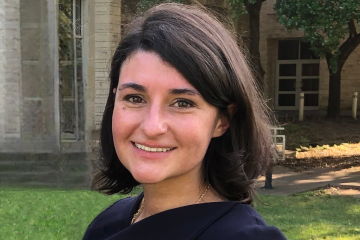
Classical education is undergoing a renaissance. According to a recent analysis by Arcadia Education, the classical sector is growing by 5 percent annually with a total projected enrollment of 1.4 million students by 2035. At the center of this growth is Hillsdale College, whose Barney Charter School Initiative has given rise to the second largest system of classical charter schools in the country (second only to the Great Hearts Academies in the Southwest). The initiative’s first school opened its doors in 2012 and has ballooned to thirty member schools in just over a decade with forty-seven more schools using its curriculum.

I had the chance to sit down with Kathleen O’Toole, an assistant provost for K–12 Education at Hillsdale College where she leads the initiative, to talk about the system of schools, how she found herself in this position, and classical education more broadly.

Let’s start with your background. What did you do before you began leading the Barney Charter School Initiative at Hillsdale College, and how did you end up in that position?

Well, if there’s one thing consistent about my life so far, it’s that I’ve always loved school and I’ve tried to find a way to be a part of schools for as long as possible. Before I came up here, I was the headmaster of a start-up Hillsdale Classical School, a teacher, and a college professor at a couple of very different colleges. Whether I was teaching at a top-ten liberal arts college or something much less glamorous in the middle of nowhere Kentucky, I really liked teaching the most. And that’s what made me interested in K–12 education. And that remains, I think, the most important thing that I do.

How did you discover classical education?

Well it wasn’t called classical education when I was growing up. It was just called liberal education. I came to understand what it was deeply when I went to the University of Dallas, which is a great liberal arts school with an excellent faculty and a really robust core curriculum. But we didn’t use the term classical education in those days, even though that wasn’t very long ago. I became familiar with classical education when I started learning about Hillsdale.

What’s the Barney Charter School Initiative? How does it function? How many schools are there? Can you give us the elevator pitch for this system of schools?

The Barney Charter School Initiative is a project of Hillsdale College that started back in 2010. We at the college provide free guidance and support to local groups of people who want to see an excellent classical school in their area. To date, we’ve helped dozens of charter schools get rolling, and we have thirty member schools across the country. Now we work very closely with these schools, but we don’t own or operate them. They’re all locally operated, which we think is an important element, but they’re faithful to the same mission that we’re faithful to.

So if I walk into one, what makes it different? Students in uniforms and Aristotle sitting on shelves?

You would definitely see Aristotle. You would definitely see uniforms. You wouldn’t see a lot of technology.

One way to talk about classical education is to talk about the core elements of it, the things that you would observe first when you went into a school. That means children raising their hands and having actual conversations with each other rather than relying on technology to communicate or learn. That means teachers who are educated deeply in their subjects and who are also really good at explaining what they know.

The things that we study are also different. We’re not innovating for the sake of innovation. There’s only so much time that you have when a child is receiving his or her primary and secondary education, so you want to make sure that you’re spending those formative years with the very best. To that end, you’ll see that the study of the Great books is a huge part of a K–12 classical education.

And we don’t think that children are too little to study real things. If you give even a very young child access to something that is really worthy, really thought provoking, really worth spending time on, that child responds. Children know when they’re being talked down to, and they know when they’re being given worthy things to do. The curriculum is full of worthy things, whether it’s great novels or a real history lesson given to very young children.

Finally, each school has an orderly plan for the education of its students. And the plan is shared by all of the teachers, kindergarten through twelfth grade. It’s not up to the teacher to focus on whatever he or she is interested in that year. No, there’s an entire course of study that is integrated and that builds upon itself year after year after year.

Isn’t this what happens in traditional public schools?

I think that in most cases, public schools are not cohesive. There is not a plan for the child’s education from kindergarten through twelfth grade. Instead, it falls to the individual teacher. The things that you learn in the education that you receive in a Hillsdale-affiliated school are much richer than what you might receive elsewhere.

I remember when my school first started back in 2014, and parents told me about the differences they saw. They said within about four or five weeks, the conversations that they were having with their children in the car on the way home were completely different. Their children weren’t burnt out anymore. They weren’t bored. They’d had enough time to run around during the day. The things that they had been learning were truly thought-provoking and truly interesting to the children. And so they were energized by it even though it was the end of a long school day, and they had so much more to say to their parents. And over time, they became a lot more articulate at saying those things.

How would you define classical education? I know every person you ask might give a slightly different answer to that question, but I’m curious as to yours.

Classical education is a cohesive course of study that’s built upon a true understanding of the human being. We are rational animals, so when we talk about our full development, happiness, or flourishing, we have to talk about both intellectual and moral virtue.

Intellectual virtue is the development of our mind and our habits of thinking. In a classical education, we develop those habits of thinking by focusing on two core areas of human knowledge: knowledge of human things and knowledge of the natural world, from which you get the humanities and the sciences.

But human beings are not merely intellectual creatures; we’re moral creatures, too, so an education can’t merely be an education in intellectual virtue. It has to develop the kinds of character that will make us able to choose well and to think well about our dealings with other human beings. And so, it’s an education in both moral and intellectual virtue for the sake of becoming happy.

It’s easy to envision what classical education means in a literature, history, or civics classroom. But what makes for a classical math or classical science?

We talked earlier about how the curriculum proceeds in an orderly way. The subject of mathematics is one way in which you can see the necessity of that progression most clearly. For example, when you’re growing up and it’s time for you to begin studying mathematics formally, you always begin with addition. And after addition, you always go to subtraction. And after subtraction, you always go to multiplication and then division. That’s not because that’s the way we’ve always done it, but rather that’s the way it has to be done in order to understand mathematics.

Could the very best teacher teach multiplication to the very best student under the very best conditions before they understood addition? It’s impossible because multiplication is repeated addition. You have to get that concept first. Classical mathematics is an approach to mathematics that understands the logical order in which mathematical concepts need to be taught in order to make rational sense.

Another way of putting it is that mathematics is the purest and clearest way in which we can study the natural world. It takes students through a course of study, which is written in nature and so is not up to us at all. It gives them the ability to appreciate, among other things, purely abstract thought. It develops in you a kind of taste for truth and the certainty that can come when you encounter a mathematical truth or a truth like a mathematical truth.

As for science, in a classical school, it is the study of the observable, physical, natural world. Our posture is, first of all, one of observation and reflection versus control. If you look at the curriculum that you would see in a STEM school or the general way in which we teach science these days, it’s very much learning about the natural world, so that you can manipulate it and do something with it. For example, if your primary education in physics is engineering, then what you’re learning is to understand the laws of physics so that you can make something out of the physical world. And that’s good. Engineering is great. Technology is great. They’re useful. But all of it has a primary posture of manipulation, control, and putting the human being sort of in the driver’s seat when it comes to nature.

So that sounds wonderful to me personally, but I know many critics of classical education argue that it’s just political conservatism or Trojan Horse for Christianity. Are they right?

Many of the schools affiliated with Hillsdale College are public charters, which means that they do not provide religious instruction. Matters of faith are left to the family and church.

On the question of whether they’re political schools, I will say that it’s very important that these schools are not partisan for the same reason that they’re not forcing students toward a particular set of religious beliefs. They’re also not guiding their students toward a particular set of political beliefs. The purpose of a classical education is much deeper and much broader than that. In the upper school curriculum, children have the opportunity to read great works that are great because they teach us to ask the most important questions, not because they put us in touch with a specific doctrine. These are not doctrinaire places, and they’re certainly not politically partisan places.

The study of America is an important part of these schools—in history, government, and literature. The course of study emphasizes that teachers and the students focus especially on primary source documents. If we’re going to try to understand what America is, we should read the evidence first and ask questions of the evidence. Questions are central to classical education. We’re constantly saying to teachers to improve your questioning, and that’s just antithetical to this idea that these are doctrinaire places that have specific things that they need students to believe.

What’s next for the Barney Charter School Initiative? Takeover American education and plant a school in every township and city in America?

The best way that we can be most helpful to the cause of recovering excellence in American education is to help local groups of people establish classical schools in their area that are beacons for teachers, for parents, and for other schools across the country. And the work that goes on in these excellent Hillsdale member schools can be emulated by anyone. Again, it’s not rocket science. It just requires a return to tried and true methods of teaching, a tried and true curriculum, and a focus on the development of the individual child’s intellectual and moral virtue as the primary purpose of the school.

view
Frustrated school teacher

How have teacher working conditions changed since the pandemic?

Heena Kuwayama
8.22.2024
Flypaper

As a teacher both during and immediately after the pandemic, I was constantly on the receiving end of some version of: “You must be so relieved that the pandemic is over.” My response was always: “Actually, it has only gotten worse.” And it’s not just me. Since the onset of the pandemic, many teachers have taken to social media to discuss the challenging working conditions that they face in American schools. The common assumption is that these conditions directly resulted from pandemic-related disruptions and chaos and therefore have now ended. However, a new working paper by two University of Missouri researchers confirms what many teachers have been saying: that working conditions have actually declined even further in school post-Covid.

The study used self-reported teacher working condition data from Illinois’s 5Essentials Survey spanning the 2016–17 to 2022–23 school years. The survey identifies five main indicators of school success—effective leaders, collaborative teachers, involved families, supportive environments, and ambitious instruction—and asks respondents to rate their experiences on several specific measures falling under each category.

The survey covered schools that comprise 90–93 percent of the state’s total student enrollment and received responses from 75–82 percent of teachers between 2019 and 2023. (The response rate was lower in 2017 and 2018, before the survey was added to the state’s ESSA plan.) Survey data were merged with data on school and district characteristics—including student demographics, school and neighborhood socioeconomic information, and primary modes of instruction during the pandemic—to allow researchers to explore some of the nuances in teacher working conditions across different school contexts.

Findings indicate that, while overall teacher working condition ratings did decline over the full duration of the study, there were notable differences between pre-, during-, and post-pandemic trends. Prior to the pandemic (2017–2019), overall working conditions actually trended positive. However, this turned into a negative trend during the pandemic (2019–2021), and conditions declined even more sharply in the years following (2021–2023).

These trends are important, but the researchers’ subsequent analyses of the specific measures that drove declines in working conditions and the differences in these trends by district characteristics produce even more valuable findings. As may be expected, scores on measures of collaborative practices and reflective dialogue decreased during the pandemic but rebounded afterwards. However, other measures that might have been expected to rebound instead continued to decline, including the quality of student discussion, the quality of professional development, and the trust teachers feel towards principals, parents, and other teachers. Classroom disruptions also became substantially worse after the pandemic.

These trends differed by primary mode of instruction during the pandemic, with the largest declines in working conditions occurring in districts that were primarily online. However, the patterns did not differ by socioeconomic status. Though high-SES schools may have more favorable working conditions overall, the trends in teacher working conditions are the same across high- and low-SES schools: They’re getting worse.

These findings should be read with caution. Though the racial makeup and school poverty measures of the Illinois student population are close to national averages, they are not exact matches—and there are many other contextual differences that make it difficult to apply these findings at the national level. In addition, the data in this study were self-reported. It is worth noting that self-reported data can be biased or influenced by any number of factors, including the setting in which the survey is completed; however, self-reports are also the only way to get a good sense of how teachers view working conditions in schools.

Still, there are some important insights to be gleaned from this study. First, we need to let go of the assumption that teacher working conditions hit “rock bottom” during the pandemic. Teachers continue to struggle with poor working conditions in American schools even after the supposed return to business as usual. In addition, understanding the measures on which teachers indicated the largest declines in conditions (especially those that are unexpected) may provide some guidance to policymakers on how to allocate resources—or at the very least, suggest what future research should focus on.

Pandemic recovery efforts thus far have been focused largely on student-level measures of academic achievement. While that’s essential, this study highlights the need for stronger recovery efforts at the teacher level, as well. As the saying goes, you can’t pour from an empty cup. American teachers are working hard to help students rebound, but they cannot be expected to perform miracles under abysmal conditions. If we want schools to truly recover from the pandemic disruption, we must address the harm it did and continues to do at every level.

SOURCE: Sofia Baker and Cory Koedel, “The Decline in Teacher Working Conditions During and After the COVID Pandemic,” Annenberg Institute at Brown University (July 2024).

view
College graduation

RoadMAP to success: Using state assessment data to predict postsecondary success

Elainah Elkins
8.22.2024
Flypaper

A recent CALDER study by Darrin DeChane, Takkako Nomi, and Michael Podgursky utilizes test data from Missouri’s state assessment, known as MAP, to assess how well these test scores predict college and career readiness.

The researchers draw on eighth grade MAP scores in math, science, and communication arts from Missouri’s longitudinal data system, as well as post-secondary outcome data from the National Student Clearinghouse, including graduating from high school, attending college, earning a degree, and earning a four-year degree. The data consist of approximately 264,000 students who started high school between fall 2009 and fall 2012 in 545 schools. The researchers monitored these students through high school and for five years following their expected graduation date.

Based on their eighth-grade scores, Missouri groups students into one of four performance levels: below basic, basic, proficient, or advanced. Using odds ratios, the researchers found a strong positive association between higher MAP performance scores and college attendance and degree completion across all subject areas. This held true for all racial (White, Black, and Hispanic) and gender (male and female) subgroups.

For example, a student who scored advanced on the eighth grade Math MAP exam is 1.4 times more likely than a below-basic student to graduate from high school, 3.9 times more likely to attend college, 13.5 times more likely to earn a post-secondary degree, and 29.7 times more likely to earn a four-year degree. These numbers are even larger for English scores. Ultimately, a student who reaches proficiency on any eighth grade MAP assessment is twice as likely to earn a degree and three times as likely to earn a four-year degree.

Additionally, analysts used a simulation to show that, if all students scoring below proficient increased to the proficient level, the total number of students earning a post-secondary degree would increase by 55 percent. This numbers are even higher for Black and Hispanic students: whopping 150 percent and 75 percent increases, respectively (with the difference largely due to the gap in achievement in original scores).

Although studies have examined the relationship between academic achievement and economic mobility, few papers have assessed the relationship between state-level assessments in the earlier grades (i.e. grades 3–8) and post-secondary educational attainment using a state longitudinal data system.

Because the findings indicate that MAP test results are a strong predictor of college and career readiness, and ESSA requires that all states must use a college and career readiness indicator, we might ask ourselves: How can other states, educators, and schools use these indicators (like state assessment data) to help prepare students for post-secondary success sooner?

First, ensuring that students reach proficiency on these tests remains important, as it not only demonstrates an understanding of content, but simultaneously boosts their chances of attending college, as well. Consequently, in order to help students achieve college and career readiness, high school teachers and administrators should not ignore test scores from earlier grades, nor should they assume that students will naturally catch up during their high school careers.

Second, students who do not reach proficient scores should receive additional support. For example, students (and their parents, as well) who fall below proficiency targets in middle or early high school should be sought out by guidance or career counselors to discuss how their current scores might impact their future college aspirations. That way, a student can begin working to make necessary changes sooner rather than later. Similarly, the school could use these data to recommend students for additional college-preparation services, such as tutoring, a peer mentorship program, assistance finding relevant jobs or internships, or help studying for the ACT or SAT.

Ultimately, the study indicates that the MAP test is a strong predictor of post-secondary outcomes. While other states might use different indicators for college and career readiness, state tests or other indicators should be utilized by teachers and school-level officials to better prepare students for success after high school.

SOURCE: Darrin DeChane, Takako Nomi, and Michael Podgursky, “College and Career Ready: How Well Does 8th Grade MAP Performance Predict Post-Secondary Educational Attainment?” CALDER (May 2024).

view

#934: Reducing chronic absenteeism: Building trust versus getting tough, with Kelly James

8.20.2024
Podcast
 

On this week’s Education Gadfly Show podcast, Kelly James, a partner at Education First Consulting and Fordham’s 2024 Wonkathon winner, joins Mike and David to discuss how policymakers and practitioners can reduce chronic absenteeism in schools. Then, on the Research Minute, Adam reports on a study about the fiscal effects of states paying districts for the costs of students they no longer serve.  

Recommended content:

  • “‘Everything, everywhere, all at once’ solutions to chronic absenteeism”—Kelly James and Brad Bernatek
  • “To fix chronic absenteeism, we must ask why kids don’t want to go to school” —Leslie Colwell
  • “How does teacher experience impact student absenteeism in early elementary school?” —Heena Kuwayama
  • Aaron Garth Smith and Christian Barnard, “Billions: The Cost of State Hold Harmless Policies in K-12 Education,” Reason Foundation, (June 2024)

Feedback Welcome: Have ideas for improving our podcast? Send them to Stephanie Distler at [email protected].

view
Fordham Gadfly image

Cheers and Jeers: August 22, 2024

The Education Gadfly
8.22.2024
Flypaper

Cheers

  • Too much focus on political squabbles distracts us from what really matters in education: empowering teachers, challenging students, and boosting achievement. —Jay Mathews, Washington Post
  • Meet Stephen West, a philosophy enthusiast and popular podcast host with a not-so-traditional educational background. —Thomas Chatterton Williams, The Atlantic
  • Charter schools are the fastest-growing segment of K-12 education in North Carolina. —The Carolina Journal

Jeers

  • Students are cheating to improve their scores on a prestigious high-school math contest, potentially due to pressures from selective colleges and internships. —Wall Street Journal
  • Chicago Teachers Union President Stacy Davis Gates blamed the city’s low reading and math scores on “racist” standardized tests, completely dodging accountability. —Wall Street Journal
  • The Chicago Teachers Union has created a city-wide education system plagued by low achievement, chronic absenteeism, under-enrolled schools, and more. —George F. Will, Washington Post
view
Fordham Gadfly image

What we're reading this week: August 22, 2024

The Education Gadfly
8.22.2024
Flypaper
  • A new analysis of six decades of yearbook pictures shows that students who have more freedom to be creative with their style in high school might also be more inventive later in life. —Faster, Please!
  • Indiana looks to the Swiss for a lesson in expanding career and technical education for high schoolers with thousands of new apprenticeships. —The 74 Million
  • Could schools be protecting parents’ mental health? A recent study finds that both antidepressant use and alcohol sales skyrocketed during pandemic school closures, then returned to baseline once schools reopened. —The Atlantic
  • Research shows that cell phone use in school can harm students academically and socially, and that cell phone restrictions can improve these outcomes. However, one expert warns that even the best policies won’t solve everything. —After Babel
Fordham Logo

© 2026 The Thomas B. Fordham Institute
Privacy Policy
Usage Agreement

National

P.O. Box 110
Burke, VA 22009

202.223.5452

[email protected]

Ohio

P.O. Box 82291
Columbus, OH 43202

614.223.1580

[email protected]

Sponsorship

130 West Second Street, Suite 410
Dayton, Ohio 45402

937.227.3368

[email protected]