Mobile Navigation

  • National
    • Policy
      • High Expectations
      • Quality Choices
      • Personalized Pathways
    • Research
    • Commentary
      • Gadfly Newsletter
      • Flypaper Blog
    • Events
    • Scholars Program
  • Ohio
    • Policy
      • Priorities
      • Media & Testimony
    • Research
    • Commentary
      • Ohio Education Gadfly Biweekly
      • Ohio Gadfly Daily
  • Charter Authorizing
    • Application
    • Sponsored Schools
    • Resources
  • About
    • Mission
    • Board
    • Staff
    • Career
Home
Home
Advancing Educational Excellence

Main Navigation

  • National
  • Ohio
  • Charter Authorizing
  • About

National Menu

  • Topics
    • Accountability & Testing
    • Advanced Education
    • Career & Technical Education
    • Charter Schools
    • Curriculum & Instruction
    • ESSA
    • Evidence-Based Learning
    • Facilities
    • Governance
    • Personalized Learning
    • Private School Choice
    • School Finance
    • Standards
    • Teachers & School Leaders
    • Think Again
  • Research
  • Commentary
    • Gadfly Newsletter
    • Flypaper Blog
    • Gadfly Podcast
  • Events
  • Scholars Program

The Education Gadfly Weekly

Sign Up to Receive Fordham Updates

We'll send you quality research, commentary, analysis, and news on the education issues you care about.
Thank you for signing up!
Please check your email to confirm the subscription.

The Education Gadfly Weekly: Cellphone bans are not enough

Volume 25, Number 36
9.11.2025
9.11.2025

The Education Gadfly Weekly: Cellphone bans are not enough

Volume 25, Number 36
view
Student using a computer in class
High Expectations

Cellphone bans are not enough

This fall, students are returning to school amidst tighter cellphone restrictions. From California to Florida, a rare consensus of politicians, educators, and parents is rising against the dangers that smartphones pose to student learning and well-being. But it is too early to celebrate. Simply banning cellphones without curtailing other devices is like locking the front door while leaving the back door open.

Henry Seton 9.11.2025
NationalFlypaper

Cellphone bans are not enough

Henry Seton
9.11.2025
Flypaper

What can schools really do about mass shootings?

Daniel Buck
9.11.2025
Flypaper

Yes, obesity is a problem, but the Presidential Fitness Test isn’t a solution

Jill Hoppe
9.11.2025
Flypaper

Revisiting research on who gets into elite colleges and how it affects their lives

Jeff Murray
9.11.2025
Flypaper

School choice, regulation, and Democrats’ defense of public schools, with Ashley Jochim | Episode 985 of The Education Gadfly Show

9.10.2025
Podcast
view
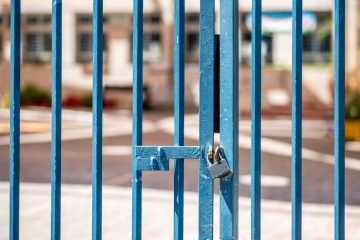
Locked school

What can schools really do about mass shootings?

Daniel Buck 9.11.2025
Flypaper
view
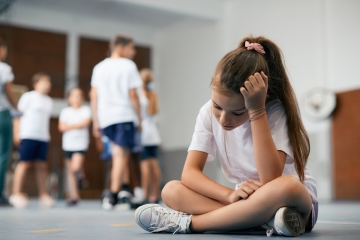
Sad student in gym class

Yes, obesity is a problem, but the Presidential Fitness Test isn’t a solution

Jill Hoppe 9.11.2025
Flypaper
view
School graduation

Revisiting research on who gets into elite colleges and how it affects their lives

Jeff Murray 9.11.2025
Flypaper
view

School choice, regulation, and Democrats’ defense of public schools, with Ashley Jochim | Episode 985 of The Education Gadfly Show

Ashley Jochim, Michael J. Petrilli, David Griffith, Ph.D., Adam Tyner, Ph.D. 9.10.2025
Podcast
view
Student using a computer in class

Cellphone bans are not enough

Henry Seton
9.11.2025
Flypaper

This fall, students are returning to school amidst tighter cellphone restrictions than ever. From California to Florida, a rare consensus of politicians, educators, and parents is rising against the dangers that smartphones pose to student learning and well-being.

But it is too early to celebrate. Simply banning cellphones is like locking the front door while leaving the back door open.

As an educator who has worked in phone-free schools for decades, I have seen firsthand how the distraction economy survives. Laptops, Chromebooks, and tablets—sometimes handed out by the schools themselves—can connect to the same social media platforms, as well as potent, addictive games, all on a bigger, brighter screen. These devices can also remotely access smartphones and even gaming systems like PlayStation and Xbox.

Firewalls help, but they are frequently no more than low fences. Classroom rules depend heavily on the eagerness of teachers and administrators to enforce them. Many educators look the other way, averse to confrontation, hoping that a distracted student is better than a disruptive one.

Even when students are actually on task, research consistently shows that screens are less effective than paper for deep reading and long-term retention. Students reading on paper can comprehend more complex texts, sustain focus longer, and remember more the next day.

And the effect is immediate: The moment a laptop is open on a desk, students’ attention spans shrink—not just for those using the devices but also for peers in their line of sight. According to a recent PISA study, about two-thirds of U.S. teens say they’re distracted by their own digital devices, and roughly 54 percent say they’re distracted by peers’ usage—a pattern linked to a 15-point drop in math scores in OECD countries.

In my first decade teaching in Massachusetts, I studied public data to find the schools near me where students had the fastest rates of growth from year to year. Again and again, I found the same thing: engaged students but minimal tech. With only a notebook, pencil, and text, students flourished under strong instruction—whether debating literature and history in whole-class discussions or wrestling with STEM problems in small groups while their teachers circulated and coached.

My own 10th grade world history course is hardly tech free. I project instructions and a timer for most activities, so expectations are clear. I post all lessons and resources online in case students need to revisit a topic. Students occasionally use their laptops in class when necessary—for example researching and preparing slides for current-events presentations. But I design most lessons to be device-free for students.

What about AI and the argument that our future will be intertwined with ChatGPT and Claude? The reality, as any teenager will tell you, is that it takes mere hours, if not minutes, to learn how to use AI tools adroitly. Conversely, it takes decades to develop the reading skills needed to be a discerning thinker. As cognitive scientists like Daniel Willingham have argued, attributes like creativity and critical thinking rarely exist in isolation but instead rely on deep foundations of subject-specific content knowledge that build slowly over time.

We need to insist that schools tighten access to all electronics, not just cellphones. The default for our nation’s classrooms needs to be that electronics are away unless they bring a clear benefit. And when students are on devices, teachers need to monitor all screens rather than naively hoping that students will self-police when highly addictive apps are a click away.

If we want to prepare our young people for a future that demands focus, knowledge, and critical thinking, the first steps are simple: Ban the phones, close the laptops, put away the tablets, and let the learning begin.

view
Locked school

What can schools really do about mass shootings?

Daniel Buck
9.11.2025
Flypaper

By now, we’ve all heard the news from Minnesota: A lone gunman opened fire during morning mass at a Catholic elementary school, claiming innocent lives and traumatizing a whole community. As a former elementary school teacher and administrator, I can tell you that news of school shootings hits differently when you work in one.

You notice thin windows and the vulnerability of dismissal and outdoor recess. You reflect on the responsibility to protect the students in your care and wonder which student in your class might crack.

These scenarios are not abstract to me. As a building administrator, I had to think through how to prevent a mass shooting—consulting with police, analyzing our policies, and wondering where in our budget we could find millions to replace windows.

Through it all, I’ve come to a conclusion that I don’t like: There’s not much schools can do to prevent mass shootings. The best, or even the only, approach may be to focus on the everyday threats to student safety that receive far less attention.

Conservatives tend to support “campus hardening”—security measures intended to make schools less vulnerable to attack. But some measures might only make matters worse. TSA-style single points of entry and exit create a chokepoint for lone gunmen. Since most shooters are themselves students, active shooter drills may only broadcast where the most potential victims will be and when. To date, according to one review of the research, there is simply no “empirical evidence” that campus hardening can “diminish firearm violence in schools.”

Anyone intent on violence will find a way and any system will have a loophole.

The left champions gun control, but the correlation between school shootings and gun ownership are weaker than they admit. Rates of gun-ownership had been declining for four decades prior to the pandemic. Yet, by any measure, school shootings increased during that period. And with 500 million firearms in America, the only regulation with any possible hope of eliminating school shootings would be universal confiscation, which is unconstitutional, a political nonstarter, and also likely wouldn’t fix the situation.

A bipartisan approach might champion early warning reporting and threat assessments. Alas, school loners are plentiful, but few turn violent. It’s worse than trying to find a needle in a haystack. It’s more akin to seeking a slightly grayer shell on a vast beach of gray shells. Deputizing students and teachers into threat assessment experts is no workable solution.

To assess what schools can actually do requires an honest assessment of the issue, which is harder to do than one might think. According to Education Week there were 39 school shootings in 2024. But that statistic doesn’t capture the reality. A revealing 2023 paper from JAMA Pediatrics analyzed 253 school shootings across 26 years and found that the majority arose from personal disputes and involved a handgun.

They were instances of targeted interpersonal violence, not mass killings. I’ve never been in a building with a Columbine-style gunman, but I have experienced this more common occurrence. Gang members have threatened to kill a rival in our building and a criminal once flashed a gun when a brawl spilled onto our playground.

In the face of such violence and uncertain remedy, what can teachers and administrators do to keep their students safe? The JAMA paper provides insight: Focus on the everyday threats to student safety that you can control.

Here’s the harsh reality: It’s unlikely that we can do much to prevent mass shootings, but better policing can reduce the crime that spills over into our classrooms. Stronger discipline policies can secure the more prosaic safety—hallway fights and weapons stashed in backpacks—that every student deserves. Moreover, cellphone bans, stronger family policies, and more community institutions create the sense of belonging that keep potential shooters from a path of isolation and violence.

What should schools not do? If there’s one thing that I advise against, it’s safetyism. During the early 2000s, child abduction scares led many parents to lock their children up despite the relative safety of the decade.

I worry the same may happen here. According to the National Center for Education Statistics, homicides on school grounds have halved since the 1990s. Statistically speaking, these buildings are safer than they ever have been. It would be an error to host fewer outdoor assemblies, spend vast sums on metal detectors or facilities updates instead of better curricula or pay raises, or constantly preach to our children that they’re in danger. None of this is a call to complacency, but an attempt at a sober reckoning of what we can do to mitigate the effects of these horrifying tragedies. Schools can’t stop every mass shooter, but they can make students safer by addressing everyday threats—and by resisting the temptation to overreact to rare ones.

Editor’s note: This was first published by the American Enterprise Institute.

view
Sad student in gym class

Yes, obesity is a problem, but the Presidential Fitness Test isn’t a solution

Jill Hoppe
9.11.2025
Flypaper

I remember standing on my high school track, clutching my inhaler, knowing I was about to fail. Officially, the Obama administration had phased out the Presidential Fitness Test, but my district hadn’t gotten the memo. So, once a year, my Rhode Island classmates and I still lined up for the evaluation.

When I finally crossed the finish line, wheezing and ready to collapse, my more athletic classmates were waiting on the turf. I was the only thing standing between them and heading back to the locker room, and the judgment on their faces told me everything I needed to know. Following the test, there was no feedback, no support, no plan for improvement—just a score that told everyone I wasn’t fit enough. My teachers insisted that my test score was based on effort, but the grading rubric said otherwise, and my GPA paid the price. My experience wasn’t unique. As I gathered research for this piece, I also came across countless articles where people shared their own negative experiences with fitness testing.

Now, more than a decade after the Presidential Fitness Test ended, the Trump administration has announced its return, citing concerns over public health and national security. But the program’s origins reveal how out of touch the test is with modern fitness goals. In 1956, amid Cold War fears about military readiness, President Eisenhower established the President’s Council on Youth Fitness, and the original version of the test included pull ups, sit-ups, a shuttle run, a standing broad jump, a 50-yard dash, and a softball throw (which was apparently supposed to mimic throwing a grenade). By the 1960s, the test had become a competitive national ritual

By 2012, when the Obama team ended it, the test included a one-mile run, sit-ups, push-ups or pull-ups, sit-and-reach flexibility, and a shuttle run (but no real or imagined hand grenades). To replace the test, the administration created the Presidential Fitness Youth Program to focus on “assessing health versus athleticism for America’s youth.” It also discouraged grades based on performance (though many states kept some form of annual fitness testing in place). The Trump administration brought back the test to “promote the physical, mental, and civic benefits of daily movement, exercise, and good nutrition.”

There are three problems with this approach to measuring fitness.

First, the tests themselves are unscientific. As noted, they are loosely modeled on military readiness benchmarks, not on child development or health outcomes. Decades of research show that fitness scores are influenced by countless external factors including test conditions, motivation, and differences in body type. The tests also misrepresent what it means to be fit: A marathoner may struggle with pull-ups and an Olympic powerlifter may never run like Usain Bolt, but both are still unquestionably fit.

Second, there is no evidence that fitness testing promotes a healthier lifestyle, despite that being the intent. A 2009 review found that fitness tests have unclear links to healthy lifestyles and do little to motivate young people or develop the knowledge and skills that are important to sustained engagement in an active lifestyle. And the best predictor of whether young people stay active isn’t their mile time, but their attitude toward exercise (i.e., whether exercise is evaluated as pleasant versus unpleasant). As one veteran PE teacher explains, “I can say with complete confidence that it will not promote a healthy, physically active lifestyle. It will do one thing: single out and label children as either capable or incapable of passing the test.”

Finally, the tests can inflict lasting damage on kids’ self-esteem. In a study of over 1,000 adults, 34 percent cited embarrassment, 18 percent lack of enjoyment of activities like fitness testing, 17 percent bullying, and 14 percent social-physique anxiety as their worst PE memories, with these negative memories linked to adult sedentary behavior. As one former student recalled, “The Presidential Fitness Test scarred me for years and made me think I was physically incapable of doing anything exercise related. I’m 68 now, but I will never forget the humiliation.”

So what might we do instead of simply testing one’s fitness in these ways? 

First, evaluate students based on effort and improvement. Instead of penalizing a student’s PE grade because they can’t run the mile in a set amount of time, schools should focus on year-to-year progress, cumulative effort, or achieving meaningful personal benchmarks (e.g., do five more sit-ups than at the beginning of the school year, cut 30 seconds off one’s mile-time, take 10,000 steps every day). That should matter more than an arbitrary national cutoff that ignores differences in characteristics like body types, baseline fitness levels, nutrition, disabilities, chronic conditions, and countless others.

Second, give PE teachers the support they need. Right now, they are asked to administer fitness tests without the resources, training, or time to do so. A (small) study of ten middle and high school PE teachers in California revealed that many teachers receive little to no training for administering these evaluations, and those who did relied on outdated or self-sought workshops. Rethinking high-stakes fitness tests means providing teachers with standardized guidance and tools to implement multicomponent curricula to foster lifelong fitness, otherwise both teachers and students are set up to fail.

Third, provide real, comprehensive support—especially for students who struggle the most. If a student bombs an important math test, we don’t just slap on a failing grade and move on, but we reteach, support, and give them multiple opportunities to demonstrate improvement. Fitness should be no different, yet the Presidential Fitness Test only gives students one or two chances a year with no system to track growth. Instead of labeling kids as “unfit” and stopping there, schools that use fitness testing should follow up with individualized guidance, focus on growth, and encourage a variety of fitness activities so students can explore exercises they may enjoy more than running, and get credit for improvement. 

Yes, declining physical fitness is a problem. So is humiliation. But we don’t have to choose either one.


view
School graduation

Revisiting research on who gets into elite colleges and how it affects their lives

Jeff Murray
9.11.2025
Flypaper

Every once in a while, an older research paper pops back into the discourse unexpectedly and invites another look. A 2023 NBER working paper analyzing the determinants and effects of attending America’s most elite colleges has been recently updated, and has gained attention anew as many on the political right continue to call into the question the influence that such institutions have in America, amid a broader discussion of the value of college.

National Bureau of Economic Research (NBER) heavyweights Raj Chetty, David Deming, and John Friedman used five different sources to build their dataset: federal income tax records on parents and children’s incomes from 1996–2021; 1098-T tax forms on college attendance from 1999–2015; Pell grant records from the Department of Education’s National Student Loan Data System from 1999–2013; standardized test score data from the College Board every year from 2001–2005 and every other year from 2007–2015, as well as ACT scores from 2001–2015; and admissions records for undergraduate first-year students spanning subsets of years from 1998–2015 from a list of private and public colleges. That list has two parts. What’s sometimes termed “Ivy-Plus” consists of the eight Ivy League schools plus Stanford, MIT, Duke, and the University of Chicago. All colleges in the University of California (UC) and California State University (CSU) systems, as well as all four-year public institutions in Texas, were labeled as a “flagship public colleges” comparison group. These data sources were linked together, and all analyses were conducted using the linked, anonymized, individual-level dataset.

The headline finding was that children from families in the top 1 percent of the income distribution were more than twice as likely to attend an Ivy-Plus college as those from middle-income families with comparable SAT/ACT scores. Two-thirds of this gap was due to higher admission rates for students from high-income families with test scores comparable to their lower-income peers; the remaining third was due to differences in rates of application and matriculation among the two groups. By comparison, children from the highest-income families demonstrated no such admissions advantage at the flagship public colleges. To be fair, flagship public colleges also admit a larger share of students from top 1 percent families than from middle-income families, but the gap there is driven almost entirely by disparities in application rates rather than anything to do with admissions.

Chetty and colleagues also used their longitudinal data to show that attending an Ivy-Plus college instead of a flagship public college on average boosted students’ chances of reaching the top 1 percent of the earnings distribution by 50 percent, nearly doubled their chances of attending an elite graduate school, and almost tripled their chances of working for a prestigious employer. Interestingly, “prestigious” is defined here as an employer that disproportionately employs students from Ivy-Plus colleges, which is somewhat circular and does raise a question or two about the findings. More on this below.

The high-income admissions advantage at Ivy-Plus colleges was driven by three factors, two of them pretty obvious: preferences for admitting children of alumni and athletic recruitment (think: “rich kid” sports like crew, squash, etc.). The third—weighting placed on non-academic credentials like “extracurricular activities, leadership traits, etc.”—is one sure to raise hackles among proponents of meritocracy. In fact, all three factors are uncorrelated or negatively correlated with post-college outcomes, whereas academic credentials such as SAT/ACT scores are highly predictive of post-college success. As Chetty and team lay it out, students of equal academic ability are being shut out of elite colleges because such ability is systematically subsumed beneath highly gameable non-academic admissions factors. And that’s a problem, not only for higher education, but also for our society at large.

To illustrate the problem, the researchers tweaked their formula to reflect a putative admissions policy without the advantage that arises from the highly-weighted non-academic factors enjoyed by students from high-income families. This change reduced the percentage of admitted students from the highest income category from 15.8 percent of the actual admitted student body to 11.1 percent of the hypothetical admitted student body. The places thus vacated could be readily filled by lower-income students with a high likelihood of college achievement based on their SAT/ACT scores. Assuming a similar distribution of outcomes (graduate school attendance, employment, income level, etc.) for the new, more-diverse cohort, the many post-college advantages of an Ivy-Plus degree are projected to be distributed beyond top income families where they are currently concentrated.

Fast forward to today: Would a change like this—leading to the diversification of society’s future leaders, per the report’s title—be enough to turn down the heated rhetoric aimed at these elite institutions? The current administration in Washington seems to be on a mission to find out, although it is hedging its bets by also trying to change the academic culture, which could easily impact the Ivy-Plus “advantage” for whomever might earn it—although not in the way this report’s authors envision it.

SOURCE: Raj Chetty, David J. Deming, and John N. Friedman, “Diversifying Society’s Leaders? The Determinants and Causal Effects of Admission to Highly Selective Private Colleges,” National Bureau of Economic Research (first published July 2023; updated August 2025).

view

School choice, regulation, and Democrats’ defense of public schools, with Ashley Jochim | Episode 985 of The Education Gadfly Show

9.10.2025
Podcast
 

Ashley Jochim, principal at the Center on Reinventing Public Education and mom of four, joins Mike Petrilli and David Griffith on the Education Gadfly Show to continue our debate on private school choice and regulation. She also discusses how Democrats’ defense of public schools often clashes with families’ real experiences, and why clear, consumer-facing information is essential to making choice work.

On the Research Minute, Adam Tyner highlights a new NBER study from Chicago showing that giving principals more autonomy can boost student achievement— though effects vary widely depending on leadership capacity.

Recommended content:

  • Unfettered Choice Has Not Delivered on Promises to Milwaukee Families —Ashley Jochim, Education Next
  • Innovation, regulation, and school choice, with Mike McShane | Episode 984 of The Education Gadfly Show
  • Overregulated charter schools: Fact or fiction? —Michael J. Petrilli
  • The mixed blessing of new school measures—Chester E. Finn, Jr.
  • When decentralization works: Leadership, local Needs, and student achievement—C. Kirabo Jackson, NBER (2025)

Feedback Welcome: Have ideas for our show? Send them to [email protected]

Fordham Logo

© 2026 The Thomas B. Fordham Institute
Privacy Policy
Usage Agreement

National

P.O. Box 110
Burke, VA 22009

202.223.5452

[email protected]

Ohio

P.O. Box 82291
Columbus, OH 43202

614.223.1580

[email protected]

Sponsorship

130 West Second Street, Suite 410
Dayton, Ohio 45402

937.227.3368

[email protected]