Mobile Navigation

  • National
    • Policy
      • High Expectations
      • Quality Choices
      • Personalized Pathways
    • Research
    • Commentary
      • Gadfly Newsletter
      • Flypaper Blog
    • Events
    • Scholars Program
  • Ohio
    • Policy
      • Priorities
      • Media & Testimony
    • Research
    • Commentary
      • Ohio Education Gadfly Biweekly
      • Ohio Gadfly Daily
  • Charter Authorizing
    • Application
    • Sponsored Schools
    • Resources
  • About
    • Mission
    • Board
    • Staff
    • Career
Home
Home
Advancing Educational Excellence

Main Navigation

  • National
  • Ohio
  • Charter Authorizing
  • About

National Menu

  • Topics
    • Accountability & Testing
    • Advanced Education
    • Career & Technical Education
    • Charter Schools
    • Curriculum & Instruction
    • ESSA
    • Evidence-Based Learning
    • Facilities
    • Governance
    • Personalized Learning
    • Private School Choice
    • School Finance
    • Standards
    • Teachers & School Leaders
    • Think Again
  • Research
  • Commentary
    • Gadfly Newsletter
    • Flypaper Blog
    • Gadfly Podcast
  • Events
  • Scholars Program

The Education Gadfly Weekly

Sign Up to Receive Fordham Updates

We'll send you quality research, commentary, analysis, and news on the education issues you care about.
Thank you for signing up!
Please check your email to confirm the subscription.

The Education Gadfly Weekly: 11 thoughts about the massive layoffs at the U.S. Department of Education

Volume 25, Number 10
3.12.2025
3.12.2025

The Education Gadfly Weekly: 11 thoughts about the massive layoffs at the U.S. Department of Education

Volume 25, Number 10
view
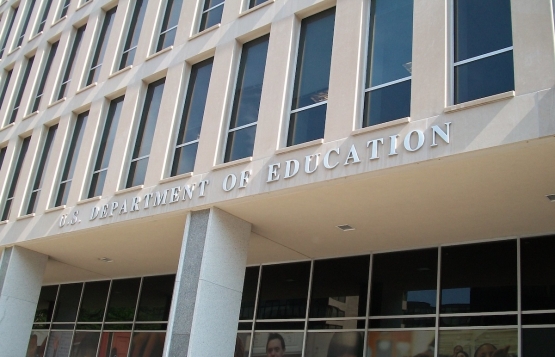
U.S. Department of Education building
High Expectations

11 thoughts about the massive layoffs at the U.S. Department of Education

Trump administration officials announced on Tuesday that they are laying off 1,300 employees at the U.S. Department of Education. This is on top of nearly 600 people who had already taken early retirement or buyouts, as well as another 60 probationary employees who had already been fired. This brings the agency’s headcount down from about 4,100 to about 2,200, a major reduction. Here are some thoughts on the situation as we understand it now.

Michael J. Petrilli 3.12.2025
NationalFlypaper

11 thoughts about the massive layoffs at the U.S. Department of Education

Michael J. Petrilli
3.12.2025
Flypaper

Should schools pay students to attend remediation programs?

Alina Adams
3.12.2025
Flypaper

The return of accountability

Tim Daly
3.12.2025
Flypaper

Barriers to teaching and assessing “soft skills”

Heena Kuwayama
3.12.2025
Flypaper

#960: Why Secretary McMahon shouldn’t waive federal testing requirements, with Charles Barone

3.12.2025
Podcast

Cheers and Jeers: March 13, 2025

The Education Gadfly
3.12.2025
Flypaper

What we’re reading this week: March 13, 2025

The Education Gadfly
3.12.2025
Flypaper
view
Giving money

Should schools pay students to attend remediation programs?

Alina Adams 3.12.2025
Flypaper
view
Bridge construction and gap

The return of accountability

Tim Daly 3.12.2025
Flypaper
view
Student working in a library

Barriers to teaching and assessing “soft skills”

Heena Kuwayama 3.12.2025
Flypaper
view

#960: Why Secretary McMahon shouldn’t waive federal testing requirements, with Charles Barone

Charles Barone, Michael J. Petrilli, Amber M. Northern, Ph.D., David Griffith, Ph.D. 3.12.2025
Podcast
view
Fordham Gadfly image

Cheers and Jeers: March 13, 2025

The Education Gadfly 3.12.2025
Flypaper
view
Fordham Gadfly image

What we’re reading this week: March 13, 2025

The Education Gadfly 3.12.2025
Flypaper
view
U.S. Department of Education building

11 thoughts about the massive layoffs at the U.S. Department of Education

Michael J. Petrilli
3.12.2025
Flypaper

Trump administration officials announced on Tuesday evening that it is laying off 1,300 employees at the U.S. Department of Education. This is on top of nearly 600 people who had already taken early retirement or buyouts, as well as another 60 probationary employees who had already been fired. This would bring the Department’s headcount down from about 4,100 to about 2,200, a whopping reduction. We don’t know too much about the specifics yet, though news is dripping out describing the reduction in force as affecting virtually every office in the agency. Below are my thoughts on the situation as we understand it now. Some of these will likely change as we get more details about specific cuts.

  1. I feel bad for the affected employees, just as I would if there had been massive layoffs at a corporation or manufacturing plant or university. This is likely to negatively impact many families and their kids for many years to come. These are, by and large, smart and patriotic Americans who came to Washington because they wanted to serve the public.

  2. It’s a shame that these cuts have apparently been made without regard to employee performance or effectiveness. It’s particularly disappointing that probationary employees were let go, given that they are either people strong enough to have recently earned promotions or were junior people bringing fresh ideas and talent into the federal government. It’s especially galling to see the Presidential Management Fellows program eliminated; it was essentially a Teach For America for federal workers. This doesn’t bode well for future efforts to recruit great people into federal service.

  3. That said, some blame has to go to prior Democratic administrations, especially the Biden Administration, which made no progress on reforming the civil service rules to allow managers to let go of ineffective employees and protect their higher performing ones. Instead of tackling these sorts of issues, President Biden hugged the government employee unions as part of his stance toward unions in general, and now we are seeing the results of that.

  4. I can understand why advocates of a muscular federal role in education are disappointed by this news. But they lost that fight when No Child Left Behind was replaced with the Every Student Succeeds Act. At this point, there’s just not much congressional oomph behind the view that the U.S. Department of Education should play a strong leadership role, and therefore, it probably doesn’t need as many staff to do the things that remain in its wheelhouse.

  5. I have less patience for the expressions of outrage from the leaders of organizations such as the AFT and the NEA, who have for decades fought against a strong federal role in education, at least when it comes to No Child Left Behind, Race to the Top, or other serious efforts to tie accountability to federal funds. It seems like their preferred policy is for Uncle Sam to keep writing checks to states and school districts, and for that money to come without many strings beyond basic fiscal oversight. Note that that sort of passive, pass-through federal role doesn’t require as many staff.

  6. I wish the Trump (and DOGE) folks had done more to protect the Institute for Education Sciences, and especially its National Center for Education Statistics. If there’s any part of the federal role that has enjoyed broad bipartisan support for basically forever, it’s research and data collection. Here’s hoping IES finds smart ways to boost efficiency and effectiveness so that crucial enterprise doesn’t suffer.

  7. Outside of IES, I don’t anticipate these staff cuts will make much of a difference in the real world of schools and classrooms. I suspect it will be hard to notice much of a difference.

  8. That depends, of course, on mundane questions around workload, and whether technology can be used to make certain processes more efficient. A lot of people who work in the Department on K–12 issues are grant or contract officers, and they are now going to oversee perhaps twice as many grants and contracts per person as before. Whether that’s too many probably depends on how important you think oversight of these grants really is.

  9. Likewise, the Office for Civil Rights staff will need to handle more complaints per person than before. They won’t have the capacity to launch proactive investigations, but in my view that’s a good thing. I didn’t like it when Democratic administrations used disparate impact theory to investigate school districts for supposedly disciplining too many students of color, and I don’t like the idea of the current administration launching proactive OCR investigations to try to stamp out DEI, which they will now have less horsepower to do.

  10. There will now be fewer people working on the big formula grant programs, like Title I, Title II, and IDEA. Some people worry that that means questions from states and school districts won’t be answered as quickly as before. But given that the underlying statutes haven’t changed in a long time, I’m not sure why there are a whole bunch of questions to begin with or why we think people at the federal level necessarily have the answers.[1]

  11. Whatever you think of these cuts, we should try to keep a sense of scale. Our K–12 education system employs something like 6 million people around the country. In that context, 2,000 jobs is a drop in the bucket. That cuts against the argument from people on the left that the “sky is falling.” But it also cuts against the argument from the Trump folks that they are achieving meaningful savings. If you want to go after the real waste, fraud, and abuse in America’s education system, you need to do it at the local level, not in Washington. After all, that’s where the money is.

[1] Update on July 15, 2025: There were relatively few cuts to staff in the offices overseeing these formula grant programs, so getting answers to questions and such might not be a problem after all.

view
Giving money

Should schools pay students to attend remediation programs?

Alina Adams
3.12.2025
Flypaper

When my middle child was in high school, nothing I said or did could keep him from dropping out. But what if I’d tried paying him?

Paying students is what the Philadelphia School District is implementing. In 2025, public school students who failed the Keystone Algebra 1 exam will be offered the chance to enroll in an eight-week course of extra classes to meet in the morning before school, in the afternoon after school, or on Saturdays, and then to retake the test in May. Those who opt-in will receive a cash stipend.

Philadelphia’s Algebra state test results are dropping. Only 27 percent were proficient last year, down from 30 percent the year before. The hope, obviously, is to reverse the downward trend via financial incentives directly to families.

There is a history of paying students, in America and around the world.

Starting in 1997, as part of Mexico’s Progresa Program, families living in 506 low-income communities were issued an educational stipend of 60 pesos per month on the condition that their third grade children attend school 85 percent of the time and not repeat a single grade more than twice. Rewards went up as the children progressed through the grade levels, and more was paid for girls to attend, maxing out with 225 pesos for females enrolled in the third year of junior high school

Despite the higher fees, the most benefit was seen in increased enrollment for fourteen-year-old boys, which went up 14 percent. Similar results were seen in a program in Colombia.

Meanwhile, teens above the age of sixteen in Sweden receive an allowance as long as they remain full-time students, and some schools in England have offered stipends for attendance and performance to low-income youth.

In America, Harvard University’s Roland Fryer has studied the impact of financial academic incentives the most. Throughout the mid-2000s, the economist spent more than $6 million dollars seeing if financial rewards would improve low-income students’ test scores in Chicago, Dallas, New York City, and the District of Columbia.

There were some minor successes, such as in Dallas, where students who were paid $2 per every book they read and understood (averaging about ten books per participant) advanced roughly two and a half months academically compared to those in the control group.

What Fryer found most often, however, was that, while test scores didn’t increase, attendance did. (This does raise the question of what was happening in those classrooms that spending more time receiving instruction didn’t translate into kids actually learning more—at least, not in a way that could be measured.)

Bentley University’s Jeffrey Livingston’s major takeaway from Fryer’s research was that students achieved more when they were encouraged to do things they believed were under their control. A concept summarized as “rewarding inputs instead of outputs.” Livingston claimed students succeeded when they were recompensed not for doing well on a test, but for performing the tasks necessary to do well on a test, such as taking notes, studying the material, or as demonstrated in Dallas, reading.

This would explain why the Philadelphia program is promising payment to all those who attend the extra tutoring sessions—regardless of how well they do on the final exam. It is similar to a program in Detroit, where students were promised $200 gift cards for every two weeks of perfect attendance between winter break and March, maxing out at $1000 per student.

Consequently, I have two questions.

If the goal is not to have students actually learn more, then what is it? Yes, getting kids off the street, helping them stay out of trouble, and providing positive role models is noble. It’s even incredibly valuable to society as a whole. Preventing crime benefits both the potential victims and perpetrators.

But should that really be a school’s primary objective? We hear talk about schools providing mental health services, about them providing food and dental care, about making every child feel valued. But those aren’t ends within themselves, are they? All those wrap-around services are supposed to be in service of K–12 students learning the skills they will need to function in the world, to find employment, to contribute to society, to raise families of their own (if they so choose). If we provide all these services—including actual cash payments—and they still don’t result in an adequate education, then how can any of them ultimately be considered a success? What purpose do they serve if learning isn’t it?

Furthermore, kids instinctively understand carrots and sticks, often better, faster, and in a deeper way than the adults issuing them. If students are told they’ll be paid for taking a test a second time, wouldn’t the logical thing to do be to deliberately fail it the first time? Kids will grasp much quicker than the administrators who created the incentive program that they are, in fact, being penalized for passing Algebra 1 on the first try. Good pupils are being punished, and bad ones are being rewarded. (Kind of like when those who act up in class receive the special treat of getting to leave and spend time with an administrator who feeds them candy and offers undivided attention, while those who behave have to stay behind and keep grinding—with no candy, to boot!)

If the Philadelphia school district insists on offering cash to their students—though the money won’t come from the district itself but from a private non-profit called The Fund For the School District of Philadelphia—and if they actually want kids to learn, wouldn’t a better incentive be to offer more money to those who pass the first time, with the returns diminishing every time you retake the exam?

This way, students wouldn’t just be incentivized to show up and serve their mandated time (did someone say school to prison pipeline?). They’d be incentivized to learn. Those who worked the hardest would receive the largest reward, yet those who took longer would still be encouraged to continue. In this way, the system wouldn’t be giving up on anyone, while still demonstrating the benefits of putting in maximum effort initially. At the very least, taking into account that factors other than hard work can affect academic performance, an equal cash payment should be available to anyone who passes the test, regardless of if they did it on the first or tenth try. There should also be no expiration date, like there is now in Philadelphia with a single time frame for extra tutoring, on finally getting it right, either.

As for my own son, I doubt any amount of money would have succeeded in keeping him engaged. By the time he dropped out of high school, he’d been working professionally as a computer programmer since seventh grade. Some days, he made more money than I did. He understood very quickly where the financial incentives were. And he realized that they weren’t in school, or in the system that required him to fill a seat for a certain number of hours, day after day, year after year—without really caring whether he learned anything while he was there.

Alina Adams is a New York Times best-selling romance, historical fiction, and mystery writer, the author of Getting Into NYC Kindergarten and Getting Into NYC High School, and mother of three. She believes you can't have true school choice until all parents know all their school choices—and how to get them. Visit her website at: www.NYCSchoolSecrets.com.

view
Bridge construction and gap

The return of accountability

Tim Daly
3.12.2025
Flypaper

During a January 29 town hall in Washington to discuss dismal new test results, Harvard professor Marty West—who serves as the vice chair of the board that oversees national testing—poked his finger straight into the light socket.

Asked by NPR correspondent Cory Turner why student performance plateaued in the 2010s and then began to decline, West referenced a term that is less popular in education circles than head lice: “There is good evidence, some of which uses NAEP data, that really does suggest a lot of that progress in the 1990s and 2000s was driven by test-based accountability.”

Accountability? Test-based accountability?

Surely, he misspoke.

Everyone hates accountability. Embodied by the No Child Left Behind Act (NCLB) passed in 2001, it was associated with annual testing in grades 3–8 and demands for constant improvement of results—particularly among struggling subgroups.

Critics saw accountability as a counterproductive fiasco that degraded education without delivering the performance miracles it promised. Instead, they argued, it encouraged states to set low standards that students could easily meet, focus excessive attention on students near the cusp of passing, cheat to avoid punishment, narrow the curriculum to reading and math, and scrap real instruction in favor of endless test prep.

Sounds miserable, doesn’t it? In 2015, Congress acceded to the critics by scrapping NCLB. States would henceforth develop their own systems for accountability with relatively few guardrails.

And yet here we’ve got Marty West, uttering the A-word in public. They didn’t even bleep it on the broadcast.

He isn’t the only one. I’ve heard the A-word more times in the past month than in the past five years. It’s suddenly back. To understand why, we need to rewind a bit.

What happened after NCLB?

State systems for school oversight post-2015 were “accountability” like Scooby Doo was a guard dog.

In the absence of a muscular state or federal role, we entered a new era that put the onus on parents. It was unspoken. No one issued a decree that said parents would henceforth be on their own to ensure schools delivered on their promises. That’s just how it worked in practice. Parents had to fill any gaps that arose. It was parent accountability.

Privileged students did fine under this approach. Their parents tended to have college degrees, higher incomes, and discretionary time to engage. These families monitored their kids progress constantly, alert to any sign of struggle by the child or low expectations from teachers. They pushed their kids into advanced coursework. They limited screen time at home and ensured homework got done. They paid out of pocket for extra tutoring when it was necessary.

Less privileged students did not do fine. Their performance dropped noticeably before the pandemic and catastrophically during it. Perhaps their parents assumed everything was OK unless someone told them otherwise. As grade inflation increased, families likely heard only rosy messages.[1] There’s reason to suspect that devices meant for completing schoolwork were repurposed for surfing the web and social media. We know that absenteeism went through the roof.

Now’s a good time to mention a trend that has been overlooked in the coverage of our recent NAEP results. It’s been widely noted that very-high-performing students—say, those at the 90th percentile of the performance distribution—are holding steady or improving, while very low performers—those at the 10th percentile—are declining steeply.

This is true. But even among high performers, gaps have widened between students along socioeconomic lines.

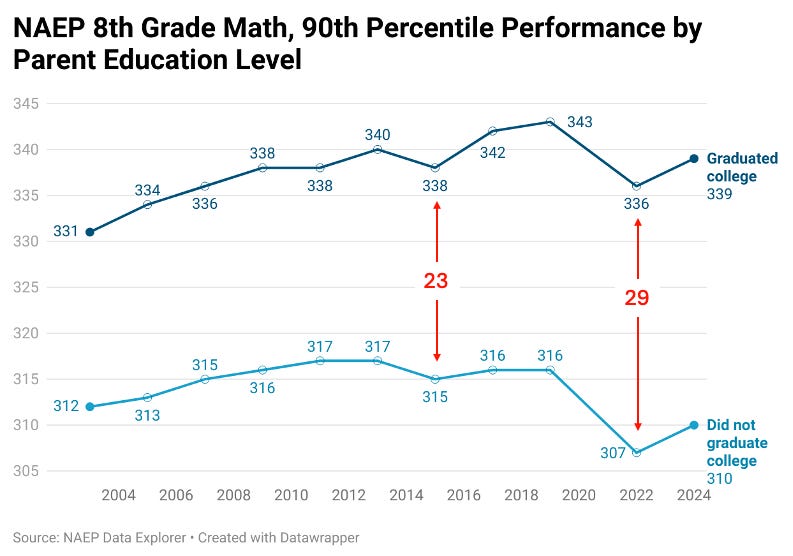
Consider the chart below. It maps 8th grade math scores for students at the 90th percentile from 2003 to 2024. The top line shows children of college graduates. The bottom line shows children whose parents had less than a college diploma—meaning they did not graduate high school, received only a high school diploma, or completed only some college.
1

The lines mostly move in tandem until 2015, when the gap was 23 points. Beginning in 2017, high performers from lower education households stopped improving even as their counterparts from more-educated households still climbed. Those whose parents did not graduate college also had a larger drop during the pandemic. Between 2015 and 2022, the gap between these groups grew by 6 points, which is more than half a year of learning.

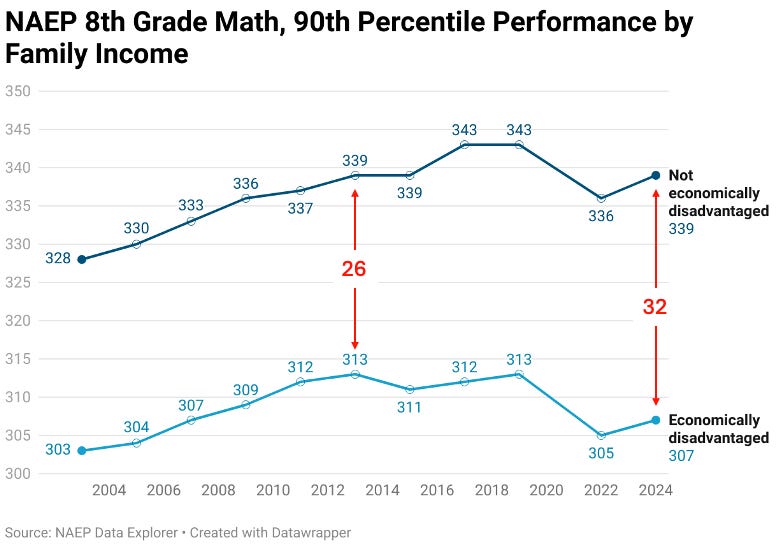
If we look at the same group—high performers—broken out by household income, we see a similar pattern. After 2013, lower income students stalled while their higher income peers improved. Gaps got larger.
2

If this is what happened among strong students, you can imagine what happened to strugglers. It was much, much worse.

Education has always had a significant inherited dimension, where those who thrive in school tend to have children who do well, too. Genes matter, two-parent households matter, etc. Poverty, neighborhood violence, and trauma suppress achievement for less privileged kids. But in the past decade, the power of these factors has been magnified. Instead of increasing opportunity by allowing children of all backgrounds to maximize their potential, our system is conferring advantages on the students who already have the most of them.

That’s what accountability is meant to address. It forces us to pull apart averages so we can see the underlying patterns and adapt when we’re replicating unfortunate legacies instead of breaking them.

Wider trends are renewing interest in accountability

Here are three key reasons that chatter about accountability is humming:

  1. Satisfaction with US public schools hasn’t been this low since the Millennium. According to a recent Gallup poll, education ranked twenty-ninth out of thirty-one aspects of society, just below “the amount Americans pay in federal taxes” and “the size and influence of major corporations.” Guess what happened the last time education did this poorly in the poll? Congress passed NCLB.

  2. Schools are making weird decisions. More districts, for example, are adopting a four-day school week. Given what happened when students had less school during Covid, you are probably unsurprised that a shorter week generally hurts learning. Districts tend to justify it by claiming it saves money (the amounts are trivial) or helps them retain teachers (it doesn’t). But they keep doing it. Some of them are also limiting access to advanced math or purchasing vibes-based reading curricula. All dubious strategies for delivering results.

  3. Spending has increased. Achievement has not. In 2024, the Census Bureau reported the largest spike in per pupil funding in over twenty years. Meanwhile, student performance has dropped to levels not seen since the 1990s or before. State-by-state analysis from the Edunomics Lab will shock you. The cost-benefit relationship is off.

What would next-gen accountability look like?

We now understand why Professor West was dropping the A-bomb.

But there’s little reason to believe there will be a return to NCLB-style, federal accountability anytime soon. The Trump administration quite famously wishes to abolish the Department of Education. NCLB was unpopular even during its prime. Republican state leaders are focused on expanding education savings accounts (ESAs), not regulating schools. Democrats have given up on K–12 education almost altogether.

And still, folks keep saying “accountability.” What do they mean? Here are my guesses:

  • Establish student learning as the non-negotiable responsibility of schools. Schools should have clear, public goals for achievement on state tests that are set in advance and reported out in a timely way. Tests aren’t the whole ballgame, but outcomes on tests absolutely matter. Without goals, schools spin any and all results as wins by cherry-picking whatever’s positive. They just did that with NAEP. Additionally, schools have been pressured to take on functions that are not their core competency, like providing mental health services and fighting culture wars, which make it more difficult to deliver on academics. Learning comes first. That’s what the public wants.

  • Distinguish between success and failure. I’ll pick on California here for a second. Back in 2017, freed from its NCLB constraints, California unveiled a new school rating system. The Los Angeles Times said it “grades on a curve and paints a far rosier picture in academics than past measurements” and “nearly 80 percent of schools serving grades three through eight are ranked as medium- to high-performing.” Instead of ratings with actual names, the new system used colors. It hasn’t gotten better. Last September, California was assigned a D-grade by the The Center on Reinventing Public Education for obscuring information about student performance on its dashboard. It feels sometimes like the state prides itself on not knowing the difference between good and bad schools. If states aren’t going to hold schools accountable, the least they can do is empower families and communities with clear, actionable information to do it locally. Compare each school’s results with those that are demographically similar and be transparent about which ones are doing the best. Many states could do better in this regard.

  • Reward smart spending. Chad Aldeman recently showed that our public schools added 121,000 employees last year. Is that because there were more students? Nope. Enrollment actually dropped by 110,000 kids. For every student we lost, we hired approximately one new staff member. That’s wholly unaffordable. I have some sympathy for schools here. They were sent dump trucks of money and a limited time to spend it toward Covid recovery. They did their best, though the hiring pool for educators was far from ideal. But it’s time for a reset. Taxpayers cannot continue to increase school budgets at the past decade’s pace. With enrollment forecasts down, we’re headed for belt-tightening. We should be offering financial incentives to districts that get more efficient by developing new staffing models, using technology smartly, and intervening with students early to avoid costly catch-up later. None of that is happening now. Accountable spending means looking not only at results but how much it costs to get those results.

This is how we end the education depression

In October, I argued that we’re stuck in a depression that began around 2013 and has now lasted more than a decade. In a subsequent post, I suggested that our strategy must encompass birth to age twenty-five so we are measuring our school systems based on the adults they produce, not just short term proxies.

Widening our aperture is critical. But we still must assess our performance and make decisions year-to-year. We need accountability. If state and federal officials don’t step up—and right now, it does not look like they will—nothing’s stopping educators and families from working together to do this locally. Local school boards can lead the effort. It’s the best way to support our students and the best way to earn future investments in our schools. Stop waiting for the higher ups to play the heavy.

Otherwise, school budgets are going to become tantalizing targets for cuts. Too many unneeded buildings, too many staff, uncontrolled pension obligations—all in the shadow of enrollment losses and underwhelming achievement.

If we fail to act and public support for schools dries up, we’ll be using stronger language than the A-word.

Editor’s note: This was first published on the author’s Substack, The Education Daly.

 

[1] Mississippi is a notable outlier here. Part of its literacy overhaul—which led to it zooming up the national rankings—required schools to communicate with parents when students are struggling with reading. In this era that pushed more onus on parents, Mississippi also ensured they knew then their children needed help. It’s also true that Mississippi ramped up its statewide push in the 2010s when most states were throttling down education reforms.

view
Student working in a library

Barriers to teaching and assessing “soft skills”

Heena Kuwayama
3.12.2025
Flypaper

Academic skills alone are not enough for students to find success later in life, whether in their career specifically or in their broader participation in society. They must also possess what are commonly referred to as “soft skills.” However, finding ways to incorporate the acquisition of such skills into instruction at scale and to determine whether students have mastered them has proven challenging for many state and local policymakers, not to mention practicing teachers.

A new report from the Center for Assessment tackles this issue, outlining the barriers to teaching and assessing “soft skills”—or what the report regrettably refers to as “twenty-first century competencies”—but ultimately stopping short of providing clear, actionable solutions in its guidance for policymakers.

It adopts the OECD definition of the competencies as knowledge, skills, and attitudes necessary to find success working in a global knowledge economy, participating in a diverse society, using new technologies, and adjusting to change. It further describes the skills as teachable, applicable across domains, complex and overlapping, and reflective of higher-order skills. Unfortunately, these descriptions of the competencies are broad and abstract, providing much less insight into the actual meaning of the term than definitions like the Department of Labor’s explanation of “soft skills.”  

The report cites several sources, including studies by America Succeeds and the World Economic Forum, which show that twenty-first century competencies are requested by employers more than technical skills and make up 90 percent of the skills considered “core” by employers. As a result, many states are considering how to incorporate such competencies into instruction and how to develop assessments that measure student progress in mastering them.

But that’s a huge challenge, beginning with the issue of crafting a single clear definition for the competencies themselves, which obviously limits the extent to which assessments can be used to make general ability claims. Furthermore, little research has been done on how competencies like strong critical thinking or creativity develop, presenting a significant hurdle to determining performance targets that specifically define what students should know at any given point in the learning process. The overlapping nature of the competencies makes it tricky to accurately measure them in isolation. And the nature of the competencies calls for assessment item types that go beyond traditional tests—but these other item types may allow for limited comparability and scoring them is apt to be deeply subjective. According to the report, these and many other barriers make it nearly impossible to accurately and reliably assess students’ mastery of twenty-first century competencies.

Perhaps we ought not be surprised, therefore, that while this report does a good job of outlining the challenges facing those hoping to integrate twenty-first century competencies into the classroom and the assessment system, the guidance it provides for policymakers and practitioners relies heavily on theory and is frustratingly devoid of concrete examples or actionable recommendations. For example, the report’s guidance highlights the importance of developing research-backed continua to facilitate skill development, a recommendation that—while theoretically sound—is practically inactionable for policymakers, given the lack of research on these competencies that is mentioned earlier in the report. The report also cautions policymakers against using assessments of the competencies for high-stakes purposes—guidance that may be important, but does not solve the issues the report focuses on, which often deter policymakers and teachers from assessing the competencies at all.

Ultimately, this report is a valuable resource for policymakers and educators seeking to understand the complexities of measuring non-academic skills. But until states and districts pursue clear, research-backed models for implementation, the vision of reliably assessing these competencies will remain just that—a vision.

SOURCE: Chris Brandt, Carla Evans, and Chris Domaleski, “Assessing 21st Century Competencies: Guiding Principles for States and Districts,” National Center for the Improvement of Educational Assessment (January 2025).

view

#960: Why Secretary McMahon shouldn’t waive federal testing requirements, with Charles Barone

3.12.2025
Podcast
 

On this week’s Education Gadfly Show podcast, Charles Barone, Senior Director of the Center for Innovation at the National Parents Union, joins Mike and David to discuss the future of federal assessment and accountability policies under the Trump Administration. Then, on the Research Minute, Amber examines a study on student loan forgiveness and its impact on work, earnings, and borrowing.

Recommended content:

  • Charles Barone, “The Future of Assessment and Accountability | Part 1 | Goodbye Federal Assessment Guardrails?,” National Parents Union  (2025).
  • Dale Chu, “Are states ready to lead on education? Could Trump’s policies set them up to fail?,” Thomas B. Fordham Institute (March 6, 2025).
  • Victoria McDougald, “The case for standardized testing,” Thomas B. Fordham Institute (August 1, 2025).
  • Michael Dinerstein, Samuel Earnest, Dmitri K. Koustas and Constantine Yannelis, Student Loan Forgiveness, NBER (February 2025)

Feedback Welcome: Have ideas for improving our podcast? Send them to Stephanie Distler at [email protected].

view
Fordham Gadfly image

Cheers and Jeers: March 13, 2025

The Education Gadfly
3.12.2025
Flypaper

Cheers

  • Richard Kahlenberg makes the case for Democrats to abandon divisive DEI programs and embrace a unifying policy of integration, equal opportunity, and belonging. —The Liberal Patriot
  • To fix America's failing schools and close the global achievement gap, states should implement merit-based teacher pay tied to student outcomes. —Vivek Ramaswamy, The Wall Street Journal
  • With 38 governor races ahead, charter school supporters must urgently build political infrastructure and mobilize families to protect and grow the movement. —John Engler, CharterFolk

Jeers

  • A Texas charter school superintendent earned $870,000 a year—more than double what was publicly disclosed—raising concerns about misuse of public funds. —Texas Tribune
  • The pandemic and virtual learning shattered the academic culture at a top Baltimore high school, leaving students disengaged, teachers indifferent, and administrators flailing. —Kappan
view
Fordham Gadfly image

What we’re reading this week: March 13, 2025

The Education Gadfly
3.12.2025
Flypaper
  • Can the board game Taboo teach education policymakers an important lesson? One author suggests “tabooing” vague DEI-related terms to encourage greater clarity in DEI debates and allow for more constructive discussions about specific policies.—Conor Friedersdorf, The Atlantic
  • With student debt and dropout rates on the rise, schools including KIPP are shifting away from the “college for all” mindset and shifting their focus to include more diverse pathways, like trade schools, apprenticeships, and two-year degrees.  —The New York Times
  • A proposed federal voucher program offers a 100 percent tax credit for donations. While supporters argue it would expand school choice, critics warn it would divert public funds, disproportionately benefit wealthier families, and create potential tax loopholes. —The Washington Post
  • The Trump administration has embraced a strong version of unitary executive theory by challenging the autonomy of several federal agencies, including the Institute of Education Sciences. —Education Next
  • An open letter to Linda McMahon urges the new Secretary of Education to prioritize the modernization and oversight of NAEP, given its critical role in measuring student progress and informing education policy. —William J. Bennett and Chester E. Finn, Jr., The 74
  • Few states require a full year of civics education, despite broad agreement on its importance, highlighting an urgent need for stronger state leadership, rigorous standards, well-prepared teachers, and accountability to prioritize civics alongside reading and math. —Chester E. Finn, Jr., The Washington Examiner
  • Companies are shifting from DEI to “merit, excellence, and intelligence” (MEI), an approach that emphasizes data-driven hiring and promotion practices to eliminate bias and optimize workforce decisions. —Roland Fryer, The Wall Street Journal
Fordham Logo

© 2026 The Thomas B. Fordham Institute
Privacy Policy
Usage Agreement

National

P.O. Box 110
Burke, VA 22009

202.223.5452

[email protected]

Ohio

P.O. Box 82291
Columbus, OH 43202

614.223.1580

[email protected]

Sponsorship

130 West Second Street, Suite 410
Dayton, Ohio 45402

937.227.3368

[email protected]