Advanced education programs are important to parents, poll finds
Academic advancement programs (especially those branded as “gifted and talented”) are often at the center of controversy about equity in education.
The conventional wisdom is that school closures are bad—not the temporary pandemic-era variety, but the permanent shuttering of underenrolled school facilities.
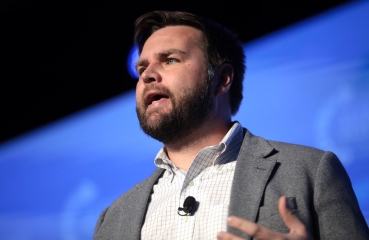
On Monday, Donald Trump chose Senator J.D. Vance as his running mate, signaling a doubling down on his MAGA brand. As far as education is concerned, this means tapping into broad parental discontent over educational and education-related issues, many of which were turbocharged by the pandemic.
Perhaps no modern American education reform has enjoyed the success and staying power of charter schools. Three-plus decades after Minnesota passed the first charter law, 3.7 million students now attend charters, the majority of whom are children of color and come from low-income families.
Spend any length of time in education and you can’t help notice pendulum swings as ideas about what constitutes effective practice fall in and out of fashion. There’s no reason to expect the “science of reading” movement to be an exception.
As policymakers grapple with pandemic-induced learning loss across the country, intensive tutoring has emerged as a promising solution.
The overturning of Chevron deference, which placed a high level of trust in federal agencies to interpret ambiguous statutes, could mean sweeping changes in education in the short term alongside more stability long term.
The Advanced Placement program is undergoing a radical transformation. Over the last three years, the College Board has “recalibrated” nine of its most popular AP Exams so that approximately 500,000 more AP Exams will earn a 3+ score this year than they would have without recalibration.
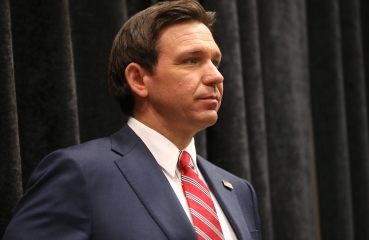
Red-state governors like Ron DeSantis, Brian Kemp, and Greg Abbott deserve credit for taking the political risk to reopen schools quickly during the pandemic, over the objections of officials in Democratic cities. They decided that education was too important to leave to the left. Now the country faces a different wave of school closings, and conservative governors must step up again.
Long after Covid-inspired shutdowns, schools remain chaotic according to recent surveys and umpteen stories of hallway brawls, bus fights, and general mayhem.
In my final college semester, I had the privilege of being a full-time student teacher at a Catholic middle school, teaching seventh and eigth grade history and theology. It was the highlight of my life. The students were curious, polite, and thoughtful, caring to one another and welcoming to me.
Between 1990 and 2013, the share of students nationally who enrolled in algebra or a similar advanced math course in eighth grade more than doubled to 46 percent. Since 2013, however, the trend has reversed, with just 36 percent of eighth graders enrolled in algebra as of 2022.
In the 2022–23 school year, an estimated 26 percent of public school students were chronically absent—a rate almost 10 percentage points higher than pre-pandemic.
With new curriculum, instructional approaches, and staffing models, Houston’s Mike Miles is implementing the most significant overhaul of a public-school system in modern history.
The teaching profession may be in for a rough year ahead, but even without the looming layoffs as federal emergency funds come to an end, school districts are not focusing enough on keeping their best talent. And teachers themselves seem bearish on their profession.
Knee-jerk reaction against public subsidies for religious education is unwise. That’s because allowing religious families to choose sectarian schools for their children could very well be a saving grace for our society. And you don’t have to be among the faithful to believe so.
Charter schools are in for a slog. It doesn’t matter who wins in November. Joe Biden is not a fan.
Inquiry-based learning in STEM classrooms, long a contentious topic, has been making news since the introduction of the controversial California Math Framework. This student-led approach aims to foster engagement by sparking curiosity and critical thinking.
Starting in 2010, Congress invested more than $1 billion to assist states with their literacy improvement efforts through the Striving Rea
Seventeen states have mandated financial literacy courses since 2020, bring the total up to twenty-five. —The Economist School choice policies are proving controversial in conservative, rural communities.
This year’s Wonkathon is over, and the results are in! 2024’s Wisest Wonks: “Everything, everywhere, all at once” solutions to chronic absenteeism, by Kelly James and Brad Bernatek Second place:
Watching the debate last night, all I could think about was my time spent on the playground with my toddler. Her wobbly legs ever close to tumbling down the ladder and causing me constant low-grade anxiety. I felt the same watching Biden fumble through answers, stare into space, and exhibit all the hallmarks of an aging man in cognitive decline.
Last month, Louisiana issued a series of common-sense recommendations titled, simply and winningly, “Let Teachers Teach.” The report hasn’t received nearly enough attention. It deserves to be studied closely in every state and school district if we’re serious about improving teacher job satisfaction, effectiveness, and raising student achievement.
Peter Liljedahl opens his wildly popular book on mathematics instruction, Building Thinking Classrooms, with a bold gambit.
You remember the six-foot rule. How could you forget?
In today’s rapidly evolving digital landscape, the importance of digital literacy can hardly be overstated. But what can schools do to help students acquire these skills? And how does access to computer courses impact students’ futures?