‘Social justice’ education has been harming the children it needs to help, but cutting off funds to schools is not the answer
Editor’s note: This story was produced by The Hechinger Report, a nonprofit, nonpartisan news outlet focused on education.

On Tuesday, April 29, I gave the keynote presentation at an event titled “New Pathways for Teachers in the Age of School Choice,” hosted by the American Enterprise Institute and the University of Austin.
Early in my tenure at the education policy organization I founded, we barely had any money. No money meant no lobbyist, which left me, a complete stranger to the legislative process, to figure out how to pass meaningful policy.
Back in 2015, three Ohio community colleges launched The Accelerated Study in Associate Programs (ASAP), a comprehensive suite of supports meant to help new community college students persist in school and complete a degree in three years or less. Across three studies, evaluation partner MDRC has tracked longer-term outcomes via a randomized controlled trial. It just released a fourth.
In April of 2022, the Thomas B. Fordham Institute launched the National Working Group on Advanced Education.
Over the past year, publications from Teen Vogue to the Associated Press have bemoaned students’ lack of reading stamina.
In this time of uncertainty and divisiveness, I’ll begin by thanking Robert Pondiscio for lifting up the AFT’s magazine, American Educator.
I appreciate and admire Randi Weingarten’s willingness to engage in a discussion about American Educator and the American Federation of Teacher’s role in education.
Ezra Klein’s new book has sparked an important discussion about how the left can provide more housing and transportation. However, one area that particularly needs self-reflection is education. The left has often obstructed the creation of new and innovative schools.

The AFT’s journal, The American Educator, was for many years a reliable source of first-rate research and practice tips for those who think teaching should run on evidence, not folklore and philosophy. It could still be an important engine of K–12 instructional reform today. All it would take is for Randi Weingarten and the AFT to give it some attention and visibility. Or failing that, just leave it the heck alone.
According to a report issued by the OECD in 2018, school closures are an inevitable consequence of declining populations of school-age children across much of the world, and the United States is not im
It’s a bleak time in education policy.
The writer Freddie deBoer makes one really important point about the ed reform movement: We have overpromised and underdelivered because we ignore the obvious truth that some kids are smarter than others. Where he’s wrong is in thinking that this one good point makes the whole reform enterprise a waste of time.
The latest Nation’s Report Card dashed hopes that U.S. students might have finally closed pandemic learning gaps. The results show reading scores are down nationally in both fourth and eighth grade, compounding declines on the 2022 National Assessment of Educational Progress or NAEP.
The pandemic gave the country a chance to rethink how states and school districts deliver quality education.
Editor’s note: A different version of this essay was first published by The 74.
When my middle child was in high school, nothing I said or did could keep him from dropping out. But what if I’d tried paying him?
Academic skills alone are not enough for students to find success later in life, whether in their career specifically or in their broader participation in s
Oregon professor Siegfried Engelmann wasn’t your typical education guru. He didn’t peddle feel-good platitudes or promote classroom fads—he treated teaching like a hard science, and he built Direct Instruction (DI) to prove it.
Earlier this month, the U.S.
Project STAR (Student/Teacher Achievement Ratio) is a widely-known experiment comparing class-size reduction and student achievement outcomes, conducted in the 1980s in Tennessee.
Jill Barshay of The Hechinger Report, one of the better education journalists working today, recently raised concerns about the empirical support for knowledge-rich curricula in improving reading comprehension. But the issue is not a lack of compelling evidence—there is prodigious evidence—but rather the difficulty of isolating long-term curricular effects in research.
A valuable recent edition of the Journal of School Choice focused entirely on research around homeschooling, aiming to add useful data and rigorous analysis to this little-studied education sector.
When I started teaching in Louisiana in 2004, I was told that the state was expanding annual assessments of students to all grades 3–8 because Louisiana ranked forty-ninth in the country for reading proficiency. I started to hear a gutting phrase that I’ve since learned is common across the southeast, “the only state behind us is Mississippi. Thank goodness for Mississippi.”
The third iteration of the Education Recovery Scorecard, compiled by Harvard’s Center for Education Policy Research, was released hot on the heels of 2024 NAEP test scores and is an
The gender gap in education is less talked about than many other achievement gaps, but it persists.
A special issue of the Journal of School Choice is now out, focusing entirely on homeschooling research. It includes 16 studies from 23 authors at more than a dozen institutions. Hard data on homeschooling has long been scarce, so this issue is worthy of attention.
On this week’s Education Gadfly Show podcast, Brian Kisida, Associate Professor at
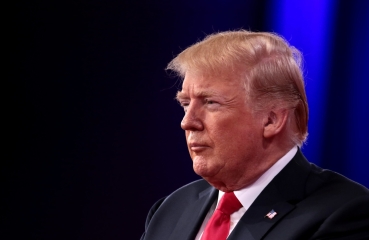
Though President Trump’s new executive order “Ending Radical Indoctrination in K-12 Schooling” contains many elements that resonate with me philosophically and educationally, I’m having trouble reconciling it with the longstanding statutory prohibition on Uncle Sam mucking with
From its founding, the lodestone of the Knowledge Matters Campaign has been evidence-based, content-rich English language arts (ELA) curricula. A possible unintended consequence of the success of this movement has been reduced instruction in science and social studies.