Mobile Navigation

  • National
    • Policy
      • High Expectations
      • Quality Choices
      • Personalized Pathways
    • Research
    • Commentary
      • Gadfly Newsletter
      • Flypaper Blog
    • Events
    • Scholars Program
  • Ohio
    • Policy
      • Priorities
      • Media & Testimony
    • Research
    • Commentary
      • Ohio Education Gadfly Biweekly
      • Ohio Gadfly Daily
  • Charter Authorizing
    • Application
    • Sponsored Schools
    • Resources
  • About
    • Mission
    • Board
    • Staff
    • Career
Home
Home
Advancing Educational Excellence

Main Navigation

  • National
  • Ohio
  • Charter Authorizing
  • About

National Menu

  • Topics
    • Accountability & Testing
    • Advanced Education
    • Career & Technical Education
    • Charter Schools
    • Curriculum & Instruction
    • ESSA
    • Evidence-Based Learning
    • Facilities
    • Governance
    • Personalized Learning
    • Private School Choice
    • School Finance
    • Standards
    • Teachers & School Leaders
    • Think Again
  • Research
  • Commentary
    • Gadfly Newsletter
    • Flypaper Blog
    • Gadfly Podcast
  • Events
  • Scholars Program

Curriculum & Instruction

Displaying 391-420 of 1594 results
Preschool classroom
Commentary
4.18.2024
Curriculum & Instruction, Governance, Teachers & School Leaders

Early childhood education matters. Is “transitional kindergarten” a feasible option?

Meredith Coffey, Ph.D.

High-quality early childhood education (ECE) offers a promising means of boosting both achievement and equity, yet districts and states across the nation face educator


Preschool classroom
Teacher writing on chalkboard
Commentary
4.15.2024
Evidence-Based Learning, Curriculum & Instruction, Governance, Teachers & School Leaders

How did teacher evaluation become a thing?

Tim Daly

Editor’s note: This was first published on the author’s Substack, The Education Daly. Are teachers interchangeable parts?

Teacher writing on chalkboard
Line graph pointing down
Commentary
4.11.2024
Evidence-Based Learning, Curriculum & Instruction, Governance, Advanced Education, Teachers & School Leaders

Doing educational equity wrong

Michael J. Petrilli

For the past several months, Petrilli been pumping out posts about “doing educational equity right.” This series concludes with a twist by looking at three ways that schools are doing educational equity wrong: by engaging in the soft bigotry of low expectations, tying teachers’ hands without good reason, and acting like equity isn’t just an important thing, but the only thing.

Line graph pointing down
Overwhelmed school teacher
Commentary
4.11.2024
Evidence-Based Learning, Curriculum & Instruction, Governance, Teachers & School Leaders

The “case for curriculum” is about reducing teachers’ workload

Robert Pondiscio

Last weekend, I gave a talk at the U.S.

Overwhelmed school teacher
Tutor and student
Commentary
4.11.2024
Evidence-Based Learning, Curriculum & Instruction, Teachers & School Leaders

Schools must go beyond surface-level learning, and better tutoring can help

Laurence Holt

In the mid-1970s, Ference Marton and Roger Säljö of the University of Gothenburg in Sweden noticed that their students took different approaches to learning.

Tutor and student
Overwhelmed school teacher
Commentary
4.4.2024
Curriculum & Instruction, Teachers & School Leaders

We’ve made teaching impossible or: What I learned talking to 200 teachers

Daniel Buck

Last week, I did something unorthodox. I asked teachers to message me directly via X (formerly known as Twitter) to vent their frustrations. Within hours, I received almost 200 messages expressing not only frustration, but also hope, humor, fatalism, and quite a bit of hesitancy to converse with a complete stranger on the internet.

Overwhelmed school teacher
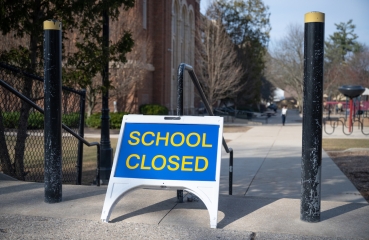
School closed sign
Commentary
3.28.2024
Accountability & Testing, Evidence-Based Learning, Curriculum & Instruction, Governance, Advanced Education

How the pandemic affected global education: Insights from PISA

Harry Anthony Patrinos

The closure of schools in response to the seismic disruptions of the Covid-19 pandemic has left an indelible mark on education worldwide. As nations grappled with closures lasting varying lengths of time, the implications for student learning became increasingly evident.

School closed sign
United States Capitol
Commentary
3.22.2024
Evidence-Based Learning, School Finance, Curriculum & Instruction, Governance, Private School Choice, Teachers & School Leaders

Students deserve better information about billions spent on education R & D

Dan Lips

Congress is currently considering legislation to update the way that the federal government funds education research and development.

United States Capitol
Harlem, New York City
Commentary
3.22.2024
Evidence-Based Learning, Curriculum & Instruction, Governance

All students deserve a “gifted” education

Alina Adams

New York City public schools offer two types of gifted and talented education.

Harlem, New York City
Child doing homework
Commentary
3.21.2024
Evidence-Based Learning, Curriculum & Instruction, Governance, Teachers & School Leaders

How an online tool affected math performance during pandemic closures

Jeff Murray

For many students and teachers, the pivot from in-person to remote learning in March 2020 was a sudden lurch from the known to the unknown. Writ large, research shows the academic impact of that move was devastating. But details matter—and so do exceptions.

Child doing homework
Classroom empty teacher desk
Commentary
3.15.2024
Curriculum & Instruction, Teachers & School Leaders

Why are teachers missing so much school?

Tim Daly

Editor’s note: This was first published on the author’s Substack, The Education Daly.

Classroom empty teacher desk
Students in a classroom
Commentary
3.14.2024
Charter Schools, Curriculum & Instruction, Private School Choice, Teachers & School Leaders

The “no excuses” model is due for a renaissance

Robert Pondiscio

Many of the conditions that led to the prominence of “no-excuses” charter schools a quarter-century ago have returned. For students, teachers, and parents who have never lost their appetite for safe and orderly schools, it can’t come soon enough.

Students in a classroom
Student doing math in a classroom
Commentary
3.14.2024
Evidence-Based Learning, Curriculum & Instruction, Teachers & School Leaders

We know more about improving math outcomes than policy debates suggest

Emily Freitag

I recently watched a seventh-grade math lesson that did a better job than I ever did as a teacher asking kids relatable theoretical probability questions. How would you represent the probability of a six-foot-tall seventh grader? How would you represent the probability of getting a test in school in any given week? Making sense of where students were coming from was a fascinating puzzle.

Student doing math in a classroom
Girl at school around friends
Commentary
3.8.2024
Evidence-Based Learning, Curriculum & Instruction, Governance, Advanced Education, Teachers & School Leaders

Can we ditch the “gifted” label and just focus on what each student needs?

Alina Adams

Editor’s note: This was first published by The 74.

Girl at school around friends
Student report card
Commentary
3.7.2024
Evidence-Based Learning, Curriculum & Instruction, Governance, Teachers & School Leaders

Doing educational equity right: Grading

Michael J. Petrilli

The way we grade student work is flawed—in some ways inequitable—and is in need of reform. But like so many things in American education, the push for “equitable grading” has often been implemented piecemeal, bringing along with it all manner of unintended consequences, the most important of which is lowered standards.

Student report card
school report card
Commentary
2.29.2024
Evidence-Based Learning, Curriculum & Instruction, Teachers & School Leaders

The hazards of “equity grading”

Meredith Coffey, Ph.D., Adam Tyner, Ph.D.

The push for more “equitable” grading policies has exacerbated grade inflation while yielding little evidence of greater learning. Some aspects of traditional grading can indeed perpetuate inequities, but top-down policies that make grading more lenient are not the answer, especially as schools grapple with the academic and behavioral challenges of the post-pandemic era.

school report card
Teacher in classroom
Commentary
2.29.2024
Evidence-Based Learning, Curriculum & Instruction, Teachers & School Leaders

Study outlier teachers to solve the homework gap

Mike Goldstein

My friend Michael Petrilli just wrote a great essay about the “homework gap.” He sets aside the upper-class question (stressed out kids with too much of it) and steers readers to the gap (some kids do what’s assigned, some kids copy and cheat, and some kids skip it).

Teacher in classroom
Female student doing homework
Commentary
2.22.2024
Evidence-Based Learning, Curriculum & Instruction, Teachers & School Leaders

Doing educational equity right: The homework gap

Michael J. Petrilli

If we care about doing educational equity right, we need to call the bluff of those who want to lower expectations for students’ effort “because equity.” Those so-called advocates need to do some of their own homework—and penance—as well.

Female student doing homework
Black student doing math in school
Commentary
2.21.2024
Evidence-Based Learning, Curriculum & Instruction, Governance, Advanced Education, Teachers & School Leaders

Why schools are failing to narrow excellence gaps in math

Jeff Murray, Brandon L. Wright

Marginalized students have long lacked access to advanced education programs in the U.S., compared to more advantaged peers, and have been under-identified and therefore underserved when such programs exist.

Black student doing math in school
Commentary
2.8.2024
Curriculum & Instruction, Teachers & School Leaders

Yes, read old books

Daniel Buck

My students caught me smelling an old book once. While they were silently reading one day, I noticed a tattered book on the shelf. So what did I do? Following deep instincts, I pulled it down, cracked the spine, and breathed deeply. “Mr. Buck, what are you DOING?!” I turned around to find the whole class staring at me.

Commentary
2.8.2024
Evidence-Based Learning, Curriculum & Instruction, Governance, Teachers & School Leaders

NCTQ analyzes how well states are using policy to promote the science of reading

Jessica Poiner

Many states are overhauling their early literacy policies to align with the science of reading, an evidence-based approach that emphasizes phonics and knowledge building. Effectively implementing these reforms is crucial, as high-quality reading instruction can improve both academic and life outcomes for children.

Commentary
2.1.2024
Evidence-Based Learning, Curriculum & Instruction, Governance

Grading New York’s “back to basics” reading plan

Robert Pondiscio

Better late than never, New York State has stirred itself to change the way reading is taught in its 800-plus local school districts. Last month, Governor Kathy Hochul announced a plan to spend $10 million to train 20,000 teachers in the “science of reading,” including a “microcredentialing” program via the state’s public universities. Assuming the legislature grants the request, here’s how New York could maximize the program’s impact.

Commentary
1.31.2024
Accountability & Testing, Evidence-Based Learning, Curriculum & Instruction, Governance, Advanced Education, Teachers & School Leaders

Gifted under-identification: How to improve diverse student access to gifted programming

Jonathan Klingeman, Ed.D.

As the population of English learners (ELs) in grades K–12 grows, so do the challenges school districts face in identifying gifted students and putting in place appropriate enrichment and acceleration opportunities for them.

Students working together
Commentary
1.25.2024
Evidence-Based Learning, Curriculum & Instruction, Governance, Advanced Education, Teachers & School Leaders

Doing educational equity right: Advanced education

Michael J. Petrilli

This is the fourth in a series on doing educational equity right.

Students working together
Commentary
1.25.2024
Evidence-Based Learning, School Finance, Curriculum & Instruction

Testing multiple measures of school economic disadvantage

Jeff Murray

Equitably funding education in America means providing more resources to students who need additional support.

Commentary
1.19.2024
Facilities, School Finance, Charter Schools, Curriculum & Instruction, Governance, Advanced Education, Teachers & School Leaders

High schools where students routinely graduate with college degrees: An interview with Kevin Teasley, CEO of GEO Academies

Brandon L. Wright

Khaya Njumbe enrolled at GEO Academies’ 21st Century Charter School, in Gary, Indiana, when he was eleven years old. By age thirteen, he’d become the youngest student in state history to earn an associate degree.

Commentary
1.11.2024
Curriculum & Instruction, Governance, Teachers & School Leaders

How to ban phones effectively

Daniel Buck

Shortly before schools—and Fordham—shuttered their doors for the holiday break, Tim Daly asked a simple question in these pages: Should schools ban smart phones?

Commentary
1.11.2024
Evidence-Based Learning, Curriculum & Instruction, Teachers & School Leaders

Alternative classroom models don’t have to threaten “traditional” ones

Meredith Coffey, Ph.D., Jeanette Luna

As former teachers in a variety of settings—charter, traditional public, and “transfer” schools—we read with great interest our colleague Daniel Buck’s recent piece, “In defense of the traditional classroom

Commentary
1.5.2024
Curriculum & Instruction, Governance, Teachers & School Leaders

Remembering Linda Brown

Chester E. Finn, Jr.

The education world lost a true reformer on Christmas Day—and the charter-school world lost one of its true heroes—when Linda Brown passed away at eighty-one at her home in Cambridge, Massachusetts.

Commentary
1.4.2024
Accountability & Testing, Curriculum & Instruction, Governance, Teachers & School Leaders

When school becomes optional

Chester E. Finn, Jr.

“Truancy” may no longer be the right word for it, maybe not even “absenteeism,” for both imply being missing from a place where one is supposed to be. “Truancy,” with its overtone of misbehavior and illegality, suggests willfulness, i.e., that one is intentionally missing, while “absenteeism” is a more neutral term with no suggestion of motive.

Pagination

  • First page « First
  • Previous page ‹ Previous
  • Page 10
  • Page 11
  • Page 12
  • Page 13
  • Current page 14
  • Page 15
  • Page 16
  • Page 17
  • Page 18
  • Next page Next ›
  • Last page Last »

Type

  • Book (3)
  • Commentary (1464)
  • Event (11)
  • Podcast (68)
  • Report (34)

Topics

  • Accountability & Testing (504)
  • Advanced Education (267)
  • Career & Technical Education (84)
  • Charter Schools (1117)
  • (-) Curriculum & Instruction (1594)
  • ESSA (129)
  • Evidence-Based Learning (837)
  • Facilities (25)
  • Governance (1416)
  • Personalized Learning (51)
  • Private School Choice (140)
  • School Finance (169)
  • Standards (190)
  • Teachers & School Leaders (1456)

Date

  • 2026 (121)
  • 2025 (158)
  • 2024 (142)
  • 2023 (148)
  • 2022 (197)
  • 2021 (203)
  • 2020 (170)
  • 2019 (94)
  • 2018 (13)
  • 2017 (5)
  • 2016 (46)
  • 2015 (76)
  • 2014 (50)
  • 2013 (38)
  • 2012 (15)
  • 2011 (83)
  • 2010 (6)
  • 2009 (8)
  • 2008 (6)
  • 2007 (2)
  • 2005 (2)
  • 2004 (3)
  • 2003 (4)
  • 2002 (1)
  • 2000 (2)
  • 1998 (1)
Fordham Logo

© 2026 The Thomas B. Fordham Institute
Privacy Policy
Usage Agreement

National

P.O. Box 110
Burke, VA 22009

202.223.5452

[email protected]

Ohio

P.O. Box 82291
Columbus, OH 43202

614.223.1580

[email protected]

Sponsorship

130 West Second Street, Suite 410
Dayton, Ohio 45402

937.227.3368

[email protected]