How are four-day school weeks impacting student attendance and teacher retention?
The four-day school week is increasingly popular, particularly in rural districts, with roughly 900 school districts having adopted such a truncated schedule as of 202
“Charter school laws have been arguably the most influential school reform efforts of the past several decades,” write economists
At Partnership Schools, we are excited that so many Ohioans are excited about the “science of reading.” In 2023 legislation that took effect this school year, Governor DeWine and the General Assembly have mandated that all reading curricula follow this approach—one we know well, since Partnership Schools have implemented it for over a
Grade inflation influences the environment in which teachers teach and students study, shaping their behavior and relationships. But utilizing external assessments, increasing transparency, and supporting reforms that preserve the rigor of grading standards can help fix the problem.
The American dream is still alive and can be achieved in just one generation, even among the most economically disadvantaged young people. That finding is among the most promising takeaways from new research produced by Harvard University’s Raj Chetty and his collaborators.
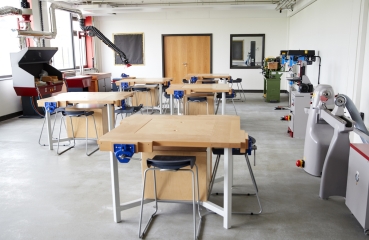
The growing popularity of career and technical education (CTE) at the high school level creates an ongoing need for more teachers with industry experience to provide hands-on instruction in a diverse variety of fields.
Rose Horowitch’s article in The Atlantic is getting lots of buzz.
Rates of student misbehavior remain elevated compared to pre-Covid levels. Pandemic-era disruptions, broader societal disorder and crime rates, and social media are also plausible explanations. But so is “discipline reform,” a set of policies and practices that many schools embraced over the past decade. Its tenets: talk to those kids, pursue “restorative justice,” or ignore their poor behavior. But never impose a consequence.
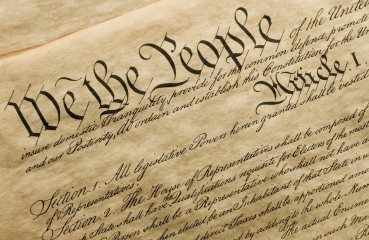
A few years ago, I taught a high school seminar class in civics and democracy at a New York charter school. My goal for the course was for students to see that the U.S. Constitution isn’t an ancient, dusty document, but an enduring set of principles, deeply woven into their lives and the headlines they read every day.
Eschewing the traditional September start to the new school year (or, at most, mid-August), some Richmond, Virginia, public schools kicked off the 2024–25 academic calendar on July 22.
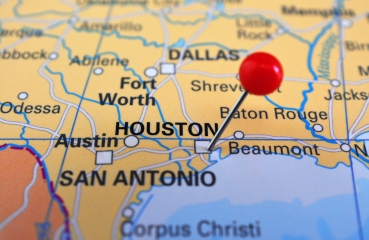
Houston’s local ABC news affiliate recently ran a report that the Houston Independent School District, Texas’s largest, has more than 2,000 uncertified teachers (out of a teaching force of approximately 10,000).
Editor’s note: This was first published by The 74.
Modern States Education Alliance is a non-profit that makes college-level courses and college credit free to any learner anywhere, including high school students interested in advanced coursework. It offers thirty-two online courses free of charge at www.modernstates.org, including all the necessary textbooks and readings.
If the academic Olympics aren’t working for some stressed-out teens and their families, they should consider downshifting in their courses and activities and forgetting about gaining admission to a highly-selected college. Focus instead on finding one that’s a great fit for you personally. Be assured that, given enrollment trends, plenty will be glad to receive you.
As school systems around the world continue trying to recover from learning losses caused by the pandemic, a new paper out of Germany gives us some historic context on what to look for and what to be wary of.
As another school year begins, I have been struck by the many different ways leaders and educators talk about instructional materials. At meet-the-teacher nights or staff meetings to explain the move to a new curriculum or in board meetings to explain plans for the year, educators often talk about the role the curriculum will play with bold claims. I have heard:
For ten years, veteran education reformer Kathleen Porter-Magee led Partnership Schools, an independent charter-like management organization that ran Catholic schools on behalf of the archdiocese of New York and, currently, Cleveland. She recently announced that she was stepping down. Here she discusses the lessons she learned.
I’m a huge fan of the Daniels Fund under the leadership of Hanna Skandera, the more so since the national part of their giving has grasped the nettle of civics education. And we at Fordham were longtime members of the Philanthropy Roundtable.
In February 2020, California settled a case which alleged that the state was violating the right to an education by sending kids to schools that didn’t teach them how to read.
Many states are struggling to revise their high-school graduation requirements, sometimes up, sometimes down. The most basic is the perennial issue of how hard should it be to earn a diploma. The next is how can high schools can possibly prepare thousands of dissimilar young people for the expectations and prerequisites of hundreds of differing post-graduation options?
Despite an unprecedented infusion of resources, the latest data show that American students are struggling to recover
Education loomed small at both political conventions this summer—a shame considering what dire condition it’s in.
Since 2022, public schools in the District of Columbia have been working to mitigate Covid learning disruptions by establishing and ramping up high-impact tutoring (HIT) efforts.
Indiana’s new proposed legislation on altered diploma requirements redesigns the purpose of a high school education, which I believe will have negative consequences for students across the state, with regard to the diminishing skills of global-mindedness and perspectives.
Society as a whole has largely bounced back from the dark days of the pandemic, but life inside our schools is arguably worse than ever. Attendance is dismal. Cheating is pervasive. Cell phones are everywhere. Disorder abounds. And for all these reasons and more, kids are learning less than they were back before the plague struck. The right way to respond is to embrace tough love. That means, first and foremost, again holding students accountable for their behavior.
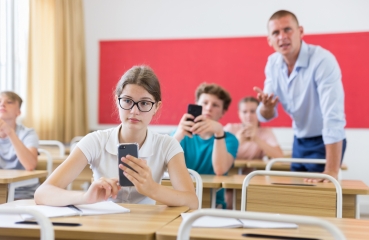
When it comes to the current storm of concern over student cellphones in schools, the conventional wisdom is that it’s educators on one side versus p
Fordham’s new study by Paul L. Morgan and Eric Hengyu Hu, "Explaining Achievement Gaps: The Role of Socioeconomic Factors," raises as many questions as it answers. Among them: How can we explain the different patterns for the Black-White achievement gap for reading, on the one hand, and math and science, on the other? Why does SES explain so much more of the Hispanic-White gap than the Black-White gap? And what’s the role of family structure in explaining the Black-White and Hispanic-White gaps?
Classical education is undergoing a renaissance. According to a recent analysis by Arcadia Education, the classical sector is growing by 5 percent annually with a total projected enrollment of 1.4 million students by 2035.
As a teacher both during and immediately after the pandemic, I was constantly on the receiving end of some version of: “You must be so relieved that the pandemic is over.” My response was always: “Actually, it has only gotten worse.” And it’s not just me.
“Come see me in the office.” Uh oh. I probably got caught teaching again.