Mobile Navigation

  • National
    • Policy
      • High Expectations
      • Quality Choices
      • Personalized Pathways
    • Research
    • Commentary
      • Gadfly Newsletter
      • Flypaper Blog
    • Events
    • Scholars Program
  • Ohio
    • Policy
      • Priorities
      • Media & Testimony
    • Research
    • Commentary
      • Ohio Education Gadfly Biweekly
      • Ohio Gadfly Daily
  • Charter Authorizing
    • Application
    • Sponsored Schools
    • Resources
  • About
    • Mission
    • Board
    • Staff
    • Career
Home
Home
Advancing Educational Excellence

Main Navigation

  • National
  • Ohio
  • Charter Authorizing
  • About

National Menu

  • Topics
    • Accountability & Testing
    • Advanced Education
    • Career & Technical Education
    • Charter Schools
    • Curriculum & Instruction
    • ESSA
    • Evidence-Based Learning
    • Facilities
    • Governance
    • Personalized Learning
    • Private School Choice
    • School Finance
    • Standards
    • Teachers & School Leaders
    • Think Again
  • Research
  • Commentary
    • Gadfly Newsletter
    • Flypaper Blog
    • Gadfly Podcast
  • Events
  • Scholars Program

Evidence-Based Learning

Displaying 421-450 of 837 results
Commentary
8.10.2023
Evidence-Based Learning, Curriculum & Instruction, Governance, Teachers & School Leaders

Mike Schmoker’s achievable vision for education reform

Daniel Buck

I must admit, I’d become something of an education fatalist. I know the research about direct instruction. I know the power of a knowledge-rich, well-sequenced curriculum and the promise of school choice. I know that individual schools and even whole charter systems can achieve amazing results. But I always wonder: Is it all for naught?

Commentary
8.10.2023
Evidence-Based Learning, Curriculum & Instruction, Governance, Teachers & School Leaders

Early College High Schools boost degree attainment, especially for marginalized students

Jamya Davis

Early College High Schools are designed to be rigorous programs that partner with higher-education institutions to help teens earn college credit before graduation, with the aim of improving their chance of success after graduation.

Commentary
8.3.2023
Evidence-Based Learning, Curriculum & Instruction, Governance, Standards

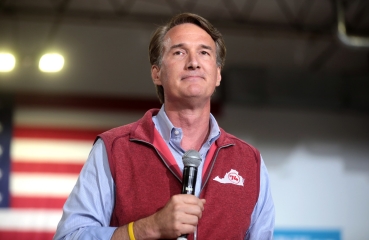
Virginia leads the way on conservative education reform

Daniel Buck

Not since former Governor Scott Walker bludgeoned the unions in my home state of Wisconsin has there been such national outrage over state-level education policies. Historically, state-scale education has been a secondary affair, rarely topping the list of people’s substantive or political priorities, and most decisions have been left to local decision-making.

Commentary
8.3.2023
Evidence-Based Learning, Curriculum & Instruction, Governance

Mississippi didn’t cheat. Its reading gains are real.

Todd Collins

Is Mississippi a cheater? Los Angeles Times business columnist Michael Hiltzik seems sure of it. Last month, the Pulitzer Prize–winning opinion writer published a column saying that Mississippi’s widely acclaimed reading improvement was just a mirage.

Commentary
8.3.2023
Evidence-Based Learning, Curriculum & Instruction, Teachers & School Leaders

Assessing the operations and impacts of Teach For America in Indianapolis

Jeff Murray

The Indianapolis branch of Teach For America (TFA Indy) was established in 2008, expanding the national organization’s mission—to build and deploy a corps of high-quality education leaders to support high-needs students—into the Hoosier State.

Commentary
7.27.2023
Evidence-Based Learning, Career & Technical Education, Curriculum & Instruction, Governance

The college-going rate is down. Here’s hoping it falls even further.

Michael J. Petrilli

One of the biggest shifts in education in recent years has been a gradual move away from the “college for all” mantra, and hard numbers show a concurrent decline in the proportion of high school students matriculating directly to college. Far from something to deplore, this trend is a positive development—but only so long as the right teenagers are choosing to enter the labor market rather than pursue college.

Commentary
7.27.2023
Evidence-Based Learning, Curriculum & Instruction, Governance, Teachers & School Leaders

It’s time to dump Reading Recovery

Aaron Churchill

This month, Ohio joined a growing list of states and school systems that require schools to use high-quality instructional materials aligned to the science of reading, an approach to reading instruction that emphasizes

Commentary
7.20.2023
Evidence-Based Learning, Curriculum & Instruction, Governance, Advanced Education, Teachers & School Leaders

Building diverse college campuses starts in kindergarten

Michael J. Petrilli

Rather than wait until kids are leaving high school to try to even the playing field, we must start in kindergarten to identify the most academically talented students of all races and backgrounds and give them the support they need to excel.

Commentary
7.20.2023
Evidence-Based Learning, Governance

Exit interview: James Peyser in defense of education reform

Robert Pondiscio

In the latest issue of Education Next, James Peyser argues that “overpromising” undercut the ed reform movement, in which he played a prominent role for three decades in a series of roles—from education advisor to two governors to chairman of the State Board of Education

Commentary
7.20.2023
Evidence-Based Learning, Curriculum & Instruction, Governance, Teachers & School Leaders

Is ed tech contributing to chronic absenteeism?

Meredith Coffey, Ph.D.

Nearly two years after federal data indicated that 99 percent of students had returned to in-person learning full-time, as many as one out of three students still haven’t really returned fu

Golf ball in sand trap
Commentary
7.13.2023
Accountability & Testing, Evidence-Based Learning, Curriculum & Instruction, Governance, Teachers & School Leaders

The accountability conundrum

Chester E. Finn, Jr.

Editor's note: Read more about this topic in Finn's essay in National Affairs, "The Accountability Challenge."

Golf ball in sand trap
Commentary
7.13.2023
Accountability & Testing, Evidence-Based Learning, Curriculum & Instruction

Can great high schools really make a difference for low-income students?

Amber M. Northern, Ph.D.

How well do our public high schools prepare students—especially low-income students—for future success? A working paper from analysts at Brown and Harvard addresses that question, focusing on a number of consequential middle- and longer-term outcomes.

Commentary
7.6.2023
Evidence-Based Learning, Charter Schools, Curriculum & Instruction, Governance, Private School Choice, Teachers & School Leaders

Giving marginalized students better access to customized learning opportunities

Katrina Boone

Recent policy innovations such as education savings accounts, microgrants, and tax credits address some of the financial barriers that prevent families from accessing flexible education opportunities.

Commentary
7.6.2023
Evidence-Based Learning, Curriculum & Instruction, Advanced Education, Teachers & School Leaders

Piloting an advanced learning curriculum for typically underserved students

Jeff Murray

In many schools, being identified as advanced or gifted doesn’t guarantee that students will receive “gifted services.” For low-income students, Black and Brown students, rural students, and many others, the odds of being identified as gifted and having access to advanced coursework are even lower than for their higher-income and White or Asian peers.

Commentary
6.29.2023
Evidence-Based Learning, Charter Schools, Governance, Private School Choice, Teachers & School Leaders

Why conservatives should embrace open enrollment

Aaron Garth Smith, Jude Schwalbach

America’s school choice moment has finally arrived, but the vast majority of students nationwide still attend traditional public schools—and will for the foreseeable future. Conservatives would be wise to support policies that give families choices within the public education system. Cross-district open enrollment does precisely that, and it has strong bipartisan support.

1
Commentary
6.29.2023
Accountability & Testing, Evidence-Based Learning, Curriculum & Instruction, Governance, Teachers & School Leaders

Three terrifying findings in the latest NAEP results

Vladimir Kogan

Parents and policymakers inured to years of depressing headlines about learning disruptions in the wake of the pandemic might be tempted to shrug at the latest federal test data on the achievement of thirteen-year-olds as more of the same.

1
Commentary
6.27.2023
Accountability & Testing, Evidence-Based Learning, Curriculum & Instruction, Governance, Advanced Education, Teachers & School Leaders

More NAEP losses for high achievers—and how to reverse them

Brandon L. Wright

Editor’s note: This is an edition of “Advance,” a newsletter from the Thomas B. Fordham Institute written by Brandon Wright, our Editorial Director, and published every other week. Its purpose is to monitor the progress of gifted education in America, including legal and legislative developments, policy and leadership changes, emerging research, grassroots efforts, and more.

Commentary
6.22.2023
Accountability & Testing, Evidence-Based Learning, Governance

Do tests predict later success?

Dan Goldhaber, Michael DeArmond

Standardized tests and test-based accountability have come under serious criticism in recent years. One of the most important questions is whether improving student learning, as measured by test scores, helps improve students’ opportunities later in life. It’s a tough issue to study, but the weight of the evidence says: yes.

Commentary
6.22.2023
Accountability & Testing, Evidence-Based Learning, Curriculum & Instruction, Governance, Advanced Education, Teachers & School Leaders

New York City’s selective high schools work

Wai Wah Chin

This month, New York City students received their offers to the city’s eight specialized high schools. As has been the case in recent years, Asian students form over half of the admittees, followed by White, Hispanic, and Black students.

Commentary
6.22.2023
Evidence-Based Learning, Charter Schools, Governance

More evidence that all charter schools shouldn’t be lumped together

Amber M. Northern, Ph.D.

It should be common knowledge by now that all charter schools—like all district schools and, for that matter, all private schools—are not created equal. Nor do they produce equal outcomes.

Commentary
6.14.2023
Evidence-Based Learning, Charter Schools, Curriculum & Instruction, Governance, Advanced Education, Teachers & School Leaders

How school systems can balance equity and excellence in their advanced education initiatives

Michael J. Petrilli

One of the most important efforts in America today is making sure we have as large and diverse a group of academic high achievers as possible in order to meet tomorrow’s challenges. A new report released this week—Building a Wider, More Diverse Pipeline of Advanced Learners—offers three-dozen recommendations to education leaders and policymakers at all levels on how to accomplish this.

Commentary
6.8.2023
Evidence-Based Learning, Charter Schools, Curriculum & Instruction, Governance, Teachers & School Leaders

Classical charter school enrollment skyrockets in Texas

Cassidy Syftestad, Albert Cheng

Recent shifts in enrollment patterns across Texas school sectors have gone in one direction—out of traditional public schools. Within those shifts, a disproportionately large swath of students has left for classical charter schools. These trends reflect a wider renaissance of classical schooling across the United States.

Commentary
6.8.2023
Evidence-Based Learning, Charter Schools, Curriculum & Instruction, Governance

The charter school landscape for English learners: An interview with two Texas experts

Amber M. Northern, Ph.D.

Texas is home to a fifth of the country’s English learners, as well as the state where the number of them has quintupled over the past decade.

Commentary
6.8.2023
Evidence-Based Learning, Curriculum & Instruction, Teachers & School Leaders

“Hold harmless” grading policies are anything but

Amber M. Northern, Ph.D.

Arguments for and against “no zeroes” and other types of “hold harmless” grading

Commentary
6.1.2023
Evidence-Based Learning, Governance

Worldwide, learning loss and pandemic school closures were directly connected

Jeff Murray

Quantifying learning loss experienced by students whose schools closed for extended periods during the coronavirus pandemic is vital.

Commentary
5.25.2023
Evidence-Based Learning, Curriculum & Instruction, Governance, Teachers & School Leaders

States should embed civic content into statewide reading assessments

Ross Wiener

Editor’s note: This was first published by The 74.

Commentary
5.25.2023
Evidence-Based Learning, School Finance, Governance, Teachers & School Leaders

Another nail in the “money doesn’t matter” coffin

Adam Tyner, Ph.D.

In recent years, the debate on the impact of financial resources in education has been petering out. Studies showing that more money for schools has had a discernable effect on student academic outcomes, particularly for students from lower-income families, keep accumulating.

Commentary
5.25.2023
Accountability & Testing, Evidence-Based Learning, Curriculum & Instruction, Governance, Teachers & School Leaders

Dire straits: Taking stock of and addressing pandemic-related learning loss

Victoria McDougald

As the school year winds down, and with the World Health Organization officially declaring the emergency phase of the Covid-19 pandemic over earlier this month, many students, parents, a

Commentary
5.18.2023
Evidence-Based Learning, Curriculum & Instruction, Teachers & School Leaders

What we need from a “DARPA for education”: A Mars rover for schools

Michael J. Petrilli

There’s a lot of buzz right now about the potential for the Institute of Education Sciences to finally get the resources and authority to support major breakthroughs in teaching and learning via an “ARPA-ED,” modeled after the Defense Department’s DARPA program. Petrilli wants something more fundamental: basic information about what the heck is going on in America’s classrooms. Enter his (admittedly far-fetched) “Mars rover for schools” idea.

Commentary
5.18.2023
Evidence-Based Learning, Curriculum & Instruction, Teachers & School Leaders

“Grading for Equity” isn’t grounded in reality

Meredith Coffey, Ph.D.

A few weeks ago, I finally sat down with Joe Feldman’s Grading for Equity (2018), expecting to nod my head along with every page. I loved teaching at an alternative school, considered myself flexible about deadlines, and frequently encouraged students to revise their writing.

Pagination

  • First page « First
  • Previous page ‹ Previous
  • Page 11
  • Page 12
  • Page 13
  • Page 14
  • Current page 15
  • Page 16
  • Page 17
  • Page 18
  • Page 19
  • Next page Next ›
  • Last page Last »

Type

  • Book (1)
  • Commentary (814)
  • Event (1)
  • Podcast (9)
  • Report (4)

Topics

  • Accountability & Testing (504)
  • Advanced Education (267)
  • Career & Technical Education (84)
  • Charter Schools (1117)
  • Curriculum & Instruction (1594)
  • ESSA (129)
  • (-) Evidence-Based Learning (837)
  • Facilities (25)
  • Governance (1416)
  • Personalized Learning (51)
  • Private School Choice (140)
  • School Finance (169)
  • Standards (190)
  • Teachers & School Leaders (1456)

Date

  • 2026 (89)
  • 2025 (124)
  • 2024 (161)
  • 2023 (129)
  • 2022 (138)
  • 2021 (111)
  • 2020 (37)
  • 2019 (47)
  • 2007 (1)
Fordham Logo

© 2026 The Thomas B. Fordham Institute
Privacy Policy
Usage Agreement

National

P.O. Box 110
Burke, VA 22009

202.223.5452

[email protected]

Ohio

P.O. Box 82291
Columbus, OH 43202

614.223.1580

[email protected]

Sponsorship

130 West Second Street, Suite 410
Dayton, Ohio 45402

937.227.3368

[email protected]