Mobile Navigation

  • National
    • Policy
      • High Expectations
      • Quality Choices
      • Personalized Pathways
    • Research
    • Commentary
      • Gadfly Newsletter
      • Flypaper Blog
    • Events
    • Scholars Program
  • Ohio
    • Policy
      • Priorities
      • Media & Testimony
    • Research
    • Commentary
      • Ohio Education Gadfly Biweekly
      • Ohio Gadfly Daily
  • Charter Authorizing
    • Application
    • Sponsored Schools
    • Resources
  • About
    • Mission
    • Board
    • Staff
    • Career
Home
Home
Advancing Educational Excellence

Main Navigation

  • National
  • Ohio
  • Charter Authorizing
  • About

National Menu

  • Topics
    • Accountability & Testing
    • Advanced Education
    • Career & Technical Education
    • Charter Schools
    • Curriculum & Instruction
    • ESSA
    • Evidence-Based Learning
    • Facilities
    • Governance
    • Personalized Learning
    • Private School Choice
    • School Finance
    • Standards
    • Teachers & School Leaders
    • Think Again
  • Research
  • Commentary
    • Gadfly Newsletter
    • Flypaper Blog
    • Gadfly Podcast
  • Events
  • Scholars Program

Teachers & School Leaders

Displaying 241-270 of 1450 results
Student using a computer in class
Commentary
9.11.2025
Curriculum & Instruction, Teachers & School Leaders

Cellphone bans are not enough

Henry Seton

This fall, students are returning to school amidst tighter cellphone restrictions. From California to Florida, a rare consensus of politicians, educators, and parents is rising against the dangers that smartphones pose to student learning and well-being. But it is too early to celebrate. Simply banning cellphones without curtailing other devices is like locking the front door while leaving the back door open.


Student using a computer in class
Locked school
Commentary
9.11.2025
Teachers & School Leaders

What can schools really do about mass shootings?

Daniel Buck

By now, we’ve all heard the news from Minnesota: A lone gunman opened fire during morning mass at a Catholic elementary school, claiming innocent lives and traumatizing a whole community. As a former elementary school teacher and administrator, I can tell you that news of school shootings hits differently when you work in one.

Locked school
Sad student in gym class
Commentary
9.11.2025
Governance, Teachers & School Leaders

Yes, obesity is a problem, but the Presidential Fitness Test isn’t a solution

Jill Hoppe

I remember standing on my high school track, clutching my inhaler, knowing I was about to fail. Officially, the Obama administration had phased out the Presidential Fitness Test, but my district hadn’t gotten the memo. So, once a year, my Rhode Island classmates and I still lined up for the evaluation.

Sad student in gym class
Bored student in school
Commentary
9.4.2025
Accountability & Testing, Governance, Teachers & School Leaders

The mixed blessing of new school measures

Chester E. Finn, Jr.

As we broaden the scope of what we judge schools for without radically expanding their footprint on the lives of children, are we not setting everyone up for failure? And will we not also—inevitably—slack off on the modest versions of results-driven accountability that we’re barely managing to hold onto today?

Bored student in school
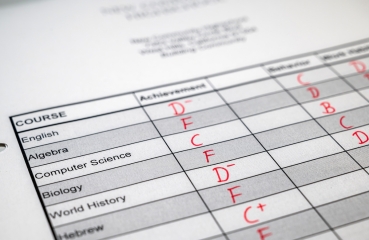
Report card
Commentary
9.2.2025
Curriculum & Instruction, Governance, Teachers & School Leaders

Two cheers for Thomas Taylor

Michael J. Petrilli

Given our moniker as “The Education Gadfly,” we at the Thomas B. Fordham Institute are not accustomed to lavishing praise on education leaders. That’s OK, considering how rarely they deserve it. But when someone in a position of authority demonstrates leadership, courage, and common sense, it’s important for us gadflies (and reformers) to say so.

Report card
New Orleans skyline
Commentary
8.29.2025
Accountability & Testing, School Finance, Charter Schools, Governance, Teachers & School Leaders

Education reform in the aftermath of Hurricane Katrina

Kamren Herring

Nearly twenty years ago, Hurricane Katrina devastated New Orleans. Among other sweeping institutional changes, the unprecedented school reforms enacted in the immediate aftermath have left long-lasting effects on the city’s K–12 public education system. But are New Orleans schools still operating in the way that reformers intended?

New Orleans skyline
High school football practice
Commentary
8.29.2025
Accountability & Testing, Curriculum & Instruction, Teachers & School Leaders

Coaches and teachers both understand: Effort is king

Michael J. Petrilli

My son came home from football practice the other night and showed me the “key performance indicators” from his position coach. This season, a missed tackle results in a “fine” of twenty burpees; a dropped interception is followed by twenty push-ups; and a missed assignment will be punished with fifty squat jumps.

High school football practice
Teacher in a classroom
Commentary
8.28.2025
Evidence-Based Learning, School Finance, Teachers & School Leaders

More research on teacher salary freezes, please

Meredith Coffey, Ph.D.

Teacher salary freezes haven’t gotten much attention in either the mainstream media or in education research. Rigorous studies explore the effects of teacher performance pay, teacher benefits, and much else, but Coffey couldn’t find a single study of pay freezes. Are they pushing teachers out of the profession?

Teacher in a classroom
New Orleans
Commentary
8.28.2025
Evidence-Based Learning, Charter Schools, Curriculum & Instruction, Governance, Teachers & School Leaders

The inconvenient success of New Orleans schools

Ravi Gupta

Editor’s note: This was first published by The 74.

New Orleans
Child with parent
Commentary
8.22.2025
Governance, Teachers & School Leaders

Parents reshape K–12 public education as students go back to school

Bruno V. Manno

It’s back-to-school season, with an estimated 47.2 million K–12 public school students and 3.2 million teachers returning to their classrooms.

Child with parent
Teacher grading a school assignment
Commentary
8.21.2025
Evidence-Based Learning, Curriculum & Instruction, Teachers & School Leaders

Teachers don’t like “equitable” grading practices

Michael J. Petrilli

Teachers hate it when the powers that be take a sledgehammer to their few sources of leverage over student motivation and effort. Nor do they like giving students grades they don’t deserve. How did we get here?

Teacher grading a school assignment
Teacher in an unruly classroom
Commentary
8.21.2025
Curriculum & Instruction, Teachers & School Leaders

How administrators can support classroom discipline

Daniel Buck

When still a teacher, I considered my building principal a consequence vending machine. When all else failed, press H5 for an in-school suspension. Having been on both sides now, I realize that the role of the administrator in maintaining school order is far more consequential.

Teacher in an unruly classroom
Slow road sign
Commentary
8.21.2025
Curriculum & Instruction, Governance, Teachers & School Leaders

The limit on classical education’s growth

Robert Pondiscio, Annika Hernandez

Classical education has become one of the brightest spots in the K–12 landscape. Once a niche movement, it now encompasses more than 1,500 public, private, and charter schools serving nearly 700,000 students.

Slow road sign
Electrician apprenticeship
Commentary
8.21.2025
Evidence-Based Learning, Career & Technical Education, Teachers & School Leaders

Tracing the CTE teacher pipeline from industry to classroom

Jill Hoppe

Student participation in career and technical education (CTE) has grown significantly in recent years, backed by bipartisan support and

Electrician apprenticeship
Teachers in a school
Commentary
8.14.2025
Curriculum & Instruction, Governance, Teachers & School Leaders

How states can address instructional incoherence

Emily Freitag

States can play a powerful role in improving student learning by improving instruction. I know this from my experience working at a state agency and from observing how the districts and schools that partner with my organization, Instruction Partners, orient to the expectations and initiatives of their state agencies.

Teachers in a school
Teacher in a school hallway
Commentary
8.14.2025
Evidence-Based Learning, Governance, Teachers & School Leaders

Does a shorter school week help recruit and retain teachers?

Adam Tyner, Ph.D.

The four-day school week has become one of the fastest-growing trends in American K–12 education, particularly in rural communities. By 2023, roughly 850 districts across 24 states had adopted the shorter week, up from about 600 before the pandemic.

Teacher in a school hallway
Empty classroom
Commentary
8.12.2025
Evidence-Based Learning, Curriculum & Instruction, Teachers & School Leaders

How to improve alternative teacher certification programs

Robert Chung

Alternative certification programs can help schools to fill vacant teaching roles with eager and promising teaching candidates.

Empty classroom
Person reading a book in a hammock
Commentary
8.12.2025
Evidence-Based Learning, Curriculum & Instruction, Teachers & School Leaders

High schools should require more summer reading

Liz Cohen

On the 2024 National Assessment of Educational Progress, just 30 percent of eighth-graders were proficient in read

Person reading a book in a hammock
Teenager working in a grocery store
Commentary
7.31.2025
Career & Technical Education, Curriculum & Instruction, Governance, Teachers & School Leaders

Why high schools should help students land summer jobs

Michael J. Petrilli

Much of the education world is obsessed these days (and rightly so) with preparing students for the world of work.

Teenager working in a grocery store
Broken pencil
Commentary
7.31.2025
Curriculum & Instruction, Teachers & School Leaders

Thanks for the help, AI, but students still need to learn to write for themselves

Meredith Coffey, Ph.D.

Since ChatGPT exploded onto the scene in November 2022, educators have grappled with how and whether to engage AI for student writing.

Broken pencil
Student thinking about math concepts
Commentary
7.24.2025
Evidence-Based Learning, Curriculum & Instruction, Teachers & School Leaders

Math needs knowledge building, too

Holly Korbey

Over the last few years, schools and teachers have begun to realize the importance of building students’ background knowledge when it comes to new learning.

Student thinking about math concepts
Empty locker
Commentary
7.24.2025
Private School Choice, Teachers & School Leaders

School choice is great, but the churn it allows comes at a cost

Ronak Shah

On Tuesday, the second week of state testing, I noticed an unfamiliar name on my roster. That was the day I met Darius. While it can be challenging to help transfer students get acclimated and caught up, it’s also a joy for me to get to know them. Some of my fondest memories come from students who arrived mid-year and found a good fit.

Empty locker
Math teacher with students
Commentary
7.24.2025
Evidence-Based Learning, Curriculum & Instruction, Teachers & School Leaders

States must rethink how they license math teachers

Ali Schalop

The future of the U.S. economy and workforce relies on effective STEM education, and that education begins with the basics.

Math teacher with students
Happy students in school
Commentary
7.17.2025
Evidence-Based Learning, Curriculum & Instruction, Teachers & School Leaders

Student success systems in action: Lessons from the GRAD Partnership

Jill Hoppe

In the wake of the Covid-19 pandemic, schools can’t seem to shake chronic absenteeism, behavioral challenges, and

Happy students in school
Female student doing math
Commentary
7.17.2025
Evidence-Based Learning, Curriculum & Instruction, Teachers & School Leaders

The gender gap in math performance starts early in elementary school

Jeff Murray

Rigorous research shows that boys and girls exhibit similar core numerical skills during infancy

Female student doing math
Paper with red ink
Commentary
7.10.2025
Accountability & Testing, Curriculum & Instruction, Governance, Standards, Teachers & School Leaders

No one actually likes high expectations

Daniel Buck

Rigorous education is far less popular on the ground than many policy wonks believe. Of course, everyone pays lip service to high academic and behavioral expectations in general. But when it comes to the particulars, many people—parents, teachers, and administrators alike, most kids, too—bristle at what rigorous education means in practice.

Paper with red ink
College graduates
Commentary
6.26.2025
Teachers & School Leaders

Could an AI-driven “job apocalypse” push the best and brightest into teaching?

Michael J. Petrilli

As recent college graduates stare down the “AI job apocalypse,” the K–12 education sector gains a golden opportunity to recruit talented new teachers. Smart school and district leaders will take steps to draw the best and brightest graduates into America’s neediest schools.

College graduates
Students raising their hands in a school classroom
Commentary
6.24.2025
Curriculum & Instruction, Advanced Education, Teachers & School Leaders

We grouped students by reading ability instead of grade. Here’s what happened.

Jessica Berg

If you had walked into the classrooms at my Rockford, Illinois, elementary school a few years ago, you would have seen something very different from what happens there today. Back then, like many schools, students stayed in their grade-level classrooms throughout the day, and we delivered reading instruction accordingly.

Students raising their hands in a school classroom
Student standing outside school
Commentary
6.19.2025
Curriculum & Instruction, Governance, Teachers & School Leaders

Whose school is it anyway?

Robert Pondiscio

The tension between public education as a civic institution and education as a vehicle for social justice is difficult to resolve. It doesn’t arrive as a policy change. It enters quietly, through teacher training programs, professional development, and curricular “recommendations.”

Student standing outside school
Student reading a book in a library
Commentary
6.19.2025
Curriculum & Instruction, Teachers & School Leaders

How schools can get teens to read more full-length books

Meredith Coffey, Ph.D.

In an earlier post, I explained why high school teachers need more support to increase reading assignment length. So how might district and school leaders provide this support? Here are four suggestions.

Student reading a book in a library

Pagination

  • First page « First
  • Previous page ‹ Previous
  • Page 5
  • Page 6
  • Page 7
  • Page 8
  • Current page 9
  • Page 10
  • Page 11
  • Page 12
  • Page 13
  • Next page Next ›
  • Last page Last »

Type

  • Commentary (1363)
  • Event (3)
  • Podcast (34)
  • Report (37)

Topics

  • Accountability & Testing (503)
  • Advanced Education (266)
  • Career & Technical Education (84)
  • Charter Schools (1115)
  • Curriculum & Instruction (1589)
  • ESSA (129)
  • Evidence-Based Learning (833)
  • Facilities (25)
  • Governance (1409)
  • Personalized Learning (51)
  • Private School Choice (139)
  • School Finance (167)
  • Standards (190)
  • (-) Teachers & School Leaders (1450)

Date

  • 2026 (143)
  • 2025 (188)
  • 2024 (159)
  • 2023 (156)
  • 2022 (206)
  • 2021 (269)
  • 2020 (203)
  • 2019 (86)
  • 2018 (8)
  • 2017 (9)
  • 2016 (3)
  • 2014 (3)
  • 2013 (3)
  • 2012 (4)
  • 2008 (1)
  • 2007 (1)
  • 2006 (1)
  • 2005 (1)
  • 2004 (1)
  • 2001 (2)
  • 2000 (1)
  • 1999 (2)
Fordham Logo

© 2026 The Thomas B. Fordham Institute
Privacy Policy
Usage Agreement

National

P.O. Box 110
Burke, VA 22009

202.223.5452

[email protected]

Ohio

P.O. Box 82291
Columbus, OH 43202

614.223.1580

[email protected]

Sponsorship

130 West Second Street, Suite 410
Dayton, Ohio 45402

937.227.3368

[email protected]