Mobile Navigation

  • National
    • Policy
      • High Expectations
      • Quality Choices
      • Personalized Pathways
    • Research
    • Commentary
      • Gadfly Newsletter
      • Flypaper Blog
    • Events
    • Scholars Program
  • Ohio
    • Policy
      • Priorities
      • Media & Testimony
    • Research
    • Commentary
      • Ohio Education Gadfly Biweekly
      • Ohio Gadfly Daily
  • Charter Authorizing
    • Application
    • Sponsored Schools
    • Resources
  • About
    • Mission
    • Board
    • Staff
    • Career
Home
Home
Advancing Educational Excellence

Main Navigation

  • National
  • Ohio
  • Charter Authorizing
  • About

National Menu

  • Topics
    • Accountability & Testing
    • Advanced Education
    • Career & Technical Education
    • Charter Schools
    • Curriculum & Instruction
    • ESSA
    • Evidence-Based Learning
    • Facilities
    • Governance
    • Personalized Learning
    • Private School Choice
    • School Finance
    • Standards
    • Teachers & School Leaders
    • Think Again
  • Research
  • Commentary
    • Gadfly Newsletter
    • Flypaper Blog
    • Gadfly Podcast
  • Events
  • Scholars Program

The Education Gadfly Weekly

Sign Up to Receive Fordham Updates

We'll send you quality research, commentary, analysis, and news on the education issues you care about.
Thank you for signing up!
Please check your email to confirm the subscription.

The Education Gadfly Weekly: Why teacher salaries are stagnant

Volume 25, Number 46
11.20.2025
11.20.2025

The Education Gadfly Weekly: Why teacher salaries are stagnant

Volume 25, Number 46
view
Flat line graph on chalkboard
High Expectations

Why teacher salaries are stagnant

Bold teacher pay reforms are needed. But to maximize the long-term impact of such policies, it’s important to address the root causes of stagnant salaries. Examining data both before and after the pandemic reveals structural problems in K–12 finance that keep dollars out of teacher paychecks.

Aaron Garth Smith, Jordan Campbell 11.20.2025
NationalFlypaper

Why teacher salaries are stagnant

Aaron Garth Smith | Jordan Campbell
11.20.2025
Flypaper

A “zero-based budgeting” approach for course requirements in the age of AI

Michael J. Petrilli
11.20.2025
Flypaper

Going back to Obama’s education policies would be a mistake

Chad Aldeman
11.20.2025
Flypaper

Evidence on homeschoolers’ self-efficacy and self-regulated learning

Jeff Murray
11.18.2025
Ohio Gadfly Daily

How AI is reshaping what kids need to learn | Episode 995 of The Education Gadfly Show

11.19.2025
Podcast
view
Bored student

A “zero-based budgeting” approach for course requirements in the age of AI

Michael J. Petrilli 11.20.2025
Flypaper
view
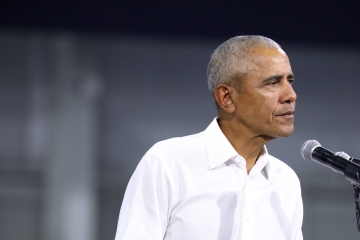
Barack Obama

Going back to Obama’s education policies would be a mistake

Chad Aldeman 11.20.2025
Flypaper
view
Self-regulated learning in homeschoolers SR image

Evidence on homeschoolers’ self-efficacy and self-regulated learning

Jeff Murray 11.18.2025
Ohio Gadfly Daily
view

How AI is reshaping what kids need to learn | Episode 995 of The Education Gadfly Show

Michael J. Petrilli, David Griffith, Ph.D. 11.19.2025
Podcast
view
Flat line graph on chalkboard

Why teacher salaries are stagnant

Aaron Garth Smith | Jordan Campbell
11.20.2025
Flypaper

A large body of research shows that effective teachers are the most important school-related factor in determining student success, making teacher compensation a key policy lever. “We need to pay all teachers more—and effective teachers even more,” said Heather Peske of the National Council on Teacher Quality in a recent SCHOOLED debate on teacher pay.

Peske has a point. The nationwide average teacher salary fell by over 6 percent between 2002 and 2022, going from $75,152 to $70,548 in 2023 dollars, according to new Reason Foundation research. In total, inflation-adjusted teacher salaries fell in 40 of 50 states, as shown in Table 1.

It’s also a fact that teacher salaries are tied to educational attainment and years of experience, meaning that high-performing teachers—and those in shortage areas like math, science, and special education—aren’t paid more for their results or expertise.

To put the right incentives in place, bold teacher pay reforms are needed. But to maximize the long-term impact of these policies, it’s important to address the root causes of stagnant salaries. Examining data both before and after the Covid-19 pandemic reveals structural problems in K–12 finance that keep dollars out of teacher paychecks.

Table 1: Inflation-adjusted average teacher salary growth (2002 to 2022)

1

Teacher salaries before Covid-19

Nationwide, inflation-adjusted teacher pay was flat in the nearly two decades leading up to the pandemic, with the average salary falling by 0.6 percent between 2002 and 2020. While a handful of states saw big swings—salaries rose by 22 percent in Washington while falling 19 percent in Indiana—most states saw moderate changes, ranging from -5 percent to +5 percent over that period.

Remarkably, teachers’ salaries weren’t increasing at a time of unprecedented growth in public school funding, which rose by 25 percent per student as all but one state boosted K–12 spending from 2002 to 2020. Figure 1 shows the growth in K–12 revenue and teacher salaries during this period.

With education funding at record levels, why wasn’t more money going to teacher paychecks?

Figure 1: U.S. revenue per student growth vs. average teacher salary growth (2002-2020, inflation-adjusted)

2

A surge in non-teaching staff

One reason teacher pay didn’t grow with K–12 spending is that public schools spent heavily on hiring non-teaching staff. From 2002 to 2020, as student enrollment grew by 6.6 percent, non-teaching staff expanded by 20 percent. For every five new students, public schools added about one non-teacher. In comparison, the number of classroom teachers rose by 6.6 percent—mirroring enrollment growth, but well below growth in all other staff.

Figure 2 shows the growth of public-school staff by position type. The largest growth category was in student support, which includes social workers, psychologists, speech-language pathologists, and other positions. A nearly identical number of instructional aides—paraprofessionals who assist teachers and often work with students with disabilities—were also added to public school payrolls. Taken together, the data suggest that special education and a greater emphasis on wraparound services played large roles in the growth of non-teaching staff.

Figure 2: Public school staffing growth by position type (2002–2020)

3

Rising teacher pension debt

Another expense that diverted funding from teacher salaries was employee benefits, a Census Bureau category that includes pensions, Social Security, health insurance, and other costs. Between 2002 and 2020, benefit spending per student rose by 79 percent in inflation-adjusted dollars. While salary and wage spending increased by $573 per student, benefit spending increased by $1,745 per student. Research indicates that rising teacher pension costs were the primary factor behind this trend. States have failed to set aside enough money to pay for the pension benefits promised to teachers, resulting in unfunded liabilities that accumulate over time.

Pension debt can add up to big bucks: In 2024, the Teacher Retirement System of Texas had an estimated $62.6 billion in unfunded liabilities, while the California State Teachers’ Retirement System had $85.5 billion in debt. These costs are usually paid for by increasing school districts’ and teachers’ contribution rates to the pension plans. As a result, K–12 funding that might go to salaries has increasingly been directed toward pension costs, even as many states have reduced teachers’ retirement benefits.

Before the pandemic, the story was relatively straightforward: Teacher salaries stagnated despite significant increases in public school funding, primarily because funds increasingly went to hire non-teachers and cover unfunded pension liabilities. After the pandemic began, however, a different story emerged.

Teacher Salaries after Covid-19

Teacher pay now plunged, falling 5.6 percent in fiscal year 2023 dollars, from $74,698 in 2020 to $70,548 in 2022. But this wasn’t because more dollars were going to new hires or benefit spending—the number of non-teachers dropped by 2 percent (before again rising sharply in 2023), and real expenditures on employee benefits inched up by $39 per student. While teacher turnover during the pandemic might have played a part, inflation during those years took a big bite out of teacher paychecks.  

After Covid-19’s onset, price growth reached levels not seen since the 1980s. “We currently face macroeconomic challenges, including unacceptable levels of inflation,” said Janet Yellen, who was Treasury secretary at the time.

The price level during the 2022 school year was nearly 10 percent higher than just two years earlier. Large pay bumps were needed to keep pace with inflation, far more than the usual 3 percent or 4 percent that districts typically dole out. Yet this didn’t happen.   

While school districts weren’t exactly strapped for cash—education funding rose by 7.4 percent between 2020 and 2022, reaching a new record of $20,097 per student in 2022—most of this $1,386 per-student increase came from federal Covid-19 relief funds. And because these dollars were temporary, many districts were hesitant to allocate them to long-term commitments such as teacher salary increases. Instead, they opted to spend the federal funding on things like building renovations, tutoring, and one-time bonuses.

Groups such as the American Federation of Teachers and National Education Association lobbied hard for the stimulus funding that ultimately squeezed teachers’ purchasing power. The consensus among economists is that Covid-19 fiscal stimulus—including the $2.2 trillion Coronavirus Aid, Relief, and Economic Security (CARES) Act signed by President Donald Trump and President Joe Biden’s $1.9 trillion American Rescue Plan, which sent $122 billion to public schools—helped lift inflation to historic levels. Public school lobbyists won the battle for pandemic relief funding, but that money didn’t increase teachers’ take-home pay even as inflation cut their purchasing power. 

Conclusion

Public school staffing decisions and rising pension debt led to teacher salary stagnation in the years leading up to Covid-19. While teacher take-home pay failed to keep up with inflation during the pandemic, the rise in price levels was atypical—and due in part to the stimulus spending that teachers’ unions lobbied for.

For policymakers looking to boost teachers’ salaries today, states like Texas and Arkansas offer bold ideas for targeting dollars on effective teachers and those teaching in shortage areas. But to maximize the long-term impact of such reforms, they’ll also need to pay down pension debt, examine special-education costs, and encourage school districts to prioritize teacher pay over other expenses. That teachers’ wages had stagnated over two decades of unprecedented growth in public school funding highlights deep structural problems in K–12 finance that shouldn’t be ignored.

view
Bored student

A “zero-based budgeting” approach for course requirements in the age of AI

Michael J. Petrilli
11.20.2025
Flypaper

For better or worse, AI, and especially chatbots associated with large language models, are already changing the daily rhythms of education here and around the world. Organizations, including the Center on Reinventing Public Education, are providing critical guidance to schools and policymakers about how educators can best take advantage of AI’s opportunities (such as personalized learning) while mitigating the risks (such as the collapse in student effort).

What’s received much less attention (more than zero but not enough) is how AI’s impact on the future of work, democracy, and human flourishing should translate into changes in the K–12 curriculum, and especially course requirements in high school. This idea isn’t exactly new; some of us can remember debates in the 1980s and 90s about what a transition to a knowledge economy meant for what students should know and be able to do. So, too, are these debates happening within the transition to the AI economy.

I can’t claim to know exactly what an AI-era education should entail. The road ahead is foggy, and nobody—not even the AIs!—can decipher exactly what impact this powerful technology will have on our democracy or our lives in the decades to come. Even in normal times, experts are not very good at predicting which jobs will disappear, and the AI age will likely be no different. 

What I want to propose instead is a process—a public engagement experience, led by state policymakers, to figure out, as best we can, what high school graduation requirements should be now and in the near term.

I’m focusing on high schools—and graduation requirements—for several reasons.

First, in line with the logic of standards-based reform, we should start with the end in mind: what students should know and be able to do at the end of their K–12 experience. Then, we should back-map from there down to kindergarten.

Second, I doubt that we will find that elementary schools and middle schools need to change all that much. No matter what happens with AI, we are always going to want all children to learn how to get along with their classmates (character, civics); how to read, write, and do arithmetic (the three Rs); and how to explore the wonders of the world and all that came before them—which means a curriculum rich in history, science, literature, and the arts.

Third, it was clear well before the rise of AI that our high school graduation requirements are a mess. On the one hand, they are too lax, with pass-the-buck “credit recovery” programs and conflicting adult priorities making it easier than ever for barely-literate students to get diplomas. On the other hand, graduation requirements are too restrictive, especially for students pursuing career and technical education, as they mandate students spend an overabundance of time on traditional college-prep courses (English, math, foreign languages, etc.). There’s also continuous course-mandate creep as state and local policymakers seem unable to help themselves from adding new requirements, from ever-expanding health courses to coding to financial literacy, and on and on. When is a CTE student supposed to have time to do an apprenticeship, or even spend significant time at the CTE center or technical college getting started on learning their trade? 

And if we’re really worried about teenagers getting more sleep, why are we overstuffing their schedules?

Someone call Marie Kondo: It’s time to declutter.

Zero-based budgeting

The idea of zero-based budgeting first came from private industry and was later picked up by reform-minded policymakers, including President Jimmy Carter. Rather than assume that next year’s budget should be much the same (but higher) as this year’s, the insight was to start fresh and go line by line to see if any items had outlived their usefulness.

I propose we take the same approach with required high school courses. The last time there was an overhaul was arguably the 1980s, after policymakers responded to A Nation at Risk by beefing up requirements in core academic subjects. That was OK for the time, but those requirements ought not be set in stone.

Every state should launch an effort, perhaps via a commission, to start over with its course mandates. The zero-based approach means starting from scratch. In other words, we assume that one real option is for the state not to mandate the completion of any courses for high school graduation. That seems radical, but in the wake of voters eliminating the MCAS as a graduation requirement, Massachusetts recently found itself in pretty much this position.

Commissions should then look at the evidence for requirements, course by course, to determine which qualify for inclusion in a new system. Importantly, these commissions shouldn’t be afraid to set different mandates for students planning to matriculate into traditional higher education versus those gunning for career and technical education.

For each subject, commissions should examine:

  • The evidence that a particular course is necessary for success in college and/or in bona fide careers.
  • The likelihood that a course’s body of knowledge and skills will still be relevant in the AI economy and an AI-infused democracy (as best they can determine).
  • Whether students might gain key knowledge and skills through other routes, such as extra-curricular activities.

Let’s consider what this might look like for a few familiar course requirements.

  • Commissions might look skeptically at “coding for all” mandates, given AI’s ability to outperform humans at low-level coding tasks. But perhaps they will encourage students to take courses such as AP Computer Science if they are planning to apply to selective colleges in STEM.
  • Commissions might question foreign language requirements, given the rapidly improving translation abilities of smartphones and connected earbuds, plus America’s lackluster record of effectively teaching foreign languages. This might be another recommended course for college-bound students (unless colleges start reconsidering the value of foreign language instruction, too).
  • They might create alternatives for mandated courses by allowing students to substitute participation in, for example, sports for PE, orchestra for fine arts, or debate for civics.
  • For core academic courses like math and English, they might determine that all students need to get through a solid foundation of skills (say, Algebra I and English II), but beyond that, only college-prep students need to continue with those subjects.

For these commissions to have real impact, their authorizing legislation should make it clear that lawmakers will vote their proposals up or down without revisions—as with military base-closing commissions.

Just as zero-based budgeting indicates that policymakers value taxpayer money, a zero-based approach to high school course requirements would indicate that policymakers value high school students’ time and future success. I see zero reasons not to give it a try.

Editor’s note: This was first published by The Center on Reinventing Public Education (CRPE).

view
Barack Obama

Going back to Obama’s education policies would be a mistake

Chad Aldeman
11.20.2025
Flypaper

Over at Slow Boring, Matthew Yglesias has been writing a series on immigration and arguing that Democrats can’t just “go back” to Obama-era policies. Yglesias makes the convincing case that the world has changed, and immigration policies need to change with it.

But in a footnote, he writes:

It also makes me a little bit sad that “go back to Obama’s approach from 2008 and 2012” isn’t the conventional wisdom on a larger set of issues. There are lots of controversial topics, like energy policy and K–12 education, where I think “copy Obama” would work well in a very literal way.

To give Matt the benefit of the doubt, I think he’s correct in referring to Obama’s general interest in K–12 education policy and his willingness to step outside the union-driven consensus that characterized the Biden years. But like immigration, the facts on the ground have changed and Democrats would be silly to run back the Obama playbook on K–12 education.

What was Obama’s K–12 playbook?

Barack Obama the candidate talked openly about the need to raise student achievement. He supported public charter schools. He angered the teachers unions by calling for merit pay and extra incentives for teachers who worked in hard-to-staff schools and subjects. The official Democratic party platform of 2008 called for parents to, “turn off the TV once in a while, put away the video games, and read to their children.”

All of these themes still make sense in today’s world. But they don’t necessarily reflect the policies that Barack Obama the president actually adopted. As president, Obama overreached on teacher evaluation policy and in the process ended up undermining support for annual testing and weakening federal oversight, first with a set of waivers he granted to states and eventually to a new law that significantly rolled back accountability for schools and districts.

The evolution here is instructive, because when most people think of Obama’s K–12 education playbook, they might start with the Race to the Top program. Armed with $5 billion in one-time federal funds as part of the 2009 American Recovery and Reinvestment Act (ARRA), Secretary of Education Arne Duncan and his team created a competitive grant program with a bundle of priorities that included:

  • Adopting a set of common standards that were aligned to “college- and career-ready” expectations (what became known as the Common Core);
  • Adopting common tests that were aligned to those standards;
  • Implementing robust teacher evaluations that evaluated teachers in “significant part” on the contributions they made to student growth;
  • Identifying the bottom 5 percent of schools for serious improvement efforts; and
  • Eliminating charter school caps and allowing high-performing providers to expand; plus
  • A grab bag of other policies around things like data infrastructure and STEM and teacher preparation.

These policies could all make sense as part of a competitive grant program where the winners get money to execute their plans. In retrospect, I think it would have made more sense to handle these discretely rather than as a full package, but the most recent research suggests that Race to the Top did improve academic outcomes for students in the winning states.

But Obama didn’t stop there. When Congress struggled to reauthorize the No Child Left Behind Act early in his first term, he decided to authorize a set of comprehensive waivers from the law. In return for getting out of the most onerous parts of NCLB, states had to commit to adopting Race-to-the-Top-lite reforms.

I was part of the team working on waivers at the U.S. Department of Education at the time. I was in the audience in the East Room of the White House when Obama announced the initiative. I recall private conversations where we worried that it was over-reach and most states weren’t ready for it, but it seemed like a clever way to integrate and extend the Obama education reform agenda. Other Democrats either agreed or were willing to stay quiet about it.

As it turns out, Obama made a bad deal. He traded away a strong federal requirement that states pay attention to and intervene in low-performing schools and districts in exchange for fuzzy promises around standards, weak commitments around teacher evaluations, and a pinkie promise that states would finally do something about their lowest-performing schools.

At best, the waivers provided a temporary Band Aid. At worst, they put Obama on the path to eventually signing an even more watered-down version of federal law with the 2015 Every Student Succeeds Act.

And ultimately, all of Obama’s signature policies suffered from weak implementation efforts and largely failed to have their desired effect. The push for higher academic standards did not lead to higher student achievement. States responded to the teacher evaluation push by making a lot of surface-level policy changes without much real change on the ground. Even after the new “tougher” policies went into effect, very few teachers were identified as ineffective and the reforms ultimately had no discernible effect on student learning.

All of this sounds quaint now in an era where federal leadership on education is scarce. The Biden administration (wrongly) bet it could win over working class voters by following the union policy playbook. He largely ignored K–12 education during his presidency while reading and math scores slid down to multi-decade lows. For his part, Donald Trump pins the blame for today’s declines on Jimmy Carter creating the U.S. Department of Education back in 1980, even though student achievement rose, for all groups of students, throughout most of the 1980s, 90s, and early 2000s.

We need a new playbook for federal K–12 policy

When Obama first took office, he was the beneficiary of gains made under his predecessors. At the time, the challenge in K–12 education was to accelerate those gains and to keep pulling up the lowest-performers.

But since then, things have been trending very differently. American student achievement scores started declining across a range of tests, grade levels, and subject areas around the time Obama started granting waivers. (Other research argues the declines started as early as 2009.) Worse, those declines have been especially bad for the lowest-performing kids.

Other cultural phenomena aren’t helping. Like their parents, kids today are spending less time reading for fun. Support for public schools is falling. Teacher dissatisfaction is high, and the supply of new teachers is low. And thanks largely to Covid-related school closures, more kids are missing more days of school.

These trends demand a different set of responses than the ones Obama pursued as president.

That starts with leadership. Donald Trump, for example, is famously not a reader. He doesn’t read his briefing documents. He watches a lot of television and spends a lot of time on social media. While he has been successful in business and politics, his attention span is poor and he struggles remembering details.

I don’t mean to pick on the president here, but these traits are emblematic of the times we’re living in. Kids too are affected by too much screen time and shallow digital content. Politicians can’t just turn into scolds here, but they also shouldn’t be afraid to make knowledge cool again. Kids really can’t “just Google it.” They will never develop into the creative, critical thinkers we all want for them to be unless they start with a solid foundational base of facts and dates and formulas on which to inform their thinking.

The next president has an opening here if they choose to accept it. America can be a country of achievement and rigor and excellence without sacrificing our values around helping the neediest students. That takes leadership though. It requires speaking the harsh truths about our current situation and learning from history about how we got here.

Editor’s note: This was first published on the author’s Substack, Aldeman On Education.

view
Self-regulated learning in homeschoolers SR image

Evidence on homeschoolers’ self-efficacy and self-regulated learning

Jeff Murray
11.18.2025
Ohio Gadfly Daily

Johns Hopkins University researchers have already conducted important research that describes why families choose homeschooling, revealing the growing numbers of such families in recent years, and explaining the changing demographics of homeschoolers. And last month, they brought us another look at this burgeoning education sector, examining homeschooled students’ ability for self-regulated learning and self-efficacy. The new findings are a bit less robust than their earlier groundbreaking work, but valuable nonetheless.

The new report is credited to three JHU researchers—Xue Wang, Genevieve Smith, and Angela Watson—and is a systematic look at a number of prior studies on the topic of homeschooled students’ motivation and perseverance toward achieving learning goals. Self-regulated learning (SRL)—typically defined as the “active, constructive process whereby learners set goals for their learning and then attempt to monitor, regulate, and control their cognition, motivation, and behavior, guided and constrained by those goals and the contextual features of their environment”—and the related area of self-efficacy (or, student belief in their academic abilities) have been consistently linked to academic achievement, motivation, and overall well-being of young people. However, nearly all of this knowledge comes from research in conventional school settings. Reasoning that homeschooled students could experience greater autonomy in learning, more personalized instruction, and different forms of social interaction than their traditionally-educated peers, the researchers looked to a raft of existing data to see if impacts and implications specifically for homeschoolers could be teased out.

Wang and her team identified a total of 23 studies that fit their selection criteria—meaning those with original empirical findings focused on K–12 homeschooled students that reported descriptive statistics related to SRL or self-efficacy outcomes (for quantitative studies) or investigated factors influencing SRL or self-efficacy outcomes (for qualitative studies). Two-thirds of the selected studies appeared in journals, while the remainder came from dissertations. About half were published between 2000 and 2020, and the rest between 2021 and 2024. Two analyses provided both quantitative and qualitative findings, resulting in 15 studies contributing quantitative data and 10 contributing qualitative data. A majority of the studies were conducted in the United States. The combined sample size for all selected studies was 6,312 participants.

Their first research question—levels of SRL and self-efficacy reported among homeschooled students—was addressed by six of the quantitative studies. Two of those used rating schema created by the original researchers, while the other four applied existing instruments, such as the Social Skills Rating System and the Self-Efficacy for Learning Form. The researchers streamlined the various schema into a single scale of low to high self-efficacy. The combined findings suggest that homeschooled students had moderate to high levels of confidence in their academic abilities. However, available data cannot determine whether homeschooling contributes to these skills or if families select homeschooling for children who already possess these characteristics.

The second research question—how homeschooled students’ SRL and self-efficacy compared to conventionally-educated peers—was addressed via data from eight of the quantitative studies. The evidence was mixed, with one study reporting significantly higher academic self-efficacy scores for homeschooled students than their conventionally schooled peers, even after controlling for socioeconomic status and parental involvement. However, the other studies found no difference or non-significant differences with homeschooled students slightly lagging traditionally-educated students.

The final research question—examining the factors that impact SRL and self-efficacy in homeschooled students—resulted in a list of five primary influences. These are the level of parental involvement and teaching approaches used (unschooling, co-ops, virtual learning, etc.), curriculum structure and flexibility, learning environment characteristics, social interactions and community involvement outside the homeschool context, and student age and developmental factors. Data from the 10 qualitative studies show strongly interwoven influences, with individualized feedback, parent modeling of SRL and self-efficacy, and reduced performance anxiety based on curriculum structure recurring as mechanisms through which homeschooling may foster self-efficacy development. Wang and her team suggest that these qualitative findings “complement the quantitative findings by illustrating the processes and contexts that may explain the generally high levels of SRL and self-efficacy observed among homeschooled students.”

The biggest takeaway in the report is that perennial concerns about homeschooled students being academically deprived in some way by not experiencing a traditional education model are likely overstated. In fact, in the vital area of student self-motivation, homeschooled students in these studies show at least as much self-efficacy for learning than their traditionally-educated peers. And even though these are not causal findings, they still highlight the importance of considering student and family diversity when developing policies that impact education writ large. Politicians, pundits, parents, and the education establishment should accept that homeschoolers are not automatically disadvantaged for making this choice and, in many cases, are actually better off.

SOURCE: Xue Wang, Genevieve Smith, and Angela Watson, “Self-Regulated Learning and Self-Efficacy Among Homeschooled Students: A Systematic Review,” Journal of School Choice (October 2025).

view

How AI is reshaping what kids need to learn | Episode 995 of The Education Gadfly Show

11.19.2025
Podcast
 

This week, Mike Petrilli returns for a solo episode to dig into artificial intelligence—not classroom tools or teaching tips, but the big-picture implications of AI for what students need to learn as work, citizenship, and even human flourishing rapidly evolve.

Then, on the Research Minute, David Griffith highlights a study linking the recent rise in child labor violations to declining school attendance—especially among Black youth and students living on farms.

Recommended content: 

  • A “Zero-Based Budgeting” Approach for High School Course Requirements in the Age of AI — Michael J. Petrilli for The Center on Reinventing Public Education
  • The illusion of learning: The danger of artificial intelligence for education — Robert Pondiscio, Thomas B. Fordham Institute
  • AI Will Transform The Workplace. Will Education Keep Up? — Matt Gandal, Forbes
  • Contemporary Child Labor and Declining School Attendance in the U.S —Lucy C. Sorensen, Melissa Arnold Lyon, Ji Hyun Byeon, and Stephen B. Holt, EdWorkingPapers (2025)

--

Feedback Welcome: Have ideas for improving our show? Send them to [email protected]

Fordham Logo

© 2026 The Thomas B. Fordham Institute
Privacy Policy
Usage Agreement

National

P.O. Box 110
Burke, VA 22009

202.223.5452

[email protected]

Ohio

P.O. Box 82291
Columbus, OH 43202

614.223.1580

[email protected]

Sponsorship

130 West Second Street, Suite 410
Dayton, Ohio 45402

937.227.3368

[email protected]