Mobile Navigation

  • National
    • Policy
      • High Expectations
      • Quality Choices
      • Personalized Pathways
    • Research
    • Commentary
      • Gadfly Newsletter
      • Flypaper Blog
    • Events
    • Scholars Program
  • Ohio
    • Policy
      • Priorities
      • Media & Testimony
    • Research
    • Commentary
      • Ohio Education Gadfly Biweekly
      • Ohio Gadfly Daily
  • Charter Authorizing
    • Application
    • Sponsored Schools
    • Resources
  • About
    • Mission
    • Board
    • Staff
    • Career
Home
Home
Advancing Educational Excellence

Main Navigation

  • National
  • Ohio
  • Charter Authorizing
  • About

National Menu

  • Topics
    • Accountability & Testing
    • Advanced Education
    • Career & Technical Education
    • Charter Schools
    • Curriculum & Instruction
    • ESSA
    • Evidence-Based Learning
    • Facilities
    • Governance
    • Personalized Learning
    • Private School Choice
    • School Finance
    • Standards
    • Teachers & School Leaders
    • Think Again
  • Research
  • Commentary
    • Gadfly Newsletter
    • Flypaper Blog
    • Gadfly Podcast
  • Events
  • Scholars Program

The Education Gadfly Weekly

Sign Up to Receive Fordham Updates

We'll send you quality research, commentary, analysis, and news on the education issues you care about.
Thank you for signing up!
Please check your email to confirm the subscription.

The Education Gadfly Weekly: Which large school districts provide fertile terrain for charter growth?

Volume 23, Number 48
12.7.2023
12.7.2023

The Education Gadfly Weekly: Which large school districts provide fertile terrain for charter growth?

Volume 23, Number 48
view
Quality Choices

Which large school districts provide fertile terrain for charter growth?

Despite the amount of attention that school choice receives in the media and among policy wonks, politicians, and adult interest groups, the extent of actual competition in major school districts is not well understood. We were curious: Which education markets in America are the most competitive? And which markets have education reformers and choice-encouragers neglected or failed to penetrate?

Amber M. Northern, Ph.D., Michael J. Petrilli 12.7.2023
NationalFlypaper

Which large school districts provide fertile terrain for charter growth?

Amber M. Northern, Ph.D. | Michael J. Petrilli
12.7.2023
Flypaper

What would another Trump term mean for education?

Chester E. Finn, Jr.
12.7.2023
Flypaper

U.S. education needs to leap ahead. R & D moonshots will pave the way forward.

Daniel Correa
12.7.2023
Flypaper

Do licensure tests predict future teacher effectiveness?

Jeff Murray
12.5.2023
Ohio Gadfly Daily

Does career and technical education still limit students’ academic opportunity?

Meredith Coffey, Ph.D.
12.7.2023
Flypaper

Cheers and Jeers: December 7, 2023

The Education Gadfly
12.7.2023
Flypaper

What we're reading this week: December 7, 2023

The Education Gadfly
12.7.2023
Flypaper
view

What would another Trump term mean for education?

Chester E. Finn, Jr. 12.7.2023
Flypaper
view

U.S. education needs to leap ahead. R & D moonshots will pave the way forward.

Daniel Correa 12.7.2023
Flypaper
view
MA licensure test analysis SR image

Do licensure tests predict future teacher effectiveness?

Jeff Murray 12.5.2023
Ohio Gadfly Daily
view

Does career and technical education still limit students’ academic opportunity?

Meredith Coffey, Ph.D. 12.7.2023
Flypaper

view

Cheers and Jeers: December 7, 2023

The Education Gadfly 12.7.2023
Flypaper
view

What we're reading this week: December 7, 2023

The Education Gadfly 12.7.2023
Flypaper
view

Which large school districts provide fertile terrain for charter growth?

Amber M. Northern, Ph.D. | Michael J. Petrilli
12.7.2023
Flypaper

In many communities, public school systems compete with an increasingly complex and frequently overlapping set of alternatives for students and families, including charter schools, public schools in other districts, voucher programs, tax-credit scholarships, and education savings accounts, as well as traditional private schools, microschools, and homeschooling.

We at Fordham view this as a healthy development, both because we believe in the fundamental right of parents to choose schools that work best for their children, and because of the large and ever-growing research literature demonstrating that competition improves achievement in traditional public schools. That “competitive effects” are largely positive should be seen as good news for everyone, as all of us should root for every sector of American education to improve. And it means that the whole “school choice versus improving traditional public schools” debate presents a false dichotomy; we can do both at the same time. Indeed, embracing school choice is a valuable strategy for improving traditional public schools.

Yet despite the amount of attention that school choice receives in the media and among policy wonks, politicians, and adult interest groups, the extent of actual competition in major school districts is not well understood. We were curious: Which education markets in America are the most competitive? And which markets have education reformers and choice-encouragers neglected or failed to penetrate?

Those questions prompted our newest analysis, The Education Competition Index: Quantifying competitive pressure in America’s 125 largest school districts, conducted by David Griffith and Jeanette Luna, Fordham’s associate director of research and research associate, respectively. The study seeks to quantify the extent to which competition is occurring by estimating the number of students enrolled in charter, private, and homeschools in each of the nation’s 125 largest school districts in spring 2020 and then dividing that sum by an estimate of a given district’s total student population (which includes students in traditional public schools). The resulting quotient—the report’s measure of the competition facing a district—is the combined market share of all non-district alternatives. While this is not a perfect measure (we can’t account for inter-district open enrollment, for instance), it is as good an estimate as current data allow.

In addition to calculating the competition that districts face for all students, David and Jeanette also crunch the numbers for individual subgroups, including Black, White, Hispanic, and Asian students, to determine the percentages of school-age children in those subgroups who are attending non-district alternatives.

As the report explains, even calculating these seemingly simple figures required a bewildering number of decisions. For example, because of the variation in state and local kindergarten policies and the data conundrum relative to high school dropouts, the report relies on enrollment in grades 1–8.

In the end, the study’s findings reveal several interesting patterns. First, most of America’s largest districts face only modest competition for students (though there is considerable variation). In the median district, approximately 80 percent of students enroll in a district-run school, and approximately 95 percent of students do so in the country’s “Least Competitive Large District,” namely Clayton County, Georgia. Meanwhile, the country’s “Most Competitive Large District”—Orleans Parish, Louisiana, where there are no district-run schools due to reforms implemented in the wake of Hurricane Katrina[i]—is a clear outlier. In the country’s second and third most competitive districts, the San Antonio Independent School District (TX) and the District of Columbia Public Schools (DC), half of students enroll in non-district schools.

In addition to facing low levels of competition in general, most large districts face more competition to educate White students than they do to educate their non-white peers. After all, White students are much more likely to attend private schools. Yet between 2010 and 2020, the ground shifted: More districts are now competing to educate non-white students, thanks largely to the growth of charter schools. Specifically, 116 of 125 large districts saw an increase in non-white students’ access to options other than traditional district schools in the last decade (with the median large district seeing a 7 percentage point increase). The coauthors commend this trend even as they conclude that we need more, as well as more affordable, non-district alternatives, especially for traditionally disadvantaged groups.

The full report includes several interactive figures that allow readers to see how specific forms of competition have evolved in specific districts and racial subgroups. So, by all means, jump in and click around to your heart’s content.

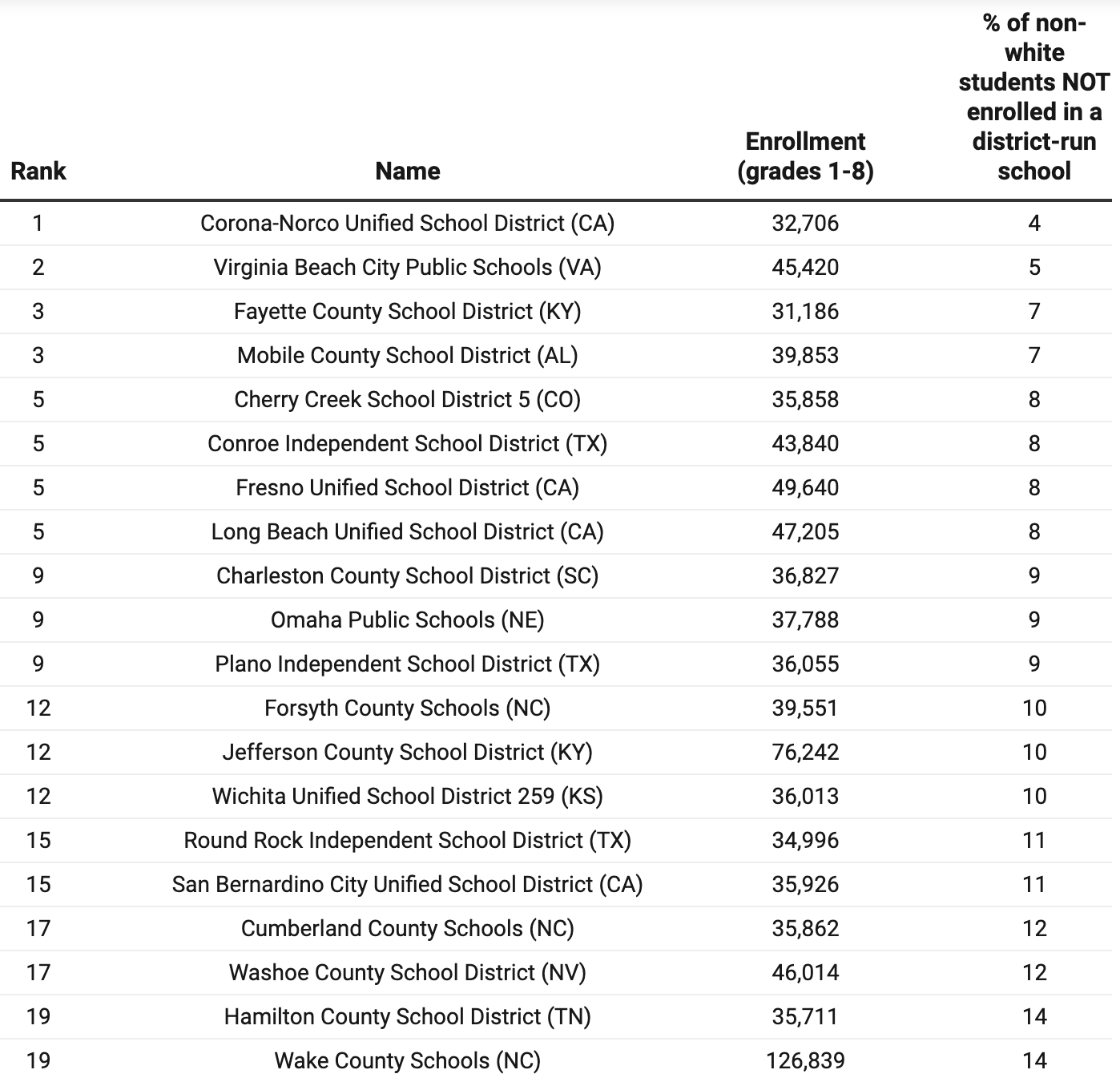
But before you do—especially if you’re an education reformer keen to expand school choice for kids who need it—take a look at the following table, which shows the top 20 major urban districts where relatively few students of color attended non-district alternatives as of 2020. (The full version in the report ranks districts one through seventy.) In our view, these districts are ideal targets for charter school expansion.

Table 1: Major urban districts that face the least competition to educate non-white students, top 20
1

Notes: Urban districts are those where private, charter, and traditional public schools with urban locale codes account for more than half of total public and private enrollment.

Table 1 shows that, of the twenty major urban districts with the least competition, two of them (Cherry Creek School District 5 and Mobile County) are located in Colorado and Alabama, which have the second and third best “state public charter school laws” (respectively) in the nation, according to the National Alliance for Public Charter Schools. Fayette and Jefferson County school districts in Kentucky and several urban districts in Texas—including those in Plano, El Paso, and Round Rock—are also in dire need of more options for students of color. The same can be said for Black and Brown kids in multiple urban districts in charter-friendly North Carolina, including in the counties of Forsyth, Cumberland, and Wake. Making more progress in Nevada could also have a big payoff, given the underperformance of Washoe County (i.e., Reno), where just 12 percent of students of color attend an option other than their district-run school.

So, a big heads-up to school choice advocates in search of fertile terrain. Take a good look at these districts because they need you. They need your energy, your resources, and your commitment to expand charter schools and other options.

Because, at the end of the day, just 7 percent of all public school students attend a public charter school. It’s a proverbial yet precious drop in the bucket. Look, we already know that the growth of high-quality charter schools benefits low-income, Black, and Hispanic students academically. So, it follows that we need more of them.

Who’s listening?

 

[i] As of 2020, seventy-eight of the city’s eighty-six schools were overseen by the Orleans Parish School Board and New Orleans-Public Schools (NOLA-PS). According to the Cowen Institute, all but three of these schools are independent public charter schools; NOLA-PS does not directly run any of the schools under its purview. See https://cowendata.org/reports/the-state-of-public-education-in--new-orleans-2019/governance.

view

What would another Trump term mean for education?

Chester E. Finn, Jr.
12.7.2023
Flypaper

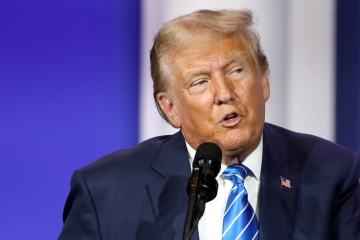
Nothing about Donald Trump is predictable except unpredictability, so it may be folly to speculate on what his return to the Oval Office would mean for American education. It also needs to be said up front that, faced with all the challenges and risks of another Trump term, K–12 education policy will not likely be the top concern on many minds. But that’s the domain where I belong, so let’s parse the clues that have already been supplied as to what Trump II will likely undertake in this realm. Some come in the form of broad hints that his team will forcefully employ every means possible to reshape the government and its policies and practices to their liking. Some are more specific statements of what their education agenda will emphasize.

The clearest expression of the latter comes on a campaign website that purports to state Trump’s positions and plans on fifteen major issues. Education appears under the heading “Protect Parents’ Rights.” Here’s the entirety of it:

President Donald J. Trump fought tirelessly to expand charter schools and school choice for America’s children. He secured permanent funding for Historically Black Colleges and Universities and protected free speech on college campuses. Now, Joe Biden and the radical left are using the public school system to push their perverse sexual, racial, and political material on our youth. President Trump will cut federal funding for any school or program pushing Critical Race Theory or gender ideology on our children. His administration will open Civil Rights investigations into any school district that has engaged in race-based discrimination. President Trump will veto the sinister effort to weaponize civics education, keep men out of women’s sports, and create a credentialing body to certify teachers who embrace patriotic values. President Trump will reward states and school districts that abolish teacher tenure for grades K–12 and adopt Merit Pay, cut the number of school administrators, adopt a Parental Bill of Rights, and implement the direct election of school principals by the parents.

In the forward-facing portion of that paragraph (starting with “President Trump will...”), I detect five themes or emphases. 

  • Engage in vigorous culture-war combat using two weapons: the power of the purse (by withholding federal funds from schools and “programs” that “push CRT or gender ideology on children”) and the threat of OCR investigations into districts that “engaged in race-based discrimination.” Though one should never underestimate what an administration (of either party) may try to accomplish via executive order, adding conditions to federal education spending normally requires Congressional action. It’s certainly possible that a Trump-aligned GOP majority on both sides of Capitol Hill would work with the White House on this, though it also seems likely that the courts would eventually take issue with restrictions that appear to limit what schools can teach. The threat of civil rights investigations, however, is entirely plausible and has been made by several recent administrations, including Trump I—and now Biden. Considering that the foremost purpose of OCR is to investigate “race-based discrimination” by educational institutions, the Trump team would simply assert that that’s what they’re doing. And they’ll run into all the usual complexities when dealing both with complaints that come through the transom and pro-active efforts to quash practices they abhor. How, for example, to cope with the upscale Evanston school system’s recent creation of single-race “affinity classes” intended to shrink racial “learning gaps”?

  • “Vetoing” efforts to “weaponize civics education.” It’s really hard to picture how this might be done. Presidents can only veto acts of Congress, although they can also halt agency actions that they don’t like. Today, however, despite efforts by devotees of civics-education reform to get Congress to authorize sizable sums for this, there’s minimal involvement by federal agencies in any form of social studies education—just a couple of tiny programs and projects here and there at ED and NEH.

  • “Keep men out of women’s sports.” Title IX is complicated and its enforcement—OCR again—multifaceted and, to a considerable extent, discretionary on the part of the enforcers. And a Republican Congress might also amend it to push enforcement farther into the myriad complexities of transgender issues. One way or another, those issues are bound to be front and center.

  • “Create a credentialing body to certify teachers who embrace patriotic values.” To my knowledge, Uncle Sam today has essentially nothing to do with teacher credentialing save for Defense Department schools—and approving the accreditation groups in higher education that include university-based teacher education. I can’t picture how a federal teacher-certification “body” would work, though I could imagine some sort of federal award or badge for teachers who—let’s say—pass the national citizenship exam. Getting into the realm of the “values” that a teacher “embraces,” however, recalls McCarthyism and feels scary—which doesn’t mean that would deter Trump.

  • “Rewarding” states and districts that “abolish teacher tenure for grades K–12 and adopt Merit Pay, cut the number of school administrators, adopt a Parental Bill of Rights, and implement the direct election of school principals by the parents.” This is a mish-mash of five different activities that would, says the Trump campaign, lead to “rewards,” which can mean anything from a handshake or fancy medal at the White House to a flag over school-system headquarters to some sort of cash bonus or freedom from one or another burdensome regulation. The ubiquitous practice of public-school teacher tenure is typically enshrined in state law, though its administration may be locally determined (often via union contracts). Merit pay, which can take a hundred forms, might be statewide, might be local. Cutting administrators—how defined, how measured, what base year?—would be a local move. A parents’ bill of rights can also mean a thousand different things, most likely a state law of some kind, though the House of Representatives has passed its own federal version. As for school principals elected by parents, that one at least has the virtue of resembling a new idea, though facsimiles of it can be found in some private and charter schools—and Chicago tried a version in its public schools in the late 1980’s.

Take note, too, of what’s missing from the Trump list, the dogs that aren’t barking—not just school safety and discipline, but also the core school-reform agenda of the past forty years. There’s nothing new here on charter schools or school choice, despite the heavy emphasis that he and Secretary DeVos gave it during their previous reign (and for which his campaign takes credit in the first part of his statement). Even more conspicuous by its absence is any mention of learning loss or dismal NAEP and PISA scores, much less the need for children to learn more so as to advance the nation’s prosperity, security, and equity via stronger achievement, higher standards, diminished gaps, accountability for results—or indeed anything at all in that vein. If the nation is still at risk due to the slipshod, gap-filled learning of its young people or the weak performance of its schools, you wouldn’t know it from this version of the Trump education platform.

By omitting the longstanding “ed-reform agenda,” the Trump team is not only departing from forty years of GOP education priorities, but also seems to not be making a play for suburban moms, independents, or Democrats, maybe not even for Republicans beyond his “base.”

To be fair, however, I must note that the Biden crew, along with its hostility to school choice, also seems oblivious to student achievement, and nothing they’ve said so far about second-term plans and priorities signals otherwise.

It all makes me very sad.

view

U.S. education needs to leap ahead. R & D moonshots will pave the way forward.

Daniel Correa
12.7.2023
Flypaper

Education in the United States needs to improve and evolve. Too many learners get lost in the current system. Even more are underserved or under-resourced. Almost nobody is learning enough—and pandemic-era learning loss and mental health challenges have left this generation of students even more at risk.

There’s not a lot of consensus about what to do about it, but recently there’s been growing alignment between right and left that our education system can benefit from a national vision for “big bets,” a moonshot mindset similar to the vision that sent astronauts into space and helped create everything from the Internet to life-saving vaccines.

What’s also clear is that DARPA-type programs can engender bipartisanship. Since DARPA’s birth in 1958, and of similar programs in other sectors, the U.S. government won praise on both sides of the aisle for investing in high-reward research and development (R & D). This investment has led to groundbreaking innovations in energy, health care, intelligence, and the military.

Now it’s education’s turn. Congress should create the National Center for Advanced Development in Education (NCADE) within the Institute for Education Sciences (IES), which would advance moonshot thinking that will benefit U.S. students far into the future.

Unfortunately, this vision didn’t come through clearly in the latest draft of the Advancing Research in Education Act, a bipartisan bill set to reauthorize the Education Sciences Reform Act, that was released by the Senate Health, Education, Labor, and Pensions (HELP) Committee leadership this week. While there are pieces of the proposed legislation to celebrate, an early draft of the bill leaves out authorization for NCADE and also short-changes education R & D in its overly restrictive definition of “evidence-based.”

The HELP Committee notwithstanding, Covid setbacks have given NCADE’s supporters new energy. With strong support from the IES Director and the rise of groups like the Alliance for Learning Innovation, momentum is building.

The urgency goes far beyond immediate school challenges. Consider, for instance, how China is outpacing the U.S. in developing its talent pipeline of underrepresented groups in innovation fields. A World Intellectual Property Organization study found that, “from 2001 to 2005 and 2016 to 2020, China grew its capacity of women inventors at almost double the rate of the U.S.—42 percent in China compared to 22 percent in the U.S.”

Investment in policies like the New Essential Educational Discoveries (NEED) Act, soon to be reintroduced in Congress, and the creation of a new center dedicated to advancing DARPA-like R & D in education can provide both the focus and the guardrails needed to foster education innovation.

Currently, most developments in education, like new ed tech, take place in the private sector, and appropriately so. Yet private industry is often more focused on short-term, profit-driven projects, which hamstrings longer-term, student-centered innovation. Moreover, these innovations are proprietary, dramatically limiting access to valuable data and the amount of new R & D that can come from them. Likewise, the philanthropy field also often requires “market-ready” solutions.

Adding to the challenge: The education market is highly fragmented and doesn’t lend itself to transformative R & D. With 14,000 school districts in the U.S., it’s hard to achieve scalable impact for new products. So for many private companies, it’s a better business bet to build safe tools guaranteed to sell rather than taking on the risk associated with developing breakthrough solutions.

NCADE would serve as a bridge between basic research—which rarely makes its way into classrooms via practical applications—and the private sector. The possibilities are boundless and are made all the more exciting by recent, groundbreaking developments in artificial intelligence, large language models, and virtual and augmented reality. NCADE could potentially lead to breakthroughs in automated tutoring for struggling students, instructional feedback and support tools that increase teacher satisfaction and retention, and more effective ways of teaching dyslexic students to read.

It doesn’t have to start with an enormous budget. Smaller investments can still lead to groundbreaking innovations. The Experiment Foundation is testing this out for programs with budgets totaling $50,000 to $250,000. Early results are promising, such as CalWave, which started as a $9,000 project and is now one of the longest-duration wave-energy projects in the world.

Researchers and developers need more opportunities and support to test out their ideas and learn from their failures. NCADE would invest in approaches and technologies that have the potential to transform education in ways that can’t even be imagined yet. The future is not as far away as people might think, and while groups may disagree on the details of how best to reshape education, leaders must begin investing in foundational education R & D moonshots now. NCADE is the opportunity to embark on this bolder path and ensure American education continues to lead the way for the world instead of being left behind.

view
MA licensure test analysis SR image

Do licensure tests predict future teacher effectiveness?

Jeff Murray
12.5.2023
Ohio Gadfly Daily

Relaxing licensure requirements for new teachers is one of many proposals being floated in order combat teacher shortages and diversify the pipeline. It’s true that licensure can be a labyrinthine process, and parts of it may be ripe for reform, but policymakers must take care not to throw out what’s working even under duress. A new paper from the American Institutes for Research (AIR) suggests that subject matter testing, at least as practiced in Massachusetts, is one of those non-negotiable parts of the process, accurately predicting a novice teacher’s abilities to deliver quality education for students.

The Massachusetts Tests for Educator Licensure (MTELs) have been administered to prospective teachers in the Bay State since 1998. To become a prekindergarten–12 teacher, applicants are required to pass at least three MTELs. These include two Communication and Literacy Skills Tests (CLST)—one in reading, one in writing—and at least one additional academic subject test. The academic subject tests generally cover broad grade bands, but contain subareas that correspond to specific content areas and are weighted to determine the number of questions, as well as the aggregation of scores. Candidates pay approximately $110–$140 to take each test and can retake any exams they fail an unlimited number of times. Currently, there are thirty-six MTELs aligned to state regulations governing subject matter knowledge expectations for teachers and current curriculum frameworks. The state also convenes a bias review committee to make sure that test content and language don’t disadvantage certain populations of teacher candidates.

The analysts look at more than 150,000 MTEL scores from 1998 to 2019, stopping before pandemic-era changes to licensure were enacted. They combine these data with employment, classroom assignment records, and performance evaluations from the state’s Education Personnel Information Management System (EPIMS). For teachers in grades 4–8 between 2012 and 2019, they have data to link their licensure test scores to their students’ achievement in math and ELA, allowing for two effectiveness measures—value-added and summative student achievement—to be connected to particular teachers.

Consistent with research in other states, the analysts find that teachers’ MTEL scores are related to both their value-added contributions to student growth and their students’ summative performance ratings. In general, the higher the score on the licensure test, the more effective the teacher is in driving student scores on MCAS, PARCC, and annual end-of-grade tests higher. For math and ELA teachers in grades 4–8, a one-standard-deviation increase in average MTEL scores is associated with an increase of about 0.005–0.014 standard deviations in students’ test performance. These are small but statistically-significant effects, and are stronger in math than ELA.

The analysts do not issue recommendations, but the detailed picture provided seems valuable for policymakers in Massachusetts—and beyond. The MTEL testing structure appears adequate to the task of screening potential teachers, and any changes contemplated in pursuit of a wider pipeline of future educators should hold the line on testing subject matter knowledge, cut scores, and the like. But that doesn’t mean that other changes to the complex process—such as reducing the cost of tests or better supporting candidates struggling to pass these exams—can’t be part of a solution to get more teachers into classrooms or to diversify the pool of candidates.

SOURCE: James Cowan et al., “Assessing Licensure Test Performance and Predictive Validity for Different Teacher Subgroups,” American Educational Research Journal (December 2023).

view

Does career and technical education still limit students’ academic opportunity?

Meredith Coffey, Ph.D.
12.7.2023
Flypaper

Once a de facto means of maintaining within-school segregation, career and technical education (CTE) has, in recent years, experienced a favorable shift in public perception. Not only are schools less likely to confine students to strictly vocational or college-preparatory tracks, but educators and policymakers have also increasingly come to value career readiness. Nonetheless, skeptics rightly ask whether CTE still limits students’ academic opportunity. Addressing such concerns, a new study by a Florida State University researcher examines the effects of CTE on other course-taking, as well as whether these effects vary by student subgroup.

Study author Walter G. Ecton analyzes data for all 310,524 Massachusetts public high school students enrolled from 2011–2012 to 2017–2018. Using a series of regression models, he tests the impact of two variables: the total number of CTE courses taken, and whether the student was formally designated a “CTE concentrator.” Outcome measures include the number of courses taken both in core academic subjects and in elective subjects. Ecton’s models control for a host of student factors: gender, race, ethnicity, socioeconomic status, disability, town of residence, middle school and high school effects, past academic performance, and past attendance rates.

First, he finds that CTE course-taking correlates with only a very small decrease in course-taking in the core academic areas of English language arts (ELA), math, science, and social studies. As Ecton explains, “[F]or CTE to predict a full ELA course decrease, students would need to take roughly 32 additional CTE courses”—an impossibility, since Massachusetts students need only take twenty-two courses to graduate. Moreover, the effects of CTE course-taking on core academic subjects are no longer significant when the model controls for high school choice. In practical terms, then, taking CTE courses makes Massachusetts students no less likely to take as many academic courses as their peers. This news should not be particularly surprising, given that the state requires three to four years in each of these subjects for graduation; still, the news may be unwelcome to some CTE advocates, who argue that student schedules should allow more time for apprenticeships and other professionalization opportunities.

On the other hand, taking even a small number of CTE courses predicts a reduced likelihood of other electives, including fine arts and world languages. This finding should also be unsurprising. Students have finite time in high school, and if they want to fit a carpentry class into their schedules, it makes more sense to drop ceramics than it does to forgo algebra. Even so, these tradeoffs merit serious consideration, as fine arts and languages have long been viewed as part of a well-rounded, liberal education—to which all children deserve access—and in more concrete terms, research has shown such courses’ positive correlation with key outcomes like reading, writing, and math achievement, as well as behavior and graduation rates.

Ecton’s breakdown of findings for different student subgroups reveals few variations, suggesting at least a softening of the racial and socioeconomic divisions that long defined CTE. But an exception lies in the findings based on prior student performance. For the highest-achieving students, becoming a “CTE concentrator” predicted 1.2 fewer Advanced Placement (AP)/International Baccalaureate (IB) courses compared to similarly high-achieving peers. This result is worrisome, since most AP/IB courses are in core academic areas, so there should not be the same scheduling conflict as with fine arts or world languages; that is, students are typically choosing between biology and AP Biology, not between automotive technology and AP Biology. Of course, there may be unmeasurable factors, like student goals, that help explain this difference in AP/IB course-taking. Just the same, districts and schools should pay careful attention to ensuring that their highest-achieving students have equitable access—both formal and informal—to advanced courses, regardless of their interest in CTE.

Conversely, for the lowest-achieving students, becoming a “CTE concentrator” correlates with fewer “study hall” and “miscellaneous” courses. This relationship may simply occur because these students are choosing cosmetology over study hall—which could be quite beneficial, as research shows that CTE courses offer a range of benefits, from graduation rates to adulthood earnings and employment. Yet, as Ecton notes, the negative relationship between these course-taking rates could be problematic if struggling students are choosing CTE over support classes that could be helping them in core academic areas.

Although pursuing CTE courses does not decrease access to basic academics in Massachusetts, the trend might differ for states with less prescriptive graduation requirements. And despite CTE’s revamp, Ecton’s study reiterates decades-old questions about how CTE course-taking might affect the highest- and lowest-performing students, both in the Bay State and elsewhere.

SOURCE: Walter G. Ecton, “The Opportunity Costs of Career and Technical Education: Coursetaking Tradeoffs for High School CTE Students,” Annenberg Institute at Brown University (October 2023).

view

Cheers and Jeers: December 7, 2023

The Education Gadfly
12.7.2023
Flypaper

Cheers

  • A proposed new rule from the EPA would require the replacement of all lead water pipes within ten years—a boon for children’s health and academic achievement. —Washington Post
  • The suicide rate among children and teens fell for the first time since the pandemic. —Education Week
  • Chicago Public Schools is working to offer Algebra at every district middle school. —Chalkbeat

Jeers

  • New Jersey waives the requirement that teachers pass the Praxis test for certification. —K12 Dive
  • Only eight states still require exit exams to graduate high school, and more states are moving towards abandoning them. —Education Week
  • “Columbus City Schools lowers its reading proficiency goals due to impact of...pandemic.” —WOSU
view

What we're reading this week: December 7, 2023

The Education Gadfly
12.7.2023
Flypaper
  • “Fueled by worries over the pandemic, equity and learning loss, Republicans and Democrats are rewriting decades’ worth of strict standardized testing and graduation requirements.” —Politico
  • American math scores fell on the international PISA tests, but other countries fell more. —The 74
Fordham Logo

© 2026 The Thomas B. Fordham Institute
Privacy Policy
Usage Agreement

National

P.O. Box 110
Burke, VA 22009

202.223.5452

[email protected]

Ohio

P.O. Box 82291
Columbus, OH 43202

614.223.1580

[email protected]

Sponsorship

130 West Second Street, Suite 410
Dayton, Ohio 45402

937.227.3368

[email protected]