Mobile Navigation

  • National
    • Policy
      • High Expectations
      • Quality Choices
      • Personalized Pathways
    • Research
    • Commentary
      • Gadfly Newsletter
      • Flypaper Blog
    • Events
    • Scholars Program
  • Ohio
    • Policy
      • Priorities
      • Media & Testimony
    • Research
    • Commentary
      • Ohio Education Gadfly Biweekly
      • Ohio Gadfly Daily
  • Charter Authorizing
    • Application
    • Sponsored Schools
    • Resources
  • About
    • Mission
    • Board
    • Staff
    • Career
Home
Home
Advancing Educational Excellence

Main Navigation

  • National
  • Ohio
  • Charter Authorizing
  • About

National Menu

  • Topics
    • Accountability & Testing
    • Advanced Education
    • Career & Technical Education
    • Charter Schools
    • Curriculum & Instruction
    • ESSA
    • Evidence-Based Learning
    • Facilities
    • Governance
    • Personalized Learning
    • Private School Choice
    • School Finance
    • Standards
    • Teachers & School Leaders
    • Think Again
  • Research
  • Commentary
    • Gadfly Newsletter
    • Flypaper Blog
    • Gadfly Podcast
  • Events
  • Scholars Program

The Education Gadfly Weekly

Sign Up to Receive Fordham Updates

We'll send you quality research, commentary, analysis, and news on the education issues you care about.
Thank you for signing up!
Please check your email to confirm the subscription.

The Education Gadfly Weekly: What do parents need to know about the science of reading?

Volume 23, Number 49
12.14.2023
12.14.2023

The Education Gadfly Weekly: What do parents need to know about the science of reading?

Volume 23, Number 49
view
High Expectations

What do parents need to know about the science of reading?

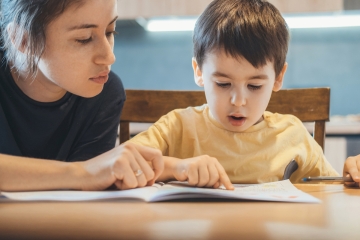
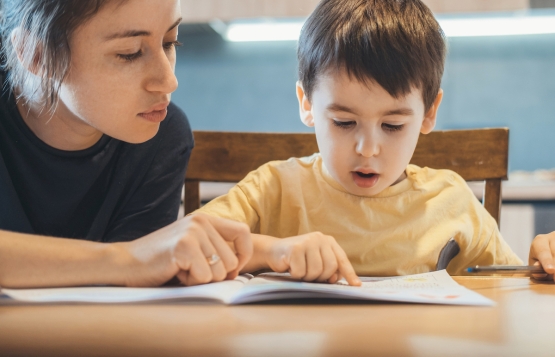
The welcome rise of the science of reading has been a sober reckoning for teachers and administrators. It also raises uncomfortable questions, seldom asked: How much faith should parents have that their child’s school and teachers understand good literacy instruction? And how much do parents need to know to advocate for their children and raise strong readers?

Robert Pondiscio 12.14.2023
NationalFlypaper

What do parents need to know about the science of reading?

Robert Pondiscio
12.14.2023
Flypaper

In defense of the traditional classroom

Daniel Buck
12.14.2023
Flypaper

Should schools ban cellphones?

Tim Daly
12.8.2023
Flypaper

Cheers and Jeers: December 14, 2023

The Education Gadfly
12.14.2023
Flypaper

What we're reading this week: December 14, 2023

The Education Gadfly
12.14.2023
Flypaper
view

In defense of the traditional classroom

Daniel Buck 12.14.2023
Flypaper
view
students on phones

Should schools ban cellphones?

Tim Daly 12.8.2023
Flypaper

view

Cheers and Jeers: December 14, 2023

The Education Gadfly 12.14.2023
Flypaper
view

What we're reading this week: December 14, 2023

The Education Gadfly 12.14.2023
Flypaper
view

What do parents need to know about the science of reading?

Robert Pondiscio
12.14.2023
Flypaper

One of the most welcome developments in education practice and policy of the past half decade has been the surprising momentum around the science of reading. To be sure, it’s been a sober reckoning for teachers and administrators, many of whom have come to recognize they were “sold a story“ about effective reading instruction and have been forced to reconsider much of what they thought they knew. The gap between what teachers assumed to be best practice and what reading research tells us raises uncomfortable questions, seldom asked: How much faith should parents have that their child’s school and teachers understand good literacy instruction? And if schools and teachers are shaky on effective practice, how much do parents need to know to advocate for their children and raise strong readers?

This unspoken tension—how much trust is owed to an education establishment that got it so wrong for so long—informs a new poll of parents with elementary school-age children, conducted by the Public Opinion Strategies and Impact Research.

Parents think education is going poorly in the U.S. but also think their own child’s teacher is excellent. No surprise there; that’s a consistent and reliable finding stretching back decades. Perhaps it’s therefore also no surprise that it’s mirrored in parents’ view of reading instruction: North of 90 percent think their child’s school and teacher do a “good” or “excellent” job teaching reading. Very few parents perceive a “crisis” in reading instruction, regardless of whether their children attend a public or private school—even if they have an IEP or are enrolled in a gifted-and-talented program. A mere 13 percent of parents rate their child’s reading as behind grade level, and even those parents tend not to hold teachers and schools accountable. They still hold overwhelmingly positive views of both.

The poll also shows that a healthy share of parents with elementary-school-aged children report reading with their children “at least a few nights per week.” It’s remarkably consistent (albeit self-reported) across all subgroups of parents: men (69 percent) and women (73 percent); Black (79 percent) and White (72 percent); college graduates (74 percent) and non-grads (69 percent). Overall, the poll finds more than four-fifth (82 percent) of parents are “confident” or “very confident” in their child’s ability to read.

But is that confidence misplaced? The poll’s authors and promoters clearly want to cultivate a sense of urgency among parents—and some healthy skepticism. To wit, one striking revelation in the poll is the substantial shift in perception after parents are presented with a troubling statistic: Just 32 percent of American fourth graders are proficient in reading, according to National Assessment of Educational Progress (NAEP) scores. Upon hearing this, 61 percent of parents expressed that reading instruction is either in crisis or going poorly. This, it must be noted, is a complicated and even contentious point. Critics, such as Tom Loveless in a 2016 Brookings paper, have long argued that “proficient” on NAEP assessments does not equate to reading at grade level. (It’s higher!)

The open question is just how well informed parents need to be to advocate effectively for quality reading instruction, and how much science of reading do they need to understand themselves? Faith Borkowsky, a veteran teacher and literacy consultant, worries that parents might get information from their child’s teacher that is unreliable or that doesn’t help them support their developing reader at home. The teacher might tell parents, for example, that their child is reading at level 2 or 3 (leveled reading is itself a concept of dubious value and provenance). “That’s really no information at all. What are the skill deficits?” asks Borkowsky, author of the 2018 book Failing Students or Failing Schools?: A Parent’s Guide to Reading Instruction and Intervention. “Does the child have the background knowledge to support what he or she is reading, trouble with decoding, blending, or reading polysyllabic words? Tell me where the child struggles so there’s something I can work on. Otherwise, they’re just going to think their child is going to improve just by reading books at a certain level, which of course doesn’t happen. Parents should know that there’s a difference between getting a letter, a book level, and a skill deficit.”

The poll suggests that parents have good instincts about reading instruction and pay close attention to their child’s literacy instruction. Nearly every parent (94 percent) is familiar with “sight word lists or flash cards”; 92 percent with “sound it out” or phonics (86 percent); 90 percent with using pictures or other clues. Not surprisingly, far fewer are familiar with specific tools and methods like “leveled readers” (65 percent), “decodable readers” (36 percent), or “three-cueing” (22 percent). Only about half (47 percent) are familiar with the phrase “science of reading.” And very few parents can describe with confidence the specific curricula and practices their child’s teacher employs.

In his book, Language at the Speed of Sight (2017), the University of Wisconsin’s Mark Seidenberg warned that “parents who proudly march their children off to kindergarten each year...make a big mistake: They assume that their child’s teacher has been taught how to teach reading. They haven’t.”

In short, parents can’t be expected to be reading experts. But they shouldn’t assume their child’s teacher is either.

view

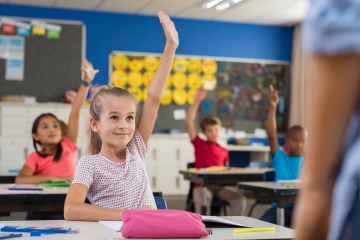
In defense of the traditional classroom

Daniel Buck
12.14.2023
Flypaper

Many futuristic reformers love to hate the classroom. According to the haters, we need to reimagine education itself, reconsider the “one teacher, one classroom” model, and do away with the traditional grammar of schooling. Center on individual students! Tear down walls! Let new models arise and lead us into a brave new world.

Most people intuitively understand the efficacy of the traditional classroom model—it’s still the modus operandi of America education, after all—but when utopian reformers treat traditional education like a punching bag, it’s important to stand up and defend the institution from time to time. Who will make the positive case for it when it’s so common to criticize it?

I hate to break it to these reformers, but the classroom really is a pretty efficient means to universally educate a populace. Like Churchill’s views on democracy, they are the worst method of mass education—except for all of the others, of course. There are identifiable strengths of the traditional classroom, and comparing them to three alternatives—tutoring, open classrooms, and remote learning—will help to tease them out.

Arguably, the best means to educate a child is one-to-one tutoring. It’s a truth so universally acknowledged that there’s even a name for it: the two-sigma problem. Children who are individually tutored perform two standard deviations better than traditionally schooled students—a near-unheard-of effect size in education. Yet tutoring comes with two problems.

First, the actual efficacy of high-dosage tutoring has come into question since Benjamin Bloom first coined the “two-sigma problem.” Research since Bloom’s seminal paper places the real effect size of tutoring closer to 0.5–0.8 standard deviations—still large, but not quite the utopian level initially reported. Moreover, one wonders how universal implementation would affect its impact after local districts cobble together programs, volunteers with little experience fill positions, and huckster organizations make big promises with few results.

Second, basic economics precludes us from universal tutoring. There are not and will not ever be the manpower or resources required to individually tutor our nation’s 55 million students. While the recent boost in home- and micro-schooling provides smaller classrooms to more students, the extra work, risk, and maybe cost that it creates for parents will keep it a niche phenomenon.

Thus, learning will remain a communal activity, and so the question becomes “what’s our next best option”?

In the 1970s, the open classroom was all the rage. Built on the idea that students learn best through doing, not instruction, open classrooms tore down walls, did away with schedules and isolated subjects, and established learning stations where students could encounter material and sequence their own educational journey. A room might have 100 students with several different teachers. Within a decade, however, this practice fell out of favor and institutions rebuilt their walls.

I like to imagine what an administrator at one of the schools might be thinking as they reconstruct the traditional schooling model:

It turns out that, to learn math, history, literature, or science, it helps to have roughly thirty to sixty minutes of direct guidance from a content expert, so let’s establish content-specific learning stations. It’s best if everyone transitions simultaneously, so perhaps an audio cue with a few minutes break between. And 100 kids are noisy, so let’s separate everyone out and set up some walls.

From isolated subjects to bells and square classrooms, there’s a reason for everything, even if it’s not immediately visible. In fact, the traditional classroom reminds me of Chesterton’s fence—a thought experiment wherein philosopher G.K. Chesterton suggests a new property owner shouldn’t tear down a fence until they understand why it was built in the first place. Remove it without such understanding, and you may find coyotes in your yard and snowdrifts blocking windows. Remove the bell, and hallways turn to chaos.

The research base on open classrooms is sparse. One meta-analysis found only twenty-one studies on it, and the results are mixed. Judging from what we know about other education research—the efficacy of explicit instruction, the need for worked examples and regular low-stakes quizzing, the importance of quiet and well-ordered learning environments, and the continual failure of discovery education every time it crops up—I highly doubt that further research would vindicate the model. In fact, those distinct strategies would flourish best in traditional classrooms.

Nonetheless, the false ideal of open classrooms reemerges every few years and fades away again as teachers build makeshift walls using whiteboards and shelves.

As one last comparison, consider the society-wide experiment we ran with online school during the pandemic. It was an unmitigated catastrophe. Students benefit from personal encounters with their teachers and peers; they flourish in the boundaries and structure of school; many rely on the bare necessities that these institutions provide. For a year and a half, we tore down Chesterton’s fence and discovered that traditional schools and classrooms with teachers in them offer kids a lot of the things they need.

Perhaps the most common criticism of the classroom denigrates it as a “factory model.” Its aisles, bell schedules, routines, hallways, and batches of children arose during the industrial revolution as a means to train good workers. So some think. But Shakespeare in his grammar school and Loyola’s Jesuits would contest that point of historical fact.

Still, assume for a moment that it was accurate. So what? We use factories because they are efficient tools to produce a high volume of product consistently—in this case, basic literacy, numeracy, and historical and scientific knowledge. Castigating schools as learning factories is not the insult that some people think it is.

Ultimately, I think the best way to understand the classroom frames it as an updated tradition. What is more basic to human society than an adult teaching a group of children about something important? The classroom might more relate to a family dinner; old doesn’t mean bad, and if we try to innovate past it, we may only discover that we’ve lost something essential.

view
students on phones

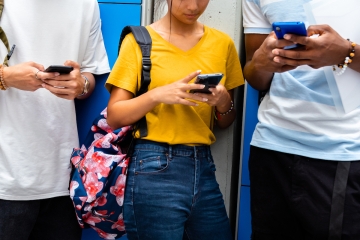
Should schools ban cellphones?

Tim Daly
12.8.2023
Flypaper

Editor’s note: This was first published on the author’s Substack, The Education Daly.

They’re coming for the kids’ phones. Who is “they”?

Governments, for starters. There’s a national U.K. effort to forbid phone usage by students during the school day. Bans have already been implemented in France and China.

Next up, we have the professors. Dozens of prominent academics, including Jonathan Haidt, sent a letter this fall to U.S. Secretary of Education Miguel Cardona calling on him to issue an official advisory asking schools to adopt phone-free policies. They argue that personal devices are generally unhealthy for kids, but particularly so when they are used during the school day.

Finally, the editorial boards. In the past two months, Bloomberg and The Washington Post have called for bans on phone usage during the school day, with the Post going even further by advocating that students be forced to leave their devices at home.

Why all the fuss? Turns out, there are good reasons.

Spoiler alert: Solutions are not as obvious as we might wish. We’re dealing with something more than kids watching TikTok during science class.

The case against mobile phones in school

Those hoping to ban phones see them as an unhealthy interference with nearly every key function schools are meant to serve. They argue that:

  • Just as more kids began spending more time with their phones, we saw a massive spike in depression and mental illness. By 2012, major social media platforms had become particularly engrossing/addictive by adding features such as likes and retweets, then coding sophisticated algorithms that massively increased the length of time users would remain engaged. By 2015, most American teenagers had smartphones. In the years to come, nearly every indicator of youth wellness worsened. It happened in one developed country after another, where technology adoption occurred at the same clip. The share of adolescents reporting high levels of loneliness, for instance, doubled in less than a decade. Psychologist Jean Twenge, whose early work on this issue was often dismissed as alarmist, has proven terribly prescient. She and others say that while we may not be able to keep kids away from dangerous social media all the time, the least we can do is to make schools a respite.

  • Phones prevent socialization between students during school. Ask a veteran teacher what’s changed in recent decades, and the first thing they’re likely to mention is kids not talking to one another anymore. Some can barely initiate or sustain a conversation with a same-age peer. They don’t have the practice. Others wear AirPods like security blankets. Phone bans are seen as restoring critical interactions that kids missed—to their lasting detriment—during Covid closures.

  • Despite what rules may exist, most students are using their phones during school. In a study conducted by Common Sense Media—which does fantastic work on this issue—97 percent of kids aged 11–17 were on their phones between 8 a.m. and 3 p.m. on school days for an average of forty-three minutes. They typically picked up their phone thirteen different times. The most frequently accessed apps were social media. To fed-up policymakers, this is evidence that guardrails on student phone usage have utterly failed. It’s time to get serious.

  • Phone usage reduces learning. You may be aware that we’re experiencing something of a learning crisis since the arrival of the pandemic. It’s bad. We need to maximize every tool to help students recover. In classrooms where phones are permitted, students perform worse—even if they are not among those using a device. This may suggest that distraction is contagious across whole groups.

To sum up, there are loads of reasons to keep kids off their phones during class. I tried to find dissenters who took the opposite position—that phones are relatively benign and we shouldn’t bother trying to keep kids from using them during school. But, honestly, I couldn’t find anything worth sharing with you. (Feel free to send me good stuff you’ve run across. I know the dissenters are out there!)

The policy options

Ok, if we’re going to do a phone ban, what does that look like? Schools commonly choose one of three rules:

  1. Students can’t bring their phones into the school building. Phones stay at home. There are obvious issues with this approach. Parents want to be able to track their kids to and from school to ensure safe travel. They want kids to be able to call them if they have a bike accident or need a ride home after school. Many students go directly from dismissal to pick up siblings at other schools or to extracurriculars where they may need their devices. Some kids do not carry cash—rather, they pay only through apps on their phones, and they need to be able to purchase things after school for themselves or their family. Just a ton of things going on here. So why are some schools—indeed, some countries—going this way? Because it simplifies enforcement. Some teachers appreciate that. If there are no phones in the building, teachers don’t have to collect them or remind students to put them in their lockers. Additionally, if the phones aren’t in the building, they can’t relay text messages or notifications to smart watches kids are wearing. Regardless of the merits of this approach, principals are likelier to win a fight with a car full of wolverines than to get parents to send their kids to school phone-less. It’s a tough sell.

  2. Students can’t have their phones in class. They must be checked into a pouch/holder under the teacher’s supervision or left in a locker. Usually, this means bell to bell. Students cannot access phones at lunch or recess. This approach avoids some of the sticky problems of the previous policy while making it reasonably easy for teachers to see whether a student’s phone has been surrendered or not. The downside is a somewhat greater burden of enforcement, which introduces the possibility of inconsistency from one homeroom to another. Nonetheless, this is the policy that seems most popular these days.

  3. Students can’t use mobile phones in class. It’s fine to have the phone—it just needs to stay in a pocket, backpack, etc. Can’t be out on the desk, can’t be actively streaming music to a student’s headphones, can’t be capturing video of a kid drooling through his nap at the next desk. This one requires a substantial level of teacher enforcement, which quickly becomes exhausting. Many teachers simply give up. It’s comically easy to thwart. Kids ask to use the bathroom and sit in the toilet stall for twenty minutes enjoying the algorithm’s greatest hits. This policy still has its supporters, though, because it is least likely to lead to confrontations with angry parents who want their children to be reachable at all times. It’s probably the least popular option with teachers.

Other stuff nobody wants to talk about

What struck me in my conversations with educators and parents about phone bans is how little they talk about phones. Or social media. Instead, there are two issues they bring up repeatedly.

First, accountability and consequences for students. The key thing about any cellphone policy, as you probably picked up in the section above, is enforcement. Teachers don’t want to spend all day policing phones. It’s awkward. It’s infantilizing. It can escalate. For some kids, having something cherished taken from them puts them in a very defensive, anxious position. Power dynamics across lines of difference zoom to the fore. Parents get really angry. Administrators often won’t back teachers who enforce the administration’s own policies.

And yet: Without consistent enforcement, none of these cellphone policies mean anything. I had many exchanges with current and former teachers. When I asked them which policy they preferred, by far the most common answer was “the one that will be enforced.”

We are living through a moment when punishing students—including things like confiscating their cellphones—is out of vogue. Schools have heard loud and clear that students are struggling, they are fragile, and the priority is to build relationships. To make students feel welcome. Punitive discipline is alienating.

District, state, or national phone bans might give cover to schools to do more enforcement. But in a hyper-decentralized system like ours, schools are going to do what they want to do. There’s a tension between the prevailing desire to lighten up on discipline and the need for consistent enforcement if we want fewer phones in class. Shouldn’t we discuss that openly?

Second, we have a broader problem with student presence. Lots of kids aren’t even showing up to school. When they do, it’s gotten harder to earn their attention because there is more competition for it. Phones are just one element—one that schools may control through a ban. But school-sponsored technology in the classroom is whopper of a challenge, too. Conservatively, 80 to 90 percent of schools have 1:1 computing. Tablets and Chromebooks can do many of the same things as smartphones—and kids have full access to them throughout the day. Unable to text one another because their phones are stored away, students open shared Google docs and send messages to one another that way. Easy. They rush through activities to play games. You might think the IT department would block kids from accessing game sites, but software companies cleverly disguise non-nutritional content as “educational.” (Check out this example. If this is math instruction, bowling is CrossFit.)

Matt Kraft and his colleagues have done great work explaining how the value proposition for the American teacher seemed to deteriorate beginning in 2010 or so. They cite a number of compelling explanations. I submit that we cannot overlook how much of it is due to teachers competing for student mindshare. It’s no fun when half your class isn’t truly there. Banning cellphones won’t solve that problem. Districts may need to ask themselves difficult questions about the tens (or hundreds) of millions of dollars they have invested in screens.

What should we do?

OK, let’s ban students from using their phones during the school day. I’m sold. That’s probably the easy part. How can this policy be implemented so it works?

Schools should invest in secure, signal-blocking pouches from a company like Yondr. That way, devices stay with the students but they cannot be used. Less for teachers to police. At the end of the day, students can unlock the pouches and access their phones. No need to return to a homeroom where the phone is being stored; unlocking stations can be made available after the final bell in every classroom and exit. If it works at Madonna concerts and Chris Rock comedy shows, it can work in schools. Districts like Springfield, Massachusetts, are reporting positive results. Others, like Richmond, Virginia, are signing on.

But let’s establish rules for adults—not just students. If enforcement of phone policies is essential, insist teachers take the appropriate action each and every time they encounter a breach. We do this with plenty of other high priorities. Teachers can’t ignore bullying or physical violence. They can’t let kids cheat on state tests. They shouldn’t ignore phones, either. Teachers will have an easier time explaining a phone confiscation to a parent if they can point to a district directive. Hold teachers accountable on performance reviews if they are undermining the school’s campaign for phone-free learning.

Next, attach a reasonable and meaningful penalty to violating school phone rules. It should be commensurate with the magnitude of the offense. To date, it sounds like most schools treat this as pretty low magnitude. I’d say we need to bump it up a level so there is a bit more deterrence. Medium magnitude. Don’t just take the phone and return it at the end of the school day. That’s when the student was going to regain access anyway if they were following the rules in the first place. It’s not an actual consequence. Ask a parent to retrieve any phone that’s found during the school day where it does not belong. Have the student serve a detention. Don’t go overboard, but make the point.

Finally, don’t lose the forest for the trees. We all want classrooms to be warm, lively, engaging environments where kids can focus on things worth doing. Target all the barriers to that goal, even if they turn out to be iPads, bad curricular materials, boring instruction, negligent classroom management, or low expectations. If we don’t address those things, how can we blame kids for watching TikTok in the bathroom? Wouldn’t you do the same?

Personal postscript

The most enjoyable part of working on this post was hearing directly from students. I had fun conversations with my own kids, who are fourteen and twelve, as well as the children of friends and colleagues. A few of them reviewed early drafts and pointed out all sorts of things I’d gotten wrong. It was a good reminder that we ought to include young people more often in discussions of education policy. If you have an opportunity to talk about cellphones, chronic absenteeism, grade inflation, or any other hot-button issues with middle or high school students, I can almost guarantee it will be time well spent and you will hear things that adults never bring up.

view

Cheers and Jeers: December 14, 2023

The Education Gadfly
12.14.2023
Flypaper

Cheers

  • State leaders in Oklahoma are encouraging Tulsa to close underperforming schools. —Oklahoma Voice
  • Virginia’s Secretary of Education reviews her state’s educational initiatives, including innovative school models, transparency, and CTE programs. —Aimee Guidera, The 74
  • North Carolina expanded its school choice programs, loosened red tape around charter authorization, and passed a parents’ bill of rights. —The Carolina Journal

Jeers

  • ChatGPT hasn’t increased cheating in high schools—but only because it was so rampant already. —New York Times
  • A Kentucky judge struck down a new law that would have created funding for charter schools in a state where there are none. —The Courier Journal
  • A new Board of Education resolution in Chicago would set goals to move the Windy City away from school choice. —Chalkbeat
view

What we're reading this week: December 14, 2023

The Education Gadfly
12.14.2023
Flypaper
  • Peer effects and social pressure are major factors in the success of high-performing schools like Stuyvesant High School in New York City. —Naomi Schaefer Riley, Wall Street Journal
  • Colleges have to lower standards for male applicants to enroll an equal number of men and women. —Jeannie Suk Gersen, The New Yorker
  • Schools and teachers should drop the “leave to succeed” narrative. —Sharif El-Mekki, Education Week
Fordham Logo

© 2026 The Thomas B. Fordham Institute
Privacy Policy
Usage Agreement

National

P.O. Box 110
Burke, VA 22009

202.223.5452

[email protected]

Ohio

P.O. Box 82291
Columbus, OH 43202

614.223.1580

[email protected]

Sponsorship

130 West Second Street, Suite 410
Dayton, Ohio 45402

937.227.3368

[email protected]