Mobile Navigation

  • National
    • Policy
      • High Expectations
      • Quality Choices
      • Personalized Pathways
    • Research
    • Commentary
      • Gadfly Newsletter
      • Flypaper Blog
    • Events
    • Scholars Program
  • Ohio
    • Policy
      • Priorities
      • Media & Testimony
    • Research
    • Commentary
      • Ohio Education Gadfly Biweekly
      • Ohio Gadfly Daily
  • Charter Authorizing
    • Application
    • Sponsored Schools
    • Resources
  • About
    • Mission
    • Board
    • Staff
    • Career
Home
Home
Advancing Educational Excellence

Main Navigation

  • National
  • Ohio
  • Charter Authorizing
  • About

National Menu

  • Topics
    • Accountability & Testing
    • Advanced Education
    • Career & Technical Education
    • Charter Schools
    • Curriculum & Instruction
    • ESSA
    • Evidence-Based Learning
    • Facilities
    • Governance
    • Personalized Learning
    • Private School Choice
    • School Finance
    • Standards
    • Teachers & School Leaders
    • Think Again
  • Research
  • Commentary
    • Gadfly Newsletter
    • Flypaper Blog
    • Gadfly Podcast
  • Events
  • Scholars Program

The Education Gadfly Weekly

Sign Up to Receive Fordham Updates

We'll send you quality research, commentary, analysis, and news on the education issues you care about.
Thank you for signing up!
Please check your email to confirm the subscription.

The Education Gadfly Weekly: We’d be paying teachers far more if we’d chosen quality over quantity

Volume 23, Number 9
3.2.2023
3.2.2023

The Education Gadfly Weekly: We’d be paying teachers far more if we’d chosen quality over quantity

Volume 23, Number 9
view
High Expectations

We’d be paying teachers far more if we’d chosen quality over quantity

Almost everyone wants to raise teacher pay. The push comes in various forms and from various places—mostly recently a proposal by Congressional liberals to create a $60,000 floor under teacher salaries. Yet we’d have far more generous teacher pay today if we hadn’t opted to hire more teachers and support staff over the years rather than raising salaries.

Chester E. Finn, Jr. 3.2.2023
NationalFlypaper

We’d be paying teachers far more if we’d chosen quality over quantity

Chester E. Finn, Jr.
3.2.2023
Flypaper

No, Professor Boaler, we should not stop talking about learning loss

Nathaniel Grossman
3.2.2023
Flypaper

Reconnecting knowledge and virtue in higher education

Jennifer Frey
3.2.2023
Flypaper

Steep transportation challenges for choice-rich districts

Amber M. Northern, Ph.D.
3.2.2023
Flypaper

How senior-year math courses affect college enrollment and persistence

Jeff Murray
2.28.2023
Ohio Gadfly Daily

#859: Eliminating honors classes won’t advance equity, with Scott Peters

3.1.2023
Podcast

Cheers and Jeers: March 2, 2023

The Education Gadfly
3.2.2023
Flypaper

What we're reading this week: March 2, 2023

The Education Gadfly
3.2.2023
Flypaper
view

No, Professor Boaler, we should not stop talking about learning loss

Nathaniel Grossman 3.2.2023
Flypaper
view

Reconnecting knowledge and virtue in higher education

Jennifer Frey 3.2.2023
Flypaper
view

Steep transportation challenges for choice-rich districts

Amber M. Northern, Ph.D. 3.2.2023
Flypaper
view
LA math study SR image

How senior-year math courses affect college enrollment and persistence

Jeff Murray 2.28.2023
Ohio Gadfly Daily
view

#859: Eliminating honors classes won’t advance equity, with Scott Peters

Scott Peters, Michael J. Petrilli, Amber M. Northern, Ph.D., David Griffith, Ph.D. 3.1.2023
Podcast
view

Cheers and Jeers: March 2, 2023

The Education Gadfly 3.2.2023
Flypaper
view

What we're reading this week: March 2, 2023

The Education Gadfly 3.2.2023
Flypaper
view

We’d be paying teachers far more if we’d chosen quality over quantity

Chester E. Finn, Jr.
3.2.2023
Flypaper

Almost everyone wants to raise teacher pay. That’s been true for as long as I can remember.

The push comes in various forms and from various places. From the unions, of course, whether at bargaining time, at state legislating-and-budgeting time, and when there’s extra money floating about, as in recent federal stimulus and recovery outlays for schools. The latest is a push by Congressional liberals—most conspicuously by Senator Bernie Sanders (I-VT), now chair of the Senate HELP Committee—to pump out enough dollars from Washington on a continuing basis to create a $60,000 floor under teacher salaries.

Nationally, the NEA projected the average public-school teacher salary in 2021–22 at $66,432, but it varies widely by state, by district, and by teacher seniority. Pay for starting teachers is in the low forty thousands—and would rise dramatically under anything akin to the Sanders proposal.

Almost nobody who agitates for more generous pay for teachers adjusts for the fact that most of them work a nine-month year, which means their salaries would be one third higher if paid for twelve months at the same rates.

And most discussions of teacher pay don’t get around to the generous benefits packages that nearly always accompany those salaries. The Commerce Department’s Bureau of Economic Analysis estimates that teacher benefits are equivalent to about 45 percent of base wages, which is a very big package indeed. Teacher.org notes that, “For a teacher making $64,133, that works out to almost $29,000 a year. Compare that to the 19 percent you might get working for just about any other employer that offers benefits.”

If you take a $60,000 nine-month salary “floor” and “annualize” it to $80,000, then add 45 percent worth of benefits, you get to $116,000, which surely ain’t hay. As veteran teachers rise above the “floor,” their pay packages become less and less hay-like.

What really gnaws at me, however, is a feature of U.S. education that also illustrates how “what might have been” far larger salaries for teachers was undone by our practice of hiring more teachers over the years rather than paying more.

Yes, I’ve rattled on about this before (though not since 2017). Back when I was growing up, the crude ratio of teachers to K–12 students across the U.S. was 1 to 27. Today, it’s 1 to 16.

Think about it: If the ratio had stayed at 1:27, then at current budget levels, today’s teacher salaries would be roughly 69 percent higher than they actually are. Yes, that’s without any mega-spending increases à la Senator Sanders. We’d be looking at average pay in the $112,000 range—still for a nine-month year and still not counting benefits.

But for decades now, at least six of them, we’ve been adding teachers and “improving” that ratio.

The reasons are obvious. Everyone wants smaller classes—teachers do, parents do—whether or not that yields achievement gains (a hugely contentious issue). Unions want more members. Colleges of education want more students. Administrators want more subordinates—and yes, we’ve been adding passels of administrators, too, not to mention the other non-teaching employees of U.S. public schools, who comprise about half the total K–12 workforce, vastly more than in other countries (more on this below).

So we’ve taken the huge increases over those decades in per-pupil spending on K–12 education and—instead of directing those dollars into better pay for the teachers we’ve got and using it to get and keep exceptionally able and effective teachers—we’ve used them to hire more people.

What if we had opted for quality rather than quantity?

Here’s another perspective: In round numbers, the U.S. spends more than $800 billion on public primary-secondary education. Divide that huge figure by 3.1 million public school teachers and you get $258,000. Which is to say, if all of what we spend on public education went straight into current salaries for the teachers we currently employ, we’d be looking at more than a quarter-million dollars per teacher per year.

Why we don’t spend more of our education budget that way is an issue worth pondering by those who want to boost teacher pay.

One last ponder. A really interesting but little noted recent paper from the Annenberg Center, by Harvard’s Virginia Lovison and Berkeley’s Cecilia Mo, based on a “survey experiment” with a national sample of more than 1,000 teachers, led the authors to conclude that, “[T]eachers value access to special education specialists, counselors, and nurses more than a 10 percent salary increase or three-student reduction in class size.... These novel estimates of teachers’ willingness to pay for student-based support professionals challenge the idea that inadequate compensation lies at the root of teacher workforce challenges and illustrate that reforms that exclusively focus on salary as a lever for influencing teacher mobility...may be poorly aligned to teachers’ preferences.”

This isn’t something that Senator Sanders wants to hear, much less teachers-union heads Randi Weingarten and Becky Pringle. They don’t want to make tradeoffs because they want more of everything. They take it as an article of faith that teachers are underpaid and that raising those salaries is teachers’ top priority. Smaller classes, too, of course, so more teachers, please, never mind that enrollments are declining. Plus innumerable additional support personnel. Plus ever-more-generous fringe benefits—and extra pay for any sort of after-hour, lunch-time, or summer work. (What sort of profession is that?)

In the real world we inhabit, however, namely an aging society with mounting public debts, how likely is this to happen? And wouldn’t our kids and our nation still be better served by focusing on quality?

Yet if past is prologue, quantity will continue to prevail. And salaries will struggle to keep pace with inflation.


view

No, Professor Boaler, we should not stop talking about learning loss

Nathaniel Grossman
3.2.2023
Flypaper

Recently, Jo Boaler—a Stanford professor and one of the country’s foremost scholars of mathematics—took to the Hechinger Report to write about pandemic learning loss. Given the severity of this problem, we might assume that Boaler would use the space to advocate for strategies to reverse it. That assumption would be wrong.

“Can we please stop talking about so-called learning loss?” Boaler pleads. In her view, learning loss isn't the problem. The problem is that we care about it in the first place. Boaler asks why we are concerned about the drop in test scores when there was no such downturn “in terms of student problem-solving or thought processes”?

In a particularly sophistic passage, Boaler asks, “Did students lose learning during the pandemic?” Or did those students replace that learning “with knowledge and insights about the world, health challenges, global upheaval, exponential growth, technology, and ways to help their families and navigate complex social situations?”

“I think it’s quite clear that they did all of these things,” she neatly concludes.

Boaler is simply and egregiously wrong. Learning loss is a profound generational problem, and we should continue to talk about it. More important, we should bend every effort to do something about it. The recent round of NAEP scores revealed that two decades of growth in reading and math test scores had been wiped out in just three years. This disruption to learning will have long-term consequences for students and society at large. One Stanford economist estimates that it’ll reduce the lifetime earnings of students by $70,000 and cause a $28 trillion hit to the American economy.

For those unfamiliar with Boaler’s work, her blithe disregard of test-measured learning loss may seem surprising. Math deals with numbers, facts, and figures—things that are objectively true or not. Likewise, students either know math content or they do not (as evidenced by the latest NAEP scores). How can Boaler claim there’s no learning loss when presented with data that clearly show otherwise? How is helping one’s family “navigate complex social situations” a plausible substitute for knowing fractions?

But for those familiar with Boaler’s work, this opinion comes as no surprise. For more than a decade, Boaler—the third most influential education scholar in America, according to AEI’s Frederick Hess—has promoted a view of math that privileges classroom culture and student enjoyment over actual content knowledge.

Her main contribution to the field of math education is her focus on mindsets. The theory, which is heavily influenced by the “growth mindset” work of Carol Dweck, holds that intelligence is not a fixed quality, but instead a process of learning and building neural connections. Teachers should therefore help students move past a “fixed mindset” and toward one that embraces experimentation and growth.

This leads to one of Boaler’s central themes: that there are no students who are inherently “good at math.” Instead, she holds that these are students who use mathematical thinking—making propositions, experimenting with methods, reflecting on outcomes—to understand and solve problems. And she contends that this mathematical thinking can be taught to anyone, meaning that there are no students who are inherently “bad at math.” These are just students stuck in a fixed mindset.

On its face, there’s nothing wrong with trying to unfix student mindsets. If a teacher affirms every students’ ability to do math, no student has an excuse to opt out of challenging work. The problem is that it’s not enough, and Boaler has a history of dismissing the importance of content knowledge and skills for students. “We don’t need students to calculate quickly in math,” Boaler declared in a 2015 opinion for the Hechinger Report; “we need students who can ask good questions.” In the same piece, she applauds tech company Wolfram-Alpha for urging schools to “stop emphasizing calculating and focus instead on problem solving.” In her 2016 Mathematical Mindsets, Boaler took schools to task for “giving students the impression that math facts are the essence of mathematics” or that the recall of math facts is essential for being a good mathematician.

Here she sets up an obvious straw-man argument. Very few teachers or schools reduce math to the pure memorization of facts. But those facts are essential to solving complex math problems. If a student cannot quickly solve simple multiplication problems like 5 x 4, that student will struggle mightily when those calculations are embedded in word problems. Quickly—or automatically—realizing that 5 x 4 = 20 allows that student to instead focus on the more complex material in the word problem.

Boaler’s troubling dismissal of test-based learning loss is consistent with her general views on math. The loss of content knowledge isn’t important because, to Boaler, it was never important to begin with. Mindsets are important. It’s telling that she cites the survey results of the National Speak Up Project, which show that roughly the same percentage of students pre- and mid-pandemic said that doing well in school was important to them. For Boaler, this motivation to learn is “arguably more important than differences in scores on standardized tests.”

Motivation to learn is indeed important. But in no way does it take the place of actual learning. Boaler has shown a willingness to engage with those who disagree with her in the past, so there’s hope her views could evolve. But for now, we should disregard Professor Boaler’s pleas. We should continue to talk about learning loss, its causes, and its possible remedies, and we should continue to do so until students are back on grade level.

view

Reconnecting knowledge and virtue in higher education

Jennifer Frey
3.2.2023
Flypaper

Classical education seeks to develop the whole person by reconnecting knowledge and virtue. On this model, to become educated is, at least in part, to become a person of good character—to become habituated into recognizable patterns of correct thinking, acting, and feeling so that one is disposed to judge and choose well on the whole, in order to live a purposeful and meaningful life that contributes to the common good. The ancient Greeks called this sort of education paideia; the Germans called it Bildung. In a contemporary U.S. context, it is ordinarily termed classical education, and its principal idea is that education is much more than the transference of specialized knowledge and skills. Education is also character formation—a shaping of minds and hearts to orient them towards what is true, good, and beautiful.

Classical education is currently undergoing exponential growth in the United States at the primary and secondary level. But what are its prospects in higher education? Is it possible to reconnect knowledge and virtue in college? Or does that conflict with “liberal learning,” which aims to cultivate the freedom to think well and for oneself, and the push for more science, technology, engineering, and math (STEM) education? The Oxford Character Project, an initiative founded by Dr. Jonathan Brant and run by Dr. Edward Brooks, proceeds from the conviction that the aims of character education and the aims of higher education ought to be integrated into a unified whole. In their “Framework for Flourishing,” which adopts the basic principles of the framework for character education published by the Jubilee Centre at the University of Birmingham, the authors outline a way to think about the connection between higher learning and the cultivation of character that is worth the reflection of postsecondary leaders in the United States.

Their starting point is to remind readers that character formation is not a new concept in higher education; it was baked into the original vision of the university as a medieval institution. In the twentieth century, however, concerns about character all too often took a backseat to considerations of technological and economic advancement. Renewed attention and commitment to character can help contemporary universities to reconnect to their original missions and to provide a compelling case for the university as a pre-eminent public good, worthy of continued public support in liberal democracies. Framework authors contend that “the cultivation of character is integral to the core research, educational, and civic purpose of universities.”

The authors note, for example, that for research to be done in accordance with the highest standards, students need to develop intellectual virtues such as studiousness and open-mindedness. Furthermore, civic virtues of civility and charity are necessary for students to learn together and from one another, both in the classroom and beyond, and to help them to develop a sense of belonging in the university. Finally, moral virtue also plays a critical role in higher education, since students need humility, compassion, and honesty in their pursuit of learning in order for that pursuit not to become selfish and disordered.

Above all, however, in higher education we should be focused on cultivating practical wisdom, which is defined as “an intellectual meta-virtue that binds together and integrates the intellectual, civic, and moral virtues” so that students are equipped to make good choices in their lives, no matter what career they decide to pursue. Practical wisdom allows a student to “reason well regarding the right thing to do, and to integrate competing emotional, motivational, and situational pressures into an appropriate course of action.” Practical wisdom is the special work of higher education, as students are taking “ownership of their identity and purpose in the world” in a more definitive and autonomous way.

For those who would argue that character education has no place in higher education because it is mere habituation—or worse, “indoctrination”—the authors respond that, within the context of liberal learning, the focus on character development is through the student’s own critical thinking and reflection, not through mere training or rote conformity to a pre-established model. The framework is clear that, while the virtues might be the same, “what is called character education at the university level distinguishes itself sharply from the development of character at earlier stages.” Drawing on a wealth of recent research in philosophy and psychology, the framework notes seven methods of character development that can be applied in university contexts: (1) habituation through experience, (2) reflection on personal experience, (3) engagement with virtuous exemplars, (4) dialogue that increases virtue literacy, (5) conversations about situational variables, (6) moral reminders that make norms salient, and (7) friendships of mutual accountability.

The framework also understands various aspects of university life in which the cultivation of character can be “caught” through examples, “taught” through education and growth in knowledge, and “sought” through opportunities for character building experiences. These aspects include: (1) university culture—looking at practices, incentives, and social expectations; (2) teaching—looking at formal and informal instruction into concepts of character; (3) research—looking at how the ethics of inquiry intersect with character; (4) extracurricular activities—looking at how sports, music, and drama might intersect with character development; (5) student support—looking at how positive character traits intersect with better mental health outcomes; (6) career services—looking at how at how character impacts one’s readiness for certain professions and professional schools. And finally, the admissions process is an excellent way to make clear the sort of character traits they want prospective students to embody in order to be admitted.

The framework notes that education is meaningfully higher not in terms of its costs or standards, but insofar as it prepares students for more than a life of work. It helps them to fashion lives for themselves that are deeply meaningful, fulfilling, and ordered to goods that transcend the self. Even within their professional lives—whether it is business, medicine, engineering, or social work—virtues are necessary for excellent practical performance.

The bottom line is this: A liberal democracy will flourish only when its professional-managerial class possesses wisdom and good character in addition to expert knowledge. Oxford University, in supporting The Oxford Character Project, is leading the way in developing character education in institutions of higher learning, and we can hope that other universities will follow their example.

view

Steep transportation challenges for choice-rich districts

Amber M. Northern, Ph.D.
3.2.2023
Flypaper

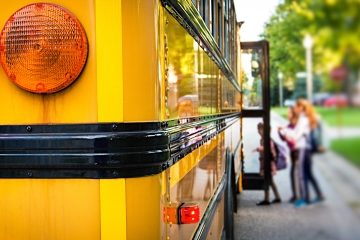
School transportation problems have been big news across the country in the last few years. Pandemic-era challenges are often blamed, but a recent report—looking qualitatively at the state of play in three very different state/district contexts—shows that the Gordian Knot of requirements and difficulties is not new at all.

Carolyn Sattin-Bajaj—an analyst in the Urban Institute’s Student Transportation Working Group and an associate professor at the University of California, Santa Barbara—dives into the issues surrounding student transportation at a time when school choice is growing. She interviews numerous district administrators, charter school leaders, charter authorizers, and stakeholders, including advocacy organizations and local foundations, in three choice-rich school districts with varying transportation policies: Detroit, New York City, and New Orleans. Choice supporters are clear that publicly-funded transportation is a cornerstone of the effort to facilitate student access to higher-quality school options. And while each jurisdiction addresses transportation and choice differently, some common issues recur.

But first, let’s summarize the key transportation policies in each. In New York City, the state department of education oversees transportation for all students, including those attending charters. Yellow buses are available for kids in grades K–6 depending on their distance in miles from home to school. Students in grade seven and above are provided Metro cards for use on public buses and subways, also based on their home-to-school distance. If kids don’t qualify for the yellow bus or full fare metro cards, they may be eligible for half-fare metro cards.

In Detroit, only those students attending district schools are guaranteed transportation. If they are enrolled in a charter or in a neighboring district through participation in Michigan’s Schools of Choice program, receipt of transportation services is at the discretion of the school or district and paid by the school, charter management organization, or district (although students with disabilities who qualify for special bus service receive individualized transportation). Detroit also has very limited public transportation infrastructure, which restricts its ability to support students.

Finally, in charter-centric New Orleans, state law requires public districts—which includes charters as their own local education agencies (LEAs)—to provide transportation for students living farther than one mile from school. In many cases, this means that charters operate and pay for their own yellow buses.

Leaders in all three locales say that transportation costs are among their largest budget items, with transport for special needs children especially high. For instance, in New York City in 2016–17, special needs students comprised 13 percent of the total population but accounted for 75 percent of the transportation budget.

The interviewed district and charter leaders report trying eight key strategies (most of which have problematic tradeoffs) to either offer more services or reduce the escalating cost of existing transportation services. They include: 1) contracting with the district for yellow buses, a strategy that charters in some states can employ, but which often leaves them at the mercy of the district’s bell schedule; 2) negotiating their own contracts, although those can be pricey—especially for smaller or far-flung schools and districts; 3) purchasing a small fleet of buses that then require costly upkeep, inspection, and maintenance; 4) making financial trade-offs, such as not providing buses in order to pay teachers more, or providing buses to ensure sufficient enrollment to stay open but compromising on teacher pay; 5) tiering, which means using the same bus to pick up students on different routes by staggering the arrival times, whereby some kids might get to school at 7:30 and others at 8:30; 6) cutting or consolidating the number of bus routes, which necessitates increased student time on the bus; 7) rebidding bus contracts to try to get a lower cost provider; and 8) setting administrator pay low and/or operating a lean central office.

These less-than-ideal solutions are made more complicated by other issues. For instance, in choice-rich districts with high student mobility, current routes are routinely impacted, even as just-arrived parents make requests for new routes. Parents also register complaints about safety on the bus, especially when students are leaving or returning home in the dark. Misbehavior often worsens when districts are either not able to afford hiring bus attendants or students travel on crowded buses due to a shortage of drivers.

The report does not delve deeply into detailed solutions or best practices. But one often-neglected solution was mentioned that could incent parents to help out: Some districts are now paying families to make their own arrangements if they have students eligible for school transportation but choose not to use it.

Outside of that, the author encourages more centralization of transportation within and across schools and across school sectors for better negotiated contracts. But the devil is in the details, of course, as the traditional school and charter sectors don’t often play nicely together. What’s more, federal school transportation regulations stipulate the types of vehicles that can be used (for instance, no fifteen-passenger vans) and the qualifications of drivers, which tend to favor large providers like districts over smaller providers like charter schools—no matter how much more economical one choice might be over the other. The list goes on, but it’s not transportation problems that our students need more of. It’s more solutions.

SOURCE: Carolyn Sattin-Bajaj, “Student Transportation in Choice-Rich Districts: Implementation Challenges and Responses,” Education Finance and Policy (April 2022).

view
LA math study SR image

How senior-year math courses affect college enrollment and persistence

Jeff Murray
2.28.2023
Ohio Gadfly Daily

California is among a handful of states that require the least amount of high school math to earn a diploma—just two courses. That means most students can complete their full complement of high school math education, even the “enhanced” requirements for admission to California State University and University of California campuses, well before their senior year. But is there a benefit to continued coursework beyond a state’s or an individual school’s minimum prescribed course load? A new study digs into the data to investigate the impacts of taking an additional year of math in high school on college enrollment and persistence.

A research team led by Leonard Wainstein of Reed College used longitudinal administrative and survey data from the Los Angeles Unified School District (LAUSD). Their analysis focused on two cohorts of students who were first-time eleventh graders in either 2015–16 or 2016–17 and who remained in the district through the following year. It included over 45,300 students in district high schools and district-affiliated charter schools.

The comparison looked at a group of seniors who took no math at all and three groups who took another a full year of math. While all the senior math non-takers had already completed their high school requirements in that subject, as well as any college preparatory requirements relevant to them, the math-takers fell into six initial groups. They included two groups that needed to take math in twelfth grade to graduate, one group that needed to boost their math grade to meet college admissions requirements, and three groups who opted for additional math courses beyond the requirements. For ease of comparison, Wainstein and his team excluded the two groups finishing high school requirements and the highest-flying optional group—those who took two additional courses above requirements during senior year.

Wainstein found that senior math-takers, overall, enrolled in college at higher rates than otherwise-similar peers who did not take any math in twelfth grade. The effect ranged from a 3.2 percent to a 6.4 percent boost. These positive effects occurred even though math-takers experienced a slight “hit” to their overall GPA—from 3 to 6 hundredths of a point—which their peers did not. Additionally, enrollment in four-year colleges was as much as 5.8 percent higher for math-takers than math non-takers. The strongest effects were seen among those students taking additional math courses above the California college admissions requirements. The researchers also found a 4.5 to 5.8 percent increase in college persistence—returning for a second year of four-year college—for students who took math in their senior year, compared with those who skipped it. Wainstein’s team found similar positive impacts from traditional courses taken in senior year—such as precalculus and algebra 2—and from so-called “alternative” offerings such as Transition to College Mathematics and Statistics or Introduction to Data Science. It seems that the mechanism at work is, especially for college-bound seniors, “keeping one’s hand in” the math game.

LAUSD Superintendent Alberto Carvalho recently announced that he plans to act on the findings in this report, to “explode the information” and make sure principals, teachers, guidance counselors, and parents know of the benefits of taking math in senior year, even for those who have already met state and university requirements. Diversifying the courses offered and increasing access to those options district-wide are also on his to do list. All of this will hopefully combine to help incent more students who will benefit from keeping their skills sharp to take more math in the future even while the state’s requirements remain at rock bottom.

SOURCE: Leonard Wainstein et. al., “Twelfth Grade Math and College Access,” UCLA Los Angeles Education Research Institute (January 2023).

view

#859: Eliminating honors classes won’t advance equity, with Scott Peters

3.1.2023
Podcast
 

On this week’s Education Gadfly Show podcast, Scott Peters of NWEA joins Mike Petrilli and David Griffith to discuss why eliminating honors classes and other advanced education opportunities in the name of equity is a mistake. Then, on the Research Minute, Amber examines the connection between public school choice and adult criminality.

Recommended content:

  • “How one school district is balancing excellence and equity—and another isn’t” —Brandon L. Wright
  • “To increase equity, school districts eliminate honors classes” —Wall Street Journal
  • “Parents speak out against school canceling honors classes in the name of racial equity” —New York Post
  • “One-size-fits-all education doesn’t work well, but diversity advocates are hitting the accelerator” —Real Clear Investigations
  • The study that Amber reviewed on the Research Minute: Andrew Bibler et al., “Does School Choice Increase Crime?” NBER Working Paper (February 2023)

Feedback Welcome:

Have ideas for improving our podcast? Send them to our producer Nathaniel Grossman at [email protected].

view

Cheers and Jeers: March 2, 2023

The Education Gadfly
3.2.2023
Flypaper

Cheers

  • Summer Boost, a tutoring program that served over 16,000 NYC students last year and helped many to achieve at grade-level in math and English, will expand to more cities this summer. —Michael Bloomberg
  • Many adults are (finally) realizing that remote learning did not work for most students. —AP News
  • Schools need to tell parents the truth about the severity of pandemic-era learning loss. —Bloomberg
  • Bucking national trends, Catholic are retaining traditional grading practices and homework policies. —Greg Richmond
  • For colleges and universities, “The goal should be to have more viewpoints, not fewer, represented on campus,” a goal that should be shared by high schools. —Ramesh Ponnuru

Jeers

  • Abandoning student ability-grouping might explain the poor performance of many traditional public schools. —Real Clear Investigations
  • A young refugee escaped war-torn Ukraine only to become a victim of classroom misbehavior in the San Francisco middle school she now attends. —San Francisco Chronicle
  • One of Pennsylvania’s best public schools is being “dismantled” by lottery-based student admissions. —Philadelphia Inquirer
view

What we're reading this week: March 2, 2023

The Education Gadfly
3.2.2023
Flypaper
  • The breakout rookie season of San Francisco 49ers quarterback Brock Purdy was anticipated by his stellar performance on the S2 Cognition test, one of two standardized tests taken by NFL draftees. —The Athletic
  • Oklahoma’s newly-elected attorney general has reversed his predecessor’s legal opinion endorsing religious charter schools. —Tulsa World
  • Politically liberal teens spend more time on social media than their conservative peers, which might account for those liberal students’ higher rates of depression. —Michelle Goldberg
  • The “last in, first out” rule in teacher contracts means that many newly-hired teachers of color could be laid off, a situation that will be made worse by the looming fiscal cliff faced by schools. —USA Today
  • Children were spared the worst of the Covid-19 pandemic, which makes the learning loss caused by school closures and remote learning all the more regrettable. —Vox
Fordham Logo

© 2026 The Thomas B. Fordham Institute
Privacy Policy
Usage Agreement

National

P.O. Box 110
Burke, VA 22009

202.223.5452

[email protected]

Ohio

P.O. Box 82291
Columbus, OH 43202

614.223.1580

[email protected]

Sponsorship

130 West Second Street, Suite 410
Dayton, Ohio 45402

937.227.3368

[email protected]