
High Expectations
One size fits most, even in the suburbs
Some progressive parents will never embrace Common Core. And that’s OK. Michael J. Petrilli
Some progressive parents will never embrace Common Core. And that’s OK. Michael J. Petrilli
Last week, writer Laura McKenna took to the Atlantic to try to understand why some suburban moms (yes, many of them white) have turned against the Common Core. She settles on misinformation as a driving force, which is certainly a factor. For example, if these parents understood that their own local schools still have complete control over curriculum and textbooks, perhaps they wouldn’t be so frustrated with standards set so far away.
But this is still an unsatisfactory answer. My own sense from watching this debate play out is that many of the “white suburban moms” who oppose Common Core also share a romantic, progressive view of education that is at odds with traditional schooling in general. We will never convince them of Common Core’s value, nor should we expect to. Instead, we should allow them to opt their kids out of traditional public schools and into schools (including charters) that are proudly progressive.
This conclusion is informed by a groundbreaking study we at the Thomas B. Fordham Institute published in 2013, What Parents Want: Education Preferences and Trade-Offs. Its major (and surprising) finding was that most parents actually want pretty much the same things from their schools: a solid core curriculum in reading and math, an emphasis on science, technology, engineering, and math (STEM) education, and the development in students of good study habits, strong critical thinking skills, and excellent verbal and written communication skills. That list matches up pretty darn well with the Common Core. Hence, schools that follow the Common Core North Star will meet most parents’ desires quite well. One size fits most.
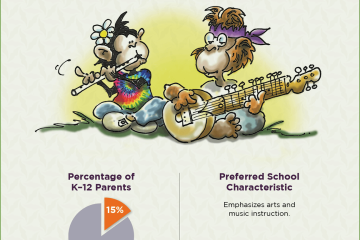
But our study also uncovered a handful of parent niches—six of them, to be precise. And one of them—the “expressionists”—sounds an awful lot like the white suburban moms who have been making most of the noise.

Parents in this niche are more likely to let their children develop at their own pace and less likely to set high expectations for them. They are also more likely than the total population to encourage their children to ask questions and less likely to set firm rules for them.
These parents are more likely than the general population to be liberal; less likely to be Christian; more likely to be atheist; and more likely to send their child to a charter school. Perhaps most importantly for Common Core politics, they are a very small minority, representing just 15 percent of all parents.
A subset of white, affluent, well-educated parents have long favored progressive education. Lisa Delpit, in her classic 1986 Harvard Educational Review article “Skills and Other Dilemmas of a Progressive Black Educator,” explained how upscale white parents in the Philadelphia school where she taught “learned the same kinds of things I had learned about education”—progressive things. A decade later, Harvard graduate student Maureen Allenberg Petronio studied the public school choice program in Cambridge, Massachusetts. She found that parents tended to be either traditionalists who wanted their kids to learn basic skills and get the “right answers” or alternative school aficionadas who sought environments that “stimulated curiosity and encouraged exploration.” The alternative school parents were generally white professionals.
Alternative schools are still a good option for such parents today. Those schools—be they charters or magnets—must take state tests, now aligned with the Common Core. But they can choose to do zero test-prep and ignore the test scores if that’s what they want. And they can give these progressive parents all the play, social/emotional learning, and creative expression that their kids can handle.
Meanwhile, the vast majority of parents can get what they want from their children’s schools—which is, by and large, precisely what Common Core delivers.

An abundance of choice in Milwaukee has led to families leaving the district for charter and private schools. A new study by the Wisconsin Institute for Law & Liberty (WILL) examines the facility challenge the city now faces as a result. The analysis estimates the “utilization rates” of every public school in the city for the 2013–14 year. This is determined by dividing a school’s enrollment by its maximum capacity, defined as twenty-seven students in each regular classroom.
A few key findings:
The authors—not surprisingly—recommend that private schools in the choice program, public charter schools, and traditional public schools be allowed to expand into the unused and underutilized MPS buildings. They’d do this either by taking over the administration of the failing schools, leasing out the space, or consolidating MPS schools and leasing or selling the leftover empty building—all of which would save taxpayers money. Yet Milwaukee officials show no interest in doing so. Exasperated, WILL recommends that the state legislature get involved. Badger State policymakers, do you care?
SOURCE: Rick Esenberg, CJ Szafir, and Martin F. Lueken, Ph.D., "Kids in Crisis, Cobwebs in Classrooms," Wisconsin Institute for Law & Liberty (January 2015).
High schools hoping to increase student success in college have often turned to an innovative solution: allow students to take college-level coursework before they graduate. The hope is that by exposing teenagers to college courses earlier, they will be more likely to think they are “college material,” earn a bit of college credit for free (or nearly free), and get acclimated to college-level rigor. (Most of these courses are taught on high school campuses by high school teachers.) A new report from the Education Commission of the States (ECS), however, questions just how strong some of these courses are and examines state strategies to ensure rigor.
The ECS analysts found that states generally follow one of four approaches to ensure quality in “dual enrollment” courses: 1) Some states, including Colorado, leave decisions about whether courses are worthy of credit up to post-secondary institutions; 2) others, such as Delaware, require post-secondary institutions and high schools to reach agreements, but do not prescribe the nature of those agreements; 3) eight states have adopted the guidelines of the National Alliance of Concurrent Enrollment Partnerships (NACEP), which are designed to ensure quality and cover topics including curricula, faculty, students, assessments, and evaluations; and 4) six others require or encourage actual NACEP accreditation.
States and districts working to encourage the completion of truly college-level coursework in high school should, as ECS recommends, ensure that educators are prepared to teach such rigorous work. They should also ensure high schools are being honest with students so they don’t enter college thinking they have earned credits only to find out those dual enrollment courses weren’t up to par. The NACEP standards may help, but they might be overly prescriptive and sometimes seem more focused on inputs than outcomes.
For these reasons and others, states may wish to preserve local control and encourage innovation by leaving some additional flexibility to institutions. They might also offer courses that are more focused on earning industry credentials than college credit. Whatever the case, states and districts must ensure that students are focused on the next step, but aren’t deceived about whether they’re progressing toward whatever productive endeavor they ultimately choose.
SOURCE: Jennifer Dounay Zinth, “Dual enrollment course content and instructor quality,” Education Commission of the States (February 2015).
In just twenty-five short years—it’s scarcely older than most of its current recruits—Teach For America has gone from a grassroots edu-insurgency to the largest teacher pipeline in the country and a dominant voice in reform debates. How’d they do it? In this new white paper, Bellwether analysts Sara Mead, Carolyn Chuong, and Caroline Goodson use internal TFA documents and interviews with key past and present staff members to tease out how the organization was able to maintain high quality while scaling up for the last fifteen years. Turns out it’s not rocket science, just hard work. TFA relied on regular measurement of applicants, corps members, and students. They’ve been equally diligent in expansion planning, taking care to evaluate each new region’s need for teachers, potential funding base, and local politics—as well as TFA’s ability to attract talent to live and teach in a given area. Rigorous quality-control mechanisms during new-site development and deepening ties in the places they already serve have fueled an expansion from 1260 corps members in fifteen regions in 2000 to 10,500 in fifty regions in 2013. And much of this has been successful due to TFA’s operational agnosticism (there’s not a lot of, “We do it this way because we’ve always done it this way” in TFA) and commitment to continuous improvement. Particularly in a sector where so many actors elevate intentions over impact, the organization’s aversion to preciousness is both refreshing and instructive. There’s plenty for other nonprofits and ed organizations to learn from here. At the same time, the report highlights the growing pains that rapid expansion has caused, including wear and tear on organizational culture. The Bellwether report offers recommendations for where the nonprofit can go next, including even more operational flexibility for successful regions, a greater focus on getting corps members to embed deeply in local communities, recruiting (even) more teachers of color, and engaging more proactively with the media to combat anti-TFA pushback.
SOURCE: Sara Mead, Carolyn Chuong, and Caroline Goodson, “Exponential Growth, Unexpected Challenges: How Teach For America Grew in Scale and Impact,” Bellwether Education Partners (February 2015).