

High Expectations
EngageNY's ELA curriculum is uncommonly engaging
Advocates hoped Common Core would incentivize good new curriculum. It’s happening. Kathleen Porter-Magee and Victoria Sears
Advocates hoped Common Core would incentivize good new curriculum. It’s happening. Kathleen Porter-Magee and Victoria Sears

Since we at Fordham began reviewing state academic standards in 1997, we’ve understood—and made clear—that standards alone are insufficient to drive improvements in student achievement. They describe the destination, but they don’t chart the journey for leaders, teachers, or schools. Which means that for standards to have any impact on what students actually learn, they must influence curriculum, assessment, and accountability. It’s far better to have a desirable destination than an unworthy one—better to aspire to reach the mountains than the recycling plant—but standards alone won’t get you there.
Plenty of educators understand this, but they often lack access to suitable vehicles by which to make the journey. The need for standards-aligned curricula is undoubtedly the most cited implementation challenge for states, districts, and schools. It’s also why “access to high-quality, standards-aligned curricular resources” comes up in nearly every discussion of the implementation challenges that teachers, schools, and districts face as they ramp up to meet the content and rigor demands of the Common Core State Standards (CCSS).
This near-universal need for properly aligned curricula and curricular materials is also why so many publishers rushed to slap shiny “CCSS-aligned!” stickers on their products, regardless of how much those products changed (or didn’t) between the release of the standards and the claims of alignment.
Yet five years into Common Core implementation, teachers still report scrambling to find high-quality, standards-aligned materials. Results from a survey conducted by the Center on Education Policy (CEP) in October 2014 found 45 percent of districts reporting “major problems” finding Common Core-aligned curricular resources and an additional 45 percent experiencing “minor problems.” That means fully 90 percent of surveyed districts were struggling to find the materials they need to teach the new standards. Findings from an Education Week Research Center study echoed the CEP report and showed that fewer than one-third of educators report having access to high-quality textbooks that are well aligned to the new standards.
Take note of the phrase “well aligned.” Despite publishers’ claims, few programs are well and truly aligned to the content and rigor demands of the CCSS. In a forthcoming paper, Morgan Polikoff analyzes the alignment of seven popular mathematics textbooks: three explicitly billed as “Common Core-aligned,” three pre-CCSS editions of those same textbooks aligned to Florida’s previous state standards, and one text not explicitly aligned to any standards. Polikoff found that “for these three textbooks produced by major publishers and marketed as Common Core-aligned, there are substantial alignment problems.” More specifically, the materials generally covered the requisite content, but they focused unevenly on certain areas (overemphasizing some and neglecting others) and often did not reach the desired level of cognitive demand.
EdReports.org, a new organization with a mission to provide educators with information on high-quality, Common Core-aligned instructional materials via free, online, Consumer Reports-style reviews, recently came to a similar conclusion. In March 2015, it released findings from its initial reviews of twenty digital and print-based K–8 math series. Among these, only one met the full criteria set forth by EdReports.org for alignment at all grades: Eureka Math, a program first developed as a free, open-source curriculum for the EngageNY website.
Now that’s an interesting development.
Enter EngageNY
Fixing America’s curriculum problem is no small challenge. Educators and policymakers have complained for decades about the poor quality of most textbook series and the unwillingness of many for-profit publishers to invest the time and money to get it right. Moreover, the Common Core called for significant instructional shifts that would require an overhaul in curricular and instructional materials, such as including more content-rich nonfiction and requiring students to use evidence from texts in English language arts (ELA).
Still, most Common Core advocates hoped that the emerging multi-state marketplace would provide sufficient incentive for the commercial publishers to get their acts together—or, alternatively, would give an opening to new players that might enter the business and deliver better products (Amplify, for example). Another possibility was that teachers themselves would create excellent materials, especially if they had a portal where they could post their best work (such as BetterLesson or the American Federation of Teachers’ Share My Lesson). To ensure quality control, several funders supported a variety of tools to vet new materials, such as the aforementioned EdReports.org, EQuIP, IMET, and the Publishers’ Criteria. (See “Monitoring Quality” sidebar.) And a few states, including Louisiana and Tennessee, developed their own rating systems.
But only one state contemplated a completely different approach: Building a brand-new, Common Core-aligned curriculum from scratch and making it available online, for free, for all to use.
After adopting the Common Core standards and receiving almost $700 million in the second round of Race to the Top in 2010, New York embarked on an ambitious (and unprecedented) effort to develop its own comprehensive, Common Core-aligned ELA and mathematics curricula. The process kicked off in early 2012, when the New York State Education Department (NYSED) issued an RFP to develop “modules of learning” aligned to the new standards. Common Core Inc. (now Great Minds), a Washington, D.C.-based nonprofit and curriculum developer, was contracted to develop math materials. The Core Knowledge Foundation, Expeditionary Learning, and the Public Consulting Group (PCG) were awarded contracts to develop ELA materials for grades pre-K–2, 3–5, and 6–12 respectively. (PCG later subcontracted the grades 6–8 portion of their contract to Expeditionary Learning and focused on materials for grades 9–12.) Today, EngageNY comprises a nearly complete set of curricular materials for math and ELA. Those materials are freely available online to anyone—not just Empire State educators—at EngageNY.org.
If, however, New York State Superintendent John King and his team were expecting thanks for building a free, open-source curriculum, they were sorely disappointed. EngageNY has been controversial since day one. On the right, it’s seen as a state-imposed curriculum (even though it’s not mandatory) and an anti-competitive governmental intrusion into the textbook market. After all, how can commercial publishers compete with a product funded by $26.6 million in federal dollars?
On the left, and particularly among educators, it was seen as a top-down mandate. While that was not the intention of New York officials (who stress the materials are “optional and supplemental”), reports surfaced of principals and maybe superintendents telling their teachers that they must use it. Not surprisingly, that has contributed to the Common Core backlash within the Empire State.
Ironically, EngageNY may be more popular outside New York than within. When working on our 2014 study, Common Core in the Districts: An Early Look at Early Implementers, we found many educators elsewhere using EngageNY as a resource, if not a full curriculum. NYSED staff report that as of April 2015, the math and ELA modules had been downloaded nearly twenty million times.
But how good is this product? Is it well aligned to the Common Core? Teachable? That’s what we wanted to know. When we launched this review, EdReports.org was working on its math analyses, so we decided to concentrate on English language arts. We recruited two of the country’s leading ELA content experts, Elizabeth Haydel and Sheila Byrd Carmichael, each with more than twenty years of solid, relevant experience, to conduct an in-depth review of EngageNY’s alignment to the CCSS ELA standards.
What did we find?
All that said, EngageNY’s English language arts materials supply educators—both inside and outside New York State—an important alternative to traditional textbooks of questionable quality and alignment.
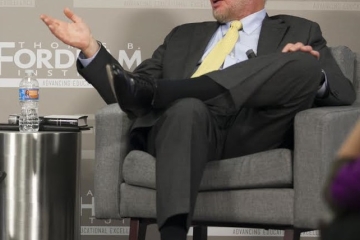
The following is an excerpt from Our Kids: The American Dream in Crisis, by Robert D. Putnam (Simon & Schuster, 2015), reprinted with permission. Watch the video of last week’s Fordham event with Professor Putnam here.
America once had a vigorous system of vocational education, apprenticeship, and workforce training, both in and out of schools. Other countries, like Germany, still do, but over recent decades we have disinvested in such programs. Part of the reason is the rise of the “college for all” mantra, reflecting the belief that a college degree is the ticket to success in the contemporary economy. While it is true that the “college premium” is high, it is also true that very few kids from disadvantaged backgrounds now obtain college degrees. Efforts to improve access and completion rates for poor kids in four-year institutions are worthwhile, and those efforts must begin well before college looms, since the challenges that poor kids face are daunting even before they enter elementary school.
Nonetheless, the “college for all” motto has tended to undercut public and private support for secondary and postsecondary education in vocational skills. A notable example of the potential for contemporary vocational education is provided by Career Academies, as described by author Don Peck: “Schools of 100 to 150 students, within larger high schools, offering a curriculum that mixes academic coursework with hands-on technical courses designed to build work skills. Some 2,500 career academies are already in operation nationwide. Students attend classes together and have the same guidance counselors; local employers partner with the academies and provide work experience while the students are still in school.”1 A controlled trial study found that earnings for academy participants were 17 percent higher per year than for non-academy participants, and that career academy students earn postsecondary degrees at the same rates as non-career-academy students.2
Specialists in this field cite other promising experiments, such as the Georgia Youth Apprenticeship Program and comparable programs in Wisconsin and South Carolina, as well as the nationwide YouthBuild network. But robust evaluations are rarer in this area than in conventional K–12 education. Research from other countries suggests that the benefits of expanded technical and vocational education could be quite high, both for the individual student and for the economy, but the United States spends (as a fraction of our economy) roughly one-tenth as much on such programs as other countries.
Fears that such programs might lead to a class-based, two-tier educational system are not unrealistic. Any effort in this area would need to erase the stigma of vocational education or apprenticeships as second-class education, by integrating quality academics and by having much tighter partnerships of industry and postsecondary schools to develop and implement quality standards. Moreover, significant investment in student guidance would be required. Rigorous research is still needed to identify which programs are cost-effective and which are not. Nevertheless the choice facing young people like those profiled in my book is not between serious training leading to a vocational certificate and four years of college leading to a highly paid career. It is between quality vocational training and no postsecondary education at all. Apprenticeship and vocational education is a promising area in which states and cities should experiment, especially with high-quality evaluation.3
Community colleges were founded initially in the Progressive Era, and greatly expanded during the 1960s and 1970s, to provide access to postsecondary education for students who, for whatever reason, could not begin at the university level. Community college advocates have long been divided on whether these institutions were primarily intended to provide an avenue to four-year institutions or an alternative for vocational education. In the 1960s three-quarters of their students were in the “transfer” track, but by 1980 nearly three-quarters were in the “terminal” track. By now, nearly half of all postsecondary students nationwide are in community college.
While more than 80 percent of them aspire to a baccalaureate degree, only a small minority will ever achieve that goal.
The advantages of community college for nontraditional students are clear: mostly open enrollment, local access, part-time (so college can be combined with a job), and above all, low costs. The limits of this avenue are also clear: Nearly two-thirds of their students drop out before receiving any degree or transferring to a four-year institution. Community college is not nearly so remunerative as a four-year degree, but as in the lives of the poor kids we’ve met in this book, community college is more attractive than the only realistic alternative—simply ending their education after high school. On the other hand, only 40 percent of those who enroll in community college are the first in their family to attend college, and that group is even less likely to go on to a four-year institution, so community colleges are not very effective in getting low-income kids headed to a BA.
Community colleges are asked to do many things with meager funding, and in recent years that funding has been cut back, limiting financial aid, raising tuition, and reducing student services. Counseling and instructional quality is often uneven. All these deficiencies disproportionately affect low-income students. Nevertheless, the key issue in evaluating community college performance is ?compared to what? Proprietary schools have a better completion rate for certificates than community colleges, but they cost three times as much, so their students graduate with much more debt than community college students.
Despite their mixed record, community colleges have real promise as a means of narrowing the opportunity gap by providing poor kids with a realistic path upward. To serve that role, they need more funding, improved student support services, better connections to local job markets and to four-year institutions, and a lower dropout rate. The best community colleges in the country, such as Miami Dade College, have taken up this challenge with gusto. As two experts on community colleges, Arthur Cohen and Florence Brawer, conclude, “The community colleges’ potential is greater than that of any other institution because their concern is with the people most in need of assistance....If the community colleges succeed in moving even a slightly greater proportion of their clients toward what the dominant society regards as achievement, it is as though they changed the world.”4
Robert D. Putnam is the Peter and Isabel Malkin Professor of Public Policy at Harvard University.
When the Foundation for Excellence in Education released its first “Digital Learning Report Card” in 2011, the state-by-state outlook for ed-tech innovation was worrying. Twenty-one states received failing grades. Four years on, the picture looks very different. While there are still only two states—Florida and Utah—earning A grades, this year’s scorecard shows half of them with improved grades and just five (Connecticut, Montana, North Dakota, Nebraska, Tennessee) with Fs. Barriers to digital learning are falling fast.
The report card grades states on ten “elements of high-quality digital learning,” including whether students can advance by demonstrating proficiency (not merely by warming classroom seats for enough months) and whether they have the ability to customize their education through digital providers. And of course, the funding and infrastructure must be in place to support digital learning. Broadly speaking, the report praises states for adopting policies that embrace new models and ways of thinking, and shames them if they don’t. States might get dinged, for example, if they restrict student eligibility for online courses (allowing kids only to take online versions of courses already offered in schools seems truly pointless). That said, some of the report’s criteria feel more like an ed-tech enthusiast’s wish list than a coherent framework to encourage “student-centered” learning. It makes sense, for example, to reward a state for ensuring that all students “have access to high-quality digital content and online courses.” But is it really important that “all students must complete at least one online course to earn a high school diploma”? Similarly, it’s not entirely clear why students’ ability to “customize their education using digital content through an approved provider” is important to anyone other than said providers. What matters more to students: customized learning or customized digital learning?
The sudden surge in access to digital learning (and rapid dismantling of barriers) chronicled by this year’s report card is occurring despite a steep drop in legislative activity in the last year; the report notes that only fifty new digital learning laws were passed by states last year. But like a python swallowing a pig, states were busily digesting more than four hundred such measures enacted since 2011. Perhaps the area of greatest movement has been in competency-based education. Connecticut finished dead last in its overall grade, but the report holds up as a model its recent measure to allow students to earn credits by meeting non-traditional, mastery-based standards. The Digital Learning Report Card is a welcome source of encouragement for educational innovation, though it obviously tends to privilege blended learning over other forms of instruction. This edition leaves the unmistakable impression that the future of education is arriving faster than we think.
SOURCE: Digital Learning Now, “Digital Learning Report Card 2014,” Foundation for Excellence in Education (May 2015).
According to a paper released this week by the American Enterprise Institute, charter authorizers are putting too many meaningless application requirements on organizations that propose to open schools, thereby limiting school autonomy and creating far too much red tape.
The report shares lessons, provides authorizer Dos and Don’ts, and divides charter application criteria into categories of appropriate and inappropriate based on AEI’s analysis of application requirements from forty authorizers around the land. The authors conclude that:
AEI correctly notes the importance of the authorizer’s role as gatekeeper for new schools and points out that authorizers should establish clear goals, hold schools accountable, review key aspects of school applications for developer capacity, and monitor compliance and finances. Authorizers shouldn’t see themselves as venture capitalists, assume the role of school management consultants, deem themselves curriculum experts, or feel entitled to include pet issues in applications.
All true, and all wise. Where it gets sticky—and where this report makes a wrong turn—is distinguishing what kinds of information are legitimate and important for authorizers to seek at the application stage and what kinds are superfluous, or even dysfunctional. In the end, as the National Association of Charter School Authorizers (NACSA) also points out, the AEI authors put too much in the latter basket.
Fordham has been authorizing charter schools in Ohio for nearly ten years. We’ve walked this walk—and sweated and agonized and made tough calls and a few mistakes. Let me summarize how our experience does and doesn’t align with the authors’ conclusions.
Yes, some authorizers mistake volume for rigor; just because the application is umpteen pages long does not mean it’s a good application. And yes, sometimes the authorizer’s role is unclear. Nowhere is that more apparent than in Ohio, where we are still trying to get authorizers out of the business of selling services to their authorized schools. (One can’t objectively monitor a school’s performance if one has a hand in its operations.) And all too often we see “proven models” favored over potentially new and innovative ones. It’s easy to forget that well-known successes like KIPP and Success Academy—and in Ohio, United Schools and the Breakthrough network—were also unproven once.
Now to our disagreements. AEI’s list of overly burdensome requirements is too long and in some cases rules out information that we’ve found valuable, even vital, in determining which proposed charters deserve to be authorized.
Yes, some charter applications contain meaningless and excessive requirements, likely mandated by state laws and regulations. This paper should serve to catalyze further conversation on the topic of charter school autonomy and accountability, and where the problems (on both sides) arise. But it’s a mistake to place too much emphasis on shortening the charter application itself or to lessen the importance of key application requirements that ultimately strengthen the viability of the whole.
SOURCE: Michael Q. McShane, Jenn Hatfield, and Elizabeth English, “The Paperwork Pileup: Measuring the Burden of Charter School Applications,” American Enterprise Institute (May 2015).
In 2006, Ohio enacted one of the nation’s first “default closure” laws, which requires the lowest-performing charter schools to shut down whether their authorizers want them to or not. The law, still in effect today, has forced twenty-four charters to close. The criteria for automatic closure are well defined in law and are based on the state’s accountability system.
This new working paper, which complements our recent study on Ohio school closures, evaluates the effect of closures induced by the automatic closure law on student achievement. (By contrast, Fordham’s study examined both district and charter closures that occurred regardless of cause, be it financial, academic, or other.) To carry out this analysis, the researchers compared the outcomes of students attending charters that closed by default to those of pupils attending charters that just narrowly escaped the state’s chopping block. The sharp “cut point” for closure versus non-closure allowed the analysts to compare very similar students who attended similarly performing schools—thus approximating a “gold-standard” random experiment.
The key finding: Students displaced by an automatic closure made significant gains in math and reading after their schools closed, a result consistent with our broader study. Moreover, the analysts found that the academic benefit for students affected by automatic closure was actually greater than the benefit for students displaced by other types of closure. The analysts estimate a 0.2 standard deviation increase in achievement after automatic closure—nearly double the effect size found in our broader closure analysis. (For some context, the black/white achievement gap is about one standard deviation.)
This suggests that Ohio’s automatic closure law has worked as intended; it forcibly shut down some of the worst-performing schools in the state, to the benefit of the children who had attended them. Meanwhile, other states could follow the example of Ohio—and ten other states—by passing an automatic closure law. Perhaps a bigger question is whether Ohio should create a default closure for poorly performing district schools, too. After all, it’s a state’s obligation to ensure that no child, regardless of her socioeconomic circumstance, ends up in a rotten school.
SOURCE: Deven Carlson and Stéphane Lavertu, “The Effect of School Closure on Student Achievement: Regression Discontinuity Evidence from Ohio’s Automatic Charter School Closure Law,” Working Paper (March 2015).