Mobile Navigation

  • National
    • Policy
      • High Expectations
      • Quality Choices
      • Personalized Pathways
    • Research
    • Commentary
      • Gadfly Newsletter
      • Flypaper Blog
    • Events
    • Scholars Program
  • Ohio
    • Policy
      • Priorities
      • Media & Testimony
    • Research
    • Commentary
      • Ohio Education Gadfly Biweekly
      • Ohio Gadfly Daily
  • Charter Authorizing
    • Application
    • Sponsored Schools
    • Resources
  • About
    • Mission
    • Board
    • Staff
    • Career
Home
Home
Advancing Educational Excellence

Main Navigation

  • National
  • Ohio
  • Charter Authorizing
  • About

National Menu

  • Topics
    • Accountability & Testing
    • Advanced Education
    • Career & Technical Education
    • Charter Schools
    • Curriculum & Instruction
    • ESSA
    • Evidence-Based Learning
    • Facilities
    • Governance
    • Personalized Learning
    • Private School Choice
    • School Finance
    • Standards
    • Teachers & School Leaders
    • Think Again
  • Research
  • Commentary
    • Gadfly Newsletter
    • Flypaper Blog
    • Gadfly Podcast
  • Events
  • Scholars Program

The Education Gadfly Weekly

Sign Up to Receive Fordham Updates

We'll send you quality research, commentary, analysis, and news on the education issues you care about.
Thank you for signing up!
Please check your email to confirm the subscription.

The Education Gadfly Weekly: Threading the needle on selective enrollment public schools

Volume 24, Number 33
8.15.2024
8.15.2024

The Education Gadfly Weekly: Threading the needle on selective enrollment public schools

Volume 24, Number 33
view
Teenager happy about letter
High Expectations

Dear Admissions Committee: Please reject my college application

The conventions of college admission essays demand tales of unparalleled grit and overcoming adversity. Yet for many seventeen-year-olds, their time on Earth has been marked by only by an unbroken series of mundane and typical experiences. What to do?

Robert Pondiscio 8.15.2024
NationalFlypaper

Dear Admissions Committee: Please reject my college application

Robert Pondiscio
8.15.2024
Flypaper

They’re still not book bans

Daniel Buck
8.15.2024
Flypaper

Threading the needle on selective enrollment public schools

Michael J. Petrilli
8.15.2024
Flypaper

A limited examination of dual enrollment course structure and student outcomes

Jeff Murray
8.13.2024
Ohio Gadfly Daily

#933: The nuts and bolts of banning cellphones in schools, with Othiniel Mahone

8.14.2024
Podcast

Cheers and Jeers: August 15, 2024

The Education Gadfly
8.15.2024
Flypaper

What we're reading this week: August 15, 2024

The Education Gadfly
8.15.2024
Flypaper
view
School library

They’re still not book bans

Daniel Buck 8.15.2024
Flypaper
view
School robotics class

Threading the needle on selective enrollment public schools

Michael J. Petrilli 8.15.2024
Flypaper
view
Dual enrollment modality SR image

A limited examination of dual enrollment course structure and student outcomes

Jeff Murray 8.13.2024
Ohio Gadfly Daily
view

#933: The nuts and bolts of banning cellphones in schools, with Othiniel Mahone

Othiniel Mahone, Michael J. Petrilli, Adam Tyner, Ph.D., David Griffith, Ph.D. 8.14.2024
Podcast
view
Fordham Gadfly image

Cheers and Jeers: August 15, 2024

The Education Gadfly 8.15.2024
Flypaper
view
Fordham Gadfly image

What we're reading this week: August 15, 2024

The Education Gadfly 8.15.2024
Flypaper
view
Teenager happy about letter

Dear Admissions Committee: Please reject my college application

Robert Pondiscio
8.15.2024
Flypaper

“August is a perfect time to collect your notes, mine for memories, and pull together a draft of your Common App essay” —advice on the College Essay Advisors website.

“Start by identifying a quirky or challenging experience that reflects a key insight into your experience. Think about how this experience has shaped your perspective and character. Use humor and honesty to bring your story to life, and focus on how you have embraced your differences to become stronger and more resilient.” —“College Essays That Worked And How Yours Can, Too,” Forbes, June 26, 2024.

Dear Admissions Committee,

I write to you today with a sense of purpose, not in the hope that my application will be accepted, but with the sincere request that it be rejected. Yes, you read that correctly. I acknowledge that the conventions of college admissions essays demand tales of unparalleled grit and overcoming adversity. Regrettably, my seventeen years on Earth have been marked by an unbroken series of mundane and typical experiences. Accordingly, I seek your rejection as an opportunity to finally craft the transformative story I so desperately lack.

Let me begin with the Great C Catastrophe of my sophomore year. Unlike the tales of those who heroically conquer academic challenges, my encounter with a poor grade on a chemistry test was merely a brush with mediocrity. I discovered no hidden learning disability and overcame no personal hardship to improve my performance. I simply studied a bit harder, made an effort to understand stoichiometry a little better, and my grades improved. Hardly the stuff of legend.

Then there was the time I was cut from the soccer team. It wasn’t because of a debilitating injury or systemic bias. I’m simply not varsity material. My response wasn’t a Herculean effort in the gym or rising before dawn to put in miles of roadwork, determined to earn a roster spot the following year. I pivoted to the debate team, where I found modest success. Again, it’s a story that lacks the dramatic arc of overcoming insurmountable odds. Just a kid trying something new when one path didn’t pan out.

Finally, there was the high school musical debacle. I auditioned and didn’t get the lead, or any part at all. Accepting the judgment of the director, I joined the stage crew. It wasn’t a life-altering setback but rather a simple redirection of my interests. My role behind the scenes was fulfilling, yet it didn’t transform me into a beacon of resilience. It just made me realize I enjoyed the technical side of theater more than being in the spotlight.

These experiences, while formative in their own ways, fail to meet the epic standards set by modern college essays. They lack the punch, the narrative twist that makes readers’ jaws drop in awe. I am—it pains me to confess it—the product of a happy, stable home where my challenges were ordinary and my responses to them equally so.

Therefore, I implore you to reject my application. Let your rejection be the crucible through which I forge my story of overcoming adversity! Permit me the gut-wrenching experience of receiving that thin envelope or terse email! Grant me the sting of failure so that I might finally have something worth writing about!

Imagine, if you will, my future essay: “Rejected from my top choice, I faced a crossroads. With grit and determination, I transformed this rejection into a launching pad for my personal growth.” It would be a tale of resilience, of turning defeat into triumph—exactly the kind of narrative that captures the hearts and minds of admissions officers everywhere.

So, in closing, I request—nay, I demand—that you reject my application. Help me help myself by giving me the adversity I so sorely lack. Allow me the privilege of being turned down so that I can rise up, story-worthy and ready, for the next application cycle.

Thank you for considering my request. I eagerly await your rejection.

Sincerely,

[Your Name]

view
School library

They’re still not book bans

Daniel Buck
8.15.2024
Flypaper

Just when I thought that book ban debates were so last year—gone the way of critical race theory or the Common Core, subsumed by the latest controversy over Title IX or Project 2025—it seems those grouchy conservatives are at it again. Kamala Harris condemned efforts to ban books in her speech to the American Federation of Teachers in July. Meanwhile, the New York Times reports on a slew of new legislation aimed at, you guessed it, banning books.

Except no one is trying to ban books. What the latest so-called “book banning” laws actually do is establish procedures so that schools can effectively handle complaints from parents and adjudicate competing claims as to the appropriateness of this or that book, hopefully resulting in more productive debates, not just partisan stalemates.

Per the Times, the law in South Carolina, for example, replaces the former “patchwork approach to challenging books and deciding whether they are appropriate” and instead establishes a formal portal through which parents and other community members can lodge complaints, as well as setting forth a system for review of those complaints and the books being challenged. In Idaho, the law delineates clear content such as “masturbation” or “sadomasochistic abuse” which would trigger a book’s removal.

These new laws are no more “bans” than a bonfire in my backyard is arson—only alike superficially. As Mark Twain famously observed, “the difference between the almost right word and the right word is really a large matter.” There’s quite a difference between a federal government black-bagging dissidents for sharing censored content, a major seller such as Barnes and Noble refusing to carry a book, a public or school library choosing not to shelve a book, and a teacher replacing one with another on a curriculum. To call routine library and curricular curation a “ban” is really a rather large categorical error.

Only a few thousand books can fit into a school library, and a handful onto school curriculum. It is the duty of school personnel to select the best books with the most educative potential to include in those small selections and the duty of our lawmakers to establish clear expectations for the personnel in and policies guiding our public institutions. Thankfully, just the other week, I strolled past a “banned books” display at my local bookstore where I could bravely buy many of these supposedly censored titles for $29.95 each. It may be false advertising, but it sure is effective.

Were we to indeed call this standard act of curation a “ban,” then by definition almost every single book in existence is banned from school libraries and reading lists. Following this logic, if anything, American schools have long been busy “banning” conservative ideas. In an amusing little study, researchers at the Cato Institute scoured the library catalogs of 200 randomly selected public schools and found a preponderance of progressive books. For example, while 39 percent of public school libraries carried Stamped: Racism, Anti-Racism, and You, only one school carried its centrist/conservative counterpart, Woke Racism.

Authors and advocates lamenting these “book ban” laws would likely take umbrage if I tried to get socially conservative books such as Ryan T. Anderson’s What Is Marriage? Man and Woman: A Defense or When Harry Became Sally into school libraries or (God forbid) excerpts onto health curricula. Many in the media did in fact clutch their pearls when Louisiana and Oklahoma mandated the instruction of biblical stories. And they have every right to express their disfavor about and seek to change the actions and decisions of these public institutions.

I’m inclined to joke that “We are all book banners when it’s books we don’t like” but that belittles what is really an important debate. What should we teach our children? What books should we have them read—and not read? Who from history shall we valorize and who shun? Plenty of considerations from literary quality to variety of genre can and should be in consideration when debating these questions. And appropriateness is absolutely one such criteria. Even authors at left-wing publications such as Salon have acknowledged, in a moment of hilarious understatement, that it might be inadvisable to distribute to children books that depict “adult bodies having sex” and “detailed drawings of genitals.”

Contrary to the Times’s framing, these recent pieces of legislation represent a productive and common sense step forward in a debate that’s been stuck in the muck and mire of partisan arguments for several years now. Creating a formal process with preset criteria will provide ideological opponents a productive means to hash out their disagreements and reach a compromise, even if perfect consensus or agreement is impossible.

To understand the benefits of these bureaucratic processes, consider another. Democracy is many things with many benefits, but it is fundamentally a process to foster political action and legitimacy. I may dislike politicians B and Q but I accept their authority, however grudgingly, because they won the formal voting process. It’s a process to manage even insurmountable disagreements.

So too, these processes lend credence to a school’s decisions about books in libraries and on curricula. No school will ever satisfy every parent, but more will accept the decisions if they’re made through formal procedures established through law. Moreover, the criteria themselves become the focus of a more productive debate. Utah, Idaho, South Carolina, and Tennessee have saved their schools from making arbitrary decisions in response to either the passions of the loudest parents or the convictions of activist teachers.

So long as we have public schools, what we teach our children and the books that we include in curricula and school libraries will and should be a matter of public debate. These states have passed laws that should create more light and less heat in these arguments, and so should be celebrated for doing so, not subjected to New York Times hit pieces.


view
School robotics class

Threading the needle on selective enrollment public schools

Michael J. Petrilli
8.15.2024
Flypaper

A recent article in the Boston Globe dug into a controversy that is dogging Massachusetts’s highly-regarded system of regional career and technical education (CTE) high schools. What makes the schools so unique is that they are highly selective. Only applicants with relatively high test scores and clean discipline records are admitted, but as the article explains, that leaves out a lot of kids who might benefit from the kinds of programs that they offer.

As far back as he can remember, Aaron Perkins knew he wanted to work with his hands. Childhood photos foreshadowed his ambitions: A tow-headed toddler wielding a toy chainsaw in one shot, the same tyke wearing floppy workman’s gloves in another. By age four, he’s on his back under a jacked-up toy tractor, absorbed in imaginary play.

It seemed inevitable, then, that Perkins—the great-grandson, grandson, and son of tradespeople—would attend his local vocational school when he reached the ninth grade.

But that never happened. He couldn’t get in.

The article highlights a dilemma that might be unusual in the CTE world but is common in public education writ large: When is it appropriate to limit admission—into a school, program, class, or curricular strand—to students with high test scores or similar attributes? This question arises most often in the context of gifted and talented and advanced education, especially with respect to the country’s most famous and academically selective public schools, such as Stuyvesant and Bronx Science in New York and Thomas Jefferson in Northern Virginia.

Some people feel strongly that public schools should never practice selective enrollment. After all, one of the principles of public education is supposed to be that schools are open to everyone.

Of course, that’s never actually been the case, even for “regular,” open-enrollment, and “neighborhood” schools, which are typically reserved for families living within designated attendance boundaries. America’s leafy suburbs, in particular, contain many of what we at the Thomas B. Fordham Institute once called “America’s private public schools.”

And yet, an absolutist position against selective-enrollment public schools carries its own problems. Not only would it lead to the demise of many excellent institutions that have long served their communities—and the nation—well, it would also mean eliminating opportunities for kids with niche needs.

Take the example of CTE centers. While the high standards of the Massachusetts schools are unusual, it’s common for CTE programs to screen out kids with disciplinary problems. If schools are going to take teens and teach them how to weld or offer apprenticeships in which adolescents are sent into corporate offices, they want to make sure that those young people have the maturity to handle the level of responsibility and function satisfactorily in the new setting.

And there’s little doubt that some educational benefit follows from grouping students of similar high achievement together, so they can all be challenged in ways they couldn’t be if their teachers also had to instruct lower-achieving peers at the same time. We don’t bat an eye, for example, when states create selective enrollment public universities. Indeed, flagship state universities—think University of Virginia, Ohio State University, or University of California, Berkeley—are typically celebrated, and for good reason. But they don’t pretend to serve everyone, even though they are “public.”

Yet obvious problems arise when programs like the Massachusetts CTE schools exclude kids who would likely succeed and benefit from them, which undoubtedly means thousands who today don’t “qualify.” So here are a few rules we might apply to make sure that selectivity and accessibility are balanced to the greatest extent possible.

  1. When it is clear that there is an excess supply of qualified applicants, schools and programs that have limited slots should be replicated or expanded so that artificially-created scarcity is not the reason that well-qualified applicants are excluded.

  2. The selection criteria should be tied to the actual skills, knowledge, and attributes needed for success in a given school or program. Measures of high academic achievement, like test scores, make sense for exam schools like Stuyvesant and Boston Latin, but humbler targets might work for CTE schools, such as being on grade level in reading and math. There, behavioral standards may matter more.

  3. Selective enrollment schools and programs can only be justified if the services they offer would not be possible in a nonselective, heterogeneous setting. For example, advanced academic programs should go faster or deeper than what’s doable in a typical classroom. It’s not enough to just group all of the high achievers together and then have them tackle the same curriculum as everyone else.

  4. Selective schools and programs should accept all well-qualified students by lottery. Admissions officers should set a high but reasonable bar for entry—whether based on test scores, behavioral records, performance in an interview, student essays, whatever. And everyone who clears that bar should be entered into a lottery, with winners chosen at random. A similar system has been suggested for America’s most selective universities. Rather than pretend that there’s a meaningful difference between kids with an SAT score of 1550 versus 1525, or a GPA of 3.9 versus 3.8, just put everyone who scores above a certain level and demonstrates a certain amount of well-roundedness into a hat and pick the winners by chance.

Back in Massachusetts, building more terrific CTE programs clearly must be part of the solution. Some could continue to serve the relatively-high-achieving students that they do now while others aim for students with more average academic abilities but a yearning to launch a career. After all, it’s possible to believe that not every school has to serve every type of student, while also making sure that selectivity is not just another excuse for inequality.

Editor’s note: This was first published by Forbes.

view
Dual enrollment modality SR image

A limited examination of dual enrollment course structure and student outcomes

Jeff Murray
8.13.2024
Ohio Gadfly Daily

Dual enrollment (DE) is a catch-all term for the means by which students earn college credit while still in high school (or middle school). But that singular term covers a number of pathways with varying structures and delivery models. Do those differences impact student outcomes? And can program structure help ensure quality? A new report sought to find out.

A trio of researchers from the University of Texas at Austin examined data from the Lone Star State, which leads the nation in DE participation. Specifically, they identified over 108,250 high school students who entered ninth grade at traditional districts in 2015 or 2016 and who took at least one DE course within four years. The analysis focuses solely on DE delivered by a community college, thereby excluding any four-year institutions, and does not include students attending charter schools or any district school that integrated early college curricula with high school coursework. Although this results in an incomplete picture of the DE landscape, the findings are numerous and interesting. Here are a handful of important nuggets:

  • The vast majority of students in the sample (81 percent) took only academic courses (the researchers’ term, covering things like English, biology, and psychology), while another 12 percent chose only career and technical education (CTE) courses like construction management and HVAC technology. The remaining 7 percent took a mix of both types of courses.

  • Higher-achieving high schoolers (identified based on average State of Texas Assessments of Academic Readiness scores) favored academic-only college courses.

  • The vast majority of DE students began taking college courses in eleventh and twelfth grade, but a larger proportion of CTE-only students (17 percent) started in ninth or tenth grade. The researchers note that this is likely due to the lower readiness requirements for CTE courses at the community college level.

  • A large majority of both academic and CTE courses were taken solely in-person, versus online or hybrid. Only 10 percent of CTE and 34 percent of academic DE sections were offered solely online.

  • Fifty-six percent of the in-person CTE courses taken by students were delivered on college campuses, 32 percent on high school campuses, and 12 percent at other locations. Approximately 46 percent of in-person academic DE courses were delivered on college campuses, 32 percent at high schools, and 22 percent at other locations.

  • For both course types, the majority of DE sections were comprised exclusively of high school students. Academic courses, however, were more likely to include both high schoolers and college students.

  • Forty-five percent of academic course sections were taught by non-tenure-track (NTT) community college faculty, 37 percent were taught by high school teachers, and 12 percent were taught by tenure-track (TT) or already-tenured faculty. For CTE courses, 46 percent were taught by high school teachers, with 43 percent taught by NTT college faculty and just 8 percent by TT/tenured faculty.

As for student learning, taking courses too early, mixing college undergrads with high school DE students, and taking courses fully online are all negatively associated with course passage and final grade. For example, regression models show that taking a DE course in ninth, tenth, and eleventh grades are all negatively associated with course completion and course grades compared to waiting to take the same DE class in twelfth grade. This holds true for both academic and CTE courses. Interestingly, the researchers hypothesize that stronger course outcomes among high school seniors may be related to better programmatic support for them (from both their high school and college teachers/counselors) at that point in time—closer to actual college-going—than to issues of student readiness. However, lack of student preparation and readiness for college courses cannot be ruled out for any of the negative outcomes.

For academic DE courses, taking the course somewhere other than the student’s high school (like on a college campus) is negatively associated with passing the course and with their final grade. For students in CTE DE courses, taking the course at the college rather than at the high school is also negatively correlated with final grade, but taking the CTE course at another location—not the high school or a college—positively predicts both course passage and final grade.

Having a college instructor rather than a high school teacher is generally associated with a lower probability of passing the course and a lower final grade. Students in academic course sections with full-time NTT instructors experienced a 1.6-percentage-point decrease in their probability of passing the course and a 0.04-unit decrease in final grade, compared with students in sections with high school teachers. The only exception is that, for academic courses, taking DE with a part-time NTT faculty member instead of a high school teacher is positively associated with course grade, although it negatively predicts passing the course.

As to future college-going, passing a DE course is associated with an 11.9-percentage-point increase in the probability of a student enrolling in any Texas postsecondary institution after high school for students taking academic DE courses, and a 10.0-percentage-point increase for those taking CTE DE courses. Academic DE students enrolling in college tend to opt for four-year institutions, while their CTE counterparts tend to opt for community colleges. Taking DE courses early in high school (before 12th grade) is negatively correlated with enrolling in any Texas college, but the relationship is only significant for CTE DE students.

Limitations of the research include the absence of charter school students and early-college high school students—to say nothing of four-year colleges—as well as a focus on final grades and course passage to the exclusion of all other possible measures of quality. There is some analysis of differentiation of outcomes per various instructor types, but no data to indicate whether DE provided at high schools by high school teachers might have lower standards than DE courses taken on college campuses and taught by professors. More research is needed to get the true picture of the value of DE in all its forms. But some takeaways might be worth the attention of high schools and postsecondary institutions: Students appear to need a lot of support to excel in tough classes, class location and teachers can impact outcomes, and that online-only classes are not the ideal means for launching most high schoolers successfully into the college world, even if they do expand DE access.

SOURCE: Wonsun Ryu, Lauren Schudde, and Kimberly Pack-Cosme, “Dually Noted: Examining the Implications of Dual Enrollment Course Structure for Students’ Course and College Enrollment Outcomes,” American Educational Research Journal (July 2024).

view

#933: The nuts and bolts of banning cellphones in schools, with Othiniel Mahone

8.14.2024
Podcast
 

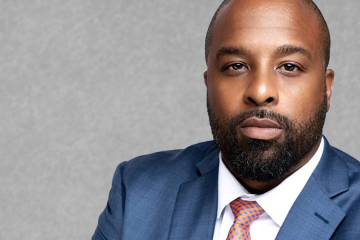
On this week’s Education Gadfly Show podcast, Othiniel Mahone, the principal at GEO Academies 21st Century School in Gary, Indiana, joins Mike and David to discuss effective strategies for implementing and enforcing an “away for the day” school cellphone policy. Then, on the Research Minute, Adam reports on a study about the impact of middle school principals on various long-term outcomes for students.

Recommended content:

  • “How to implement a cellphone ban in schools” —Amber M. Northern, Ph.D., Fordham Institute
  • “LAUSD approves cellphone ban as Newsom calls for statewide action” —Howard Blume and Defne Karabatur, Los Angeles Times
  • “New York City Schools Should Be Next to Ban Mobile Phones” —Michael R. Bloomberg, Bloomberg
  • Eric A. Hanushek, Andrew J. Morgan, Steven G. Rivkin, Jeffrey C. Schiman, Ayman Shakeel, and Lauren Sartain, “The Lasting Impacts of Middle School Principals,” NBER Working Paper No. 32642 (July 2024)

Feedback Welcome: Have ideas for improving our podcast? Send them to Stephanie Distler at [email protected].

view
Fordham Gadfly image

Cheers and Jeers: August 15, 2024

The Education Gadfly
8.15.2024
Flypaper

Cheers

  • Advocates in California killed a controversial bill that would have eliminated performance assessments as teaching licensure requirements. —EdSource
  • The stars of this year’s Olympic Games? Nerds and geeks. —Sally Jenkins, Washington Post
  • School districts in Colorado are redesigning their gifted programs to better identify promising candidates, especially among students of color and students from low-income families. —Chalkbeat
  • Despite some shortcomings, liberalism continues to shine as the superior philosophy of governance. But strong civic education is key to keeping it going. —Jonathan Rauch, Persuasion

Jeers

  • A spike in verbal and physical aggression from students is driving teachers out of their schools, if not out of the profession entirely. —Education Week
  • OpenAI created a tool to reliably detect when someone uses ChatGPT to write an essay or research paper, but so far, the company has refused to release it. —Wall Street Journal
view
Fordham Gadfly image

What we're reading this week: August 15, 2024

The Education Gadfly
8.15.2024
Flypaper
  • “Shifting NYC school demographics: There are nearly as many Asian American as Black students.” —Chalkbeat
  • Free meals for all children, longer-than-average Covid closures, and a focus on gender and racial equality: Did Tim Walz's policies improve Minnesota schools or cater to the teachers' union at the expense of test scores? —The Washington Post
Fordham Logo

© 2026 The Thomas B. Fordham Institute
Privacy Policy
Usage Agreement

National

P.O. Box 110
Burke, VA 22009

202.223.5452

[email protected]

Ohio

P.O. Box 82291
Columbus, OH 43202

614.223.1580

[email protected]

Sponsorship

130 West Second Street, Suite 410
Dayton, Ohio 45402

937.227.3368

[email protected]