Mobile Navigation

  • National
    • Policy
      • High Expectations
      • Quality Choices
      • Personalized Pathways
    • Research
    • Commentary
      • Gadfly Newsletter
      • Flypaper Blog
    • Events
    • Scholars Program
  • Ohio
    • Policy
      • Priorities
      • Media & Testimony
    • Research
    • Commentary
      • Ohio Education Gadfly Biweekly
      • Ohio Gadfly Daily
  • Charter Authorizing
    • Application
    • Sponsored Schools
    • Resources
  • About
    • Mission
    • Board
    • Staff
    • Career
Home
Home
Advancing Educational Excellence

Main Navigation

  • National
  • Ohio
  • Charter Authorizing
  • About

National Menu

  • Topics
    • Accountability & Testing
    • Advanced Education
    • Career & Technical Education
    • Charter Schools
    • Curriculum & Instruction
    • ESSA
    • Evidence-Based Learning
    • Facilities
    • Governance
    • Personalized Learning
    • Private School Choice
    • School Finance
    • Standards
    • Teachers & School Leaders
    • Think Again
  • Research
  • Commentary
    • Gadfly Newsletter
    • Flypaper Blog
    • Gadfly Podcast
  • Events
  • Scholars Program

The Education Gadfly Weekly

Sign Up to Receive Fordham Updates

We'll send you quality research, commentary, analysis, and news on the education issues you care about.
Thank you for signing up!
Please check your email to confirm the subscription.

The Education Gadfly Weekly: There is proof that knowledge works. And it’s overwhelming.

Volume 25, Number 8
2.27.2025
2.27.2025

The Education Gadfly Weekly: There is proof that knowledge works. And it’s overwhelming.

Volume 25, Number 8
view
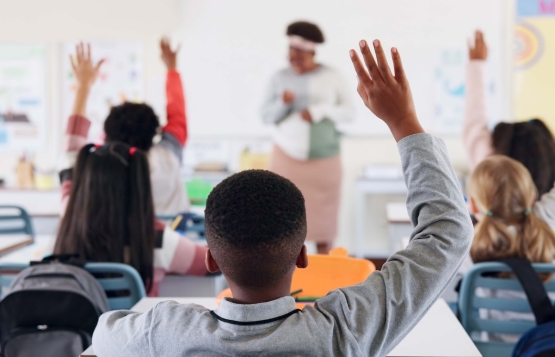
Students raising their hands in a school classroom
High Expectations

There is proof that knowledge works. And it’s overwhelming.

Jill Barshay of The Hechinger Report, one of the better education journalists working today, recently raised concerns about the empirical support for knowledge-rich curricula in improving reading comprehension. But the issue is not a lack of compelling evidence—there is prodigious evidence—but rather the difficulty of isolating long-term curricular effects in research.

Robert Pondiscio 2.27.2025
NationalFlypaper

There is proof that knowledge works. And it’s overwhelming.

Robert Pondiscio
2.27.2025
Flypaper

Open enrollment deserves bipartisan support

Jude Schwalbach
2.27.2025
Flypaper

Hard lessons from the NAEP results

Tim Daly
2.27.2025
Flypaper

Examining a new method of estimating homeschool participation

Jeff Murray
2.27.2025
Flypaper

#958: Louisiana’s NAEP gains and the power of a strong curriculum, with John White

2.26.2025
Podcast

Cheers and Jeers: February 27, 2025

The Education Gadfly
2.27.2025
Flypaper

What we’re reading this week: February 27, 2025

The Education Gadfly
2.27.2025
Flypaper
view
Student entering a school

Open enrollment deserves bipartisan support

Jude Schwalbach 2.27.2025
Flypaper
view
Scantron

Hard lessons from the NAEP results

Tim Daly 2.27.2025
Flypaper
view
Homeschooling

Examining a new method of estimating homeschool participation

Jeff Murray 2.27.2025
Flypaper
view

#958: Louisiana’s NAEP gains and the power of a strong curriculum, with John White

John White, David Griffith, Ph.D., Amber M. Northern, Ph.D. 2.26.2025
Podcast
view
Fordham Gadfly image

Cheers and Jeers: February 27, 2025

The Education Gadfly 2.27.2025
Flypaper
view
Fordham Gadfly image

What we’re reading this week: February 27, 2025

The Education Gadfly 2.27.2025
Flypaper
view
Students raising their hands in a school classroom

There is proof that knowledge works. And it’s overwhelming.

Robert Pondiscio
2.27.2025
Flypaper

Jill Barshay of The Hechinger Report is one of the better education journalists working today. She does her homework, understands research, and makes a visible effort to connect evidence with real-world teaching. Her recent piece, “The buzz around teaching facts to boost reading is bigger than the evidence for it,” raised concerns about the empirical support for knowledge-rich curricula in improving reading comprehension. She wrote, “There’s never been a study to show that increasing knowledge of the world boosts reading scores.” Such a broad and sweeping statement is demonstrably incorrect, deeply misleading, and carries significant downside for reading instruction if taken uncritically. The issue is not a lack of compelling evidence—there is prodigious evidence—but rather the difficulty of isolating long-term curricular effects in research.

The story is not about the limits of knowledge-rich curriculum. It’s about the limits of research methods.

To begin, few (if any) proponents of knowledge-rich curricula advocate merely for “teaching facts.” That’s an unfortunate cartoon that has been used as a strawman by its opponents to mock and lampoon a knowledge-based approach to literacy, conjuring Thomas Gradgrind, the school superintendent in Dickens’ Hard Times who insists children must be taught to value facts over imagination and creativity. The case for a knowledge-rich approach is far more nuanced, rooted in extensive cognitive science research on how knowledge supports comprehension and critical thinking. Reductionist expressions such as “a content-packed curriculum,” or “content-heavy curriculum” do a disservice and fail to accurately capture what the ten international researchers who wrote Developing Curriculum for Deep Thinking: The Knowledge Revival are advocating. (The book provides the occasion for Barshay’s piece.)

Likewise, having praised and admired her work, it was hard not to wince at Barshay’s characterization of knowledge-rich curriculum as “forcing children to learn a specific set of facts and topics” or “stuff[ing] a child with more knowledge.” The book’s authors (and advocates of knowledge-rich education at large) make clear that they are referring to carefully and democratically selected, coherent, well-sequenced and interconnected knowledge—not rote memorization of large amounts of unrelated facts, let alone “forcing” anyone to learn them.

Contrary to the claim that there’s never been a study, Developing Curriculum for Deep Thinking synthesizes a wealth of evidence supporting the role of knowledge in learning. The book argues for a coherent curriculum that systematically builds students’ background knowledge to facilitate deeper understanding and better reading comprehension. This aligns with decades of research in cognitive science demonstrating that comprehension is not a transferable skill but is largely dependent on prior knowledge.

Barshay’s Hechinger piece presents several key arguments: first, while background knowledge is clearly important for comprehension, the evidence linking knowledge-rich curricula to improved reading outcomes is inconclusive; second, many studies showing an association between knowledge and comprehension are correlational rather than causal; and third, proponents of knowledge-building curricula may be overstating the strength of the empirical evidence supporting their approach.

It is important to clarify the distinction between correlational and causal studies. Correlational studies identify relationships between two variables—for example, students with more background knowledge tend to perform better in reading comprehension. However, these studies do not prove that knowledge directly causes better comprehension, as other factors may also be influencing the outcome. In contrast, causal studies attempt to establish a direct cause-and-effect relationship, often through experimental designs such as randomized controlled trials.

While her points are not entirely without merit, they risk missing the bigger picture. The nature of reading research makes it inherently difficult to isolate and prove with definitive causal evidence that specific curricular interventions lead to improved reading achievement. Reading comprehension is influenced by a complex interplay of factors, including vocabulary, background knowledge, and syntax, making it exceptionally tricky to conduct randomized controlled trials that can definitively attribute gains to a knowledge-rich curriculum alone. Moreover, the effects of knowledge-building approaches accumulate over years, not days, weeks or months, making short-term experimental studies inadequate for capturing their true impact.

Barshay herself quotes Tim Shanahan acknowledging that it would take many, many years for gains to manifest. Reading interventions are studied over weeks or months, whereas a knowledge-rich approach yields its most significant effects over years. The benefits of having broad background knowledge may not be immediately apparent, but they are crucial for long-term reading success. Moreover, an assistant professor sweating out tenure would likely not pursue such a study, given the pressures of publishing on shorter time frames. “It would take years to see a general effect [of knowledge-rich curriculum implementation],” University of Virginia cognitive scientist Dan Willingham explains. “That kind of research is very expensive and would only be undertaken by someone who doesn't need a quick research pay-off.”

“Whenever people elevate causal over correlational conclusions, I point out that if we insisted on a direct experiment, we would not know that smoking causes cancer,” observes Dylan Wiliam, one of the contributors to Developing Curriculum for Deep Thinking. In dwelling on the lack of “causal” evidence without the larger context, Barshay’s piece risks inadvertently downplaying the practical significance of building background knowledge as a foundation for reading comprehension, which is simply not in dispute. Cognitive science has demonstrated repeatedly that knowledge is not just helpful but essential for making sense of texts. Studies such as the well-known “Baseball Study” (Recht & Leslie, 1988) have shown that students with prior knowledge of a subject comprehend related texts far better than those without it, regardless of their general reading ability. This insight has been reinforced by scholars like Willingham and E.D. Hirsch Jr., who have argued that efforts to improve reading scores must go beyond strategy instruction and ensure that students acquire broad, domain-specific knowledge across subjects.

A useful comparison can be drawn to dieting and exercise. It might be challenging to show a direct cause-and-effect relationship between a specific weight loss and exercise program, but that does not mean the broader evidence for diet and exercise is lacking. We accept that long-term health outcomes are influenced by consistent, cumulative behaviors. Similarly, the impact of a knowledge-rich curriculum unfolds over time, making it difficult to capture its full effect in short-term studies or in a specific curriculum. This overall approach – less time spent looking in the mirror; more time directing students’ attention out of windows – is the thing.

Valorizing knowledge-rich curricula is a sensible response to decades spent focusing on reading “skills and strategies” that demonstrably fail to transfer to new and unfamiliar contexts. Recent meta-analytical research also suggests (not surprisingly) that the effects of reading strategy instruction is significantly strengthened by instruction in background knowledge (Peng et al., 2023). Moreover, an emphasis on “mirrors over windows”—prioritizing students' personal experiences in reading and writing—may offer a false positive. When students read and write about what they already know, they appear to be stronger readers and writers than they truly are, as the “Baseball Study” would predict. However, when faced with unfamiliar domains, their comprehension falters. This should underscore the importance of broad, structured knowledge-building rather than an overreliance on self-referential literacy activities.

For years, we have tried to raise reading achievement by teaching students “what good readers do”—encouraging them to adopt and emulate habits associated with effective reading. But this approach has fallen short because reading comprehension is not just a matter of habits; it depends on knowledge. Researchers like Micheline Chi and Derek Hodson made it clear that the way experts do science is not the best way for students to learn science. Similarly Paul Kirschner (2009) showed that the way knowledge is built in a field should not be mistaken for the best way to teach it. In sum, instead of merely teaching students what good readers do, knowledge-rich curriculum instills over time what good readers know.

This overweighted instructional focus on reading skills and strategies has led to what I have described elsewhere as “cargo cult reading”—a phenomenon where students mimic the behaviors of proficient readers without grasping the deeper mechanisms at work. Just as cargo cultists in the Pacific built imitation airstrips and control towers to lure planes to return and disgorge precious goods—emulating behaviors and routines they witnessed soldiers perform during World War II—many reading programs have students practice surface-level comprehension skills without ensuring they possess the knowledge necessary to that make comprehension occur.

Finally, citing a 2023 study of the Core Knowledge curriculum (a causal study) which was implemented to great effect in nine Colorado charter schools, Barshay wonders whether it was a result of the curriculum or other factors, particularly since “students at these charter schools were largely from middle and upper middle class families.” However there was one low-income school among the nine in that study. It showed even larger effects in ELA and measurable effects in math and science—gains large enough to eliminate the achievement gap associated with income.

The insinuation that a knowledge-rich curriculum is elitist, favoring the already advantaged, is particularly troubling. E.D. Hirsch Jr. has long countered this claim, emphasizing that access to broad, shared knowledge is a key mechanism for democratizing opportunity. In Cultural Literacy, Hirsch argues that when students from disadvantaged backgrounds are deprived of the same foundational knowledge that wealthier peers often acquire at home, they are placed at a permanent disadvantage. A knowledge-rich curriculum is not about privileging certain students but about ensuring that all students—regardless of background—have access to the cultural and intellectual capital needed to engage fully in civic and professional life. In a speech some years ago, Hirsch framed the matter eloquently. “It's my fervent belief, reinforced by everything I have learned from study and experience,” he concluded, “that public education has no more right to continue to foster segregated knowledge than it has to foster segregated schools.”

Let that be the first and last word on “equity.”

Editor's note: This was first published on the author's Substack, The Next 30 Years.

view
Student entering a school

Open enrollment deserves bipartisan support

Jude Schwalbach
2.27.2025
Flypaper

In recent years, school choice has made impressive strides. Eleven states have codified universal or near-universal private school choice programs. Still, most of this progress has occurred in red-leaning states, such as Florida or Arizona, and some advocates fear the momentum school choice gained during and after the Covid-19 pandemic will soon sputter out. In National Review, Notre Dame University’s Nicole Stelle Garnett theorized that private school choice expansions will likely hit a “blue wall” in states where policymakers have not been open to expansive choice programs, such as Pennsylvania.

However, educators, and lawmakers should consider options for advancing school choice far more broadly. One potential opportunity: strengthen and expand K–12 open enrollment, which allows students to attend public schools outside their residential zones as long as space is available.

The latest national polling from EdChoice showed that 79 percent of Democrats, 75 percent of Republicans, and 73 percent of independents with school-aged children support open enrollment.

There are two types of public-school open enrollment: within-district, which lets students transfer to schools inside their assigned district, and cross-district, which lets students enroll outside district boundaries. The hallmark of a strong open enrollment law is that all districts must participate so long as schools have open seats available.

Like other school choice policies, open enrollment has gained momentum since the pandemic. Reason Foundation research finds that “twenty-one states have either a robust cross- or within-district open enrollment policy, while twenty-nine states do not, leaving 30 million students with limited school options.”

Since 2021, nine states have codified strong open enrollment laws, including Oklahoma, Kansas, and West Virginia. But before this recent surge, it wasn’t just red states: six were red or leaned red, three leaned blue and three were purple states. Blue-leaning and purple states, including Delaware and Colorado, have very successful open enrollment laws; others, like California and Washington, have elements of successful public school transfer programs.

In Delaware, whose program ranked seventh in Reason Foundation’s report, about 22 percent of public school students used open enrollment during the 2020–21 school year to find an alternative that was the right fit for them.

Kansas codified its strong open enrollment laws in 2022 with a Democratic governor. Preliminary reports show that more than 1,500 students used the state’s cross-district open enrollment program just launched in 2024.

Colorado passed its open enrollment law back in 1990. During the 2023–24 school year, nearly 200,000 Colorado students, 28 percent of the traditional public school population, used open enrollment to find the best public school for them. This is especially notable because this past November, Colorado voters rejected a statewide constitutional amendment to establish a right to private school choice. Colorado illustrates how strong open enrollment laws can enjoy success in states where other forms of school choice may struggle to gain traction.

With 2025 legislative sessions starting, lawmakers and school choice advocates should consider public school open enrollment proposals that expand options for families. With its widespread popularity among parents and its success across red, purple, and blue states, open enrollment is a winning political issue for the right and left that can benefit the tens of millions of students in public schools.

Editor’s note: This was first published by The 74.

view
Scantron

Hard lessons from the NAEP results

Tim Daly
2.27.2025
Flypaper

Scores from the National Assessment of Educational Progress (NAEP) were released on January 29. How were they? Headlines used terms like “disheartening,” “new low,” and “even worse.”

It was that bad. Average performance dropped in reading and barely improved in math.

Here’s what we learned:

1. The education depression continues

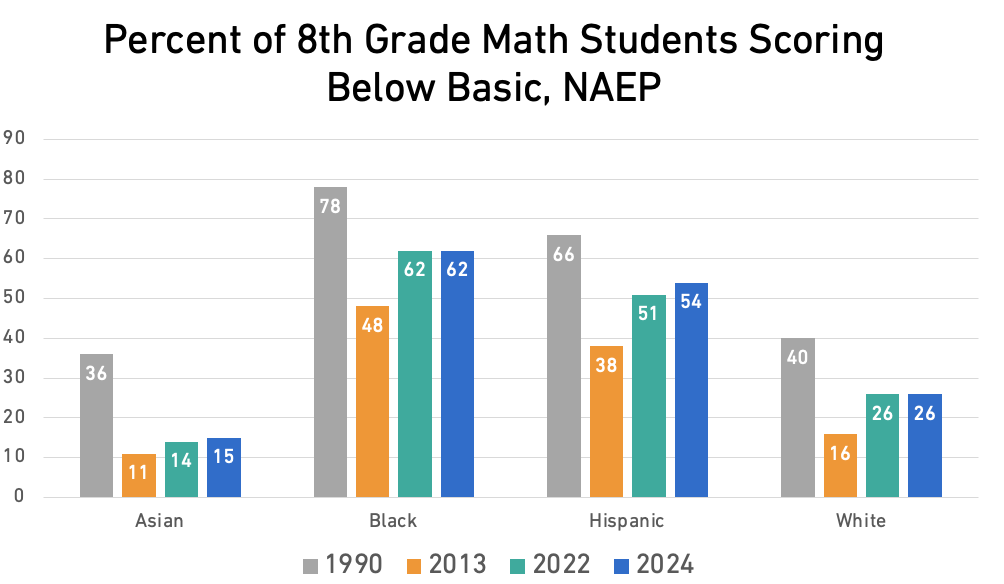
I wrote in October that we have been mired in shrinking academic outcomes for more than a decade, exemplified by a surge in students with very low performance levels. From 1990 to 2013, we made massive progress in that area. By 2022, most of it had disappeared.

The latest scores confirm that the depression rolls on. Below is an updated version of a graph I made in the fall. For each racial group, we have just as many eighth graders scoring Below Basic as we did in 2022 and far more than we had in 2013.
1

Source: NAEP data explorer, U.S. Department of Education.

Five years after the onset of the pandemic, there has been virtually zero recovery. We’ve seen this across assessments. It’s not an illusion.

2. Mediocrity rules

Massachusetts and Wisconsin tied for the top score in eighth grade math at 283. They are justifiably proud of their standing. But let’s put their performance in perspective. In 2013, that same score of 283 would have placed thirtieth. Let that marinate for a moment. Math achievement has fallen so far in eleven years that what would once have been an unremarkable score now leads the nation.

Reading is similar. The 2024 fourth grade leader—again, Massachusetts—would have tied in 2013 with Indiana, Washington, and Maine… for fourteenth.

Another troubling sign is a lack of positive outliers. In 2013, only five states were within 10 points—which is approximately one year’s learning—of Massachusetts in eighth grade math. It stood head and shoulders above the pack. This year, twenty-four states were within 10 points of Massachusetts and Wisconsin.

There is a golden opportunity for a handful of focused, aggressive states to remake the top of the leader board by improving just a handful of points. Start your engines.

3. If it seems too good to be true, it probably is

Two years ago, Los Angeles Unified posted a shocking gain of nine points on the eighth grade reading test. This was unexpected for several reasons. First, pandemic school closures lasted longer in L.A. than most cities. Second, reading scores nationally dropped by three points in 2022, and not a single state improved. Yet L.A. didn’t just improve. It soared.

When skeptics wondered if something might be amiss with the results—an error in selecting the sample of students to be tested, perhaps—Superintendent Alberto Carvalho publicly compared them to flat-earthers. He maintained that the gains were real and attributed them to distribution of technology during pandemic shutdowns, tutoring, and teacher training.

There was some awkwardness last week when 2024 NAEP results showed that LAUSD’s eighth grade reading score dropped by eight points, wiping out the 2022 improvement almost entirely. Carvalho, apparently with a straight face, told the Los Angeles Times that “sampling methods can lead to anomalies.”

4. Money matters, but it’s not mattering enough right now

Most research finds that providing more funding for schools leads to better outcomes such as higher test scores and more college-going. Just last summer, two separate studies found that the federal infusion of $190 billion for Covid recovery was helping.

Along comes these new NAEP results. We spent an unprecedented amount of money. And results are very discouraging.

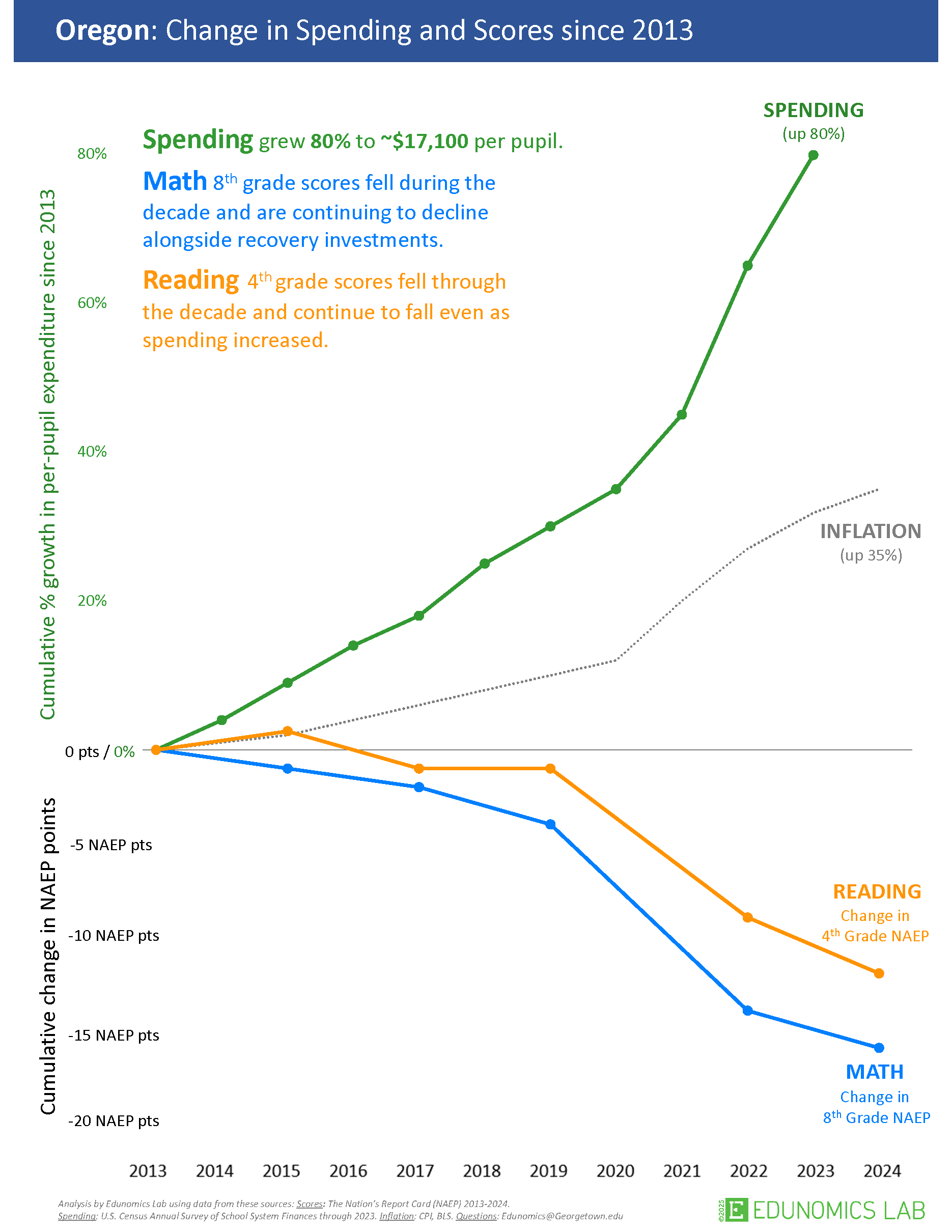
Cue Edunomics Lab, based at Georgetown University. Marguerite Roza and her team examined each state’s return on investment (ROI) by comparing changes in spending since 2013 to changes in academic outcomes.

It’s ugly.

Consider Oregon. Had it merely kept pace with inflation, it would have increased school spending by about 35 percent from 2013 to 2023. In actuality, it raised spending by 80 percent. Over the same period, math and reading performance tanked, with math posting a remarkable 16-point decline—the equivalent of 1.5 grade levels. Oregon is spending much more and achieving much less.
2

Oregon is not alone. You can view all fifty states here. Washington and Vermont are pretty scary. Mississippi has bucked the trend with smaller spending increases and real gains in reading.

Here’s the bottom line: The case for investing more in schools is very weak right now because it’s not clear that new resources will yield better results. All of us who care about education have a stake in changing that storyline.

5. Baghdad Bob is back and better than ever

Baghdad Bob was easily the best part of the Iraq War. Real name Mohammed Saeed al-Sahhaf, he served as Saddam Hussein’s press chief. While American soldiers and tanks streamed into the capital city right behind him, he calmly reassured television cameras that no such invasion was happening. It was PR performance art.

I suspect Bob is now writing press releases for state education agencies. In the face of dismal national NAEP results, almost every state claimed victory and did a goofy, unconvincing touchdown dance.

Wyoming’s performance dropped on three of the four NAEP tests and was flat in the other. Its official statement, which makes no mention of this, says Wyoming “continues to stand out nationally.”

It was a popular move. The logic? Because other states did poorly, our state is doing awesome by comparison—even if our students are learning less than before. Shout outs to Illinois and Washington, among others, for going all in.

Florida, which had particularly bad reading results, goosed the ante by having its state chief, Manny Diaz, write a letter saying NAEP’s methodology is wrong and calling for the Department of Education to be abolished.

The only thing more disappointing than the NAEP results themselves has been the state response. Truly a low point for our sector. We are hiding from the truth about what we are providing for our students. Let’s do better, friends.

6. Demographic adjustments change the picture

Fueled by coffee and chutzpah, Matt Chingos and Kristin Blagg from the Urban Institute published demographically adjusted NAEP results the same day as the national release. It’s a great resource.

The method here is to compare a state’s actual NAEP scores to what would be expected given that state’s student population. Factors considered include gender, age, race/ethnicity, and status for free lunch, special education, and English language learner services.

It produces a very different leader board. Mississippi, for example, finished thirteenth in fourth grade math and seventh in fourth grade reading in the official NAEP rankings. Not bad! But adjusting for demographics, they finished first in both.

On the other end, New Hampshire’s fourth grade reading score was the fourth highest in the country. Once adjusted, though, they dropped to twenty-fourth.

This is yet another indication that some states are facing and meeting greater challenges while others might be achieving less than meets the eye.

What now?

The new test results suggest we’ve been chasing the wrong ghost for years. This isn’t about recovery from deficits that festered during Covid Zoom school.

The bigger picture is a prolonged slide dating to 2013—especially among lower-performing students. We’ve always had an achievement gap. It was getting worse prior to the pandemic. Since 2019, it has exploded and we can’t tell yet if it’s done growing.

Some districts and states have no plan to reverse the sad patterns because they barely acknowledge the patterns exist.

Patience is waning. But it can’t fall on system leaders alone to fix this. They need help. They need better insights on what caused our depression and better ideas for reinvigorating instruction. We’ve all got a role to play.

For now, our shared job is to be honest: This isn’t good enough.

Editor’s note: This was first published on the author’s Substack, The Education Daly.

view
Homeschooling

Examining a new method of estimating homeschool participation

Jeff Murray
2.27.2025
Flypaper

A valuable recent edition of the Journal of School Choice focused entirely on research around homeschooling, aiming to add useful data and rigorous analysis to this little-studied education sector. The work published in that edition gives us a new appreciation for homeschooling but also illustrates how much we still need to learn. It is as much about refining the research process as it teasing out the findings. We at Fordham have already reviewed two of the reports in that issue, and here is another report, in which analysts test some interesting strategies to identify data on homeschooling from surveys asking parents about other aspects of their children’s education.

Missouri does not live up to its famous nickname in at least one regard: The Show Me State is one of twenty-nine states that do not require homeschooling to be reported by parents to any agency. Amy Shelton and Collin Hitt, two Saint Louis University researchers, recently tested three approaches to estimating homeschool enrollment in Missouri using publicly available datasets.

Their first approach uses data from the Census Bureau’s American Community Survey (ACS) from 2008 to 2023. ACS samples households continuously throughout the country and uses those responses to estimate the demographics and socioeconomic conditions of the entire population, broken down at the state and community levels. Among the education-related questions, ACS asks respondents to indicate school type and grade (if applicable) for each person in the household, and reports the results in three bands—ages 5–9, 10–14, and 15–17.

Shelton and Hitt compare the population of school-age children in Missouri to the totals in the three age bands reported by ACS to arrive at an annual estimate of the number and percentage of school-age children enrolled in each type of school. This approach is a start, but it is far from definitive for two reasons. First, because the ACS education categories are “public school,” “private school, homeschool,” and “has not attended in the last three months.” It is entirely plausible that homeschool families might choose either “has not attended” or “homeschool” as an option for their children on this survey, obscuring the true numbers of homeschoolers in both categories. Second, compulsory education in Missouri begins at age seven, leaving a swath of five- and six-year-olds who could be artificially inflating the “has not attended” numbers.

The analysts’ second approach compares the ACS data to two other sources, looking to eliminate as many verified private and public school students from the ACS categories as possible. Private school enrollment data come from the Private School Universe Survey (PSS) administered every other year to private-school leaders across the country by the National Center for Education Statistics (NCES), and public school numbers come from the Missouri Department of Elementary and Secondary Education.

The analysts clean both sets of data to match ACS as closely as possible, including estimating numbers for the out-years when PSS was not administered. Both are analyzed looking for trends—decreases and increases in students in public and private schools, but decreases in particular—that could equate to changes in enrollment within the three ACS school type categories. Shelton and Hitt zero in on an observed decrease of 16,000 students attending public schools between the 2019–20 and 2021–22 school years—that is, through the first years of the coronavirus pandemic, when enrollment patterns shifted nationwide. Private school enrollment in Missouri increased by approximately 1,800 students in the same time period, but that only accounts for 11 percent of the net public-school decrease. This suggests that the majority of the increase also observed in ACS’s “private school, homeschool” category over that time is due to increased homeschooling participation in Missouri. However, despite heroic attempts to align the three datasets, both the lowest (ages 5–9) and the highest (15–17) age bands likely suffer from noisy data based on Missouri’s specific K–12 framework, as noted above.

The third analytical approach utilizes data from the Census Bureau’s Household Pulse Survey (HPS), which began in April 2020 to examine trends in the experiences of American families during the pandemic and beyond. The first waves of the HPS asked respondents if, at any time during February 2020, any children in the household were enrolled in a public or private school or educated in a homeschool setting in kindergarten through twelfth grade. Subsequent surveys asked the same question regarding the 2020–21, 2021–22, 2022–23, and 2023–24 school years. Importantly, public and private school enrollment are grouped as one response category on the HPS, while homeschool is offered as second, standalone category of school enrollment—that is, formal schooling versus homeschooling.

They pool these results along with Missouri-specific household surveys conducted by St. Louis University’s PRiME Center research hub in 2021 and again in 2024, concluding that approximately 7.26 percent of Missouri’s school-age children were homeschooled in fall 2021, including 6.92 percent of children in grades 4–8 (once again, the most accurate age/grade bands due to data misalignment). Those numbers increased to 10.49 percent of all Missouri school-age children and 9.9 percent of fourth through eighth graders when parents were polled in 2024.

Putting all of this together, Shelton and Hitt conclude that, in 2024, approximately 61,000 Missouri children ages 5–17 were homeschooled, a substantial increase from 37,000 children in 2020. Put into perspective: That is roughly equal to the public school enrollments in St. Louis City and Kansas City combined. It also confirms for them, as accurately as existing data will allow, that the anecdotal pandemic-era boost in homeschooling indeed occurred in Missouri and persisted beyond the restoration of “schooling as usual” in the state.

The authors recommend that state leaders interested in supporting families take note of these findings and craft policies according to the true state of play in education, which appears to be different than most policymakers and pundits believe it is. Additionally, Shelton and Hitt urge researchers in other states to replicate their work. ACS, NCES, and HPS data are available for every state, and the statewide polling that the PRiME Center conducted—which put all of the other Missouri datasets into focus—can be done simply and inexpensively in other states. It’s a huge step forward for homeschooling research.

SOURCE: Amy Shelton and Collin Hitt, “Taking Attendance: Estimating Homeschooling Populations in States without Official Homeschool Data – a Pilot Analysis in Missouri,” Journal of School Choice (December 2024).

view

#958: Louisiana’s NAEP gains and the power of a strong curriculum, with John White

2.26.2025
Podcast
 

On this week’s Education Gadfly Show podcast, John White, former Louisiana superintendent of education and current CEO of Great Minds PBC, joins David and Amber to discuss the reforms he led in Louisiana and their role in the state’s significant NAEP gains. Then, on the Research Minute, Amber highlights a study on the expansion of “transitional kindergarten” in Michigan and its impact on early learning access and socioeconomic gaps.

Recommended content:

  • Kevin Mahnken, “New NAEP Scores Dash Hope of Post-COVID Learning Recovery,” Thomas B. Fordham Institute (January 29, 2025).
  • Emily Freitag, “A bold state move to improve reading,” Thomas B. Fordham Institute (February 20, 2025).
  • Sara Schwartz, “Why Are Reading Scores Still Falling on the Nation’s Report Card?,” EducationWeek (January 29, 2025).
  • Sonia Q. Cabell, James S. Kim, Thomas G. White, Charles J. Gale, Ashley A. Edwards, HyeJin Jordan Berne, Katia Córdoba García, Brian A. Jacob, Tareena Musaddiq, Samuel Owusu, Anna Shapiro, and Christina Weiland, Transitional Kindergarten: The New Kid on the Early Learning Block, SAGE Journals (2025)

Feedback Welcome: Have ideas for improving our podcast? Send them to Stephanie Distler at [email protected].

view
Fordham Gadfly image

Cheers and Jeers: February 27, 2025

The Education Gadfly
2.27.2025
Flypaper

Cheers

  • Many of the Trump administration’s initial nominees for the Department of Education bring extensive experience and strong track records of student-first reforms. —AEI
  • Steubenville, Ohio, has defied national trends by achieving near-universal literacy among its third graders through a proven commitment to structured reading programs, small class sizes, subsidized preschool, and targeted interventions. —APM Reports

Jeers

  • Democrats’ obsession with racial equity in education has led to policies that systematically disadvantage Asian students, from higher admission hurdles to efforts to dismantle merit-based school programs, alienating a key voter bloc in the process. —Josh Barro, Very Serious
  • The U.S. has largely abandoned efforts to improve education for poor students, with political shifts weakening accountability, test scores declining, and digital distractions exacerbating the issue. —Matthew Yglesias, Slow Boring
  • “‘Without knowledgeable decision makers like Peggy Carr, it is likely that the scientific quality of NAEP, and other important data collections, will be eroded,’ said Eric Hanushek.” —The 74
view
Fordham Gadfly image

What we’re reading this week: February 27, 2025

The Education Gadfly
2.27.2025
Flypaper
  • Math instruction deserves the same scrutiny as reading—but the absence of a single, widely discredited teaching method make it harder to drive widespread reform. —Holly Korbey, The Grade
  • Strategic reforms—such as clearer standards, implementation focus, and a DARPA-like innovation model—could make federal research more effective in addressing educational challenges and driving meaningful improvements. —By Dan Goldhaber, Ashley Jochim, Robin Lake, and Andrew J. Rotherham, The 74
  • DOGE’s $880 million cut to education research contracts has sparked backlash, but some see it as an opportunity to modernize data collection and ensure taxpayer-funded studies better address the country’s educational challenges. —Mark Schneider, National Review
Fordham Logo

© 2026 The Thomas B. Fordham Institute
Privacy Policy
Usage Agreement

National

P.O. Box 110
Burke, VA 22009

202.223.5452

[email protected]

Ohio

P.O. Box 82291
Columbus, OH 43202

614.223.1580

[email protected]

Sponsorship

130 West Second Street, Suite 410
Dayton, Ohio 45402

937.227.3368

[email protected]