Mobile Navigation

  • National
    • Policy
      • High Expectations
      • Quality Choices
      • Personalized Pathways
    • Research
    • Commentary
      • Gadfly Newsletter
      • Flypaper Blog
    • Events
    • Scholars Program
  • Ohio
    • Policy
      • Priorities
      • Media & Testimony
    • Research
    • Commentary
      • Ohio Education Gadfly Biweekly
      • Ohio Gadfly Daily
  • Charter Authorizing
    • Application
    • Sponsored Schools
    • Resources
  • About
    • Mission
    • Board
    • Staff
    • Career
Home
Home
Advancing Educational Excellence

Main Navigation

  • National
  • Ohio
  • Charter Authorizing
  • About

National Menu

  • Topics
    • Accountability & Testing
    • Advanced Education
    • Career & Technical Education
    • Charter Schools
    • Curriculum & Instruction
    • ESSA
    • Evidence-Based Learning
    • Facilities
    • Governance
    • Personalized Learning
    • Private School Choice
    • School Finance
    • Standards
    • Teachers & School Leaders
    • Think Again
  • Research
  • Commentary
    • Gadfly Newsletter
    • Flypaper Blog
    • Gadfly Podcast
  • Events
  • Scholars Program

The Education Gadfly Weekly

Sign Up to Receive Fordham Updates

We'll send you quality research, commentary, analysis, and news on the education issues you care about.
Thank you for signing up!
Please check your email to confirm the subscription.

The Education Gadfly Weekly: Texas has a theory of education

Volume 26, Number 27
7.9.2026
7.9.2026

The Education Gadfly Weekly: Texas has a theory of education

Volume 26, Number 27
view
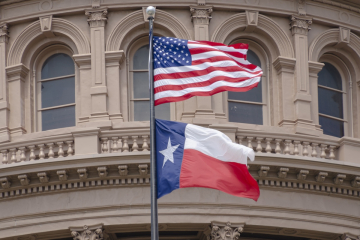
American and Texas flags
High Expectations

Texas has a theory of education

Texas’s new social studies standards, required literature list, and curriculum have all drawn familiar charges of culture-war excess, with their inclusion of Bible stories, canonical books, and “patriotic” content. But taken together, these initiatives suggest something more consequential than conservative provocation. Read more.

Robert Pondiscio 7.9.2026
NationalFlypaper

Texas has a theory of education

Robert Pondiscio
7.9.2026
Flypaper

State assessments can be useful for both instruction and accountability—if we design them that way

Arthur VanderVeen
7.9.2026
Flypaper

Through-year assessments can improve a broken testing system

Jenn Vranek | Khaled Ismail
7.9.2026
Flypaper

Sixteen years later, what did NYC’s small schools accomplish?

Amber M. Northern, Ph.D.
7.9.2026
Flypaper

Do school closures save money?

Alicia Anderson
7.9.2026
Flypaper

The accountability vibe shift | Episode 1025 of The Education Gadfly Show

7.8.2026
Podcast
view
Students on laptops

State assessments can be useful for both instruction and accountability—if we design them that way

Arthur VanderVeen 7.9.2026
Flypaper
view
Bad grade

Through-year assessments can improve a broken testing system

Jenn Vranek, Khaled Ismail 7.9.2026
Flypaper
view
School entrance

Sixteen years later, what did NYC’s small schools accomplish?

Amber M. Northern, Ph.D. 7.9.2026
Flypaper
view
Closed school

Do school closures save money?

Alicia Anderson 7.9.2026
Flypaper
view

The accountability vibe shift | Episode 1025 of The Education Gadfly Show

Michael J. Petrilli, David Griffith, Ph.D., Amber M. Northern, Ph.D. 7.8.2026
Podcast
view
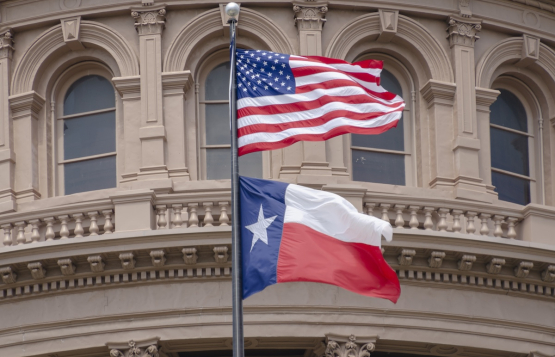
American and Texas flags

Texas has a theory of education

Robert Pondiscio
7.9.2026
Flypaper

This June, the Texas State Board of Education adopted new social studies standards and a required literature reading list for its public schools. These changes follow Texas’s 2024 release of its “Bluebonnet” curriculum, a package of instructional resources for elementary school, which sparked controversy over the inclusion of Bible stories in the reading materials.

Bible stories, canonical books, and “patriotic” social studies standards have each invited familiar charges of culture-war excess. Perhaps. But look again—and look at these three things together.

Taken together, these initiatives suggest something more consequential than conservative provocation. Texas appears to be developing a coherent theory of education: Knowledge is cumulative, literacy depends on background knowledge, and language proficiency has an unavoidable cultural valence, meaning that it reflects the knowledge a speech community shares and assumes its members possess. Furthermore, Texas’s theory of education assumes that public education is obligated to equip every child with the knowledge, language, habits, and skills needed for full and effective participation in America’s civic, cultural, and economic life.

Texas may not have gotten every curricular choice right. But it appears to know what it thinks education is for. That alone distinguishes it from much of American schooling.

Start with the state’s new social studies standards. Their most striking feature is not their ideological orientation but their specificity and architecture. In the early grades, children learn stories, people, places, events, and traditions. Beginning in third grade, the standards become broadly chronological, moving from ancient civilizations through Greece and Rome, the medieval world, the Renaissance and Reformation, the Scientific Revolution and Enlightenment, European colonization, the American Revolution, and the Constitution. The standards explicitly call for concepts to be embedded in stories and historical content in order to “create schema for understanding.”

This is a significant departure from the way American education often thinks about social studies—and education more broadly. For decades, schools have been encouraged to focus on skills: critical thinking, problem solving, analysis, collaboration, and, in literacy, comprehension strategies such as finding the main idea, making inferences, and identifying the author’s purpose. The tacit assumption is that the particular content used to practice these skills is negotiable and interchangeable.

Texas’s approach goes in the opposite direction: Knowledge builds on knowledge. What a child learns in second grade affects what she can understand in fifth grade, which affects what she can comprehend in eighth grade. A student who understands Greece and Rome, Hebrew Scriptures, medieval institutions, the Reformation, and the Enlightenment is better prepared to understand the American founding. The fifth-grade standards make those connections explicit.

This is not merely a theory of history or literacy instruction. It’s a theory of education itself.

If literacy depends on knowledge, and knowledge is cumulative, content cannot be endlessly interchangeable—a school’s entire curriculum is therefore a literacy curriculum. That helps explain why Texas’s social studies standards, Bluebonnet curriculum, and reading list should be viewed as parts of a whole. Coherence demands choices. A school system cannot be indifferent to whether one classroom studies ancient Egypt, another spends six weeks on a generic unit about “communities,” and a third pursues student-selected projects, and then assume all children will arrive at the next grade equally prepared.

Natalie Wexler, one of the nation’s most important advocates for knowledge-building curriculum, recently praised the ambition and specificity of the Texas social studies standards while worrying that their perceived ideological coloration could unnecessarily inflame the culture wars. That concern is worth taking seriously; Virginia, which she points to as an exemplar, shows that content-rich standards can be built through a more bipartisan process. But Texas is attempting something broader than writing better standards for a single subject: aligning literacy, curriculum, culture, and civics around a common theory of education.

To Wexler’s broader point about political provocation, conversations about curriculum are unavoidably complicated and uncomfortable, because background knowledge is not culturally neutral and does not always yield to preferred notions of inclusivity.

E. D. Hirsch Jr.’s deepest insight was not merely that reading comprehension depends upon knowing facts. He also understood that language is a cultural artifact. A speech community’s history, religion, literature, myths, symbols, idioms, and collective memories become embedded in the language its members speak and read. A “David and Goliath” struggle, a “Trojan horse,” an “Achilles’ heel,” and “Big Brother” are not mere decorative flourishes appended to English. They are part of English.

This raises an essential but uncomfortable curricular question: What does the language we want children to master assume they already know?

That question does not yield an immutable list of names, books, and events. Speech communities change, and America’s cultural inheritance has always expanded and evolved. Nor does it render representation irrelevant. America’s diversity and the contributions and experiences of its people must be taken seriously, treated respectfully, and taught truthfully.

But “representation” is not the purpose of public education. A curriculum is not principally a mirror in which every child must see a flattering reflection of himself. Its more important function is to give children access to a world they did not make but must learn to navigate—including the taken-for-granted cultural knowledge their more privileged peers are likely to encounter outside school. That is an equity argument. Affluent and highly educated families will always find ways to transmit sophisticated language, cultural knowledge, institutional know-how, and civic confidence to their children. Children who depend chiefly upon school for access to those things have the greatest need for an explicit, cumulative, coherent curriculum.

Critics have also charged that the new Texas standards and curricula are overly patriotic. But public schools are, if nothing else, public institutions. It should not be controversial for them to cultivate some measure of affection for the community, state, and country that created and sustains them. This need not require triumphalism, mythology, or silence about injustice. But it is simply incorrect to view critique as neutral but affirmation as ideological. A curriculum can estrange children from their country just as surely as it can teach uncritical reverence for it.

Moreover, it’s simply not accurate to say that the standards paper over American failures. They include slavery, the Civil War, Juneteenth, segregation, the civil rights movement, and figures such as Frederick Douglass, Harriet Tubman, Martin Luther King Jr., Claudette Colvin, Rosa Parks, Ruby Bridges, and Hector P. Garcia. The story the standards tell is not merely one of national greatness, but of ideals, failures to honor them, and struggles to extend them.

It’s also worth noting that civic education is not merely about attachment. Children need knowledge of American history and institutions so they can understand their rights, navigate government, make persuasive arguments, pursue opportunities, advance their interests, participate in self-government, and change institutions intelligently when necessary.

The Texas social studies standards are admirably explicit about this knowledge-building component of civics. They aim to develop responsible citizens who understand constitutional government, consent of the governed, civic virtue, individual rights, and the preservation of liberty.

In sum, literacy gives children access to the speech community, and civic knowledge gives them agency within the political community. The pursuit of both aims tends to spark political controversy and debate, but they are vital nonetheless.

None of Texas’s curricular reforms guarantee success. The state’s greatest challenge may be practical: Its new social studies standards are enormously ambitious, yet social studies is easily squeezed out by reading and math, and classroom practice is hard to change through state policy alone.

Texas appears to have grappled with this problem. Its ambitions extend beyond aligning standards and curriculum to creating coherence across the larger education system.

“What the State Board has done is significant because it has attempted to ensure coherence in the standards,” Texas Education Commissioner Mike Morath told me. “What broader laws in Texas do is ensure that coherence is supported by high-quality instructional materials, teacher preparation, in-service training, and, ultimately, assessment.”

Each of those levers matters, but not equally. Better teacher preparation and training can help change practice. Aligned assessment is more powerful still. Texas plans to align its reading assessments with its knowledge-building ambitions, drawing some passages from the literary works list and others from content students will have studied in science and social studies. If schools know that reading comprehension will be tested partly through material students are supposed to have encountered, the familiar dictum that “what gets tested gets taught” may finally be put to constructive purpose. Schools will have less incentive to sacrifice history and science for generic reading-skills practice if state reading tests reward the acquisition of specific domains of knowledge.

Whether all this is enough to change classroom practice remains to be seen. But Texas is at least attempting to align the major levers available to a state: what children are expected to know, the materials teachers use, how teachers are prepared and trained, and what the state measures. That is a far more serious theory of implementation than states typically bring to reform efforts.

This larger development—and the contrast to business as usual—is worth recognizing and praising. American education has spent decades fruitlessly pursuing skills without knowledge, literacy without content, diversity without commonality, and citizenship without grateful inheritance. Texas is attempting something different: a coherent approach to knowledge, language, literacy, and civic formation.

Whether it can execute that vision remains an open question. Some of its individual choices deserve debate, and others will surely require revision. But the fact that Texas’s emerging theory conflicts with several fashionable ideas about education is not the problem.

It is the point.

view
Students on laptops

State assessments can be useful for both instruction and accountability—if we design them that way

Arthur VanderVeen
7.9.2026
Flypaper

Dale Chu’s recent critique of through-year assessment revisits a familiar concern: that state assessments cannot serve both accountability and instruction without compromising one purpose or the other. It is a concern worth taking seriously. Accountability requires comparable, defensible claims about student performance; instruction requires timely, actionable evidence that helps teachers respond to student learning. If poorly designed, through-year assessment can blur those purposes and satisfy neither.

But that is not an argument against through-year assessment. It is an argument for better design.

Nathan Dadey and his colleagues at the Center for Assessment have made the more careful version of this point. They define through-year assessments as systems intended to support both “the production and use of a summative determination” and at least one additional goal. The most commonly cited additional goal is instructional utility: providing information during the year that helps educators and students make better decisions while there is still time to act.

That is exactly the claim through-year assessment systems must be held accountable for.

So what is required for instructional utility? The Center has identified five essential features: coherence with the enacted curriculum, tasks that support deeper thinking, results at the right grain size, timely feedback, and results that inform instruction. The fifth is both the most important and the hardest to achieve. It is not enough to display data faster or more often. Assessment becomes instructionally useful only when it helps educators understand what students are thinking, where they are struggling, and what to do next.

That is the design problem we are working to solve with the Montana Office of Public Instruction.

In the Montana MAST through-year model, shorter assessment events are designed to align flexibly to local curriculum scope and sequence while still aggregating to a comparable statewide summative measure. The goal is not to make a single test “do everything.” It is trying to replace a fragmented assessment ecosystem—state summative tests over here, commercial interims over there, curriculum-embedded checks somewhere else, and disconnected remediation tools on top of all of it—with a more coherent system of instructional decision making.

This is not a “New Shimmer” problem—asking one product to do two incompatible things. Granted, the accountability concern is real. Because through-year testlets contribute to the final summative score, accountability pressure does not disappear; it is distributed across the year. That makes design especially important. These short testlets, administered in a class period every four to six weeks, are not intended to replace classroom formative assessment practices or curriculum-embedded assessments. They are intended to monitor students’ progress toward mastery in a way that applies accountability not simply to the final outcome, but in support of better instructional practice throughout the year: reinforcing the adopted curriculum rather than narrowing it, testing students on what they have had an opportunity to learn, returning instructionally useful feedback while it can still shape instruction, and supporting cycles of inquiry that help teachers adjust instruction before learning gaps harden.

We are seeing evidence that students and educators recognize the value of this approach as they become more familiar with it. In the most recent annual survey of Montana teachers and students, 79 percent of students and 59 percent of teachers surveyed agreed that students learn more when they take several smaller assessments during the year instead of one large test at the end. And teachers overwhelmingly value the misconceptions reporting because it gives them something specific and actionable they can address in the context of their taught curriculum. That’s something they just aren’t getting from the rest of the test pile.

Dale’s argument largely recycles an older debate as if the field has stood still. Innovative assessment leaders are moving beyond the false choice between instructional utility and comparability. A growing number of states—including Montana, Indiana, North Carolina, Missouri, Delaware, and now Texas and Oklahoma—are exploring ways to make state assessment more useful without abandoning comparability or rigor. The details differ, but the motivation is shared: State leaders recognize that the current model often produces information too late, too far from instruction, and too disconnected from the decisions educators need to make during the year.

That is why through-year assessment should be evaluated not as a new version of the traditional summative test, but as an effort to redesign the state assessment system around a clearer theory of action. The recent analysis of MAST published by the Montana Office of Public Instruction and Education First makes that point well:

Through-year assessments are best understood not as incremental modifications to existing summative models but as fundamentally different systems that require clarity of instructional vision, deeply contextualized theories of action, intentional incentive structures and a reimagined role for state education agencies. When these elements are misaligned, TYAs risk amplifying reactive or incoherent instructional responses. When they are thoughtfully aligned, however, TYAs have the potential to provide information that is genuinely value-added: supporting educators in making more informed, timely and productive decisions for their students.[1]

State assessments should not promise to be everything to everyone. But they can be better than the status quo. Through-year models should be judged by what they make possible in practice: teachers using more actionable evidence in planning conversations, districts using data to target professional learning and curriculum implementation supports, and states gaining clearer visibility into where investments are needed to help students meet rigorous expectations. The challenge is real, but it is one that state assessment systems are increasingly positioned to meet.


[1] Aneesha Badrinarayan, Cedar Rose, and Emma Fortier, Moving Toward Instructional Relevance: Recommendations for Through-Year Assessment Systems that Advance Teaching and Learning (Education First and Montana Office of Public Instruction, 2026), 32.

view
Bad grade

Through-year assessments can improve a broken testing system

Jenn Vranek | Khaled Ismail
7.9.2026
Flypaper

In a recent Flypaper post, Dale Chu argues that the promise of a single assessment system doing multiple things well is “too good to be true.” He says that through-year assessments (TYA)—tests administered periodically throughout the school year that culminate in a summative score—are trying to do too much. But his critique relies on theoretical exaggerations, ignores the glaring failures of our current testing landscape, and dismisses the very real potential of through-year assessments to reduce testing while actually helping teachers.

The foundation of his argument rests on a philosophical, rather than empirical, claim: that a test cannot simultaneously be instructionally useful for teachers and provide valid accountability data for policymakers. In reality, state assessment systems should serve two perfectly legitimate purposes: instructional improvement and system-level accountability. When state assessments are designed to serve instructional improvement, they can also serve system-level accountability. It’s the reverse that is not true. The dozen states redesigning their state end-of-year tests into through-year tests to support educators to improve learning also can help districts and states see whether all students are being served well, and where the system needs to act.

Dale also selectively points out the potential “unintended effects” of through-year assessments, while conveniently avoiding the massive unintended negative effects created by the current system. The modern assessment landscape is an incoherent pile of redundant, unhelpful tests. The average American student takes seven standardized tests a year, and in the highest-testing districts, students take 88 by the end of eighth grade.

Because state end-of-year tests fail to give teachers timely feedback, a market failure has emerged. Districts spend millions layering on commercial interim assessments (like NWEA or STAR) throughout the year. District leaders see these interim scores, assume students are on track, then learn otherwise from the state summative results.

This pile of expensive, unhelpful tests littering the school calendar surely isn’t what advocates for system accountability intend.

Perhaps most frustrating is Dale’s assumption that states adopting TYA will inevitably spend more money and “add to students’ total testing burden.” This assumes the worst case and ignores how TYA actually functions. If a state-coordinated through-year system replaces the disjointed commercial interims districts currently buy, total testing time goes down, not up. In fact, during Indiana’s first year of ILEARN implementation, more than 60 percent of surveyed districts reported they are eliminating commercial interims like MAP or STAR because ILEARN provides what they need. Texas soon will explicitly prohibit districts from administering locally mandated benchmark tests that are not aligned to what’s taught as it implements its new through-year assessment system. This should result in fewer tests overall.

Through-year assessments are not a magic bullet, but they hold the distinct promise of making summative tests far more meaningful to educators and families. By breaking up the end-of-year testing monolith and aligning assessments more closely with what is actually being taught, TYA provides timely, relevant feedback that lets teachers make real-time course corrections during the school year. Here are facts about leading models:

  • Montana’s MAST allows districts to choose when to administer “testlets” according to their own local scope-and-sequence, counts the testlets’ results toward the summative score, and includes student misconceptions on the math reports that educators are nearly universally praising as immediately actionable and helpful. MAST was designed first for instructional utility and is in federal peer review now to serve as the state’s accountability assessment. And the worry that this funnels every school onto a single course sequence does not hold up: The state built a configurator that lets each district match the testlets to its own curriculum and pacing. This year it ran more than 800 configurations across 52 curricula, built on the most commonly used high-quality instructional materials (HQIM). (See Arthur VanderVeen’s post for more about Montana’s model.)

  • Indiana’s ILEARN is a series of formative “checkpoints,” with “second chance opportunities” throughout the year that feed predictive modeling, though the summative score comes only from the end-of-year test. It uses an application programming interface (API) to sync state assessment data automatically with locally adopted HQIM and intervention platforms, which eliminates manual data tracking and generates personalized study and remediation plans in tools students already use. Indiana is also moving to require those vendors to align to the state’s Performance Level Descriptors, so the rigor bar holds no matter which materials a district adopts.

Dale also raises the specter of kids and teachers facing three high-stakes tests a year instead of one. We would frame the stakes differently. The stakes can be higher, but in a way, we should want them to be. When a test gives a teacher honest, specific information about what a student knows, where they are stuck, and why—and does so while that student is still in the room—it pushes adults to act on the results during the year instead of reading about them after the fact. That is the kind of accountability people have been asking for, when they complain that schools are judged on results they never had a real chance to do anything about.

We’re excited to see what Kansas, Texas, and Missouri will contribute to continued state innovation and learning. At last month’s National Conference on Student Assessment, Texas Education Agency Commissioner Mike Morath indicated the new state-developed beginning- and middle-of-year interim assessments will use “warm reads,” which are texts related to the concepts and vocabulary in students’ curriculum. Warm reads, described here by science of reading guru Natalie Wexler, help more accurately measure students’ reading comprehension. Texas is going a step further and barring districts from layering other non-instructionally relevant tests on top of its system and setting criteria for what qualifies. We are for it, on one condition: The bar for quality has to be high, and the state must face down the vendor lobby when their products cannot clear it.

Given all of this potential, we wish Dale and others would stop arguing against the theoretical versions of through-year assessment, rather than evaluating whether specific models actually outperform the broken status quo. We need more research, evaluation, and innovation to understand how well TYA measures provide support for both instruction and accountability and fewer theoretical critiques.

The question we should be asking is not “can one test do everything flawlessly?” (Because, duh, no.) The real question is whether a thoughtfully designed, state-coordinated through-year system can work better than the expensive, redundant, and instructionally useless status quo we have today.

view
School entrance

Sixteen years later, what did NYC’s small schools accomplish?

Amber M. Northern, Ph.D.
7.9.2026
Flypaper

New York City’s Small Schools of Choice (SSC) program was one of a panoply of education reforms enacted in the early 2000s under then-mayor Michael Bloomberg and schools chief Joel Klein. The idea was to redesign students’ high school experiences and to increase graduation rates for students from low-income backgrounds by leveraging smaller school models emphasizing personalized academic instruction. A recent report from MDRC gives us a longer-term look at how SSC students have fared over time.

The SSC effort initially closed dozens of large, low-performing high schools in the city; created over 100 new small schools to serve students in the lowest-income areas of the city; and used a ranked-choice application system to assign all rising ninth-graders to specific high schools, with priority given to low-income students. Ultimately, about 90 percent of students attending SSCs were Black or Hispanic and 83 percent qualified for free or reduced-price lunch.

SSCs typically served around 100 students per grade and emphasized academic rigor and personalized relationships between teachers and their students. Building staff chose a school theme and a community partner to provide additional support, which ranged from helping to fund programs, to hiring staff, to providing students with work-based experiences.

Since 2010, MDRC researchers have used the lottery process embedded within New York City’s district-wide high school assignment process to study SSCs’ effects. In short, when a given school had more applicants than seats, the district’s admissions algorithm randomized which applicants received an offer. So far, they’ve found large, positive impacts on high school graduation. However, they haven’t been able to look at longer-term outcomes until now, as enough time has passed.

MDRC drew an evaluation sample comprising over 100 SSCs and more than 16,000 students, including those who won the lottery and enrolled in an SSC, and those who lost and enrolled instead in a non-SSC New York public school. Researchers followed students for six years who attended an SSC in the 2005–06 through 2008–09 school years and measured effects on enrollment in postsecondary education, degree attainment, future employment, and earnings.

Descriptive data show that, on average, 76 percent of SSC enrollees graduated from high school within four years, versus 68 percent of non-SSC enrollees. Their causal results show large, positive effects (nearly 10 percentage points) on students’ enrollment in postsecondary education immediately after graduating from high school. But there was no difference between the two groups in the selectivity of institutions in which they enrolled. And that big percentage-point difference in college enrollment translated into a more modest positive effect of 2.5 percentage points on four-year postsecondary degree attainment rates, suggesting that SSCs boosted college entrance more than degree completion (perhaps a by-product of the college-for-all ethos). Finally, SSCs do not have an impact on individuals’ employment rates or earnings six years after their expected high school graduation. Still, the researchers believe that may not be the last word because many sampled kids are still in college.

While most of the initial Small Schools of Choice schools are still around, that terminology is no longer used today. However, New York City Schools is still opening and operating small and themed schools. But it’s doing so with a more organized and curated push for career-connected learning in them, which befits the current focus on building varied and effective pathways from high school to postsecondary success, in all its forms. That’s all well and good.

Just as commendable is MDRC’s and the Gates Foundation’s 16-year commitment to following these schools. In education, patience and funding usually run out long before the evidence does. It’s worth applauding efforts to stay the course long enough to see where results do—and do not—materialize.

SOURCE: Rebecca Unterman and Miki Shih, “Effects of New York City’s small schools of choice on postsecondary degree attainment and employment,” MDRC (January 2026).

view
Closed school

Do school closures save money?

Alicia Anderson
7.9.2026
Flypaper

Throughout the first quarter of the 21st century, schools built up capacity to accommodate growing student populations, adding classroom space, teacher positions, and the many resources that go into educating a child. The Covid-19 pandemic accelerated the build-up through the injection of giant sums of federal money to supplement state and local budgets. In 2025, more students graduated from high school than in any other year in American history. Today, however, the population of young people is sharply declining and the trend shows no signs of slowing.

Districts around the country are seeing what happens to schools funded by per-pupil formulas when there are simply fewer pupils to go around. It’s a concern for teachers unions, with leaders desperately trying to strong-arm blue-state governors to keep existing budgets intact. It’s a concern for rural communities, who have seen this play out before. And it’s a concern for families who feel their children are pawns in an opaque and disruptive process that has the largest impact on communities already struggling.

It’s very easy to find emotional reasons to argue against closing underenrolled schools; it’s trickier to argue against the cold, hard fact that keeping empty schools running costs a lot of money while leaving students with less access to high-quality programming, safe facilities, and the non-academic resources that can help put struggling students on a better path.

This background makes a new analysis from Stanford’s Francis Pearman compelling. Using a synthetic difference-in-differences model, Pearman examined 796 California districts between 2011 and 2019 to see whether closure decisions led to balanced budgets. The sample design is important: Pearman looked at school district finances after the Great Recession but before the pandemic. He excluded districts with school closures underway at the beginning of the study period because the analysis requires a pre-treatment baseline, plus dropped single-school districts and any districts with missing data. These choices allow for a sophisticated statistical analysis but potentially exclude some districts facing circumstances similar to those making closure decisions today.

Pearman found that the closures in California reduced the number of students within a district by an average of 287 students, and reports that closures “left districts’ funding deficits and probability of achieving a balanced budget unchanged.” The null result held for districts in financial distress and for financially stable systems.

Why? Spending went down by about $447 per pupil, with a standard error of $388—nearly as large as the estimate—but revenue fell at effectively the same rate. California’s Local Control Funding Formula (LCFF) creates a large degree of state allocation variance based on local student counts, as state funding (about 55 percent of total funding at the start of the study period) drops when students leave the district with no hold-harmless cushion. Plus, closing schools had no effect on the total number of teachers and staff despite shuttered buildings and a drop in enrolled students. Fixed costs like required salary and benefits payments did not change following the closures.

Rather than truly right-sizing schools, it appears the districts just moved around adults.

With over three-fourths of all public school expenditures going to personnel costs and the average public school teacher salary in California during the 2024–25 school year reaching six figures, district leaders have limited tools to adjust their budgets. California has the second-strongest teachers union in the country according to Fordham’s latest analysis, working hard to protect its members’ jobs and raise salaries even when those costs extend beyond what districts can afford. Beyond union pressure, the regulatory environment in California limits the ability to repurpose closed buildings to optimize revenue—a point Pearman considers in discussing how the state’s surplus land policies constrain local districts.

It’s hardly the case that as goes California, so goes the nation. Other states facing enrollment-related financial pressure may have very different results if local school leaders have flexibility to optimize revenue and right-size their workforce based on student needs rather than collective bargaining conditions. While anti-closure advocates have been quick to latch on to an oversimplified conclusion that school closures have no fiscal benefit, Pearman’s analysis points to a much more complicated picture of school closure decisions, particularly after looking at how regulatory pressure in California hamstrung local leaders in ways that do not apply to many other states.

That said, the impact of closures on communities is real, and school board members facing tension between their fiduciary responsibilities and the vocal desires of their constituents would be wise to walk through the reasons why consolidations often better serve children rather than staring at spreadsheets and announcing a top-down decision.

Leaders can make the case for fiscally responsible decisions with both compassion and tangible benefits for the families most impacted. Consolidations can expand access to better classes, more extracurriculars, safer facilities, and stronger wraparound support—gains too often underdiscussed amid emotional conversations about closures.

State and local leaders can also create conditions for smart facility reallocation like affordable housing for teachers and community services that support children and families. There is a role here for philanthropists aiming for broad impact to help ensure closed buildings become a boon rather than a blight in impacted neighborhoods. 

Tough choices lie ahead, and voters should keep leaders accountable rather than sending tax dollars toward poorly maintained, empty buildings where costs will rise as student enrollment continues to fall. Pearman’s findings suggest that conditions in California hindered financial savings from closing schools, but do not support the conclusion that closing schools doesn’t save money in an era of demographic decline. Instead, his analysis underscores the need for a holistic understanding of the factors impacting school budgets—from statehouse on down—and a policy approach that looks at both revenue production and cost reduction. Leaders should take heed quickly: Kicking the can further down the road leaves bigger problems for affected communities, while wise decisions today provide an opportunity to build out improved programs that are right-sized and tailored to the children they serve.

SOURCE: Francis A. Pearman II. “The Fiscal Consequences of School Closures in California: Evidence from a Statewide Synthetic Difference-in-Differences Design,” Stanford SCALE (May 2026).

view

The accountability vibe shift | Episode 1025 of The Education Gadfly Show

7.8.2026
Podcast
 

Mike Petrilli takes the mic to consider whether America’s schools need a renewed sense of urgency around raising achievement and closing gaps. He revisits the test-based accountability era, debates whether its biggest contribution may have been less about policy mechanics and more about shifting the national “vibes,” and argues that today’s education leaders may need to be much clearer about what it means to put students first.

Then, on the Research Minute, Amber Northern reviews a new American Enterprise Institute report tracking post-pandemic chronic absenteeism and warning that elevated absence rates may be turning into a long-term condition.

Recommended content:

  • The one where Ross gets rebuked by reformers —Michael J. Petrilli, SCHOOLED
  • On NCLB, Wiener and Petrilli fight to a draw —Robert Pondiscio, Thomas B. Fordham Institute
  • The Impact of No Child Left Behind on Student Achievement —Thomas S. Dee and Brian A. Jacob, NBER
  • From Attendance Crisis to Chronic Condition? Tracking Post-Pandemic Chronic Absenteeism into 2025 —Nat Malkus, American Enterprise Institute (2026)

Feedback Welcome: Have ideas for improving our show? We would love to hear them. Send them to [email protected]


Transcript

This transcript was generated with the assistance of AI and lightly edited for clarity and readability.

Introduction

Mike Petrilli [00:00]

Welcome to The Education Gadfly Show. I'm your host, Mike Petrilli of the Thomas B. Fordham Institute.

This week, I go solo to talk about accountability as vibes and whether schools need a renewed sense of urgency around raising achievement and closing achievement gaps.

Then on the Research Minute, Amber Northern reviews a new report on why chronic absenteeism may be becoming a long-term post-pandemic problem.

All that and more this week on The Education Gadfly Show.

Ed Reform Update: Accountability as vibes

Mike Petrilli [00:40]

Hello, this is your host, Mike Petrilli of the Thomas B. Fordham Institute, here at The Education Gadfly Show and online at FordhamInstitute.org.

It is again that time of the month when I go solo. Today we're going to talk about accountability, specifically accountability as vibes. Let's do it on Ed Reform Update.

Okay, so what do I mean by accountability as vibes? Let me try to explain, but I will warn you, it's going to be a journey. We will get there eventually.

There's been a lot of talk lately about the impact of test-based accountability and about No Child Left Behind. This is partly because of a big op-ed that Ross Wiener published in The New York Times a few weeks ago. We've been debating that and talking all about it over on my Substack, Schooled.

Those of us in the policy wonk world all refer to the famous Tom Dee and Brian Jacob study that found that consequential accountability policies from about twenty-five years ago led to a significant bump in test scores in math. NAEP scores went up in states that adopted test-based accountability with real teeth in the late 1990s. That's what Dee and Jacob found, versus the states that did not adopt those policies in the 90s until they adopted them in the early 2000s, when they were forced to because of the No Child Left Behind Act. Then those states saw a test-score bump at that time. We have some other studies that have also shown smaller but significant achievement gains in reading that they can connect to No Child Left Behind.

But here's the thing. It's a bit of a mystery that I've been puzzling over forever. The test-score gains that Dee and Jacob and others can attribute to test-based accountability were relatively modest. But if you go back and you look to the late 90s and the 2000s, until let's say 2012 or 2013, achievement gains as a whole for the country went up dramatically, especially for low-income kids, Black and Hispanic students, and students with disabilities. These gains were way outside what Dee and Jacob and others were able to pinpoint to test-based accountability. We're talking about twenty or thirty points, two or three grade levels of progress over about fifteen years. So it was, let's say, one generation of students. Enormous gains.

So then you say, if those test scores went up dramatically but it mostly wasn't the accountability policies, what was it?

Well, I have argued before that spending increases back then might have been a part of it. This was when there were a lot of court cases about state constitutions requiring states to spend more money. So we saw this huge influx of state money coming into education in the 90s and 2000s. It certainly could also have been that child poverty rates were going down, which was great news for this country and for kids. In the 90s, with the booming economy, maybe with welfare reform, a whole bunch of things came together, and kids were not as poor as they used to be. Maybe that was part of what was happening.

But I also wonder if there's something else, and that could be about the vibes.

Now, we all like to talk about vibes these days. It's a big word we use. We talk about the vibecession. Why are the vibes so bad about the economy when so many things about the economy today are actually pretty good?

Here, I'm talking about the vibes back then. Everybody was focused on raising achievement and closing achievement gaps. Now, I don't think I'm looking back with rose-colored glasses. Maybe I am. But I remember living through it, and just about everywhere, all the time, everyone was talking about, how do we raise student achievement? How do we close achievement gaps? That is what the mission was. It's what presidents and governors talked about. State and local superintendents, principals, professional development people, policy wonks, practitioners, everybody.

Now, Ross Wiener, in his op-ed, looks back on all of that era and thinks we were too narrowly focused on test scores. And when we're talking about student achievement and achievement gaps, yes, we're talking about that measured by test scores. In the op-ed, he says, let me quote him here: "You cannot accountability-pressure your way to better educational outcomes when chronic absenteeism has skyrocketed, misbehavior is common, students are disengaged and skeptical that school prepares them for the lives they want to lead, and teachers feel not just tired but stripped of the professional trust that makes the work meaningful."

All of those claims we can debate. I think there are certainly arguments to be made for them. But back in the late 90s and 2000s, we had some words for thinking like that: excuses.

We used to say, hey, no excuses. By the way, the charter schools back then were called no-excuses charter schools not because they were saying that to the kids, not to make an excuse. They were saying that we, as adults, were not going to make any excuses for low performance, low student achievement, or big achievement gaps. Because to do so, as President Bush said, was to engage in the soft bigotry of low expectations.

There was this consensus among policymakers and policy wonks, for sure, but also many education leaders, maybe not every teacher, but a lot of the people out there in the system, that raising achievement and closing achievement gaps was important. It was job number one, and it was doable. Those were the vibes.

And guess what? If the focus, if all the attention, if all the professional development sessions and conferences and journal articles and staff meetings are about what we are going to do to keep raising achievement and close achievement gaps, if that's the focus, maybe that helps to explain why back then we made so much progress in raising achievement and closing achievement gaps.

Now, a reasonable question is whether the accountability policies caused the vibes or whether the vibes came first and set the stage for politicians and policymakers to adopt accountability. Did they go together? I'm not sure. I may not know how to disentangle them. But I do think it's fair to say that around the same time the accountability pressure largely went away, when Congress replaced the No Child Left Behind Act with the Every Student Succeeds Act, the vibes shifted too.

Suddenly, we weren't talking all the time about raising achievement and closing achievement gaps. We started talking about other stuff. This was the time of the test opt-out movement, the Common Core backlash, and the backlash to evaluations tied to test scores. People started talking more about social and emotional learning. Of course, DEI came in, in education and in other fields.

In fact, Ibram Kendi, who was super big back then, made the argument that even talking about achievement gaps was itself racist. The whole notion that we're going to compare the achievement of different racial groups and show that Black students were underperforming white students, that even pointing that out was a form of racism.

And guess what? Because of all that stuff, we just didn't talk and focus as much anymore on student achievement, on closing achievement gaps. And, interestingly, achievement started going down. Achievement gaps started getting bigger again.

Robert Pondiscio, in response to Ross's article, was wondering whether all this accountability pressure really did a whole lot of good anyway, at least when it came to teaching and learning. Let me quote what he wrote in response. He said, "The accountability era promised more than it could deliver. The theory behind No Child Left Behind seemed straightforward enough: establish standards, measure performance, identify and target failure, and attach consequences. Schools would respond to incentives by improving instruction, and achievement would rise. The first half worked. The second half proved far more complicated."

He said accountability systems became very good at identifying struggling schools but were far less successful at helping schools improve, or even understand how to improve. And he goes on to argue that the places that are now doing well, that are seeing achievement gains, Louisiana and Houston, they still have accountability, but layered on top of that they have coherent instructional strategies. We talk about high-quality instructional materials, the science of reading stuff, a lot of support for teachers, and a lot of focus on how teachers learn. That's how you start to get real changes in teaching and learning, and thus improvements in achievement.

And I agree with all of that. But what I think Robert is missing here, and this is the final big point I want to make today about vibes, is that No Child Left Behind and test-based accountability were not just trying to encourage schools to do a better job. They were also trying to shift the politics at the local level. They were trying to get school boards to make different decisions than they had always made. They were trying to get superintendents to make different decisions than they had already made.

I don't mean about curriculum and things like that, though again, like Robert said, that's super important. I mean about focus, resources, small-p politics. Who was going to get the share of resources, and who wasn't? Most concretely, it means, were we going to spend more money, or first of all at least as much money, on the low-income schools as the rich schools? Ideally, were we going to spend more money on the high-poverty schools than the rich schools?

Were the high-poverty schools critically going to get their fair share of the best teachers, or were they going to have to continue to put up with getting mostly the new teachers right out of ed school, who didn't really know what they were doing yet, who would practice and learn on the poor kids before transferring to the wealthier schools in the district?

It was that kind of thing that No Child Left Behind and accountability were also trying to shift. It was this political science proposition that basically, left to their own devices, too many of these local school districts, and especially the local elected school boards, would just continue to let normal politics plod along. That meant responding to the politically powerful people in a district. And in most districts, that means number one, organized labor, the teachers and the teachers' unions. Even in places that don't have unions, the teachers still have a lot of political power. And number two, the wealthy parents, who knew how to be squeaky wheels and to get what they wanted.

Who is left behind in that scenario? It's the families that don't have a lot of money and therefore don't have a lot of political power.

So if the point was accountability and the vibes of saying, hey, we need to have higher expectations, we need to expect that all kids can achieve, we need to close achievement gaps, otherwise it's the soft bigotry of low expectations, all of that was also about trying to shift these politics.

Now, I say that, and I can imagine that some people would respond thinking, well, was that the point? We didn't hear people really spell that out, that we were trying to change the politics on the ground. It was also the case that a lot of these districts, even if they were interested in responding to this pressure in this way, didn't know what to do.

And here again, it's like what Robert writes about with instruction. We put all this pressure on schools, expecting them, for example, to go look for the best curriculum. They didn't necessarily know how. They didn't know what the best curriculum was. They didn't know, when it comes to reading, for example, that that means making sure there's a content-rich curriculum and not just something focused on skills and finding the main idea.

So, too, here. We were not explicit enough about what you might actually do to try to make sure that, for example, poor kids get the resources they need to achieve. We needed to be more concrete.

For example, maybe we should have said, hey, the next time your collective bargaining agreement comes up for negotiation, you need to look at taking out those master's degree pay bumps, because paying teachers more to get a master's degree has no relationship to achievement. We also should stop giving teachers big raises after maybe ten or fifteen years. Keep up with inflation, okay, but otherwise they're not necessarily getting any better. We know from a lot of research that the returns to experience peter out around ten or fifteen years, so don't keep raising that.

Retiree health care benefits: Why are we paying teachers who are retired, and their families, paying their bills for health care, especially now that there are other options with Obamacare? If you take all that money and repurpose it, you could afford to dramatically boost starting teacher pay in order to recruit great people into the profession. And most critically, you could afford to put serious stipends into the high-poverty schools, dramatically more, ten thousand or twenty thousand dollars more to teach in a high-poverty school, so that you could cut down on the teacher retention and turnover problem in so many high-poverty schools. Therefore, you could raise achievement and close achievement gaps.

We know this now from D.C., from Dallas, and other places, that this kind of stuff can work. Those are the kinds of things that we need to see districts respond to accountability pressure.

But again, we weren't explicit enough. Maybe just putting the pressure and creating the incentives is not enough. We've learned when it comes to curriculum that if we really want to see it happen, it probably needs to be some kind of state policy, if not a state mandate, to say to districts, you have to adopt high-quality instructional materials. Here's a list. Choose among these materials.

Maybe we need something similar with state policy. Maybe the accountability pressure is not enough. Maybe states should just say, hey, districts, you are not allowed to pay teachers more for getting master's degrees. You are not allowed to pay for retiree health care. You must pay teachers in high-poverty schools more, significantly more, so that you cut down on this terrible teacher attrition problem.

Maybe that's where we need to be going. Maybe we realize that the accountability pressure can't do it alone.

Let me tell you, I live in Montgomery County, Maryland, where I now have one son still in the public schools. There's a school board election going on. There's a teacher contract negotiation coming up. Nobody's talking about any of this. None of it. It's not going to just come out of the ether. We need to be more explicit.

The final point is this: We're not going to get there, we're not going to have these kinds of conversations, if we don't see the vibe shift again. If we're talking about everything but student achievement, if we're talking about everything but closing achievement gaps, there's not the same urgency and focus to ask, hey, could we be doing things differently in order to get to the goals that we want to get to?

This stuff is hard, let's be honest. Trying to change the way we pay teachers, for example, trying to figure out ways to drive more resources into the neediest schools, these are politically challenging things to do, just like trying to improve teaching and learning is instructionally challenging.

We can do them. But it would sure help if we have vibes saying, this is what it's about. We believe that raising achievement and closing achievement gaps matters. It matters to these kids. It matters to our country.

So I gotta say, please, let's have the vibes shift back again.

Research Minute: Chronic absenteeism as a long-term condition

Mike Petrilli [17:15]

Okay, everybody, now it's time for everyone's favorite, Amber's Research Minute.

Amber, welcome back to the show.

Amber Northern

Thanks, Mike.

Mike Petrilli

And David, welcome back to the show as well.

David Griffith

Thanks, Mike. Always a pleasure.

Mike Petrilli

Discerning listeners may have noticed that not only were you not here for the solo, because that would be weird if you were just here watching me do my solo podcast, but that you've been missing for a few weeks. So welcome back. I hope you had a good time on your journey.

David Griffith

I was in Wyoming. It was very hard to reach me.

Mike Petrilli

Really? Wyoming? Why did I think you were in Europe? Sometimes you go to Europe, I guess I just assumed.

David Griffith

Yeah, not all liberals go to Europe at every opportunity, Mike.

Mike Petrilli

Okay, I'm impressed. I've never been to Wy- What am I saying? I've been in Wyoming. I've never been to Montana. See, look at me. I'm not supposed to mistake my western states like that, and I just did. Wyoming is beautiful, though. Good. I hope you got to pretend to be a cowboy or something.

David Griffith

You just can't help yourself, can you?

Mike Petrilli

Meanwhile, we're all very sad this morning now that the United States is out of the World Cup, leaving again after the round of 16. But that kind of makes sense, right? Aren't we ranked something like fifteenth or so in the world?

David Griffith

In the cold light of day, it makes a great deal of sense, Mike.

Mike Petrilli

Right. Amber, I guess maybe you're happy we can go back to talking about things other than soccer?

Amber Northern

I am. It's been a lot of soccer, although I have loved the little videos of the folks from other countries here trying out Chick-fil-A and McDonald's and whatever. That's been kind of fun.

Mike Petrilli

Buc-ee's is another thing that I have to admit I've never been to, but they're creeping north, so they're getting closer and closer to us. I don't know what it is. It's Wawa on steroids, right? Something like that.

Amber Northern

It's like Wawa and Walmart combined. Literally, it's a gas station the size of Walmart.

Mike Petrilli

Okay, yeah. Maybe for the next Fordham retreat we can go to a Buc-ee's and report back.

Amber Northern

I know. It is a destination for folks.

Mike Petrilli

Yes. Okay, so it is time to talk education research. Just because it's summer doesn't mean we focus only on other things. What you got for us, Amber?

Amber Northern [19:48]

That's right. We have a new report from Nat Malkus over at AEI. He's our buddy. He's been tracking absenteeism for a while. He's got a new report that's tracking post-pandemic chronic absenteeism up until 2025, so super recent.

He's using district-level absenteeism data. He's got forty-four states and Washington, D.C. He's been collecting data, I think most of our listeners know, through this Return to Learn Tracker. Again, it's got the latest and greatest.

The headline finding is that attendance is still improving, but at a rapidly slowing pace. In the 2018 and 2019 school years, the nation's chronic absenteeism rate was, I think, considered already a crisis, but at least it was stable. I think it was 15 percent in 2018. In 2022, the chronic absenteeism rate for these forty-five states he's looking at with the 2025 data hit an unprecedented 28 percent. So it went from 15 to 28 percent in the pandemic.

Then it improved by about three percentage points in 2023. Nat has been reporting all this time, and we saw that three-percentage-point increase in 2023. Then in 2024, he saw a two-percentage-point increase. In 2025, the rate is now just below one percentage point. So it just keeps slowing and slowing over the last few years in terms of seeing improvements. That's not good news.

The report also examines how absenteeism varies across states and district types. Again, it shows that raw absenteeism rates remain highest in the highest-poverty, lowest-achieving, and urban districts.

But he also finds that these pandemic-era increases we've seen are proportionally similar across districts. It doesn't mean that the effects of absenteeism are the same across districts. It just means that pandemic-era change is proportionally similar across districts and across these six years.

But the most interesting part of the analysis was across grade levels, and that's where you see some of the headlines. If elevated absenteeism were primarily a consequence of pandemic-era disruptions experienced by particular cohorts, in other words, if it was just that we have these cohorts that were affected by the pandemic and we think it's only going to apply to those cohorts, we'd expect these younger kids who entered school after the pandemic to have lower absenteeism.

Unfortunately, students in those early elementary grades are exhibiting similarly elevated rates. Nat sees this as evidence of a broader cultural shift in attendance norms. He thinks that, unfortunately, this may be a new normal. Absenteeism is no longer quickly falling like it was in the early years, as I said.

He warns that half of the pandemic-era increase in absenteeism could again become the new baseline if the current trends continue. He worries again that we're talking about a new approach to schooling that's not good, relative to the pandemic, versus just, we had this one generation of pandemic-era cohort that were affected. Maybe that's not the case.

Then I dug into it, and we had a little bit of back and forth over email. I just wanted to reiterate that it is a descriptive analysis, and you can't disentangle the changing attendance norms from all these other factors that affect attendance. I remember as a teacher, there's a lot about reporting and classification. It could be that some families are really good at writing notes and navigating these excuse policies. It could be that some parents are more organized in terms of getting these notes to the teachers. It could be that they are more engaged, so on and so forth.

I remember a lot of parents would consider vacations during the school year to be an excused absence, and schools don't. So it's unclear, honestly, whether schools are overriding some of these excused absences or not.

My bottom line is that there's inevitably all these other things going on among family behaviors, school behaviors, and administration practices that might be affecting attendance. But it still seems like the big picture is that we're slowing down on the improvements, and that's not good.

Mike Petrilli [24:41]

That is depressing. I guess I'll point out that it is also in line with some other recent analyses that have come out. One very recently about DIBELS, I think, and another one, I'm trying to remember if it was MAP or i-Ready, showing flatlining reading achievement in those early grades.

We had been making progress year over year after the pandemic, again as you think about kids coming up who maybe finally were not directly impacted by being out of school, because they were not born yet or they were too young. But now we have these later cohorts, and still the progress has stopped in reading. Maybe that could be related to the fact that they're not getting to school enough.

The other thing, though, and I asked Nat this, and I'm not sure what he thinks about it, is there's this nagging question I have, which is about data and whether something might have changed in the way we track attendance.

It's on my mind. I was just talking on the solo podcast about vibes, and I referenced this idea of a vibecession: Why do Americans think the economy is so bad when inflation is bad but otherwise most indicators are pretty good? There was an article, I think Nate Silver maybe put it out, saying that the Michigan Consumer Sentiment Survey changed a few years ago from a phone survey to an online survey. When that happened, the sentiment went down sharply. I guess survey people know that people tend to be more negative on online surveys than on phone surveys. So maybe the vibecession isn't actually happening if you adjust for that.

Long story saying, is it possible that we changed the way that we measure absenteeism and attendance? Are we more careful about it now than we used to be? There's been so much more focus on it, and we certainly know that, I think at the middle school and high school level, there are important nuances. How do you count it if a kid misses one class? Does that count as an absence all day, or do they have to miss four classes? Could that be an issue? That's not an issue for kindergartners or first graders, I would think.

But it just makes me wonder, how confident are we that this is real versus something that is about the way we collect the data? Am I coping here, David? Does this seem like a big cope on my behalf?

David Griffith [27:12]

Well, probably. But by definition, if the way we're collecting the thing has changed, unless we have documentation of that, we wouldn't know.

It's possible there has been more focus on partial-day absenteeism and that sort of thing. I don't know. I think where my gut is at is still that this is a tech-based shock. There is something about, and I sound like a broken record, but when I look back at how life changed between before the pandemic and after the pandemic, people are working from home. Screens have become ubiquitous. The intersection of those two things probably is significant.

You used to have to go to a movie store to get a movie. Now you can just stick your kid in front of a screen all day, and you can also be home, and you're not breaking any laws. I don't know if that explains all of it. I think some of it is also kind of this broader cultural shock and just not being as attached to school.

But the fact that we're still seeing it, and to me that's the most significant thing about the report, is that we seem to still be seeing it in these younger cohorts, which did not have a chance to detach from school. That suggests that that's not a full explanation to me.

I guess the other thing I would say is, I think we're getting mixed signals about these new cohorts. You mentioned the DIBELS, but NAEP, if you look carefully, had maybe some more positive news for the younger kids. They weren't as young as the ones I'm talking about. Those were fourth graders recently. I'm talking about kindergartners recently.

But nevertheless, I think there's some tension. We're not sure if the newer cohorts are rebounding or if we have a permanent downshift. Depending on which data source you believe, that either is in tension with the absenteeism data or it's not. I wish I could shed more light on what's happening, but I don't think it's clear.

Mike Petrilli [29:40]

When I think about older kids, we know there's always been this U-shape for absenteeism, right? It's highest for kindergartners and high school seniors, and then maybe lowest for, say, sixth graders. I feel like it doesn't take a lot to think about solutions for the middle school and high school kids. For example, you say if you don't show up enough, you don't get an A. You gotta show up if you want good grades. We are going to dock your grades. That would help to some degree, right?

We also know that a lot of it is that it's just so easy to get all the slides and lectures and notes and everything online, so why show up? You can just stay home instead. That's one set of issues.

But the kindergartners, right? How do we get parents to send their kindergartners to school? Here's where I think you're right, David. It's much less painful to keep your kindergartner home than it used to be, because you can entertain them. That does change the dynamic quite a bit.

Yeesh, that's a scary thought, right? We can just put them in front of a screen now and not have to babysit them, so it's okay to keep them home. Well, I don't know. If they don't want to go, if they don't feel like it, if maybe they've got the sniffles, I don't know.

I think it's still this mystery, again, assuming it's real. Most states didn't track chronic absenteeism until ESSA and a few years after that, so I just wonder if we set up all these data systems to track this stuff and maybe it's not as dramatically worse as we think it is. I'm just saying that. I'm putting it out there. Nat, tell me if I'm wrong.

Amber Northern [31:26]

So I can explain the whole thing, though, Mike? I really don't. This is like NAEP. We can look at the data and then we can all have our theories, isn't it? It makes it so fun.

Mike Petrilli

All right. Thank you, Amber. Thank you, Nat. It's important stuff, and it continues to obviously puzzle us, so we'll keep tracking it.

Closing

Mike Petrilli [31:47]

All right, gang. That is all the time we've got for this week. So until next week...

David Griffith

I'm David Griffith.

Mike Petrilli

And I'm Mike Petrilli of the Thomas B. Fordham Institute signing off.

Narrator

The Education Gadfly Show is a production of the Thomas B. Fordham Institute, located in Washington, D.C. For more information, visit us online at FordhamInstitute.org.

Fordham Logo

© 2026 The Thomas B. Fordham Institute
Privacy Policy
Usage Agreement

National

P.O. Box 110
Burke, VA 22009

202.223.5452

[email protected]

Ohio

P.O. Box 82291
Columbus, OH 43202

614.223.1580

[email protected]

Sponsorship

130 West Second Street, Suite 410
Dayton, Ohio 45402

937.227.3368

[email protected]