Mobile Navigation

  • National
    • Policy
      • High Expectations
      • Quality Choices
      • Personalized Pathways
    • Research
    • Commentary
      • Gadfly Newsletter
      • Flypaper Blog
    • Events
    • Scholars Program
  • Ohio
    • Policy
      • Priorities
      • Media & Testimony
    • Research
    • Commentary
      • Ohio Education Gadfly Biweekly
      • Ohio Gadfly Daily
  • Charter Authorizing
    • Application
    • Sponsored Schools
    • Resources
  • About
    • Mission
    • Board
    • Staff
    • Career
Home
Home
Advancing Educational Excellence

Main Navigation

  • National
  • Ohio
  • Charter Authorizing
  • About

National Menu

  • Topics
    • Accountability & Testing
    • Advanced Education
    • Career & Technical Education
    • Charter Schools
    • Curriculum & Instruction
    • ESSA
    • Evidence-Based Learning
    • Facilities
    • Governance
    • Personalized Learning
    • Private School Choice
    • School Finance
    • Standards
    • Teachers & School Leaders
    • Think Again
  • Research
  • Commentary
    • Gadfly Newsletter
    • Flypaper Blog
    • Gadfly Podcast
  • Events
  • Scholars Program

The Education Gadfly Weekly

Sign Up to Receive Fordham Updates

We'll send you quality research, commentary, analysis, and news on the education issues you care about.
Thank you for signing up!
Please check your email to confirm the subscription.

The Education Gadfly Weekly: A silver lining for blue state education reform?

Volume 24, Number 46
11.14.2024
11.14.2024

The Education Gadfly Weekly: A silver lining for blue state education reform?

Volume 24, Number 46
view
Silver lining clouds
High Expectations

A silver lining for blue state education reform?

Trump 2.0 is likely to be bad for education reform, especially in blue states, says Petrilli. But that take could prove too pessimistic. Perhaps the rightward shift in some of the bluest parts of America will encourage Democrats to fight for the center again, including by embracing sensible education reforms. Let’s give this possibility a hearing.

Michael J. Petrilli 11.14.2024
NationalFlypaper

A silver lining for blue state education reform?

Michael J. Petrilli
11.14.2024
Flypaper

Florida, the forgotten education-reform star

Robert Pondiscio
11.14.2024
Flypaper

How schools can support equitable advanced education

Dina Brulles
11.14.2024
Flypaper

The longer-term impacts of early-college high schools

Jeff Murray
11.14.2024
Flypaper

#946: Is there hope for education reform after the election? with Dale Chu

11.13.2024
Podcast

Cheers and Jeers: November 14, 2024

The Education Gadfly
11.14.2024
Flypaper

What we're reading this week: November 14, 2024

The Education Gadfly
11.14.2024
Flypaper
view
Welcome to Florida sign

Florida, the forgotten education-reform star

Robert Pondiscio 11.14.2024
Flypaper
view
Advanced education classroom

How schools can support equitable advanced education

Dina Brulles 11.14.2024
Flypaper
view
Teenagers raising hands in a classroom

The longer-term impacts of early-college high schools

Jeff Murray 11.14.2024
Flypaper
view

#946: Is there hope for education reform after the election? with Dale Chu

Dale Chu, Michael J. Petrilli, David Griffith, Ph.D., Amber M. Northern, Ph.D. 11.13.2024
Podcast
view
Fordham Gadfly image

Cheers and Jeers: November 14, 2024

The Education Gadfly 11.14.2024
Flypaper
view
Fordham Gadfly image

What we're reading this week: November 14, 2024

The Education Gadfly 11.14.2024
Flypaper
view
Silver lining clouds

A silver lining for blue state education reform?

Michael J. Petrilli
11.14.2024
Flypaper

It’s hard to be optimistic about education reform in the wake of the election. This is nothing new; as Tim Daly wrote recently, we’ve been in an “education depression” for over a decade, and that seems unlikely to change anytime soon. (It was unclear what a Kamala Harris victory would have meant for schools.)

While I’m doubtful that President Trump will eliminate the U.S. Department of Education or otherwise make drastic changes to the federal role in schooling, I do suspect that Trump 2.0 will lead to The Resistance 2.0. Especially if he follows through with his promises on mass deportations, which looks increasingly likely, and is likely to be a humanitarian disaster.

Trump 2.0 is also likely to be bad for education reform, especially in blue states. If history repeats itself, reform-minded Democrats in liberal bastions like California, Illinois, and New York will be shunned or sidelined because Trump’s support for school choice will make the issue radioactive on the left. Given the strong evidence that expanding urban charter schools, in particular, lifts achievement and important long-term outcomes for kids, stopping charter growth in its tracks would be terrible for students in Los Angeles, Chicago, New York, and elsewhere.

But maybe that take is too pessimistic. Perhaps the dramatic rightward shift in some of the bluest parts of America will encourage Democrats to fight for the center again, including by embracing sensible education reforms. Let’s give this possibility a hearing. Along the way, we’ll discuss the intramural fights happening within both parties, as well as the state of play at the national versus state and local levels.

A mini-history of the politics that made education reform possible

Back in the day, both parties were fighting for the center, with their more moderate, more technocratic factions ascendant. George H.W. Bush promised a “kinder, gentler” nation (and GOP) after eight years of President Reagan. Bill Clinton branded himself a “New” Democrat and embraced a “third way.” George W. Bush promoted “compassionate conservatism” to distinguish himself from Newt Gingrich and the Congressional Republicans of the 1990s.

I will leave it to historians and political scientists to explain why this era in American politics was so conducive to centrism. Certainly, Clinton made the case that the Democrats had no choice, given that they had lost five of six presidential elections from 1968 through 1988, a period during which “liberal” became a dirty word. His successful run in the 90s—the first two-term Democratic president since FDR—solidified the centrist Democratic strategy. And perhaps that in turn encouraged Republicans to quickly coalesce around Bush the Second—a relative moderate—as well.

Whatever their underlying causes, these macro-politics were fantastic for education reform—for putting the needs of students (especially disadvantaged students) over the needs of adults working in the system. Most importantly, it allowed Clinton and the Democrats to break with the teachers unions on key issues. Not all of the time, or on everything, but certainly on standards-based reform and public-school choice, including charter schools. That trend continued under President Obama. The unions endorsed Hillary Clinton in the Democratic primaries, leaving him a free hand to disagree with them. He famously called for merit pay for teachers at a speech at the National Education Association conference—while running for president. When in office, he appointed uber-reformer Arne Duncan, supported charter schools, and pushed for tough-minded teacher evaluations.

Choice and accountability were an easier sell to Republicans, but President George W. Bush was also able to convince the GOP to back his call for an aggressive federal role and a focus on racial achievement gaps in the form of No Child Left Behind. And at the state level, Republican governors didn’t fight too hard against increases in spending, and in some cases welcomed it. Had Mitt Romney won in 2012, he likely would have kept the good times rolling, considering his successful, centrist tenure on education as governor of Massachusetts.

So what changed? The wars in Iraq and Afghanistan, and especially the financial crisis and the resulting Great Recession, sparked a populist backlash. It started on the right, first with the Tea Party movement and then with the nomination of Trump. The failures of the Bush years ruined the neo-conservatives’ reputation as the “adults in the room” that cared about governance and institutions. Conservative populists were eager to burn it all down.

Progressives on the left soon became restive, as well. Disappointed that the Obama years weren’t bringing as much change as they’d hoped, angry over police brutality toward Black men, and alarmed by the GOP’s rightward turn, they started pushing the Democrats away from the center, too.

Education as an issue wasn’t the cause of these tectonic shifts but did play a minor role. The Common Core became a bête noire of the Tea Party movement. Test-based teacher evaluations helped the unions spark a testing backlash. The 1619 Project and schools’ handling of transgender issues were conspicuous parts of the “woke wave” of the late Trump era.

But mostly education policy was on the receiving end of these larger cultural and political changes. By the time Hillary Clinton ran in 2016, she was cozying up to the teachers unions, talking about progressive favorites like universal pre-K, and generally downplaying the reform efforts of her husband’s long-ago administration. Donald Trump obviously didn’t care much about education or make it a priority, though was happy to participate in the brewing culture wars. Joe Biden embraced his self-image as the “most union-friendly president in history,” including the teachers unions, bragging that he slept with a member of the National Education Association (his wife Jill) every night. Now we’re back to Trump, and reformers’ exile continues.

Or does it?

National education politics: Reformers not welcome here

I wish I could find reason for hope that either party would return to its reform roots at the national (i.e., federal) level. But with Trump in office and Democrats in the grip of negative partisanship, that’s extremely unlikely.

Not that there won’t be opportunities. Trump might invest political capital in attaching an ambitious school choice proposal to his tax reform plan, though I still find that possibility remote, nor do I see Republicans making it a priority compared to tax cuts or deficit reduction. But it’s possible.

Meanwhile, the renewed attention both parties are giving to working class voters makes high-quality career and technical education a natural area where rare bipartisan action might be feasible. We could see constructive efforts to shift some of the federal largesse from traditional higher education institutions to those providing shorter-term technical training, for instance.

There’s no sign, however, that Trump and congressional Republicans want to use the federal government to pursue Bush-style reforms. Far from it. If they keep the Department of Education, it won’t be to pursue greater accountability for schools or evidence-based practices in classrooms, but as Rick Hess suspects, to wage the culture war.

And on the left, will we see national Democrats break with the teachers unions again? That will depend on how their postmortem food fight turns out, and whether centrists in the party win the argument that moderation is key to retrieving working-class voters and making more gains in the suburbs. Advocates were thrilled when NBC’s Chuck Todd argued on the air that Latino voters in particular might be swayed with arguments over school choice. Robert Pondiscio also sees an opportunity for our friends on the left to embrace school choice—“or lose more elections.”

Maybe. But I worry that the “new centrism” that Democrats will embrace will be more economically populist than the neo-liberalism that gave air to education reform in its heyday. That doesn’t strike me as a posture that would include marginalizing the role of the teachers unions in setting the party’s education policies.

More reason for hope at the state and local levels?

While national education politics look stuck, perhaps some ice might break free in the states, suburbs, and cities.

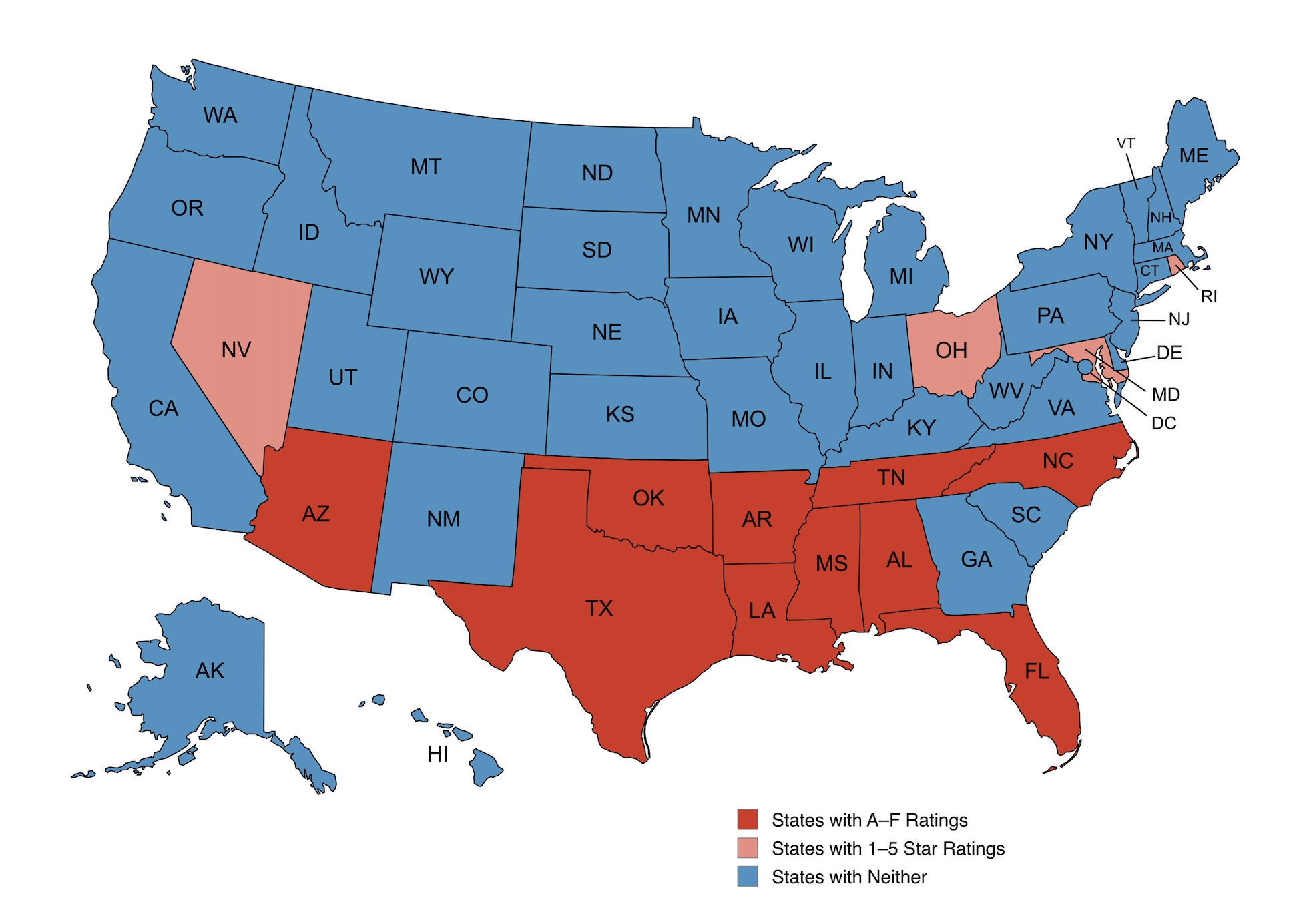
Things are already in decent shape in many red states when it comes to education reform. While the press continues to obsess over Republicans’ embrace of private school choice, including universal education savings accounts, the GOP’s reform agenda in many places is much broader and bolder. At this week’s ExcelinEd conference in Oklahoma City, (mostly) red-state governors and legislators will share ideas across a host of issues, including expanding high-quality charter schools, implementing science of reading and “third grade guarantee” laws, building high-quality CTE systems, and much else. It’s red states, not blue, that have maintained real accountability systems, with A-through-F or 5-star ratings. (See Figure 1.) The progress is palpable.

Figure 1. States that use A–F or 5-star ratings for their school accountability systems
1

That’s because in Texas, Georgia, Ohio, Tennessee, and other Republican bastions, the populist, Trump wing of the party is not in full control. Normies have a lot of say—and in most cases the governor’s mansion. Strong executive and legislative leadership is making a difference.

But what about blue states? Reformers there face the twin challenges of ascendant teachers unions and bad ideas emanating from the left. (Regarding the latter: notions like going soft on discipline, inflating grades, and abolishing gifted education “because equity.”) Both challenges make it harder than it should be to run effective schools and school systems. And both are bad for kids, especially poor kids.

But here’s where a bit of silver lining glimmers through: Voters in deep-blue states and cities appear to have had enough of poor governance and terrible results. California voters, for example, overturned a proposition that had decriminalized shoplifting items worth less than $1,000 and ousted a “progressive prosecutor” in Los Angeles. Chicago voters rejected some of the Chicago Teachers Union’s candidates in the city’s first-in-a-generation school board race. Left-leaning pundits are begging Democrats to run their big cities more effectively.

And sure enough, the largest, most diverse urban areas were the ones that swung toward Trump the hardest. Democrats will spend the next several months wondering why. Let’s hope they decide that city-dwellers are angry about performative progressivism and instead crave good government, including better schools.

—

Once upon a time, both Democrats and Republicans used education reform to signal a break from the previous, discredited, more ideologically-rigid versions of themselves. Perhaps it could happen again—the sooner the better. One must hope.


view
Welcome to Florida sign

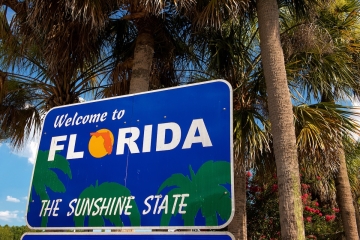
Florida, the forgotten education-reform star

Robert Pondiscio
11.14.2024
Flypaper

Around the turn of the millennium, Florida was widely regarded as a pace-setter in education reform. Led by then-Governor Jeb Bush, the Sunshine State implemented an outcomes-driven agenda focused on prioritizing literacy, holding schools accountable, and expanding school choice, among other agenda items.

The success of these reforms garnered national attention, with significant gains seen in student performance, especially for historically underserved groups. As Fordham’s Mike Petrilli pointed out a few years ago, “from the late 1990s until 2017, the reading performance of Black fourth-graders in Florida skyrocketed 26 points—equivalent to more than two grade levels worth of progress.” Similar improvements were observed for Hispanic and low-income students, with eighth-grade math scores also showing remarkable progress.

Yet there hasn’t been much talk about Florida in recent years, at least not regarding K–12 education. The spotlight has shifted to other states, particularly Mississippi, whose remarkable progress in literacy on the National Assessment of Educational Progress (NAEP) captivated the attention of reform enthusiasts. But a new paper published by AEI’s Conservative Education Reform Network (CERN), Grading Florida’s Schools: A for Achievement and Return on Investment, suggests that even as ed reform’s attention was diverted elsewhere, Florida has kept its eye on the ball and delivered good results. “Thanks to minimal shifts in party control in the nearly eighteen years since Bush left office,” authors Kathryn Perkins, Paul Powell, and Jeff Wasbes write, “there has been sustained gubernatorial involvement and a through line to policy in Florida’s education space.”

That constancy has paid handsome dividends. Florida was one of only five states where NAEP scores for fourth-grade reading did not decline during the Covid years, i.e., between 2019 and 2022. Over that same time period, the authors note, no other state matched Florida’s NAEP results in fourth-grade math among students eligible for free lunch. But perhaps most significantly, Florida ranks third nationally in fourth-grade reading performance while having the third-lowest spending per pupil. “It’s roughly $11,000-per-pupil expenditure places it in the bottom three nationally when adjusted to an equalized dollar across the fifty states,” the authors note, making Florida’s per-pupil expenditure “three times smaller than the top spender’s (New York’s) budget.” The two states whose reading results most closely mirror Florida, Wyoming, and Massachusetts, spend nearly twice as much per student as the Sunshine State. Math results are no less brag-worthy: Socioeconomically disadvantaged kids in Florida topped the nation in 2019 and 2022 NAEP, note the trio of authors, who are associated with the Florida Charter Institute.

Florida’s strong performance and bang for its education buck have been hiding in plain sight and arguably underappreciated for a while now. In his 2019 analysis, Petrilli described the state’s return on investment as “off the charts,” while noting the state “kept spending per pupil flat as a pancake, actually inching downward from $9,765 per pupil in 1990 to $9,724 in 2016 in inflation-adjusted dollars.” Five years later on it’s still true. “Many states’ education focus areas fall victim to the pendulum swing brought about by party shifts,” notes Perkins, Powell, and Wasbes, but Florida’s comparative outcomes and thrift “offers a real case study of education-engaged politicians building and sustaining a coherent legislative agenda.”

The trio shrewdly note that cohort analyses of 2022 fourth graders will be an important test of whether Florida’s results hold up as those students hit eighth and twelfth grades. But even now, they conclude, Florida's outsized growth and success in elementary grades, especially relative to its spending, “make it an important national study for serving students and maximizing taxpayer dollars.”

“In a moment when education reform has come up against new and significant hurdles,” they conclude, “Florida’s results are promising. We should be talking about them.”

view
Advanced education classroom

How schools can support equitable advanced education

Dina Brulles
11.14.2024
Flypaper

In the Fordham Institute policy report titled Think Again: Are Education Programs for High-Achievers Inherently Inequitable?, Brandon Wright outlines four claims describing arguments that opponents of advanced education programs use to advocate for their elimination. He explains then responds to those who seek to justify their opposition to advanced academic services, such as acceleration, honors courses, and grouping practices.

Educators must support all learners according to their varied educational needs. On this I believe we completely agree. In this blog, I describe practical measures that schools have taken to address these objections in ways that promote fairness to all students who need such learning opportunities to make academic progress in their schools. I demonstrate how these measures can serve our advanced learners while also preparing those who don’t yet show readiness but have the potential to benefit from advanced academic opportunities.

I begin by restating the four claims as framed by Wright, along with his responses, and then I delineate actions that schools can take that are in line with those responses.

Opponent claim 1: “Programs for advanced students don’t work, especially for marginalized students.”

Wright’s response: “False. Interventions, including acceleration and readiness grouping benefit high-achieving students from all backgrounds and don’t harm their lower- and middle-achieving peers.”

Advanced academic programs fluctuate widely based on the fidelity of implementation and support. When done well, they are highly effective and critical to students’ academic growth. They are not inherently bad for marginalized students; schools must design their systems better to become more inclusive. One approach is to recognize both students demonstrating high academic achievement and also those with high ability who may not yet be achieving at levels commensurate with their ability. We can more easily recognize students’ strengths when using local norms for identifying students who may be capable of learning at a faster pace and deeper level.

Grouping students with high ability along with high achievers for at least part of their daily instruction can help those with high potential make faster gains in their academics. With this exposure to intellectual peers, many students with high potential (not yet advanced in their learning) will likely begin achieving at higher levels than they would if isolated from their advanced peers.

Opponent Claim 2: “What’s commonly termed ‘differentiated instruction,’ i.e., grouping all readiness levels into single classrooms, works just as well as advanced programs that group some of them separately.”

Wright’s response: “False. No high-quality research shows that heterogeneous differentiation can work at scale for the full range of student readiness levels typically present in American classrooms. And several large-scale meta-analyses say it doesn’t work.”

Some schools use “differentiation” as an excuse for not having programs or processes for challenging students with advanced abilities. It is a false assumption that differentiated instruction can work by itself, without those programs or processes. It cannot due to several factors, such as the inherent inconsistency within the practice, limited support and training of the teachers, and most importantly, the wide range of achievement levels in a given class. Differentiated instruction can work well when there is a narrowed range of ability and achievement in classes and when teachers have consistent training and support in this type of instruction. It is unreasonable to expect or believe that even highly skilled teachers can adequately reach and engage all students at their challenge levels when classes have the full spectrum of learners—those achieving at levels far below average along with those at the highest end of the spectrum.

Additionally, with increasing teacher shortages, many schools have teachers who do not have specific teacher preparation, so it is hard to assume they are prepared to teach students with a wide range of abilities or achievement levels in a heterogeneous classroom.

Opponent claim 3: “School systems under-identify marginalized students due to biased practices.”

Wright’s response: “Perhaps. We can’t deny that bias can occur, but the problem is deeper—and it is up to us to intervene early.”

Bias occurs because many schools continue to use biased screening processes and teacher rating scales to decide whom to nominate for gifted testing. Bias is rarely intentional. It often stems from a lack of knowledge and familiarity with students’ true abilities. (See Claim 4 response below.) There are several solutions and approaches schools can adopt and implement to counter biased practices, beginning with understanding the difference between high ability and high achievement and planning for both groups.

View advanced thinkers and advanced achievers as part of a spectrum of learning. Group high-ability students when that ability is first recognized, ideally from universal testing in the primary grades. Treat them as gifted by grouping them together, then build on students’ strengths to prepare them for advanced academics. Develop leveled services and tiered learning opportunities to provide ongoing entry points for students to participate in advanced coursework when they demonstrate the need.

Schools and states that universally test students (thereby necessarily including grade-level groups, specific underserved demographics, etc.) can better identify all students who would benefit from specialized services.

Opponent claim 4: “Many school systems have a gatekeeping mentality, which serves to worsen segregation and inequity.”

Wright’s response: “True. And we must address it.”

Consider that only a few states require pre-certification coursework in gifted education as part of their teacher preparation programs. This means, among other things, that they don’t have the skills to recognize advanced skills, strengths, or potential in many of their students—especially those with whom teachers don’t share cultural backgrounds. This lack of congruity adds to schools missing identifying students of diversity for advanced coursework. One solution is to provide professional learning opportunities for teachers and school administrators in understanding learning characteristics of a broad range of gifted and talented learners, with specific attention to the school’s demographics.

Part of the problem is how schools and/or states label those students who need advanced academics, i.e., gifted, gifted and talented, highly capable, advanced academics, honors, accelerated learning, and more. These distinctions often influence the design of instructional services. So when the school’s terminology does not recognize a child with high potential, they may be overlooked. For example, if a school uses the term “advanced academics,” will it be looking to identify those with high potential? Once again, being broader in our scope will make the services more inclusive.

Wright summarizes his three top recommendations:

  1. Expand and augment school programs for higher achievers.
  2. Screen all students for advanced program eligibility using local norms.
  3. States should mandate that districts offer fully developed advanced programs and regularly audit districts for compliance.

Schools can embed effective and equitable grouping practices into existing school structures by developing systemwide processes for screening all students, grouping using local norms, and requiring ongoing, formative assessment to monitor achievement and readiness. This process also requires providing ongoing professional learning to all teachers in areas such as flexible grouping practices, acceleration, and differentiated instruction. And finally, when state mandates require schools to develop advanced programs, a measure of accountability is missing in most states.

view
Teenagers raising hands in a classroom

The longer-term impacts of early-college high schools

Jeff Murray
11.14.2024
Flypaper

Early-college high schools are those that fully incorporate college course-taking into the curriculum. They are not to be confused with a more-typical “dual enrollment” model, which allows students the opportunity to take college courses if they have time. Early college schools bake in college attendance (and almost always in person in university lecture halls and science labs) as part of the four-year high school experience. In general, they do this by accelerating traditional high school coursework to allow students as much time as possible to attend postsecondary classes—and hopefully earn transferrable credits—before graduation. The model is new enough to still be the subject of pilot-program-style research but old enough to have a significant amount of longitudinal data informing that research. A new report from the American Educational Research Association journal, examining the early-college model’s impact on college degree attainment, illustrates the point.

This report is the second follow-up on students who first entered high school almost twenty years ago. My colleague Aaron Churchill reviewed the first published research in 2013, and some of the same analysts led this successor study. The sample for the original early-college impact study consisted of students who participated in admission lotteries offered by a set of ten early-college schools in five states (North Carolina, South Carolina, Texas, Utah, and Ohio) and who entered ninth grade between 2005 and 2007. Treatment group students were those who applied for a school’s ninth-grade lottery and were offered a spot in one of the schools (n= 1,028); control group students were those who applied but were not offered a spot (n=1,360).

The original study, using an intent-to-treat model, was published in 2013 and found higher rates of high school graduation—and college enrollment within two years of graduation—among students admitted to an early-college school. The first follow-up study, using the same methodology and published in 2021, found that early-college admittees had significantly higher rates of associate degree completion (29.3 percent vs. 11.1 percent) and bachelor’s degree attainment (30.1 percent vs. 24.9 percent) than their non-admitted peers within six years of expected high school graduation.

And now the newest study follows up again with the same students ten years after graduation. It uses the same methodology as before but excludes fifty-seven of the original subjects due to a change in data access from one state’s department of education. The impact of early college school admittance on postsecondary degree completion was still statistically significant over the longer term, though it was greatly decreased. Treatment group students were 8.5 percentage points more likely to have earned a postsecondary degree by year ten than control group students. The results for associate degree completion were roughly similar to the overall results. The impacts of early-college admission on bachelor’s degree completion, however, were no longer significantly different between the two groups after year four. For master’s degree completion, the statistical difference ended after year six. Impacts on Black and Hispanic students in the treatment group were higher across the board than for their White and Asian counterparts. Interestingly, the strongest impacts on associate degree completion were among the highest-achieving middle school students (as determined by eighth grade test scores), indicating that the most-prepared students in early-college schools were able to fully or nearly complete their associate degrees before leaving high school. The bottom line: Early-college students attained degrees at a higher rate and faster pace than control students for nearly a decade after graduation.

This would appear to be the end of the road for this particular line of research regarding degree attainment, although it might be instructive to try and replicate the effort with more-recent cohorts of students. In the nearly two decades since the students in this study entered high school, the early college movement has expanded to more schools, new models, and other states. It’s time to move the impact research on to those new pastures. However, there is likely still data to be mined from these original subjects in terms of career pathways and earnings trajectories.

SOURCE: Mengli Song et al., “Accelerated Postsecondary Pathways: The Longer-Term Impact of the Early College High School Model on Postsecondary Degree Attainment,” American Educational Research Association (September 2024).

view

#946: Is there hope for education reform after the election? with Dale Chu

11.13.2024
Podcast
 

On this week’s Education Gadfly Show podcast, Dale Chu, a senior visiting fellow at the Fordham Institute, joins Mike and David to discuss how the election results could impact education and whether there’s reason for optimism. Then, on the Research Minute, Amber shares a study examining how geographic access to public colleges affects enrollment decisions across different races and socioeconomic groups.

Recommended content:

  • Michael J. Petrilli, “A silver lining for blue state education reform?,” Thomas B. Fordham Institute (November 14, 2024).
  • Matt Barnum, “Trump Gears Up for Assault on Wokeness With Education Overhaul,” The Wall Street Journal (November 11, 2024).
  • Alia Wong, “A push for school choice fell short in Trump’s first term. He may now have a more willing Congress,” Associated Press (November 8, 2024).
  • Tim Daly, “We’re living through an education depression,” Thomas B. Fordham Institute (November 1, 2024).
  • Riley Acton, Kalena E. Cortes, and Camila Morales, Distance to Opportunity: Higher Education Deserts and College Enrollment Choices, Annenberg Institute (2024).

Feedback Welcome: Have ideas for improving our podcast? Send them to Stephanie Distler at [email protected].

view
Fordham Gadfly image

Cheers and Jeers: November 14, 2024

The Education Gadfly
11.14.2024
Flypaper

Cheers

  • Chicago voters rejected Mayor Brandon Johnson’s education agenda, electing only four of the ten school board candidates endorsed by the city’s teacher union. —Chicago Tribune
  • Former charter school teacher Matt Meyer will serve as Delaware’s next governor and oversee the state’s reform of its Jim Crow-era school funding system. —The 74
  • Oakland Unified School District is once again gearing up to shutter schools, but this time, activists like Azlinah Tambu understand why these closures are in students’ best interest. —San Francisco Chronicle
  • L.A. Unified School District has scrapped its new relaxed admissions requirements for two of its most rigorous advanced programs after a rushed implementation and negative feedback from the community. —LA Times

Jeers

  • After 30 years of gains in education, Massachusetts has voted to eliminate the MCAS graduation requirement, reflecting a broader shift in education policy away from accountability and toward less rigorous standards. —Frederick M. Hess, American Enterprise Institute
  • Financial crises are plaguing large urban school districts at the expense of young learners. —Marguerite Roza and Maggie Cicco, The 74
  • States including Oklahoma and Wisconsin are making it easier for students to pass annual math and English assessments following a decade of declining test scores nationwide. —RealClearInvestigations
view
Fordham Gadfly image

What we're reading this week: November 14, 2024

The Education Gadfly
11.14.2024
Flypaper
  • Betsy DeVos expresses interest in returning to the secretary of education role while discussing the president-elect’s plans for education in his second term. —Education Week
  • Eleven newly elected governors have big plans for education in their states, with a focus on key issues including school funding, teacher retention, early literacy, math proficiency, career readiness, and school choice. —ExcelinEd
  • In an open letter to Donald Trump’s Efficiency Czar Elon Musk, Francis Fukuyama offers some advice that’s quite relevant to improving the U.S. Department of Education. —Francis Fukuyama, Persuasion
  • The 2024 election revealed growing frustration with the Democratic Party and highlighted the significance of issues like school choice, accountability, and transgender policies in influencing voter behavior.—Andrew J. Rotherham, Eduwonk
Fordham Logo

© 2026 The Thomas B. Fordham Institute
Privacy Policy
Usage Agreement

National

P.O. Box 110
Burke, VA 22009

202.223.5452

[email protected]

Ohio

P.O. Box 82291
Columbus, OH 43202

614.223.1580

[email protected]

Sponsorship

130 West Second Street, Suite 410
Dayton, Ohio 45402

937.227.3368

[email protected]