Mobile Navigation

  • National
    • Policy
      • High Expectations
      • Quality Choices
      • Personalized Pathways
    • Research
    • Commentary
      • Gadfly Newsletter
      • Flypaper Blog
    • Events
    • Scholars Program
  • Ohio
    • Policy
      • Priorities
      • Media & Testimony
    • Research
    • Commentary
      • Ohio Education Gadfly Biweekly
      • Ohio Gadfly Daily
  • Charter Authorizing
    • Application
    • Sponsored Schools
    • Resources
  • About
    • Mission
    • Board
    • Staff
    • Career
Home
Home
Advancing Educational Excellence

Main Navigation

  • National
  • Ohio
  • Charter Authorizing
  • About

National Menu

  • Topics
    • Accountability & Testing
    • Advanced Education
    • Career & Technical Education
    • Charter Schools
    • Curriculum & Instruction
    • ESSA
    • Evidence-Based Learning
    • Facilities
    • Governance
    • Personalized Learning
    • Private School Choice
    • School Finance
    • Standards
    • Teachers & School Leaders
    • Think Again
  • Research
  • Commentary
    • Gadfly Newsletter
    • Flypaper Blog
    • Gadfly Podcast
  • Events
  • Scholars Program

The Education Gadfly Weekly

Sign Up to Receive Fordham Updates

We'll send you quality research, commentary, analysis, and news on the education issues you care about.
Thank you for signing up!
Please check your email to confirm the subscription.

The Education Gadfly Weekly: School choice supporters keep moving the goal posts

Volume 26, Number 5
2.5.2026
2.5.2026

The Education Gadfly Weekly: School choice supporters keep moving the goal posts

Volume 26, Number 5
view
Football goalposts
Quality Choices

School choice supporters keep moving the goal posts

Over the past decade or so, as the education reform movement has increasingly splintered along partisan lines, the number of people who support both charter schools and private school choice has shrunk to almost nothing. One cause of the growing divide is that some private school choice advocates are making demands that are increasingly outlandish.

Michael J. Petrilli 2.5.2026
NationalFlypaper

School choice supporters keep moving the goal posts

Michael J. Petrilli
2.5.2026
Flypaper

Will Mississippi muddy the waters on testing and accountability?

Dale Chu
2.5.2026
Flypaper

Why Texas is right to name the books students should read

Robert Pondiscio
2.5.2026
Flypaper

Should states cover AP exam costs for all students?

Meredith Coffey, Ph.D.
2.5.2026
Flypaper

Pandemic learning loss by grade

Alicia Anderson
2.5.2026
Flypaper

Success stories shouldn’t be a secret | Episode 1004 of The Education Gadfly Show

2.4.2026
Podcast
view
Mississippi river bridge

Will Mississippi muddy the waters on testing and accountability?

Dale Chu 2.5.2026
Flypaper
view
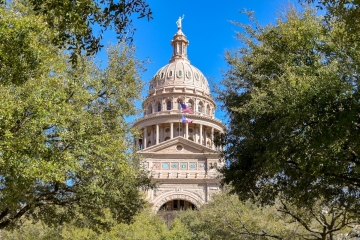
Texas Capitol

Why Texas is right to name the books students should read

Robert Pondiscio 2.5.2026
Flypaper
view
Student taking a test

Should states cover AP exam costs for all students?

Meredith Coffey, Ph.D. 2.5.2026
Flypaper
view
Chalkboard line graph

Pandemic learning loss by grade

Alicia Anderson 2.5.2026
Flypaper
view
Karin Chenoweth

Success stories shouldn’t be a secret | Episode 1004 of The Education Gadfly Show

Karin Chenoweth, Michael J. Petrilli, Amber M. Northern, Ph.D., David Griffith, Ph.D. 2.4.2026
Podcast
view
Football goalposts

School choice supporters keep moving the goal posts

Michael J. Petrilli
2.5.2026
Flypaper

Over the past decade or so, as the education reform movement has increasingly splintered along partisan lines, the number of people who support both charter schools and private school choice has shrunk to almost nothing. I think there might be a dozen of us left. (Wait, Jorge Elorza makes thirteen.) One cause of the growing divide, I believe, is that private school choice advocates are making demands that are increasingly outlandish.

It’s not just the push for universal access or for education savings accounts, though that’s part of it. As Nicole Stelle Garnett acknowledges in City Journal, these are big shifts from where the school choice movement started out three decades ago.

As a young attorney, in the mid-1990s, I helped defend the constitutionality of the nation’s first modern voucher programs. Back then, we were fighting to preserve two programs that served a few thousand kids in Milwaukee and Cleveland. Both were means-tested, limited to the poorest students, and animated by what Howard Fuller called the “rescue mission” justification for parental choice in education—that is, the imperative of empowering disadvantaged kids to exit failing public schools—rather than by what he deemed “a fight for broad societal change.”

Nicole still embraces the rescue mission as a “moral imperative,” even as she’s now excited about a more expansive approach, but it seems to me that said mission has dropped to a bottom-tier priority for many in the choice movement.

Consider the policy wish list of the main school choice organizations today. Not only do they want to give parents, including affluent ones, debit cards loaded with taxpayer dollars to be spent on all manner of products and services—they also want private schools to get public funding and still be able to:

✓ Cherry pick their students

✓ Exclude students from religious faiths other than their own

✓ Exclude gay students or students with gay parents

✓ Exclude students with disabilities

✓ Exclude English learners

✓ Charge tuition above whatever public subsidies they receive, potentially excluding poor and working-class families

✓ Refuse to report test scores for participating students (as in Arizona), or refuse to take the state tests (as in all other school choice states save for Indiana and Wisconsin)

That a lot of demands. And note that not a single one applies to charter schools. This is a big reason why center-left folks like Chad Aldeman strongly prefer the charter model:

Some people argue that private school students shouldn’t have to take state tests. After all, private schools don’t have to follow state standards or regulations in other ways, and they face accountability through parental choice.

But policymakers should be clear about the trade-offs they’re making. The research literature from recent large-scale voucher programs finds negative effects on achievement scores, even while showing more positive impacts on longer-term outcomes like attainment.

Would you accept that deal? Public investment, lower math scores?

I wouldn’t. I would want to know how my investments are working. Most states can’t do that right now. But if states aren’t collecting achievement data, all they have to judge their private school choice programs by is enrollment growth. And if that’s the only metric that matters, then sure, everything looks like sunshine and rainbows.

Yet the private school choice folks are asking for even more. Because now Marty Lueken has declared that funding parity is “the next frontier for school choice”:

Over the past decade, choice policies have expanded rapidly. More families than ever can choose schools outside their assigned district. But while access has grown, funding systems have largely stayed the same. And those systems quietly signal that some students are worth less than others.

Furthermore:

In most states with private school choice programs, students who use those programs receive substantially less funding per pupil (around two-thirds less on average) compared to what their residentially assigned public schools receive in total funding from all sources.

To be clear, I support private school choice, and I like the idea of money following the child. I certainly agree that it’s well and proper to debate the appropriate level of funding for private school choice programs. Even Charlie Barone—who opposes vouchers and the like—admits that private school choice is underfunded:

Tennessee’s newly enacted Education Freedom Act provides families with about $7,300 per student through its universal ESA program. Texas offers about $10,800 annually. Florida’s Family Empowerment Scholarship delivers approximately $8,000 as does Iowa’s Students First program. These figures sound substantial until confronted with an inconvenient truth: the national average private school tuition for 2025-26 stands at approximately $15,000 per year.

This gap, between $5,000 and $8,000 annually per child, fundamentally undermines both the abundance and affordability narratives.

Back to Marty’s argument: Is it unfair that private schools receive two-thirds of what public schools get? Well, in part it depends on the kinds of kids that private schools are serving. Marty laudably supports sending extra dollars to schools with more kids with greater needs; it’s a fact that private schools tend to serve fewer such children—in part because they are allowed to exclude them. So it’s possible that student composition explains much of the funding gap. (That’s not true for charter schools, which generally serve similar students as traditional public schools do, but still aren’t close to funding parity.)

But what if a sizable public/private funding gap remains, even after adjusting for pupil composition? Do we really think that private schools deserve parity with traditional public schools and charter schools, given private schools’ ability to exclude students and their unwillingness to be held accountable for academic results? Life is full of trade-offs, and if private schools want to protect their admissions policies and lack of public accountability, they should accept fewer public dollars in return.

I would also be happy for states to provide incentives such that private schools to receive more public funding if they agree to accept all comers and/or participate in state accountability systems. I bet a bunch of urban Catholic schools would take that deal.

That would be a great way to re-prioritize the “rescue mission” that Dr. Fuller advocated, with a particular focus on getting poor and working-class kids into Catholic schools and other high-quality institutions with a history of boosting upward mobility.

view
Mississippi river bridge

Will Mississippi muddy the waters on testing and accountability?

Dale Chu
2.5.2026
Flypaper

Mississippi has earned well-deserved plaudits for its outsized literacy gains in recent years, ranking first in the nation in fourth grade reading and near the top in eighth grade, when adjusted for poverty and demographics. Its advances reflect a commitment to the science of reading and strong accountability systems—delivered at a fraction of the cost of many states. But school choice is confined to just ten charter schools and a handful of targeted private programs. That paradox—strong results alongside sparse alternatives—lands at a moment when private school choice is ascendant, even as accountability struggles to keep pace, illustrating the widening view among Republicans today that choice alone drives improvement.

Into this mix comes House Bill 2, a 446-page omnibus measure that narrowly passed Mississippi’s House before stalling in the Senate. Much of the attention has focused on its expansive school choice provisions, but also buried within are directives with far-reaching implications for accountability. The bill instructs the state department of education to seek a federal waiver that would eliminate statewide assessments in grades 3–8 while consolidating multiple federal funding streams into a single block grant. U.S. education secretary Linda McMahon’s team already forced Iowa to walk back a similarly ambitious attempt to merge funds, suggesting that Mississippi’s block grant ambitions would face steep federal headwinds—leaving the push to escape annual assessments as the bill’s more salient feature.

On the surface, that provision may seem harmless and largely symbolic, since federal approval is required—and unlikely. But it puts some state leaders on record as wanting to weaken key elements of what made Mississippi’s literacy gains possible. State assessments aren’t just bureaucratic checkboxes. They provide critical data on student progress and anchor the state’s A–F accountability system. Bypassing those exams risks eroding transparency, leaving policymakers and parents with less actionable information, and signaling that results-driven accountability is optional rather than central. In a state that has seen sustained success without broad-based choice, the push to expand parental options while trimming oversight makes clear that freedom is asserting itself over evidence in education policy and politics.

It’s no secret that today’s private school choice advocates argue that parental satisfaction is the best proxy for accountability. Many private school leaders reject state testing outright, seeing it as incompatible with the flexibility and distinctiveness that define private education—a stance that underscores both the promise and trade-offs of choice. Evidence from some private choice programs suggests that, while students may fall behind on standardized exams, they can still benefit in ways that matter for long-term outcomes like college attendance and completion.

On the other hand, test-based accountability during the Bush-Obama era underpinned a period of steady gains, particularly in math, even if it brought its own set of challenges. Part of what made this approach effective was the comparability of data across schools and districts. Without standardized testing, it is far more difficult for parents to evaluate schools across sectors. This is why, while I was in Indiana, we set a high bar for quality assurance by holding all schools receiving public dollars accountable to the same yardstick. Test scores are not the end all and be all, but they provide a consistent, objective measure that allows parents, policymakers, and educators to evaluate schools and track progress over time.

The drive for unfettered choice in Mississippi carries broader implications, too. If private schools funded with public dollars are ultimately held accountable only to the families who choose them, it becomes difficult to justify expecting a fundamentally different standard for public schools—which are, increasingly, schools of choice themselves. This logic is already emerging in other states. In Texas, lawmakers recently flirted with proposals to weaken statewide assessments even as they expanded choice options, reflecting the argument that public accountability should bend in step with private autonomy. And in Idaho, state leaders are signaling a desire to scale back state testing in favor of alternate measures that are less tightly aligned to state standards, citing flexibility and easing compliance burdens on districts and schools.

Magnolia State lawmakers may not realize the consequences of directing the state education agency to seek a testing waiver. They may see state assessments as an obstacle to private school operators or a barrier to expanding choice, but in pursuing what seems like a simple solution, they risk weakening the very system that has underwritten Mississippi’s recent gains. Without statewide assessments, the state’s A–F grades might technically remain in place, but they would convey far less reliable information about student achievement.

With the legislative session still underway in Jackson, Mississippi’s senate education chair has raised concerns about the bill arising from the state’s Blaine Amendment and the measure’s cost, as well as its lack of accountability. The state senate has also been reluctant to expand charter schools, citing weak performance in existing charters. Taken together, they underscore the tension between expanding choice and preserving accountability: The House risks weakening the system that drives student success, while the Senate, though defending accountability, may be overly cautious in expanding options.

Mississippi is trying to find a sweet spot between test-based accountability and accountability entrusted to the parental marketplace. There’s surely room to expand parent power, but more options won’t help if families don’t have reliable information on school quality. Put simply, allowing parental choice to replace systematic assessment erodes the very data that enables comparisons, weakens incentives for schools of all types to focus on measurable outcomes, and risks widening information gaps that already disadvantage historically underserved populations. Choice is a means, not the end.

view
Texas Capitol

Why Texas is right to name the books students should read

Robert Pondiscio
2.5.2026
Flypaper

Texas is once again at the center of a familiar but unresolved debate about literacy, culture, and the proper role of schools. A proposed statewide list of books, plays, poems, and other literary works that all students would be expected to read has prompted criticism—and, in some quarters, predictable alarm.

The draft list, released by the Texas Education Agency pursuant to recent legislation, is now before the State Board of Education, which is expected to debate, amend, and vote on it in the coming months. It proposes roughly 15 to 30 works per grade—far more than many expected—including novels, plays, poems, and shorter historical texts such as presidential speeches and founding documents. That scope came as a surprise, since the State Board of Education had asked the agency only to identify “at least one literary work” per grade. The selections lean heavily on classic literature and are organized into optional groupings, pairing anchor texts—often full books—with shorter literary and historical works to build knowledge and context.

In an interview last week, Texas education commissioner Mike Morath reminded me that the Texas Constitution charges the state with promoting “a general diffusion of knowledge.” It is a striking phrase—at once modest and demanding. The framers did not speak of skills, competencies, or dispositions. They spoke of knowledge and of the need for it to be broadly shared.

In this respect, those 19th-century statesmen turned out to be fair—if accidental—cognitive scientists. Long before anyone spoke of background knowledge, schema, or cognitive load, they hit upon a foundational truth about literacy: Language proficiency depends on access to a common stock of knowledge that writers assume and readers recognize. Comprehension is not a content-neutral “skill” that can be reduced to decoding symbols on a page and finding the main idea. It’s a sense-making process that rests to an extraordinary degree on references, idioms, allusions, and stories that are common and broadly shared among the literate.

That insight helps explain why Texas, alone among states, has taken the unusual step of proposing a specific, statewide list of literary works—books, plays, poems, speeches, and stories that all students would be expected to encounter over the course of K–12 schooling. The list is not an attempt to freeze culture in place or settle arguments about the canon once and for all. It’s honest about what literacy actually requires: not exposure to print in the abstract, but familiarity with the texts and traditions that enrich, inform, and structure the English language.

An essay on my Substack by my AEI colleague Annika Hernandez anticipates—and answers—many of the objections now being leveled against the Texas list. As she observes, “Many educators have forgotten that, no less than history and science, English class exists to deliver a body of knowledge: specifically, knowledge of the literary canon” [emphasis mine].

Of course, for some the word canon itself is a provocation. Hernandez’s point—and Texas’s—is not about canon-making as an exercise in reverence or exclusion. It can be understood as curation. These are the works literate speakers and writers know, draw upon, and assume their listeners and readers know, too. To decline to teach them is not an act of humility or inclusion; it is to deny students access to the shared references and background knowledge that make language intelligible in the first place. Hernandez puts it well: “An educated person is expected to know what ‘to be or not to be’ means and where it comes from. We might think that’s unfair, but we cannot wish it away.”

The current controversy over Texas’s reading list reprises the arguments over its 2024 Bluebonnet curriculum. Then as now, critics objected, most particularly, to the inclusion of biblical stories, which the state planned to teach explicitly as literature and cultural source material. The charge was that the curriculum was “Bible-infused,” as if this were an evangelization attempt rather than a linguistic reality. Of course it’s “Bible-infused,” I argued at the time. So is English. Our language is saturated with biblical idioms and references (as well as references to Greek and Roman myths, Shakespeare, and classic literature) not because anyone decreed or imposed it, but because centuries of common usage made it so.

This is the point that is too often missed in debates like these. Language is not a moral project. It doesn’t bend to our will and it cares not one bit for our politics. We don’t get to vote on which allusions, idioms, metaphors, or background knowledge gain traction. Usage decides. Unconsciously, writers assume what readers know, not what curriculum designers wish they knew. Schools can pretend otherwise, but students—particularly low-income and minority students—pay the price when they encounter texts that assume knowledge they were never taught because it made someone in a position of power uncomfortable—or worse, because they thought they were helping, honoring, or elevating them by demanding “representation.”

This goes a long way to explain why Texas, at the moment, is more clear-eyed about language proficiency than any other state. Rather than treating literacy as a collection of transferable skills, Texas has begun to treat it as what it actually is: a knowledge-dependent capacity that grows through sustained exposure to shared content. That clarity has led the state to make choices—naming texts, sequencing knowledge, and insisting that some things be commonly taught—that inevitably run afoul of long-standing education homilies from both the left and the right about local control, personalization, child-centered pedagogy, and content neutrality.

The backlash is predictable. A curriculum that names what students should know will always be criticized for what it leaves out. But refusing to name content is not a neutral act. It simply shifts the burden of acquiring cultural and linguistic knowledge away from schools and onto families—rewarding those who can supply it at home and penalizing those who cannot.

In the final analysis, then, the debate over Texas’s reading list is not about religion or ideology. It is about whether schools are willing to acknowledge an uncomfortable truth: literacy requires shared knowledge, and shared knowledge requires choices. Those choices will never satisfy everyone. But refusing to make them carries a cost and, frankly, an inequitable one—borne disproportionately by students who depend on schools to provide what others acquire by chance.

If the state is serious about its constitutional duty to diffuse knowledge broadly, it must be willing to say what that knowledge is—and to ensure that students who don’t get it at home still get it somewhere.

The question is not whether Texas’s list is perfect. It is whether it is better than the alternative.

And the alternative—a curriculum that names no texts, assumes no common ground, and leaves cultural literacy to chance—has already failed too many students to recommend itself again.

view
Student taking a test

Should states cover AP exam costs for all students?

Meredith Coffey, Ph.D.
2.5.2026
Flypaper

When high schoolers pass Advanced Placement (AP) exams, they can earn college credits, making them more likely to complete college within four years and likely increasing their earnings in adulthood. Fees of $99 per exam, however, deter many students from participating. In response, both the College Board and the federal government partially subsidize fees for low-income students, and states have increasingly moved to do likewise. Evaluating the efficacy of one variation on such policies, researchers from Johns Hopkins University and George State University recently published a study examining the effects of North Carolina’s AP exam fee waiver, which covers costs for all Tarheel students taking these exams.

Drawing data from the North Carolina Education Research Data Center and the College Board, the authors used a sample of 556,514 student-AP course enrollments between 2010–11 and 2016–17. Using a quasi-experimental design called difference-in-differences, they contrasted outcomes—AP exam participation and pass rates—between the periods immediately prior to and immediately following the 2014–15 implementation of universal AP fee coverage. The researchers controlled for factors including student demographics, prior academic achievement, grade level, and subject. Districts that received a bundle of additional AP-related services during this period (such as specialized teacher training) were excluded from the study.

Among the overall population, universal fee waivers increased AP exam participation without significantly affecting the likelihood of a student earning a passing score. This suggests that the new waiver recipients were just as qualified as those previously taking the exam (if they were underqualified, presumably the pass rate would have dropped). Also encouraging: Among low-SES students, the fee waivers led to a statistically significant 3.3 percentage point increase in exam pass rates compared to otherwise similar high-SES peers.

The policy’s impact on exam pass rates varied by subject. For the AP exams that students were previously least likely to take, the waivers prompted not only greater exam participation, but also a 6 percent average increase in pass rates. Among the previously “underutilized” subjects with the biggest pass rate gains were macroeconomics and Spanish literature, both widely accepted options for college credit.

Then, to calculate the return on investment (ROI) for these waivers, the researchers divided the predicted gain in lifetime earnings from taking the exam (i.e., how much more will a student likely earn if they take the exam?) by its net cost to the state. For each state dollar spent, a waiver targeting only low-SES students would deliver $2.11 in benefits to each of those AP course enrollees, and a universal waiver would deliver $2.64 to each AP course enrollee.

Ultimately, the study’s authors advocate a universal waiver policy. They base this recommendation on the higher ROI for the universal waiver, along with concern that a narrower policy might rely on “coarsely-defined” categories, such as low-income districts or low-participation AP exams, and would therefore miss many students who would otherwise benefit.

Still, skeptics might wonder whether states would nonetheless be better served by targeting waivers toward economically disadvantaged populations. When it comes to ROI, for example, is it really a worthy use of taxpayer dollars to boost the lifetime earnings of students who aren’t low-SES? And while it’s true that a poorly targeted policy would miss many students, most states with AP waiver policies seem to target individual students effectively, relying on free and reduced-price lunch eligibility, USDA low-income thresholds, residence in federally subsidized public housing, and similar designations.

Whether states want to invest in waivers for all their students remains an open question, and one that leaders will need to grapple with—including in North Carolina itself, where legislators have recently proposed such a revision to their current policy. But what’s clear from the findings is that fee waivers give low-SES students greater opportunity to prove what they’ve learned: With waivers, they not only take AP exams at higher rates, but they also pass them at higher rates compared to their more advantaged peers. That’s validation for the 19 states (and the District of Columbia) that already fully cover AP exam fees for low-SES public school students, and it should be a nudge to the other 31.

SOURCE: Md Twfiqur Rahman and M. Cade Lawson, “Removing Barriers to College Credits: Where and for Whom AP Exam Fee Waivers Work,” Annenberg Institute at Brown University (November 2025).

view
Chalkboard line graph

Pandemic learning loss by grade

Alicia Anderson
2.5.2026
Flypaper

A steady stream of recent research has reported on the pandemic’s disparate effects on education. Unsurprisingly, lost learning time hurt children, particularly those who needed the most support. A December 2025 Brookings study by Lauren Bauer and Eileen Powell is among the first to look specifically at the learning impacts based on grade level at the time of the disruption. Their results may come as a surprise.

When schools shut down in spring 2020, older students presumably had greater reading fluency and technology skills compared to younger cohorts. In theory, this might make them better prepared to continue learning during the disruption. A teacher might check in on Zoom, then send the kids over to Khan Academy for a math video, then on to IXL for practice problems. It’s easier to prescribe this computer-based work to a 12-year-old than to a kindergartener who can’t read and is trying independently to navigate a digital learning platform.

The researchers track student cohorts based on 2019–20 grade level, following their proficiency rates on state standardized tests. For example, fourth graders in 2019–20 are followed as fifth, sixth, seventh, and eighth graders. Their proficiency rates are compared to pre-pandemic cohorts at the same point in their education. Students in fourth through seventh grade as of spring 2020 have both pre- and post-pandemic data to compare against the pre-pandemic cohorts. Younger students have only post-pandemic data, which are compared to the pre-pandemic benchmarks. The authors focus on proficiency data through eighth grade in 28 states selected due to their consistent standardized tests from 2015–16 to 2024–25.

The results reveal a clear pattern: Older students have struggled more to recover from learning loss, especially in math.

When testing resumed in the spring of 2021, all cohorts showed big drops. In math, proficiency was about 9 percentage points below pre-pandemic levels. In the following years, results diverged: The older the student in 2019–20, the more persistent the learning loss. By 2025, the youngest kids—in preschool through second grade in 2019–20—were at or close to pre-pandemic proficiency levels. Pandemic third graders showed similar initial gaps in their first round of standardized testing (grade 4, 2021) but rebounded to match the pre-pandemic cohorts by eighth grade.

Meanwhile, the older elementary and middle school students never fully caught up. Pandemic fourth graders tested above the pre-pandemic average proficiency rates in 2019 (52 percent) but dropped to 36 percent in fifth grade, remaining below pre-pandemic cohorts as eighth graders. Differences in English proficiency rates are not as extreme as in math, narrowing between cohorts by the end of middle school but still below the pre-pandemic average for the pandemic fourth through seventh graders.

Younger students had more time between the initial disruption and eighth grade testing, perhaps explaining the divergent results. This explanation, however, does not change the fact that pandemic fourth through seventh graders finished middle school with lower proficiency rates than their pre-pandemic peers.

The data support what a lot of teachers already know: Those pandemic fourth graders are now high school sophomores, and many are missing critical foundational skills, especially in math. National data confirm the trend observed in the Brookings study of statewide tests—this cohort scored 8 points below 2019 levels on the 2024 NAEP in eighth grade math. The pattern also matches observations from university professors like those at UCSD, who say many college students lack middle school-level math skills. Coupled with the elimination of standardized testing for admissions, universities should expect at least a few more years of remedial courses.

The better news? Students who were younger during the pandemic seem to be making up for the lost learning time. But for high schools, the message for teachers is clear: Don’t assume students learned the basics, and be prepared to look back several years to fill in the gaps.

SOURCE: Lauren Bauer and Eileen Powell, "Learning Curves: Post-COVID Learning Trajectories Differ by the Grade a Student Was in When the Pandemic Hit," Brookings, December 8, 2025.

view
Karin Chenoweth

Success stories shouldn’t be a secret | Episode 1004 of The Education Gadfly Show

2.4.2026
Podcast
 

This week on The Education Gadfly Show, we’re joined by Karin Chenoweth, founder of Democracy and Education and author of Schools that Succeed, to talk about what she’s learned from years of visiting successful classrooms, schools, and districts across the country. We explore a deceptively simple question: Why don’t educators, policymakers, and researchers spend more time studying success?

Then, on the Research Minute, Amber Northern highlights new evidence from New York City showing that small public high schools significantly boost graduation rates and college enrollment, especially for disadvantaged students.

Recommended content:

  • Schools that Succeed —Karin Chenoweth
  • Learning from greatness: The conversation continues —Holly Korbey, The Bell Ringer
  • Best practices are the worst —Jay P. Greene, Education Next
  • Effects of New York City’s small schools of choice on postsecondary degree attainment and employment —Rebecca Unterman and Miki Shih, MDRC (2026)

Feedback Welcome: Have ideas for improving our show in 2026? We would love to hear them. Send them to [email protected]

Fordham Logo

© 2026 The Thomas B. Fordham Institute
Privacy Policy
Usage Agreement

National

P.O. Box 110
Burke, VA 22009

202.223.5452

[email protected]

Ohio

P.O. Box 82291
Columbus, OH 43202

614.223.1580

[email protected]

Sponsorship

130 West Second Street, Suite 410
Dayton, Ohio 45402

937.227.3368

[email protected]