Mobile Navigation

  • National
    • Policy
      • High Expectations
      • Quality Choices
      • Personalized Pathways
    • Research
    • Commentary
      • Gadfly Newsletter
      • Flypaper Blog
    • Events
    • Scholars Program
  • Ohio
    • Policy
      • Priorities
      • Media & Testimony
    • Research
    • Commentary
      • Ohio Education Gadfly Biweekly
      • Ohio Gadfly Daily
  • Charter Authorizing
    • Application
    • Sponsored Schools
    • Resources
  • About
    • Mission
    • Board
    • Staff
    • Career
Home
Home
Advancing Educational Excellence

Main Navigation

  • National
  • Ohio
  • Charter Authorizing
  • About

National Menu

  • Topics
    • Accountability & Testing
    • Advanced Education
    • Career & Technical Education
    • Charter Schools
    • Curriculum & Instruction
    • ESSA
    • Evidence-Based Learning
    • Facilities
    • Governance
    • Personalized Learning
    • Private School Choice
    • School Finance
    • Standards
    • Teachers & School Leaders
    • Think Again
  • Research
  • Commentary
    • Gadfly Newsletter
    • Flypaper Blog
    • Gadfly Podcast
  • Events
  • Scholars Program

The Education Gadfly Weekly

Sign Up to Receive Fordham Updates

We'll send you quality research, commentary, analysis, and news on the education issues you care about.
Thank you for signing up!
Please check your email to confirm the subscription.

The Education Gadfly Weekly: No one actually likes high expectations

Volume 25, Number 27
7.10.2025
7.10.2025

The Education Gadfly Weekly: No one actually likes high expectations

Volume 25, Number 27
view
Paper with red ink
High Expectations

No one actually likes high expectations

Rigorous education is far less popular on the ground than many policy wonks believe. Of course, everyone pays lip service to high academic and behavioral expectations in general. But when it comes to the particulars, many people—parents, teachers, and administrators alike, most kids, too—bristle at what rigorous education means in practice.

Daniel Buck 7.10.2025
NationalFlypaper

No one actually likes high expectations

Daniel Buck
7.10.2025
Flypaper

Seizing educational dynamism

Stéphane Lavertu | Tim Rosenberger
7.10.2025
Flypaper

Close bad schools and expand good ones

Chad Aldeman
7.10.2025
Flypaper

Analyzing homeschooling demographics and families’ definitions of student success

Jeff Murray
7.8.2025
Ohio Gadfly Daily

Attend and achieve: Can high-impact tutoring boost student attendance?

Robert Chung
7.10.2025
Flypaper

#976: A new hub for smarter education policy, with Doug Harris

7.9.2025
Podcast
view
Feet with arrows in different directions

Seizing educational dynamism

Stéphane Lavertu, Tim Rosenberger 7.10.2025
Flypaper
view
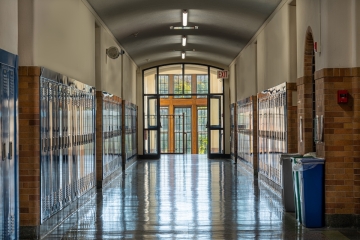
Empty hallway

Close bad schools and expand good ones

Chad Aldeman 7.10.2025
Flypaper
view
Homeschool parents and success measurements SR image

Analyzing homeschooling demographics and families’ definitions of student success

Jeff Murray 7.8.2025
Ohio Gadfly Daily
view
student and tutor

Attend and achieve: Can high-impact tutoring boost student attendance?

Robert Chung 7.10.2025
Flypaper
view
doug harris

#976: A new hub for smarter education policy, with Doug Harris

Doug Harris, Michael J. Petrilli, Meredith Coffey, Ph.D. 7.9.2025
Podcast
view
Paper with red ink

No one actually likes high expectations

Daniel Buck
7.10.2025
Flypaper

By the end of this past school year, I realized something simple: Rigorous education is far less popular on the ground than many policy wonks believe. Of course, everyone pays lip service to high academic and behavioral expectations in general. But when it comes to the particulars, many people—parents, teachers, and administrators alike, most kids, too—bristle at what rigorous education means in practice.

I noticed it first with parents. Working mostly in schools of choice, it was easy to sell prospective parents with rhetoric about academic rigor, challenging curriculum, and the like. But those nodding heads at enrollment meetings often turned to disgruntled emails as the year began. Nightly homework? Demanding tests for which students would need to study for hours? Stressful academic gauntlets? The occasional bad grade or negative disciplinary report? You won’t give full credit for late assignments even if they’re good? No thank you. Give my child straight A’s, don’t mess with my evenings and weekends, and tell me all is well.

Like a golf course that sets sand or water traps just outside the real range of play, many parents want the veneer of rigor without genuine challenge. An unskilled golfer can feel accomplished with only the appearance of difficulty as many parents want to believe their child is getting a rigorous education without the frustration of an entire essay rewrite.

To be fair, it’s not laziness or poor parenting that causes this preference for mediocrity. Rigor requires trust. To accept a poor grade or support a school’s exacting standards, a parent must trust that what the school is asking is actually worthwhile for their child—and worth the effort.

Too often, that’s not the case. Teachers assign various projects full of glitter, glue, and razzmatazz without any academic purpose. Schools mistake repetition and heavy workloads for actual quality or challenge. Or they assign ideological course work—think Howard Zinn or genderbread men—with which parents aren’t comfortable. If those are the assignments that students are bringing home, maybe it is better that their child spend a few more hours outside playing instead of doing schoolwork.

Teachers and administrators, too, are guilty of rejecting high expectations. Maintaining academically challenging coursework is hard. Grading nightly homework or leaving personalized feedback on essays, planning well-designed lessons, and running an efficient, teacher-led classroom where students are learning every minute is hard work that takes a lot of time day in and day out.

The alternative is much simpler. “Project-based learning” and group work mean a teacher only has to grade a handful of projects, likely light on writing, instead of an essay or test for every student. During class, they can provide work time and grade or plan instead of running lessons, managing behavior, administering quick knowledge checks, and actively teaching—all cognitively demanding compared to the alternative.

Assigning poor grades is likely to mean disgruntled parents. Sending misbehaving children to the principal’s office requires more paperwork. And preset curricula often set a brisker pace than is comfortable.

Once again, I don’t want to advance the “lazy teacher trope” as the sole explanation for these dynamics. If a behavior referral will mean a livid parent calls a teacher or admin to hector them past work hours, keeping them from their family, can we blame them?

For administrators, it’s easier to sweep poor behavior and academic mediocrity under the rug and instead boast about how your school “met the standards.” Meanwhile, truly high standards from local, state, or federal policymakers mean a school is more likely to get dinged by accountability measures or simply bad press.

For a real-world example of the preference for complacency, look no further than Mike Miles in the Houston Independent School District. In two short years, he has led the once flailing district to “significant performance gains,” but he will forever have the modifier “controversial” appended to his name and record numbers of teachers have quit. Everyone mouths support for academic excellence but not what it actually requires: tough curriculum, enforced behavioral codes, hard choices, demanding leadership, and retained students.

We’re not without recourse here. A resurgence of accountability and standardized testing from state and federal policymakers would do much to advance academic rigor again. Mike Miles may be “controversial,” but standardized testing allows him to point to the score board whenever he’s facing public pressure. And when incentives naturally push towards complacency, accountability provides a counter-incentive towards the tough choice. As an administrator, if I knew my job or school depended on a third-grade reading cutoff, I’d spend more time on our retention policy, pushing teachers towards rigorous phonics, and encouraging parents to read with their children at home.

School boards are also an essential lever. High expectations remain and ever will be popular in the abstract. Rhetorical calls for exacting standards win members their board seats. Once there, they can use that general popularity to maintain high standards in the less-than-popular particulars. Retention policies, behavior codes, curricular choices, pay scales, instructional best-practices, professional development regimes—these are the board-created polices that either empower teachers and administrations to maintain high standards or allow them to slide into mediocrity.

All of these changes and nudges might be deemed “eat your spinach” policies. Everyone wants six-pack abs until that means salad for lunch and a workout on your break. It’s incumbent on policymakers in particular—those outside the day-to-day hustle, bustle, and stress of the school—to make the changes to push each actor in school towards academic excellence. Where eating spinach or high standards may prove unpopular on the ground, policy leaders must nudge schools towards rigor and thereby look out for the long-term interests of our schools, not just immediate comfort.

view
Feet with arrows in different directions

Seizing educational dynamism

Stéphane Lavertu | Tim Rosenberger
7.10.2025
Flypaper

American education is experiencing an historic shift. After more than a century of consolidation and standardization, a wave of pluralism is sweeping the country. Charter schools, private-school vouchers, homeschooling, microschools, and education savings accounts (ESAs) have all gained traction, most recently with a new federal tax credit to fund K–12 scholarship programs. These changes have been years in the making, but the pandemic accelerated them, creating a sudden opening for institutional innovation. For the first time in memory, a decentralized and diversified education system seems possible.

The opportunity before us is not just for variety. It is also for dynamism—the kind of productive, experimental diversity that improves organizational performance over time (schools might measurably improve their ability to educate students) and enables societies to adapt to social and economic change, such as shifts in technology, labor market demands, and demographic trends.

Yet despite these promising signs, decentralization could stall without intentional and ongoing support, and this nascent moment of educational pluralism could revert to uniformity and stagnation.

Why dynamism matters

America’s education system has not consistently delivered on either of its foundational goals: cultivating citizenship or promoting academic excellence. Academic excellence matters for all of us. Cognitive capacity, as captured by achievement tests, has had a pronounced impact on the wealth of nations. Yet, according to the 2024 National Assessment of Educational Progress (NAEP), only 39 percent of fourth graders and 28 percent of eighth graders performed at or above the “proficient” level in mathematics. U.S. eighth graders’ most recent performance on international math exams is their worst since testing began in 1995, ranking the U.S. nineteenth out of forty-five countries—on par with Romania, Cyprus, the United Arab Emirates, France, and Azerbaijan. Lower math performance in the U.S. has historically been accompanied by significant social costs, including lower incomes, higher rates of teen pregnancy, and higher rates of incarceration.

These outcomes are not too surprising, considering America’s increasingly centralized and politicized school bureaucracy. Children have differing needs. The evidence is clear that boys, for example, are underserved by traditional school models, and that low-income kids have fallen far behind since 2012. Giving families access to diverse educational settings can help address these challenges in ways that centralized mandates cannot. Moreover, a single, centralized delivery model is a recipe for interest-group capture and organizational inefficiency. Indeed, as centralization has increased, it has been accompanied by a rise in political conflict, bureaucratization, and stagnation.

Recent battles over curriculum and culture, from California’s ethnic studies curriculum to Texas’s K–5 reading curriculum, further illustrate the dangers of one-size-fits-all schooling. Such curricula meet the needs of some parents while raising significant concerns for others. And the political battles over curriculum can hurt everyone. Research by our Ohio State colleague Vladimir Kogan demonstrates the harm caused by these culture wars. In a working paper and forthcoming book, Kogan shows that ideological conflict among adults leads to lower academic performance among students. Such conflicts distract from learning, impose burdens on teachers, and undermine community trust in schools.

Allowing greater educational pluralism could reduce political tension and improve system-wide outcomes. The Cato Institute’s Neal McCluskey has long argued that school choice is not only a tool for academic improvement but also a pressure-release valve for culture war conflict. When families are empowered to choose the best-fitting program for their children, the stakes of any one curricular decision are lowered. Schools can then serve their communities more directly, without becoming battlegrounds for ideological control. Importantly, as scholarship by Patrick Wolf and his colleagues has shown, such pluralism can also strengthen democratic values.

Pluralism also equips the education system to adapt to a rapidly changing world. As David Deming’s research shows, the labor market increasingly rewards “soft skills” such as leadership abilities and decision-making acumen, alongside or even instead of the traditional “cognitive skills” captured by test scores. Deming’s findings suggest that policymakers cannot predict with reasonable certainty which educational pathways will be most valuable in ten or twenty years. The best hedge against this uncertainty is a decentralized system capable of evolving in many directions simultaneously.

Schools offering a classical curriculum, for example, could help students respond to societal changes by imparting problem-solving and communication skills. And a renewed focus on civic virtue and historical understanding might help adapt civic life to technological disruption. But some students will be better served by learning to work with the tools of that very disruption, especially in STEM fields. Educational pluralism can yield dynamism on both dimensions and avoids the trap of ideological monoculture.

A rare policy opening

The present moment is especially promising for educational dynamism. After decades of increasing centralization, the institutional landscape is shifting. The expansion of charter schools in the 1990s and 2000s showed that alternative governance structures were politically and practically viable. Passage of the Every Student Succeeds Act (ESSA) in 2015 marked a retreat from strict federal oversight and gave states more discretion over accountability.

These reforms were significant, but they were slow-moving. The pace of change accelerated rapidly during, and in the immediate aftermath of, the pandemic. Families encountered remote learning and discovered both the limitations and possibilities of alternative education. They disenrolled from traditional public schools in large numbers. Many turned to private schools and homeschooling. Others organized microschools. Legislatures in red states responded by dramatically expanding school choice programs. Eighteen states have enacted universal choice programs since 2021. All students in those states are now eligible for private school scholarships or ESAs, and Congress has just marked Independence Day by enacting its own tax-credit scholarship program.

We have entered a new era in which pluralism is not theoretical but operationalized. More families are opting out of the traditional district model. Public charter enrollment continues to grow, while homeschooling numbers remain elevated well above pre-pandemic levels. Microschools and hybrid programs are expanding, often led by entrepreneurial educators or parent cooperatives.

A rare technological opening

Concurrent with changes in policy, this is a unique moment for technologically driven transformation in education. AI provides opportunities for hyper-customization of curriculum, either to allow for greater parental involvement or to better align offerings with the needs, abilities, and interests of particular students.

With AI presenting opportunities for streamlining and improving lesson planning, instructing, correcting, and grading, the conventional classroom model appears to be on the verge of disruption. The opportunities for customization to improve student learning are obvious. AI tools can provide students with highly customized instruction that dynamically advances as they gain mastery of new concepts. It can provide just-in-time scaffolding, support, information, and resources to students at the moment a challenge or knowledge gap is encountered. Students with the motivation to advance in their studies could accelerate past other students, without being bound to the pace of a conventional classroom. As Frederick Hess has noted, “it doesn’t take a lot of imagination to see how (in theory) 24/7, reliable, personalized AI-powered tutoring could have a profound impact.”

The advent of earlier technologies similarly led to significant promises of educational disruption, usually without much discernable impact. There are signs that the promise of large language models (LLMs) is fundamentally different. Credible studies have begun to document potential improvements in K–12 lesson planning and student learning when teachers make good use of LLMs, for example. And students’ extensive use of LLMs in completing assignments is already prompting changes in pedagogical approaches. There appears to be some consensus around the urgent need to teach students how to harness this technology toward productive ends, while retaining the capacity to think deeply and communicate effectively—and fending off cheating.

This moment also promises to allow for a different kind of technological deployment precisely because of the decentralization of schooling and the break-up of the public-school monopoly. As Larry Cuban argued, organizational environments—the incentives that schools and teachers face—may be the biggest roadblock to realizing technology’s potential in schooling. Recent changes to those incentives could unleash an explosion of educational experimentation. The political forces that induce risk aversion, rule following, and organizational stagnation and conformity appear to be giving way. This moment’s fusion of technological and organizational disruption opens the possibility for AI to feed educational dynamism.

Why dynamism still isn’t guaranteed

The current momentum toward educational diversification is encouraging, but diversity in how education is delivered—through parents, privately-run schools, or government-run schools—does not automatically generate diversity of educational approaches. There are tremendous forces pushing all educators toward conformity. This is the problem of isomorphism: even when structural reforms take place, underlying norms and incentives eventually reassert themselves and pull schools back toward a central model.

One reason is the continued presence of political incentives to standardize and micromanage. Even when funds are portable, regulations often follow them. Political interests, operating at all levels of government, have strong incentives to impose increasingly burdensome regulations to ensure schools pursue their preferred societal outcomes. To be sure, some government oversight is necessary to ensure that parents are choosing among quality school options and public funds are not wasted or used to enrich scammers. But, over time, political incentives to micromanage may render even private schools into heavily regulated public schools. To combat this, policymakers should create a clear bifurcation in regulatory regimes between default public schools—which should be held to a high and consistent standard of delivering core competencies employing proven instructional methods, and would have guaranteed, ongoing, funding—and private schools that are encouraged to experiment bravely and, when their experiments don’t work, to fail quickly.

There are also broader and more subtle social forces at work. To avoid controversy, charters, private schools, and homeschoolers may become exceedingly cautious in their experimentation and feel pressure to adopt conventional curricula. Without a deliberate effort to normalize differentiation and experimentation, the system’s default settings may continue to suppress substantial dynamism. If we want the civic and economic benefits that true educational pluralism can generate, we must convince one another to allow for meaningful difference.

Seizing the opportunity

There are considerable forces working against the educational pluralism that could bring so much benefit to U.S. economic and civic life. If we want decentralization to result in the type of pluralism that can yield educational dynamism, we must find a way to do the following.

First, preserve institutional autonomy. Private schools (religious and secular) and homeschool cooperatives must be allowed to operate according to their distinctive missions and student populations, and they should have considerable freedom to experiment and fail. States should resist the impulse to standardize these institutions through excessive regulation. They should continue to enforce minimum standards of operation that guard against fraud and protect children’s health and safety, and they should require that students acquire basic skills and some foundational knowledge (e.g., with respect to civics, literacy, and numeracy) if services are paid for with public funds. But, beyond that, state governments can let schools and vendors set the learning outcomes they wish to pursue and then collect and publish report cards that evaluate entities with respect to those goals.

Second, build a culture that promotes pluralism. Preserving institutional autonomy requires changing the way we think about public education in the U.S. Ashley Rogers Berner has noted that fellow democracies, such as the Netherlands, Australia, and Sweden have successfully supported diverse types of schools (religious, pedagogical, secular) while still holding them all to common academic standards and assessments. Critics argue that the picture in Europe is not so rosy and that allowing individuals to segregate according to their identities could be damaging—particularly for students at society’s margins. Activating such fears may undermine calls for pluralism. But catch-all public schools will remain an option for students who, due to disability, religious objection, or other belief or identity cannot be effectively served by locally available private options, and eligibility for programs can be conditioned upon the broadest, legally defensible requirements to accept all qualified students. The post-pandemic environment has presented the opportunity to make Americans comfortable with new schooling structures and diverse educational options.

Third, provide parents with information and assistance. Policymakers tend to focus on potential market failures—the ways in which lightly regulated markets may yield schools that systematically fail to meet parental and societal goals. That is a legitimate concern. We are perhaps more concerned with the pronounced government failures in school provision (notably, the stifling of schools’ institutional autonomy and diversity), but we are also realistic about parents’ lack of time and knowledge to make informed educational choices. Families need trustworthy metrics that are comparable across schools. Beyond test scores and graduation rates, states should collect and disseminate information on other dimensions of human flourishing (perhaps captured via parental satisfaction surveys) and longer-term workforce and college outcomes. Critically, parents need support—so that comparing schools on relevant dimensions and enrolling one’s child is quick and painless. Combining transparent data tools, simple apps, and human navigators—in addition to the basic operational and academic standards we reference above—can go a long way toward addressing the market failures to which critics of school choice frequently point.

The current moment brims with promise. Decades of centralization have given way to new models and new energy. But if this promise fails to yield true dynamism, American education may remain mired in mediocrity, albeit with more flavors.

Dynamism is not just about innovation. It is about resilience. A pluralistic education system allows a nation to learn from itself, to respond to new challenges, and to honor the diverse convictions of its citizens. The tools are now within reach. The question is whether we have the courage to use them.


view
Empty hallway

Close bad schools and expand good ones

Chad Aldeman
7.10.2025
Flypaper

Close low-performing, underenrolled schools. Expand high-performing, in-demand schools.

This formula has tremendous upside. It’s what cities like New Orleans, Denver and Indianapolis have done to great success. It’s also been a key ingredient behind Florida’s climb up the state achievement rankings.

Over the past two decades, Florida has added about 230,000 students, closed 214 schools and added 1,011 new ones. This churn has undoubtedly forced some hard decisions at the local level, but it has also improved the overall quality of schools statewide.

Last year, for instance, Florida gave 1,299 of 3,451 public schools an A on their state report card. Of those A-rated schools, 192 didn’t exist ten years ago, and 483 didn’t exist twenty years ago. Last year, 47 percent of schools that predated 2004 received an A or B, compared with 69 percent of those that have opened since then.

The table below looks at the data in a slightly different way. It compares the performance of schools that existed in 2004 with how they did in 2024. Among schools that received an A in 2004, nearly half still earned top marks last year, and another 25 percent earned a B. For the most part, good schools tended to stay good.

But look at the bottom end. Among schools that earned an F in 2004, only 2 percent received an A in 2024. In fact, more than half the F-rated schools in 2004 had been closed by last year. In Florida, schools either got better or they shut down.

Table: Florida Schools Got Better — or Were Closed

FL school grades

Source: Florida School Grades Archives

This combination of opening more schools while closing underperforming ones can be hard to execute.  And even when a school is underenrolled or underperforming, closing it can be disruptive. Some advocates and politicians have used those disruptions to argue that all this school choice and markets stuff of the past two decades is too much trouble, and that education policy should just stick with trying to improve existing neighborhood schools.

That might seem logical, but the evidence against school turnarounds has slowly changed my mind. For one thing, research around the No Child Left Behind law found that light-touch interventions like writing a school improvement plan did little to change the trajectory of chronically underperforming schools. Big improvements required big changes.

Dramatic improvements are possible. Right now, for example, the Houston school district is making impressive gains thanks to the leadership of hard-charging superintendent Mike Miles. Lawrence, Massachusetts, is another case where a state takeover helped raise student achievement.

But these success stories are not the norm. Massachusetts, for example, has been unable to replicate the Lawrence success story in other cities, and a broader review of state takeovers found they had no effect, on average. Similarly, Tennessee’s Achievement School District, which had charter management organizations take over chronically low-performing district schools, did not improve scores on middle school assessments, ACT college admissions tests or end-of-course exams.

In other words, it’s hard to make bad schools better. Not impossible, but very hard.

So what is Florida doing differently? It follows the portfolio model, which focuses on developing a comprehensive set of high-quality and autonomous public schools. These are evaluated based on their performance and parent demand, and policymakers concentrate on cultivating a broad variety of high-quality options for families.

This approach has contributed to citywide transformations in places like Denver and New Orleans. For example, Tulane University’s Doug Harris and a team of researchers found that New Orleans students made large gains in the wake of Hurricane Katrina, and that the average new school was almost always better than the average school that was closed or taken over. It was this effect — of closing lower-performing schools and replacing them with better-performing ones —that drove the citywide gains.

A comprehensive report from the Center for Education Policy Analysis at the University of Colorado Denver found that Denver’s portfolio strategy also produced large gains. Thanks to a common regulatory framework, annual evaluations of school performance, the closure of low-performing schools, the creation of new schools and district-led turnaround efforts, Denver’s performance rose from the bottom fifth percentile of all districts statewide to the 60th percentile in English Language Arts and the 63rd in math.

The portfolio model is far from a panacea. It requires districts to take a more active role in helping parents make good choices among their options, and for city leaders to tackle thorny policy questions around transportation and students with special needs. The politics can also be hard, and localized interests tend to protect their school no matter how few students want to go there. One extreme example: a Chicago school with twenty-eight students operating with twenty-seven employees.

Political pushback against school closures led Chicago to adopt a moratorium on school closures and for Denver to retreat from its successful portfolio model. But these trends are also playing out in smaller ways in many parts of the country. As I noted last year, school shutdowns have been falling to modern lows, even amid widespread enrollment declines.

Yet, keeping underenrolled schools open carries steep financial costs, which can then be used as an argument against investing in other, more popular schools. And when districts pursue this scarcity mindset, they end up forcing parents to fight over whose kids get into the “good” schools. In Fairfax County, Virginia, where I live, the district has tinkered with the entry requirements for the Thomas Jefferson High School for Science and Technology, a selective magnet school, but has not created another one. New York City has similar fights over its specialized high schools, although several mayoral candidates — including charter school donor Whitney Tilson, Comptroller Brad Lander and state Sen. Jessica Ramos — called for creating more of them.

The same trends are playing out in Massachusetts, where Democrats mostly vote against expanding charter schools even as the state’s charter sector consistently demonstrates impressive outcomes. (In fact, the research on high-performing charter networks has been possible only because they are so oversubscribed that they have to conduct random lotteries to see which kids get in!) And in Boston, the Metco program, a voluntary desegregation initiative that has produced amazing results for students since the late 1970s, still has only enough seats for half the kids who want one.

But won’t expanding school choice options harm existing schools? Surprisingly, that fear hasn’t been borne out in the data. In fact, EdChoice has found that schools with enrollment declines tend to receive more money thanks to various funding protections, and a bevy of research has found that competition forces existing schools to respond in ways that boost student achievement.

The portfolio model is certainly not the only way to improve school quality, but it is a particularly good fit for the current moment. As parents clamor for more choices, education policymakers should focus on providing a high-quality portfolio of options for them to choose from.

Editor’s note: This was first published by The 74.

view
Homeschool parents and success measurements SR image

Analyzing homeschooling demographics and families’ definitions of student success

Jeff Murray
7.8.2025
Ohio Gadfly Daily

Data show that the number of homeschooling families in America is growing, and is similar in size now to the private and charter school sectors. Researching the topic is difficult because there is no centralized “sector” per se, but available evidence also strongly suggests that homeschool families are more diverse today than in the past. Credit for a trove of recent research in this area goes to Johns Hopkins senior research fellow (and former Fordham EEPS scholar) Angela Watson. She is back again, with Kennesaw State University’s Matthew Lee, continuing to dig into troves of data to further sharpen the picture of modern homeschooling from as many angles as possible.

Watson and Lee’s analysis, published in a new working paper, uses data from a nationally representative sample of parents, collected in partnership with the Indiana non-profit organization EdChoice and the polling firm Morning Consult during the spring of 2024. Nearly 3,200 parents completed the survey, accounting for over 5,160 school-aged children. Approximately 250 parents reported homeschooling one or more of their children. This is comparable to parents reporting students in private schools (288) and in non-traditional public options such as charters or intradistrict open enrollment (320).

A quick look at demographic data reiterate the diversity of today’s homeschooling sector. While 69 percent of homeschool parents are White (relative to 56 percent of all parents in the sample), a substantial proportion of Hispanic (15 percent vs. 22 percent) and Black families (10 percent vs. 12 percent) also report homeschooling their children. Homeschool families are less likely to live in urban settings (24 percent vs. 33 percent of all parents in the sample) and more likely to live in rural settings (25 percent vs. 15 percent), which is part of the more-traditional picture of homeschoolers. However, a similar proportion of suburban (41 percent of homeschoolers vs. 43 percent overall) and small-town families (11 percent vs. 9 percent) also choose homeschooling. Homeschool parents are more likely to report being Republicans (44 percent vs. 36 percent overall) and conservative (43 percent vs. 32 percent). Yet a substantial proportion of homeschooling parents identify as Democrats (29 percent), independents (27 percent), liberals (25 percent), and moderates (32 percent). There are more comparisons in the paper, but this is a good illustration to start.

Most homeschooled students were reported as learning full-time at home (71 percent), while 18 percent are in a cooperative setting, 8 percent in a hybrid school, and 3 percent reported in some undefined “other” type of setting. They are generally equally distributed across all grades, with some higher concentrations in transitional grades like 7th and 9th grade (middle-to-high school), as well as 11th grade (nearing graduation). Interestingly, more than one-third of families with at least one homeschooled child also have a student enrolled in a traditional district school. Another 9 percent of homeschoolers have a child in a charter school. In a recent interview, Watson called this finding a “big deal,” as it is solid evidence that the choice to homeschool is not the wholesale rejection of the institutions of public or private education that it was historically thought to be. Different students have different needs, and the widespread school closures of 2020 and 2021 both brought this fact to the fore and gave parents from all walks of life the permission (or determination) needed to branch out and find the best fit for their own young learners.

Additionally, Watson and Lee embedded a fully randomized conjoint experiment into their survey. In such an experiment, respondents are presented with consecutive sets of hypothetical options with randomly assigned attributes and asked to select their preferred option within the set. This version presented parents with six sets of twelve hypothetical high school graduates and asked them to identify which they thought was the most “successful” graduate within each set. They used this method to sample parent perspectives on five components of student success: standardized test scores, college matriculation, civic outcomes, academic skills, and religiosity. Students with strong test score performance (“average” or “above average” scores) were seen by all parents—homeschool and non-homeschool alike—as the most successful graduates overall, with students who had been accepted to “prestigious colleges” next, followed by those with “active community involvement” and those who had been accepted to a plain vanilla “college or university.” Students with average academic skills (such as literacy and numeracy), as well as minimal religious involvement, were rated at the lowest end of the success scale by all parents. The only factors homeschool parents rated differently from non-homeschool parents was in placing less emphasis on admission to a prestigious college and in rating even further down graduates who were not active in religion. The variation was statistically significant for these two factors, but small in magnitude.

Like most of Angela Watson’s recent research into modern homeschooling, this report seems more like baseline setting than breaking new ground. But creating that foundational understanding—what, where, how, and why families choose to homeschool some or all of their children—is an important act of “newness” in itself. Revamping tired stereotypes of religiously-motivated rural White families with an aversion to any institutional education trappings—especially in the post-pandemic world where homeschooling is more appealing and achievable than ever—allows for a clarified picture of who is in the “sector” and why they chose it. Not to mention the fact that, despite their choices outside of a traditional educational system, homeschoolers seem to want similar outcomes for students from their participation. These are the data we seek in all other education sectors, and this work will help put homeschooling research onto equal footing with options like charter and private schools. It’s invaluable.

SOURCE: Angela R. Watson and Matthew H. Lee, “Who Homeschools and What Does ‘Success’ Mean to Them? Experimental Evidence from a National Sample,” Harvard Kennedy School working paper (June 2025).

view
student and tutor

Attend and achieve: Can high-impact tutoring boost student attendance?

Robert Chung
7.10.2025
Flypaper

Five years after the onset of the pandemic, schools continue to combat pandemic-era learning loss and chronic absenteeism. One evidence-based method to expedite learning recovery is high-impact tutoring. While much has been said about the positive impact of tutoring on student achievement levels, little has been conveyed about its impact on student absenteeism. A June 2025 study helps to fill this void.

A Stanford research team used student-level attendance data collected in Washington, D.C. during the 2022–23 school year. That year saw the implementation of the High-Impact Tutoring (HIT) Initiative, which funded tutoring providers across D.C. Public Schools (DCPS). The initiative aimed to expand access to high-impact English and math tutoring for K–12 at-risk students in DC schools, prioritizing those with the greatest academic needs (i.e., students who scored in the bottom two levels of math and ELA standardized assessments in the previous year). The team compared student absences on days with and without scheduled tutoring, controlling for student demographics and variations in the time and day the tutoring took place. Student and date fixed effects are included in the models to control for unobserved student characteristics and day-specific factors that may influence attendance on a scheduled tutoring day. Overall, the findings provide strong evidence that scheduled high-impact tutoring sessions help improve student attendance.

The researchers find that students were 1.2 percentage points less likely to be absent on scheduled tutoring days than on days with no scheduled tutoring, which translates to an overall 7 percent reduction in the likelihood of a student being absent.

The HIT Initiative’s effect varied among different student groups. For example, scheduled tutoring sessions had an especially large positive effect on students with more absences the previous academic year. Students who were chronically absent for more than 30 percent of the previous school year were 2.6 percentage points less likely to be absent on days with scheduled tutoring sessions. Additionally, effect sizes were strongest for middle school students compared to elementary and high school students, with middle school students 1.9 percentage points less likely to be absent on scheduled tutoring days, a 0.7 and 1.7 percentage point difference compared to elementary and high school students, respectively. Furthermore, estimates for middle and elementary school students were statistically significant, in contrast to those for high school students. Given that student engagement often declines in middle school, this finding is particularly valuable. The HIT Initiative can facilitate strong student-tutor relationships that strengthen students’ sense of belonging within their school, in turn boosting their desire to attend school and reducing absenteeism levels.

Variations in the design of tutoring programs within the HIT Initiative impacted student absenteeism as well. Students in tutoring programs offered during the school day were 1.9 percentage points less likely to be absent than those in after-school programs, who were still 0.7 percentage points less likely to be absent than non-participants. Furthermore, larger effects were seen in programs with the smallest student-tutor ratios (1:1 or 1:2) and more frequent tutoring sessions (3-5 sessions per week), which were associated with a reduction in student absenteeism by 3.8 percentage points and 2.1 percentage points, respectively.

The researchers also looked at the impact of “bundles” of features of high-impact tutoring (e.g., tutoring during the school day, small student-tutor ratios, and frequent tutoring sessions). Students exposed to programs containing two such features were 2.6 percentage points less likely to be absent; those exposed to a bundle of all three features were 5.5 percentage points less likely to be absent (i.e., more than twice the effect for students in programs with a bundle of two features and approximately five times the overall effect).

While this is only one study in one district over one school year, and showed relatively small effects, the results indicate that high-impact tutoring can have a positive influence on student attendance—yet another reason for schools to embrace the practice.


SOURCE: Monica G. Lee, Susanna Loeb, and Carly D. Robinson, “The Impact of High-Impact Tutoring on Student Attendance: Evidence from a State Initiative,” Annenberg Institute at Brown University (June 2025).

view
doug harris

#976: A new hub for smarter education policy, with Doug Harris

7.9.2025
Podcast
 

On this week’s Education Gadfly Show podcast, Doug Harris, director of the National Center for Research on Education Access and Choice (REACH), joins us to discuss a new website aimed at advancing evidence-based education policy and supporting more effective decision-making in schools.

Then, on the Research Minute, Meredith Coffey examines new data from Massachusetts that reveal lasting post-pandemic shifts in school enrollment, particularly in the middle grades and in higher-income districts.

Recommended content: 

  • “AEFP Live Handbook of Education Policy Research” —Association for Education Finance & Policy (AEFP)
  • “School Enrollment Shifts Five Years After the Pandemic” —Abigail Francis and Joshua Goodman, EdWorkingPapers (June 2025)
  • “Analyzing homeschooling demographics and families’ definitions of student success” —Jeff Murray, Thomas B. Fordham Institute
  • “Fixing IES” —Chester E. Finn, Jr., Thomas B. Fordham Institute

Feedback Welcome: Have ideas for improving our podcast? Send them to Stephanie Distler at [email protected]. 

Fordham Logo

© 2026 The Thomas B. Fordham Institute
Privacy Policy
Usage Agreement

National

P.O. Box 110
Burke, VA 22009

202.223.5452

[email protected]

Ohio

P.O. Box 82291
Columbus, OH 43202

614.223.1580

[email protected]

Sponsorship

130 West Second Street, Suite 410
Dayton, Ohio 45402

937.227.3368

[email protected]