Mobile Navigation

  • National
    • Policy
      • High Expectations
      • Quality Choices
      • Personalized Pathways
    • Research
    • Commentary
      • Gadfly Newsletter
      • Flypaper Blog
    • Events
    • Scholars Program
  • Ohio
    • Policy
      • Priorities
      • Media & Testimony
    • Research
    • Commentary
      • Ohio Education Gadfly Biweekly
      • Ohio Gadfly Daily
  • Charter Authorizing
    • Application
    • Sponsored Schools
    • Resources
  • About
    • Mission
    • Board
    • Staff
    • Career
Home
Home
Advancing Educational Excellence

Main Navigation

  • National
  • Ohio
  • Charter Authorizing
  • About

National Menu

  • Topics
    • Accountability & Testing
    • Advanced Education
    • Career & Technical Education
    • Charter Schools
    • Curriculum & Instruction
    • ESSA
    • Evidence-Based Learning
    • Facilities
    • Governance
    • Personalized Learning
    • Private School Choice
    • School Finance
    • Standards
    • Teachers & School Leaders
    • Think Again
  • Research
  • Commentary
    • Gadfly Newsletter
    • Flypaper Blog
    • Gadfly Podcast
  • Events
  • Scholars Program

The Education Gadfly Weekly

Sign Up to Receive Fordham Updates

We'll send you quality research, commentary, analysis, and news on the education issues you care about.
Thank you for signing up!
Please check your email to confirm the subscription.

The Education Gadfly Weekly: At long last, E.D. Hirsch, Jr. gets his due

Volume 23, Number 15
4.13.2023
4.13.2023

The Education Gadfly Weekly: At long last, E.D. Hirsch, Jr. gets his due

Volume 23, Number 15
view
High Expectations

At long last, E.D. Hirsch, Jr. gets his due: New research shows big benefits from Core Knowledge

A new study demonstrates unusually robust and beneficial effects on reading achievement among students in schools that teach E.D. Hirsch’s Core Knowledge curriculum. The working paper offers compelling evidence to support what many of us have long believed: Hirsch has been right all along about what it takes to build reading comprehension.

Robert Pondiscio 4.13.2023
NationalFlypaper

At long last, E.D. Hirsch, Jr. gets his due: New research shows big benefits from Core Knowledge

Robert Pondiscio
4.13.2023
Flypaper

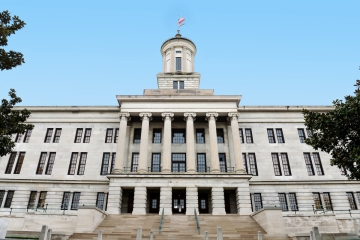
Lessons for ed reform from the Tennessee Three

Dale Chu
4.13.2023
Flypaper

The extended case for faith-based charter schools

Andy Smarick
4.13.2023
Flypaper

Kids can learn from robots—with a lot of help from humans

Jeff Murray
4.11.2023
Ohio Gadfly Daily

Algebra for none: The effects of San Francisco’s de-tracking reform

Jeanette Luna
4.13.2023
Flypaper

#865: The challenges of parenting gifted children, with Gail Post

4.12.2023
Podcast

Cheers and Jeers: April 13, 2023

The Education Gadfly
4.13.2023
Flypaper

What we're reading this week: April 13, 2023

The Education Gadfly
4.13.2023
Flypaper
view

Lessons for ed reform from the Tennessee Three

Dale Chu 4.13.2023
Flypaper
view

The extended case for faith-based charter schools

Andy Smarick 4.13.2023
Flypaper
view
Competent robots SR image

Kids can learn from robots—with a lot of help from humans

Jeff Murray 4.11.2023
Ohio Gadfly Daily
view

Algebra for none: The effects of San Francisco’s de-tracking reform

Jeanette Luna 4.13.2023
Flypaper
view

#865: The challenges of parenting gifted children, with Gail Post

Gail Post, Michael J. Petrilli, Amber M. Northern, Ph.D., David Griffith, Ph.D. 4.12.2023
Podcast
view

Cheers and Jeers: April 13, 2023

The Education Gadfly 4.13.2023
Flypaper
view

What we're reading this week: April 13, 2023

The Education Gadfly 4.13.2023
Flypaper
view

At long last, E.D. Hirsch, Jr. gets his due: New research shows big benefits from Core Knowledge

Robert Pondiscio
4.13.2023
Flypaper

A remarkable long-term study by University of Virginia researchers led by David Grissmer demonstrates unusually robust and beneficial effects on reading achievement among students in schools that teach E.D. Hirsch’s Core Knowledge sequence. The working paper offers compelling evidence to support what many of us have long believed: Hirsch has been right all along about what it takes to build reading comprehension. And we might be further along in raising reading achievement, closing achievement gaps, and broadly improving education outcomes if we’d been listening to him for the last few decades.

I’ve described countless times how teaching fifth grade in a low-scoring New York City public school made me a Hirsch disciple and a Core Knowledge enthusiast. Hirsch’s work—and only Hirsch’s work—described uncannily what I saw every day in my South Bronx classroom: children who could decode written text but struggled with reading comprehension. 

My school’s staff developers, district consultants and coaches, ed school professors, and the literacy gurus they assigned us to read and study had different explanations for students’ reading struggles: Children were bored by required texts that didn’t reflect their interests and personal experiences. If we let them read what they wished, it would be more pleasurable and they’d spend more time at it. Classroom instruction was built around an all-purpose suite of reading “skills and strategies” that students could apply to any book. We were to “teach the child not the lesson,” make them fall in love with books and develop a “lifelong love of reading.” When students who appeared to be successful under this “child-centered” vision of literacy struggled on standardized tests, there was an answer for that, too: test anxiety and “inauthentic” assessments.

For more than four decades, Hirsch has responded to all this with a simple, cognitively unimpeachable, hiding-in-plain sight rejoinder: No, it’s background knowledge. Sophisticated language is a kind of shorthand resting on a body of common knowledge, cultural references, allusions, idioms, and context broadly shared among the literate. Writers and speakers make assumptions about what readers and listeners know. When those assumptions are correct, when everyone is operating with the same store of background knowledge, language comprehension seems fluid and effortless. When they are incorrect, confusion quickly creeps in until all meaning is lost. If we want every child to be literate and to participate fully in American life, we must ensure all have access to the broad body of knowledge that the literate take for granted. 

The effects of knowledge on reading comprehension are well understood and easily demonstrated. The oft-cited “baseball study” performed by Donna Recht and Lauren Leslie showed that “poor” readers (based on standardized tests) handily outperform “good” readers when the ostensibly weak readers have prior knowledge about a topic (baseball) that the high-fliers lack. We also know that general knowledge correlates with general reading comprehension. University of Virginia cognitive scientist Dan Willingham, a co-author of the study, put it best in a video he made years ago: Teaching content is teaching reading. What has been more difficult to prove is that a specific curricular intervention aimed at systematically building students’ background knowledge can raise reading achievement. What the new study suggests is that not only is Hirsch’s theory solid, so is his prescription.

The six-year randomized control trial followed over 2,300 students who applied for kindergarten to one of nine oversubscribed Core Knowledge charter schools in the Denver area. Nearly 700 students who won seats in the lottery were compared to students who applied but ended up matriculating elsewhere. Researchers looked at state test results from third through sixth grade. The cumulative long-term gain from kindergarten to sixth grade for the Core Knowledge students was approximately 16 percentile points. Grissmer and his co-authors put this into sharp relief by noting that if we could collectively raise the reading scores of America’s fourth graders by the same amount as the Core Knowledge students in the study, the U.S. would rank among the top five countries on earth in reading achievement. At the one low-income school in the study, the gains were large enough to eliminate altogether the achievement gap associated with income. Eliminate it.

What’s critical to note about the study is that the effects of Core Knowledge are revealed slowly, over time, exactly as Hirsch’s theory predicts. He frequently observes that language comprehension is a slow-growing plant. One of the reasons for the dominance of bland, bloodless skills-and-strategies reading instruction is surely the idea that it can be employed immediately and on any text like a literacy Swiss Army Knife. But we must see language proficiency for what it is, not what we wish it to be: Reading comprehension is not a transferable skill that can be learned, practiced, and mastered in the absence of “domain” or topic knowledge. You must know at least a little about the subject you’re reading about to make sense of it. There are no shortcuts or quick fixes.

I called Don (the “D” in E.D. stands for Donald) earlier this week expecting him to be reveling in the study’s findings. He was indeed gratified. But having just turned 95 and congenitally modest, he’s not one for victory laps. Moreover, he’s American education’s Sisyphus, having pushed this rock up the hill many times only to see it roll back down as we get distracted by each shiny new thing. We talked for half an hour about the study, and how its outcomes might be even more powerful and replicable now that the Core Knowledge sequence has been codified in a language arts curriculum that hadn’t even been published when the researchers began following the Denver cohort. We talked about the power of literate culture to unite disparate people, the damage done to disadvantaged children when American education embraced progressive education ideas, and how misguided notions of social justice that make us reluctant to be prescriptive about what children should know end up imposing a kind of illiteracy on those we think we’re championing.

No single study is definitive, and even if it were, changing classroom practice is hard and faces stubborn resistance, particularly if the evidence shows things we would rather it didn’t. Hirsch has long had to face knee-jerk charges of Eurocentrism or worse, and that his object is to force-feed children a dead white-male curriculum and canon. It’s simply not so. Language—any language—bears the weight of its origins, which evolve over time, but cannot be stripped away. Not for nothing was Hirsch’s landmark work titled Cultural Literacy. The standard anti-Hirsch critique has always misunderstood entirely what his Core Knowledge project is about: It’s not an exercise in canon-making at all, but a curatorial effort, an earnest attempt to catalog the background knowledge that literate Americans know so as to democratize it, offering it to those least likely to gain access to it in their homes and daily lives. We are powerless to impose our will on spoken and written English and to make it conform to our tastes. Our only practical option is to teach it.

There has never been a fairer, more equitable, and frankly progressive effort to ensure that our least fortunate students have access to the same knowledge that affluent Americans seem to absorb through their pores. Hirsch’s work offers knowledge have-nots the language of power. That some might seek to deny access to it has long seemed to me among the greatest and most unforgivable of educational crimes. And now there’s a powerful proof point that makes continuing in that obstruction even less forgivable than it was yesterday. 

I’ve said for years that if you’re not serious about literacy, you’re not serious about equity. I’ll go one step further: If you’re not serious about Hirsch, you’re not serious about literacy, or about equity.

view

Lessons for ed reform from the Tennessee Three

Dale Chu
4.13.2023
Flypaper

When Tennessee House Republicans expelled, albeit briefly, two young, Black Democratic lawmakers late last week, it raised a number of unsettling questions—not only about the contours of our politics, but also about the future of education reform. To wit, in Tennessee and in reform circles, there are those who believe that bipartisanship is for losers—and that Republicans can and make more progress without Democrats than with them. Practitioners of this brand of negative partisanship are likely to see such a strategy come back to bite them.

In Tennessee, it’s hard to see how House Republicans gained anything but applause from their rabid base. They didn’t win a policy debate, and they didn’t even succeed in removing the two Black lawmakers for long, as local officials thankfully reinstated both men after massive outcry from their base.

What they lost, though, was credibility in communities of color, whose citizens now have more reason to believe that Republicans stand for disenfranchisement and division. That’s particularly a shame in Tennessee, what with its longtime record of bipartisanship—in education and beyond—having built and sustained a reform coalition that has held together for the greater part of two decades across Democratic and Republican governors, along with three capable education commissioners.

But it’s not just Tennessee. Anywhere in the country, it’s a dangerous game for conservatives or libertarians—mostly White, mostly Republican—to push through policies like Education Savings Accounts without the support of the families—mostly Black and Brown, mostly Democratic—who have the most to gain or lose. To be sure, advocates such as Jay Greene are right that Democratic politicians can be fair-weather friends, given their loyalty to the unions. Maybe it’s possible to enact laws without Democratic votes (at least in red states). But if the reform movement loses Black and Brown Democratic voters, too, we’re toast. And antics like those in Tennessee don’t help.

While it’s true that Republicans are passing more ESA bills into law in red states, keeping Democrats on board—both elected officials and the voting public—should remain an ongoing aspiration and priority if we care not only about kids in red states, but also about kids in blue states, to say nothing of kids in blue cities in red states!

The importance of bipartisanship is also important if we’re concerned, which we should be, about installing good policies that live beyond any single administration or swing of the political pendulum. Today’s strain of “smash-and-grab” reform, which I’ve written about previously, is detrimental to any serious discussion about improving schools:

One has to hope that more pragmatic figures within today’s GOP can eventually steer the party away from its angry and resentful fringes and towards an education agenda that offers something for conservatives, progressives, moderates, and others to unite around. While this should certainly include school choice, a serious discussion must also extend to raising standards and improving teacher salaries...

Based on assessment data, millions of children are now behind, many perhaps irretrievably. Almost a quarter-million children across twenty-one states are missing entirely from schools. Teen mental health has reached crisis levels. It remains to be seen how effectively federal relief dollars have been deployed to address these pandemic-induced gaps, though there’s no shortage of expenditures to scrutinize, based on early reports. With the reform movement, as it were, already despairingly balkanized, we need policies that bring more people together to help tackle these pressing issues. Which is to say, education reform shouldn’t be reduced to throwing culture war grenades.

The alternative is to invite the scorn of Americans far and wide, as GOP lawmakers in the Volunteer State just managed to do. Instead of channeling their energy and effort into responsible solutions, Tennessee House Republicans looked inward and thought they could use nothing but raw power to divorce themselves of their opposition and muscle their way through to their desired ends. The ploy backfired, and in the process, those on the right found a way to undermine much, if not all, of their credibility when it comes to defending kids. Reformers of all stripes might do well to consider the perils of this ugly example.

view

The extended case for faith-based charter schools

Andy Smarick
4.13.2023
Flypaper

A little-noticed event in late 2022 destabilized a pillar of contemporary American K–12 education, namely that all schools considered part of the public system must be secular. Last December, the attorney general of Oklahoma issued an advisory opinion stating that, due to recent U.S. Supreme Court decisions, the state could no longer prohibit faith-based groups from operating charter schools. Catholic leaders seized the opportunity and applied to do just that; the state’s virtual charter board voted down their application this week, but delayed a final decision until a revised application is submitted.

Not long after, in Arizona, one of the nation’s most successful charter operators announced it was launching an initiative to start faith-based classical schools. Though technically part of the private-school sector, these schools would be based on the organization’s charter-school model and would access public funding available via a new state Education Savings Account program that gives education dollars directly to families.

Though the efforts are distinct—the Arizona case brings faith-based education and public schooling closer, while the Oklahoma case merges them—they are, in a sense, the logical conclusion of thirty years of choice-based reform. Backers and detractors, however, see “logical conclusion” very differently. Opponents might say they suspected choice advocates were fighting from day one to raze the wall separating church and state. Proponents might say this is an obvious, sensible consequence of American pluralism: Given the nation’s long history of faith-based nonprofits, once government engaged civil society in school operations via chartering, it was inevitable that religious groups would want to participate.

Like so much today, this issue divides observers along political lines. Indeed, the idea deeply troubles many progressives. But those on the political left might consider whether they could support faith-based charters, even if just as a pilot program.

Part of this consideration should be strictly pragmatic, as it pertains to keeping families engaged with the public school system. Opinion on public education is souring, with Americans now giving lower grades to schools both locally and nationally than before the pandemic. Today, only about one in five give the nation’s schools an A or B; only 21 percent of non-parents think American K–12 education is headed in the right direction. In 2022, Gallup found public satisfaction with K–12 schools was at its lowest level in more than twenty years.

Consequently, private school choice is on the march. Half or more of Americans support universal vouchers, tax-credit scholarships, and homeschooling. One survey found between two-thirds and three-quarters of adults support education savings accounts, vouchers, and charter schools when provided definitions.

Today, there are about seventy-five state-level private school choice programs, and new programs have recently been passed in Arkansas, Florida, Oklahoma, Iowa, and Utah, with progress in Idaho, Kansas, Nebraska, and Texas. These policies are being fueled by a growing array of options. Today, we have private schools, magnets, charters, pods, hubs, various homeschooling models, online schools, hybrid homeschooling, microschools, dual enrollment offerings, tutoring, and more. Those concerned about the diaspora from traditional public education should appreciate that growing and diversifying options inside of the public system may be the best, if not only, way to respond to families’ interest in choice while preserving key elements of public schooling, like transparency, accountability, and a degree of democratic control.

The other consideration is more philosophical. Our current politics seem oblivious to the fact that one of the greatest challenges of American governing is figuring out how 330 million people with vastly different histories, traditions, and priorities can live together peacefully. The solution is not erasing our differences or discouraging the flourishing of diverse ways of life. Instead, we animate American e pluribus unum—“out of many, one”—by building systems that, first, allow different communities to be themselves and, second, help those different communities contribute to a broader common good.

Faith-based chartering could fit this mold. It would invite faith-based groups to participate in school operation alongside secular nonprofits. It wouldn’t force anyone to attend a faith-based charter, but it would respect families eager to give those schools a try. Importantly, it would make such schools, in exchange for public dollars, follow public rules related to finances, operations, safety, and achievement. In total, then, it would contribute to a diversified set of schools that collectively work to serve all students.

What does a faith-based charter look like?

Faith-based charters do not yet exist. But the idea has percolated for twenty years, with some writers suggesting how it might be possible and why it is worth pursuing. That conversation, however, never went far because the explicit language of state charter laws and federal education programs made clear that charters had to be secular. Moreover, a mountain of jurisprudence since the middle of the twentieth century seemed to close the door on the concept: The U.S. Supreme Court held that public schools, as creatures of the state, could not be religious.

Despite all that, the idea has had legs because it seems to make sense on a few dimensions. For example, dozens of state programs enable families to use public dollars to choose private faith-based schools. Why wouldn’t we allow some faith-based charters? Since those publicly funded private faith-based schools are free from most regulation, shouldn’t we support publicly funded faith-based schools that are subject to more oversight? Moreover, if a brand-new nonprofit with no experience running schools is eligible to run a charter, shouldn’t a centuries-old faith-based nonprofit with enormous experience running high-quality schools be eligible?

If every other nonprofit is allowed to run a charter, isn’t it anti-religious discrimination to exclude faith-based nonprofits?

What would a faith-based charter look like? A faith-associated nonprofit would apply to a charter authorizer. It would complete the same application as other interested operators, explaining its proposed curriculum, staffing, transportation plan, calendar, governance, and so on. It would explain how its school would meet various state requirements, for instance related to building codes and safety. It would develop student-performance indicators so the authorizer could hold the school accountable for results. If the application were approved, the school would secure a facility, hire staff, purchase books, and recruit students. It would have to meet operational, financial, and governance milestones prior to opening. Once operational, it would be subject to regular performance monitoring by its authorizer. If it failed to live up to its side of the contract, its charter would be revoked. Its primary difference from other charter schools would be its use of faith elements, for instance readings from its texts or teaching good behavior with reference to faith principles. As a public school, it could not discriminate against prospective students: Like all charters, it would be open enrollment.

History repeating itself?

The idea of faith-based chartering may be jarring to those only familiar with public schooling over the last half century. But zooming out, we can see that America has frequently reconsidered the role that government and civil society play in schooling. We can also see that the state’s relationship with faith communities has been frequently redefined in education. Though the history is complicated, we can think of four distinct eras.

In the colonial days and first decades of the republic, America had no system of public education to speak of. To the extent kids received formal schooling, it was generally through tutors, boarding schools, small town schools, or religious schools. The government’s role was miniscule by today’s standards, and the role of civil society, including faith-based groups, was substantial.

The mid-nineteenth-century advent of common schools expanded the role of government. School boards would tax, hire teachers, purchase supplies, and more. Though these schools were “public,” they were seldom secular. Teachers often led prayers, and readings from the Bible were common. Interestingly, much of the resistance to this system came from minority religious communities that disapproved of how faith was taught; the debate was frequently about which Bible and prayers, not whether Bible and prayers. Indeed, the sense that many of these schools were unfriendly to religious minorities led to the growth of faith-based private schools, most notably Catholic schools. Therefore, this second era can be understood as one of marked growth for religiously tinged government-run public schools and faith-based private schools.

By the middle of the twentieth century, Supreme Court rulings were separating faith and government in education. Prayers and Bible-reading were prohibited in public schools, and faith-based private schools were prevented from receiving most direct public support. We can think of the second half of the twentieth century as bifurcating K–12: In this third era, public schools were almost always run by the government and had to be secular; faith-based schools were private and ineligible for direct state aid.

The fourth era began in the early 1990s with two policy reforms. First, chartering enabled nonprofits to run public schools. The implications were profound. No longer did “public school” mean “government-run school.” A chartered public school would be operated by a non-government body but function within a system of public accountability and funding. The public system would now comprise an array of operators. Second, private school choice programs, like vouchers, enabled families to direct public dollars to secular and faith-based private schools (vouchers were deemed constitutional in 2002).

These two reforms can be seen as leading in the same direction: More families had more ability to choose from among more types of schools. Seen another way, they produced a peculiar outcome: We now have some largely autonomous, nonprofit-run, government-funded schools we call “public” and some largely autonomous, nonprofit-run, government-funded schools we call “private.” The former are charters; the latter can be faith-based schools supported by voucher-style programs. In practice, this means a Montessori, project-based-learning, or classical-education organization could run a school in either category. A faith-based group, however, can only be found in the latter. To put a fine point on it, a faith-based school can receive substantial public funding (e.g., via vouchers) while remaining free of most government oversight, but it can’t join the charter sector and accept more public accountability. 

In theory, we could make this system more coherent. We could require all government-run public schools to remain wholly secular while allowing all nonprofit-run schools that submit to public accountability to receive public funding. All nonprofit-run schools that wanted to remain free of most regulation could stay in the private sector and forgo public dollars. As recently as ten years ago, this kind of fundamental shift would’ve faced two obstacles—one popular, one legal. First, there was little appetite for big change; public opinion supported local public schools, and most families participated in that traditional system. As recently as 2016, 70 percent of parents gave their local public schools an A or B; that year, the federal government reported only 10 percent of K–12 students were in private schools. But that system has fragmented thanks to school-choice programs, new models of education delivery, and the Covid era. EdChoice estimates that only 64 percent of students today attend their assigned traditional public schools. The rest are choosing another district school, a charter school, a private school, a magnet school, an online school, a homeschool, or something else. Families are increasingly accustomed to finding options tailored to their kids’ needs. Fewer families see the neighborhood public school as the best, much less the only, option.

Second, the language of education programs was based on a constitutional interpretation that kept faith entirely out of the public system. Since the First Amendment was understood to require that government functions remain secular, and since the provision of public education was a government function, faith-based schools were deemed ineligible to be part of the public system. Hence the requirement that charter schools, which are public schools, remain secular. But this is no longer an obvious legal conclusion. In short, public opinion changed in ways that make faith-based charters a policy possibility, and the Supreme Court’s jurisprudence changed in ways that make faith-based charters a legal possibility.

Supreme Court precedent

Missouri provided grants to nonprofits wanting to resurface their playgrounds. State policy, however, prevented religious entities from accessing those funds. The Court, in Trinity Lutheran v. Comer (2017), ruled that prohibiting a faith-based group from enjoying a public benefit simply because it is faith-based is unconstitutional. Three years later, the Court expanded the doctrine in Espinoza v. Montana Department of Revenue (2020), declaring unconstitutional that state’s policy of prohibiting faith-based schools from participating in a school-choice program. A third decision would do even more to boost the prospects of faith-based charters.

Because Maine is a sparsely populated rural state, some of its school districts don’t have high schools. For generations, the state provided funds to students in those districts so they could pay to attend a high school elsewhere. Maine permitted just about all schools to participate—public schools, private schools, schools in other states, even schools in other countries. But one type of school was ineligible: faith-based schools. Maine justified its policy by saying it was funding other schools to essentially function as Maine public high schools, and since public schools must be secular, all participating schools must be secular. In Carson v. Makin (2022), the Court disagreed: Once the government makes a benefit available, it can’t declare faith-based groups ineligible simply because they are faith-based.

Addressing those charging that the Court was forcing states to fund religious groups, Chief Justice Roberts’s Espinoza decision explained that Montana didn’t have to create a program that funded nongovernmental organizations. But once the state did so, it couldn’t single out faith-based groups for exclusion. The same logic applies in Trinity Lutheran and Carson: States don’t have to create programs for nonprofits to resurface playgrounds or for students to attend out-of-district high schools, but once they do, they can’t single out faith-based groups for exclusion. We should expect a Roberts opinion ruling that states aren’t obligated to allow charter schools, but once they do, they can’t single out faith-based groups for exclusion.

A looming decision for progressives

Opponents of faith-based charters have one major legal argument remaining. There is a grey area between direct government action and government support of varied nonprofits. That is, government activity must be secular while government benefits must be accessible to faith-based organizations. But what happens when the two concepts are mixed—when governments enlist nonprofits to carry out government functions? Since it’s a government-related activity, must the performing entity be secular? Or since the organization is a nongovernment body, must the government allow it to be faith-based? This is the “state action doctrine.”

In short, if the nonprofit is clearly carrying out a government function and/or is controlled by the government, then its actions can be attributable to the government, meaning it functions as a state actor and must be secular. Opponents of faith-based charters will argue that public schooling is a government activity and that states use chartering to enlist nongovernmental bodies to carry out this state duty. Proponents will argue that education is not solely a government function (nongovernmental bodies have run schools for eons), that chartering was created to enable nonprofits to operate schools different than government-run public schools, and that faith-based colleges aren’t considered state actors, even when they receive government aid. University of Notre Dame professor Nicole Stelle Garnett has ably made this very case.

Though the specific question of whether charter schools can be faith-based has not yet been litigated, a federal appeals court recently considered in a school-uniform case whether charters are state actors. The majority held that a North Carolina charter is a state actor, though several judges dissented. The Supreme Court is considering whether to take up the school’s appeal. Further complicating matters, in February, the new Oklahoma attorney general withdrew his predecessor’s advice on faith-based charters. The Governor, Kevin Stitt immediately replied, arguing that the first advisory opinion—supporting faith-based charters—was correct. And at the national level, choice advocates are not of one mind when it comes to expanding the charter tent to include faith-based groups. Obviously, this issue remains in flux politically and legally. But never in the thirty-year history of chartering has the approval of a faith-based charter school seemed so possible.

Hence the dilemma for America’s political left. Since the advent of school choice in the early 1990s, the default position for many progressives has been opposition. Standing up for public education, many believed, meant standing against school choice. Even Democrats’ Bill Clinton–era openness to charter schools has waned; today, only 38 percent of Democrats support charters. Even putting aside moral and philosophical questions, the left’s opposition increasingly appears politically imprudent. Families are experimenting with and appreciating educational alternatives, and states are creating programs that advance school choice.

It’s not inconceivable that five years from now there will be more than 100 state-level choice programs supporting millions of students in private schools, homeschools, and other options outside of the public system. The left’s strategy could be to simply vote “no” as this wave swells. An alternative is to support more school options and increased parental power inside a public system of transparency and accountability. That would mean sitting down at—not walking away from—the negotiating table on the issue of faith-based charters. When the Supreme Court eventually rules that states with charter school laws must permit faith-based charters, the left will be glad that they had a hand in crafting those programs instead of standing on the sidelines.

Editor’s note: An earlier version of this article was first published by The 74.

view
Competent robots SR image

Kids can learn from robots—with a lot of help from humans

Jeff Murray
4.11.2023
Ohio Gadfly Daily

Could robots be part of the answer to alleviating teacher shortages (and other staffing issues) in the future? Lots of folks think so, and new research indicates kids might already be primed to accept a non-human information source.

A group of researchers from Concordia University in Montréal, Canada, ran two experiments with groups of three- and five-year-old children, all recruited from a database of existing research participants. Families received gift cards and the children received certificates of merit for participating. Approximately half the sample was white, a quarter of the sample was mixed race, and the remainder consisted of various other ethnic groups (such as African, Asian, and South American). Nearly 60 percent of participants were from high-socioeconomic-status (SES) households (earning more than $100,000 annually), just over 26 percent were middle-SES households ($50,000–$100,000), and the remainder came from low-SES households. Because the experiment took place during Covid lockdowns, all trials occurred over Zoom, with parents providing minimal assistance to set up the video connection.

In the first experiment, a human and a small robot with humanoid features told children the names of three familiar objects (car, ball, cup). The robot called them by the correct terms; the human by familiar but incorrect terms (book, shoe, dog). Then the children were presented with three unfamiliar items (the top of a turkey baster, a roll of twine, and a silicone muffin container). Again, the human and the robot told children the names of those objects, but each used a different set of nonsense words to do so (“mido,” “dax,” etc.). The children were then asked what each of the unfamiliar objects was called, choosing from either the label offered by the robot or by the human. While the three-year-olds showed no clear preference for one “informant” over another, the five-year-olds were much more likely to side with the robot, which had given the correct names of the familiar objects, than the human, who hadn’t. The researchers say that both outcomes indicate that children are attributing similar characteristics to human and mechanical informants, although the three-year-olds are focused only on the fact that these similarities exist. By the age of five, however, children are also paying attention to the content coming from their informants and can, when the conditions are right, tell who is a competent informer and who is not.

The second experiment, with new participants in each group, was the same as the first except that the humanoid robot was replaced by an even smaller and less-anthropomorphized machine. The results were the same, showing that tech-informants don’t even have to look like humans for children to pay attention to, and in the case of the older children, believe them.

The upshot: There are likely capacity and efficiency benefits to be gained by embracing machine-based teaching and learning in certain contexts. But don’t fear the robotic dystopian classroom just yet. Take note that all mechanical and robotic instruction described here was created, programmed, and set in motion by people. And that the kids needed specific background knowledge as a prerequisite to the robots’s success—knowledge that came from parents, caregivers, libraries, and daycare staffers. So it seems a very long time before such machines evolve beyond helpers—however vital—to teachers and parents.

SOURCE: Anna-Elisabeth Baumann et al., “People Do Not Always Know Best: Preschoolers’ Trust in Social Robots,” Journal of Cognition and Development (March 2023).

view

Algebra for none: The effects of San Francisco’s de-tracking reform

Jeanette Luna
4.13.2023
Flypaper

The ongoing debate over when students should begin taking Algebra I is rooted in efforts to reduce inequities in access to higher STEM courses in high school. California, worried about marginalized students disproportionately being enrolled in lower-level math courses, required its districts to shift away from placing high-achieving students on advanced math pathways by implementing “Algebra for All” in the late 1990s.

In practice, however, “Algebra for All” yielded poor results. Perhaps most concerning, rather than providing new opportunities for students who would have been placed into lower pathways, taking Algebra in eighth grade was “unambiguously harmful” for the lowest performers—who often needed to repeat the course.

San Francisco’s solution? No Algebra for any student until ninth grade. Rolled out in 2015 with the state’s new math standards, policymakers claimed that the more rigorous middle school math framework would better prepare students for long-term success in mathematics. Though the reform removed Algebra as an option for eighth graders regardless of their math ability, students could accelerate to an advanced math pathway in later years by taking a new “compression” course, which combined Algebra II and Pre-Calculus or taking Geometry the summer after ninth grade.

A recent study explores how the controversial reform changed high school math course-taking patterns, student performance, and how the results varied by race. Using longitudinal data from over 23,000 students, researchers analyzed math course enrollment and credits earned across six cohorts that spanned the implementation of the new Algebra policy.

As expected, course-taking patterns changed significantly for the class of 2019, the first affected by the reform. Ninth grade enrollment in Geometry fell 45 percentage points from 52 to 7 percent, and Algebra enrollment increased by 53 percentage points. By tenth grade, Algebra II enrollment had fallen from 38 percent to 5 percent—while Geometry enrollment rose 40 percent. In the 2019 cohort’s junior year, Precalculus enrollment fell from 41 to 16 percent, but 20 percent of students signed up for the new “compression” course. Regardless, AP Calculus enrollment fell by 6 percentage points for seniors between the 2018 and 2019 cohorts.

Although subsequent cohorts made better use of their acceleration options (e.g., taking Geometry over the summer), enrollment in advanced math courses still remained lower than before the reform.

One of the primary goals of the policy was to narrow racial gaps in advanced math course-taking, but post-reform racial gaps remained largely the same. White and Asian enrollment in Precalculus was still over twice that of their Black and Hispanic counterparts, Calculus enrollment for Black and Hispanic students remained below 10 percent both before and after the reform, and the proportion of students who chose not to enroll in any math course in their senior year remained virtually unchanged.

Contrary to the policy’s intention, the number of students who received credit in an advanced math course did not change, either. Pre-calculus, Probability & Statistics, AP Statistics, and AP Calculus credit attainment were unaffected.

This study provides important evidence that delaying Algebra had a null impact on the advanced course-taking and credit attainment of marginalized students, contrary to what has been reported.

Furthermore, additional analyses and anecdotal reports provide evidence that the reform is exacerbating inequalities—as families with resources now enroll their students in more expensive tutoring, summer courses, and private schools to accelerate their child’s learning.

Any way you slice it, the reform effort failed to meet its goals. Rather than opening opportunities to all students, delaying Algebra until ninth grade limited opportunities for advanced math coursework. By mistaking equity for mediocrity, San Francisco Unified School District has disrupted its students’ math education with nothing to show for it.

SOURCE: Elizabeth Huffaker, Sarah Novicoff, and Thomas Dee, “Ahead of the Game? Course-Taking Patterns under a Math Pathways Reform,” Annenberg Institute at Brown University (2023).

view

#865: The challenges of parenting gifted children, with Gail Post

4.12.2023
Podcast
 

On this week’s Education Gadfly Show podcast, Gail Post joins Mike Petrilli and David Griffith to discuss how parents can support their gifted children and advocate for their educational needs. Then, on the Research Minute, Amber looks at a Dallas program that used salary bonuses to attract and retain highly effective teachers at hard-to-staff schools.

Recommended content:

  • Gail’s new book: The Gifted Parenting Journey: A Guide to Self-discovery and Support for Families of Gifted Children
  • Fordham’s Substack newsletter on gifted education: Advance
  • “The wonderful but weighty challenges of parenting a gifted child” —Victoria McDougald
  • “A formula for creating more equitable gifted and talented programs” —Wall Street Journal
  • The study that Amber reviewed on the Research Minute: Andrew Morgan et al., “Attracting and retaining highly effective educators in hard-to-staff schools,” NBER Working Paper (March 2023)

Feedback Welcome:

Have ideas for improving our podcast? Send them to our producer Nathaniel Grossman at [email protected].

view

Cheers and Jeers: April 13, 2023

The Education Gadfly
4.13.2023
Flypaper

Cheers

  • The board of the Los Angeles Unified School District unanimously approved additional instructional days to the school calendar in the face of union opposition. —The 74
  • “Over objections from Big Labor, governors of both parties work to ease limits on youth employment.” —Jason L. Riley
  • The fields of literature and mathematics are “inextricably” linked; understanding their links enhances the enjoyment of both. —Sarah Hart

Jeers

  • A professor dropped grading and attendance requirements for his college course on Zen, a practice we hope doesn’t become a trend for K–12 schools. —Hechinger Report
  • “Two Alabama districts show stark divide in pandemic’s toll on schools” —Washington Post
view

What we're reading this week: April 13, 2023

The Education Gadfly
4.13.2023
Flypaper
  • A new study finds that Detroit’s neighborhood schools have a higher proportion of students in deep poverty than the city’s charter and application schools. —Chalkbeat Detroit
  • “Religious charter school rejected in Oklahoma, but a national fight looms.” —Chalkbeat
  • Hillsdale College—a small, conservative school in Michigan—has expanded its influence by creating a network of affiliated K–12 charter schools around the nation. —New Yorker
Fordham Logo

© 2026 The Thomas B. Fordham Institute
Privacy Policy
Usage Agreement

National

P.O. Box 110
Burke, VA 22009

202.223.5452

[email protected]

Ohio

P.O. Box 82291
Columbus, OH 43202

614.223.1580

[email protected]

Sponsorship

130 West Second Street, Suite 410
Dayton, Ohio 45402

937.227.3368

[email protected]