Mobile Navigation

  • National
    • Policy
      • High Expectations
      • Quality Choices
      • Personalized Pathways
    • Research
    • Commentary
      • Gadfly Newsletter
      • Flypaper Blog
    • Events
    • Scholars Program
  • Ohio
    • Policy
      • Priorities
      • Media & Testimony
    • Research
    • Commentary
      • Ohio Education Gadfly Biweekly
      • Ohio Gadfly Daily
  • Charter Authorizing
    • Application
    • Sponsored Schools
    • Resources
  • About
    • Mission
    • Board
    • Staff
    • Career
Home
Home
Advancing Educational Excellence

Main Navigation

  • National
  • Ohio
  • Charter Authorizing
  • About

National Menu

  • Topics
    • Accountability & Testing
    • Advanced Education
    • Career & Technical Education
    • Charter Schools
    • Curriculum & Instruction
    • ESSA
    • Evidence-Based Learning
    • Facilities
    • Governance
    • Personalized Learning
    • Private School Choice
    • School Finance
    • Standards
    • Teachers & School Leaders
    • Think Again
  • Research
  • Commentary
    • Gadfly Newsletter
    • Flypaper Blog
    • Gadfly Podcast
  • Events
  • Scholars Program

The Education Gadfly Weekly

Sign Up to Receive Fordham Updates

We'll send you quality research, commentary, analysis, and news on the education issues you care about.
Thank you for signing up!
Please check your email to confirm the subscription.

The Education Gadfly Weekly: Kentucky Governor Andy Beshear’s reelection is a loss for education reform

Volume 23, Number 46
11.16.2023
11.16.2023

The Education Gadfly Weekly: Kentucky Governor Andy Beshear’s reelection is a loss for education reform

Volume 23, Number 46
view
Quality Choices

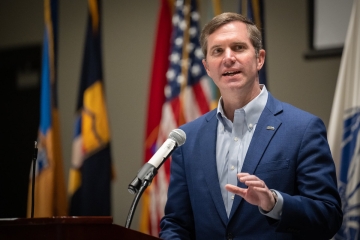
Kentucky Gov. Andy Beshear might be a moderate Democrat, but he’s no education reformer

After handily defeating his Republican rival for the governorship of red-hued Kentucky, Democrat Andy Beshear is having a moment as a center-left moderate who could run for president in 2028. But we education reformers should curb our enthusiasm because Beshear’s stances are alien to ours.

Daniel Buck 11.16.2023
NationalFlypaper

Kentucky Gov. Andy Beshear might be a moderate Democrat, but he’s no education reformer

Daniel Buck
11.16.2023
Flypaper

Culture wars aside, barriers to everyday family-school communication remain

Meredith Coffey, Ph.D.
11.16.2023
Flypaper

Liberty and civic education

David Davenport | Mark C. Schug
11.16.2023
Flypaper

Do schools provide equal value to all their students?

Amber M. Northern, Ph.D.
11.16.2023
Flypaper

Looking at a new framework for classroom evaluations

Jeff Murray
11.14.2023
Ohio Gadfly Daily

Cheers and Jeers: November 16, 2023

The Education Gadfly
11.16.2023
Flypaper

What we're reading this week: November 16, 2023

The Education Gadfly
11.16.2023
Flypaper
view

Culture wars aside, barriers to everyday family-school communication remain

Meredith Coffey, Ph.D. 11.16.2023
Flypaper
view
ddms image

Liberty and civic education

David Davenport, Mark C. Schug 11.16.2023
Flypaper
view

Do schools provide equal value to all their students?

Amber M. Northern, Ph.D. 11.16.2023
Flypaper
view
New classroom observation and assessment framework SR image

Looking at a new framework for classroom evaluations

Jeff Murray 11.14.2023
Ohio Gadfly Daily

view

Cheers and Jeers: November 16, 2023

The Education Gadfly 11.16.2023
Flypaper
view

What we're reading this week: November 16, 2023

The Education Gadfly 11.16.2023
Flypaper
view

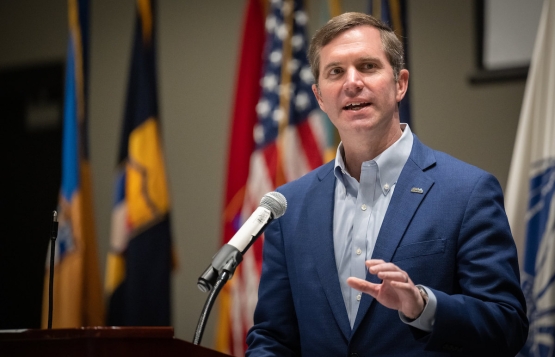
Kentucky Gov. Andy Beshear might be a moderate Democrat, but he’s no education reformer

Daniel Buck
11.16.2023
Flypaper

After handily defeating his Republican rival for the governorship of red-hued Kentucky, Democrat Andy Beshear is having a “moment.” Prominent commentators from CNN’s David Axelrod to Politico’s Jonathan Martin think he has 2028 presidential potential: “attractive, young southern moderate, experienced governor, appeals to both R’s and D’s.”

I’m no political consultant or election seer, but to the extent that such comments and predictions are true, even that serious political analysts think they might be true, we education reformers should curb our enthusiasm. Perhaps Beshear is a promising center-left moderate on some issues, but not on ours.

Beshear’s major proposal for his second term promises increased teacher pay and universal pre-K. He has blocked charter school and school choice legislation. As for the culture wars, he vetoed a bill that would have limited instruction into sexual topics and access to transgender surgeries for minors. It’s a laundry list of the standard, uninspired progressive promises of the pre-reform era (now shared, alas, by the Biden team): no changes to the system, just more of it.

Comparisons to two former southern Democratic governors who reached national prominence reveal the changing nature of education reform over recent decades.

Bill Clinton rose to the presidency as an attractive, young, moderate southern governor of a red state, a Tony Blair–style centrist willing to pat backs and cut deals. But here the Beshear similarities end. Clinton was an ed reformer, especially in K–12 education. He was a long-time advocate for charter schools, for higher academic standards, and for test-driven accountability. All that started when he was governor of Arkansas, then went national when he co-hosted the 1989 Education Summit with then-president George H. W. Bush that convened forty-nine of the country’s fifty governors to establish ambitious education goals and a system of accountability to pressure schools towards them, setting the agenda for education reform for the next three decades.

The goals they set were naively ambitious, and the accountability system to come from it was flawed, sanctioning poor performing schools without bolstering their capacity to improve. Even so, these reforms sought meaningful changes to the system, not simplistic calls for more funding or higher pay. What’s more, despite their imperfections, the standards-based reforms that followed (with Goals 2000 and the Improving America’s Schools Act, both under Clinton, then NCLB, enacted with bipartisan support early in the term of Bush 41) brought notable improvements in academic scores, especially in elementary mathematics. Charter schools began to proliferate around the land, with federal support to jump-start more of them. Insufficient improvements, to be sure, but improvements regardless.

It’s impossible to picture Beshear doing any of those things. Policy-wise, he’s much more like another southern Democratic governor with national prospects: Jimmy Carter. Prior to the modern education reform movement, the theory of action in his time focused on inputs—more money, more regulation, more days in school, more unions, more credentialing for teachers, more revised textbooks, more, more, more. Beshear would have loved it—but he was only four when Carter yielded the Oval Office to Ronald Reagan.

Upon his reelection last week, Beshear’s first words, save for thanking his family, were a pledge for higher teacher pay, which leaves me questioning to whom he owes a debt. This resembles Carter’s election debt to the NEA that led him (against advice from most of his team) to push through the federal Department of Education.

This is yet another sign that the bipartisan ed reform coalition has splintered. There have been countless post mortems declaring its death, and Beshear’s flaccid proposals only confirm this reality.

Aside from “the science of reading”—a rare point of agreement—there’s functionally no conversation or overlap between Republican and Democratic education proposals. Today’s Republicans focus almost exclusively on school choice, the limitation of politicized instruction, and the abolition of the U.S. Department of Education. Meanwhile, Democrats either obsess over the latest identity-themed fad or voice little more than insipid promises for money. Even perceived moderates like Josh Shapiro cave to union pressure when considering expanded charter or choice legislation.

A card-carrying conservative, I remain bullish (albeit cautiously) on education reform. The platform of Beshear’s rival, Daniel Cameron, could have bipartisan appeal: the inclusion of phonics in early elementary school, an expansion of afterschool and summer tutoring programs, increased pay of starting teachers, and stricter school discipline. Other Republican governors have reformed their civics and history curriculum, school choice is going gangbusters in just about every red state, and phonics has finally won the reading wars.

Unfortunately, there doesn’t seem to be a pathway forward for many such reforms in Democratic states—or red states like Kentucky that are run by Democratic governors. Like it or not, durable education change, whether at the state or federal level, requires durable bipartisan support.

All of that said, the landscape of education reform has shifted since the last time a red state Democrat became a media darling. Union politics now cow Democrats away from reform, and conservatives have leaned again into values-laden debates that they formerly set aside to make common cause with liberals. Meanwhile, like forgotten toys, accountability and standards receive little attention from either party.

I’d take Beshear’s bland, oatmeal-like policies over the eliminate-all-consequences, discovery-education-obsessed variety of Gavin Newsom. But that’s hardly a soaring endorsement. If our only options then are conservative culture wars issues that don’t win elections (however much I agree with them in principle), a Carter-like educational malaise, or Kombucha-flavored California radicalism, we all lose.

view

Culture wars aside, barriers to everyday family-school communication remain

Meredith Coffey, Ph.D.
11.16.2023
Flypaper

Since 2020, we’ve heard quite a lot about families’ growing influence over public schooling. From Virginia Governor Glenn Youngkin’s high-profile embrace of parental involvement, to the rise of Moms for Liberty, to “parents bills of rights” passed by four states and the U. S. House, parents’ voices have increasingly shaped the wider landscape of public education.

But the voices capturing national attention, by and large, don’t represent the everyday type of involvement that we know truly impacts academics: things like parent-teacher conference participation and family attendance at school events. Specifically, research shows that greater family involvement correlates not only with improved student achievement, but also with attendance, behavior, graduation rates, advanced course enrollment, and college enrollment.

These findings make intuitive sense. Regular communication means that families are more likely to learn how their child is doing and to hear about teachers’ concerns. Without such conversations, many families incorrectly assume that their child is succeeding in school—a particularly salient problem at a moment when parents are significantly underestimating learning loss. Engagement with teachers can also better equip the family to support the child outside of school hours. If a school advises families on strategies for extending a child’s math learning at home, for example, students at that school are more likely to meet grade-level expectations in math.

Unfortunately, we don’t have much reason to believe that such mundane but effective forms of family involvement are on the rise.

And although the benefits occur across socioeconomic (SES) and racial groups, many families of color and of low SES encounter barriers to school involvement, in turn putting their children at a disadvantage compared to White and/or middle-class peers.

Overall, Hispanic and Black families report less communication and weaker relationships with schools. Even though the federal government requires schools to communicate with families in a language in which they are proficient, Spanish-speaking parents on the whole communicate less frequently with their children’s schools than English-speaking parents—and we can only speculate about those whose languages are less common. And low-SES families often feel less involved in their children’s schools.

Misunderstanding may be at the root of many of these communication barriers. Families of low SES and Hispanic families are more likely to take a “hands-off” approach out of deference to the expertise of educators and the authority of administrators. Others, lacking familiarity with the American education system, simply may not know how to get involved. But teachers, who are predominantly middle-class and White, often interpret deference or unfamiliarity as a lack of interest, in turn making them also less likely to initiate communication.

Even more alarming evidence suggests that educator bias may be another contributing factor. Lower parental SES correlates with a lower likelihood of families’ feeling welcome at school. Teachers are less likely to contact immigrant Hispanic families with news of positive achievement. And a study of 3,600 principals found that all principals—though particularly White ones—were less likely to respond to an email from a parent they believed was Black.

Of course, families of all backgrounds want to support their children’s education. While we can’t eliminate communication barriers overnight, some relatively small policy interventions could have a large impact:

  1. District and school leaders should establish a dialogue protocol for conferences and other family communications. Specific questions can help teachers better grasp families’ cultural capital and challenges, and they can create space for families to articulate concerns and questions.

  2. Districts should mandate protected time for teachers to reach out to families. In most districts, teachers have limited time to conduct outreach, and it usually falls within periods also used for planning and grading.

  3. District and school leaders should fund activities and structures that encourage family involvement. Cultural organizations, inclusive committees that seek family input into school activities and events, family nights, and other organizations can allow families to participate in ways that enable them to feel comfortable and valued.

  4. Districts should—most obviously—diversify their teacher and school staff workforce. While this policy move is a heavier lift, it might do the most to improve family-school communications (not to mention other student outcomes). Having educators who share more in common with their students’ families may improve communication and trust, in turn increasing the likelihood of parental involvement. For recruitment efforts, districts can invest in teacher pathways that teachers of color are most likely to pursue, including Grow Your Own programs, which recruit teachers from local communities, and alternative certification pathways. Reports from educators of color indicate that financial incentives like higher starting salaries, loan forgiveness, expanded leadership opportunities, and improved administrative support could all improve retention.

Districts rarely hesitate to respond to families with time, resources, and cultural capital. They also shouldn’t hesitate to expand access for the many other families whose children their schools serve.

view
ddms image

Liberty and civic education

David Davenport | Mark C. Schug
11.16.2023
Flypaper

Editor’s note: This was first published by The Liberty Fund.

The state of civic education in America is low but the stakes are high. Benjamin Franklin warned about the dangers when he was asked what kind of government the Founders had given us: “A Republic, if you can keep it,” Franklin responded. It turns out that nothing is more foundational to keeping the republic than robust civic education. The whole of the republic—its constitutional order and its protection of “life, liberty and the pursuit of happiness”—relies on a virtuous and educated people. Sadly, all of that has been in a steep decline and is now at risk.

Liberty and republicanism require civic education

The Founders understood that to enjoy the fruits of liberty, the American people would need to be virtuous, including a civic virtue that required them to look out not just for themselves but to sacrifice for the good of the whole. Recognizing that “enlightened statesmen would not always be at the helm,” as James Madison put it in Federalist No. 10, the Founders also built into the Constitution an elaborate balancing of interests and powers, including checks and balances and separations of power of many kinds. As scholar Gordon Wood observed, the Founders married religious virtue with modern political science in order to keep and sustain the republic.

For both pillars of the republic—civic virtue and constitutional order—a robust civic education would be required. As the Massachusetts Constitution of 1780 put it: “The most obvious republican instrument for…inculcating virtue in a people was education…being necessary for the preservation of rights and liberties.” Nearly all the leading Founders pledged allegiance to robust and widespread education in order to keep the republic. In his final message to Congress, President George Washington urged the expansion of education as essential to the perpetuation of the new nation’s common values and the chance of a “permanent union.” Thomas Jefferson argued that education made possible the very consent of the people on which the government was built. Indeed, Jefferson advocated public education from the earliest grades through the university. John Adams asserted that education of all classes of people should be a concern of the government and funded at public expense.

As Notre Dame scholar David Campbell has pointed out, the primary purpose of public schooling in the founding era was civic education. “U.S. public schools were actually created for the express purpose of creating democratic citizens,” Campbell has written. Legendary educator John Dewey warned in his 1916 book Democracy in Education that even teaching the “three R’s” (reading, writing and ‘rithmetic) were not enough to achieve the goal to “educate a useful citizen.” American schools were founded not to train students for jobs but to prepare them to be citizens of their democratic republic. My, how things have changed.

The sad state of civic education today

The Founders would be sorely disappointed to see the low priority schools now give to civic education. It is hardly taught at all in elementary and middle schools, reduced now in most states to a single course in high school. The most recent NAEP (National Assessment of Educational Progress (also called “the Nation’s Report Card”) scores show that only 22 percent of American 8th graders are “proficient” or better in US government and civics, while a shocking 13 percent are proficient or better in US history. Unfortunately, this problem is not limited to 8th graders. A study by the Woodrow Wilson National Scholarship Foundation found that only one in three Americans could pass the civics portion of the citizenship test, which immigrants pass at more than a 90 percent rate. Other surveys show that Americans don’t know the three branches of government and can’t name a single right guaranteed by the First Amendment. Some think Judy Judge is on the Supreme Court and that climate change was triggered by the “Cold” war.

In an October, 2020 study for the Orrin G. Hatch Foundation, I described the primary causes of the decline in civic education. A series of education crises has prompted huge turns away from the teaching of civics—as well as the humanities and social sciences more broadly—to other topics deemed more urgent to the national interest. The Soviet firing of the first space satellite, Sputnik, in 1957 not only led to an acceleration of America’s space program but also to a greater emphasis on science in our schools. Similarly, a major national report, “A Nation At Risk” in 1983, sounded an alarm that American students were falling behind their international peers and led to increased curricular demands for reading and math in schools. The federal “No Child Left Behind” law in 2001 codified this emphasis and required extensive student testing, especially in reading and math. Since neither the school day nor school year were lengthened to make room for these curricular additions, they came at the expense of social science and the humanities, including civic education. Now there was essentially no teaching of civics in elementary and middle schools, with only a single one-semester course in high school—too little too late.

And this shift away from civics is hardly over. The new rage is STEM (science, technology, engineering and math) education so that students will be qualified for jobs in those fields. One widely quoted estimate is that the federal government now spends $54 per child per year on STEM education and only five cents on civics! National testing on civics and history are given only once, in the 8th grade, whereas more “important” subjects are tested in the 4th and 12th grades as well. The clear message we are giving is that civic education is no longer of real importance.

Too Little civic education puts liberty and the republic at risk

We are already seeing downstream effects of poor civic education. Americans’ trust in government has been in steady decline, with young people leading the way. The Pew Research Center has studied trust in government since 1958 and finds it at “near historic lows” at only 24 percent. This lack of trust is especially prevalent among young people, as older Americans expressed trust at nearly double the rate of the young. Of course, the obvious cause is a lack of understanding: how can you trust what you do not understand? As one study noted, “Those who are bewildered by such basics as the branches of government and the concept of judicial review are less likely to trust the court…Importantly, those who have taken a high school civics class are more likely to command key constitutional concepts.” Clearly poor civic education has put trust at risk.

Another downstream effect of poor civic education is low voter turnout and reduced civic participation. Alia Wong pointed out in The Atlantic that only half of eligible adults ages 18-29 voted in the 2016 presidential election, and only 20 percent in the 2014 midterm election. Among older age groups, two-thirds voted in 2016. Experts agree that, again, poor civic education is a root cause, and there is widespread agreement that better civic education would help. Poor civic education has put voting and civic participation at risk.

The risk to liberty from poor civic education is shown even more clearly by how poorly young people understand socialism, communism, and the free market systems. Previously thought of as anathema to most Americans, socialism has now become popular, even trendy, among younger generations. A number of polls and surveys and recent years attest to this rising acceptance of socialism among the young. As early as 2014, a Reason-Rupe study showed that 58 percent of young people ages 18-24 held a favorable view of socialism. A 2016 YouGov survey showed that 43 percent of young people held a favorable view of socialism; similarly a 2018 Gallup Poll number was at 51 percent. Even more alarming, a 2019 Harris Poll found that 49.6 percent of Millennials and Gen Zers would prefer to live in a socialist country, while a 2021 YouGov poll said 36 percent of those groups had a favorable view of communism.

The favorability of socialism is generational but it is also educational. Apparently when young people use the term socialism, they are not thinking of its classic definition: an economic system in which the people own the means of production and distribution. The Gallup organization published a poll on the meaning of socialism in October, 2018, and found the following top three understandings of the term: equality (23 percent), government ownership and control of business (21 percent) and free services from the government (10 percent). For every respondent who understood the classic definition of socialism, two thought it meant equality and free goods. In a 2010 New York Times/CBS poll, only 16 percent of young people could accurately define socialism.

Digging a little deeper, one finds a direct contradiction between young people’s favorable view of socialism and their preference for who should run business. In the same 2014 Reason-Rupe survey where 58 percent of young people held a favorable view of socialism, they preferred markets over government to lead the economy by a two-to-one margin. Likewise, the May 2019 Gallup Poll found 43 percent saying socialism would be good for the country, yet they chose market control over government control of everything from the economy to wealth distribution and even healthcare. Clearly there is a major educational gap in young people’s understanding of the American market system compared with socialism.

American politicians have exacerbated the misunderstanding of socialism. When Senator Bernie Sanders and others identified Denmark as a kind of socialist, or democratic socialist, economy in the 2016 presidential campaign, the Danish Prime Minister felt the need to clarify that Denmark was not socialist but rather “a market economy” with “an expanded welfare state.” It turns out that when young people say they like socialism, what they really want is an expanded welfare state and more free stuff from the government. This basic lack of understanding of economic systems shows a major deficit in their education, one that a more robust civic education should address.

Grave dangers face liberty and the republic including loss of trust in government, low voter turnout and civic participation, and misunderstanding of how the American system actually works. Surely this is a crisis of even greater proportion and consequence than Sputnik or international test scores or preparing for jobs in the new economy. As Chief Justice John Roberts has said, we have let civics fall by the wayside and we need to revive it in order to protect our democracy.

Revisionist and politicized content of history and civics endangers liberty

Beyond the problem of too little civic education is the politicized content of much of history and civics today. Howard Zinn’s A People’s History of the United States in 1980 launched a major turn away from a more positive view of US history and civics that had been the consensus toward a series of political attacks on American history and a new revisionist history. Originally thought of as a kind of supplemental American history text, Stanford University education professor Sam Wineburg has said that Zinn’s text “has arguably had a greater influence on how Americans understand their past than any other book.”

Zinn starts right in with Christopher Columbus who, according to Zinn, was not an explorer and discoverer but rather a greedy murderer pursuing the gold of native Indians. The founding of America, per Zinn, was a myth invented by the upper class and sold to the common man, with the Constitution really aimed at preserving the wealth of a few over the many who were poor. As Gordon Lloyd, an expert on the American founding, has said: “It’s hard to love an ugly founding,” which is exactly what Zinn has offered to students.

Now the 1619 Project, introduced by the New York Times in 2019, has continued the negative and revisionist history of the US. It seeks to reframe the founding of the country as the time when slaves first came to the continent, rather than the traditional founding dates of 1776 with the Declaration and the American Revolution, and 1787 with the signing of the Constitution. The Project would establish the economic and social institution of slavery as the real founding story, not the principles of liberty and equality proclaimed by the Declaration and the unique political system established by the Constitution. The Pulitzer Center has undertaken to bring the 1619 Project into the classroom for widespread adoption and use. Other education movements such as critical race theory, action civics and ethnic studies have accelerated a leftward and negative revision of US history and civics.

If American history is all about money and greed, little room is left for an appreciation of liberty and the political order. Instead of creating patriots with a love of country, we are often teaching ideas that cause students to hate America. As Thomas Jefferson said, “Everything depends on establishing this love in a republic. And to inspire it ought to be the principal business of education.” Turning this misguided approach to history and civics around will be a big undertaking, indeed.

Some good news

Fortunately, it is possible to improve civic education without waiting for a sweeping bill from a divided Congress or a major investment from a billionaire philanthropist. A number of important contributions can and should be made by parents, citizens, educators and political leaders that could secure the future of liberty and the republic. But the time to start is now, before the decline becomes irreversible.

In his farewell address, President Ronald Reagan chose to emphasize the need for better civic education, stating clearly where it must begin. Reagan went right to the need to protect liberty, saying, “We’ve got to do a better job of getting across that America is freedom,” adding that freedom is “fragile” and “needs protection.” So, he continued, we have to do a better job of teaching history, pointing out that losing our national memory would “result, ultimately, in an erosion of the American spirit.” We must “start with some basics,” Reagan said, with “more attention to American history and a greater emphasis on civic ritual.”

But then he turned to the question of where to begin, and it was not with politicians or even schools. Instead, Reagan offered, “all great change in America begins at the dinner table.” Parents must take the lead in teaching “what it means to be an American.” Reagan stated a goal, which was valuable in itself: Developing “an informed patriotism.”

Then schools must do their part and this starts with state legislatures and boards of education requiring more civics to be taught. The gold standard should be some teaching of civics in age-appropriate ways every year beginning in kindergarten. Then students are ready for a full year—not just a semester as is common now—of civics in high school. The federal government, which oversees the NAEP test, should require it be given in government and history in grades 4 and 12 as well as 8. All of this carries the clear message that civics are important.

How we prepare teachers of civics is also important. The best practice is to teach US history and civics using primary documents: the Constitution and Declaration, certainly, but also speeches and essays of the period. Students need to leave their 21st century lenses behind and travel back to key moments in American history to understand why our republic works as it does, and how it could be maintained and strengthened. This is both less boring than textbooks and less politically controversial, allowing students to study history and civics on their own terms and draw their own conclusions.

We have a long way to go to strengthen our grip on liberty and the future of the republic with better civic education. This is at least as big an educational crisis as Sputnik or STEM, and we will need all hands on deck to promote better civic education.

view

Do schools provide equal value to all their students?

Amber M. Northern, Ph.D.
11.16.2023
Flypaper

Previous literature on school quality and teacher quality largely assumes that good schools and good teachers are beneficial for all enrolled children, which means that a school’s “value added” is typically calculated as the average effect on students. A recent study from Matthew Naven of Washington and Lee University asks whether schools can be more effective for a specific type of student. It’s a wonky read, but is a worthy wrinkle (say that five times) to supplement our understanding of school quality.

The study uses individual-level data on California public school students spanning 2002 through 2013, data that are linked to postsecondary records. Naven focuses on students in grades four to eleven since there are no prior test score data for younger pupils, and he targets English language arts since students are tracked to different non-comparable math tests starting in grade seven. He calculates standard value-added models first—models that control for prior test scores and student demographics—and then extends that analysis via use of “drift methodology” as honed by Raj Chetty and Jonah Rockoff. The latter allows value added to change from year to year, which is important because schools experience things like staff turnover that could impact their quality in any given year.

The drift method also includes controls for three additional factors: the characteristics of the neighborhood in which a student lives (based on Census tract data from the American Community Survey); the prior test scores and college enrollment status of a student’s older sibling(s) living at the same address; and the effects of a child’s peers (including how their varying ability levels influence classmates). Naven uses this enhanced model to calculate value added for each school’s low- and high-socioeconomic-status (SES) students (meaning those living in a household with a median income of roughly $60,000 versus $100,000); minority and non-minority students (the latter are white and Asian); and male and female students.

What do the various calculations reveal? The standard model shows that, on average, schools provide less value (in terms of boosting test scores) to their low-SES, minority, and male students. But after controlling for the income level of neighborhoods, the outcomes of older siblings, and the effects of peers, the magnitude of within-school differences diminishes. Specifically, relative to test scores, schools add similar value when it comes to educating low- and high-SES students and minority and non-minority students, but add slightly more value when educating females (within-school differences account for 6 percent of the gender gap in test scores). Turning to postsecondary enrollment, the pattern is the same but larger: Within-school differences in quality account for 22 percent of the difference in college enrollment between men and women.

Two takeaways. The first is for state-level folks who are still committed to getting value-added models right (we see you out there!). Don’t assume that a school has the same impact on all types of students enrolled in it. Investigate it. Because, depending on how your accountability system is structured, it may generate school growth measures based more on the type of students enrolled than on true growth. That’s a real problem that needs to be addressed and one that the right growth measures can help avoid (along with better controls and smart use of them).

Second, schools seem to be better at increasing the chances that women will attend college. That’s good for our young women. But they need to be equally good at boosting the chances of men. Because, barring life under the proverbial rock, everyone knows that our young men need ample help on the education front.

SOURCE: Matthew Naven, Within-School Heterogeneity in Quality: Do Schools Provide Equal Value Added to All Students? Annenberg Institute at Brown University (May 2023).

view
New classroom observation and assessment framework SR image

Looking at a new framework for classroom evaluations

Jeff Murray
11.14.2023
Ohio Gadfly Daily

Real time classroom observations by trained evaluators hold promise to accurately assess the quality of teaching and learning going on inside those four walls; an as-yet-untapped area of “education R&D”. But numerous roadblocks—lack of time and training, disagreement over rubrics, and teacher resistance among them—stand in the way of a systematized and smoothly-functioning assessment system. A group of researchers from Australia has developed a new framework that evaluates teacher and student engagement with course content that can be utilized while observing video-recorded lessons. A recent report explains their methods and describes the findings of its application.

The basis for the new teacher evaluation framework comes from the research of Michelene T. H. Chi, professor at the Mary Lou Fulton Teachers’ College at Arizona State University. Chi was a 2023 Yidan Prize winner for developing the ICAP (Interactive, Constructive, Active and Passive) theory of cognitive engagement to help understand how students learn.

A précis on ICAP’s four modes of engagement: “Passive” cognitive engagement is where learners are being oriented toward and receiving information from instructional materials, such as listening to a lecture or watching a video, without overtly doing anything observable related to more active learning. “Active” engagement requires focused attention while manipulating lesson materials or input—think underlining text or writing a summary of an essay. “Constructive” engagement refers to behavior that produces new ideas that go beyond the information given; students might relate new information to previous knowledge, generate inferences that are not explicitly stated in the text, or provide justifications that make the text or the problem solution more explicit. And “interactive” engagement is a group activity that meets two criteria: (a) the partners’ utterances must be primarily Constructive, and (b) the interaction must extend the generative nature of the prior contributions of the individual partners. In short, it’s a constructive-type engagement with a partner or two rather than the teacher.

Chi’s work argues three that there is a clear hierarchy among these four mode, with passive at the bottom and interactive at the top. Active engagement leads to stronger learning outcomes than passive, she says, because students engage with the material, relate it to prior knowledge, and store it in easily-retrievable ways. Constructive is better than active because students must provide explanations, raise critical questions, or complete other tasks that engage the highest levels of cognitive processing. And the interactive mode of engagement leads to the strongest learning outcomes because dialogue between learners can give rise to knowledge change processes and can create new knowledge that the partners could not have generated alone.

The Australian researchers devised an ICAP-based coding framework that distinguishes the four modes of cognitive engagement, provides reviewers clear operational criteria for defining the different modes when they observe them, and links the different modes to distinct learning outcomes. Best of all, the coding can be done using recorded lessons and transcripts, minimizing classroom disruption that can occur during live observation and maximizing the number observations a single reviewer can complete.

They watched and coded one thirty-minute video recorded lesson from twenty teachers from eight schools in the Greater Adelaide region of South Australia. All but one of the teachers taught in public schools, and all but one at the secondary level; each had more than five years of teaching experience. All had Bachelor degrees, and four also had master’s degrees. All of the teachers taught STEM-related subjects, including math, hard science (physics, biology, etc.), and soft science (psychology, health, etc.). Most schools were rated “less advantaged” via the socio-economic criteria used by the South Australian state government, including several landing at the most disadvantaged level (7 on a 1–7 scale). A few schools were on the “more advantaged” side of the spectrum, but no higher than a 4 on the scale.

The observers coded the lessons and tasks the teachers presented and assigned, as well as the verbal instructions they used in whole class directions, to determine which of the four areas of student cognitive engagement they utilized. Student actions, talk, and outputs were also examined to assess whether the actual mode of engagement that students displayed matched what was described in the teachers’ intentions for each lesson or task. Inter-rater reliability testing showed strong correspondence between different observers’ coding of lessons and tasks.

All together, the observers identified and coded seventy-six lessons and teacher-assigned tasks. Thirty-eight percent of those were active, 35 percent were passive, 13 percent were constructive, and 12 percent were interactive. Observed student engagement with the lessons and tasks—meaning the mode students were in, versus the mode teachers intended—was coded separately. But there was a high degree of correlation—except that students were observed in passive mode more often than any other, especially in the hard-science classes and in the less advantaged schools. In other words, some lessons and tasks designed to be active, constructive, or interactive instead produced passive student engagement.

The researchers deem all of this to be problematic for numerous reasons—including the possibility that it shows teachers who believe that engaging with difficult material is beyond the capabilities of certain students and are choosing to teach “downward” to an entire classroom based on that belief. However, their concerns are predicated on several questionable convictions. Such as that ICAP’s interaction hierarchy is gospel and that students cannot fully and properly understand, say, physics without a specific (and much higher than observed) percentage of constructive and interactive engagement with the material. Their basis for concern is also dependent on the observation of a single lesson, which is not able to account for the flow of a semester- or year-long course, no matter how accurate their coding instrument may be. Many such courses, especially in the hard sciences, typically start with introduction of new and unfamiliar material via lecture and progress to independent and group activities (experiments, reports, and the like) designed to demonstrate and reinforce the new concepts. For all we know, the very next lesson from those teachers, not observed or coded, would have flipped the engagement mode timing entirely around with a whole-class discussion or an entire class period of hands-on lab work.

It’s not a bad idea for teachers to understand how much time they spend in each mode—the observational framework does seem adequate to that purpose—and to provide advice and techniques for them to keep students meaningfully engaged as much as possible. But this research does not yet go far enough to actually prove how much passivity is occurring or whether it’s a problem no matter what that percentage turns out to be. More observation, coding (AI, anyone?), and analysis are minimum requirements.

SOURCE: Stella Vosniadou et al., “Using an extended ICAP-based coding guide as a framework for the analysis of classroom observations,” Teaching and Teacher Education (October 2023).

view

Cheers and Jeers: November 16, 2023

The Education Gadfly
11.16.2023
Flypaper

Cheers

  • Grade inflation sends false signals to parents, but practices such as providing the average class score can mitigate such misinformation. —Alyssa Rosenberg, Washington Post
  • In an upset, three reformist candidates unseated union-backed school board members in Denver. —Chalkbeat
  • An alliance of parents, teachers, and policymakers have rallied in an effort to restore algebra in San Francisco. —Wall Street Journal Editorial Board
  • A new campaign aims to give parents a more accurate account of whether their kids are on grade level. —The 74

Jeers

  • Oregon is the latest state to no longer require that students pass high school graduation tests. —Matt Barnum, Wall Street Journal
  • Illinois abandoned a school choice initiative serving almost 10,000 low-income students. —Chalkbeat
  • “Regents exams may become optional for high school graduation in New York.” —New York Times
view

What we're reading this week: November 16, 2023

The Education Gadfly
11.16.2023
Flypaper
  • Preferring half measures, states must go all-in for universal education savings accounts if school choice is to truly revolutionize education. —Roland Fryer, Wall Street Journal
  • School vouchers fail to create the conditions necessary for effective markets to function. —Douglas Harris, Annenberg Institute
  • A once popular economic concept, so-called nudge thinking, falls into disrepute. —Eduardo Porter, Washington Post
  • The biggest obstacle to school-wide phone bans isn’t students; it’s parents. —Pamela Paul, New York Times
  • A new survey finds that even students don’t like overly-lenient grading and attendance policies. —New York Times
  • “How Reconstruction created American public education” —Adam Harris, The Atlantic
Fordham Logo

© 2026 The Thomas B. Fordham Institute
Privacy Policy
Usage Agreement

National

P.O. Box 110
Burke, VA 22009

202.223.5452

[email protected]

Ohio

P.O. Box 82291
Columbus, OH 43202

614.223.1580

[email protected]

Sponsorship

130 West Second Street, Suite 410
Dayton, Ohio 45402

937.227.3368

[email protected]