Mobile Navigation

  • National
    • Policy
      • High Expectations
      • Quality Choices
      • Personalized Pathways
    • Research
    • Commentary
      • Gadfly Newsletter
      • Flypaper Blog
    • Events
    • Scholars Program
  • Ohio
    • Policy
      • Priorities
      • Media & Testimony
    • Research
    • Commentary
      • Ohio Education Gadfly Biweekly
      • Ohio Gadfly Daily
  • Charter Authorizing
    • Application
    • Sponsored Schools
    • Resources
  • About
    • Mission
    • Board
    • Staff
    • Career
Home
Home
Advancing Educational Excellence

Main Navigation

  • National
  • Ohio
  • Charter Authorizing
  • About

National Menu

  • Topics
    • Accountability & Testing
    • Advanced Education
    • Career & Technical Education
    • Charter Schools
    • Curriculum & Instruction
    • ESSA
    • Evidence-Based Learning
    • Facilities
    • Governance
    • Personalized Learning
    • Private School Choice
    • School Finance
    • Standards
    • Teachers & School Leaders
    • Think Again
  • Research
  • Commentary
    • Gadfly Newsletter
    • Flypaper Blog
    • Gadfly Podcast
  • Events
  • Scholars Program

The Education Gadfly Weekly

Sign Up to Receive Fordham Updates

We'll send you quality research, commentary, analysis, and news on the education issues you care about.
Thank you for signing up!
Please check your email to confirm the subscription.

The Education Gadfly Weekly: High standards are not to blame for NAEP declines

Volume 25, Number 38
9.25.2025
9.25.2025

The Education Gadfly Weekly: High standards are not to blame for NAEP declines

Volume 25, Number 38
view
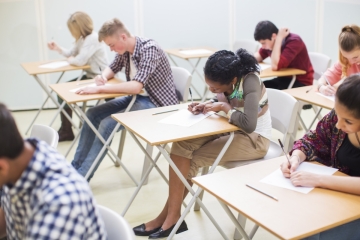
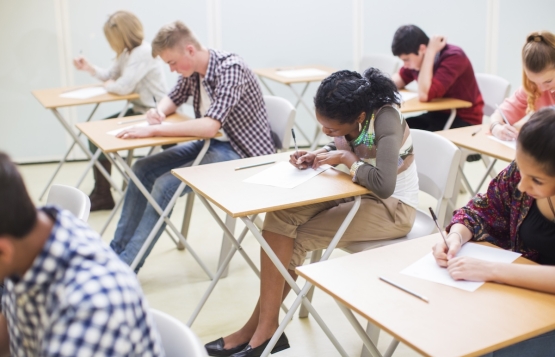
Teenagers at school taking a test
High Expectations

High standards are not to blame for NAEP declines

Critics contend that the National Assessment Governing Board, which sets policies for the Nation’s Report Card, sets the bar too high—that the definition of “proficient” is too challenging. This aligns with moves to lower the bar in parts of the country, including efforts in some states to make it easier for kids to pass end-of-year assessments or to eliminate those tests completely. This line of thinking and these polices are deeply misguided.

Patrick Kelly 9.25.2025
NationalFlypaper

High standards are not to blame for NAEP declines

Patrick Kelly
9.25.2025
Flypaper

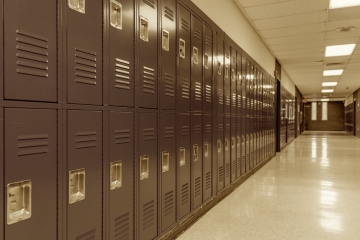
From lockers to group projects, schools have changed more than you think

Meredith Coffey, Ph.D.
9.25.2025
Flypaper

Gaslighting parents about learning loss could cost Democrats the White House

Ben Austin
9.25.2025
Flypaper

How alternative certification programs impact teacher pipelines and student outcomes

Jeff Murray
9.25.2025
Flypaper

Joyful classrooms, but zero public transparency: Inside an ESA micro-school | Episode 987 of The Education Gadfly Show

9.24.2025
Podcast
view
School lockers

From lockers to group projects, schools have changed more than you think

Meredith Coffey, Ph.D. 9.25.2025
Flypaper
view
Parent and child doing homework

Gaslighting parents about learning loss could cost Democrats the White House

Ben Austin 9.25.2025
Flypaper
view
Teacher in a classroom

How alternative certification programs impact teacher pipelines and student outcomes

Jeff Murray 9.25.2025
Flypaper
view

Joyful classrooms, but zero public transparency: Inside an ESA micro-school | Episode 987 of The Education Gadfly Show

Chandler Fritz, Michael J. Petrilli, David Griffith, Ph.D., Adam Tyner, Ph.D. 9.24.2025
Podcast
view
Teenagers at school taking a test

High standards are not to blame for NAEP declines

Patrick Kelly
9.25.2025
Flypaper

The just-released Nation’s Report Card showing score declines for eighth graders in science and downward trends in reading and math for 12th graders is eliciting a range of reactions. The one we don’t have time for, given the extent of student needs, is skepticism.

Critics contend that the National Assessment Governing Board (NAGB), which I serve on and which sets policies for the Nation’s Report Card, sets the bar too high. My colleagues and I have identified the NAEP (National Assessment of Educational Progress) “Proficient” level as the goal. There’s a Proficient level—as well as “Basic” and “Advanced” levels—for every subject that NAEP assesses. Attaining it means that students have demonstrated competence over challenging material.

Criticism of NAEP as “too challenging” aligns with trends to lower the bar in parts of the country. That has included efforts in some states to make it easier for kids to pass end-of-year assessments or to eliminate those tests completely.

Who that helps is unclear to me. As a cross-country coach, my runners will be ill-prepared if my evaluation of their performance at practice is exclusively drawn from running less than two miles when the actual competitions cover a distance of 3.1 miles. Similarly, NAEP’s challenging yet realistic expectations help evaluate how prepared students are for the ultimate competition of experiencing success beyond school.

I also believe that calls to lower the bar on NAEP threaten the assessment’s unique capacity to serve as a measure of academic progress. The Governing Board avoids changes to assessments that would weaken our ability to compare results from prior years, especially in math and reading.

This unique design makes the 2024 results in 12th grade reading and math especially concerning. Regardless of where you think the goalpost should be, a downward trend is a downward trend. The measuring stick hasn’t changed. The results follow a string of other NAEP releases showing declines since the pandemic and falling scores that began even earlier, around 2015, in some grades and subjects.

On the latest NAEP tests, students working at different achievement levels lost ground compared to 2019 except for the highest-performers among them. Those results mirror my experience working with my Advanced Placement U.S. Government class. Last year, all my students scored 3 or above on the AP exam, the standard typically required for college credit. But I’m also a parent to teens, a coach, and an active member of my community. I care about all the kids our school serves, and I worry about their future.

I’ve been teaching for 21 years. The students who will graduate in 2026 will encounter a far more complicated world than those who left in 2005. It doesn’t bode well if they’re leaving school with less knowledge and fewer skills.

They’ll need to evaluate arguments, wade through competing information, and vie for entry-level positions amid AI-fueled shifts in the economy. Even roles that might not require a college degree call for technical abilities and problem-solving skills. When our home’s air conditioning went down this summer, the technician used new, computer-based technology to assess the problem and digital apps to communicate with and invoice us. If kids are losing ground in STEM and literacy, they’ll be less equipped to succeed in nearly any industry as well as daily life.

A higher percentage of students are now working below NAEP Basic, which is itself a way station en route to proficiency. High school seniors who don’t reach Basic likely can’t make inferences to show they understand elements of a reading passage or apply their knowledge of percentages to solve a real-world problem.

We have to respond with urgency. That starts with efforts to tackle chronic absenteeism. Students on NAEP surveys report more absences, and there’s a correlation between poor attendance and score declines. Approaches that boost attendance include improving data collection and reporting, fostering belonging, and tapping community partners for help. States like Rhode Island that are trying these strategies are making progress.

I’m also glad to see that states adopting strong, evidence-based policies around reading, including teaching phonics and building student knowledge on topics like history and civics, are seeing gains, particularly at the elementary level. I want more students to have access to rigorous high-school coursework, and that requires a strong literacy foundation.

In South Carolina this year, there was a 43 percent drop in third graders failing to meet expectations on the state’s reading assessment. On the other hand, Louisiana, which is also focused on using literacy practices backed by research, has returned to pre-pandemic achievement levels in reading on the fourth-grade NAEP. Alabama did that in math and has similarly focused on evidence-based approaches. I hope this focus on what works becomes the norm throughout public education.

This is personal. One of my daughters is graduating this year, and many kids I’ve watched grow up are doing the same. We’re sending them into environments—whether they’re going to college, careers, or the military—that look different from the past.

We can’t get distracted by questions like whether we’re asking too much of students. Instead, I would challenge every adult who cares about the future success of children to ask what else can we do to ensure that every student reaches their full potential.

view
School lockers

From lockers to group projects, schools have changed more than you think

Meredith Coffey, Ph.D.
9.25.2025
Flypaper

What do the conservative former U.S. Secretary of Education Betsy DeVos, her liberal predecessor Arne Duncan, and the professor who taught my first pedagogy course in graduate school all have in common? Within recent memory, they’ve all said that schools haven’t changed in more than a century. The American K–12 system, the popular narrative goes, was designed long ago based on a factory model: grouping students by age, departmentalizing subjects, and ringing bells between precisely timed class periods.

On some counts, this story is accurate. Shortly before World War II, my grandparents attended high schools structured this way, and a decade from now, my children presumably will, too. In terms of content, both my father and I were assigned Hamlet, Macbeth, and The Crucible, all of which remain among the top ten books taught in grades 6–12 today. And the typical Algebra I-Geometry-Algebra II sequence dates to the mid-twentieth century. For better or for worse, much has stayed the same in American high schools.

Yet, as others have noted, much else has changed in our schools, even in the two decades since I graduated (what’s up, class of ‘05!). Certainly, there’s widespread anxiety over some of the big changes, like learning loss, smartphones, and AI—and with good reason. But what about the mundane stuff that doesn’t make headlines? A recent New York Times op-ed explored how our world so often shifts in ways that we barely notice at the time. Has change also quietly crept into schools in ways that haven’t seemed worthy of contemporaneous remark?

Brace yourself. Millennial nostalgia ahead.

I’ll start with the most mundane of all, the quintessential school backdrop of yesteryear: the humble locker. In fifth grade, I received with pride my first locker assignment—a true coming-of-age moment—and I think enough time has passed that I can safely share that my sixth-grade locker code was the unforgettable 0-10-20. And the location of one’s locker was a thing! High or low? Which hallway? Whose was near yours? What notes would you slide inside your friends’ lockers? And of course, how would you decorate your own? Indeed, the ubiquitous locker appeared in representations of high school from Gen X’s Fast Times at Ridgemont High (1982) to my contemporaries’ Mean Girls (2004).

In 2025, alas, the hallway locker is almost no more. There’s less need, as students have exchanged three-ring binders and brown bag-covered textbooks for Chromebooks, and that’s coupled with greater concern about lockers’ implications for school safety. Individual backpacks must contain the entirety of the few physical materials that students still carry. The demise of the locker may bring more order in the hallways, but I wonder, too, whether it also might mean the dissolution of a “third place” within schools, a space where—again, for better or for bitter—students don’t interact as they once did.

Another near-obsolete space for forced socialization: the group project. Yes, to the dismay of overachievers everywhere, group projects still exist. But twenty years ago, we had to meet in person to tackle the offending assignment. Sometimes we convened at someone’s house to assemble a shoebox diorama or prepare an American history presentation. Other times we just met at the school library. Either way, it was sure to be awkward! Nonetheless, you were compelled to agree upon a meeting time and place, and then to speak face to face with someone with whom you might have otherwise never made eye contact.

Today, however, group projects are often done asynchronously. During class, kids divvy up tasks. Then, both in and out of class, each completes his or her portion using Google Docs, Google Slides, and a host of other digital tools that allow for simultaneous remote collaboration. And if groupmates need to check in with one another outside school hours, a quick text or email will usually suffice. No direct conversation required.

This greater flexibility may be more equitable. And the group member who didn’t pull their own weight twenty years ago would still be the group member who doesn’t pull their own weight today, so we’re breaking even there. Still, today’s setup invites even more procrastination (why not add your slides at 2:00 a.m.?), and it certainly requires less actual interaction.

Yet the decline of face-to-face communication between students hasn’t translated into less communication overall, which brings me to my third mundanity: family-school communications. In ye olde twenty-aughts, the extent of my parents’ school correspondence was as follows. They received my quarterly report card, and at least one of them dutifully attended back-to-school night each year. Additionally, a few teachers gave us sheets to track our own averages, and we earned points if we got a parent’s or guardian’s signature each week. Precisely once, my mother initiated contact with a teacher, when I was struggling in pre-calc; she promptly declared the teacher unhelpful and found me a tutor. That concluded the parent-school interaction.

In theory, my parents could have called or emailed my teachers at other times, but they didn’t. Their level of engagement was standard among families where kids weren’t having noteworthy academic or behavioral issues. (And a couple of my editors would like to point out that email wasn’t even an option when they were in school.)

But much of the above will sound utterly quaint to high schoolers today. Why track your grade average on a piece of paper when your school’s online grading platform already contains that information? Why would your teacher need a signature when your parent or guardian is already subjected to an endless stream of notifications about your activities and grades, updated in real time? Managing all the data input and electronic communication requires additional labor from teachers—having recently taught high school, I am well aware—but the ease and frequency of information-sharing is an overall good. More timely knowledge about a child’s difficulties can equip families to address them sooner, and family involvement can improve achievement, attendance, and other outcomes.

American schools have evolved in myriad other ways, too, both mundane and not. What I wonder, though, is how some of these gradual changes in everyday communication have come to shape school communities; schools, families, and students have more access to information but less face-to-face engagement. What are the benefits and drawbacks of this shift? What does it mean, if anything, for high schools as socializing agents and cultivators of civil society? Or maybe that’s too ambitious a question for such mundane changes. I’ll mull that over with some colleagues—via email, obviously.

view
Parent and child doing homework

Gaslighting parents about learning loss could cost Democrats the White House

Ben Austin
9.25.2025
Flypaper

As a Los Angeles Unified School District parent during the pandemic, I had a front row seat as my fellow Democrats and their teachers union allies lit the match that turned a global health crisis into an education inferno.

I watched my daughters isolate at home every day during the school closures, logging onto the occasional Zoom, often without video while lying horizontal in bed, in what we loosely referred to as “school.” As weeks bled into months, as one lost school year bled into another, I watched my daughters’ anxiety spike and their spirits dim.

When I began organizing with other LAUSD parents to reopen all schools for all kids, I watched the president of the teachers union—which controlled our schools along with the Democratic Party—gaslight parents, as if ripped from a lesson plan on George Orwell, that there is “no such thing as learning loss.”

This shocking claim went unchallenged by our Democratic mayor, our Democratic governor, and our Democratic president—all of whom uncoincidentally ran with strong teachers union backing. It is a tragic understatement to say that assertion has not aged well.

The most recent NAEP national report card included the first reading and math results for 12th graders since before the pandemic, and it showed across-the-board declines for American children—with reading scores dipping to their lowest levels in American history.

Dan Goldhaber of the American Institutes for Research tied much of the abysmal data directly to pandemic-related school closures. Tom Kane of the Harvard Graduate School of Education called the results a “five-alarm fire.”

Marc Porter Magee, CEO of 50CAN, articulated in the New York Times that Democrats have long treated America’s education crisis as a vexing policy problem, when it’s actually the result of cold political calculus: “There’s a road map out there from states like Louisiana and Tennessee, focused on high-dosage tutoring, high-quality curriculum, and clear information for parents on where their kids stand. What’s missing now is the political will to bring it to every state.”

Porter Magee is arguing that Democrats must choose between placating powerful special interests or putting the interests of children and parents first. They can’t have it both ways.

Democratic dithering on education created a vacuum which President Trump and other Republicans were keen to fill. Trump’s educational choice tax credit offers Republicans a clear—if flawed—answer to this crisis: free money for parents to send their children to the school of their choice.

President Biden and VP Harris fled from the bold education legacies of President Obama and President Clinton (whose White House I worked in as a young staffer) by opposing public charter schools, supporting pandemic school closures, and caving to teachers union demands. In doing so, they repositioned Democrats as flat-footed defenders of the status quo while erasing the party’s historic advantage on education.

Unfortunately for Democrats, it turns out that voters are wildly dissatisfied with the status quo.

According to a poll commissioned by Education Civil Rights Now last month, 65 percent of Americans rightly do not believe that American school children have recovered from the Covid school closures, and a supermajority of 71 percent believe our schools are doing a poor job preparing students for an AI-dominated future.

In terms of a new North Star for American public education, 86 percent of voters and a nearly unanimous 97 percent of Democrats support establishing high-quality public schools as an actionable civil right for all American children. The reason we don’t see a stampede of national Democrats racing to embrace this position is that teachers union leaders are among the 1 percent of Democrats who oppose quality education as a civil right.

Here’s a lesson plan for my party: Presidents Clinton and Obama won in part because they had the courage to challenge party orthodoxy on behalf of the American people. Harris—along with every other nominee since Walter Mondale who lost in the general election—ran effectively as an avatar of party orthodoxy and outsourced education policymaking to teachers unions.

Voters get it. All the gaslighting in the world isn’t going to change the fact that public school parents—including parents in swing states who will elect the next president—are fed up with the state of American education.

National Democrats now face a defining choice. They can double down on teachers union rhetoric that there is no such thing as learning loss: “Nothing to see here folks!” Or they can recapture the mantle as the party of public education by embracing parents as partners, supporting public school choice, and translating “high quality public schools” from a soundbite into a civil right for all American children.

Democrats can’t rely on education arsonists to put out this five-alarm fire. If they want to win, they must chart a future-focused vision of high-quality public schools for all children unconstrained by special interest politics. This isn’t a nerdy policy debate. It’s a political imperative—to win back parents, reclaim the White House, and save American democracy.

view
Teacher in a classroom

How alternative certification programs impact teacher pipelines and student outcomes

Jeff Murray
9.25.2025
Flypaper

The teacher pipeline concerns currently being debated in the media are not new. They’re merely the most recent iteration of a slow-burning problem that has become more acute since Covid school closures upended K–12 education. One suggestion for boosting the number and diversity of new teachers is to relax licensing requirements. It’s no secret that these can be onerous, expensive, and time-consuming enough to deter or derail many potential candidates. Relaxing them has been tried before, but not without concerns of lowered teacher quality. New research shows interesting results for one such effort that could be instructive going forward.

Fearing incipient educator shortages more than 30 years ago, and with the only extant alternative being to fill pressing vacancies with uncertified teachers via emergency permits, Texas passed a law in 1999 designed to promote flexibility in teacher preparation pathways. This was meant to boost the number of certified candidates available for hire and gave the State Board for Educator Certification (SBEC) authority to establish alternative routes to certification beyond typical four-year college degrees, district-run programs, and the like, which had been the longstanding means for training and certifying teachers in the Lone Star State. In carrying out this authority, SBEC in 2001 scrapped the requirement that preparation programs include student teaching. This opened the floodgates for alternative programs (including those run by non-profit and for-profit companies) that certified candidates’ classroom readiness via course grades and test scores only. Traditional programs remained, well, traditional.

Such alternatives are faster and cheaper than completing a traditional four-year degree with additional student teaching requirements. But do they produce more candidates? Do they reduce reliance on wholly uncertified placeholders? And how good are the teachers thus certified?

To dig into those questions, researchers Christa Deneault of the Federal Reserve Bank of Dallas and Evan Riehl from Cornell University examined detailed datasets that include measures of worker supply and quality. Sources include the Texas Education Agency, SBEC, and the Texas Higher Education Coordinating Board. Data include all teacher certifications, all public school employees, and all public school students enrolled in the state from 1996–2019, along with demographics and value-added data for math and English language arts tests in grades 4–8.

They find that the plan achieved its primary goal admirably and quickly. The total number of initial certifications—i.e., individuals receiving their first teaching certificate—rose from roughly 14,000 in 2000 to 28,000 by 2007, driven in large measure by those attaining alternative program certification. Growth flattened after that but alternative pathways continued to produce 50 percent or more of all new teacher certifications through the end of the study period in 2020.

The multiple upsides to this hiring bounty include decreased reliance on uncertified teachers (by a whopping 25 percentage points between 2000 and 2010) and diversification of the teaching corps. To wit: Teachers certified through alternative pathways were more diverse than their traditionally-certified counterparts—16 percentage points more likely to be male and 8 percentage points less likely to be white. Eighty-five percent of teachers from traditional programs majored in just two academic fields in college (interdisciplinary and humanities studies). By comparison, alternatively-trained teachers were more likely to have degrees in business, communications, social sciences, and STEM subjects. In other words, they were more representative of college graduates as a whole and somewhat better aligned with the subjects that K–12 schools teach. Additionally, a majority of traditionally-trained teachers who were hired ended up in elementary schools, while teachers from alternative programs were more likely to teach—and displace uncertified teachers—at harder-to-staff middle and high school grades.

Teacher turnover rates—a proxy for teacher quality, as excessive turnover has been linked to negative impacts on student achievement—are largely similar for both groups of certified teachers, with about 70 percent of new hires still teaching after five years, regardless of how they got certified. Alternatively-certified ELA and math teachers produced modestly lower (but still statistically-significant) value-added scores in both subjects. Teachers certified through for-profit alternative programs scored lower on all measured outcomes compared to their non-profit alt-cert peers, but uncertified teachers were lowest of all on every measure. They were most likely to leave the profession within five years and had the worst value-added scores of any other subgroup.

Deneault and Riehl conclude that allowing alternative-certification programs—for-profit and non-profit alike—achieved Texas policymakers’ goal of filling educator vacancies, even though the new hires were of somewhat lower quality than traditionally-certified teachers. Interestingly, they consider “reducing schools’ reliance on uncertified teachers with even worse outcomes” to be a “net zero” impact on students, when it likely should be seen as a positive result. Without them, the ranks of uncertified—and even-lower-quality—placeholders would surely have grown. And an accurate, documented perspective seems especially important now, since history seems to be repeating in Texas, where a resurgence in the hiring of uncertified teachers, supercharged by post-pandemic hiring incentives, has resulted in a predictable academic downturn. That, in turn, has moved the state legislature to eliminate the use of uncertified educators once and for all by 2029. The next phase is unpredictable, but at least the researchers will be watching.

SOURCE: Christa Deneault and Evan Riehl, “Should States Reduce Teacher Licensing Requirements? Evidence from the Rise of For-Profit Training Programs in Texas,” NBER Working Paper (September 2025).

view

Joyful classrooms, but zero public transparency: Inside an ESA micro-school | Episode 987 of The Education Gadfly Show

9.24.2025
Podcast
 

This week, Chandler Fritz, author of Harper’s Magazine’s cover story The Homemade Scholar, shares what he discovered when teaching in an ESA-funded micro-school—including a lackluster curriculum but undeniably joyful kids.

On the Research Minute, Adam Tyner unpacks California’s big school-spending surge—showing that despite major funding increases, starting teacher pay hasn’t risen and staffing levels have barely changed.

Recommended content

  • The Homemade Scholar —Chandler Fritz, Harper’s Magazine
  • The “à la carte education” accountability conundrum —Michael J. Petrilli, Thomas B. Fordham Institute
  • Student experience data is sending a message. Will we listen? —Dr. Deborah A. Gist for the Thomas B. Fordham Institute
  • Why I’m wary of universal education savings accounts —Chester E. Finn, Jr., Thomas B. Fordham Institute
  • Doing educational equity right: School finance —Michael J. Petrilli, Thomas B. Fordham
  • Teacher Staffing Trends in California: Assessing the Impact of Recent Spending —Julien Lafortune, Iwunze Ugo, and Brett Guinan, PPIC (2025)

Feedback Welcome: Have ideas for our show? Send them to [email protected]

Fordham Logo

© 2026 The Thomas B. Fordham Institute
Privacy Policy
Usage Agreement

National

P.O. Box 110
Burke, VA 22009

202.223.5452

[email protected]

Ohio

P.O. Box 82291
Columbus, OH 43202

614.223.1580

[email protected]

Sponsorship

130 West Second Street, Suite 410
Dayton, Ohio 45402

937.227.3368

[email protected]