Mobile Navigation

  • National
    • Policy
      • High Expectations
      • Quality Choices
      • Personalized Pathways
    • Research
    • Commentary
      • Gadfly Newsletter
      • Flypaper Blog
    • Events
    • Scholars Program
  • Ohio
    • Policy
      • Priorities
      • Media & Testimony
    • Research
    • Commentary
      • Ohio Education Gadfly Biweekly
      • Ohio Gadfly Daily
  • Charter Authorizing
    • Application
    • Sponsored Schools
    • Resources
  • About
    • Mission
    • Board
    • Staff
    • Career
Home
Home
Advancing Educational Excellence

Main Navigation

  • National
  • Ohio
  • Charter Authorizing
  • About

National Menu

  • Topics
    • Accountability & Testing
    • Advanced Education
    • Career & Technical Education
    • Charter Schools
    • Curriculum & Instruction
    • ESSA
    • Evidence-Based Learning
    • Facilities
    • Governance
    • Personalized Learning
    • Private School Choice
    • School Finance
    • Standards
    • Teachers & School Leaders
    • Think Again
  • Research
  • Commentary
    • Gadfly Newsletter
    • Flypaper Blog
    • Gadfly Podcast
  • Events
  • Scholars Program

The Education Gadfly Weekly

Sign Up to Receive Fordham Updates

We'll send you quality research, commentary, analysis, and news on the education issues you care about.
Thank you for signing up!
Please check your email to confirm the subscription.

The Education Gadfly Weekly: A future for IES?

Volume 26, Number 9
3.2.2026
3.2.2026

The Education Gadfly Weekly: A future for IES?

Volume 26, Number 9
view
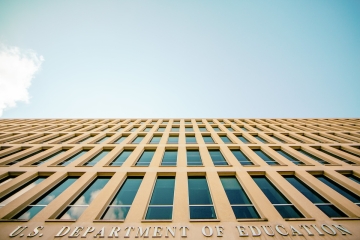
U.S. Department of Education building
High Expectations

A future for IES?

Thank you, Amber! My colleague Amber Northern, Fordham’s longtime senior vice president for research, has done American education a great service by recommending a future for the Institute for Education Sciences that goes far beyond undoing the damage done by DOGE a year ago.

Chester E. Finn, Jr. 3.2.2026
NationalFlypaper

A future for IES?

Chester E. Finn, Jr.
3.2.2026
Flypaper

The role of private school choice in a morally fractured age

Brandon L. Wright
3.5.2026
Flypaper

The 10-year test for durable schools

Robert Pondiscio
3.5.2026
Flypaper

How common is “counseling out”—or encouraging teachers to leave schools?

Julia Hayes
3.5.2026
Flypaper

College advising boosts enrollment but not persistence

Jill Hoppe
3.5.2026
Flypaper

What the fadeout effect means for testing, accountability, and school choice | Episode 1008 of The Education Gadfly Show

3.4.2026
Podcast
view
students raising their hands

The role of private school choice in a morally fractured age

Brandon L. Wright 3.5.2026
Flypaper
view
School building

The 10-year test for durable schools

Robert Pondiscio 3.5.2026
Flypaper
view
Empty classroom

How common is “counseling out”—or encouraging teachers to leave schools?

Julia Hayes 3.5.2026
Flypaper
view
College student outside

College advising boosts enrollment but not persistence

Jill Hoppe 3.5.2026
Flypaper
view

What the fadeout effect means for testing, accountability, and school choice | Episode 1008 of The Education Gadfly Show

Drew Bailey, Michael J. Petrilli, Amber M. Northern, Ph.D., David Griffith, Ph.D. 3.4.2026
Podcast
view
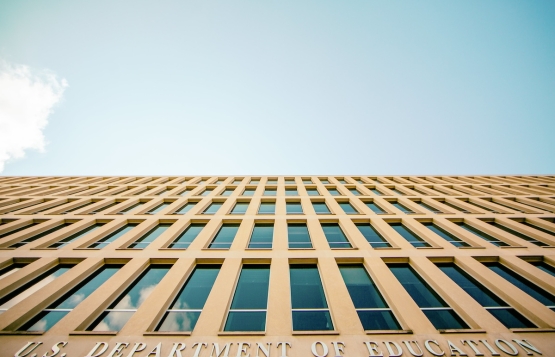
U.S. Department of Education building

A future for IES?

Chester E. Finn, Jr.
3.2.2026
Flypaper

Thank you, Amber! My colleague Amber Northern, Fordham’s longtime senior vice president for research, has done American education a great service by recommending a future for the Institute for Education Sciences that goes far beyond undoing the damage done by DOGE a year ago.

On sabbatical from Fordham for seven months and—at the invitation of Secretary McMahon—detailed to the U.S. Department of Education under the Intergovernmental Personnel Act (IPA), Amber, with help from a solitary research assistant (plus beaucoup interested parties, some invited, some self-invited), produced a 95-page report, subtitled “a strategy for relevance and renewal,” which the powers-that-be, after some dithering, finally made public on Friday at mid-day. Endorsements from those powers were cordial but guarded, as you can see in the accompanying press release, though acting IES director Matthew Soldner separately issued a thoughtful and supportive message via blog.

That’s because, as best one can tell from outside, the administration itself has made no decisions about what actually to do with IES—as it gradually seeks to “eliminate” the Education Department itself, so far by cutting staff, attempting to cut budgets, and outsourcing various programs and duties to other agencies. This silence—or indecision, political wariness, whatever—serves, of course, to make the entire education field less trusting and confident regarding future developments. (Meanwhile, Congress keeps adding funds to various IES activities—and other Department programs—that the White House keeps trying to shrink or zero out.)

How to think about reconstructing IES’s central function within that unwanted department—especially with vast uncertainty as to whether Congress will ever update the aging (2002) Education Sciences Reform Act that created IES? Many of the reforms proposed by Amber could be undertaken under current law, but several major recommendations would require legislative action “should Congress choose to reauthorize ESRA.” These include building a lot more flexibility for states into the “regional labs” program and empowering IES to do direct procurements of cutting-edge projects rather than struggling through the department’s glacial grants-and-contracts unit.

At the core of Amber’s recommendations for the future of IES are six “big shifts.” You can (should) read them for yourself, both in the executive summary and longer justifications, but here’s the gist, with some comments by me.

1: Rather than spreading resources across many disconnected projects, IES should focus on the most urgent education challenges, informed by state and district leaders.

Focusing scarce resources on urgent (and upcoming) challenges makes all kinds of sense. Who should decide what those are is more complicated. The “informed by state and district leaders” part was to be expected, considering the administration’s pledge to return education to the states. One must ask, however, whether gathering advice in that way can ever yield a coherent and worthwhile agenda for a federal agency that should instead (in my view) be leading states and districts into the future, while also helping with a finite list of current challenges that are actually amenable to research and/or data. At the same time, I’m mindful of angst in the field that entrusting such priorities to whatever administration is in power will lead (as we’ve seen at CDC, FDA, etc.) to idiosyncratic and politicized choices. The least bad governance resolution that I can see—built into the 2002 authorizing legislation—is to appoint top-notch, independent leadership for IES plus a robust, apolitical National Board for Education Sciences that includes wise folk from states and localities, as well as science, statistics, and education practice. But “independence” isn’t likely to appeal to the present administration—and perhaps beyond—in this era of the “unitary executive.”

2: Instead of funding multiple data collections and longitudinal surveys that may be redundant or outdated, the National Center for Education Statistics (NCES) should develop a streamlined and coordinated data strategy while preserving and strengthening its vital core functions, such as the Nation’s Report Card.

If you don’t read anything else in this report, focus on the 20 pages that address the National Center for Education Statistics (NCES), the beating heart of IES, the part that can trace its origin to Lincoln’s time, the place from which we get most of the data on which everything else depends—including those state and local policies so dear to the administration—and the part of NCES that DOGE did the worst damage to. (Gutting veteran statistical experts is leading, for example, to some deterioration in the quality of state data collection, which is a prerequisite for reliable national data.) It’s important to note, though, that Amber’s recommendations go so much further than rebuilding. They amount to a full overhaul of NCES’s core functions (and trimming the non-core and duplicative kind) and are especially smart about longitudinal data and NAEP—the Nation’s Report Card. If nothing else in this report gets acted upon, may it please be the overhauls spelled out here!

3: Rather than focus on individual or project-specific grants within a single state, institution, or jurisdiction, IES should prioritize multi-state awards to help scale the most promising interventions, resources, and policies.

Obvious, desirable, and commonsensical (but why hasn’t that been past practice?)

4: Direct the focus of the research work towards practicality, innovation, and relevance.

Another one that’s hard to quarrel with, though it leaves open the question of who decides. (See Big Shift #1.)

5: IES should build mechanisms by which the applied research and technical assistance work of its Regional Educational Labs (RELs) is responsive, timely, and coordinated, as well as shared across the country.

For 40 years, I’ve questioned the value of the “regional labs,” and in the present era, they’re less needed than ever. But they’re embedded in statute, they’ve got lobbyists and protectors, and apparently nobody has the stomach to go to war against them. That being the case, read the fine print of Amber’s recommendation because it would build in a lot of needed flexibility for states to make use of the labs.

6: Narrow the scope of the What Works Clearinghouse (WWC) to the development of practice guides and tools and ensure that its evidence base is better utilized.

The WWC was a great idea, now spread too thin and often lacking certainty about what actually does work. So tighten it and get it to concentrate on what it does best.

Finally, let me cite Amber’s wise words as to why rehabilitating and modernizing IES is worth doing and the “bedrock” principles that such an overhaul should preserve:

Executing on the big shifts in the prior section will be a heavy lift. These are not nips and tucks, as IES is struggling in multiple ways to remain relevant and responsive. But let’s also remember that it is an entity worth redemption and revitalization, precisely because its work has the potential to empower those who deliver education to the American people, meaning state and local leaders, school leaders, teachers, and the broader public, including parents.

Some of the bedrocks of IES revitalization that must carry forward include its independence, scientific integrity, statistics infrastructure, and rigorous research across diverse settings.

Well done, Dr. Northern (and welcome back to Fordham)! The country and education field owe you big thanks. Now may the “powers that be” seize this baton and carry it across the finish line. If they can do that while allowing for the “independence,” “scientific integrity,” and “rigor” that IES and the field need, it will more than make up for the damage done a year ago. It will, in fact, do American education a great deal of good.

view
students raising their hands

The role of private school choice in a morally fractured age

Brandon L. Wright
3.5.2026
Flypaper

The United States is in a period of moral fragmentation and decay, and the extended family—the primary historical source of moral education—has given way to a nuclear family that is stretched thin and, in many cases, itself fractured. Children now spend less of their formative time inside family networks and more of it in schools, daycares, afterschool programs, and summer camps. Yet cultural conflict and politics have left these places less able to shape character at the very moment their role has grown. This is a problem, and private school choice, while no panacea, is the most practical education-policy response.

By “moral fragmentation and decay,” I mean a weakening of the shared norms that make everyday life and democracy work, such as respect for rules, respect for others, empathy, sympathy, and self-restraint. As these have eroded and society has become more atomized, they’ve contributed to declining social trust, eroding participation in civic and community life, polarization, rising contempt for institutions, and more disorder and conflict in the places where people work and learn.

These shifts affect children because they develop character through daily habituation, including repeated expectations, modeled behavior, consistent consequences, and the peer cultures that form around them. A child’s “moral education” is therefore inseparable from the environments where that child spends the most time.

The biggest change is the transformation of family life. Americans still have devoted, loving parents, but the network that once made moral formation easier and more consistent has splintered. Geographic mobility separates grandparents, aunts, uncles, and cousins who used to be present in daily life. Household structure is also less stable for many children, with a large share born to unmarried parents and many experiencing divorce or separation. Meanwhile, the pressures on parents’ time and attention are significant: dual-earner schedules, long commutes, and a digital environment that competes with, and often corrodes, family life rather than supporting it. When adult time, adult presence, and intergenerational reinforcement decline, the work of character formation becomes harder to sustain.

As family life has changed, the time-allocation of childhood has shifted toward institutions, a shift that’s visible in rough hour-counts. Consider two early-childhood pathways. A child cared for primarily by family members and attending half-day preschool from ages three to five might accumulate something like 18,000 hours embedded in family life and 2,000 hours in institutional care by the start of kindergarten. A child who attends full-time daycare and then full-day preschool could be closer to 8,000 hours with family and 12,000 hours in institutional care over the same span. Precise figures vary, of course, but the direction is unmistakable: Long before kindergarten, many children are spending a substantial share of their formative time in institutional settings.

Once kindergarten begins, school alone accounts for roughly 1,000 hours a year for many children, plus before- and after-school care, structured extracurriculars, and summer programs—not to mention tremendous amounts of time on their phones and other devices. By adolescence, many students have spent a majority of their waking weekday hours in places designed primarily for instruction and supervision (or in the case of screen-time, attention and engagement), instead of environments designed for deep, values-centered formation—especially a formation that’s in line with a specific family’s values. Parents are still relevant, of course, but institutional environments now bear much more of the load than in past generations.

If those institutions were well-suited to provide coherent character education, this shift might not matter as much. But in the modern United States, public school systems face three structural constraints that make this difficult.

First, pluralism and politics make agreement on more substantive moral teaching hard to achieve in a public system. Schools tend to default to simple values—be kind, follow directions, wait your turn—because they are the only ones that are politically safe. And as the next paragraph explains, they often struggle to enforce even these. Under these circumstances, schools can’t possibly do all the work that families once did. The result is often a patchwork of implicit values, contested norms, and conflict avoidance.

Second, many schools have moved toward discipline policies that are less corrective and less consistent. Kids learn right and wrong when adults state rules plainly and reliably enforce and model them. When misbehavior is handled unpredictably, or treated as something adults must accommodate rather than correct, students learn that boundaries are flexible and obligations to others are optional. Even when the intent is compassionate, the cumulative effect can weaken the school’s culture of conduct.

Third, modern incentives push schools toward measurable academic outputs and away from sustained character formation. They’re evaluated primarily on test scores and graduation rates, not on the difficult, hard-to-measure, and deeply relational job of building a coherent culture of right and wrong. Teachers receive limited training and support for that sort of work, and school leaders have strong incentives to minimize controversy rather than take clear stances on what virtues a school will explicitly model and promote.

Private schools are less constrained by these forces, which is why programs that give more families the opportunity to attend them are the most promising of available, real-world education policies for offsetting our moral fragmentation and decay. They won’t solve the problems, of course; they’re far too enormous and their causes too many. It’s more like bringing an excavator to a massive landslide—insufficient by itself, but a necessary part of the solution, and therefore important to pursue.

Private school leaders can state a moral mission openly, be it religious or secular, and build a coherent culture around it in ways that district schools often can’t (and in the case of public charter schools, often don’t). They can hire staff who believe in their mission. They can adopt curricula and instructional practices that treat character formation as central rather than as an awkward add-on. And all of this can align with the expectations and values in students’ homes because families opt in rather than being assigned. Moreover, that alignment cuts both ways: If a school drifts from its mission, parents can hold it accountable by leaving.

This is what the moment demands. If moral education requires habituation inside consistent environments, then coherence between families and institutions matters. And a private school community that agrees on what virtues it is trying to cultivate is better positioned to teach them than a public school that has to serve families with fundamentally competing moral commitments.

A predictable objection is that private school choice lacks guardrails. If that’s true, it’s also fixable. Programs can honor family freedom while still protecting the public interest by instituting regulations that require transparency about mission and outcomes, track academic achievement in core subjects, and protect against fraud, abuse, and discrimination (however defined). Some places will require more of these rules, other less. The challenge will be ensuring that any such constraints don’t rob private schools of the qualities that allow for strong character formation. 

Another objection is that choice could intensify social fragmentation. If people self-select into different moral communities, won’t we become even more divided? But we already sort—by neighborhood, housing prices, and social networks—and public schools already reflect those divides. More importantly, a pluralistic society is held together by citizens who have developed strong moral foundations, and who can then bring those virtues into a shared civic space, not by forcing everyone into one contested set of values.

In this sense, private school choice is a central response to a central problem. If schools are going to carry more of the moral-formation load in a strained, fragmented society, then leaders should expand the number of schools capable of doing that work effectively and expand access to them. Policies like education savings accounts, vouchers, and tax credit scholarships—especially when well designed and regulated—do just that.

view
School building

The 10-year test for durable schools

Robert Pondiscio
3.5.2026
Flypaper

Within ten years, a successful school or district will almost certainly experience at least one superintendent change, multiple principal transitions, substantial staff turnover, curriculum reviews and technology initiatives, school board elections, and shifts in funding or political priorities. In my last post, I argued that none of these should be described as “disruptions.” They are the standard operating conditions of American public education. The real question, then, is not whether a successful school can keep producing strong results under ideal circumstances. It’s whether it is strong enough to survive the entirely predictable turbulence that lies ahead.

All of this makes studying top-performing schools and districts more challenging than it seems at first blush. High test scores or a bracing turnaround tale tell us what a school is accomplishing now. They tell us almost nothing about whether current results are due to years of institutional capacity-building, or the stars aligning temporarily. For the third and final entry in this series, I offer some thoughts about what we might look for right now if we wanted to predict whether a currently successful school or district is likely to continue succeeding a decade from now—and by extension, which schools and districts likely merit close study and emulation. What are the features that make success likely to endure?

Think of this not as a scoring rubric but as a thought exercise. These are the kinds of questions I would ask and the kinds of answers that would make me more confident that a school’s success is built to last.

Spoiler alert: The word “innovation” will appear nowhere in what follows.

The first and most revealing question is deceptively simple: Could a diligent new teacher walk into this school next year and be successful? Durable schools do not depend primarily on recruiting and hiring gifted, motivated educators and hoping they figure things out. They can point to a structured curriculum, shared materials, and explicit instructional routines that allow new hires to be acculturated into a functioning system. Just as important, they have a strong and well-defined school culture—not slogans or mission statements but a clear sense of “this is how we do things around here.” Expectations about classroom management, instructional pacing, student behavior, collaboration, and professional norms are visible, reinforced, and socially transmitted. A new teacher isn’t handed materials, told to “make it your own,” and wished good luck. He or she enters an environment that actively shows new faculty how to function successfully.

This was one of the most striking lessons from my reporting on Success Academy. Whatever else explains that network’s astonishing results, they cannot plausibly be attributed to staffing classrooms with pedigreed recruits from elite universities, as was often the case in the early days of “no excuses” charter schools. As I noted in How the Other Half Learns, classrooms were named after teachers’ alma maters, as in many schools that preach college-going to low-income kids. But they were workaday places like SUNY Oneonta, Hunter College, even BMCC, or Borough of Manhattan Community College—the kind of state and local institutions whose graduates make up the backbone of the profession. The instructional model and adult culture, consistent across dozens of schools, were designed on the assumption that ordinary teachers, properly trained and supported, could produce extraordinary outcomes. As noted previously, Success Academy stays aloft despite extremely high teacher turnover. So far, its schools prove that durability can coexist with high teacher turnover so long as institutional structures and culture are strong.

Houston’s ongoing turnaround efforts reflect a similar logic. As I noted in Education Next (“The Last Hurrah”), the district’s “NES schools” have implemented a routinized  structure in which lesson sequences and instructional techniques are often explicitly prescribed. The effect is to guarantee a baseline of competent teaching and a consistent student experience across classrooms. What Houston appears to be doing is not assuming that great teaching will happen; they’re engineering conditions that make competent teaching unavoidable.

Closely related is whether the system demands extraordinary effort simply to maintain normal performance. Some schools produce impressive gains because teachers work unsustainable hours, constantly design their own materials, and carry enormous instructional loads. For a time, this can look like institutional excellence, but often it masks institutional strain: Schools that depend on brilliance or burnout eventually run out of both. What would reassure me instead is hearing leaders talk about reducing teachers’ burdens, about shared resources, about routines that make good teaching easier rather than harder. The relevant question is not whether today’s staff is extraordinary, but whether an ordinary future staff could succeed under ordinary working conditions. Many of the celebrated schools of the early reform era—the kinds profiled in the Casey and Chenoweth books discussed earlier in this series—appear, in retrospect, to have depended heavily on superhuman adult effort that proved difficult to institutionalize once leadership changed or burnout took its toll.

Another revealing signal is how the school handles new initiatives and reform proposals. Education is notoriously fad-happy: wave after wave of new programs, each accompanied by persuasive research, compelling advocates (or vendors), and even genuine moral urgency. Individually, these might be defensible. Collectively, they can overwhelm a system’s capacity to execute. Durable schools develop what might be called an institutional immune system. Bluntly, it’s the ability to say, “No, we’re not doing that.”

I’d feel particularly confident I was in a school whose success was likely to endure if its team could name initiatives they declined. Stability in education rarely comes from discovering the perfect program; it comes from protecting the ones that already work. From the outside, this may look and sound unimaginative, but schools rarely fail because they lack ideas. They fail because they adopt too many.

Bench strength is another crucial signal. Founder-driven systems can produce rapid gains, but unless knowledge diffuses beyond a charismatic leader, those gains often prove difficult to maintain once leadership changes, as inevitably it will. I would want to see that assistant principals, instructional coaches, and teacher leaders can articulate the instructional model in similar terms and sustain it operationally. If success stories focus mainly on a single exceptional leader, sustainability likely depends on his or her continued presence.

Governance, however, may be the most underestimated durability factor of all—and, frankly, the one least within educators’ control. In public education, leadership flows through school boards and the political imperatives and enthusiasms surrounding them. Boards hire superintendents, set priorities, and respond to incentives that reward visible reform more than quiet continuity. Almost no school board candidate runs on a platform of pure stewardship; we seek and reward visible change over quiet success. It is probably even rarer to find a superintendent hired specifically to keep doing what is already working—or someone who actually seeks such a job. Given these realities, even successful systems face constant pressure to signal change. I would find it reassuring if a school’s leadership transitions had historically preserved instructional continuity rather than resetting it—proving that the district leaders are capable of resisting novelty and tolerating stability.

If all of this sounds demanding, bordering on implausible, that’s because it is. Sustained excellence in schooling is genuinely difficult to achieve, and it is no accident that long-term successes are rare in our field. Almost every impulse and structural feature of American public education pushes in the opposite direction. The system is fragmented across thousands of districts. Governance is electoral and therefore inherently prone to leadership turnover and shifting priorities. Staff churn is constant. And the professional culture of education often encourages teachers and leaders to see themselves as individual change agents and advocates for children—roles that might be morally admirable but not always aligned with the quieter institutional discipline required to seek out and preserve what works.

None of this means sustained success is impossible. But it does mean it is unlikely to emerge by accident, and even less likely to persist without deliberate institutional design and discipline. The conditions that undermine durability—leadership churn, reform cycles, political pressure, initiative overload—are not temporary aberrations. They are inherent features of the system. Any school or district that manages to sustain excellence over decades is therefore doing something unusually difficult: not merely achieving strong results but building structures and cultures capable of surviving the very forces that typically erode them.

All of this brings us back to the original premise of this series, and to Holly Korbey’s wise call to study successful schools more carefully. She is surely right that education has much to learn from its highest performers. But if we are serious about learning from greatness, we need to study not only what successful schools do, but also what they are built to withstand. The miracle is not that some schools succeed. It’s that any manage to keep succeeding.

view
Empty classroom

How common is “counseling out”—or encouraging teachers to leave schools?

Julia Hayes
3.5.2026
Flypaper

Principals play a crucial role in managing teacher quality, including hiring, developing, and retaining effective staff while also addressing low-performing teachers. Classroom observations and value-added metrics based on student achievement can help identify ineffective teachers, although data suggest that few teachers actually face dismissal. In practice, principals rely on a mix of formal and informal methods to manage teacher effectiveness.

One informal strategy to remove ineffective teachers is known as “counseling out”—an intentional effort to encourage a teacher to leave the school without initiating formal dismissal procedures. A new study by Nat Malkus and Amy Cummings used interview data from a convenience sample of 50 principals across six traditional public school districts in four U.S. states to explore the prevalence and practice of counseling out. The researchers relied on interview data because formal records do not capture counseling out. Interview data were supplemented with district administrative data on teacher mobility, assignment, experience, and evaluations, which provided contextual information, but did not identify whether departures resulted from counseling out.

Several key findings emerged. A whopping 94 percent of principals reported counseling out a teacher at some point. Rather than being an isolated practice, counseling out appeared to be a significant human resource strategy widely used by school leaders.

Administrative data from the 2017–18 school year showed that 283 teachers (14 percent) who taught in the sampled schools that year did not return the following school year. Of these departures, 210 (74 percent) left voluntarily—principals did not report encouraging their departure, 14 (5 percent) were formally dismissed, and 59 (21 percent) were counseled out—principals intentionally encouraged them to leave. Sixty-four percent of principals confirmed that this was representative of the proportion of teachers who were typically counseled out each year.

Clear differences emerged between the evaluation ratings of teachers who were counseled out and those who voluntarily departed. Evaluation ratings for counseled-out teachers more closely resembled those of teachers who were formally dismissed. Through these evaluations, teachers were rated as low-, middle-, or high-performing. Fifty-three percent of counseled-out teachers received a low rating, compared to 22 percent of all departures. In contrast, only 5 percent of teachers who were counseled out had received a high rating, compared to 37 percent of all departures. Both counseled-out and formally dismissed teachers were intentionally removed by their principals, albeit through different mechanisms.

Principals were asked to describe the process they followed when counseling out a teacher. The most common approach was “critical conversations,” which were used to counsel out 61 percent of teachers. This approach involved frank discussions about teachers’ shortcomings and how those shortcomings could jeopardize their employment, while also offering teachers an opportunity to leave without a formal record that could impact their future employment.

Although the administrative data did not provide information on counseled-out teachers’ subsequent employment, principals were asked whether they knew the whereabouts of those who departed in the 2017–18 school year. Generally, principals had limited knowledge of the destinations of teachers formally dismissed, as they were unlikely to discuss future career plans with those they had terminated. However, principals were able to report on 39 percent of counseled-out teachers; among those, approximately half continued teaching in the same district, suggesting some degree of local career continuity. This raises the possibility that counseling-out may shift ineffective teachers to different schools within the same district rather than removing them from the district altogether, potentially redistributing rather than resolving performance concerns. 

These findings suggest that counseling out is not merely a last-resort measure, but a widely used tool for maintaining teacher quality and influencing dismissals. Rather than relying exclusively on formal termination policies, counseling out allows principals to remove underperforming teachers while reinforcing the importance of teacher evaluation systems for improving school quality and guiding consequential staffing decisions. This dynamic highlights the tension between both formal and informal policies, as formal policies make it difficult to remove persistently underperforming teachers, leading principals to turn to informal strategies, for better or worse.

SOURCE: Nat Malkus and Amy Cummings, “Turnover Tactics: Unveiling the Frequency and Mechanisms of Counseling Out,” Journal of Education Human Resources, 2026-01, Vol.44 (1), p. 98–123 (February 2026).

view
College student outside

College advising boosts enrollment but not persistence

Jill Hoppe
3.5.2026
Flypaper

The end of race-based affirmative action and persistent gaps in enrollment and degree attainment among students from low-income backgrounds have intensified calls for strategies that expand postsecondary access and completion. One such initiative, Advise TN, is a statewide advising program that places college advisors in Tennessee high schools with a history of low college enrollment. They are there to supplement the work of guidance counselors and are employed, trained, and overseen by the Tennessee Higher Education Commission (THEC), not by schools themselves, and are prohibited from engaging in non-advising school duties. Their work includes helping students complete the FAFSA, apply for state-level financial aid programs like Tennessee Promise, submit college applications, and explore non-college options. A new working paper examines whether the program improves students’ postsecondary outcomes.

Researchers from the University of Wisconsin-Madison followed more than 120,000 students across 33 Advise TN high schools, as well as 28 eligible schools that were not accepted due to funding limitations from 2010–11 to 2019–20. Although the program began in 2016, data from 2010–2016 serve as a baseline, capturing student outcomes at these schools before the advising intervention.

The researchers draw on student-level data from TN DATA, which follows students from pre-K through high school, postsecondary education, and into the workforce. These records are combined with four additional administrative and program data sources to compare six outcomes across the two groups of schools: whether students filed FAFSA, Tennessee Promise application rates, college enrollment within one year of high school graduation, college persistence, degree attainment, and post–high school employment among students who do not enroll in college.

Advise TN produced substantial gains early in students’ transition to postsecondary education. FAFSA filing rates increased by 7 to 8 percentage points, applications to Tennessee Promise increased by 3 to 4 percentage points, and college enrollment within one year of high school graduation increased by approximately 3 percentage points. Gains were especially strong for historically underrepresented students, including Hispanic students and those in rural areas (up 6.3 and 6.4 percentage points, respectively), suggesting that intensive advising is particularly effective at reducing procedural and informational barriers that disproportionately affect certain populations.

Importantly, gains are correlated with program design: highest in schools with more frequent meetings, fewer students per advisor (especially 99:1 or lower), and among students who received advising in person or through a hybrid model combining in-person meetings with texts, calls, or emails. Students who only interacted with advisors remotely showed no increases in college enrollment.

Despite initial college enrollment boosts, however, the researchers find no significant causal impacts on college persistence, degree attainment, or post-high school employment. While there is suggestive evidence of a small (1.9 percentage point) increase in degree attainment in the earliest years of the program, these effects are not consistent across cohorts. For students who never enrolled in college, Advise TN did not appear to alter employment outcomes following high school graduation.

Later graduating cohorts in the study (e.g., high school class of 2019) were enrolled in college during the Covid-19 pandemic, a period that disrupted college persistence and completion nationwide. Despite this, the study does not explicitly address how the pandemic may have affected student outcomes, so it may underestimate Advise TN’s impact. Future research incorporating additional post-pandemic cohorts will help clarify whether Advise TN is more effective at boosting persistence and degree attainment without the context of a global pandemic. An in-depth analysis of post-college employment outcomes could help reveal whether Advise TN leads to longer-term gains.

Nevertheless, without sustained gains in persistence or completion, Advise TN risks inflicting significant harm on both individuals and the state with increased student debt and lost time. Policymakers must seriously weigh whether the program’s enrollment gains justify its costs, particularly when historically underrepresented students enroll in college and leave without a credential.

High school-based college advising can be effective at helping students clear the administrative and informational barriers that stand between them and college enrollment, but may be less effective at influencing what happens next. Without continued support after high school graduation, even well-designed advising programs can open the door to college without ensuring students can finish, leaving low-income students at risk of unnecessary, debilitating debt and lost time that might be better spent pursuing alternative pathways to the workforce.

SOURCE: Taylor Odle and Isabel McMullen, “When and Why Does College Advising ‘Work:’ Evidence from Advise TN,” Annenberg Institute at Brown University (December 2025).

view

What the fadeout effect means for testing, accountability, and school choice | Episode 1008 of The Education Gadfly Show

3.4.2026
Podcast
 

Drew Bailey, professor at the University of California, Irvine, joins The Education Gadfly Show to discuss the fadeout effect across education interventions. Why do early treatment effects shrink over time, and what does that mean for judging program success, especially when test score gains diminish but long-term outcomes like graduation rates and earnings persist? We also debate the role of test scores in accountability, the evidence linking school value-added to real-world success, and what this all means for the role of testing in school choice initiatives.

Then on the Research Minute, Amber Northern examines new data on how states define “proficiency” in reading and math and what NAEP reveals about rigor, transparency, and the debate over standards.

Recommended content:

  • Why Do Most Education Interventions Fade Out Over Time? —Drew Bailey, Tyler Watts, and Emma Hart, Education Next

  • School Choice, Test Scores and Long-Term Outcomes: The Evidence Is Ambiguous —Michael J Petrilli, Education Next

  • Reducing Inequality through Dynamic Complementarity: Evidence from Head Start and Public School Spending —Rucker C. Johnson and C. Kirabo Johnson, American Economic Journal

  • A future for IES? —Chester E. Finn, Jr., Thomas B. Fordham Institute

  • Mapping State Proficiency Standards Onto the NAEP Scales Results From the 2022 NAEP Reading and Mathematics Assessments —Darrick Shen-Wei Yee and Brian Cramer, Institute of Education Sciences, National Center for Education Statistics (2026)

Feedback Welcome: Have ideas for improving our show? We would love to hear them. Send them to [email protected]

Fordham Logo

© 2026 The Thomas B. Fordham Institute
Privacy Policy
Usage Agreement

National

P.O. Box 110
Burke, VA 22009

202.223.5452

[email protected]

Ohio

P.O. Box 82291
Columbus, OH 43202

614.223.1580

[email protected]

Sponsorship

130 West Second Street, Suite 410
Dayton, Ohio 45402

937.227.3368

[email protected]