Mobile Navigation

  • National
    • Policy
      • High Expectations
      • Quality Choices
      • Personalized Pathways
    • Research
    • Commentary
      • Gadfly Newsletter
      • Flypaper Blog
    • Events
    • Scholars Program
  • Ohio
    • Policy
      • Priorities
      • Media & Testimony
    • Research
    • Commentary
      • Ohio Education Gadfly Biweekly
      • Ohio Gadfly Daily
  • Charter Authorizing
    • Application
    • Sponsored Schools
    • Resources
  • About
    • Mission
    • Board
    • Staff
    • Career
Home
Home
Advancing Educational Excellence

Main Navigation

  • National
  • Ohio
  • Charter Authorizing
  • About

National Menu

  • Topics
    • Accountability & Testing
    • Advanced Education
    • Career & Technical Education
    • Charter Schools
    • Curriculum & Instruction
    • ESSA
    • Evidence-Based Learning
    • Facilities
    • Governance
    • Personalized Learning
    • Private School Choice
    • School Finance
    • Standards
    • Teachers & School Leaders
    • Think Again
  • Research
  • Commentary
    • Gadfly Newsletter
    • Flypaper Blog
    • Gadfly Podcast
  • Events
  • Scholars Program

The Education Gadfly Weekly

Sign Up to Receive Fordham Updates

We'll send you quality research, commentary, analysis, and news on the education issues you care about.
Thank you for signing up!
Please check your email to confirm the subscription.

The Education Gadfly Weekly: Freddie deBoer is right about one thing, not everything

Volume 25, Number 12
3.27.2025
3.27.2025

The Education Gadfly Weekly: Freddie deBoer is right about one thing, not everything

Volume 25, Number 12
view
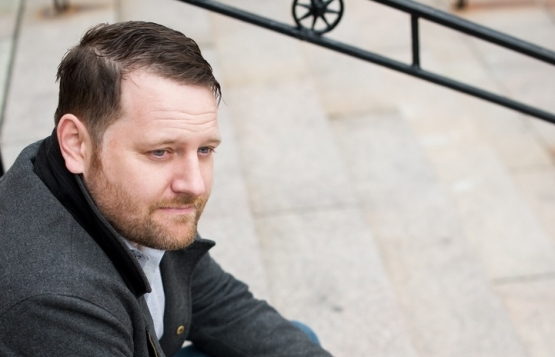
Fredrik deBoer
High Expectations

Freddie deBoer is right about one thing, not everything

The writer Freddie deBoer makes one really important point about the ed reform movement: We have overpromised and underdelivered because we ignore the obvious truth that some kids are smarter than others. Where he’s wrong is in thinking that this one good point makes the whole reform enterprise a waste of time.

Michael J. Petrilli 3.27.2025
NationalFlypaper

Freddie deBoer is right about one thing, not everything

Michael J. Petrilli
3.27.2025
Flypaper

New Nation’s Report Card disappoints—but shouldn’t surprise

Martin R. West
3.27.2025
Flypaper

The pandemic was a Sputnik moment for rethinking education, and we blew it

Robin Lake | Paul T. Hill
3.27.2025
Flypaper

Do education savings accounts increase the cost of private school tuition?

Amber M. Northern, Ph.D.
3.27.2025
Flypaper

#962: Replacing DEI with something better, with Richard Kahlenberg

3.26.2025
Podcast

Cheers and Jeers: March 27, 2025

The Education Gadfly
3.27.2025
Flypaper

What we’re reading this week: March 27, 2025

The Education Gadfly
3.27.2025
Flypaper
view
Scantron

New Nation’s Report Card disappoints—but shouldn’t surprise

Martin R. West 3.27.2025
Flypaper
view
Disappointed student

The pandemic was a Sputnik moment for rethinking education, and we blew it

Robin Lake, Paul T. Hill 3.27.2025
Flypaper
view
Students in a classroom

Do education savings accounts increase the cost of private school tuition?

Amber M. Northern, Ph.D. 3.27.2025
Flypaper
view

#962: Replacing DEI with something better, with Richard Kahlenberg

Richard Kahlenberg, Michael J. Petrilli, Amber M. Northern, Ph.D., David Griffith, Ph.D. 3.26.2025
Podcast
view
Fordham Gadfly image

Cheers and Jeers: March 27, 2025

The Education Gadfly 3.27.2025
Flypaper
view
Fordham Gadfly image

What we’re reading this week: March 27, 2025

The Education Gadfly 3.27.2025
Flypaper
view
Fredrik deBoer

Freddie deBoer is right about one thing, not everything

Michael J. Petrilli
3.27.2025
Flypaper

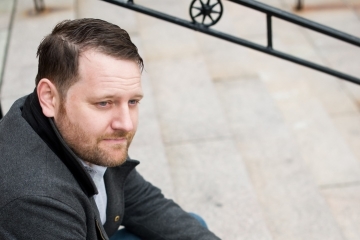
I’m not proud to admit it, but I’m a little bit obsessed with Freddie deBoer. I know it doesn’t make any sense, given that he is an avowed communist and, as far as I know, might not be having any actual impact on the education policy debate. But he’s obviously a brilliant guy, whose Substack clearly has a lot of readers on the center and left, and in his book and in many of his writings, he makes one really important point about the ed reform movement. Where he’s wrong is in thinking that his one good point makes the whole reform enterprise a waste of time.

What’s his one good point? It’s that we have overpromised and underdelivered because we have not been willing to acknowledge what everyone in the real world knows intuitively: Some kids are smarter than others.

He’s right, both that it’s of course true, and that we in ed reform don’t like to say it. And for good reason; if you’re a teacher, we want you to suspend disbelief and assume that the kids in front of you are all capable of greatness (or at least high achievement). That’s because of the many research studies indicating that most children and teenagers respond well to high expectations. And as Freddie himself would say, we surely don’t want teachers to make assumptions about kids’ intelligence based on their race or ethnicity, their zip code, or any other demographic markers that might be related to achievement in the aggregate but not in the particular.

Freddie is also right that, back in the bad old days, it was unfair to measure schools’ effectiveness (or lack thereof) by the proportion of students who could read and do math at the “proficient” level—because that didn’t take into account kids’ varying abilities. But news flash: It’s not 2005, when No Child Left Behind was still in effect. It’s 2025, and almost every state has moved beyond using proficiency rates alone to measuring student-level growth, so that today we can evaluate schools based on their impact on achievement, after controlling for prior student achievement. That means taking into account the demographic factors that we all know are related to achievement, as well as the variation in kids’ academic potential.

So what’s Freddie’s beef? Enter his school-reform straw man.

Ed reform versus income redistribution

What Freddie is really mad about is that some of us reformers, once upon a time, argued that education reform was an alternative to a European-style social welfare state. The “cult of smart,” he argued, was a thought system that assumed that the winners in our knowledge economy deserved their just deserts because they were the smart kids who worked hard in school and won the game of meritocracy fair and square. On the other hand, people stuck in low-wage jobs only have themselves to blame for not doing better in school, not working harder, and not educating themselves to the middle class and beyond.

He's right: That’s dumb.

But does anyone actually believe this? Especially after a decade and a half of populism, I think we all understand that rich people who believe that they entirely “earned” their success are annoying and self-unaware. Indeed, we should teach young people who are good at school to understand that their intellectual gifts—the amount of horsepower under the hoods of their prodigious brains—were bestowed by grace. They are also super lucky to be born at a time when book smarts are highly valued, versus most of human history, when brute strength might have been more in demand.

But Freddie goes further. He believes that most of ed reform is pointless because it doesn’t shake up the academic hierarchy and therefore fails to challenge the economic hierarchy. He’ll concede that stronger schools can help kids learn marginally more than they otherwise would but not enough to change their lives significantly. The kids scoring at the 10th percentile in the third grade are never going to get to the 40th percentile, much less the 80th percentile, by the twelfth grade and therefore aren’t going to have a shot in our knowledge economy, no matter how great their schools might be. The only hope they’ve got is some sort of system of social welfare.

Like I said, he’s a communist.

But is he right that it doesn’t matter much if kids do or do not learn marginally more than they otherwise might? It doesn’t matter if children and teenagers do or do not achieve their full academic potential?

Because if we’re honest with ourselves, that’s what education reform is about—helping students learn marginally more than they otherwise would so they achieve their full academic potential (or close to it). Maybe that won’t “transform” society. But young people who reach basic levels of literacy and numeracy because they are lucky to attend great schools will surely be better off than they otherwise would have been, even if they still face a lifetime of low-skill, low-wage work. And so it is across the academic spectrum. Great schools can be the difference between being college-ready or not. Or well-prepared for rigorous career-tech programs or not. Or competitive for admissions to highly selective colleges or not. As the University of Michigan’s Richard Nisbett wrote over a decade ago, “schooling makes you smarter.”

And in the aggregate, do we really believe it doesn’t matter to our country or our economy whether test scores as a whole go up or down? We’ve run an experiment about this recently, of course. During Covid, we kept kids out of school for a year or more, and guess what? They learned less. Especially the lowest performing kids, who disproportionately come from the most disadvantaged homes. We’ve seen the bottom fall out on the National Assessment of Educational Progress and other tests. Does Freddie think this is fine? Because plenty of research studies indicate that the individuals in the Covid cohort, and the group as a whole, are going to be scarred for life in terms of lost productivity, earnings, and opportunities. Marginal learning, or the lack thereof, matters a lot.

Here’s just one recent study that proves the point. High schools in Massachusetts that helped their students learn more than they otherwise would have also helped those same students earn more than they otherwise would have. Even though the measures of learning were just reading and math tests. Even though high school is super late to intervene in kids’ lives. Still, the relative quality of high schools mattered in real-world terms to real-world kids.

—

Freddie is right that we reformers should shelve the happy talk about “transformational change.” Let’s embrace more honest, if less inspirational, bumper stickers like: “Marginal learning matters” or “Every bit of learning counts!”

But don’t buy his argument that ed reform is beside the point. We have way too many mediocre schools in this country—and making them better would indeed improve lives, our economy, and our democracy. Let’s keep working on it.

view
Scantron

New Nation’s Report Card disappoints—but shouldn’t surprise

Martin R. West
3.27.2025
Flypaper

The latest Nation’s Report Card dashed hopes that U.S. students might have finally closed pandemic learning gaps.

The results show reading scores are down nationally in both fourth and eighth grade, compounding declines on the 2022 National Assessment of Educational Progress or NAEP.

Math scores ticked upwards from 2022 in fourth grade, but not enough for students to reach achievement levels seen in 2019. And scores were flat in eighth grade after a historic drop in 2022.

Persistent learning loss is pervasive nationwide: Achievement in each state lags pre-pandemic levels on at least one test.

And it’s intensifying inequality. The gain in fourth-grade math reflected improvement among high-achieving students. The reading declines were largest for low achievers.

There are plenty of factors contributing to our ongoing slide, but I’m increasingly convinced a big part of the problem is that many stakeholders (from policymakers to parents to educators) are thinking about learning loss the wrong way.

When my exercise routine gets disrupted by an injury or a busy stretch at work, my conditioning quickly deteriorates. When I’m able to return to the gym, the first few workouts are a grind. But if I stick it out and resume my routine, I find that I’m back to my baseline (forty-eight-year-old) fitness level within a few weeks.

I worry many people think recovery from educational disruptions works much the same way—that if we just get kids back into classrooms and learning under normal conditions, they’ll get back on track in short order.

When my colleagues and I surveyed American parents in May 2022, for example, only 9 percent doubted their children would catch up fully from Covid-related learning loss within a year or two. About half were confident their child would catch up that quickly, while 43 percent reported no learning loss in the first place. Clearly, few parents thought we’d still be seeing large declines in student achievement nearly five years after Covid sent kids home from school.

A better metaphor for learning loss is saving for retirement. If a household emergency forces me to skip a planned deposit, the shortfall in my savings account will persist until I make up for that missed payment. In fact, that shortfall will grow over time due to the foregone opportunity to earn interest on my savings.

The savings metaphor is more realistic because it incorporates a bedrock principle of the science of learning and development known as the “Matthew Effect”—an allusion to the biblical book’s teaching that the rich tend to get richer while the poor get poorer.

The Matthew Effect pervades education, especially in the domain of literacy. Children who are strong in phonics, for example, have a systematic advantage when it comes to building their vocabularies. Students with robust vocabularies are in turn better positioned to develop the background knowledge needed to excel across subject areas—and on tests of reading comprehension like NAEP.

The Matthew Effect helps explain why it is often more cost-effective to intervene in children’s academic development in early childhood than later. Early intervention can help kids develop cognitive skills and habits of mind that make learning easier and more efficient as they progress through school. As Nobel-winning economist James Heckman puts it, “skill begets skill.”

Even if learning conditions had been ideal when students returned to school in person, their rate of learning would have been slower than we’d have expected prior to the pandemic. But learning conditions have been far from ideal. Schools have struggled with rampant staff shortages and behavior challenges. Meanwhile, rates of chronic absenteeism—the share of students missing 10 percent or more of the school year—jumped from 15 percent in 2018 to 28 percent in 2022.

State and local school systems did receive $190 billion in federal funds to reopen schools and address learning loss. Research by my colleagues at the Harvard Graduate School of Education indicates those funds may have helped on the margin, but the scale of the gains fell far short of what’s needed to offset pandemic declines.

While it’s natural to be disappointed in these NAEP results, we really shouldn’t be surprised. We should act with urgency to prevent the Covid generation from bearing scars of the pandemic far into the future.

The skills measured by tests like NAEP matter for students’ labor-market success. Stanford economist Eric Hanushek projects the lost learning evident on the 2022 NAEP will result in the average U.S. student experiencing about 6 percent lower lifetime earnings.

So what can policymakers and education leaders do?

First, we must hold students to high expectations. Rather than helping them catch up, several states recently lowered grade-level standards on their tests—a cynical move that seems aimed at masking the extent of the challenge. Relatedly, rampant grade inflation at the school and district level makes it all but impossible for parents to know whether their child is on track for success.

None of that will help anyone. It only makes it harder for young people to do well later in their schooling and in future careers.

Second, we should redouble efforts to let students make up instructional time they missed in the Covid era. Research shows increasing time-on-task is one of the most effective ways to accelerate learning. States may want to expand their instructional time requirements, and districts and schools can rethink how they use the time they have. Education leaders and policymakers can expand afterschool tutoring and summer learning opportunities, particularly for at-risk students, and work with parents to get students to attend.

Finally, there may be times when the best answer is to allow a student to repeat a grade. Grade repetition is controversial among educators, but evidence from states like Florida and Mississippi confirms that staying back can be a gamechanger for many students struggling in the early grades. Every elementary schooler whose family wants them to do so should have that opportunity.

Roughly one third of the students whose K–12 careers were upended by the pandemic have since moved on to college or careers, often without being given the opportunity to make up for the learning they missed in high school. That’s a national shame. But it is not too late for us to do right by the 35 million students following in their footsteps. The only question is whether we will do so.

Editor’s note: This was first published by Education Next.

view
Disappointed student

The pandemic was a Sputnik moment for rethinking education, and we blew it

Robin Lake | Paul T. Hill
3.27.2025
Flypaper

The pandemic gave the country a chance to rethink how states and school districts deliver quality education. When schools shut down, there was an opportunity to create more flexible, innovative learning models tailored to students’ varied needs. America had a chance to build stronger connections between schools, families, and communities.

In March 2020, resilience, innovation and adaptability became urgent priorities, backed by billions in federal funding. It was a Sputnik moment for American education.

We blew it.

We failed to take advantage of the moment. Instead of embracing lasting change, most school systems rushed back to “normal”—as if normal had ever been good enough.

The results are horrifying. Student achievement is in free fall. Fewer than one-third of students scored proficient in reading and math, according to the latest National Assessment of Educational Progress. These declines predated the pandemic but were exacerbated by prolonged school closures.

Given these realities, can policymakers still pretend the traditional education model works? A system designed over a century ago to train students for farm and factory labor is woefully inadequate for today’s needs. It cannot deliver the personalized learning students require in the Age of Artificial Intelligence.

This outdated system relies on one-size-fits-all solutions while assuming teachers can somehow provide differentiated support for every student. It rests on an increasingly fragile social contract: that students will attend school daily, that marginalized families will trust and wait for better service, and that schools are the sole places for learning. The pandemic shattered these assumptions.

The U.S. must rethink education. On this, the fifth anniversary of the start of the pandemic, the Center on Reinventing Public Education has launched Phoenix Rising, a forum for exploring bold new ideas. Phoenix Rising looks back on the root causes of the disastrous pandemic response and articulates a vision for a more nimble, personalized, joyful, and evidence-based public education system. Five years after the pandemic began, we reflect on the failures and propose a path forward.

Our research identifies key failures in the pandemic response and recovery:

  • Schools lacked incentives, autonomy, and capacity to deliver the personalized instruction needed to accelerate learning.
  • States and the federal government provided little leadership, leaving districts to fend for themselves.
  • Politics, not science, dictated too many decisions.
  • Federal aid was distributed without clear expectations or accountability, offering only temporary relief.

The consequences are clear: declining test scores, wildly varied student needs within classrooms, disruptive behavior, chronic absenteeism, and increasing mental health challenges for both students and teachers. Parents remain unaware of the full extent of learning loss, and public trust in education is eroding.

Rather than blame educators or school districts, we at CRPE diagnose a deeper problem: The education delivery system is fundamentally overmatched by its challenges. It cannot deliver the outcomes today’s students need.

We propose a future-ready system that prioritizes:

  • Providing flexible, personalized learning pathways: Schools should act as portfolio managers, offering students personalized learning options rather than delivering all the instruction and support themselves. Core academics would remain in assigned schools, but students could use public dollars for apprenticeships, enrichment programs, tutoring, and mental health support.
  • Breaking down barriers in schools: Schools must dismantle rigid structures that limit student potential. Advanced coursework should be more accessible. Universal design for learning and individualized pathways to college and careers should be the norm, not the exception.
  • Preparing students for the future: Success after high school requires more than career pathways, internships, or college applications. Schools must emphasize durable skills like critical thinking, communication, and leadership. By high school, students should be immersed in career exploration and have universal access to early college.
  • Rethinking teacher roles and instruction: New schooling models should encourage team-based teaching. Evidence-based instructional practices must become standard. Research-based methods for reading, writing, math, and behavior regulation should be integrated into teacher preparation and school support structures.

Forty years ago, CRPE advocated for a portfolio system of governance, where school boards diversified their offerings—traditional public schools, magnets, and charters—while focusing on core services like funding and accountability.

Managing personalized pathways requires going further. It demands not just new governance structures, but also transformed instruction and student support.

States and localities must unlock funding, teacher assignments, and student intervention strategies to enable innovative approaches. They should empower new governing bodies, whether independent boards, mayors, or state-appointed leaders, to integrate ideas from outside the traditional district framework.

This transformation required bold action. Simply calling for more patience, more money and less regulation is not enough. Schools need sustained state leadership. With the federal government pulling back from education oversight, states must step up. Empty declarations of emergency won’t suffice. Top-down mandates won’t work.

Students can and will learn if given the chance—but only if educators rethink how they learn. That means transforming classroom instruction, teacher roles, technology use, and more. States must reallocate federal funding flexibly, revamp laws to incentivize innovation, and create new opportunities for experimentation beyond the traditional system.

Above all, the next wave of education reform must look forward, not backward. American schools cannot afford to cling to outdated structures out of a misguided allegiance to the past.

Policymakers must empower schools to embrace new ideas, act on evidence, and be bolder in pursuing better outcomes.

Students’ futures—and the country’s economic and social prosperity—depend on it.

Editor’s note: This was first published by The 74.

view
Students in a classroom

Do education savings accounts increase the cost of private school tuition?

Amber M. Northern, Ph.D.
3.27.2025
Flypaper

Education savings accounts (ESAs) are taxpayer-funded spending accounts with differing eligibility requirements and usage guidelines depending on the state. Between the 2021–22 and 2022–23 school years, participation in them nearly tripled nationally, rising to roughly 489,000 total students.

In some states, ESAs can only be used for private school tuition—that’s why some confuse them with vouchers—but typically they can also be used for tutoring, online education programs, therapies for students with special needs, textbooks, and so on. Seventeen states now have ESA programs on the books after a flurry of legislative efforts in recent years.

Iowa’s Students First ESA program allows parents to receive the per-pupil state funding already set aside for their children’s education. However, those funds must first be used on tuition and fees at an accredited private school before any remaining dollars can be tapped for tutoring and other services. The idea is that users will be motivated to shop around for a lower-cost school to retain some of the ESA funds for other allowable supplements.

Iowa and neighboring Nebraska both passed universal ESA legislation in the same 2023 legislative session. Iowa passed its bill in January and implemented ESAs for the 2023–24 school year, while Nebraska passed its bill in May with the program originally scheduled to be implemented in 2024–25 (although that plan ultimately collapsed when the legislation was repealed). The time lag provides the basis for a natural experiment conducted by a pair of Princeton scholars, Jason Fontana and Jennifer L. Jennings. They use a difference-in-differences study design to determine impacts on private school tuition, where changes over time can be compared between a treated group exposed to the new ESA policy and a comparison group not (or not yet) exposed to it.

In general, no students were eligible for ESAs in pre-kindergarten, all kindergartners were universally eligible for the ESAs, and some students were eligible in grades 1–12 based on family income. Analysts are comparing how the changes in tuition prices varied between those three groups in the first year of implementation in Iowa as compared to Nebraska. They weight the data such that their results represent tuition changes for the average student in a given grade level.

Using private school websites, state department data, and direct contacts to schools, the researchers gathered school-level data (such as enrollment and grades served) and grade-level tuition amounts in both states during the summer of 2023 (utilizing the higher “non-parishioner rate” for religious schools). They similarly gathered historical tuition data from past versions of those same websites using the Wayback Machine digital archive. Their final sample includes 51 percent of Iowa private schools (educating 62 percent of the state’s private school students) and 44 percent of Nebraska private schools (educating 51 percent of that state’s private schoolers).

Fontana and Jennings find that ESA implementation has varying effects depending on whether a particular grade level was eligible for the subsidy. There was no effect on tuition for ineligible grades. But for grades with partial eligibility, tuition increases in Iowa ranged from 10–16 percent (10 percent equates to about $830), depending on whether the model controlled for school-level factors (such as school quality, resources, teaching staff, and so on). The largest effect was on the universally eligible grade of kindergarten, where analysts saw increases of 21 to 25 percent in tuition (21 percent amounted to about $1,300).

While the “pay tuition first” structure of Iowa’s program may limit the generalizability of these results, the bottom line is that implementation of its ESA did indeed contribute to a rise in private school tuition levels in the state, and thus to an increase in revenue for participating schools. Such findings parallel the well-known phenomenon observed at the college level where the widespread availability of student aid enabled/encouraged colleges to charge more. Fontana and Jennings do note, rightly, that this could be a net positive if the additional revenue allowed for increases in school quality—by, for example, hiring more high-quality teachers, purchasing better curricular materials, etc.

But if tuition costs or tuition increases continue beyond this one-year snapshot and ultimately outpace the ESA payment, it will ultimately defeat the stated purpose of using taxpayer-funded subsidies to open private school choice to a wider swath of needy families. According to Private School Review, the average cost of private school tuition in Iowa in 2025 is $7,140 per year, while the full value of a Students First ESA in 2025 is $7,635. That’s a fragile balance—in both senses of the word—that warrants monitoring.

SOURE: Jason Fontana and Jennifer L. Jennings, “The Effect of Taxpayer-Funded Education Savings Accounts on Private School Tuition: Evidence from Iowa,” Annenberg Institute at Brown University (April 2024).

view

#962: Replacing DEI with something better, with Richard Kahlenberg

3.26.2025
Podcast
 

On this week’s Education Gadfly Show podcast, Richard Kahlenberg, author of Class Matters: The Fight to Get Beyond Race Preferences, Reduce Inequality, and Build Real Diversity at America’s Colleges, joins Mike and David to discuss how Democrats can move beyond DEI and embrace “integration, equal opportunity, and belonging.” Then, on the Research Minute, Amber examines a study on the relationship between standardized test scores, high school GPA, and first-year college performance at Ivy-Plus universities.

Recommended content:

  • Richard Kahlenberg, “Time to Ditch DEI in Favor of Something Better,” The Liberal Patriot, (March 5, 2025).
  • Richard Kahlenberg, A Way Out of the DEI Wars, PPI (February2025).
  • Richard Kahlenberg, “Class Matters: The Fight to Get Beyond Race Preferences, Reduce Inequality, and Build Real Diversity at America’s Colleges,” (March 25, 2025).
  • John N. Friedman, Bruce Sacerdote, Douglas O. Staiger, and Michele Tine, Standardized test scores and academic performance at Ivy-Plus colleges, NBER (March 2025)

Feedback Welcome: Have ideas for improving our podcast? Send them to Stephanie Distler at [email protected].

view
Fordham Gadfly image

Cheers and Jeers: March 27, 2025

The Education Gadfly
3.27.2025
Flypaper

Cheers

  • The College Board added two new Advanced Placement (AP) courses that aim to equip non-college bound students with workplace skills. —EdWeek
  • All kids deserve to be pushed to their full potential, be it in taekwondo, relationship-building, or academics. —Let Grow
  • While politicians squabble over culture wars, our education system is collapsing — and unless we follow the lead of states like Mississippi and Alabama, we’re letting a generation slip through the cracks. —Rahm Emanuel, The Washington Post

Jeers

  • “Seattle was told it was ‘disappearing’ its top students. Did SPS hear?” —Seattle Times
  • Due to pandemic-era learning loss, even Harvard is offering a remedial math course to shore up foundational algebra skills among some incoming students. —The Harvard Crimson
view
Fordham Gadfly image

What we’re reading this week: March 27, 2025

The Education Gadfly
3.27.2025
Flypaper
  • New research shows that Democrat-leaning states saw greater pandemic-related learning loss, especially in math, likely due to longer school closures. —The Economist
  • Once hailed as a civil rights triumph, Brown v. Board now faces growing skepticism among Black intellectuals, many of whom argue that school integration often harmed Black communities more than it helped. —Justin Driver, The Atlantic
  • Recognizing that test scores alone are not enough to measure quality, some states and charter networks are now using in-depth reviews (including observations and interviews) to evaluate schools more comprehensively, akin to UK-style inspections. —Erik W. Robelen, Education Next
Fordham Logo

© 2026 The Thomas B. Fordham Institute
Privacy Policy
Usage Agreement

National

P.O. Box 110
Burke, VA 22009

202.223.5452

[email protected]

Ohio

P.O. Box 82291
Columbus, OH 43202

614.223.1580

[email protected]

Sponsorship

130 West Second Street, Suite 410
Dayton, Ohio 45402

937.227.3368

[email protected]