Mobile Navigation

  • National
    • Policy
      • High Expectations
      • Quality Choices
      • Personalized Pathways
    • Research
    • Commentary
      • Gadfly Newsletter
      • Flypaper Blog
    • Events
    • Scholars Program
  • Ohio
    • Policy
      • Priorities
      • Media & Testimony
    • Research
    • Commentary
      • Ohio Education Gadfly Biweekly
      • Ohio Gadfly Daily
  • Charter Authorizing
    • Application
    • Sponsored Schools
    • Resources
  • About
    • Mission
    • Board
    • Staff
    • Career
Home
Home
Advancing Educational Excellence

Main Navigation

  • National
  • Ohio
  • Charter Authorizing
  • About

National Menu

  • Topics
    • Accountability & Testing
    • Advanced Education
    • Career & Technical Education
    • Charter Schools
    • Curriculum & Instruction
    • ESSA
    • Evidence-Based Learning
    • Facilities
    • Governance
    • Personalized Learning
    • Private School Choice
    • School Finance
    • Standards
    • Teachers & School Leaders
    • Think Again
  • Research
  • Commentary
    • Gadfly Newsletter
    • Flypaper Blog
    • Gadfly Podcast
  • Events
  • Scholars Program

The Education Gadfly Weekly

Sign Up to Receive Fordham Updates

We'll send you quality research, commentary, analysis, and news on the education issues you care about.
Thank you for signing up!
Please check your email to confirm the subscription.

The Education Gadfly Weekly: End school mask mandates

Volume 22, Number 7
2.17.2022
2.17.2022

The Education Gadfly Weekly: End school mask mandates

Volume 22, Number 7
view
High Expectations

End school mask mandates

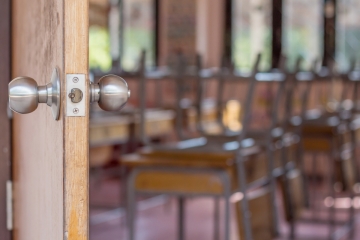
Thirteen states and D.C. still mandate face masks for students, as do myriad individual districts in places that defer to local leaders. In total, about half of American students have to wear a mask every day. But there’s little evidence that this mitigates the spread of Covid—a consideration that the Omicron variant has made less important anyway—and, more importantly, masking inflicts real educational and emotional harm on students.

Daniel Buck 2.17.2022
NationalFlypaper

End school mask mandates

Daniel Buck
2.17.2022
Flypaper

Why I left the classroom during the Great Resignation

Nathaniel Grossman
2.17.2022
Flypaper

Incentivize individual agency to achieve upward mobility

Ian Rowe
2.17.2022
Flypaper

Finding the best fit: School choice data from London show more of what parents know

Jeff Murray
2.11.2022
Ohio Gadfly Daily

Dual language education seems to be a promising route to academic progress

Amber M. Northern, Ph.D.
2.17.2022
Flypaper

Education Gadfly Show #807: What are schools doing with their Covid relief dollars?

2.16.2022
Resource

Cheers and Jeers: February 17, 2022

The Education Gadfly
2.17.2022
Flypaper

What we're reading this week: February 17, 2022

The Education Gadfly
2.17.2022
Flypaper
view

Why I left the classroom during the Great Resignation

Nathaniel Grossman 2.17.2022
Flypaper
view

Incentivize individual agency to achieve upward mobility

Ian Rowe 2.17.2022
Flypaper
view
Primary school choice in London SR image

Finding the best fit: School choice data from London show more of what parents know

Jeff Murray 2.11.2022
Ohio Gadfly Daily
view

Dual language education seems to be a promising route to academic progress

Amber M. Northern, Ph.D. 2.17.2022
Flypaper
view

Education Gadfly Show #807: What are schools doing with their Covid relief dollars?

Michael J. Petrilli, David Griffith, Ph.D., Amber M. Northern, Ph.D., Thomas Toch 2.16.2022
Resource
view

Cheers and Jeers: February 17, 2022

The Education Gadfly 2.17.2022
Flypaper
view

What we're reading this week: February 17, 2022

The Education Gadfly 2.17.2022
Flypaper
view

End school mask mandates

Daniel Buck
2.17.2022
Flypaper

Once a hallowed political position, the case for masking in schools has now crumbled. Even so, as of this week, thirteen states and the District of Columbia mandate face masks for students, as do myriad districts in places that defer to local leaders. Because of the prevalence of these mandates, about half of American students wear a mask every day. The CDC still encourages universal masking of all students over the age of two.

Europe has taken the opposite approach, keeping masks off children, and even the World Health Organization advises against masks for young kids and recommends them only in select cases for older students.

There is scant evidence that masking in school mitigates the spread of Covid-19. A study last year in Georgia found that masking children did not have a statistically significant benefit. The few extant studies that tout the efficacy of masks on children do not “isolate the impact of masks specifically.” In other words, other confounding variables—vaccination rates, social distancing, community spread, air ventilation, etc.—could just as easily explain the positive correlation.

Lacking evidence for masks is sufficient reason to justify their removal—compulsion should not continue without reason—but that’s just half the issue. Without a compelling positive case for masks in school, there is still the issue of what negative consequences they bring. Quite simply, face masks inflict real educational and emotional harm on students.

Faces are crucial to academic and social development. Wearing a mask is not just another piece of clothing. For children in particular, it’s not a minor inconvenience. There is a trade-off.

It’s easiest to see in the development of language and literature. A mask muffles the voice and obscures the face and so stymies phonemic awareness, a critical aspect of early reading.

It begins with infants. A compelling study tracked the eye movements of babies while watching a speaker. Very young infants focus on a speaker’s eyes, but between four and six months, infants begin to track the mouth of the speaker; they rely on lip movements to develop early language.

As children age, they continue to use lip-reading for communication. They don’t have the same ability to discern sounds as do adults, and so they need to see a speaker’s mouth to pick out every word. The author of the aforementioned study writes that a mask “robs us of a plethora of linguistic signals that are essential for communication.”

This reliance on lip formation continues past verbal and into written language. When learning to read, facial expression and mimicry are hallmarks of phonics instruction—asking children to pronounce a syllable in a written word while the teacher demonstrates what sound to make. Preliminary studies find that word identification is “significantly compromised” when a teacher is wearing a mask.

There are no long-term analyses to confirm this prediction, but we should anticipate, alongside the learning loss from school closures, a smaller but still discernible learning loss from continued masking. Third grade is considered a crucial year in education. If students have not yet learned to read at this point, their likelihood of dropping out of school increases fourfold.

Then there’s the issue of a child’s social and emotional development to consider. It seems silly to have researched—why study the patently obvious?—but masks significantly hamper face recognition among children. To determine identity, adults rely on stature, voice, hair, and much more. Little kids need to see a face. If they struggle to know whom they’re talking to, what are the implications for learning the subtleties of human emotions?

The real toll is yet more insidious. A seminal paper in sociology stresses the importance of “weak-tie” relationships in emotional well-being. We need strong friendships and family ties, but equally important are the “weak ties” we have—the daily smile from our barista, a wave from our neighbor down the street. Students unmask and spend time with their friends outside of school—strong-tie relationships—but they miss out on the smiles and approving nods from teachers they don’t have and from other students in the hallways. This regular interaction among distant acquaintances provides a sense of belonging and regularity to a person’s life. Without it, we get the sentiment among many teachers that there’s no feeling of “life” in school buildings.

The same phenomenon played out with school closures. An article in The Atlantic declared in October 2020 that schools were not super-spreaders and yet many remained closed for an entire year regardless, inflicting untold academic and emotional harm on students. In similar fashion, the case against masking children has crumbled, but cloth coverings remain.

The policy solution here is really quite simple: End the mandates. Yet our public institutions are recalcitrant. This state of affairs—that such simplicity cannot manifest in reality, that public education refuses to “follow the science”—is perhaps the greatest argument in recent memory for cracking the calcified bureaucratic control over schools with school choice.

Editor’s note: A version of this essay was first published by National Review.

view

Why I left the classroom during the Great Resignation

Nathaniel Grossman
2.17.2022
Flypaper

Millions of Americans are quitting their jobs. “The Great Resignation” is causing a labor shortage in many industries, as workers leave for other jobs or simply stay home. The field of education is one that’s hurting. “No more teachers” Politico blares, perhaps overstating the case. NBC notes that 48 percent of surveyed administrators said their schools or districts were “having trouble finding enough full-time teachers.” Some other reports dig into the federal data on employment and don’t find the same catastrophe. Yet it’s clear that, after three disrupted school years in a row, many teachers feel like they’ve had enough.

I know firsthand. In December, I left the classroom after more than a decade. For the first time since I began my education career in 2009—first as a substitute teacher, then as a fulltime aide, and ultimately as a head teacher in kindergarten through second grade—my days are no longer paced by the tones of the school bell. Now I don’t lead morning meetings or teach reading strategies or decorate bulletin boards. I am no longer “Mr. Grossman” (or “Mr. G” if it’s early in the year and we’re still learning names).

Quitting was not an easy decision. No one leaves a career more than ten years in the making on a whim. But I knew I was suffering from that other malady that’s sweeping the nation: burnout. In a piece for the New Yorker last year, Jill Lepore wrote that, “To be burned out is to be used up, like a battery so depleted that it can’t be recharged.” Symptoms of “burnout syndrome” include “exhaustion, cynicism, and loss of efficacy.” Check, check, and check.

It’s not that I became disillusioned with teaching per se. I firmly believed, and still do, that a quality education is the moral right of every American child. I still believe that education is the most effective strategy available to us to lift people out of poverty and into the middle class. And I still believe that education is the best tool we have to promote human flourishing in a free and open society. What I stopped believing is that I could participate in this noble cause, day in and day out, while also maintaining my health, sanity, and personal relationships.

The most difficult part of teaching is not planning lessons, grading tests, or responding to misbehavior. These things take years to master, but they can be managed by most novice teachers. In time, I got pretty good at these duties and even came to enjoy doing them. When done in an intentional, systematic way, they allow students to grow and succeed. That’s rewarding to see, even when it’s a heavy lift.

It’s the emotional labor of being a teacher that burned me out. Teachers are not just responsible for the academic achievement of the two dozen young people in their classroom; they are also responsible for the emotional well-being of children. A teacher is only as good as the bond he or she forms with students. It is a connection that is built through patience, consistency, and an extra-large dose of empathy. It is especially true for the early elementary grades. Teaching kindergarten means juggling the roles of educator, life coach, surrogate parent, and unlicensed nurse.

This can be exhausting even when there’s not a once-in-a-century pandemic. During my tenure, I helped students manage countless routine conflicts and small disappointments—arguments over who gets to use the blue crayon first, the agony that comes with being excluded from a playground game, a test score that falls below what was expected. And that doesn’t even cover the extreme cases, such as the fistfights I broke up, the calls I made to Child Protective Services to report abuse by a parent, the thrown chairs I dodged.

The pandemic sent this emotional labor into overdrive. When schools first closed their doors in 2020, it was a shock. My school went to spring break a day early (“just to be safe”) and didn’t return to in-person instruction until fall. There was no time for an orderly transition, no time to prepare students for the seismic shift that was happening under their feet.

I’m thankful that my school had the resources to send each student home with an iPad so learning could continue remotely. But the digital space of our Zoom sessions did little to foster the community we had built in the classroom. Students who had been practically bursting at the seams during carpet time were now listless. This was understandable. I saw more than one child break down in tears, frustrated by the isolation and the uncertainty. As much as possible, I tried to create a safe space where my young pupils could grapple with their emotions. But at the same time, I was responsible for my own child, less than a year old and suddenly deprived of daycare. I became a multitasker, trying to make lunch while leading math lessons. My son learned to crawl during this stage of the pandemic, and more than once I had to excuse myself from a Zoom session because he was “exploring” the dog’s water bowl.

When I returned to in-person learning that fall, things improved, but not enough. Children that were thrilled to see their friends again were told to keep six feet away from them at all times, which meant no hugs, no high-fives, and very limited partner work. At one point, an administrator told faculty members not to stand next to children when helping them with school work. It was much safer to stand in front of them, separated by those six feet. And the cloth masks we forced students to wear robbed everyone of a whole range of non-verbal communication. Learning now that those masks weren’t effective infuriates me.

It killed me to enforce protocols that I knew were not developmentally appropriate for young children, but the consequences of not doing so could have been much worse. So literally dozens of times a day, I reminded students about maintaining proper social distance and not letting their masks slip below their noses. No one likes a nag, and a nagging teacher is even worse. After a while, the kids just stopped listening.

It was about this time when I knew something was wrong. I put my head down, gritted my teeth, and finished the school year. I thought summer break would be my salvation. I would recharge and come back strong in the fall. The faculty at my school had a vaccination rate around 90 percent, so the next school year would be a little closer to normal. Maybe we could even take off the masks! Then Delta hit and brought me back to reality. More distancing, more masking, more uncertainty.

My last school year as a teacher began in August 2021 and ended by winter break. I was done.

I now work from home and things are different. Some changes are welcome. Beginning work at 9 a.m. means I spend more time with my son. While teaching, I was usually out the door before he was even awake. When I stayed late for back-to-school nights or conferences, I might not see him at all that day. Being able to take a personal call during the day is also nice. And when Friday comes, I no longer pass out by 8 p.m. from sheer exhaustion.

Yet I miss it, too. Young kids are some of the funniest, most curious, most interesting people you’ll meet. Their capacity for joy is immeasurable. Want to see pure elation? Watch a group of kindergarteners on their way to recess when it’s snowing. It’s even better when you’ve commandeered some lunch trays for sleds (not that I would do that). It’s a paradox of teaching that students exhaust you but still infect you with their contagious energy. They love learning, so they make you love teaching.

But here’s the rub: The source of my burnout, which is the emotional labor of being a teacher, is an essential part of education. There’s no way to eliminate it from our schools, and we shouldn’t try. That makes dealing with the burnout an enormous challenge and complicates the resignations that it causes. The solutions on offer—higher pay, more flexible schedules, emotional sick days—aren’t bad ideas, but they don’t really get to the heart of the problem. Until we move past the pandemic, I’m not sure anything will.

view

Incentivize individual agency to achieve upward mobility

Ian Rowe
2.17.2022
Flypaper

Editor’s note: This testimony was given by Fordham Institute trustee Ian Rowe on January 20, 2022, to the U.S. House of Representatives Select Committee on the Economy as part of a hearing titled “Race, Ethnicity and the Economy: How Improving Economic Opportunity Benefits All.” The statement was first published in a similar format as the one presented here by the American Enterprise Institute.

To Chairman Himes, Ranking member Steil, and the distinguished members of the House Select Committee on the Economy, good morning. My name is Ian Rowe.

I submit my testimony today as a proud product of the New York City public school system kindergarten through twelfth grade, and a graduate of Brooklyn Tech High School, Cornell University College of Engineering, and Harvard Business School. I am the founder and CEO of Vertex Partnership Academies, a new network of character-based, International Baccalaureate high schools, with the first campus to open in the Bronx in 2022. For the past ten years, I was CEO of a non-profit network of public charter elementary and middle schools in the heart of the South Bronx and the Lower East Side of Manhattan. We educated more than 2,000 students—primarily low-income, Black, and Hispanic kids. We had nearly 5,000 families on our waiting list.

Many of our parents understand that racial disparities exist, but they know those disparities do not have to be destiny for their kids. These parents were given the power to choose our schools because they wanted their children to develop the skills and habits to become agents of their own uplift and build a better life, even in the face of structural barriers. In District 8 in the South Bronx, of the nearly 2,000 public school students beginning high school in the South Bronx in 2015, only 2 percent graduated ready for college four years later. That means 98 percent of students either dropped out of high school before completing their senior year or they did earn their high school diploma but still needed remediation in math and reading—if they did go to college.

We cannot ignore that the racial disparities we are seeking to close originated long before they show up for adults as statistical gaps in financial wealth, home ownership, or crime. In this district, if only 2 percent of mostly Black and Brown kids are graduating from high school capable of doing even basic reading and math, why would we reasonably expect these same kids as adults to be flourishing in higher education and the workplace, starting businesses, getting married, having children within marriage, or any of the other behaviors that typically mark passage into young adulthood and likely entry into the middle class or beyond?

I see young people today trapped between two dominant narratives. The first is what I call blame the system, the belief that America is an oppressive nation; that every institution is steeped in racism; that there is a white supremacist lurking on every corner; that capitalism itself is evil; that these systems are so rigged and discriminatory that the individual is powerless and only massive government intervention is the solution.

The second narrative I call blame the victim, the idea that America is full of opportunity, and that if you are not successful, then it must be your fault. You have some pathology that is the cause of your failure. You should have pulled yourself up by your own bootstraps.

Both of these narratives are wrong and rob young people of agency, the sense that they can control their own destiny. If we want to help young people of all races achieve the American Dream, I propose a new framework, FREE, based on encouraging young people to embrace four pillars—family, religion, education, and entrepreneurship—a revitalization of the four local, mediating institutions that drive human flourishing.

Family is helping young people understand the importance of forming strong families. Here we should teach decision making, that if you finish your education, get a full-time job of any kind so you learn the dignity and responsibility of work, and then if you have children, marriage first, data shows that 97 percent of millennials avoid poverty.

R is religion and the personal faith commitment that can be an anchor in your life.

E is for education and ensuring that every parent has the right to choose the education that best meets their child’s needs. School choice is fundamental.

And the final E is entrepreneurship, on the ways that young people can access capital, build wealth.

To see how these FREE pillars of family, religion, education, and entrepreneurship interact, consider that the Federal Reserve’s 2019 Survey of Consumer Finances gap between Black and White Americans at the median—the middle household in each community—was $164,100. For some, this gap is vibrant proof of a permanent and insurmountable legacy of racial discrimination.

Yet the same 2019 Survey of Consumer Finances shows that when education and family structure are considered, on an absolute basis, the median net worth of two-parent, college-educated Black households is nearly $220,000, and about $160,000 more than that of the typical White, single-parent household. The wealth gap is completely reversed.

Figure 1. Median net worth of two-parent Black households versus single-parent White households with children

ir 21722

Source: Federal Reserve 2019 Survey of Consumer Finances. Note: Households headed by “widowed” parent were excluded from analyses.

We have a moral imperative to encourage young people of all races to adopt a new cultural norm around family, religion, education, and entrepreneurship. I look forward to discussing it in more detail.

view
Primary school choice in London SR image

Finding the best fit: School choice data from London show more of what parents know

Jeff Murray
2.11.2022
Ohio Gadfly Daily

Since the 1980s, parents in London, England, have been guaranteed the right to choose a state-funded school for their children, with capacity being the only barrier. Since 1996, school performance tables have been made publicly available to aid them in sorting through what can be a wide array of options. While the ideal randomized school choice experiment is not possible in this environment, a recent working paper from Queen Mary University Ph.D. candidate Marco Ovidi approximates random variation in school selection by utilizing the tie-breaking mechanism of the centralized assignment process. Turns out that parents seem to know best for their children, even when their choices go against the publicly available school information.

For primary school in England (ages five to eleven), parents are required to rank up to six schools at the time of application, in order of preference. Those preferences are informed by publicly available information including standardized test scores, value-added measures, and the student composition of the schools. Local authorities (LA) overseeing schools are required to provide a seat to local applicants—those living in closest proximity—and to assign all applicants to the highest preference school available. Institutions with excellent test scores are typically sought after and usually become oversubscribed before seats are assigned. In these cases, distance to the school is used as a tiebreaker between applicants with equal priority, generating catchment areas that vary year by year. This divide allows Ovidi to identify applicants living at a similar distance from a given school—thus, having the same chance of admission—and compare those who got a seat in their most-preferred school and those who did not.

Ovidi’s data include administrative and demographic information on 199,220 applicants to London primary schools and the value-added scores of those schools in 2014 and 2015. The average parent ranked three or four options upon application. London students are more likely to have a disadvantaged background, with a higher proportion of students eligible for free lunch or with special education needs as compared to students in the rest of the UK. London schools, however, typically outperform the national average in terms of test scores. As befits the density of a major European capital city, catchment areas around London primaries average just 600 meters (just over one-third of a mile) and can be as close as 300 meters (less than one-fourth of a mile). One caveat Ovidi notes is that schools are allowed certain admission priorities—such as siblings of currently-enrolled students—that override the centralized assignment system, although he does his best to identify and correct for these relatively-few outliers.

Not surprisingly, parents overall show strong preference for primary schools with higher test scores and for institutions located closer to their homes, regardless of socioeconomic status, although parents in higher-income areas of London have access to more high-performing schools nearer to them. However, any given school can be ranked very differently by different parents without observable characteristics to explain the variation. Ovidi suggests parents are making personal, child-specific judgments about schools with information gathered from sources as yet unknown. Even more interesting, it seems these gut decisions ultimately create better school matches. While higher-performing schools will, in general, produce higher student achievement than will lower-performing schools, Ovidi finds that students who land in their parents’ first-choice school perform even better than expected based on test scores and value-added data. Enrollment in a preferred school increases achievement in mathematics by 0.09 standard deviations above what would be expected based on school quality compared to a similarly effective institution with lower parental preference. To state it another way, a student will actually do worse academically if the tie-breaking algorithm sends him to a less-preferred school, even if it is statistically identical to the school that his parent ranked first.

A specific example of positive parental preference effects explored in the paper also shows the complex interactions at play. Ovidi looked at male students who entered primary school with relatively low achievement levels. Parents of these students, unusually, tended to prefer schools with lower overall performance ratings than other options near them. Those boys did better in their parents’ preferred institution than did their peers in higher-performing schools. And since the match effects observed in his sample are largest in schools in the bottom quartile of the peer quality distribution, he also suspects that such seemingly paradoxical preferences are driving the positive outcomes. Ovidi hypothesizes that these parents preferred to place their lower ability students with peers at or near the same level rather than with children who are more advanced. While he cites other research showing that males react “less productively” than females to new environments with higher-ability peers, the data do not go far enough to prove this conclusively.

The bottom line appears to be that parental choices, while informed by school quality and proximity, are child-specific and based on other factors beyond the obvious. But that is not to say that they are arbitrary or focused on non-academic considerations. Quite the contrary, it seems. Parents can not only spot a good school generally, but can also home in on the school that is the best fit for their child. We must respect these abilities when designing school choice programs. As EdChoice’s Mike McShane puts it in his brief analysis of Ovidi’s work, “By understanding the skills that parents have in navigating their choices and the differential quality within the options...we can better understand how to improve them. That improvement falls to policymakers, so understanding the factors that lead to the adoption and expansion of programs is all the more important.”

SOURCE: Marco Ovidi, “Parents know better: Primary school choice and student achievement in London,” Working Paper No. 919, Queen Mary University of London, School of Economics and Finance, London (December 2021).

view

Dual language education seems to be a promising route to academic progress

Amber M. Northern, Ph.D.
2.17.2022
Flypaper

Dual language instruction (DL) is a version of bilingual education that renders instruction in two languages in the same classroom. It differs from the more common English-only classroom with pullout/separate services for students learning English as a second language (ESL). It also differs from language immersion in which students receive all instruction in their non-native language. Little is known about the efficacy of the DL model, but a recent study in the Journal of Education Finance and Policy provides some useful insights.

It makes use of oversubscribed lotteries for two DL magnet schools in the Charlotte-Mecklenburg School District in North Carolina, enabling analyst Andrew Bibler to compare the average differences in test scores between those who won and lost the lottery. In both schools, 90 percent of instructional time in kindergarten is in Spanish; in grades one to five, at least half of the content is taught in both Spanish and English. The students are a mix of both English-proficient and English learners (ELs). The sample includes students entering kindergarten from the 2006–07 through 2011–12 school years who submitted an application for a DL school. Bibler utilizes eight years of lottery results, and his primary outcome of interest is end-of-grade exam scores.

The sample includes roughly 372 observations from the English-proficient sample and 232 from the English learner sample. Overall, attending a DL school leads to increases of 0.04 and 0.05 standard deviations per year on math and reading exam scores, respectively. Interestingly, the effects for EL and non-EL students are similar. Estimates show that the effects on math scores are also similar for males and females in the non-EL sample. For the EL kids, math and reading estimates are larger for males but not significantly so.

Bibler is unable to estimate effects by race in the EL sample because virtually all of the students are Hispanic, but in the non-EL sample, estimates for math and reading are positive across all races. Next, he examines whether the DL effects can be explained by observable classroom differences, looking at such factors as average teacher experience, class size, percent of peers who are ELs, percent of economically disadvantaged peers, and percent of peers who are White. He finds that, in general, none of these examined characteristics is likely driving the positive impacts of DL.

Because his original estimates can’t distinguish between a DL-specific effect and the average effect of winning a seat in a magnet school—which is pretty important!—Bibler compares results with non-DL magnet schools, finding that the effects for the DL schools are two to three times larger than the effects for the non-DL schools. Finally, he finds no evidence that attending a DL school changes the likelihood one way or another of being classified as an English learner in grades four through six.

Unfortunately, the analysis is not able to examine the effect of DL participation on fluency or literacy in the partner language to try to parse out whether and how that may play a role. Still, this report paints DL education as a promising route by which to leverage the home language ability of EL students while at the same time educating ELs and non-ELs alike.

SOURCE: Andrew Bibler, “Dual Language Education and Student Achievement,” Journal of Education Finance and Policy (October 2021).

view

Education Gadfly Show #807: What are schools doing with their Covid relief dollars?

2.16.2022
Resource
 

On this week’s Education Gadfly Show podcast (listen on Apple Podcasts and Spotify), Thomas Toch, director of FutureEd, joins Mike Petrilli and David Griffith to discuss the ways schools are spending $123 billion in federal Covid relief. Then, on the Research Minute, Amber Northern discusses a study of how leaders are investing in the teacher workforce, and whether that aligns with the preferences of educators.

You can find this and every episode on all major podcast platforms.

Recommended content:

  • FutureEd’s analysis of more than two thousand local spending plans: “How Local Educators Plan to Spend Billions in Federal Covid Aid.”
  • Marguerite Roza’s paper that explores tradeoffs in school spending: “The ‘Would You Rather?’ Test,” from the book Getting the most bang for the education buck, eds. Frederick M. Hess and Brandon L. Wright (Teachers College Press, 2020).
    • The study that Amber reviewed on the Research Minute: Virginia S. Lovison and Cecilia H. Mo, “Investing in the Teacher Workforce: Experimental Evidence on Teachers’ Preferences,” retrieved from the Annenberg Institute at Brown University (February 2022).

Feedback welcome!

Have ideas or feedback on our podcast? Send them to our podcast producer Pedro Enamorado at [email protected].

view

Cheers and Jeers: February 17, 2022

The Education Gadfly
2.17.2022
Flypaper

Cheers

  • “Imagine if a lemon law penalized schools for rotten educations.” —Mitch Daniels in the Washington Post
  • San Francisco’s parents and its Asian American community recalled, in a landslide, three school board members for prioritizing activism over students during the pandemic. —Washington Post

Jeers

  • Many of Chicago’s Covid relief funds aren’t going to students. A hefty portion is instead going to staff pay and benefits. —Chalkbeat Chicago
  • A Reuters investigation found 220 instances of intimidation and threats of violence against local school boards. —Reuters
  • “New Jersey blocks expansion of three Newark charter schools, continuing slowdown of charter growth.” —Chalkbeat Newark
view

What we're reading this week: February 17, 2022

The Education Gadfly
2.17.2022
Flypaper
  • In this interview, the Manhattan Institute’s Reihan Salam explains why a conservative vision for civic discourse in a pluralistic democracy is at odds with critical race theory. —Jay Caspian Kang
  • Children “force us to debate the merits of our own moral doctrines explicitly, despite the fact that we have little skill for it and less practice.” This is clearest in discussions about school policies. —Elizabeth Bruenig
  • This pre-K study challenged its lead researcher’s priors when she found it had negative effects on student outcomes. —NPR
  • In this point-counterpoint, Amy Ellen Schwartz and Michah Weitzman Rothbart present the benefits of expanding access to free school meals, and Max Eden explains the cons. —Education Next
  • “A new analysis finds that at 30 percent of all colleges, more than half of students ten years after enrollment earn less than a high school graduate.” —U.S. News and World Report
  • As local governments repeal Covid-19 restrictions for adults, parents from both parties are not happy with how the rules affect their children in schools. What does this mean? —Codebook by Kristen Soltis Anderson
Fordham Logo

© 2026 The Thomas B. Fordham Institute
Privacy Policy
Usage Agreement

National

P.O. Box 110
Burke, VA 22009

202.223.5452

[email protected]

Ohio

P.O. Box 82291
Columbus, OH 43202

614.223.1580

[email protected]

Sponsorship

130 West Second Street, Suite 410
Dayton, Ohio 45402

937.227.3368

[email protected]