Mobile Navigation

  • National
    • Policy
      • High Expectations
      • Quality Choices
      • Personalized Pathways
    • Research
    • Commentary
      • Gadfly Newsletter
      • Flypaper Blog
    • Events
    • Scholars Program
  • Ohio
    • Policy
      • Priorities
      • Media & Testimony
    • Research
    • Commentary
      • Ohio Education Gadfly Biweekly
      • Ohio Gadfly Daily
  • Charter Authorizing
    • Application
    • Sponsored Schools
    • Resources
  • About
    • Mission
    • Board
    • Staff
    • Career
Home
Home
Advancing Educational Excellence

Main Navigation

  • National
  • Ohio
  • Charter Authorizing
  • About

National Menu

  • Topics
    • Accountability & Testing
    • Advanced Education
    • Career & Technical Education
    • Charter Schools
    • Curriculum & Instruction
    • ESSA
    • Evidence-Based Learning
    • Facilities
    • Governance
    • Personalized Learning
    • Private School Choice
    • School Finance
    • Standards
    • Teachers & School Leaders
    • Think Again
  • Research
  • Commentary
    • Gadfly Newsletter
    • Flypaper Blog
    • Gadfly Podcast
  • Events
  • Scholars Program

The Education Gadfly Weekly

Sign Up to Receive Fordham Updates

We'll send you quality research, commentary, analysis, and news on the education issues you care about.
Thank you for signing up!
Please check your email to confirm the subscription.

The Education Gadfly Weekly: Elon, stick to cars, rockets, and tech

Volume 24, Number 50
12.19.2024
12.19.2024

The Education Gadfly Weekly: Elon, stick to cars, rockets, and tech

Volume 24, Number 50
view
Elon Musk
High Expectations

Elon should stick to cars, rockets, and tech

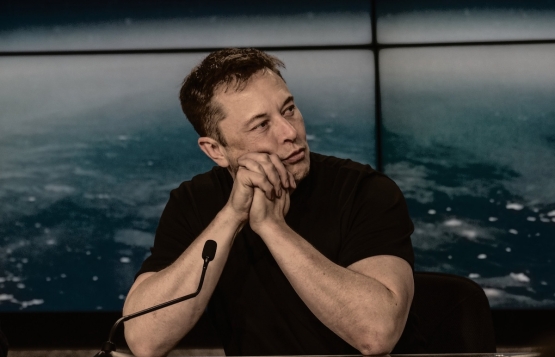
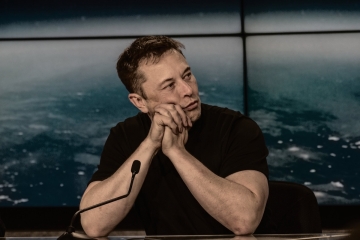
Any hope that Musk would find success in revolutionizing education is unlikely. His educational experiments may succeed on Space X grounds with the children of Space X employees—with all of the cultural capital that comes with such an upbringing—but would almost certainly explode on lift off were they launched at scale.

Daniel Buck 12.19.2024
NationalFlypaper

Elon should stick to cars, rockets, and tech

Daniel Buck
12.19.2024
Flypaper

Don’t want to close underenrolled schools? Here’s how to make the math work.

Marguerite Roza
12.19.2024
Flypaper

The state of global education in a post-pandemic world

Nuno Crato | Harry Anthony Patrinos
12.19.2024
Flypaper

New international data on the persistent link between Covid school closures and learning loss

Jeff Murray
12.19.2024
Flypaper

Checking in on the postsecondary outcomes of high school dual enrollment students

Jeff Murray
12.17.2024
Ohio Gadfly Daily

#950: The best and worst of ed reform in 2024, with Checker Finn

12.18.2024
Podcast

Cheers and Jeers: December 19, 2024

The Education Gadfly
12.19.2024
Flypaper

What we're reading this week: December 19, 2024

The Education Gadfly
12.19.2024
Flypaper
view
School classroom door and key

Don’t want to close underenrolled schools? Here’s how to make the math work.

Marguerite Roza 12.19.2024
Flypaper
view
Globe

The state of global education in a post-pandemic world

Nuno Crato, Harry Anthony Patrinos 12.19.2024
Flypaper
view
Empty school hallway

New international data on the persistent link between Covid school closures and learning loss

Jeff Murray 12.19.2024
Flypaper
view
Dual enrollment and postsecondary outcomes SR image

Checking in on the postsecondary outcomes of high school dual enrollment students

Jeff Murray 12.17.2024
Ohio Gadfly Daily
view
Checker Finn

#950: The best and worst of ed reform in 2024, with Checker Finn

Chester E. Finn, Jr., Michael J. Petrilli, Amber M. Northern, Ph.D., David Griffith, Ph.D. 12.18.2024
Podcast
view
Fordham Gadfly image

Cheers and Jeers: December 19, 2024

The Education Gadfly 12.19.2024
Flypaper
view
Fordham Gadfly image

What we're reading this week: December 19, 2024

The Education Gadfly 12.19.2024
Flypaper
view
Elon Musk

Elon should stick to cars, rockets, and tech

Daniel Buck
12.19.2024
Flypaper

Considering that Elon Musk developed the technology to parallel park rockets, designed electric cars that people actually like, held one of the first human trials of neural implants, and on the side, manages one of the most influential social media platforms in the world, I have a lot of time for his schemes. Greatness and eccentricity often pair, after all.

But in education, where Musk has dabbled for years, his ideas would almost certainly explode on lift off were they launched at scale. Last month, Education Week reported that Musk was opening a school for young adults, and believes that school should operate like “a video game.” Normally, yet another entrepreneur opening a school is a small news story, but considering Musk has the ear of President-elect Trump—and many more look to Musk for inspiration—his thought leadership is worthy of our attention. And here, it would be deleterious.

Indeed, Musk’s forays into education are many. He first opened a clandestine school, Ad Astra, at Space X’s headquarters with a simple dictum to its founding principal: Make it great. Hundreds of families at Space X and a few select students from Los Angeles applied for fewer than 40 spots. An article for the Washington Post describes the school as a “secret laboratory school for brilliant kids who love flamethrowers,” with a curriculum geared toward problem solving skills.

In 2020, Musk dissolved the school and the teachers involved spun the concept off into two separate products: Astra Nova and Synthesis. Astra Nova is an unaccredited, online school that offers a variety of courses covering everything from infectious diseases to history to an introduction to stand-up comedy. Synthesis is a series of weekly “games” or simulations first offered at Ad Astra, but now is a subscription software that schools or families can use for enrichment. And Musk plans to soon re-open a variation of his initial Ad Astra school in Texas outside of Space X’s headquarters—the aforementioned school for young adults that Education Week covered.

As supplement offerings, it’s difficult to take issue with these products. But they would be a disaster as the basis for educating a substantial portion of American students. 

A school at Space X serves mostly “failure proof kids.” Reared in affluence with educated parents, essentially any educational model could function on the organization's campus. Throw a squirrel and a chatbot in a room with books, and the children of Space X employees would come out well-educated. Children from stable homes have parents that have leisure time to assist with projects or tutor their kids. Children with affluent backgrounds are more likely to grow up in language-rich households, thus naturally developing more complex vocabulary and sentence structures. Similarly, within the cultural mainstream, such children have been normed into society’s basic expectations about decorum, behavior, and speech.

Conversely, if an underprivileged student has to babysit their siblings in the evenings, doesn’t have parents who have time to provide homework help, doesn’t have behavioral accountability at home, or doesn’t come to school with an advanced vocabulary, they need the structure of a traditional school and the explicit instruction of a traditional curriculum.

When it comes to his actual theories, Musk makes a fundamental categorial error. Education is the incorrect domain for innovation. We should no more innovate beyond direct instruction or good curriculum than we should family dinners or reading bedtime stories. Though the foundations of modern schooling may not be self-evident, traditional classrooms are built upon sound principles. For example, factual knowledge, not abstract skills, determine our ability to think critically. We are human and so think and problem solve by nature. These inherent aptitudes grow more skillful with the application of specific content knowledge. A good engineer isn’t good because they’ve honed abstract thinking skills, but because they know much of physics, structural mechanics, and mathematics. Consequently, to develop the “critical thinking” capacities that Ad Astra and other Musk products extol, students need exposure to a sequence of unfamiliar knowledge, what we might call a curriculum.

Similarly, every basic structure in a school has a purpose. Bells ensure swift, efficient, and timely transitions so no time is wasted. Desks in rows keep attention forward and temptations to distraction minimal. Behavioral expectations ensure orderly, safe learning environments where kids can focus on their work. A small school tucked away in Silicon Valley may be able to shed these structures, but they’re absolutely essential to the task of mass educating an entire populace.

Open classrooms, whole-language and balanced literacy, restorative justice, one-to-one computing, chatbots—each one promised to change everything, schools scrambled to implement them, and education consultants made mean profit off of them. But teachers realized each one doesn’t work, and they’ve all fell out of, or are soon to fall out of, fashion. Musk may get humanity to Mars, but his educational efforts will do little to change the trend of our national test scores.

view
School classroom door and key

Don’t want to close underenrolled schools? Here’s how to make the math work.

Marguerite Roza
12.19.2024
Flypaper

As enrollments drop, city after city is facing pressure to close half-empty schools. Fewer kids means fewer dollars. Consolidating two schools saves money because it means paying for one less principal, librarian, nurse, PE teacher, counselor, reading coach, clerk, custodian… you get the idea. Low-enrollment schools end up on the chopping block because they’re the ones that typically cost more per pupil.

But there is another way to cut costs without closing underenrolled schools.

First, it’s worth noting that small schools needn’t cost more per pupil. Our school spending and outcomes data include examples of small schools all across the country that operate on per-pupil costs comparable to their larger peers—some even delivering solid student outcomes.

But here’s the catch: These financially viable small schools are staffed very differently than larger schools.

There’s a fifty-five-student school near Yosemite that spends about $13,000 a student—well under the state average. How do they make it work? One teacher teaches grades two, three, and four. There’s no designated nurse, counselor, or PE teacher, and rather than offer traditional athletics, students learn to ski and hike.

A quick glance at the many different financially viable small schools across different states reveals that staff often wear multiple hats. The principal is also the Spanish teacher, or the counselor also teaches math.

Also common are multi-level classrooms. When my kids attended a small rural high school, physics was combined with AP Physics, which meant both my tenth and twelfth graders were in the same class, but with different homework.

Sometimes schools give kids electives via online options, send students to other schools for sports, or forego some of these services altogether. Some have no subs (merging classes in the case of an absence). Sometimes the schools partner with a community group or lean on parents to help in the library or coach sports.

Done well, smallness can be an asset, even with the more limited services and staff. Whereas a counselor might be critical in a larger school to ensure that a student has someone to talk to, with fewer students in a small school, relationships come easier. Teachers may have more bandwidth to assist a struggling student.

What isn’t financially viable? A school with the full complement of typical school staff but fewer kids. These aren’t purposely designed small schools, rather they’re underenrolled large schools (sometimes called “zombie schools”). Los Angeles Unified School District, for instance, has a slew of tiny schools spending over $30,000 per pupil. Such schools vary in performance, but all sustain their higher per-pupil price tag by drawing down funds meant for students in the rest of the district. In the end, no one wins.

With so much aversion from parents to closing schools (witness, for example, Seattle, Chicago, San Francisco, Oakland, Pittsburgh, or Denver) we might expect more districts to adopt these non-traditional staffing models as a way to save costs and keep families happy.

In some cities, it’s the charter schools that are offering just that: smaller non-traditional programs that make it work without extra subsidies.

Some will argue that non-traditional schools (including charters) won’t work for every student. Districts must take all comers, including English learners, families needing extra supports, those wanting a full athletics program, specialty autism services, and so on. That said, the idea here is that larger districts needn’t offer those services in every school, provided they’re available elsewhere in the district.

But it’s these larger districts that are the most wedded to the uniform staffing structure. It’s so deeply embedded in job titles and union rules, as well as program specifications and more.

Tolerating small non-traditional schools would mean letting go of some of that rigidity and accepting the idea that schools can be successful without all those fixed inputs. And it might mean reducing some staff who believe their roles are protected when enshrined in a staffing formula. On the flip side, if the school in question has higher outcomes, and the choice is to close it or redesign its staffing structure to transform it into a more intentionally small school, parents and students may accept that trade if it means preserving the school community.

It would also mean changing budgeting practices so that what gets allocated is a fair share of the dollars per pupil—in contrast with allocations based on standardized staffing prescriptions.

The last decade saw a big push for inputs-based models, including “every school needs a counselor” or “every school needs a nurse.” As enrollments continue to fall, these inflexible one-size-fits-all allocations stand in the way of keeping small schools open.

None of this is to say that every school should remain open. Many will inevitably close. But for some of those that deliver solid outcomes for their students, perhaps now is the right time to rethink the typical schooling model. 

view
Globe

The state of global education in a post-pandemic world

Nuno Crato | Harry Anthony Patrinos
12.19.2024
Flypaper

The recently released results from Trends in International Mathematics and Science Study (TIMSS) 2023 highlight a concerning decline in U.S. students’ performance in science and mathematics, with the country falling further behind peer countries. But it isn’t just America. The post-pandemic education landscape reveals a troubling decline in student performance globally, with critical gaps in core subjects.

In addition to TIMSS, this is borne out in international assessments such as the 2021 Progress in International Reading Literacy Study (PIRLS) and the 2022 Program for International Student Assessment (PISA), which have tracked educational progress since the 1960s, providing crucial data for tracking trends and guiding policymaking. However, the latest results show concerning trends: 26 percent of students are low performers in reading, 31 percent in mathematics, and 25 percent in science. These numbers suggest that large numbers of students are not meeting even basic academic standards. While the pandemic exacerbated these challenges, many of these issues predate the pandemic. These results raise concerns about the long-term trajectory of global education.

The learning losses caused by the pandemic have only deepened these trends. In our new book, Improving National Education Systems After COVID-19, we show that students have lost anywhere from half a year to a full year of academic progress due to school closures and remote learning challenges. These setbacks have disproportionately affected marginalized students. Those from low-income households or rural areas faced particular hardships, including limited access to technology and reliable internet. These disparities have amplified existing achievement gaps, with disadvantaged students falling further behind. Addressing these inequities must be a central priority as we move forward in educational recovery.

To recover from the pandemic’s impact and ensure long-term growth in student learning, education systems must focus on several key strategies. First, maintaining rigorous and consistent assessments is crucial. Countries that continued standardized testing during the pandemic were better able to track the extent of learning loss and respond with targeted interventions. In contrast, nations that suspended assessments struggled to fully understand the scope of the crisis, making it harder to design effective recovery policies. Regular assessments are more important than ever to identify learning gaps, monitor student progress, and adjust policies accordingly.

Another essential strategy is providing targeted support for students who have fallen behind. High-dosage tutoring programs, which involve frequent, small-group sessions with trained tutors, have proven highly effective in helping struggling students catch up. These programs are particularly beneficial for disadvantaged learners, who may lack the resources or support outside of school. These interventions should be personalized to address individual learning needs, ensuring that students receive the right support at the right time.

The pandemic also presents an opportunity to rethink and streamline curricula. Many education systems have begun reviewing what is taught in schools, prioritizing foundational subjects like reading and mathematics. A well-structured curriculum that builds skills progressively from one grade to the next will better prepare students for academic success. Curriculum reform should also focus on developing critical thinking, problem-solving, and digital literacy. Moreover, curricula must be flexible enough to adapt to future challenges, such as potential disruptions to education or advances in technology.

Teacher support is another critical component of recovery. Teachers have faced enormous challenges during the pandemic, from adapting to remote learning to managing students’ mental health needs. Ongoing professional development and support are essential to help teachers navigate these challenges and deliver high-quality education. Teacher training should also focus on strategies for addressing learning gaps and supporting diverse learners, ensuring that educators are equipped to meet the varied needs of their students.

Finally, education policy must be data-driven. Policymakers should rely on insights from international assessments, national data, and other sources to make informed decisions. Data-driven policymaking will ensure that resources are allocated efficiently and that interventions are targeted where they are most needed. By using evidence rather than assumptions, education systems can better address existing gaps and create strategies for long-term improvement.

Recovery will not be easy, but it is achievable. By focusing on rigorous assessments, targeted interventions, curriculum reform, teacher support, and data-driven decision-making, we can rebuild education systems that not only recover from the pandemic but also thrive in the face of future challenges. The time to act is now. Our children’s future depends on it.

view
Empty school hallway

New international data on the persistent link between Covid school closures and learning loss

Jeff Murray
12.19.2024
Flypaper

Emergency school closures aimed at minimizing the impact of the coronavirus pandemic disrupted the education trajectory of over one billion children worldwide starting in March 2020. However, the length and manner of closures varied greatly from country to country and education system to education system. A new report from the University of Arkansas’ Department of Education Reform looks at twenty years of international trend data, culminating in 2023, that shows clearly that the longer a student’s school was closed, the more academic damage is in evidence.

An international team of researchers uses data from six administrations of the Trends in International Mathematics and Science Study (TIMSS) exam. TIMSS, given every four years, assesses fourth- and eighth-grade achievement in science and math across seventy-one education systems worldwide. It also provides contextual information and characteristics of students through a background questionnaire. This study incorporates both the 2019 results and the newly-released 2023 results, giving us a detailed look at the impacts of the Covid era on student achievement. School closure data, including the types (full, partial, hybrid) and durations (measured in weeks), come from the UNESCO Institute for Statistics. The researchers first created a long-term trends model from pre-pandemic testing data, then used a mixed-effect model to estimate deviations from those trends as revealed by 2023 results, adjusting for various demographic factors.

Overall, performance in mathematics and science for both fourth and eighth graders fell significantly below expectations based on the pre-pandemic linear trends. The global average decline was 0.11 standard deviations (SD) in student achievement, but it’s the specific mechanisms at work that deserve the most attention. In all models, the longer schools were closed, the greater that country’s student achievement deviated from pre-pandemic trends. This negative relationship ranged from about 0.16 points lost for each week of closure (grade four science) to 0.52 points lost per week (grade eight mathematics). This is equivalent to declines in average achievement of between 0.07 to 0.21 SDs. Negative impacts of school closures were strongest among eighth graders, low-performing students, girls, and what are termed “linguistic minorities” (students who reported speaking a language at home other than the one in which the test was given).

The academic damage from Covid can been seen across the globe, and the data are clear that school closure is the prime mechanism responsible for those findings. While it is not directly accounted for in the data or the modeling, most students likely experienced some form of remediation after disruptions ended and before taking the 2023 TIMSS. One can only assume the grim results would have been even grimmer without it. The report’s recommendations focus on the importance of such remediation efforts tailored to not only restoring lost content, but also on providing additional support to the most vulnerable students to get them back to where they should have been absent the disruption, especially for the most-impacted populations. These include increased—and precisely targeted—funding, direct interventions like high-dosage tutoring, and motivational nudges to keep students moving forward. They also believe that the unprecedented learning loss now fully evident in TIMSS and other international tests, like PISA and PIRLS, underlines the need for international planning and cooperation to make sure that such catastrophic educational disruptions do not happen again.

SOURCE: Tomasz Gajderowicz, Maciej Jakubowski, Alec Kennedy, Christian Christrup Kjeldsen, Harry Anthony Patrinos, and Rolf Strietholt, “The Learning Crisis: Three Years after Covid-19,” University of Arkansas, Department of Education Reform working paper series (December 2024).

view
Dual enrollment and postsecondary outcomes SR image

Checking in on the postsecondary outcomes of high school dual enrollment students

Jeff Murray
12.17.2024
Ohio Gadfly Daily

Dual enrollment, which allows students to complete college coursework and earn transferrable credits while still enrolled in high school, is a popular and growing pathway into postsecondary education. For many students, it also offers a way to take more advanced courses during high school and is often seen as an alternative to longstanding means such as Advance Placement and International Baccalaureate. Nearly every state now has formal programs for facilitating dual enrollment (DE), and the number of dual enrollees has tripled in the past twenty years. However, research lags on the effectiveness of DE in getting students to and through college. A recent report tries to bolster the research base.

A team of analysts from the Community College Research Center at Columbia University looks at national and state-by-state data on the postsecondary enrollment and degree completion outcomes of three groups of students who first enrolled in college in fall 2015. They are: DE students—high schoolers who enrolled at a postsecondary institution for the first time in fall of 2015 in order to take college courses while still attending high school; prior dual enrollment (PDE) students—new college freshmen who enrolled in fall 2015 after their high school graduation and had records of postsecondary enrollment while in high school; and non-dual-enrollment (non-DE) students—new college freshmen who enrolled after high school graduation but had no prior DE experience. The analysts use National Student Clearinghouse (NSC) data for most demographic and postsecondary institutional data and include neighborhood income data from the U.S. Census Bureau to estimate family income based on home addresses.

The sample comprised 3.6 million students from across the country. In the fall of 2015, 62 percent were non-DE students, 25 percent were PDE students, and 13 percent were DE students. All students were followed for four years after high school graduation, which means DE students were followed for a longer period of time than their peers. While the findings are largely just a snapshot of the college-going behaviors of each group—rather than any kind of controlled trial to determine causation—the report does offer some interesting comparisons.

Overall, the analysts find confirmation of widespread DE participation across states. However, just ten states (including California, New York, Washington, and Fordham’s home state of Ohio, among others) accounted for over half of all new DE students nationally in fall 2015. Texas was the top dog, with nearly twice as many students as the second-place state, New York. Community colleges enrolled 1.6 million students in the sample, with 60 percent of those students having PDE experience or being current DE students. By contrast, only 20 percent of the 2 million students who enrolled at four-year colleges had current or prior DE participation. DE students were highly likely to re-enroll in college for at least one semester after high school graduation, with 81 percent of those doing so within a year. In forty-one states, the re-enrollment rate for DE students exceeded 33 percent. In the top states, it was nearly half. The majority of re-enrollers (51 percent) opted for a four-year institution.

The remainder of the detailed analyses focus specifically on the DE students in the sample, with no further comparisons to the other groups included. Some examples: Forty-two percent of DE students went on to complete a college degree or certification within four years of finishing high school. Twenty-nine percent completed a bachelor’s degree, 10 percent completed an associate degree, and 2 percent completed a short-term certificate. Four years after high school, almost a third of DE students were still enrolled in college but had not yet earned a degree or certificate. In 41 states, DE students who enrolled in college right after high school had higher college completion rates than their non-DE peers. These outcomes were strongest in Delaware, Florida, Georgia, Mississippi, and New Jersey. Even stronger outcomes were seen for students who participated in DE at four-year institutions and who then went on to matriculate at four-year schools. However, this population was less likely to live in a lower-income neighborhood or to be Black or Hispanic than their community college DE peers.

There’s lots more to dig into here, including the state-by-state comparisons along various data points. The bottom line for these analysts is that dual enrollment in high school appears to be a reliable pathway into college for all types of students. It also appears to function as a booster toward on-time degree completion. The analysts conclude that states could increase DE access to more high schoolers in the hopes of spreading more of its benefits around. But they also note that state leaders should closely monitor their own data to make sure that completion rates are reasonable and that students are not being set up to fail (at potentially great cost). The bottom line for research, however, is that causal links are still desperately needed to really establish whether dual enrollment is truly fulfilling its promise of access to college and degree completion—not to mention the various “flavors” of dual enrollment which have varying levels of availability and outcomes, which are not differentiated here at all.

SOURCE: Tatiana Velasco et al, “The Postsecondary Outcomes of High School Dual Enrollment Students: A National and State-by-State Analysis,” Community College Research Center (October 2024).

view
Checker Finn

#950: The best and worst of ed reform in 2024, with Checker Finn

12.18.2024
Podcast
 

On this week’s Education Gadfly Show podcast, Checker Finn, Fordham’s president emeritus—and the original Education Gadfly—joins Mike and David to discuss the best and worst news in education reform in 2024. Then, on the Research Minute, Amber shares the top five research studies of the year.

Recommended content:

  • Michael J. Petrilli, “The best and worst of education reform in 2024,” Thomas B. Fordham Institute (December 19, 2024).
  • Michael J. Petrilli, “How much blame does the federal government deserve for America’s mediocre schools?,” Thomas B. Fordham Institute (November 21, 2024).
  • Michael J. Petrilli, “The end of MCAS is the end of an era. Now let’s figure out what comes next.,” Thomas B. Fordham Institute (December 5, 2024).
  • David Griffith and Daniel Buck, “It’s time for tough love to address chronic absenteeism,” Thomas B. Fordham Institute (September 5, 2024).
  • Dan Goldhaber and Grace Falken, ESSER and Student Achievement: Assessing the Impacts of the Largest One-Time Federal Investment in K12 Schools, CALDER (2024).

Feedback Welcome: Have ideas for improving our podcast? Send them to Stephanie Distler at [email protected].

view
Fordham Gadfly image

Cheers and Jeers: December 19, 2024

The Education Gadfly
12.19.2024
Flypaper

Cheers

  • This year, more students than ever have been accepted to college via QuestBridge—a nonprofit that helps high-achieving high schoolers from low-income families access and afford higher education. —Forbes
  • Charter school enrollment in Houston has nearly doubled since 2014 to about 94,000 students. —Houston Chronicle

Jeers

  • American students are falling behind in math, and neither Democrats nor Republicans are rising to the challenge to help them. —Charles Sykes, The Atlantic
  • Oakland Unified School District is in deep financial trouble, but the school board refuses to address overspending and declining enrollment. —San Francisco Chronicle
  • Across the country, cellphones have “increasingly fueled and sometimes intensified campus brawls, disrupting schools and derailing learning.” —New York Times
  • Interest in apprenticeships is increasing among students, but employers are reluctant to provide these opportunities. —The Hechinger Report
view
Fordham Gadfly image

What we're reading this week: December 19, 2024

The Education Gadfly
12.19.2024
Flypaper
  • Severe aggression in children may be linked to neuro-cognitive difficulties that require treatment. If educators can recognize the underlying factors and advocate for appropriate interventions, they can support these students and reduce classroom disruptions. —R. J. R. Blair and Daniel T. Willingham, American Educator
  • Moody’s Ratings has issued a negative outlook for traditional K–12 public schools in 2025, as they face challenges like rising staffing costs and declining enrollment, while charter schools are expected to maintain a stable outlook despite financial pressures.—K-12 Dive
  • What were the biggest discoveries in education research this year? Students are still hurting from the pandemic, charter schools are boosting college-going rates, teacher job satisfaction is dropping, student screentime is up, and much more! —Kevin Mahnken, The 74
  • Michigan’s Tim Walberg has been selected as the next chair of the House Committee on Education and the Workforce, where he may focus on issues such as parental rights, school choice, and the expansion of career and technical education. —K-12 Dive
  • A dive into the research shows that boys in school tend to “dominate the extremes,” excelling at the highest levels while also being overrepresented in academic and behavioral struggles. —Thomas B. Edsall, New York Times
  • The U.S. outpaces Europe in innovation and economic growth, but its relatively low share of top-performing students raises important questions. —Edward Conard, Wall Street Journal
Fordham Logo

© 2026 The Thomas B. Fordham Institute
Privacy Policy
Usage Agreement

National

P.O. Box 110
Burke, VA 22009

202.223.5452

[email protected]

Ohio

P.O. Box 82291
Columbus, OH 43202

614.223.1580

[email protected]

Sponsorship

130 West Second Street, Suite 410
Dayton, Ohio 45402

937.227.3368

[email protected]