Mobile Navigation

  • National
    • Policy
      • High Expectations
      • Quality Choices
      • Personalized Pathways
    • Research
    • Commentary
      • Gadfly Newsletter
      • Flypaper Blog
    • Events
    • Scholars Program
  • Ohio
    • Policy
      • Priorities
      • Media & Testimony
    • Research
    • Commentary
      • Ohio Education Gadfly Biweekly
      • Ohio Gadfly Daily
  • Charter Authorizing
    • Application
    • Sponsored Schools
    • Resources
  • About
    • Mission
    • Board
    • Staff
    • Career
Home
Home
Advancing Educational Excellence

Main Navigation

  • National
  • Ohio
  • Charter Authorizing
  • About

National Menu

  • Topics
    • Accountability & Testing
    • Advanced Education
    • Career & Technical Education
    • Charter Schools
    • Curriculum & Instruction
    • ESSA
    • Evidence-Based Learning
    • Facilities
    • Governance
    • Personalized Learning
    • Private School Choice
    • School Finance
    • Standards
    • Teachers & School Leaders
    • Think Again
  • Research
  • Commentary
    • Gadfly Newsletter
    • Flypaper Blog
    • Gadfly Podcast
  • Events
  • Scholars Program

The Education Gadfly Weekly

Sign Up to Receive Fordham Updates

We'll send you quality research, commentary, analysis, and news on the education issues you care about.
Thank you for signing up!
Please check your email to confirm the subscription.

The Education Gadfly Weekly: Doing educational equity right: The homework gap

Volume 24, Number 8
2.22.2024
2.22.2024

The Education Gadfly Weekly: Doing educational equity right: The homework gap

Volume 24, Number 8
view
Female student doing homework
High Expectations

Doing educational equity right: The homework gap

If we care about doing educational equity right, we need to call the bluff of those who want to lower expectations for students’ effort “because equity.” Those so-called advocates need to do some of their own homework—and penance—as well.

Michael J. Petrilli 2.22.2024
NationalFlypaper

Doing educational equity right: The homework gap

Michael J. Petrilli
2.22.2024
Flypaper

Horace Mann’s solution to political turmoil in education

Daniel Buck
2.22.2024
Flypaper

Education reform is a bipartisan endeavor

Chester E. Finn, Jr.
2.22.2024
Flypaper

Gag order? Or gag reflex?: State laws on teacher speech

Robert Pondiscio
2.22.2024
Flypaper

Why schools are failing to narrow excellence gaps in math

Jeff Murray | Brandon L. Wright
2.21.2024
Flypaper

Cheers and Jeers: February 22, 2024

The Education Gadfly
2.22.2024
Flypaper

What we're reading this week: February 22, 2024

The Education Gadfly
2.22.2024
Flypaper
view
Horace Mann

Horace Mann’s solution to political turmoil in education

Daniel Buck 2.22.2024
Flypaper
view
Bipartisan handshake agreement

Education reform is a bipartisan endeavor

Chester E. Finn, Jr. 2.22.2024
Flypaper
view
Teacher in a classroom

Gag order? Or gag reflex?: State laws on teacher speech

Robert Pondiscio 2.22.2024
Flypaper
view
Black student doing math in school

Why schools are failing to narrow excellence gaps in math

Jeff Murray, Brandon L. Wright 2.21.2024
Flypaper

view
Fordham Gadfly image

Cheers and Jeers: February 22, 2024

The Education Gadfly 2.22.2024
Flypaper
view
Fordham Gadfly image

What we're reading this week: February 22, 2024

The Education Gadfly 2.22.2024
Flypaper
view
Female student doing homework

Doing educational equity right: The homework gap

Michael J. Petrilli
2.22.2024
Flypaper

This is the sixth in a series on doing educational equity right. See the introductory post, as well as ones on school finance, student discipline, advanced education, school closures, grading, effective teachers, and a concluding post on doing educational equity wrong.

The casual observer might be surprised that there’s much controversy about homework. A common sense, man-on-the-street view would be straightforward: Teachers should assign homework, and students should do it. After all, practice makes perfect, and kids can’t learn without exerting effort.

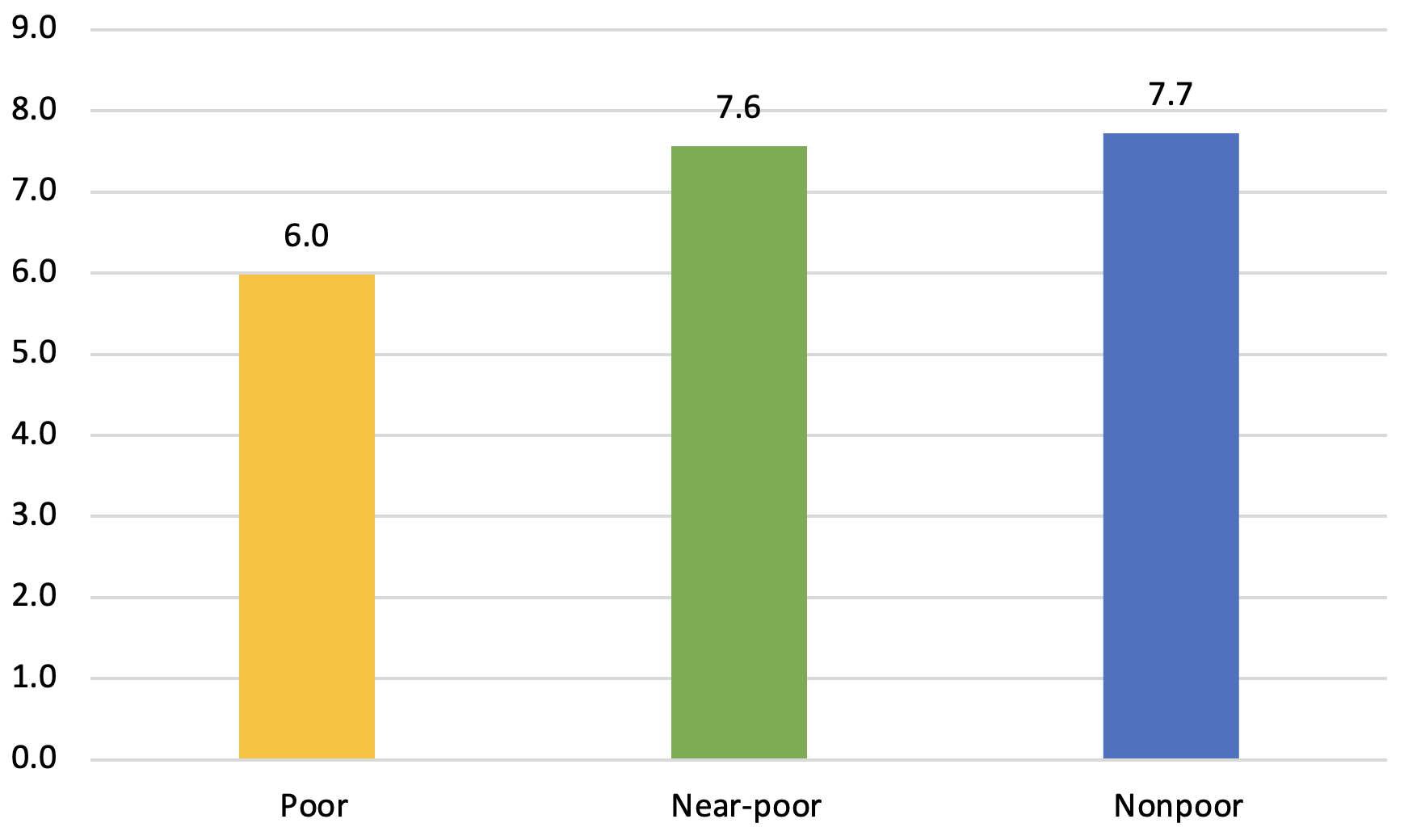
But alas, in this domain, as in others, there is indeed robust debate (and not just among bellyaching students). Some of it springs from “hothouse” schools in upper-middle-class suburbs where parents fret that too much homework is stressing out their sons and daughters. Some of it stems from scholars, who have questioned whether homework actually boosts learning. But much of it comes from concerns about “the homework gap”—the longstanding finding that kids from low-income households spend significantly less time on homework than their more advantaged peers. And therefore, some argue, we should limit homework or eliminate it altogether.

Figure 1. The high school homework gap: Average hours spent doing homework, by student poverty level, 2019

mp 1 2-21

Source: U.S. Department of Education, National Center for Education Statistics, Parent and Family Involvement in Education Survey of the National Household Education Surveys. (This table was prepared April 2021.) Note: Poor children are those whose family incomes were below the Census Bureau’s poverty threshold in the year prior to data collection. Near-poor children are those whose family incomes ranged from the poverty threshold to 199 percent of the poverty threshold. Nonpoor children are those whose family incomes were at or above 200 percent of the poverty threshold.

You won’t be surprised that I disagree. That certainly is no way to “do educational equity right.” Instead of leveling down, Harrison Bergeron style, we should level up. Our goal when it comes to homework should be to get more students to do more of it—at least the valuable, productive kind, which loads of research studies demonstrate is related to increased academic achievement.

And that means addressing the barriers that some low-income students face when it comes to doing homework—either at home or at school.

The most obvious one relates to technology. Though the “digital divide” has largely been closed, low-income families are still less likely to have high-speed internet access in their homes. And while schools dramatically ramped up their one-to-one laptop initiatives during the pandemic, there are still locales where not all students have access to workable devices. As reported by Education Week, a recent Pew survey found that 22 percent of U.S. teens said they often or sometimes have to do their homework on a cellphone, 12 percent said that “at least sometimes” they are unable to complete homework assignments because they do not have reliable access to a computer or internet connection, and 6 percent said they have to use public Wi-Fi to do their homework “at least sometimes” because they don’t have an internet connection at home. To the extent that schools are assigning homework that must be done online, that’s an issue.

Low-income students are also less likely to report having a quiet place to do homework, not surprising given that their homes tend to be smaller and that they often are tasked with taking care of younger siblings. Their parents may also be less capable of helping with homework, given that, within lower-income families, parents and other caregivers are much more likely to have dropped out of high school themselves.

But the answer to these challenges can’t be simply to throw up our hands and say it’s unfair to assign homework to kids from low-income families, so we just won’t assign any homework to anyone. It’s to overcome the challenges!

That entails addressing the technology gaps, such as by providing laptops or Chromebooks to all students, as well as Wi-Fi hotspots. An even better approach might be to make such technology available at the school, by keeping media centers open and staffed before school, after school, and on the weekends. That turns “homework” into “out of class work”—but the benefits are the same. The marginal costs of keeping public school facilities open longer are minimal, but the benefits could be substantial.

If that creates new challenges—for example, providing transportation to students for these “extended learning time” opportunities—then study halls and the like could be built into the regular school day itself. Just make the day longer and adjust the transportation schedule accordingly. Or team up with other community organizations that could provide homework help and quiet environments, from public libraries to Boys & Girls Clubs to churches.

None of this is rocket science. Indeed, KIPP charter schools have been doing versions of this for a quarter century—including giving students their teachers’ cell-phone numbers so they can get help with homework at night. That’s because KIPP and other great high-poverty schools have always felt a sense of urgency around helping their students catch up to their more affluent peers. And they’ve always known that means working harder and longer—not just to close the homework gap, but to reverse it.

I know what some might be saying: Getting traditional public schools to do things like this is going to be hard. Chromebooks and Wi-Fi hotspots cost money. So does keeping school libraries open after school or on weekends. Not all teachers will be crazy about giving kids access to their phone numbers.

All true. But if we care about doing educational equity right, we need to call the bluff of those who want to lower expectations for students’ work and effort “because equity.” Those so-called advocates need to do some of their own homework—and penance—as well.

view
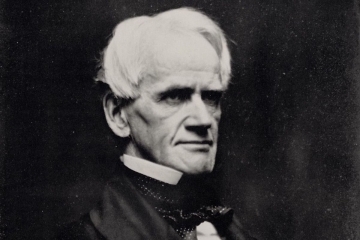
Horace Mann

Horace Mann’s solution to political turmoil in education

Daniel Buck
2.22.2024
Flypaper

Fights over books, an exodus from public schools, politically obsessed adolescents, the need for civics education—Horace Mann predicted it all back in 1848. Thankfully, this education luminary also provided wisdom and insight in the common school era for how we can turn down the culture war heat in modern times.

In case anyone reading this doesn’t already know it, Horace Mann is considered the founder of modern American public schools. A rising star in Massachusetts politics, back in 1837 he shocked his peers by accepting a then-insignificant role as secretary of the Massachusetts Department of Education. With little money or power, he began crafting what became widely circulated and influential annual reports, detailing the need for publicly funded, publicly run, universally attended schools. And in his final report, he spilled much ink warning his readers exactly what would happen if we allowed politics into our classrooms.

Today, as is well known, our public schools are struggling. They have always been a place of contention in America, but the fights have been distinctly acrimonious of late. Once sleepy affairs, school boards resemble raucous, fiery, even violent battlegrounds—as both conservatives and liberals contend over value-laden debates over books, curricula, and other topics of instruction.

Schools cannot help but inculcate some sort of worldview. What books are read, what behavior is rewarded or punished, who selects curricula, offhand remarks from teachers, uniform rules—everything a school does communicates to students implicit ethical messages and political encouragements. If this philosophy veers too far in any direction from the broader zeitgeist, parents will rightly take umbrage and look elsewhere.

Horace Mann foresaw this risk. He asked, “If parents find that their children are indoctrinated into what they call political heresies, will they not withdraw them from the school?” Astutely, he predicted that, in a politicized education, a central issue would be curriculum wars over what books kids should read: “What better could be expected, than that one set of school books should be expelled, and another introduced, as they might be supposed, however remotely, to favor one party or the other?”

In perhaps the most amusing passage, he describes schoolrooms that could become “a miniature political club-room” full of political addresses “prepared by beardless boys, in scarcely legible hand-writing, and in worse grammar.” As action civics replaces studying the Constitution, students partake in mock rallies, high schoolers have become international talking heads, and both cursive and grammar instruction fall out of favor, I can’t decide if I should laugh or weep at Mann’s caricature.

Thankfully, Mann didn’t leave us without recourse. He acknowledged that squabbles over public education are inevitable. Get a few hundred families together to collectively educate their children, and conflicts will arise almost necessarily. But to keep such conflicts productive and civil, he recommended a few essential topics for instruction:

The constitution of the United States, and of our own State, should be made a study in our Public Schools. The partition of the powers of government into the three co-ordinate branches—legislative, judicial, and executive—with the duties appropriately devolving upon each; the mode of electing or of appointing all officers, with the reason on which it was founded; and, especially, the duty of every citizen, in a government of laws, to appeal to the courts for redress, in all cases of alleged wrong, instead of undertaking to vindicate his own rights by his own arm; and, in a government where the people are the acknowledged sources of power, the duty of changing laws and rulers by an appeal to the ballot, and not by rebellion, should be taught to all the children until they are fully understood.

Not a bad civics curriculum: We should read the Constitution with our students, teach them how our government functions, and impress upon them their duties as citizens. More enlightening than a list of topics to cover, though, is Mann’s explanation for how learning about the proper functioning of our government will facilitate healthy disagreement. The reasons are two.

First, very practically, civics education will help people understand that there are proper and effective mechanisms to enact political changes, such as “the machinery of the ballot” or the court system. When we have a means to influence policy, political passions can vent without the need to resort to “violence.” Without a proper understanding of political processes, anger manifests in unruly school board meetings or the needless harassing of school officials instead of productive political engagement.

Second, civics education unifies through the creation of shared experiences, a shared cultural knowledge, and shared civic values—inculcating a common valorization of, for instance, equality before the law and religious toleration. These common beliefs, really a form of civil religion, form “the only common ground, whence the arguments of the disputants can be drawn.” With shared civic dogmas about the rights of man, the nature of government, and the purpose of society, we shared a common set of beliefs—a common language and rules of disputation—through which we can hash through our disagreements.

Now, I’m no fan of needless vitriol or baseless name-calling, but many of the arguments undergirding the so-called culture wars—what should our kids learn, how should we frame our history, who has authority to determine which policies—are inevitable, healthy even. The question of what values get taught in schools is an important one, and one that should be decided in the public square. But these arguments will prove productive and keep from descending into needless mud throwing only if we begin with a common ground. Without that, political impasse results.

Horace Mann brought public education mainstream, and this achievement warrants adulation. But if we go back and read his arguments, we find that they changed the nation precisely because they were powerful, convincing polemics, full of wisdom that can and should influence our politics and policy today.


view
Bipartisan handshake agreement

Education reform is a bipartisan endeavor

Chester E. Finn, Jr.
2.22.2024
Flypaper

In their FUSION essay “The Past and Future of Education Reform,” drawing heavily on their worthy new book, Rick Hess and Mike McShane are reasonably clear-eyed about the past, but the lessons they draw from it are a bit blurrier and their vision of the future is long on aspiration but slightly dimmed by ideology.

Looking back, the authors intentionally skip from the progressive era to A Nation at Risk, which has the unfortunate effect of eliding many relevant changes that occurred between World War II and Ronald Reagan’s arrival in the Oval Office, including much that implicates conservatives along with progressives.

Some wise folks have noted that everything in education at the federal level that’s had any real impact or staying power has been bipartisan, and at least until the current era, I’m pretty sure that’s correct. The GI Bill, for example, was drafted by former American Legion commander Harry Colmery and passed both houses of Congress with solid support from R’s as well as D’s. The National Defense Education Act of 1958 originated in the Eisenhower White House. Though both the Elementary and Secondary Education Act and the Higher Education Act (both 1965) were pushed mainly by LBJ and his fellow Democrats, both were expanded by the Nixon and Ford Administrations. And—as Rick and Mike note—much that followed A Nation at Risk owed its initiation and momentum to the two Bushes and such other GOP stalwarts as Lamar Alexander.

Hess and McShane are well aware of this bipartisan legacy, which they correctly note began to unravel during the Obama administration, but they’re not quite right in saying that “those on the right have mostly played defense, sat on their hands, or gone along for the ride.” It would be more accurate to say “those on the right were major instigators of much that happened—and certainly the twin pushes for school choice and results-based school accountability owe a great deal to conservative thinkers and Republican leaders.”

They’re certainly correct that “the contemporary left has yet to find a limiting principle it’s willing to embrace” and that this reality will bedevil future efforts at bipartisan education policy (much less education reform), but they’re not quite right when they charge conservatives with having “capitulated” to progressives in the education realm during previous decades. There were certainly instances when conservatives were defeated by progressive—at least Republicans were outvoted by Democrats—such as when Bush 41 and Education Secretary Lamar Alexander sought (through their “America 2000” initiative) to foster progress toward the new—and assuredly bipartisan—“national education goals” that the governors and President had set, only to be shunned by a Democratic Congress, a defeat that opened the door for Clinton’s bigger-government version called “Goals 2000,” which in turn opened the door for Bush 43’s No Child Left Behind Act.

Going forward, Hess and McShane mostly make sense. I second their assertion that “the right must...unapologetically sketch an agenda that speaks to the needs of all families,” yet they don’t quite acknowledge an obvious and worrying reality: Most of today’s policy leaders on the right seem to forget that the overwhelming majority of American families still send their children to district-operated public schools, much as they have for a century and a half, and this is pretty sure to continue. Today’s obsession on the right with private-school choice and seeming obliviousness to whether kids actually learn anything in school is scarcely calculated to win the approbation or support of “all families.” Most families’ “needs” are for better curricula, better teachers, better discipline, and more learning in the schools they’ve got, not for different schools or access to education savings accounts. I wish our distinguished co-authors had hit that one hard.

But they do set forth a modest agenda of reform initiatives that they say have the potential to unite “populists and traditionalists,” and they seem to appreciate the importance of trying once again to do so. Mostly, it’s familiar, small-bore stuff, like “promote curricula rich in content and rigor,” “help parents find affordable early education that reflects their needs and their values,” and “insist that schools honor hard work, kindness, and mutual respect.” I’m all for trying, though I’m mindful that lurking within these seemingly vanilla ideas is the potential for political and cultural conflict. For example, the left today wants “early education” to be attached to public schools and unionized, while the right wants it voucherized and privatized—and the latter may be necessary if what’s on offer is indeed structured to align with differing parental values. The seemingly vanilla suggestion that American history teaching be both “inclusive and devoid of political agendas” is an invitation to big fights over what exactly should be included and whether it’s even possible to insulate history from politics.

In other words, while it’s a fact that (as noted above) pretty much everything of lasting value in the ed-reform space has been bipartisan, and while it’s surely worth striving for that kind of unity going forward, it’s not going to be simple. Yet if America heads down the path of separate education policies for red and blue states (and districts), each side may score some short-term wins, but the country will continue to come apart, even as we know that education of the young should be part of the glue that holds us together.

Editor’s note: This essay was first published in slightly different form by FUSION.

view
Teacher in a classroom

Gag order? Or gag reflex?: State laws on teacher speech

Robert Pondiscio
2.22.2024
Flypaper

A new report from PEN America claims that 1.3 million teachers, roughly a third of full-time classroom staff in the United States, are now forced to work under “educational gag orders.” PEN tallies forty pieces of legislation restricting teacher speech across twenty-two states as of November 1, 2023. The report warns darkly that political conservatives “have learned from past mistakes and have new and more insidious strategies for silencing America’s educators,” particular shifting their emphasis from bills banning the teaching of critical race theory to “bills that restrict speech about LGBTQ+ topics and identities, including numerous copycats of last year’s HB 1557 in Florida, known to critics as the ‘Don’t Say Gay’ law.”

First and foremost, it’s important to recognize PEN America for what it is—an advocacy group concerned with protecting writers’ free expression, not an education organization. While its commitment to free speech is commendable in most contexts, PEN’s advocacy doesn’t translate seamlessly to the complex dynamics of K–12 public education, where states and school districts commonly and uncontroversially impose restrictions on teacher speech and conduct in the service of protecting minors, running safe and orderly schools, and advancing academic standards, while being mindful of often complex community sensibilities. 

Tendentiously describing restrictions on teacher speech as “educational gag orders” is on par with equally hyperbolic claims about “book bans,” which, needless to say, do not and cannot co-exist with robust First Amendment protections. When bookstores proudly display tables of “banned books” for sale with (thank goodness) no fear of prosecution, it’s self-evident (and vaguely comical) that no such “bans” exist.

More pertinently, restrictions on K–12 teacher speech are not intrinsically intolerable, even to those on the political left. At least one major poll found that when presented with the actual language of the Florida’s much maligned “Don’t Say Gay” law, which prohibits classroom instruction on sexual orientation or gender identity from kindergarten through the third grade, even Democrats supported it by a better than two-to-one margin.

If teachers are under the impression they are or ought to be free to hold forth on any topic they wish in front of a captive audience of other people’s children, that official interference is intolerable, or that the principle of academic freedom entitles them an unfettered hand to teach what they wish and how they like, they have been misled and poorly served by schools of education and others responsible for their professional development.

The concept of “academic freedom,” common and appropriate to higher education, simply doesn’t apply to K–12 public education, which, at least in theory, is focused on delivering a comprehensive curriculum aligned with state standards and educational goals, rather than on fostering open-ended inquiry or academic exploration. Public school teachers’ classroom speech is governed by school boards, district policies, state regulations, and curriculum standards. Any number of court decisions have affirmed that teachers are not independent professionals with unlimited free speech; functionally they are “hired speech” generally considered to speak for the school district when at work in a public school classroom—a crucial point seldom made in many teacher preparation programs, which explicitly encourage degree candidates to view their work as a form of activism. While K–12 educators certainly have, of necessity, professional discretion in how they deliver instruction, meet standards, and engage with students, the culture of teaching at least tacitly encourages something of a free agent mindset.

That being said, it’s crucial for all stakeholders, particularly conservatives and others with reasonable and appropriate concerns about classroom content and overt classroom activism, to exercise restraint and nuance in addressing issues related to teacher speech. When conservative activists sue school systems or try to get entire curricula thrown out over trivialities, they risk seeming unreasonable and forfeit the moral high ground and public sentiment.

Public school classrooms are not personal domains for unrestrained expression, but rather professional spaces where pedagogy and curriculum align with broader educational goals and community expectations. When lawmakers, parents, and others seek to rein in classroom activism and curricular excesses, that’s not a gag order. It’s a gag reflex.

view
Black student doing math in school

Why schools are failing to narrow excellence gaps in math

Jeff Murray | Brandon L. Wright
2.21.2024
Flypaper

Marginalized students have long lacked access to advanced education programs in the U.S., compared to more advantaged peers, and have been under-identified and therefore underserved when such programs exist. Research also suggests that these “opportunity” and “excellence” gaps—nearly ubiquitous in elementary, middle, and high schools—are worsening post-pandemic due to learning interruptions that were experienced unequally by low-income, Black, Hispanic, and Native American children.

RAND Corporation’s multi-year American Mathematics Educator Study (AMES) recently shed further light on these problems. Although focused on the entire spectrum of math achievement, not specifically the high end, its findings are highly relevant to advanced education—and plenty depressing. The study was announced in October 2023 with the goal of finding and explaining “key factors that shape equitable, high-quality mathematics teaching and learning,” to be used as baseline data necessary to remediate the stark declines in student math achievement witnessed as a result of pandemic-era school disruptions. The very first research findings were released this month, looking at school “structures” that may facilitate or limit access to math learning opportunities for students in elementary and middle schools. (A high school report is coming in the near future.)

The research team, led by Julia H. Kaufman, defines “school opportunity structures” as the systems and resources in place to support students in their mathematics education. Specifically, the three structures studied are: grouping of students by achievement, and their subsequent access to rigorous mathematics courses; whether students have access to certified, knowledgeable math teachers and principals; and the availability of and access to additional supports for struggling students beyond standard classroom instruction. Most of the findings center on the existence (or not) of these structures, with a lesser focus on utilization. And the first two areas, especially—achievement grouping and knowledgeable teachers and principals—are relevant to opportunity and excellence gaps in advanced education.

Data come from a spring 2023 survey given to nationally representative samples of teachers and principals from RAND’s American Teacher Panel and American School Leader Panel. The present report is based on responses from 2,505 teachers of mathematics (including elementary teachers of all subjects) and 2,293 principals across all grades K–12 (but including answers specific to K–8 grade bands only). Responses are weighted to be representative of the national population of K–12 teachers and school leaders. However, the researchers also oversampled teachers and principals in the four largest states—California, Florida, New York, and Texas—to provide some state-level comparisons.

They report that a majority of principals nationwide (59 percent) say their schools do not group students by math achievement in the elementary grades. That percentage effectively flips in middle school (grades 6–8), which still means that more than one-third of schools aren’t doing this. Among middle schools that do, principals report an almost even split between students grouped by achievement within their math classes (that is, several smaller groups within a single classroom) and those grouped into their mathematics classes (students of different achievement levels learning in different classrooms).

The most commonly reported means by which students are assigned to groups are diagnostic or benchmark assessment (reported by 85 percent of principals) and teacher recommendation (83 percent). Principal recommendation is the least commonly reported means (15 percent), with parent/guardian request in the middle at 42 percent. Relevant to opportunity gaps: Parental requests for math class assignment are reported by 50 percent of principals in low-poverty schools versus just 30 percent in high-poverty schools.

The research team also zeroed in on Algebra I offerings in middle school, as introductory algebra has long been considered a “gateway” course to participation in higher level math in high school—provided students can take and pass it by the end of eighth grade. Eighty-five percent of middle school principals reported that Algebra I was offered in their schools—meaning one in every six schools did not offer the course—while 65 percent of them said they offer the course but restrict it to certain students. This latter group of schools likely gatekeeps enrollment via prerequisites like course completion, letter grades, test scores, teacher or principal approval, parental pressure, or a combination of these. This can be a good thing if the students excluded truly aren’t yet capable of success. But too often, schools rely on inequitable metrics that are biased against marginalized subgroups and therefore leave out otherwise prepared students and contribute to the opportunity and excellence gaps they should be trying to narrow. (Here’s where the report’s lack of utilization information is a small weakness.) Worse, however, are California-specific data that echo other research showing the “unambiguously harmful” impacts of the state’s Algebra for All initiative, which had the main effect of moving Algebra access to ninth grade (at the earliest) for a majority of students.

Also concerning is that too few math teachers report being certified to actually teach their subject. This is true of one-third of middle school math educators and nine out of ten in the elementary grades. This likely reflects different licensure requirements for those grade bands in various states—and, indeed, most states only require generic elementary education certification in grades K–5. But it combines to call into question schools’ ability to offer rigorous, high-quality math instruction that provide students with the sort of solid early-grade foundations necessary to prepare more of them for advanced courses in later years.

All of this together adds up to poor prospects for narrowing opportunity and excellence gaps in advanced education. Research tells us that the structures that the RAND study found lacking in schools across the country—accelerated classes like Algebra 1 in middle school and achievement grouping—significantly improve the learning outcomes of advanced learners. Acceleration is “one of the most-studied intervention strategies in all of education, with overwhelming evidence of positive effects on student achievement,” as scholar Jonathan Plucker puts it. Numerous high-quality studies have found that arranging students by academic achievement in the same or separate classrooms is a net positive for advanced students and isn’t detrimental to their peers. And as another RAND resource puts it, “teachers matter more to student achievement than any other aspect of schooling,” so having such a large number of K–8 math educators lack certification in the subject may also be negatively impacting achievement—no matter how standard this practice is across states and school systems in the elementary grades.

The structural problems laid bare here are significant, but they’re also, of course, fixable. We know what works. Build the structures! Doing so would help improve achievement for all students, as well as narrow excellence gaps in advanced education. Consider, for example, the thirty-six recommendations put forth by The National Working Group on Advanced Education (of which one of us was a member) in its final report, Building a Wider, More Diverse Pipeline of Advanced Learners. That may seem like a large number of steps, but the core principle is simple: Become a champion for excellence and equity. As this RAND study shows, too many schools are failing at both.

SOURCE: Julia H. Kaufman, Lauren Covelli, and Pierrce Holmes, “Elementary and Middle School Opportunity Structures That Factor into Students’ Math Learning Findings from the American Mathematics Educator Study,” RAND Corporation (February 2024).

view
Fordham Gadfly image

Cheers and Jeers: February 22, 2024

The Education Gadfly
2.22.2024
Flypaper

Cheers

  • The L.A. Times editorial board rightfully condemns a new anti-charter policy in the City of Angels. —Los Angeles Times
  • “A child didn’t have pajamas for pajama day. His bus driver bought him some.” —Washington Post
  • Low-performing and under-enrolled schools should be closed. —Editorial Board, Bloomberg

Jeers

  • On college campuses and society more generally, the world’s oldest hatred, antisemitism, is winning. —Dara Horn, The Atlantic
  • Many companies have eliminated degree requirements but still predominantly hire traditionally credentialed workers. —Wall Street Journal
  • One professor offers a Pollyannaish view of American education. —Deborah Loewenberg Ball, Education Week
view
Fordham Gadfly image

What we're reading this week: February 22, 2024

The Education Gadfly
2.22.2024
Flypaper
  • Seemingly positive daily attendance data can mask the realities of chronic absenteeism. —Jill Barshay, Hechinger Report
  • With the recent influx of immigrants, many Denver schools are at capacity, struggling to get necessary resources. —Chalkbeat
  • A focus on practical policy and sensible reform could win both Democrats and Republicans public trust on the issue of American education. —Rick Hess, Mike McShane, and Ruy Teixeira, Education Next
  • There’s a strong case, one that can appeal to conservatives and liberals, for raising base teacher salaries to $100,000. —Daniel Pink, Washington Post
  • We should re-engage business leaders and bring them back into education reform. —James A. Peyser, Education Next
  • Despite recent papers arguing otherwise, the evidence is clear that education has a positive return on investment. —Noahpinion
Fordham Logo

© 2026 The Thomas B. Fordham Institute
Privacy Policy
Usage Agreement

National

P.O. Box 110
Burke, VA 22009

202.223.5452

[email protected]

Ohio

P.O. Box 82291
Columbus, OH 43202

614.223.1580

[email protected]

Sponsorship

130 West Second Street, Suite 410
Dayton, Ohio 45402

937.227.3368

[email protected]