Mobile Navigation

  • National
    • Policy
      • High Expectations
      • Quality Choices
      • Personalized Pathways
    • Research
    • Commentary
      • Gadfly Newsletter
      • Flypaper Blog
    • Events
    • Scholars Program
  • Ohio
    • Policy
      • Priorities
      • Media & Testimony
    • Research
    • Commentary
      • Ohio Education Gadfly Biweekly
      • Ohio Gadfly Daily
  • Charter Authorizing
    • Application
    • Sponsored Schools
    • Resources
  • About
    • Mission
    • Board
    • Staff
    • Career
Home
Home
Advancing Educational Excellence

Main Navigation

  • National
  • Ohio
  • Charter Authorizing
  • About

National Menu

  • Topics
    • Accountability & Testing
    • Advanced Education
    • Career & Technical Education
    • Charter Schools
    • Curriculum & Instruction
    • ESSA
    • Evidence-Based Learning
    • Facilities
    • Governance
    • Personalized Learning
    • Private School Choice
    • School Finance
    • Standards
    • Teachers & School Leaders
    • Think Again
  • Research
  • Commentary
    • Gadfly Newsletter
    • Flypaper Blog
    • Gadfly Podcast
  • Events
  • Scholars Program

The Education Gadfly Weekly

Sign Up to Receive Fordham Updates

We'll send you quality research, commentary, analysis, and news on the education issues you care about.
Thank you for signing up!
Please check your email to confirm the subscription.

The Education Gadfly Weekly: The best and worst metro areas for school quality may surprise you

Volume 21, Number 48
12.9.2021
12.9.2021

The Education Gadfly Weekly: The best and worst metro areas for school quality may surprise you

Volume 21, Number 48
view
High Expectations

The best and worst metro areas for school quality may surprise you

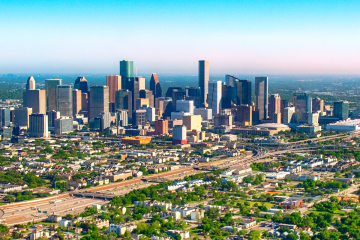
Fordham newest study ranks schools in the nation’s 100 largest metro areas, with heavy focus on academic growth. Many of America’s “superstar cities” appear far less super when examined through this lens. Some have a right to brag—but others would be well advised to stop resting on their laurels and work harder to improve all students’ progress.

Michael J. Petrilli 12.9.2021
NationalFlypaper

The best and worst metro areas for school quality may surprise you

Michael J. Petrilli
12.9.2021
Flypaper

Education’s enduring love affair with “luxury beliefs”

Robert Pondiscio
12.9.2021
Flypaper

Conservatives: Let’s focus on winning policy, not just winning politics

Karen Nussle
12.9.2021
Flypaper

Learning more about the use of industry recognized credentials

Amber M. Northern, Ph.D.
12.9.2021
Flypaper

Proof that online credit recovery has been on the rise

Adam Tyner, Ph.D.
12.9.2021
Flypaper

Education Gadfly Show #798: Which metro areas are accelerating student learning?

12.8.2021
Podcast

Cheers and Jeers: December 9, 2021

The Education Gadfly
12.9.2021
Flypaper

What we're reading this week: December 9, 2021

The Education Gadfly
12.9.2021
Flypaper
view

Education’s enduring love affair with “luxury beliefs”

Robert Pondiscio 12.9.2021
Flypaper
view

Conservatives: Let’s focus on winning policy, not just winning politics

Karen Nussle 12.9.2021
Flypaper
view

Learning more about the use of industry recognized credentials

Amber M. Northern, Ph.D. 12.9.2021
Flypaper
view

Proof that online credit recovery has been on the rise

Adam Tyner, Ph.D. 12.9.2021
Flypaper
view

Education Gadfly Show #798: Which metro areas are accelerating student learning?

Michael J. Petrilli, Adam Tyner, Ph.D., David Griffith, Ph.D., Amber M. Northern, Ph.D. 12.8.2021
Podcast
view

Cheers and Jeers: December 9, 2021

The Education Gadfly 12.9.2021
Flypaper
view

What we're reading this week: December 9, 2021

The Education Gadfly 12.9.2021
Flypaper
view

The best and worst metro areas for school quality may surprise you

Michael J. Petrilli
12.9.2021
Flypaper

Way back in the pre-pandemic Before Times, one of America’s more consistent and pernicious long-term trends was the growing domination of so-called “superstar cities.” As Richard Florida explained it, a winner-take-all dynamic was allowing a handful of metropolitan areas to dominate the knowledge economy. San Francisco and Silicon Valley, Washington, D.C., New York City, Boston, Austin, Miami, the Research Triangle, and a handful of other leading metros were raking in jobs, venture capital, highly educated workers, and the various benefits (and occasional challenges) that come with those attributes. The rest of America’s cities, not to mention its small towns and rural communities, were increasingly being left behind.

The contest to choose a new Amazon headquarters was symbolic of this frenzy, with hundreds of locales begging the retail giant to pick them, complete with promises of tax breaks and other incentives. Then they watched Jeff Bezos choose the D.C. area and New York City—winners taking all, yet again. (New York later backed out, under pressure from progressives, and Nashville got something of a consolation prize.)

Bezos et al. faced plenty of criticism for giving hope to the underdog cities and making them cough up data that Amazon could exploit for other purposes. Yet it was hard to fault their final decision. As the Brookings Institution’s Alan Berube wrote, it was all about “talent, talent, talent.”

There’s little doubt that the New Yorks, Bostons, D.C.’s, and Silicon Valleys are very effective at attracting talented and highly educated workers. In a virtuous cycle, these individuals migrate to where the highly paid jobs are, where lots of other smart young people live, and where all manner of amenities make their nonworking life more fun. But workers are also drawn by the promise that their own children, whether extant or prospective, will enjoy high-quality public schools in their new home towns.

But is that actually true? Do the “superstar cities” boast better public schools than those in the Rust Belt or Sun Belt? Business leaders often say the quality of local schools is a key factor when choosing new locations for corporate headquarters or facilities. But are they looking at the right data when judging school quality?

Label us skeptics

Longtime followers of the Thomas B. Fordham Institute won’t be surprised to learn that we are skeptical of how school success tends to be measured. It’s not the fault of the business leaders—or even the economic development folks who strive to woo them. It’s simply a fact of data availability and access. Until recently, few sources allowed nationwide comparisons of schools below the state level. And those sources that did exist, such as average SAT scores or graduation rates, are terrible at helping us understand the quality of the schools. That’s because such “status measures”—snapshots of performance—are so closely related to the demographics of individual schools and districts. It’s why, for so long, communities that have touted their “great public schools” were actually just bragging about schools populated by the children of highly educated parents.

That’s a lousy definition of school quality because it doesn’t consider whether schools are actually effective at helping students learn. It allows the schools in upper-middle-class suburbs to rest on their laurels, while hiding the amazing work done at many high-poverty schools, whose students start out way behind but may make remarkable progress year to year—even if they never quite catch up to the more advantaged kids. Not every high-poverty school pulls that off, not by a long shot, but more succeed at it than you might think, certainly more than city-comparers have been able to see.

So in Fordham's new report, America’s Best and Worst Metro Areas for School Quality, we wondered: If we could measure school effectiveness the right way, by looking at student progress over time, would a different picture of school quality emerge? And in particular, could we start to determine at the metro-area level which American regions really have the best—i.e., the most effective—schools? Might such an analysis assist business leaders in giving more metros another look when making locational decisions—especially in the post-pandemic world, now that so many workers are rethinking their commitments to “superstar cities” with their sky-high housing prices, soul-grinding traffic, and distance from family?

As for the challenge of usable data, that one has been solved, thanks to the impressive Stanford Education Data Archive (SEDA). Leveraging state summative assessments and adjusting them for states’ performance on NAEP, the analysts at SEDA have enabled previously impossible comparisons of schools, districts, and cities across the land.

Equipped with these excellent data, we set out to build valid comparisons at the metro-area level for school quality across the United States, complete with an interactive website. We are grateful that our friends and colleagues at the U.S. Chamber of Commerce Foundation agreed to join us in this pursuit. The Chamber’s affiliates are key players in economic development decisions, active in recruiting employers to their regions. They are integrally involved in local education issues, too, as major funders and consumers of the education system. Readers may also remember that the Chamber has a long history of educational rankings, going back to its excellent Leaders and Laggards series. We greatly appreciate the Chamber’s support and involvement.

We’re also deeply grateful to external reviewers Kristin Blagg, senior research associate at the Urban Institute, and Stephen Holt, assistant professor of economics at SUNY Albany, for offering advice on the rankings methodology and reviewing the interactive website; to Fordham’s associate director of research Adam Tyner for serving as lead analyst, project manager, and number-cruncher; and to Juan Thomassie for designing the interactive website.

Introducing the SLAM rankings

Because we thrive on catchy acronyms, we’re calling these rankings the Student Learning Accelerating Metros, or SLAM. The measures that go into these rankings are those most clearly connected to school effectiveness and that are available nationally at the school district level—namely:

  • Academic growth (worth 60 percent of the score in our preferred ranking system).
  • Academic growth for traditionally disadvantaged students (worth 20 percent).
  • Improvement in achievement in recent years (worth 10 percent).
  • High school graduation rates (worth 10 percent).

All these measures are adjusted for demographic differences in districts’ pupil populations.

What’s different about the SLAM rankings compared with other measures of school quality is that they correlate far less with family wealth and student background than do simple academic achievement ratings. They are heavily weighted toward student progress because schools have more control over how much their students grow during the K–12 years than they do over, say, the percentage of residents with a doctorate degree (which other rankings use).

So enough with the preliminaries. Let’s look at the results.

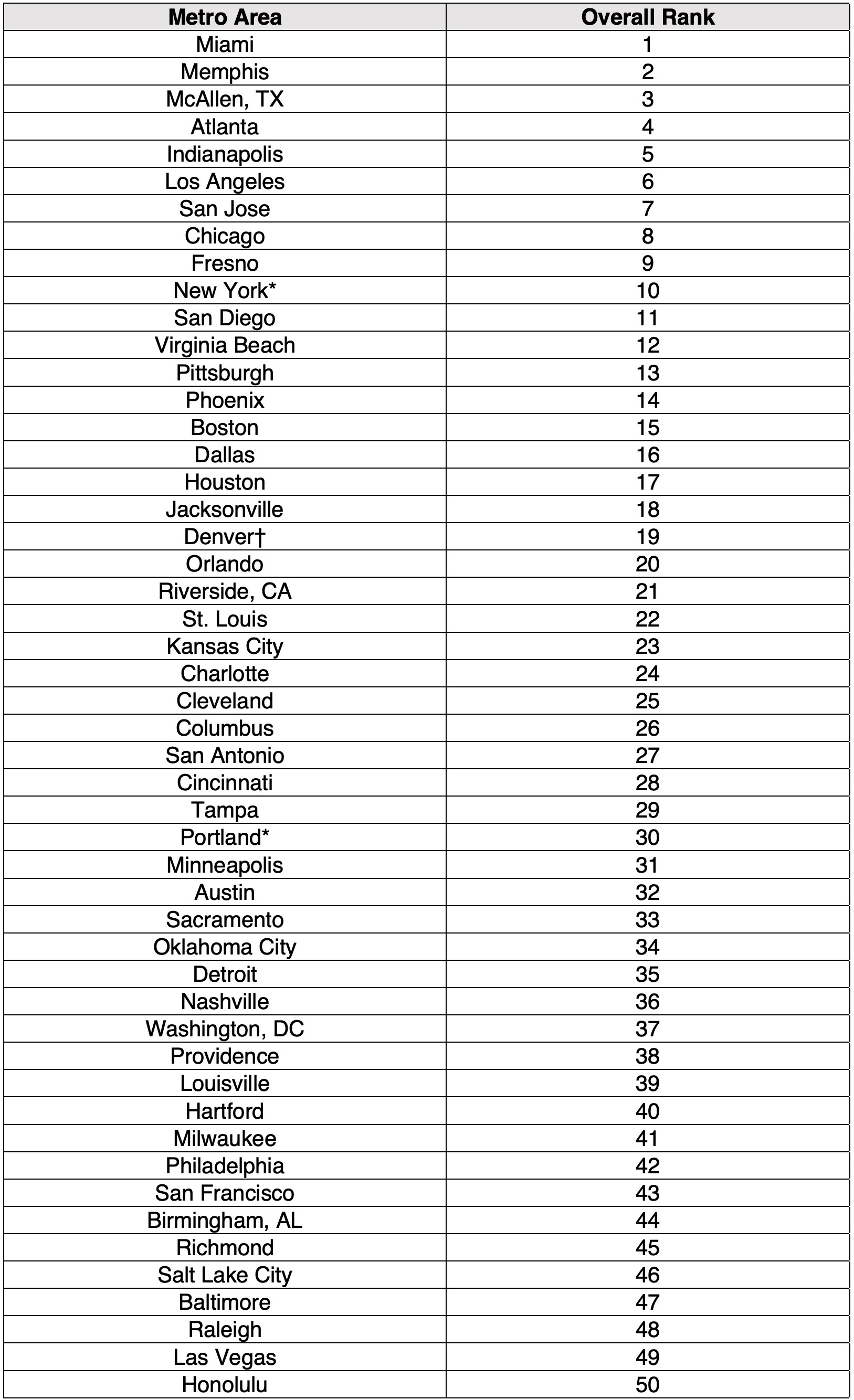
Table 1. America’s fifty largest metro areas ranked by school quality
1.1

Note: Each metro represents a core-based statistical area that includes nearby suburbs, towns, and other cities. Metro area names are abbreviated for legibility; full names appear in the report’s Appendix. All outcomes are adjusted for district-level demographics.
*Metro is missing data for its largest district for all recent observations, meaning New York City Public Schools and Portland Public Schools.
†Key data points are missing in the early years of the SEDA data. Because missing early data makes it impossible to calculate metro progress, the value for that variable is imputed to align with the metro’s performance on the other components of the SLAM ranking.

What should be clear is that some superstar cities do better than others. The Miami metro area—South Florida really, including Miami-Dade, Broward, and Palm Beach counties—comes out as number one. The “capital of Latin America” has been on a tear of late, increasingly attracting venture capital and corporate headquarters, especially in the finance industry. New arrivals will find excellent schools for their kids.

The Boston metro area does quite well, too. To be sure, it’s affluent and well educated, which is not surprising, given the presence of so many world-class universities, medical centers, and tech companies. But schools there aren’t standing still. Students are making significant progress over time, as well, along with students in the Los Angeles, San Jose, and Chicago metro areas.

Yet that’s not so in some superstar cities. The San Francisco metro area looks pretty bad, once we measure school effectiveness the correct way. The Washington, D.C., metro area is not much better. Or look at Raleigh, in the Research Triangle, which is way down on the list.

Be careful, too, not to confuse metro areas with their central cities. For example, Washington, D.C., itself shines on our ranking, thanks to its rapidly improving public school system and its highly effective charter school sector. The Northern Virginia suburbs of Fairfax and Loudoun County, however, are dragging the metro down. They are rich and highly educated, but their pupils don’t appear to be making much progress from year to year. Indeed, Amazon may have erred in placing its new headquarters in Northern Virginia instead of, say, Maryland’s Prince George’s County, which is less affluent and much more diverse but boasts schools that are helping kids make more progress, especially once we control for demographics.

Meanwhile, some other large metro areas deserve a fresh look, given the quality of their public schools, including Atlanta, Indianapolis, and Fresno. The rankings for Memphis, Tennessee, and McAllen, Texas stand out in particular, with remarkably effective schools despite their Deep South and Border Town poverty—likewise, the mid-sized metros of Jackson, Mississippi, and Brownsville, Texas. Other mid-sized cities deserve attention, too, including Sarasota, El Paso, Boise, and Grand Rapids. (See the full results for mid-sized metros in Table A3 in the report’s Appendix.)

—

Great public schools are essential to the health of any community. They’re a powerful driver of economic development. But we need to make sure we’re defining “great schools” correctly. Now, thanks to the new data provided by SEDA and the tools on Fordham’s new website, we can finally identify metro areas that have a right to brag about the quality of their school systems and charter schools—as well as places that would be well advised to stop patting themselves on the back and get a move on.  

view

Education’s enduring love affair with “luxury beliefs”

Robert Pondiscio
12.9.2021
Flypaper

The proof of a powerful idea is how well it sticks. Once you hear about it “you start to see it everywhere,” as Bari Weiss puts it. She was describing “luxury beliefs,” a phrase coined by Rob Henderson, an Air Force veteran and Ph.D. candidate at the University of Cambridge, who defines luxury beliefs as “ideas and opinions that confer status on the rich at very little cost, while taking a toll on the lower class.” You can afford to believe in defunding the police, for example, if you live in a safe neighborhood that’s unlikely to be negatively affected by diminished police presence. It’s someone else who will suffer the consequence of your fashionable idealism.

Henderson described luxury beliefs on a recent episode of Weiss’s excellent podcast, and she’s right: They’re everywhere. And nowhere is the gulf between upscale ideals and everyday reality wider or more obvious than in education policy and practice. Too few of us know or have personal experience walking in the shoes of the families and students we claim to serve. Instead, we opine about what’s best for other people’s children from the safety of our respective bubbles, indulging our own set of luxury beliefs.

Where to begin? It’s easy to be blithe about school safety and policing when your child goes to a safe, well-run school. Similarly, one can be quick to label disruptive behavior as “a form of communication” and focus entirely on “disparate impact” in student suspension rates when your child’s school is orderly and she faces minimal risk of physical threats or having her education frittered away by endless disruptions. Hand-wringing about overstressed teens groaning under the weight of hours of homework and the pressure of taking too many AP classes to impress college admissions officers flies in the face of data suggesting just the opposite: The average American student is challenged not too much, but too little.

A grating luxury belief of recent vintage is the haughty insistence that “learning loss isn’t real,” and that Covid-induced school shutdowns haven’t had a profoundly negative effect on children—particularly disadvantaged children.

A particularly selfish belief is common to “proud public-school supporters” who oppose school choice measures that would benefit low-income families while failing to recognize that they themselves utilize the most common form of choice: the ability to buy a home in a community with good schools. Corey DeAngelis of American Federation for Children has made a cottage industry of unmasking or calling out elected officials and advocates, from Elizabeth Warren and Terry McAuliffe to Diane Ravitch, who play a particularly obnoxious form of this game touting the virtues of public education while sending their own children to private schools.

Classroom practice is similarly riddled with luxury beliefs. For years, I’ve noted my own “complicated relationship” with testing, which lends political will and moral authority to reform efforts but has also had a deleterious effect on school culture and instruction, particularly in reading. Yet it’s hard to have patience for the anti-testing activism of those who don’t have to worry if their child will ever read on grade level.

The list goes on. I’ve written elsewhere that the demand for “antiracist” pedagogy and practice tends to come mostly from young, “woke” staffers in urban charter schools, not from the parents who swell those schools’ waiting lists. Similarly, one glance at NAEP history and civics scores should suffice to retire tendentious arguments about what is or is not critical race theory’s place in the classroom. When a mere 15 percent of America’s eighth graders are proficient in history, it’s a luxury belief to think U.S. school should “just teach history honestly.” Honestly, just teach history.

My AEI colleague Ian Rowe has made himself something of a lightning rod in recent years by championing the “success sequence” and insisting we have a duty to share it with children. Citing the work of Ron Haskins and Isabel Sawhill, Rowe never tires of reminding educators, philanthropists, and policymakers that if a young person graduates from high school, works full-time in any capacity, and gets married before having a child, that child is statistically almost certain not to grow up in poverty.

It would be grand understatement to say that Rowe has received strenuous pushback to his commonsense argument from educators horrified at the notion that they might be stigmatizing single parents, who are the majority in many low-income neighborhoods. Yet Rowe often observes that those who have pushed back hardest against his advocacy for the success sequence are often those with stable marriages and nuclear families who would surely be upset if their own children didn’t follow those norms. There are few better examples of “ideas and opinions that confer status on the rich at very little cost, while taking a toll on the lower class” than refusing to preach what we practice to children most in need of adult role models and guidance.

Henderson, the man who coined the term “luxury beliefs,” has a fascinating backstory; it’s no surprise that he saw, described, and named the phenomenon. He was a freshman at Yale in 2015 when the infamous Halloween costume controversy made national news. Angry students accused professor Erika Christakis and her husband of failing to create a “safe space” for resident students when the former wrote an email defending students’ right to be a “a little bit obnoxious, inappropriate, or offensive” in their choice of costumes. After reading the email several times, Henderson guilelessly asked one of his fellow classmates what made it offensive. She responded, “you’re too privileged to understand the pain that this email caused.” Unbeknownst to his peer, Henderson had arrived at Yale a genuine outsider, having spent his childhood far below the poverty line. His father abandoned the family when he was two, and his mother was addicted to drugs, leaving him to be raised in multiple foster homes. Henderson was a poor student, ran with a rough crowd, and eventually fell into alcohol and drug abuse before joining the military and righting himself, ending up at an Ivy League bastion of power and privilege. Few of us can claim a comparable first-hand view of both the seduction of luxury beliefs, and their cost.

Henderson’s story reminds me of Andy Rotherham’s frequent observation that education policy and reform are dominated by people “who not only liked being in and around schools, they excelled at academic work.” That’s fertile ground for our unique set of luxury beliefs to take root and grow. The views of those whom schools served badly are seldom represented; worse, we often assume we simply know better. The failures and conditions of their schools are filtered through the lens of an idealized “normal.” It doesn’t necessarily make us hypocrites, but it does leave us susceptible to narrow and technocratic thinking. At worst, it casts in sharp relief the wide gulf between abstract ideals held by elites—us—and the day-to-day lives of the children and families who pay the price when those ideals are enshrined in policy and practice. 

Just look around.

view

Conservatives: Let’s focus on winning policy, not just winning politics

Karen Nussle
12.9.2021
Flypaper

There’s been lots of jabber lately about what the upset win by Glenn Youngkin in the recent Virginia gubernatorial race means for education policy. Due to his deft campaign strategy and ability to leverage education as a mobilizing issue in the closing days of the campaign, particularly in highlighting the fracas over critical race theory, many GOP candidates and their consultants are now licking their chops to replicate this playbook in 2022 races.

Some interpret the Virginia results to mean that education has finally returned as a top-tier political issue. Some have said that what happened in the Old Dominion had less to do with transformation on the right, and more to do with a dramatic left turn by progressive elites. Still others think it marks a dramatic shotgun start of “education culture wars” as the key to electoral success for Republicans.

Such punditry is all well and good, and some may even be accurate. But it also misses a larger point—resulting in a potentially massive opportunity that conservatives are at risk of missing.

It is true that liberals and progressives have long owned the education issue, a fact that is hugely frustrating to us conservatives. We often find ourselves fighting the noble fight for the well-being of students and parents, while losing to the progressive machine that works mainly to protect the interests of the adults in the education systems, often at the expense of kids. So I surely understand the excitement when education shows potential to be a winning political issue on the right.

Yet despite having fought this battle most of my career, I don’t want education to be a winning issue if it’s not about, well, education. I don’t want to go in the side door. I want to have the knock-down-drag-out fight about how we make sure that all kids have access to the high-quality education that every one of them deserves. An education that prepares them well for the world we will send them out into with skills that will help them not just be successful, but crush it—and lead our country into its next phase of greatness. Our current K–12 system is failing badly at this fundamental expectation. The overwhelming majority of its students today cannot read or do math at grade level, and that includes all students, regardless of race. We are not preparing or supporting teachers to meet this challenge, and Covid-19 has just intensified the system failures.

Don’t get me wrong. I’m not suggesting we shrink from or abdicate the fundamental values we conservatives know to be the proper foundation of American education. There’s plenty of rotten and morally corrupt stuff going on out there, and conservatives are right to push back on it fiercely, particularly when we can show that the education establishment and its progressive overseers are at best complicit or at worst instigating it, as Rick Hess and his colleagues at AEI have thoroughly documented. But events happening in places like Loudoun County, Virginia, are outliers in a system that is educating 55 million kids. If conservatives put all our energy into weaponizing those examples for political gain, then all we do is make it harder for the many, many schools across America that are struggling just to get a majority of kids to read and do math at grade level. We’re using all the platforms at our disposal to wind parents up to march on schools and school boards demanding to review the library inventory or lesson plan choices where there has been no evidence of malpractice. But this only serves to distract educators from the real job at hand—especially in the wake of the pandemic’s unprecedented disruption.

Instead, conservatives should seize this moment to galvanize parents around reforms that have the potential to truly revolutionize American education—more school choices for families, an insistence on reading proficiency by third grade, accountability systems that highlight successful schools that can be replicated, and higher-quality curricula, particularly in the elementary and middle grades. In high schools, well, we all need to demand a reimagining of the four years before we send students out into the world. Our high schools are completely broken, and our students are the first ones to tell us so.

The bottom line is that our education agenda as conservatives must be more than manufacturing outrage and creating the false narrative that all schools and school systems are primarily focused on pushing liberal ideology over academic outcomes. If that’s what we stand for, we are missing an enormous opportunity to deploy our actual political power to change the trajectory of an entire generation and the country that it will inherit.

view

Learning more about the use of industry recognized credentials

Amber M. Northern, Ph.D.
12.9.2021
Flypaper

While the ubiquitous term “college and career readiness” assumes that twelve years of compulsory education could adequately prepare a student for both postsecondary and workplace settings, we know far more about readiness for the former than the latter.

A recent working paper from CALDER presents a descriptive analysis of one pathway to career readiness: industry recognized credentials (IRCs)—how prevalent they are, the characteristics of students who complete them, and how credentials in different industries attract different types of students. IRCs are awarded to individuals who demonstrate competency in a specific career through participating in a career-training experience or by earning an adequate score on a technical skills exam. Although IRCs can also be earned by adults, researchers Joshua Eagan and Corey Koedel focus on high-school students in their analysis.

They use administrative and IRC data on all twelfth graders in Missouri during the 2018–19 school year, since their pre-analysis indicated that the vast majority of IRCs are completed during a student’s senior year. They use middle school test scores to document selection into the program by achievement. They also compare their IRC findings against other college-ready programs including Advanced Placement and International Baccalaureate programs (or AP and IB, which are grouped together) and dual credit and dual enrollment (or DC and DE) courses. These are also grouped together for ease of analysis, although important differences have been documented between the two.

The researchers find that 9 percent of students in Missouri completed an IRC during their senior year, whereas completion rates for AP-IB courses and DC-DE courses are much higher, with 19 and 31 percent completing at least one course in these categories, respectively. The achievement level of the average IRC student is only slightly above the statewide mean, unlike AP-IB and DC-DE courses, which tend to draw disproportionately from the top end of the achievement distribution. These other college readiness programs serve more advantaged students as measured by their low-income, special needs, or English learner status, but there is virtually no selection into IRCs along those dimensions—nor by gender. The only observed characteristic by which IRC completion gaps exist is by race and ethnicity, as White students are more likely to complete IRCs than students in other race groups. Specifically, compared to their White peers, students in other racial and ethnic groups are 3–6 percentage points less likely to complete IRCs. The analysts find that completion gaps that exist by race and ethnicity are driven by both within- and across-school differences.

Among the fifty-five IRCs awarded in Missouri, Eagan and Koedel find that some attract high achievers with clear college intentions. These include business management and administration, as well as information technology. Other fields primarily attract students with low test scores who go on to enter the workforce directly from high school rather than enrolling in a postsecondary institution. These include architecture and construction, manufacturing, and transportation and logistics. Women and men are similarly likely to complete an IRC, but they are sorted strongly into different types, with men overrepresented in manufacturing, transportation, and construction and women overrepresented in education and health sciences. This gender sorting accords with previous research. The fields of agriculture, health science, transportation, business management, and hospitality and tourism account for just over two thirds of all IRCs completed in the study year.

Despite the relatively lower number of participants overall, a broader swath of Missouri high school students participates in earning industry-recognized credentials than in comparable college-readiness programs like DE, DC, and AP. This means that career-affiliated programs deserve as much study as their more examined (and generally higher-status) counterparts. Of vital interest would be the comparative value of different IRCs in terms of job placement, potential for advancement, and earnings potential over time. We need more and better evidence before we can determine whether IRC attainment serves students like it should and whether all subgroups could benefit.

SOURCE: Joshua Eagan and Cory Koedel, “Career Readiness in Public High Schools: An Exploratory Analysis of Industry Recognized Credentials,” CALDER Working Papers (September 2021).

view

Proof that online credit recovery has been on the rise

Adam Tyner, Ph.D.
12.9.2021
Flypaper

Recent years have seen a move to eliminate homework and relax grading standards, and struggles by teachers and students to do their work during the pandemic have accelerated this trend. Some educators and commentators, however, fret that these new practices amount to lowering standards. Assigning students to “recover” unearned credits through online programs has also been criticized for reducing academic rigor, and the scandals associated with credit recovery have reinforced the idea that academic standards ought not be entrusted to the programs themselves. Although previous research has examined the prevalence of credit recovery, a new study from the American Journal of Education provides compelling evidence that online credit recovery programs have been on the rise and were even pre-pandemic.

Using data from North Carolina covering all high school students from the 2012–13 through 2016–17 academic years, the study examines enrollment patterns after students fail a required course. In North Carolina schools, as is becoming more common around the country, such students often have options of retaking a course through a traditional face-to-face class and may also have the option to take an online credit recovery course.

The first question the study addresses is about what happens when a student fails a course. It finds that, 38 percent of the time, a failed class is simply never repeated; 38 percent of the time, it’s retaken face-to-face; 19 percent of failures were remediated with online credit recovery exclusively; and 5 percent of the time, the student took a combination of both face-to-face and online credit recovery. In other words, retaking a course face to face remains more common than online credit recovery, at least in the period before the pandemic.

There is strong evidence that schools have been shifting towards online credit recovery and away from in-person course retakes. The study finds, for example, that the share of schools where online credit recovery was more common than in-person class retakes nearly doubled during the study period, from 16 percent in 2013 to 30 percent in 2016. (The end of the study period was around the time that journalists first started taking note of the trend towards online credit recovery.)

The study also investigates how different types of schools may be using credit recovery differently. For example, rural schools and large schools are slightly more likely to put kids into credit recovery. More alarmingly, when schools are broken out by academic characteristics and attendance, substantial differences emerge. Schools with high levels of absenteeism, schools where graduation rates and test scores had been low in the past, and alternative schools are the ones most likely to put kids in online credit recovery when they fail a class.

Interestingly, social studies classes are more commonly reassigned via online credit recovery than math or science courses.

The evidence the study provides about the rigor of credit recovery programs is less definitive but still worth considering. For example, the study finds that students are more likely to pass credit recovery courses than face-to-face courses for the same subject, which may imply that credit recovery is less academically challenging. Since some administrators told the author they were more likely to assign students to credit recovery when they had just barely failed a course or failed because of absences, differences in academic rigor may not be the only thing driving differences in completion. In any case, students who take credit recovery are 12 percentage points more likely to actually receive credit than those who take face-to-face courses.

Finally, the study finds that schools with higher credit recovery enrollment have higher graduation rates but lower test scores. Diplomatically, the study speculates that “schools could be making a purposeful choice to focus on high school graduation rates over test scores.” Yet even if test scores aren’t the only measure of academic success, given the incentives at play and the accumulating cases of misuse of these programs, there are obvious reasons to question schools implementing such a strategy.

SOURCE: Samantha Viano, A Choice between Second Chances: An Analysis of How Students Address Course Failure, American Journal of Education (2021).

view

Education Gadfly Show #798: Which metro areas are accelerating student learning?

12.8.2021
Podcast
 

On this week’s Education Gadfly Show podcast, Adam Tyner, Fordham’s Associate Director of Research, joins Mike Petrilli and David Griffith to discuss our new analysis, America’s Best and Worst Metro Areas for School Quality, some of which may surprise you. And on the Research Minute, Amber Northern examines the effectiveness of efforts to diversify the teacher workforce.

Recommended content:

  • Fordham’s new report at metro.fordhaminstitute.org.
  • More of our work on metro areas:
    • What You Make Depends on Where You Live: College Earnings Across States and Metropolitan Areas.
    • How Aligned is Career and Technical Education to Local Labor Markets?
  • The study that Amber reviewed on the Research Minute: Dan Goldhaber and Etai Mizrav, “The Prospective Teacher Pipeline: Simulation Evidence on Levers to Influence Teacher Diversity,” CALDER Working Papers (December 2021).

Feedback welcome!

Have ideas or feedback on our podcast? Send them to our podcast producer Pedro Enamorado at [email protected].

view

Cheers and Jeers: December 9, 2021

The Education Gadfly
12.9.2021
Flypaper

Cheers

  • Democrats should embrace parent choice as the best way to reinvent public education. —Will Marshall
  • Effective tutoring should supplement classroom teaching by using the same high-quality materials. —David M. Steiner and Ethan Mitnick
  • Recent survey data find parental support for testing is growing since students returned to classrooms. —Daniel Silver and Morgan Polikoff

Jeers

  • There is a growing “political erosion of education standards.” —Wall Street Journal
view

What we're reading this week: December 9, 2021

The Education Gadfly
12.9.2021
Flypaper
  • “In a San Francisco high school, the scars of remote schooling linger.” —Washington Post
  • Staff shortages are hurting districts across the country. In some states, principals are taking over custodian work, and National Guardsmen are serving as bus drivers. —Washington Post
  • “An education agenda for Eric Adams: How the next mayor can better serve New York City’s kids and families.” —Brett Peiser and Julie Jackson
Fordham Logo

© 2026 The Thomas B. Fordham Institute
Privacy Policy
Usage Agreement

National

P.O. Box 110
Burke, VA 22009

202.223.5452

[email protected]

Ohio

P.O. Box 82291
Columbus, OH 43202

614.223.1580

[email protected]

Sponsorship

130 West Second Street, Suite 410
Dayton, Ohio 45402

937.227.3368

[email protected]