
Lost opportunity for charter schools
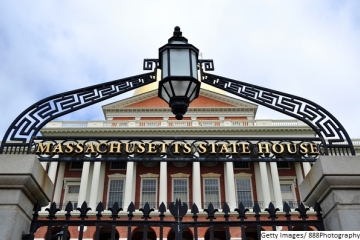
While the rest of the nation was riveted by the final days of the presidential campaign, the education world was paying equally close attention to Massachusetts, where voters decided whether to allow more charter schools in their state. The ballot question, called Question 2, attracted millions of dollars of advertising from supporters and opponents alike, making it the most expensive ballot-question battle in the nation, according to the nonprofit Center for Public Integrity.
Election Day has come and gone, and 62 percent of Massachusetts voters rejected the expansion of charter schools.
Writing at the pro-reform website The 74, Richard Whitmire framed the issue as one of fairness and equity: “Will voters in Newton (median house listing price: $1.2 million) vote to help out voters in Roxbury (median list price: $479,000) looking for better school options?” he asked.
Now that we know the answer is no, don't point angry fingers at selfish Massachusetts voters: Blame falls equally upon a movement that has long been a bit too enamored of our own civil-rights-issue-of-our-time rhetoric to worry much about building a constituency among the middle class.
At a conference at the American Enterprise Institute last month, I listened to a presentation from Jay Heiler, the founder and chairman of Great Hearts, a nonprofit network of public charter schools based in Arizona and Texas. Great Hearts offers a classical liberal arts curriculum, which delivers strong results and has proven to be enormously popular with middle class and affluent families. (Two of the network's schools in the Phoenix urban core serve predominantly low-income students.)
Afterward, my friend Max Eden of the Manhattan Institute quipped to me that “if there were one of two Great Hearts operating in Massachusetts”—if middle-class parents thought charter expansion could mean a better education for their children—“it would have been a whole different ball game” on Question 2.
I couldn't agree more. The charter sector has earned moral authority and drawn political oxygen from battles with teachers unions, offering a lifeboat to parents who can't get their kids into better schools—either because they can't afford parochial or private school tuition, or because they're frozen out of home ownership in communities with higher-performing schools. But as the charter sector gets bigger, its footfalls get heavier. Resistance to lifting the charter cap in Massachusetts, home to some of the nation's best and most effective charter schools, suggests the social justice case for school choice only goes so far.
In Massachusetts, “unions and their local suburban school officials are doing a great job of scaring suburbanites about how a charter expansion might harm the relatively good arrangements they currently enjoy,” observes Jay Greene at Education Next. Predictably, progressive stalwart Elizabeth Warren, who used to support charters for low-income children, recently came out against Question 2. “After hearing more from both sides, I am very concerned about what this specific proposal means for hundreds of thousands of children across our Commonwealth, especially those living in districts with tight budgets where every dime matters,” Warren told the Boston Globe.
Appealing to middle-class and more affluent parents would mean less talk about alternatives—any alternative—to failing schools, and more differentiation within and between charter schools' curriculum and culture. Middle-class families are less desperate for alternatives than families with low socioeconomic status, and tend to be much more protective of their traditional local schools. But given the opportunity to choose a school that offers a first-rate program in sports, the arts, or like Great Hearts, a classical education that's simply unavailable elsewhere at any price, it's hard to imagine that wouldn't broaden the appeal of charter schools—and the sector's political base.
Arizona, where Great Hearts is based, offers a model. Arizona leads the nation with 17 percent of its children in charter schools. “The broad middle class here is invested in charter schools,” Heiler tells me. “That's an important place to get to if you want to have a long, sustained run toward improving your school system through ed reform,” he says.
Last week I was invited to an info session for prospective parents who were thinking of applying to a high-performing charter school on the Upper West Side of Manhattan—a diverse and relatively well-off neighborhood. Moms and dads peppered the school's staffer with questions about foreign language instruction, arts programs and sports teams, class sizes and homework loads. Nobody offered any hint that they were looking to rescue their kids from a poor-performing neighborhood school. The only question about test scores was from a mom who wanted to know how the charter school's test scores compared to the city's gifted and talented program.
Listening to the conversation, it wasn't hard to imagine this kind of exchange taking place someday on urbanbaby.com, with charter school parents debating and defending fine-grained differences in curriculum and pedagogy in their kids' schools the way affluent parents do at present, when dissecting the offerings at Manhattan's private schools.
The demand is almost certainly there, a different outcome would’ve required a significant mind-shift among choice and charter advocates. “Until [education] reformers temper [their] antipathy towards more advantaged families, abandon guilt-driven political appeals, and embrace the political realities of self-interest they should expect to continue suffering a series of political defeats,” noted Greene.
Clearly he was right. Massachusetts voters were not sufficiently moved by appeals to fairness to vote yes on Question 2. But as another great Bay State politician used to say, “all politics is local.” Next time, charter advocates who hope to see the sector grow and thrive will need a better pitch than “hey, soccer moms, you've got yours; don't be so damn selfish!”
Editor's note: This article originally appeared in a different form, before Massachusetts voted on the measure, in U.S. News & World Report and on Fordham’s Flypaper blog.

Race to the Top and student achievement
The Obama administration’s $4.35 billion competitive grant program, Race to the Top (RTT), intended to encourage reform and improve student outcomes in K–12 education by awarding competitive grants to states that agreed to implement certain policies and practices, including creating state data systems and adopting common standards. A new report from the U.S. Department of Education’s Institute of Education Sciences (IES) analyzes the implementation of RTT and evaluates its impact on student achievement. The study was conducted by Mathematica in partnership with American Institutes for Research (AIR) and Social Policy Research Associates (SPR).
The analysts collected information on state education policies and student achievement through phone interviews with state education agency representatives (conducted Spring 2013) and state-level test scores from the National Assessment of Educational Progress from 2003–15. They then compared these data amongst three types of states: Early RTT states which received Round 1 or Round 2 grants in 2010 (twelve states), later RTT states that received Round 3 grants in 2011 (seven states), and non-RTT states that did not receive grants (thirty-two states).
In Spring 2013, those states which received first or second round grants in 2010 reported using more RTT endorsed policies than non-RTT states in four areas encouraged by the program: turning around low achieving schools, adopting high-quality standards and assessments, promoting conditions that allow for more successful charter schools, and improving teacher and principal performance. Later RTT states reported adopting more polices than non-RTT states in just area: improving teacher and principal performance. These findings seem to indicate RTT had an impact on state policies early on, yet the authors of the report note that other factors could be responsible for these differences—and, indeed, when they looked for changes in state policies over time, they found no significant differences in the use of RTT promoted policies in RTT states versus non-RTT states.
When it came to RTT impact on student achievement the results were equally uncertain. As the report states, “Different reasonable interpretations of how student achievement was trending before RTT yield conflicting conclusions.” With various other happenings and reforms going on at the same time of the implementation of RTT, it becomes virtually impossible to determine whether changes in student achievement were a direct result of RTT.
This report highlights the challenges of evaluating the program’s impact, especially when other local factors are at play. In any event, as Education Week points out, more definite findings would have little hope of improving RTT or similar programs anyway; the Every Student Succeeds Act passed in December of last year ended the funding of the RTT program and prohibits the federal government from creating such programs in the future.
Lisa Dragoset et al., “Race to the Top: Implementation and Relationship to Student Outcomes,” Institute of Education Sciences, U.S. Department of Education (October 2016).
How school surveillance affects privacy and equity
“If schools continue to embrace the potential benefits that accompany surveillance technology,” assert the authors of a new report issued by the National Association of State Boards of Education (NASBE), “state policymakers must be prepared to confront, and potentially regulate, the privacy consequences of that surveillance.” And thus they define the fulcrum on which this seesaw of a report rests.
Authors J. William Tucker and Amelia Vance do not exaggerate the breadth of education technology that can be used for “surveillance,” either by design or incidentally, citing numerous examples that range from the commonplace to ideas that Big Brother would love. We are all familiar with cameras monitoring public areas in school buildings, but as police use of body cameras increases, school resource officers will likely be equipped with them as well. The authors note that a district in Iowa even issued body cameras to school administrators. (Our own Mike Petrilli wondered a few years about putting cameras in every classroom.)
Cameras have been commonplace inside and outside of school buses for years, but now student swipe cards and GPS bus tracking mean that comings and goings can be pinpointed with increasing accuracy. Web content filters are commonplace in school libraries, but the proliferation of one-to-one devices has led to monitoring applications for use both in the classroom and in students’ homes. Even a student who provides his or her own laptop can be fully monitored when using school Wi-Fi networks. Social media monitoring of students is an imprecise science, but the authors report it is becoming more sophisticated and more widespread in order to identify cyberbullying incidents or to predict planned violent acts on school grounds. And into the realm of science fiction, they add increasing use of thumbprint scanners, iris readers, and other biometric data gathering apparatus.
The authors are thorough in listing the intended benefits of all of these surveillance efforts—student safety, anti-bullying, food-service auditing, transportation efficiency, etc. Those benefits likely made the adopted surveillance an easy sell in schools that have gone this route. But on the other side of the fulcrum are two equally large areas of concern: privacy and equity. These issues are addressed by the report on a higher, more policy-oriented level. Privacy concerns are addressed in terms of which data are, by default, kept by schools (all of it) and for what length of time (indefinitely). The authors assert that without explicit record keeping policies (or unless the storage space runs out), there is neither will nor incentive to do anything but save the data. Additionally, there are unanswered questions, such as what constitutes a student’s “educational record” and by whom that data may be accessed. For example, details of disciplinary actions may be educational records, but what about the surveillance video that led to that disciplinary action? Equity concerns are addressed in terms of varying and unequal degrees of surveillance (high school kids who can afford cars are not monitored on the way home at all, for example) as well as inequitable “targeting” of surveillance techniques on certain students before anything actionable has occurred.
As a result of this rather wide gulf between facts and policy, even NASBE’s good and thorough list of suggestions for state boards to attempt to balance student safety, privacy, and equity concerns with policies seem more like a skateboarder’s efforts to catch up with a speeding train. Those recommendations are: 1) keeping surveillance to a bare minimum, including discontinuing existing efforts once they are no longer needed, 2) using surveillance only in proportion to the perceived problem, 3) keeping all surveillance methods as transparent as possible to students, parents, and the public, 4) keeping discussion of surveillance use and possible discontinuation thereof open to the public, 5) empowering students and parents to use surveillance data in their own defense when disputes arise between students or between students and staff, 6) improving broader inequities in schools so that there is less precedent for families to believe that surveillance is being used inequitably, and 7) training for state and local boards, administrators, teachers, and staff on all aspects of surveillance methods, data use, public records laws, etc.
Balancing students’ safety and their privacy is a difficult and sensitive job, and the recommendations enumerated here are good ones. But how many state board members have the bandwidth to address surveillance issues at that level of granularity? How many local board members (perhaps a more logical place for these decisions to be made)? And what happens when board member seats turn over? Legislative means of addressing these concerns are not even touched upon in this report.
In the end, it seems that the juggernaut of technology has spawned an unprecedented level of student surveillance, and diffuse, widespread fear for student safety—whether legitimate or not—serves only to “feed the beast.” As well-intentioned as this report and its recommendations are, even the most casual observer of today’s schools can’t help but conclude that the seesaw is definitely tipped toward more and more varied surveillance that is unlikely to be checked at the state policy level.
SOURCE: J. William Tucker and Amelia Vance, “School Surveillance: The Consequences for Equity and Privacy,” National Association of State Boards of Education (October, 2016).