Mobile Navigation

  • National
    • Policy
      • High Expectations
      • Quality Choices
      • Personalized Pathways
    • Research
    • Commentary
      • Gadfly Newsletter
      • Flypaper Blog
    • Events
    • Scholars Program
  • Ohio
    • Policy
      • Priorities
      • Media & Testimony
    • Research
    • Commentary
      • Ohio Education Gadfly Biweekly
      • Ohio Gadfly Daily
  • Charter Authorizing
    • Application
    • Sponsored Schools
    • Resources
  • About
    • Mission
    • Board
    • Staff
    • Career
Home
Home
Advancing Educational Excellence

Main Navigation

  • National
  • Ohio
  • Charter Authorizing
  • About

National Menu

  • Topics
    • Accountability & Testing
    • Advanced Education
    • Career & Technical Education
    • Charter Schools
    • Curriculum & Instruction
    • ESSA
    • Evidence-Based Learning
    • Facilities
    • Governance
    • Personalized Learning
    • Private School Choice
    • School Finance
    • Standards
    • Teachers & School Leaders
    • Think Again
  • Research
  • Commentary
    • Gadfly Newsletter
    • Flypaper Blog
    • Gadfly Podcast
  • Events
  • Scholars Program

The Education Gadfly Weekly

Sign Up to Receive Fordham Updates

We'll send you quality research, commentary, analysis, and news on the education issues you care about.
Thank you for signing up!
Please check your email to confirm the subscription.

Indiana’s Potemkin Standards?

Volume 14, Number 16
10.22.2013
10.22.2013

Indiana’s Potemkin Standards?

Volume 14, Number 16
view
High Expectations

Common Core in the Schools: A First Look at Reading Assignments

In Common Core in the Schools: A First Look at Reading Assignments, researchers analyze what texts English teachers assign their students and the instructional techniques they used in the classroom.

Tim Shanahan, Ann Duffett 10.22.2013
NationalReport

Common Core in the Schools: A First Look at Reading Assignments

10.22.2013
Report

Indiana’s Potemkin Standards?

Kathleen Porter-Magee
4.16.2014
Blog

Cherry blossoms and baseball

4.17.2014
Resource

Do high flyers maintain their altitude?

Janie Scull
9.20.2011
Flypaper

Do Standard Measures of Preschool Quality Used in Statewide Policy Predict School Readiness?

Amber M. Northern, Ph.D.
4.17.2014
Blog

Attaining Equitable Distribution of Effective Teachers in Public Schools

Andrew McDonnell
4.17.2014
Blog
view

Indiana’s Potemkin Standards?

Kathleen Porter-Magee 4.16.2014
Blog

Cherry blossoms and baseball

Dara Zeehandelaar Shaw, Ph.D., Amber M. Northern, Ph.D., Pamela Tatz 4.17.2014
Resource
view

Do high flyers maintain their altitude?

Janie Scull 9.20.2011
Flypaper
view

Do Standard Measures of Preschool Quality Used in Statewide Policy Predict School Readiness?

Amber M. Northern, Ph.D. 4.17.2014
Blog
view

Attaining Equitable Distribution of Effective Teachers in Public Schools

Andrew McDonnell 4.17.2014
Blog
view

Common Core in the Schools: A First Look at Reading Assignments

10.22.2013
Report

Press Release

As forty-six states and the District of Columbia implement the Common Core State Standards, questions abound regarding implementation, including the implications for curriculum and pedagogy. In Common Core in the Schools: A First Look at Reading Assignments, researchers analyze what texts English teachers assign their students and the instructional techniques they used in the classroom. This study is meant to serve as a “baseline” that shows what the very early stages of CCSS implementation look like. This “baseline” study—with a follow-up slated for 2015—shows what the very early stages of CCSS implementation look like:

Most teachers believe that the new standards promise better learning for their students, and an overwhelming majority of teachers say that their schools have already made significant progress toward implementing the standards, including relevant curriculum changes and professional development.

Watch our Fordham LIVE event, Common Core & Curriculum Controversies

But findings from this survey also show that, for the most part, the heavy lifting of aligning curriculum and instruction to the rigor of the CCSS still lies ahead:

  • The CCSS emphasize the centrality of texts in the English language arts curriculum. Yet the majority of teachers still report that their lessons are dominated by skills and are more likely to try to fit texts to skills than to ground their skills instruction in what is appropriate to the texts they are teaching. Indeed, an astonishing 73 percent of elementary school teachers and 56 percent of middle school teachers place greater emphasis on reading skills than the text; high school teachers are more divided, with roughly equal portions prioritizing either skills or texts.
  • The Common Core asks teachers to assign texts that provide language complexity appropriate to the grade level, but significant proportions of teachers—particularly in the elementary grades—are still assigning texts based on students’ present reading prowess. Specifically, the majority of elementary teachers (64 percent) make substantial efforts to match students with books that presumably align with their instructional reading levels. This happens less often in middle and high school, with approximately two in five middle school teachers selecting texts this way. This means that many youngsters are not yet working with appropriately complex language in their schoolbooks.
  • The CCSS call for students to have substantial experience reading informational texts (including literary nonfiction such as speeches and essays). Despite some public controversy over this, most of the teachers indicated that they are already devoting significant proportions of time to teaching such texts in their classrooms. Nevertheless, many English language arts teachers (including 56 percent at the middle school level) assign none of the literary or informational texts listed in the survey, which represent both CCSS exemplars and other high-quality texts. 
view

Indiana’s Potemkin Standards?

Kathleen Porter-Magee
4.16.2014
Blog

As opposition to the Common Core State Standards has gained momentum in parts of the land, it’s important to ask what happens if a state changes its mind and renounces those standards—which, as we’ve long said, states have every right to do. But then what? Does the state revive its old academic standards, be they good, bad, or average? Does it rewrap the Common Core and affix its own label thereon? (That’s happened already in several places, including some states where the Common Core wasn’t particularly controversial but state pride and sense of ownership are intense.) Does it keep the substance of the Core but add some content of its own—as Common Core authors always expected? (This has occurred, inter alia, in Massachusetts, Florida, and California.) Does it come up with something altogether new and better? Or does it come up with something new and worse?

Last month, when Governor Mike Pence signed a bill officially repealing his state’s 2010 adoption of the CCSS, Indiana became the first Common Core state to formally repudiate the standards. Unfortunately, it appears that, in its haste to reject and replace the CCSS, Indiana seems poised to adopt a set of Potemkin Standards—expectations built with a façade that impresses but with very little enduring substance.

Repealing the Common Core left the state’s teachers and school districts with no curricular or instructional guidance, and it left the state Department of Education little time to finalize a new set of K–12 English and math standards or to develop a workable implementation plan for those standards. (Indeed, there was so much confusion that state leaders proposed administering two entirely different summative assessments this year, considered adding a third in September, then scrapped plans for the second and third tests—and are still wondering what tool to use to measure student achievement as they transition away from the state’s existing ISTEP test.)

At the same time, Indiana Department of Education officials scrambled to develop new “college- and career-readiness” standards for Hoosier schools—which are obligatory under the state’s ESEA waiver agreement. The first draft of the new standards was released for review in February; the second draft was shown privately to a small group of national experts in March. And the final standards were released earlier this week and are to be voted on by the state Board of Education at its April 28 meeting.

What are they like? Like the Potemkin villages built to wow (and deceive) Catherine the Great, they are intended to impress—and very possibly will deceive. Indeed, Indiana Standards–scriveners have cleaned up much of the superficial confusion that made its February draft difficult to navigate and have attempted to add specificity to previously vague expectations.* More than that, however, the Indiana Academic Standards for English language arts bear a striking resemblance to the Common Core—a clear attempt to assure CCSS supporters that little has changed. In fact, as Achieve noted in its review of Draft 2, “the majority of their draft 2014 standards verbatim from [the CCSS].”

Unfortunately, in the course of that transcription, at least in English language arts, while Indiana may have kept the CCSS façade, they have stripped away three of the most important elements of the Common Core—elements that, in my judgment, set the Core’s expectations apart from nearly every set of K–12 ELA standards that preceded them. I describe these elements below. (Understand, please, as you review them, that none of these remain in what Indiana’s state Board will vote on next week.)

1. A clear link between content and comprehension

Prior to the Common Core, no state ELA standards made explicit the crucial connection between content and comprehension. The Core’s authors changed the instructional game by making this link unambiguous. On page 6, for instance, the document explains,

…while the Standards make references to some particular forms of content, including mythology, foundational U.S. documents, and Shakespeare, they do not—indeed, cannot—enumerate all or even most of the content that students should learn. The Standards must therefore be complemented by a well-developed, content-rich curriculum consistent with the expectations laid out in this document. [Emphasis added.]

On page 33, the Common Core document goes further, providing detailed guidance about how thoughtfully to sequence texts to build and deepen content knowledge over time:

At a curricular or instructional level, texts—within and across grade levels—need to be selected around topics or themes that systematically develop the knowledge base of students. Within a grade level, there should be an adequate number of titles on a single topic that would allow children to study that topic for a sustained period. The knowledge children have learned about particular topics in early grade levels should then be expanded and developed in subsequent grade levels to ensure an increasingly deeper understanding of these topics.

Research consistently shows that once students learn how to decode, their reading comprehension is more directly related to their knowledge and vocabulary than to their fluency with reading skills and strategies. The Common Core standards recognize and underscore this connection and call for curricula that build both skills and knowledge.

2. The centrality of text selection

Whereas state ELA standards have long emphasized skills development as a means to improving comprehension while downplaying the choice of what students actually read, the Common Core makes explicit on page 8 that

The Reading standards place equal emphasis on the sophistication of what students read and the skill with which they read.

The importance of choosing texts worthy of reading and analysis—and of reading texts that are appropriately complex for the grade—is emphasized consistently and unambiguously throughout the CCSS. At every grade level, for example, students are expected to read and analyze texts that fall within the grade-appropriate complexity band. On pages 31–32 and again on 57–58, the standards make clear exactly what is meant by “grade-appropriate texts” both by including guidance about how teachers can use quantitative and qualitative measures to judge text complexity and by including a list of texts that exemplify the expected complexity of each grade band. In addition, the standards are accompanied by an appendix that lists, for each grade, examples of literary and informational texts that meet the content and rigor demands of the Core. This guidance is clear, thorough, and integral to the standards themselves.

3. Historical and cultural literacy

The Common Core ELA standards obviously place heavy emphasis on what is read and go to great lengths to help educators select the right readings for their students, but the expectations themselves require only five readings by name: these are the Declaration of Independence, the Preamble to the Constitution, Lincoln’s Second Inaugural Address, the Bill of Rights, and one play by Shakespeare. These texts were chosen specifically because of their cultural, historical, and literary importance.

Furthermore, the CCSS include standards that ask students to

analyze seminal U.S. documents of historical and literary significance (e.g., Washington’s Farewell Address, the Gettysburg Address, Roosevelt’s Four Freedoms speech, King’s “Letter from Birmingham Jail”), including how they address related themes and concepts. (Grades 9–10, page 40)

Such requirements signal the importance of learning about our nation’s history, they underscore the importance of reading essential primary source documents that are a critical part of civic education, and they illustrate the core fact that reading is something that schools must address far beyond the English teacher’s classroom. By contrast, the Indiana standards require that students read “seminal U.S. and world texts,” with no such texts identified by name, no explicit emphasis on the Founding Documents, and equal weight given to American and “world” texts.

Bottom line

To repeat, each of these three vital and praiseworthy elements of the Common Core has been erased from the new Indiana Academic Standards. No longer are students required to read Shakespeare. No longer are they expected to read the Declaration of Independence or Bill of Rights. Teachers will find no exemplar reading list for any grade level; they will find no examples of the kinds of texts that students should read to meet the content and rigor demands of particular standards.** This is a real step backwards for Indiana, especially because their previous ELA standards included an exemplary reading list that helped guide text selection and curriculum.

Yes, the new Hoosier standards have retained language that requires students to read “appropriately complex” texts, but the guidance that helps define what that means has vanished. This means any vendor or publisher can step in and define for itself what it means for a text to be “appropriately complex,” leaving Hoosiers with little confidence that children across the state will be exposed to and asked to read and analyze equally rigorous and challenging texts.

Perhaps worst of all, the explicit link between content and comprehension—the call for a content-rich curriculum and the guidance about how a teacher or publisher might thoughtfully sequence texts to build students’ knowledge over time—is gone. Disappeared. Banished. Whereas the CCSS explicitly asks to “be complemented by a well-developed, content-rich curriculum,” the Indiana standards merely ask to “be complemented by well-developed, aligned, and appropriate curricular materials, as well as robust and effective instructional best practices.” The word “content” appears nowhere in this context. And no further guidance is offered.

In short, Indiana has inexplicably gutted the Common Core of its strongest elements, renamed what remains, and moved forward swiftly with a campaign to secure adoption of this pale, skills-heavy, content-light, text-neutral document. The Indiana Department of Education appears to have built Potemkin standards that give the illusion of substance without the foundation they need to drive teaching and learning.

It may be too late for this generation of Indiana schoolchildren. But by revealing in stark detail how repealing Common Core can lead to a significant step backward, this event will shift the dialogue away from procedural debates about the past to the critical choices that must be made regarding what academic expectations we will set for students, educators, and schools in the future.


 * In the February draft, for instance, a fourth-grade standard asked students to “determine the meaning of words and phrases as they are used in a text.” Now the standard asks that students “determine the meanings of general academic and content-specific words and phrases in a nonfiction text relevant to a third grade topic or subject area.” Sadly, the extra words add little substance or guidance.

 ** The state has promised a “supplemental” resource guide that promises to include a reading list, but it appears that this resource will be optional, not part of the standards themselves.

Cherry blossoms and baseball

4.17.2014
Resource

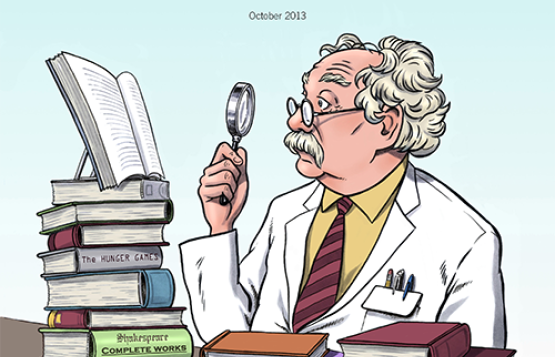
Dara and Brickman enthuse about early-talent identification programs, rue Indiana’s subpar state standards, and wonder how much is too much to pay superintendents. Amber finds little to no connection between a popular pre-K quality measure and pupil outcomes.

Amber's Research Minute

“Do Standard Measures of Preschool Quality Used in Statewide Policy Predict School Readiness?” by Terri J. Sabol and Robert C. Pianta, Education Finance and Policy 9(2): 116–64.

view

Do high flyers maintain their altitude?

Janie Scull
9.20.2011
Flypaper

If America is to remain internationally competitive, we need to maximize the potential of our top students. Over the last decade, however, federal and state education-accountability systems?particularly in the wake of the No Child Left Behind Act (NCLB) of 2001?have placed primary emphasis on moving low-performing students toward proficiency. The sanctions stemming from these systems have cast greater attention on schools that fail to attain proficiency for most students?a necessary and noble endeavor. But they have also fueled concerns that the academic needs of high-performing learners, who in many states are largely unaffected by accountability systems, have been neglected.

In order to maximize the potential of our above-average and top students, we first need to know who those students are, and where and when they're most likely to falter. But to date, few research studies have examined the progress of individual high achievers over time.

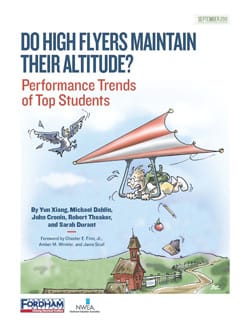
Today, Fordham took a leap in that direction with the release of a groundbreaking study, Do High Flyers Maintain Their Altitude? Performance Trends of Top Students, the first ever to examine the achievement of high-performing students over time at the individual level. It poses?and seeks to answer?this straightforward question: Do students who outscore their peers on standardized achievement tests remain at the top of the pack year after year? Put differently, how many ?high flyers? maintain their ?altitude? over time? How many fall back toward Earth as they make their way through school, losing the academic edge they once enjoyed?

Over the next few days, we'll delve into the report's main findings and host a forum for expert guests to react here on Flypaper. If you just can't wait to find out more, you can download a copy of Do High Flyers Maintain Their Altitude? Performance Trends of Top Students here, or visit the report data gallery, hosted by the Kingsbury Center at the Northwest Evaluation Association, here.

?Janie Scull

view

Do Standard Measures of Preschool Quality Used in Statewide Policy Predict School Readiness?

Amber M. Northern, Ph.D.
4.17.2014
Blog

The 2008 federal economic stimulus act invested $5 billion to support early-childhood programs, including $500 million for the Race to the Top Early Learning Challenge, which pushes states and localities to participate in the Quality Rating and Improvement System (QRIS). One of the quality measures endorsed by QRIS is the widely popular Early Childhood Environmental Rating Scale–Revised (ECERS-R). Much research has shown a positive relationship between higher scores on ECERS and children’s development, including academic and social outcomes—but the measure has neither been tested in a nationally representative sample nor subjected to a robust set of controls to lessen the impact of selection bias (e.g., motivated parents might choose higher-quality child care). In this study, Terri Sabol of Northwestern University and Robert Pianta of the University of Virginia use data from the Early Childhood Longitudinal Study–Birth Cohort (ECLS-B); they include children born in 2001, ultimately yielding a sample of roughly 10,000 kids, whom they track through age 5, and they also conduct classroom observations in 1,400 center-based providers. They measure a number of outcomes at age 5, including math and literacy, expressive language, and social skills among others—and control for numerous child, family, and center characteristics as well as demographics. The bottom line: the analysts found scant evidence that the ECERS is related to children’s academic or social development. In all, they ran over fifty different analytic models and found few significant effects between this particular measure of quality and outcomes at age 5. Further, programs that scored higher on the ECERS failed to improve student growth relative to the measured outcomes. The authors conclude by recommending that other tools, such as those that measure the types of interactions between students and teachers, might do a better job of capturing classroom quality—and, thus, predicting student outcomes.

SOURCE: Terri J. Sabol and Robert C. Pianta, “Do Standard Measures of Preschool Quality Used in Statewide Policy Predict School Readiness?” Education Finance and Policy 9(2): 116–64.

view

Attaining Equitable Distribution of Effective Teachers in Public Schools

Andrew McDonnell
4.17.2014
Blog

High-quality teachers are distributed across schools in patterns that resemble life in the desert, fleeing harsh terrain for soothing oases, fleeing poorer schools for more affluent. This report from the Center for American Progress analyzes the policies that regulate the equitable distribution of teachers and recommends policy changes that could lead some teachers to choose the more challenging environments for themselves. First, the researchers reaffirmed that despite the many equity-promoting provisions of NCLB, disparities in teacher quality persist: experienced, effective teachers, who hold at least some the keys to closing student achievement gaps, are disproportionately absent from low-income and minority schools. CAP recommends that states and districts develop systems that link teacher-effectiveness data to pupil achievement in order to identify high-quality instructors and track teacher movement. With that information, states and districts can tackle the distribution challenge by altering school-finance disparities and making sure that effective teachers receive proper compensation at all schools. The federal government should monitor that data and hold states accountable for their teacher distribution policies. Though the author of this report emphasizes the need for bold changes, she objects to heavy-handed approaches like forced teacher relocation. Instead, states and districts should work on incentives and transparency, developing rewards and job supports that will foster a positive work environment and encourage growth among all teachers.

SOURCE: Glenda L. Partee, Attaining Equitable Distribution of Effective Teachers in Public Schools (Washington, D.C.: Center for American Progress, April 2014).

Fordham Logo

© 2026 The Thomas B. Fordham Institute
Privacy Policy
Usage Agreement

National

P.O. Box 110
Burke, VA 22009

202.223.5452

[email protected]

Ohio

P.O. Box 82291
Columbus, OH 43202

614.223.1580

[email protected]

Sponsorship

130 West Second Street, Suite 410
Dayton, Ohio 45402

937.227.3368

[email protected]