Mobile Navigation

  • National
    • Policy
      • High Expectations
      • Quality Choices
      • Personalized Pathways
    • Research
    • Commentary
      • Gadfly Newsletter
      • Flypaper Blog
    • Events
    • Scholars Program
  • Ohio
    • Policy
      • Priorities
      • Media & Testimony
    • Research
    • Commentary
      • Ohio Education Gadfly Biweekly
      • Ohio Gadfly Daily
  • Charter Authorizing
    • Application
    • Sponsored Schools
    • Resources
  • About
    • Mission
    • Board
    • Staff
    • Career
Home
Home
Advancing Educational Excellence

Main Navigation

  • National
  • Ohio
  • Charter Authorizing
  • About

National Menu

  • Topics
    • Accountability & Testing
    • Advanced Education
    • Career & Technical Education
    • Charter Schools
    • Curriculum & Instruction
    • ESSA
    • Evidence-Based Learning
    • Facilities
    • Governance
    • Personalized Learning
    • Private School Choice
    • School Finance
    • Standards
    • Teachers & School Leaders
    • Think Again
  • Research
  • Commentary
    • Gadfly Newsletter
    • Flypaper Blog
    • Gadfly Podcast
  • Events
  • Scholars Program

The Education Gadfly Weekly

Sign Up to Receive Fordham Updates

We'll send you quality research, commentary, analysis, and news on the education issues you care about.
Thank you for signing up!
Please check your email to confirm the subscription.

The Education Gadfly Weekly: Sex, drugs, and screens: Why schools can’t win the dopamine Olympics

Volume 25, Number 45
11.13.2025
11.13.2025

The Education Gadfly Weekly: Sex, drugs, and screens: Why schools can’t win the dopamine Olympics

Volume 25, Number 45
view
Teenagers using cellphones
High Expectations

Sex, drugs, and screens: Why schools can’t win the dopamine Olympics

The ubiquity, pervasiveness, and personalization of smartphones are reshaping behavior at a scale and speed never before seen. The classroom cannot compete with the attention economy on its terms. The smarter approach is to change the rules of the game entirely so that students spend less time swiping and more time solving for x.


Dale Chu 11.13.2025
NationalFlypaper

Sex, drugs, and screens: Why schools can’t win the dopamine Olympics

Dale Chu
11.13.2025
Flypaper

The slippery slope of relaxed high school graduation standards

James Peyser
11.13.2025
Flypaper

Trump’s education tax credit has a quality control problem. Is there a private sector solution?

Michael J. Petrilli
11.13.2025
Flypaper

What do longitudinal cognitive skills tests reveal about human capital development?

Jeff Murray
11.13.2025
Flypaper

Are teachers penalized for working the jobs their peers don’t even want?

Meredith Coffey, Ph.D.
11.13.2025
Flypaper

What’s at stake if federal oversight of IDEA weakens? | Episode 994 of The Education Gadfly Show

11.12.2025
Podcast
view
Graduates

The slippery slope of relaxed high school graduation standards

James Peyser 11.13.2025
Flypaper
view
US Capitol Building

Trump’s education tax credit has a quality control problem. Is there a private sector solution?

Michael J. Petrilli 11.13.2025
Flypaper
view
Road with dollar sign

What do longitudinal cognitive skills tests reveal about human capital development?

Jeff Murray 11.13.2025
Flypaper
view
Teacher in a classroom

Are teachers penalized for working the jobs their peers don’t even want?

Meredith Coffey, Ph.D. 11.13.2025
Flypaper
view
Elizabeth Yancy Bostic

What’s at stake if federal oversight of IDEA weakens? | Episode 994 of The Education Gadfly Show

Elizabeth Yancy Bostic, Michael J. Petrilli, David Griffith, Ph.D. 11.12.2025
Podcast
view
Teenagers using cellphones

Sex, drugs, and screens: Why schools can’t win the dopamine Olympics

Dale Chu
11.13.2025
Flypaper

We are in the throes of an attention arms race: 90 percent of U.S. teens own a smartphone, and nearly one in three eight-year-olds do, as well. Seven in ten high school teachers say cellphone distraction is a major problem in the classroom. In response, more than half of states have implemented phone bans, and calls are growing for schools to reclaim students’ focus. But the problem runs deeper than devices in pockets or backpacks. Classrooms today are competing not just with screens, but with an attention economy engineered to keep young and old alike scrolling, swiping, and craving more.

Even if schools could wall off smartphones, they can’t escape the cultural logic these devices have taught. Every app, notification, and algorithm is designed to maximize engagement and minimize friction—to make effort feel optional. Learning, by contrast, runs on the opposite principle: It requires focus, patience, and struggle. Yet rather than confronting that tension head-on, too many education leaders have tried to bridge it with gimmicks—gamified lessons, digital bells and whistles, AI tutors that promise to “make learning fun.” It’s a fool’s errand. The classroom will never outcompete TikTok or YouTube on engagement, nor should it try.

Educator-turned-researcher Daisy Christodoulou underscored the reality in a recent Substack post titled, “Why education can never be fun.” Her argument is simple, piercing, and hard to ignore: Most phone apps are trying to do just one thing, which is hold the user’s attention. Teachers are also trying to hold their students’ attention, but they also want their students to learn. In a straight head-to-head with a phone app, the teacher will always lose because, while the app is optimizing for one parameter (fun), educators are optimizing for two (fun and learning). Christodoulou drives the point home with a line that is equally amusing and alarming: “If online content is so addictive that it can lead to adults having less sex, it’s probably fair to speculate that it will lead to kids studying less algebra.”

Relatedly, teen substance abuse, sexual activity, arrests, and DUI fatalities have all been falling, suggesting that screens may be redirecting much—if not all—of their risk-taking impulses toward the dopamine hits provided by the online portals glued to their eyes. If that’s the case, the question facing schools isn’t how to compete with technology, but how much longer they can afford to keep pretending they can.

Some observers argue nonetheless that schools should respond by making lessons more engaging. On the surface, it’s a compelling idea: If students are bored, they’ll gravitate toward the screen. But the problem isn’t boredom alone. It’s that screens deliver instant rewards classrooms were never designed to match. Trying to have classrooms outcompete screens risks chasing a mirage. The apps are just one part of a broader attention ecosystem that pulls at students before, during, and after the school day.

Christodoulou takes the point a step further. Two decades ago, she writes, one might have argued that better teachers or better-designed lessons could keep students engaged, and that the right mix of charisma and creativity could outshine distraction. Sadly, that bargain no longer holds. “Learning,” she says, “is the slow, ponderous, and beautiful Galapagos tortoise, and online content is the invasive predator which will inevitably drive it to extinction.” Her point isn’t defeatism. It’s pragmatism. The attention economy has so thoroughly rewired our expectations that even great teaching can’t compete on its terms, least of all a system that depends on 3.8 million public school teachers doing heroic work every day. The sensible response isn’t to try harder. It’s to rethink the conditions under which classrooms can remain relevant and learning can survive.

So what might this look like? Outright or bell-to-bell phone bans provide a starting point, but they must be paired alongside efforts that help students unlearn what cognitive scientist Daniel Willingham identifies as the root obstacle: Students’ attention is not diminished in capacity, but in practice, the instant rewards of digital devices make choosing to focus more difficult—both in class and during afterschool homework or studying. Doug Lemov has described the present challenge as “rewiring schools for belonging and achievement,” emphasizing structural change over superhuman effort.

Specifically, this means reexamining the structure and rhythms of the school day. From extracurriculars to rituals and routines, each plays an essential role in creating an environment for students to think deeply and critically. But the classroom is the most important space of all—and it must be one free from phones. Within that space, students’ interactions should be deliberately shaped—encouraging attentive listening, supportive responses, and connections between contributions—so that peer engagement reinforces both focus and belonging. Yet these principles cannot stop at the classroom door. Homework, studying, and even assessment practices must be rethought in the era of AI and grade inflation, so that students engage meaningfully rather than relying on shortcuts or hollow marks. Attention and learning, in short, must be deliberately cultivated across the entire educational experience.

States are banning phones because they’ve recognized the limits of competing directly with digital distractions. Instead of trying to win on engagement alone, they’re attempting to alter the terrain so that classrooms can foster meaningful learning. The hope is that students will internalize the fact that phones are not available in school, and so the calculation around boredom and attention shifts in ways that are more conducive to higher levels of student focus and learning.

Some dismiss all of this as nothing but the latest moral panic, echoing fears over video games or couch-potato generations. Yet the ubiquity, pervasiveness, and personalization of smartphones are reshaping behavior at a scale and speed never before seen. The classroom cannot compete with the attention economy on its terms. The smarter approach is to change the rules of the game entirely so that students spend less time swiping and more time solving for x.

view
Graduates

The slippery slope of relaxed high school graduation standards

James Peyser
11.13.2025
Flypaper

A few weeks ago, Mike Petrilli asked readers of his SCHOOLED Substack: “Are high school graduation standards too low?” The initial responses from Dan Goldhaber, Checker Finn, and Matt Gandal were a consistent “yes.” They were less clear on what to do about it, but there was some agreement that just doing more of what we’ve been doing probably isn’t a viable path forward.

The days of a single statewide assessment to set the threshold for high school graduation may indeed be over, at least here in Massachusetts. In 2024, voters rejected the MCAS exam as the state’s method for determining whether a student is academically ready to graduate—notwithstanding its widely recognized quality and its contribution to the Commonwealth’s 30-year academic success story.

But there’s no use crying over spilled milk (at least not a year after that election). The question on the table is, what now? I agree with the apparent consensus that we should consider more varied and flexible ways to evaluate student readiness for graduation, but I’m very concerned that we’re stepping onto a slippery slope that the (relentless) opponents of standards-based reform will exploit, unless there is a clear foothold on which to stand.

The tone of the public conversation today is not how to improve or strengthen the architecture of standards-based reform, but rather how to abandon most or all of its underlying principles and components. Instead of anchoring state standards on core academic knowledge and skills, the focus is on critical thinking, problem solving, communications, cultural competence, and social-emotional health. All of this sounds nice in theory, but, importantly, these topics and skills—many of which are surely worthy—are too often seen as distinct disciplines or subjects, rather than by-products of a more robust educational experience. They are also notoriously difficult or impossible to assess with reliability and validity.

Their boosters seem to view academic learning as a distraction from their favorite skills and competencies. Instead of mastering math, science, English, and history, students are expected to develop “literacy across content areas,” which I take to mean a high-level awareness of these subjects in the expectation that what you don’t pick up in school you can learn as needed via Google and now AI. This is not about broadening the canon and making the liberal arts more inclusive. It’s about minimizing the role of academics altogether.

Which leads me to conclude that, while we need to provide opportunities for students to pursue multiple pathways in high school that align to their interests and career aspirations, including new ways of assessing their learning, we cannot walk away from bedrock promise of the last 40-odd years of education reform: that all students, regardless of where they live or the challenges they face, should graduate from high school with the requisite knowledge and skills they need to succeed in a life of their choosing. This requires more than just a passing familiarity with the academic subject areas that provide young people with the ability to actually have choices.

Are high school graduation standards too low? Yes, and they’re getting lower. Should we have a multi-tiered or differentiated graduation standard? Maybe, but as a complement to a rigorous common standard, not a substitute.

If “multi-tiered” means that students with minimal academic achievement are given a diploma and told they’re good to go, then I'm against it—especially if it means that the adults are effectively allowed to write off students (or whole groups of students) who are struggling to meet basic standards. That’s assuredly what will happen if being in the “low tier” of graduation requirements means you just have to show up and barely pass your courses. I saw that happen myself growing up in New York when they used to give out both Regents diplomas and local diplomas, a distinction that I wasn’t even aware of at the time and neither was the general public, including most parents and employers.

If differentiation means there’s no challenging academic core that all students should master (or at least grapple with), then my answer is also no. That need not mean a full four-year college-prep course of study for everyone, but it can’t mean that some students can choose (or be placed into) a watered-down curriculum of business math, remedial English, general science, and electives.

I fully agree with Checker’s suggestion that a minimum standard for a diploma be set at a level “that the vast majority of kids can, with reasonable effort in reasonable schools, attain and that does signify a recognizable level of attainment in core subjects.” Here in Massachusetts, that’s exactly what we had under the now defunct system where only about one percent of seniors failed to graduate on time due to MCAS, though even that was caricatured as punitive. The risk now is that there may be nowhere to go but down unless we come up with an alternative graduation requirement that keeps academic subjects as the core with valid and reliable assessments of learning tied to high standards and high expectations for all.

view
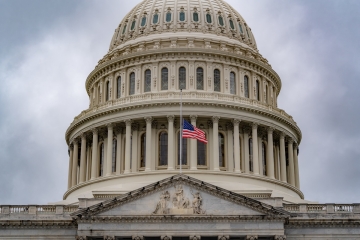
US Capitol Building

Trump’s education tax credit has a quality control problem. Is there a private sector solution?

Michael J. Petrilli
11.13.2025
Flypaper

The education tax credit included in the “One Big Beautiful” act has the potential to drive tens of billions of dollars toward private school scholarships, as well as tutoring programs in public and charter schools. That’s because, starting in 2027, taxpayers may direct up to $1,700 toward qualified Scholarship Granting Organizations (SGOs) and write off the entire amount from their federal tax returns.

But what’s missing so far from that gusher of cash is much quality control. That’s bad for kids, taxpayers, and the cause of school choice—and might sink the tax credit over the long term.

As Treasury Department officials work to finalize the regulations for how exactly this provision will work, some of us think they’d be wise to allow states to add some basic regulations to protect against waste, fraud, and abuse, as well as to encourage SGOs to hold participating schools and programs accountable for boosting student outcomes. Allowing SGOs to limit scholarships to low-income or working-class kids might help, too, if the goal is to get more Democratic governors to sign on. Same with permitting protections for LGBTQ kids and families. But given the resistance to such ideas from many school choice supporters, the Trump team will likely refuse to do so.

If that’s the case, states that opt to participate will have to approve any SGO that meets the bare-bones requirements of the law, which are designed to ensure that the bulk of the money goes to services, rather than overhead, and which protect against self-dealing (i.e., parents taking the tax credit to benefit their own child’s school).

Yet that need not cause this initiative to turn into the Wild West of education choice. There’s an obvious private sector solution that could steer significant portions of the money toward high-quality (and non-discriminatory) schools and programs—if philanthropies are wise enough to stand it up.

And that’s to create organizations, akin to GuideStar or Charity Navigator, that can vet and rate SGOs and encourage taxpayers to donate to those that promote quality choices for parents and are aligned with donors’ values. (Indeed, perhaps GuideStar and/or Charity Navigator should create such a service themselves.)

Imagine landing on a “scholarship tax credit navigator” website. Users could look for SGOs based on several criteria, including:

  • Location.
  • Types of students served (those from low-income families, students with disabilities, English language learners, homeless children, etc.).
  • Ages of children served.
  • Types of services provided (private school scholarships versus tutoring).
  • Sector(s) of eligible schools (private, public, and/or charter).
  • Strength of quality control (e.g., does the SGO employ test score data to determine which schools or programs are helping students make significant growth?).
  • For private school scholarships, what types of schools are served (i.e., Catholic, Christian, Jewish, all, etc.).
  • For private school scholarships, whether the SGO sends funds to schools that do not admit LGBTQ students or students with LGBTQ parents, and/or students with disabilities.
  • Whether SGOs meet basic requirements around fiscal responsibility and governance, such as submitting to annual audits.

Done right, this would nudge the field toward high-quality choices, while maintaining a light regulatory burden at the federal and state levels—especially if philanthropists also invested in advertising efforts to drive taxpayers to the site. (Collaborations with tax filing programs like TurboTax could help, as well.)

To be sure, this would be a long-term play because, in the early years at least, established SGOs, as well as large education organizations, will have a big advantage in attracting donations. School districts will stand up tutoring programs, launch SGOs connected to their PTAs or other affiliated groups, and use their vast communications infrastructure to encourage parents (and grandparents) to donate to their efforts. So, too, will charter school networks, Catholic dioceses, and existing SGOs that already provide private school scholarships.

In time, though, millions of tax filers will seek to understand what this education tax credit is all about, and a Scholarship Tax Credit Navigator could point them—and the school choice movement—in the right direction.

Editor’s note: This was first published by RealClearEducation.

view
Road with dollar sign

What do longitudinal cognitive skills tests reveal about human capital development?

Jeff Murray
11.13.2025
Flypaper

A new study published in The Economic Journal in the United Kingdom attempts to untangle the intertwined influences of cognitive skills and human capital development on adult wages over a person’s lifetime. It’s an ambitious effort that sheds some light on a perennial issue but raises additional questions in the end.

Researcher Uta Bolt from the University of Bristol utilizes longitudinal data from the National Child Development Study (NCDS), which has followed the same cohort of individuals—nearly all people born in the U.K. during a single week in March 1958—for almost 60 years. They were first surveyed via their parents at birth, and followed up at ages 7, 11, 16, 23, 33, 42, 46, 50, and 55. Detailed survey data include information on the circumstances of individuals while growing up—such as parental education and household size—as well as circumstances during adulthood, including wages, occupational choice, and periods of unemployment. Importantly for Bolt’s study, extensive cognitive testing was conducted with individuals at ages 7, 11, and 16, as well as at age 50. Her analytical cohort comprised all those NCDS participants who took part in cognitive testing at age 16 (1974) and at 50 (2008).

It is worth noting, as my Fordham colleague David Griffith does in his podcast review of this report, that the singular term “cognitive skills” is a simplification of a complex comparison. “The measures of adulthood cognitive skills are clearly not identical to the measures of childhood cognitive skills,” Bolt herself writes. “In particular, the age-16 cognitive skills are primarily based on learned concepts (e.g., doing algebra), whereas the age-50 cognitive skills do not require knowledge of any particular learned concept.” The age-50 tests included things like recalling 10 common words read out to them several minutes earlier and a “letter cancellation exercise” where participants were asked to cross out as many “Ps” and “Ws” as they could from a page of random letters within one minute. These test “attention and mental speed” generally, rather than specific verbal or mathematical skills. But Bolt ran additional tests on the two sets of results and ensured their comparability to her satisfaction, writing that her concerns that the tests capture completely different skills were alleviated. She still suggests keeping the variation in testing types in mind when considering the conclusions, which we shall do.

Here are the main regression analysis results: First, childhood cognitive skills persist strongly into adulthood. That is, individuals were likely to show the same skill level—relatively speaking—at 50 as at 16. Second, wages at age 50 are better predicted by cognitive skills at 16 than by cognitive skills at 50. These two findings imply that human capital development may operate on different tracks for cognitive skills versus wages, and the final three findings clarify this. To wit, additional education predicts higher cognitive skills and higher wages, while occupational choice predicts wages, but not cognitive skills at 50. Periods of time spent out of the labor market (a.k.a. unemployment) lower wages but not cognitive skills at 50.

While some of this seems counterintuitive—surely workers get paid in relation to the value of skills they possess—it would make more sense if it is true that cognitive skills and workplace skills operate on separate trajectories. As researcher Bolt puts it, “wages and cognitive skills capture distinct dimensions of adulthood human capital—adulthood investments that predict higher wages do not necessarily predict higher cognitive skills. In fact, education is the only investment which predicts both higher wages and higher cognitive skills at age 50.” All of this is predicated on the cognitive skills measured by the NCDS project at age 16 being the same as those measured at age 50, which we have already suggested may not be the case, despite the robustness checks conducted on the skills test data.

We are left with some interesting information that points to more questions than answers, such as how to best prepare young people for a prosperous future based on their cognitive starting points and how much those cognitive starting points can realistically be boosted if needed.

SOURCE: Uta Bolt, “Cognitive Skills Beyond Childhood,” The Economic Journal (October 2025).

view
Teacher in a classroom

Are teachers penalized for working the jobs their peers don’t even want?

Meredith Coffey, Ph.D.
11.13.2025
Flypaper

Much has been said about teacher pay: It’s adequate or it’s definitely not enough, it impacts teacher retention or maybe it doesn’t, and it should or should not correlate to student performance, to name just a few hot-button topics. Recently, there’s been more exploration of pay policies to incentivize teachers to work in hard-to-staff roles or schools. Now, researchers from Texas State University have released a study that provides a remarkably broad view of this existing work, examining teacher compensation trends in hard-to-staff schools nationally over the course of three decades.

The analysis relies on the theory of “compensating wage differentials,” or the idea that workers want higher wages to perform less-desirable jobs. Being an oil rig worker, for example, is isolating and extremely dangerous; that’s why experienced oil rig workers can earn well into the six figures. Teaching isn’t nearly so hazardous, yet some teaching roles appear less desirable than others. Research shows that, unfortunately, teachers don’t prefer working in schools with a high percentage of low-income students, in schools with a high percentage of students of color, or in rural districts. Although the evidence indicates that teachers leave these schools due to poor working conditions, rather than student characteristics, the reality remains that such schools are more likely to face chronic teacher shortages. According to the theory of compensating wage differentials, teachers in these schools should earn salaries that compensate for the relative undesirability of their jobs. But do they?

To find out, the researchers use data from the 1988–89 to 2017–18 administrations of a public-school teacher survey conducted by the National Center for Education Statistics. Their statistical models account for factors including teacher characteristics (like demographics and years of experience), school characteristics (like average class size and grade levels taught), and socioeconomic factors (like collective bargaining rules). Their findings address wage differentials at high-poverty, high-minority, and/or rural schools, among teachers overall and among teachers with a B.A. in science, technology, engineering, or math (STEM). They define “high-poverty” schools as those with at least 50 percent of students who qualify for free lunch and “high-minority” schools as those with at least 50 percent enrollment of Black, Hispanic, Native American, Asian, Native Hawaiian/Pacific Islanders, and/or multiracial students.

The researchers found that teaching at high-poverty and at rural schools largely correlated with statistically significant wage penalties, even when controlling for cost of living. (The sole exception to this trend was high-poverty, high-minority schools in non-rural areas.) At high-poverty schools, if the share of minority students was held constant at zero in their statistical model, each percentage-point increase in poverty correlated to an average 0.17 percent wage penalty annually. Teachers at a school with 70 percent of kids qualifying for free lunch, then, would earn an average 3.4 percent less annually compared to their colleagues at a school where 50 percent of kids qualify for free lunch. For high-poverty schools in rural settings, the penalties per percentage-point increase ranged from 0.07 percent (if not high-minority) to 0.1 percent (if high-minority).

Conversely, teachers earned a wage premium at high-minority schools and at high-minority, high-poverty schools (as long as the schools were not rural). In high-minority schools with no students receiving free lunch, teachers earned an average 0.07 percent more annually for each percentage-point increase in minority students. In a high-minority and high-poverty school, each additional percentage point of both student poverty and minority was correlated with a 0.04 percent increase in wages. So teachers at a school with 80 percent of kids qualifying for free lunch and 80 percent identifying as students of color would earn an average 1.2 percent more annually compared to their colleagues at a school with 50 percent low-income students and 50 percent students of color.

These patterns were generally consistent for teachers overall and for teachers with a B.A. in a STEM subject, although the latter consistently out-earned their peers with non-STEM degrees.

In short, working at a rural school put teachers at an earnings disadvantage across the board; working at a high-poverty school also correlated to wage penalties, unless it was also a high-minority school; and working at a high-minority school gave teachers a slight earnings edge. Still, given that high-minority schools’ teacher turnover rate remains two-and-a-half times higher than that of schools serving fewer students of color, the theory of compensating wage differentials would suggest that teachers at all these school types still need to be paid more to offset the working conditions that make these jobs less competitive. A few hundred or even a few thousand dollars more just doesn’t cut it.

Additionally or alternatively, structural changes to improve working conditions at hard-to-staff schools could boost retention without requiring more fiscal expenditure. And further research could dive deeper into variations in these trends over time, including in the wake of more recent efforts to compensate teachers for filling harder-to-staff positions. Enduring teacher shortages make clear that what we’ve been doing isn’t working—and using compensating wage differentials as a lens for teacher pay policy could well be another tool for researchers, policymakers, and advocates to add to their kits.

SOURCE: Jieon Shim and Li Feng, “Estimating Compensating Wage Differentials for Public School Teachers in High-Poverty and High-Minority Schools: Evidence from U.S. National Data, 1988–2018,” Annenberg Institute at Brown University (October 2025).

view
Elizabeth Yancy Bostic

What’s at stake if federal oversight of IDEA weakens? | Episode 994 of The Education Gadfly Show

11.12.2025
Podcast
 

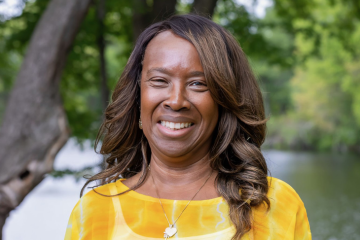
This week, we’re joined by longtime special education advocate Elizabeth Yancy Bostic to discuss what could happen for students with disabilities if federal oversight and enforcement of IDEA are scaled back. Drawing on more than two decades of experience supporting families, including her own, as they navigate services, Elizabeth explains why strong oversight matters and what is at risk for students and districts when those safeguards erode.

Then, on the Research Minute, David Griffith shares a study from Sweden that tracks the long-term outcomes of students attending for-profit versus nonprofit charter high schools.

Recommended content: 

  • ‘Educational exile’: How Trump’s layoffs threaten students with disabilities —Susan Haas, Education Week
  • Federal special education staff may get their jobs back. But for how long? —Cory Turner, NPR
  • CRPE on special education: Great diagnosis, wrong prescription —Chester E. Finn, Jr., Thomas B. Fordham Institute
  • Schooling for Profit: Long-run Effects of Private Providers in Public Education —Petter Berg (2025) 

Feedback Welcome: Have ideas for improving our show? Send them to [email protected]

Fordham Logo

© 2026 The Thomas B. Fordham Institute
Privacy Policy
Usage Agreement

National

P.O. Box 110
Burke, VA 22009

202.223.5452

[email protected]

Ohio

P.O. Box 82291
Columbus, OH 43202

614.223.1580

[email protected]

Sponsorship

130 West Second Street, Suite 410
Dayton, Ohio 45402

937.227.3368

[email protected]