Mobile Navigation

  • National
    • Policy
      • High Expectations
      • Quality Choices
      • Personalized Pathways
    • Research
    • Commentary
      • Gadfly Newsletter
      • Flypaper Blog
    • Events
    • Scholars Program
  • Ohio
    • Policy
      • Priorities
      • Media & Testimony
    • Research
    • Commentary
      • Ohio Education Gadfly Biweekly
      • Ohio Gadfly Daily
  • Charter Authorizing
    • Application
    • Sponsored Schools
    • Resources
  • About
    • Mission
    • Board
    • Staff
    • Career
Home
Home
Advancing Educational Excellence

Main Navigation

  • National
  • Ohio
  • Charter Authorizing
  • About

National Menu

  • Topics
    • Accountability & Testing
    • Advanced Education
    • Career & Technical Education
    • Charter Schools
    • Curriculum & Instruction
    • ESSA
    • Evidence-Based Learning
    • Facilities
    • Governance
    • Personalized Learning
    • Private School Choice
    • School Finance
    • Standards
    • Teachers & School Leaders
    • Think Again
  • Research
  • Commentary
    • Gadfly Newsletter
    • Flypaper Blog
    • Gadfly Podcast
  • Events
  • Scholars Program

The Education Gadfly Weekly

Sign Up to Receive Fordham Updates

We'll send you quality research, commentary, analysis, and news on the education issues you care about.
Thank you for signing up!
Please check your email to confirm the subscription.

The Education Gadfly Weekly: Reform teacher education. Improve student literacy.

Volume 25, Number 43
10.30.2025
10.30.2025

The Education Gadfly Weekly: Reform teacher education. Improve student literacy.

Volume 25, Number 43
view
wonkathon
High Expectations

Reform teacher education. Improve student literacy proficiency.

Editor’s note: This essay is an entry in Fordham’s 2025 Wonkathon, which asked contributors to answer this question: “What needs to happen next—at the state, district, and school levels—for the science of reading revolution to fulfill its promise and ensure that far more

Patrick Riccards 10.30.2025
NationalFlypaper

Reform teacher education. Improve student literacy proficiency.

Patrick Riccards
10.30.2025
Flypaper

Improving science of reading implementation through career-long educator support

Michael W. Kirst
10.30.2025
Flypaper

Next steps to sustain effective science of reading instruction for all students

Linda Diamond | Kelly Stuart | Dale Webster
10.30.2025
Flypaper

Do the ACT and WorkKeys exams measure the same or different skills?

Jeff Murray
10.30.2025
Flypaper

Do high school STEM opportunities affect postsecondary decisions?

Meredith Coffey, Ph.D.
10.30.2025
Flypaper
view
wonkathon

Improving science of reading implementation through career-long educator support

Michael W. Kirst 10.30.2025
Flypaper
view
wonkathon

Next steps to sustain effective science of reading instruction for all students

Linda Diamond, Kelly Stuart, Dale Webster 10.30.2025
Flypaper
view
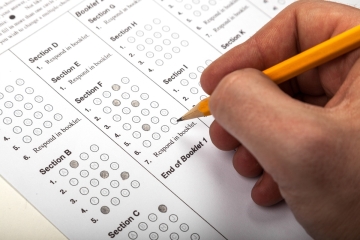
Standardized test in school

Do the ACT and WorkKeys exams measure the same or different skills?

Jeff Murray 10.30.2025
Flypaper
view
Teenage student doing math

Do high school STEM opportunities affect postsecondary decisions?

Meredith Coffey, Ph.D. 10.30.2025
Flypaper
view
wonkathon

Reform teacher education. Improve student literacy proficiency.

Patrick Riccards
10.30.2025
Flypaper

Editor’s note: This essay is an entry in Fordham’s 2025 Wonkathon, which asked contributors to answer this question: “What needs to happen next—at the state, district, and school levels—for the science of reading revolution to fulfill its promise and ensure that far more children learn to read well?” Learn more.

For nearly two centuries, since the Yale Report of 1828, America’s colleges and universities have used the same models, same approaches, and similar expectations, despite what their students might need. By refusing to adapt how we deliver higher education, particularly in teacher preparation programs, we shouldn’t be surprised only a third of fourth graders today are reading proficient.

We expect novice teachers to lead in a global, digital, information economy, but we aren’t equipping them with the knowledge and skills needed to reach the most diverse student population in the history of our nation. Two decades ago, one of my mentors, Reid Lyon, stated that education schools were guilty of “educational malpractice” for failing to adequately prepare aspiring educators in literacy instruction. We should be horrified that most education schools ignored those admonishments and still rely on teacher education and preparation programs built almost exclusively on a failed philosophy, producing ill-equipped elementary school teachers.

Put simply, teacher preparation is broken. After far too many decades, education schools continue to resist the research on proven effective instruction, particularly when it comes to the “science of reading.” While educators, policymakers, parents, and communities have battled fiercely over how best to teach reading, our education schools continue to use the failed approaches once known as whole language and currently known as balanced literacy. No matter the label, though, it is a failed approach ensuring that we continue to fail those young learners in need of literacy skills.

Today, the vast majority of states are charting courses to make “science of reading” the required approach in elementary school classrooms. But few are calling for the changes necessary to ensure that science of reading is actually taught with fidelity, or even taught at all. Almost none are requiring their colleges and universities to ensure that science of reading is the foundational component of any and all pre-service teacher preparation in their states. And test scores are still reflecting this deficiency.

We do not have to accept the statistics of the past as destiny. Despite our past struggles in getting all students proficient in reading, we know what steps need to be taken. Those bold states and educators are now taking those steps, doing what is necessary to improve the learning process in our schools, close the achievement gap, and transform every child into a strong, effective reader. Despite years and years of hearing that such actions were either too hard, too controversial, or too much of a change from what has always been done, we are finally starting to do it. But the hardest challenge lays before us—changing higher education.

Twenty-five years after the release of the National Reading Panel report, its findings still stand. Despite multiple efforts to disprove scientifically based reading, it is what is proven effective with virtually all learners. While children may enter the reading continuum at different points, a strong and confident reader requires measurable skills in all five components. In building upon each other, these components provide a strong foundation on which ongoing reading proficiency is based.

The challenge many states have faced since the NRP’s completion has been to create policy that will infuse the NRP’s five proven principles into classroom instruction. It is not enough to simply identify what components of the literacy acquisition process can and should be included. We also must focus on what is being done to prepare the teachers necessary to implement such policies. That focus requires states to lead when it comes to teacher education, enacting policy that demands:

  • Ensuring that undergraduate and graduate courses in the science of reading are part of any pre-service education program and are required of all new public elementary school teachers of record.
  • Improving the pre-service and in-service training so that all teachers (in all subjects and grades), not just reading educators, at least learn the basics of evidence-based reading instruction (right now, most of our schools of education severely lack pre-service education in evidence-based reading).
  • Focusing on the instructional materials necessary to help virtually all students acquire those five skills, be it through statewide adoption processes or funding priorities, and providing educators specific pre- and in-service training in how to use them.
  • Ensuring all novice teachers are empowered with the necessary data systems and professional development supports to tailor classroom instructional practice to meet the individual needs of each student.

The data is clear that science of reading–based instructional approaches can equip nearly all learners with the skills and knowledge they need to be proficient fourth-grade readers. Those approaches, though, require classroom teachers steeped in pre-service and in-service science of reading pedagogy. To get there, we need to radically transform our teacher preparation programs, ensuring all are based on a strong foundation of SOR.

Yes, higher education is one of the hardest sectors to change, reform, and improve. It resists change like no other. But such change it is necessary if we want to break decades of failures and shortcomings and equip all learners with needed literacy skills. The future of our students, our communities, and our nation requires us to finally say no to teacher educators who continue to indoctrinate their classes with the failed instructional experiments and philosophies that they themselves learned decades ago.

Improved student reading proficiency requires the science of reading. Successful implementation of the science of reading requires committed and successful educators. And the preparation of those educators requires education schools and teacher preparation programs built on the science, the data, and proven-effective instructional approaches.

Knowing all this is not enough, though. If we are serious about closing achievement gaps and giving all children—regardless of race, family income, or zip code—the opportunity to truly succeed in school, we must translate this knowledge into action by building a commitment for a solution, mobilizing stakeholders and enacting change. And such improvement begins in our teacher preparation programs.

For science of reading to succeed in elementary school classrooms, we need to prepare aspiring teachers in what it is, how to use it, how to measure it, and how to target it to meet the needs of individual learners. If our colleges and universities aren’t up to the challenge, or refuse to accept it, we cannot make the improvements our classrooms need and deserve. No teacher education student should accept a preparation program that doesn’t actually prepare them to change lives and teach kids to read. And no school district should hire an educator not prepared in the science of reading.

view
wonkathon

Improving science of reading implementation through career-long educator support

Michael W. Kirst
10.30.2025
Flypaper

Editor’s note: This essay is an entry in Fordham’s 2025 Wonkathon, which asked contributors to answer this question: “What needs to happen next—at the state, district, and school levels—for the science of reading revolution to fulfill its promise and ensure that far more children learn to read well?” Learn more.

In a report that I authored for the Learning Policy Institute, I examined the long, winding, and often perilous journey of state reading policies and found that even well-designed policies frequently fail to translate into meaningful classroom implementation. Teachers and principals emerged as critical links in the chain between the state capitol and the classroom. Yet I found that state strategies for teacher and principal improvement are often superficial, fragmented, underfunded, and overly reliant on external vendors who are not embedded in district operations.

That research led me to a deeper question: Why do most state policies for teacher development end when a teacher and principal are certified and inducted into the profession? This approach is no longer sufficient, given the challenges in implementing science of reading.

To ensure that all students benefit from high-quality reading instruction aligned with state standards, we must rethink the role of the state in supporting educators in every grade throughout their careers. This means building a coherent, long-term system of professional learning that spans the entire teaching lifecycle—from early career to veteran educators. It also means aligning professional development initiatives with state reading frameworks, leveraging research on what works, and creating the infrastructure to support continuous improvements at scale.

Every state has an entity responsible for certifying educators and approving post-secondary preparation programs. In ten states, this function is handled by an entity separate from the state department. However, once educators are certified and complete their induction, state involvement in their professional growth largely ends. This discontinuity leaves a critical gap in the career-long development of teachers and principals to teach reading.

To address this, state legislation should expand the mandate of these certification bodies—or create new ones—to support professional learning across the entire career continuum. A logical starting point would be to extend support for early-career teachers and gradually scale up to include experienced practitioners. Crucially, this expanded role must be tightly aligned with state reading curriculum content standards and frameworks, rather than left to the sole discretion of local districts.

Such a shift would bring coherence and vision to professional development efforts, reduce reliance on one-off initiatives, and replace scattered categorical programs with a more strategic, sustained approach. The Mississippi Department of Education offers a promising example through its state-led literacy initiatives, which demonstrate how coordinated, standards-aligned efforts can support educators more effectively. Mississippi relied heavily on coaches. A new state agency and plan should include incentives for teachers to upgrade their teaching skills including compensation for micro credentials.

I have often thought of directing classroom practice from the state capitol as trying to coax a turtle toward a goal. Too often, state policies often operate at the surface—affecting the turtle’s shell—while the complex, interdependent work of operating schools and teaching students happens beneath the shell. District leaders and administrators represent the turtle’s body, responding to state nudges while managing their own complex responsibilities. But the real movement comes from the turtle’s legs—school sites and classrooms—where policy must ultimately reach to influence teachers’ subject matter knowledge and pedagogy.

My experience in California showed that deferring too heavily to local districts for professional learning led to isolated pockets of success, but more often resulted in widespread superficial implementation.

Author’s note: This essay is based on longer commentary published by the Brookings Institution in June 2025.

view
wonkathon

Next steps to sustain effective science of reading instruction for all students

Linda Diamond | Kelly Stuart | Dale Webster
10.30.2025
Flypaper

Editor’s note: This essay is an entry in Fordham’s 2025 Wonkathon, which asked contributors to answer this question: “What needs to happen next—at the state, district, and school levels—for the science of reading revolution to fulfill its promise and ensure that far more children learn to read well?” Learn more.

To address the issue of sustainability and successful next steps for sustained implementation of new reading laws, one must first identify why waves of previous reading reforms, many aligned to evidence, have not endured. Three factors have contributed to this failure.

  1. Educator preparation programs (EPPs) have not aligned their coursework and standards to the evidence on effective reading instruction but have still received accreditation, and new educators receive licensure often not based on evidence.
  2. Educator professional learning has been limited to knowledge training but not always aligned to the evidence, nor is it sufficiently inclusive of ongoing training and support in the effective use evidence-aligned materials.
  3. Leadership change at all levels has led to constant reform rather than sustained implementation of effective reading instruction, often because leaders themselves have little to no training in effective reading instruction to successfully lead it.

First, educator preparation programs (EPPs) must align with the evidence not only on what is necessary to develop proficient reading, but also on how reading should be taught—drawing on insights from both cognitive science about how humans learn and instructional science about the most effective teaching practices. While many universities are already revising their courses to better align to reading science, they are not also aligning to learning science. New educators may be learning about what reading content to teach but are not necessarily learning how best to teach that content. Internationally, because of rigorous preparation and ongoing professional learning, the U.K. has moved up to ninth in reading. The U.S. lags behind. The only way to ensure EPPs are preparing educators is to require changes that align evidence to licensure, licensure tests, license renewal, and accreditation. EPPs must be judged for accreditation based on course work and clinical practice that provides all educators with the knowledge necessary to ensure all students become proficient readers and writers. Currently, too many EPPs are not adequately equipping preservice educators with the necessary skills and practices to teach reading effectively but nonetheless are still receiving accreditation.  

Licensure tests should require preservice educators to demonstrate that they possess the evidence-aligned knowledge and skills to teach reading effectively. Similarly, the two main accreditation organizations, the Council for the Accreditation of Educator Preparation (CAEP) and the Association for Advancing Quality in Educator Preparation (AAQEP), must embed into their standards and their reviews the requisite knowledge for teaching reading so that EPPs are evaluated against evidence-aligned standards in both course work and clinical practice. Short of those changes, higher education will likely continue business as usual that too often relies on ideology and philosophy rather than evidence.

Second, both pre-service and in-service professional learning must go beyond knowledge training about the essential components of reading and include training on understanding how people learn (cognitive science) and therefore how best to teach. In addition, professional learning must include training on the use of actual evidence-aligned, high-quality instructional materials that build word level skills, language, writing, and deep knowledge, similar to what has been done in the successful southern states such as Louisiana, Alabama, Tennessee, and Mississippi. Professional learning should also include ongoing coaching and implementation support. Just as doctors go through internships and pilots go through simulations and co-pilot training where they learn to apply their knowledge and make expert use of their equipment, all educators must be equipped with both research-aligned knowledge and practical skills and receive ongoing coaching to mastery. Such professional learning must extend to principals who evaluate their teachers and lead systemic school efforts to improve literacy outcomes. Principals must know reading content to monitor and support implementation. To do this, they need clear systems in place for managing instruction, scheduling instructional time, delivering interventions, and collecting and analyzing class and school-wide assessment data.

Finally, a significant cause for continued reading failure, despite abundant research and despite legislation, is leadership turnover at all levels—state superintendents and policymakers, district superintendents and district line staff, and principals. Too often, new leaders bring their own ideas and beliefs about what should be the focus, despite evidence that previous leaders’ programs and policies led to strong achievement gains. However, having a common body of evidence-aligned knowledge that includes effective implementation practices that all leaders draw from would reduce and eventually eliminate this problem. Therefore, we also propose a radical change just as is done in many businesses—the use of successor plans for which state departments of education, state boards, and local school boards are accountable for developing. Successor plans can ensure that effective reading policies and practices are sustained. A successor plan facilitates smooth transitions, includes timelines and milestones to ensure continuity of effective services, operations, and expectations. Such successor plans allow a period of mentoring and support for new leaders. To achieve such a radical shift, state and district governing boards must build sustainability into their hiring plans, into their interviews, and into the evaluation of new leaders.

This idea of sustainability has been demonstrated so clearly in the Steubenville story reported by Emily Hanford; 25 years of sustained evidence-aligned programs, quality materials, ongoing professional learning, and practices produced decades of strong student results. In most school districts, reading programs change with each new superintendent or principal. Funding may dry up and priorities shift, and strong programs are replaced before they even take root. But in Steubenville, Ohio, one program—Success for All—has endured for more than twenty-five years. Why? Stability. The superintendent has led the district for over a decade and is a former principal and teacher in the district. Many teachers have attended Steubenville schools themselves. Such continuity fosters trust between teachers and administrators. Although Steubenville might not have referred to it as succession planning, the district developed this sustained succession organically. Teachers became principals; principals became district leaders. Steubenville cultivated an internal leadership pipeline that preserved values, coherence, and instructional quality. Sustainable change depends not on new mandates but on steady leadership, intentional succession, and a commitment to evidence over trends. (This vignette draws in part on reporting from “Sold a Story: Episode 13 – The List,” APM Reports (2025).)

To sustain significant progress on reading, we must ensure improvements in educator preparation, ongoing professional learning, sustained implementation support, and ultimately guard against leadership changes that disrupt or reverse gains.

view
Standardized test in school

Do the ACT and WorkKeys exams measure the same or different skills?

Jeff Murray
10.30.2025
Flypaper

For decades, ACT has been testing students’ postsecondary readiness via two separate assessments: one aimed at measuring college readiness and a second that focuses on career-related skills and abilities. A new working paper from the nonprofit that produces both assessments compares the college-based ACT with the WorkKeys test to find out if there is some overlap among their measures. In other words, how well do the scores on a career-readiness test align with those of a college-readiness test?

Analysts from ACT’s internal research department examined a sample of almost 359,000 students nationwide who took both the ACT and WorkKeys assessments between fall 2022 and summer 2025. Data focused on each student’s most recent attempt on each, which for 68 percent of those in the sample occurred in their junior year of high school. The analysts were interested in students who took the two tests within the same academic year, wanting to limit additional learning taking place in between.

The sample group was 54 percent female and 46 percent male. Forty-nine percent were White, 30 percent Black, and 11 percent Hispanic. Students hailed from 30 states, but the majority came from just six (North Carolina, Louisiana, Alabama, Mississippi, Arkansas, and Kansas). The analysts compared their sample test takers to a reference population—specifically, all 11th grade students assessed during the school day under ACT state contracts across 22 states in spring 2025. In comparison, the two-test sample students had a larger percentage of students who are female or Black and a lower percentage of those who are male or Hispanic. Otherwise, the two were demographically similar.

The researchers began by examining correlations between ACT scores and WorkKeys scale scores. The ACT data for this analysis comprised the four section test scores (English, math, reading, and science), the English-plus-reading score (representing ELA performance), and the composite score for all students in the sample. The WorkKeys data comprised the scale scores for applied math, graphic literacy, and workplace documents tests, as well as a summed total score. All WorkKeys scale scores were compared to all ACT section scores, regardless of academic subject (thus, applied math is compared to English, graphic literacy to science, and workplace documents to reading, etc., as well as the more direct applied math to math comparison).

They found the correlations with WorkKeys scores were generally high and consistent across ACT sections, ranging from 0.59 to 0.69 for applied math, 0.62 to 0.65 for graphic literacy, and 0.55 to 0.62 for workplace documents.[1] That’s not surprising, given that both tests largely assess reading and math skills. Correlations of this magnitude suggest that students who perform well on the ACT are also likely to perform well on the WorkKeys assessments, but the two assessments also provide some unique information on student readiness.

Next, they investigated how performance benchmark outcomes—ACT’s college readiness levels and the National Career Readiness Certificate (NCRC) performance levels of WorkKeys—compared among dual test-takers. Only one in three sample students met ACT’s college-ready threshold, with another 37 percent nearly college ready. By comparison, 65 percent of sample students earned at the Silver or higher NCRC level, which means that nearly two out of every three students had the foundational skills needed for most entry-level, career-ladder jobs. The bottom line: Thirty-one percent of sample students were prepared for both college and career, while 34 percent were career ready only. And although a miniscule 2 percent were college ready only, a worrying 33 percent tested ready for neither college nor career.

About 26 percent of students in the sample performed better on the ACT than on WorkKeys, and a similar percentage better on WorkKeys than the ACT. About 47 percent performed similarly (within 9 percentage points) on the two assessments. These relative scores were compared with students’ stated postsecondary plans (derived from answers provided on additional questions asked during ACT administration), with some interesting findings. For example, students with occupation plans in skilled trades performed relatively better on WorkKeys than the ACT, while students with occupation plans in the social sciences, arts, communications, and languages performed relatively better on the ACT. Students who did not plan to go to college or who expected to earn less than a bachelor’s degree performed relatively better on WorkKeys, while those who expected to earn at least a bachelor’s degree performed relatively better on the ACT.

It is unsurprising that the folks who produce the ACT and WorkKeys exams conclude from all this that “there are potential benefits to having separate assessments and separate performance standards for college and career readiness,” and such a finding would seem to support the idea of most students taking both tests as a matter of course. But the analysis here could also indicate that there are lots of jobs out there—which are not dead ends—that are attainable for a swath of students who test ready for them via WorkKeys and who are indeed interested in pursuing them. For them, career training should be the prescription in their upper high school years, rather than enforced college prep courses and an ACT arms race.

SOURCE: ACT Research, “Multiple Measures of College and Career Readiness: What Does the Evidence Suggest?” Draft Working Paper (October 2025).


[1] The report also lists correlations between ACT scores and other readiness indicators, based on outside research. These include a 0.40 correlation between ACT scores and first-year college GPA, a 0.55 correlation with high school GPA, and a 0.89–0.93 correlation with SAT total scores.

view
Teenage student doing math

Do high school STEM opportunities affect postsecondary decisions?

Meredith Coffey, Ph.D.
10.30.2025
Flypaper

Careers in science, technology, engineering, and math (STEM) fields tend to pay well, offering about double the average wages of non-STEM jobs. But even with that pay advantage, several STEM careers rank among the anticipated workforce shortage areas. How can we improve the STEM pipeline, both to strengthen young people’s economic opportunities and for our broader economic and societal well-being? To help answer this question, a new study by researchers from Saint Louis University and the University of Missouri-Columbia explores the effects of a STEM career and technical education program that’s now reached millions of students in all fifty states.

Project Lead the Way (PLTW) offers rigorous pre-K–12, project-based STEM courses, including three pathways at the high school level: engineering, computer science, and biomedical science. Since its inception in the late 1990s, the program has been studied numerous times. Now, in a follow-up to their own previous work on the effects of introducing PLTW in high schools, the researchers have now analyzed what happened when the program expanded within high schools where it was already offered.

They compiled data for 68,000 students who began ninth grade in one of 501 Missouri public schools between 2010–11 and 2014–15, during which time PLTW saw rapid growth across the Show-Me State. Within the study’s 225 “treatment” schools, the number of courses available more than doubled, as biomedical science and computer science newly became available alongside the engineering pathway. Using linked data from the Missouri Department of Elementary and Secondary Education and the National Student Clearinghouse, the researchers evaluated the impact of PLTW course expansion on students overall, by gender, and by “STEM readiness” (STEM skills upon high school entry).

Among all students, PLTW expansion correlated with statistically significant changes to postsecondary outcomes. For every additional course per 100 students, college enrollment increased by 0.3 percentage points (pp), and STEM major declaration within five years of enrollment also rose by 0.3 pp. These results are more substantial than they may initially sound, given that these are pp increases among all students in the “treatment” schools, not just those who took PLTW courses.

For male and female students, the impact of PTLW was more nuanced. With college enrollment, the effect size for male students was statistically significant and larger (0.5 pp) than for their female counterparts (0.3 pp, not statistically significant). This difference could be at least partly attributable to the fact that women already tend to enroll in college at higher rates than men. For STEM major selection, different PLTW pathways had different effects. Engineering and computer science expansion was associated with a statistically significant, 0.7 pp increase in STEM majors among male students, whereas biomedical science expansion correlated with a statistically significant 1 percent increase in STEM majors among female students.

PLTW’s effects also differed among students of different STEM readiness levels. Those who started high school in the top quartile were nearly three times as likely to take PLTW courses as their peers, and they were the only quartile to have a statistically significant increase in STEM major selection (1.3 pp), a finding that was consistent for both male and female students. For those in the bottom three quartiles, on the other hand, PLTW was associated with higher rates of college enrollment.

With more Project Lead the Way access, more students overall took STEM classes, enrolled in college, and chose STEM majors—but the subgroup results don’t tell such a straightforward story. And that’s partly the point: The program may help different students in different ways. Initially lower-performing students were more likely to enroll in college, and initially higher-performing students were more likely to choose PLTW courses, and later, STEM majors. That different pathways seemed to attract students of different genders is perhaps not surprising, but it reiterates that there’s work to be done when it comes to gender messaging around STEM fields. For now, though, getting more students into STEM pathways is a win, both for those students as individuals and for all of us.

SOURCE: Takako Nomi, Darrin DeChane, and Michael Podgursky, “Increasing Applied STEM Curricular Opportunities in High School and Impacts on Early Post-Secondary Outcomes: The Effect of Project Lead the Way,” Annenberg Institute at Brown University (October 2025).

Fordham Logo

© 2026 The Thomas B. Fordham Institute
Privacy Policy
Usage Agreement

National

P.O. Box 110
Burke, VA 22009

202.223.5452

[email protected]

Ohio

P.O. Box 82291
Columbus, OH 43202

614.223.1580

[email protected]

Sponsorship

130 West Second Street, Suite 410
Dayton, Ohio 45402

937.227.3368

[email protected]