
Mobile Navigation

  • National
    • Policy
      • High Expectations
      • Quality Choices
      • Personalized Pathways
    • Research
    • Commentary
      • Gadfly Newsletter
      • Flypaper Blog
    • Events
    • Scholars Program
  • Ohio
    • Policy
      • Priorities
      • Media & Testimony
    • Research
    • Commentary
      • Ohio Education Gadfly Biweekly
      • Ohio Gadfly Daily
  • Charter Authorizing
    • Application
    • Sponsored Schools
    • Resources
  • About
    • Mission
    • Board
    • Staff
    • Career
Home
Home
Advancing Educational Excellence

Main Navigation

  • National
  • Ohio
  • Charter Authorizing
  • About

National Menu

  • Topics
    • Accountability & Testing
    • Advanced Education
    • Career & Technical Education
    • Charter Schools
    • Curriculum & Instruction
    • ESSA
    • Evidence-Based Learning
    • Facilities
    • Governance
    • Personalized Learning
    • Private School Choice
    • School Finance
    • Standards
    • Teachers & School Leaders
    • Think Again
  • Research
  • Commentary
    • Gadfly Newsletter
    • Flypaper Blog
    • Gadfly Podcast
  • Events
  • Scholars Program

What Are Special Educational Needs?

Chester E. Finn, Jr.
10.17.2001

John Marks, Centre for Policy Studies, June 2000

John Marks is a British education expert who thinks heterodox thoughts and says irreverent things when warranted. In this 46-page study for the London-based Centre for Policy Studies (published in June 2000), he probes why the United Kingdom has recently experienced such an explosion (his word) in the number of children said to have special educational needs. (According to his data, the U.K. now classifies 2-3% of its school children as having explicit, serious physical and/or mental disabilities, but almost 20% more as having other sorts of "special educational needs.") His working conclusion: "We have brought this disaster upon ourselves." The reasons are numerous, but they center on what Marks terms the "retreat from traditional teaching practices." He also offers a number of recommendations for rectifying the situation. These center, not surprisingly, on the restoration of more "traditional" practices of organizing schools and teaching children. If you'd like to read it for yourself, it seems you'll have to order (and pay for) a hard copy. (The price is ??7.50.) You might start by e-mailing [email protected] or surfing to  http://www.cps.org.uk/sen.htm where you'll find an on-line order form. You could also write to the Centre for Policy Studies, 57 Tufton Street, London SW1P3QL. Or you could phone 020 7222 4488 or fax 020 7222 4388.
Tags: London United Kingdom

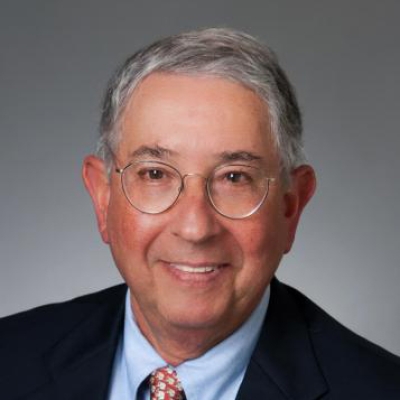
Chester E. Finn, Jr., scholar, educator and public servant, has devoted his career to improving education in the United States. At Fordham, he is now Distinguished Senior Fellow and President Emeritus. He’s also a Volker Senior Fellow at…

View Full Bio
Fordham Logo

© 2026 The Thomas B. Fordham Institute
Privacy Policy
Usage Agreement

National

P.O. Box 110
Burke, VA 22009

202.223.5452

[email protected]

Ohio

P.O. Box 82291
Columbus, OH 43202

614.223.1580

[email protected]

Sponsorship

130 West Second Street, Suite 410
Dayton, Ohio 45402

937.227.3368

[email protected]