
Mobile Navigation

  • National
    • Policy
      • High Expectations
      • Quality Choices
      • Personalized Pathways
    • Research
    • Commentary
      • Gadfly Newsletter
      • Flypaper Blog
    • Events
    • Scholars Program
  • Ohio
    • Policy
      • Priorities
      • Media & Testimony
    • Research
    • Commentary
      • Ohio Education Gadfly Biweekly
      • Ohio Gadfly Daily
  • Charter Authorizing
    • Application
    • Sponsored Schools
    • Resources
  • About
    • Mission
    • Board
    • Staff
    • Career
Home
Home
Advancing Educational Excellence

Main Navigation

  • National
  • Ohio
  • Charter Authorizing
  • About

National Menu

  • Topics
    • Accountability & Testing
    • Advanced Education
    • Career & Technical Education
    • Charter Schools
    • Curriculum & Instruction
    • ESSA
    • Evidence-Based Learning
    • Facilities
    • Governance
    • Personalized Learning
    • Private School Choice
    • School Finance
    • Standards
    • Teachers & School Leaders
    • Think Again
  • Research
  • Commentary
    • Gadfly Newsletter
    • Flypaper Blog
    • Gadfly Podcast
  • Events
  • Scholars Program

State Higher Education Finance, FY 2003

Chester E. Finn, Jr.
7.21.2004

State Higher Education Executive Officers (SHEEO)
2004

The State Higher Education Executive Officers (SHEEO) produced this 92-page fact book dealing with the finances of higher education at the state level in 2003. It offers lots of important and sometimes counterintuitive information. For example:

  • It's "superficial and premature" to conclude that state support for higher ed has been declining in recent years.
  • In fact, from 1991 to 2003, per (FTE) pupil funding in public-sector institutions rose 2.1 percent faster than inflation (using a very generous higher-ed specific gauge of inflation measure). The authors make no suggestion that institutional results, effectiveness or productivity also rose during that period. Indeed, one sees here what must be termed declining productivity in U.S. higher education.
  • Higher ed enrollments also continue to rise: up 19 percent between 1991 and 2003 (in public institutions).
  • The share of total institutional spending (in public colleges/universities) that comes from tuition has risen too, from 26 to 33 percent.
  • Not surprisingly, tuition levels (net tuition revenues per FTE student) rose 29 percent during that period, as state appropriations declined 7 percent.

Yes, tuitions are soaring. Yes, students (and parents and aid-suppliers) are bearing a larger share of the total cost of higher ed. But higher ed outlays per student are rising as well. Why? One recalls the old truism: because they can. There's no real pressure for greater efficiency.  See for yourself by surfing here. 
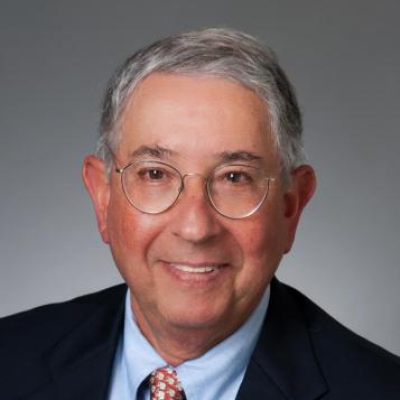
Chester E. Finn, Jr., scholar, educator and public servant, has devoted his career to improving education in the United States. At Fordham, he is now Distinguished Senior Fellow and President Emeritus. He’s also a Volker Senior Fellow at…

View Full Bio
Fordham Logo

© 2026 The Thomas B. Fordham Institute
Privacy Policy
Usage Agreement

National

P.O. Box 110
Burke, VA 22009

202.223.5452

[email protected]

Ohio

P.O. Box 82291
Columbus, OH 43202

614.223.1580

[email protected]

Sponsorship

130 West Second Street, Suite 410
Dayton, Ohio 45402

937.227.3368

[email protected]