
More than 9.5 million students attend rural schools in the United States, a population that’s larger than the enrollment of the 100 biggest school districts combined. Despite serving millions of students, rural communities are often overlooked by state and federal policymakers when considering education policy reforms. Unlike urban and suburban school systems, rural schools face distinct challenges related to funding, staffing, geography, and infrastructure. Policymakers must stop treating rural education as a niche issue and start designing reforms that reflect rural realities.
Rural schools are not disadvantaged because of poor leadership or lower expectations; rather, their challenges stem from geography, demographics, and resource constraints. One of the primary factors putting rural schools at a disadvantage compared to urban and suburban school systems is inequitable school funding. Although state funding formulas today rely less on local wealth than they once did, significant gaps remain in many places. For example, Connecticut and Massachusetts have made substantial progress in equalizing funding, while rural funding disparities remain more pronounced in North Carolina and New Hampshire. Rural schools in these states often face financial challenges due to small tax bases and limited commercial development, which restrict their ability to generate local revenue. At the same time, funding formulas often fail to fully account for the unique costs and circumstances of rural communities. In many states, aid has also declined relative to local contributions, placing a greater financial burden on rural districts and making it more difficult to provide equitable educational opportunities.
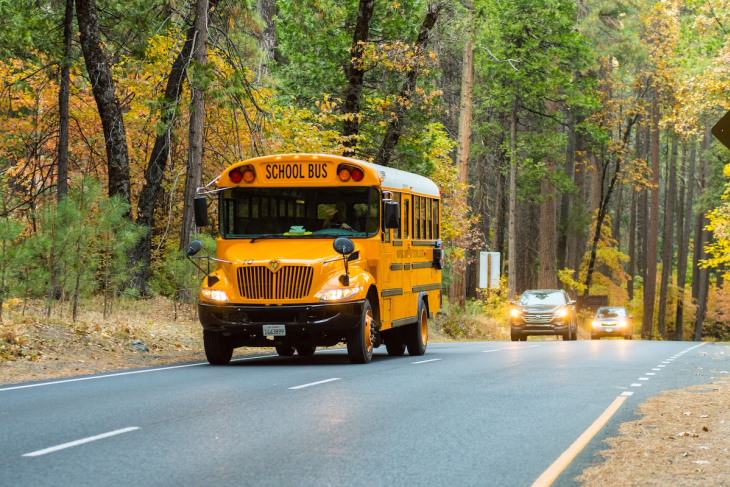
Transportation costs consume a large amount of resources in rural school systems. Geographic constraints lead to longer bus routes—ultimately increasing transportation costs. As a result, districts spend significantly more on transportation relative to instructional spending than non-rural districts, leaving fewer funds available for high-quality instructional materials (HQIM), staff pay, and school resources. These financial constraints also make it more difficult for rural districts to attract and retain qualified educators.
Rural schools struggle to recruit educators because there are fewer applicants and fewer qualified candidates. Additionally, there are typically fewer educator preparation programs, making it difficult to recruit high-quality educator candidates. Schools already struggle to recruit educators since their salaries are typically lower than those in more populated districts, with the average rural educator salary being $76,375 compared to $81,645 for denser locales as of 2023. Geographic isolation also discourages prospective educators from working in rural districts due to transportation costs and limited housing availability.
Retaining educators is equally challenging. Educators experience unique challenges that make their jobs significantly more difficult. Due to staffing shortages, many teach multiple subjects or outside of their certification areas. Access to high-quality professional development and in-school resources is also limited, making it more difficult for educators in these districts to feel supported.
So why do traditional reform strategies often fall short in addressing educator shortages in rural districts? For one, school turnaround models frequently assume districts can replace large numbers of staff, an unrealistic expectation in communities where qualified candidates are scarce. Similarly, educator quality policies often emphasize dismissing ineffective educators without addressing the underlying challenge of recruiting replacements. Unlike urban and suburban districts, rural schools often lack a deep labor pool and cannot simply hire their way out of shortages.
Rural students also have fewer academic opportunities due to small enrollments and staffing limitations, with 50 percent of schools offering AP courses compared to nearly 90 percent in urban and suburban areas.
And rural families may have fewer educational options available to them. Traditional school choice programs often depend on a critical mass of students and schools, making them less feasible in sparsely populated areas—even if homeschooling, microschooling, and other flexible models can help mitigate the issue.
Beyond the classroom, there are broader challenges facing rural communities that disadvantage schools. Rural poverty rates have exceeded urban poverty rates for decades, while food insecurity and healthcare access continue to affect student well-being and academic performance. Geographic isolation can also limit students’ access to enrichment opportunities, college and career networks, and other experiences that support long-term success. Broadband access is another significant barrier, with only 36 percent of rural students reporting strong home internet access compared to 90 percent of their non-rural peers.
These issues are significant, and schools cannot solve them alone. They require a policy agenda tailored to rural America that focuses on four priorities: strengthening the educator pipeline, expanding academic opportunities, reforming school funding, and closing the digital divide.
- Strengthen the rural educator pipeline. Geographic isolation and long travel distances often limit rural communities’ access to high-quality educators and professional development. Investing in local educator recruitment programs, such as Grow Your Own (GYO), can encourage local talent to earn full teaching credentials through paid apprenticeships and other work-based pathways that bypass traditional and costly higher-education barriers. Policymakers should prioritize evidence-based models that include clinical experience, partnerships with institutions of higher education, and pathways to licensure and certification. Increased funding for rural educator salaries, combined with incentives such as housing stipends, tax benefits, and student loan forgiveness, can help rural districts compete with non-rural schools in recruiting and retaining educators. Housing assistance programs should also be expanded to reduce challenges associated with limited housing availability in remote communities. Rural-specific professional development programs through partnerships among state agencies, school districts, higher education institutions, and training organizations should also be implemented to further support educator retention.
- Expand access to HQIM and advanced coursework. Rural schools face systemic barriers to accessing standards-aligned, high-quality curriculum and advanced learning opportunities. Increased funding for curriculum can help districts adopt research-backed HQIM that improve student outcomes. States should also support access to AP, dual-enrollment, STEM, foreign language, and other advanced coursework by helping districts recruit qualified educators and expand course offerings. Financial assistance for AP exam fees, dual-credit tuition, and related costs can ensure rural students are able to participate in these opportunities.
- Pass more equitable funding laws. State funding formulas should be reformed to ensure rural districts are not disadvantaged by smaller property tax bases and have adequate resources to support student learning. States should provide greater funding support to offset disparities in local revenue capacity and account for unique rural costs, particularly transportation expenses. Resources should be allocated based on student and district needs rather than local wealth to ensure rural students have access to the same educational opportunities as their non-rural peers. Targeted funding should also be provided to help rural districts offer competitive salaries and close the pay gap between rural and non-rural educators, strengthening their ability to recruit and retain educators.
- Close the digital divide. Federal and state investment in high-speed internet access should be increased to ensure rural students can participate in online learning and advanced coursework. Subsidies, affordable internet programs, and device access can help reduce connectivity barriers at home. Professional development should also be provided to help educators effectively integrate digital tools into their instruction.
Rural schools educate millions of students yet remain underrepresented in education policy discussions. Since the challenges facing these schools differ from those facing urban and suburban districts, policymakers must pursue solutions tailored to rural realities. It’s time to ensure all of our communities have a seat at the table and that education reforms reflect their unique needs and circumstances.
