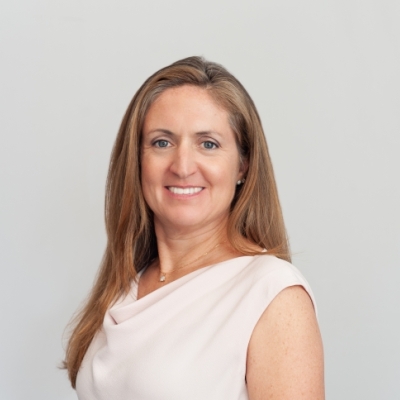
This is a guest post from Diana Senechal, written in response to my post, Private School Idolatry and the Case of the Missing Solution. Diana was a contributor to Fordham's review of state ELA standards in 2010, she is also author of the book Republic of Noise: The Loss of Solitude in Schools and Culture, which will be published by Rowman & Littlefield Education in November.
Kathleen,
I am speaking for myself here?I just wanted to respond to your points.
The problem with the ?maximize every moment? approach is that in the name of maximizing every moment, the moments themselves are often limited?and needlessly.
Many children in urban schools are not on the brink of failure; they desperately need more challenge. They are placed in classes with students who lag them by several years. I'm not saying tracking is the solution?but these students should at least be acknowledged.
Because of the belief that urban students in general must be yanked into success, some reformers assert that every moment of the lesson should be directly tied to its objective and that the lesson should be swift, purposeful, and productive. This precludes the sort of discussion that allows for tangents and open questions and that does not lead to a physical product or concrete result.
Not every lesson can be like that, even in wealthy schools. You need to teach children concrete things and to ensure that they are learning them. But children are capable of that tiny bit of uncertainty and openness, the time to consider something interesting, the pause to listen to a poem without deriving something specific from it. And they should be given that opportunity?and should be given the things worth pausing over, in many subjects.
A lesson needs not only structure and purpose, but a touch of something else, and that students in urban schools are capable of appreciating this as much as students in private schools. Some may need to learn how to handle uncertainty and open questions, but they can learn.
Some might ask: why does it matter? If the kids in the ?maximize every moment? schools are achieving, isn't that what counts? Well, up to a point. There is still a gap between students who can handle doubts and open questions, and students who cannot. This will show in high school and college (and even earlier). What's more, the ?concrete results? trend is spilling over even into affluent private schools. We are losing the idea of education as something that is not completely sure, something other than a pursuit of a known goal by a known means.