
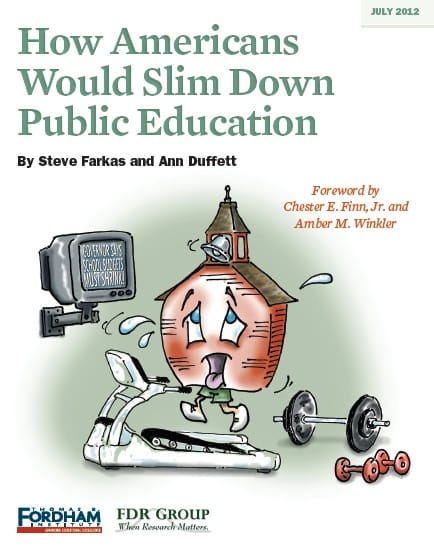
 Online learning has plenty of boosters, from statehouses to edtech startups, but those advocates may find the public far from enthusiastic about the expansion of virtual education. Fordham’s latest report, How Americans Would Slim Down Public Education, details the findings of a nationally representative survey of the public, including that Americans remain deeply divided on the merits of online learning (something that previous research has also shown).
Blended learning, which combines online instruction with face-to-face instruction, split respondents: Forty-two percent favored the expansion of the model while 46 percent said that schools should stay away from blended classes. The public was also skeptical of virtual schools, where students take some or all of their classes online and have an online teacher. Only 21 percent described such schools as a “good idea,” while 32 percent labeled them a “bad idea.” Forty percent of those surveyed thought virtual schools were a “good option, but only for students who have difficulty in traditional schools.” Perhaps surprisingly, parents who had experience with virtual schools were not more supportive of them than the general public: Only about a fifth of both groups supported the model.
Whether Americans’ mistrust of the model will fade as online learning becomes more commonplace is uncertain. For now, though, public opinion may be a significant obstacle to a “digital revolution” in K-12 education.
