

Mobile Navigation

  • National
    • Policy
      • High Expectations
      • Quality Choices
      • Personalized Pathways
    • Research
    • Commentary
      • Gadfly Newsletter
      • Flypaper Blog
    • Events
    • Scholars Program
  • Ohio
    • Policy
      • Priorities
      • Media & Testimony
    • Research
    • Commentary
      • Ohio Education Gadfly Biweekly
      • Ohio Gadfly Daily
  • Charter Authorizing
    • Application
    • Sponsored Schools
    • Resources
  • About
    • Mission
    • Board
    • Staff
    • Career
Home
Home
Advancing Educational Excellence

Main Navigation

  • National
  • Ohio
  • Charter Authorizing
  • About

National Menu

  • Topics
    • Accountability & Testing
    • Advanced Education
    • Career & Technical Education
    • Charter Schools
    • Curriculum & Instruction
    • ESSA
    • Evidence-Based Learning
    • Facilities
    • Governance
    • Personalized Learning
    • Private School Choice
    • School Finance
    • Standards
    • Teachers & School Leaders
    • Think Again
  • Research
  • Commentary
    • Gadfly Newsletter
    • Flypaper Blog
    • Gadfly Podcast
  • Events
  • Scholars Program
Flypaper

From “mogging” to “big chungus”: What Scripps’s new words tell us about 21st-century literacy

Jenn Alfah
4.1.2026
Gladfly
Generated by AI
Listen to this article
Loading the Elevenlabs Text to Speech AudioNative Player...

g

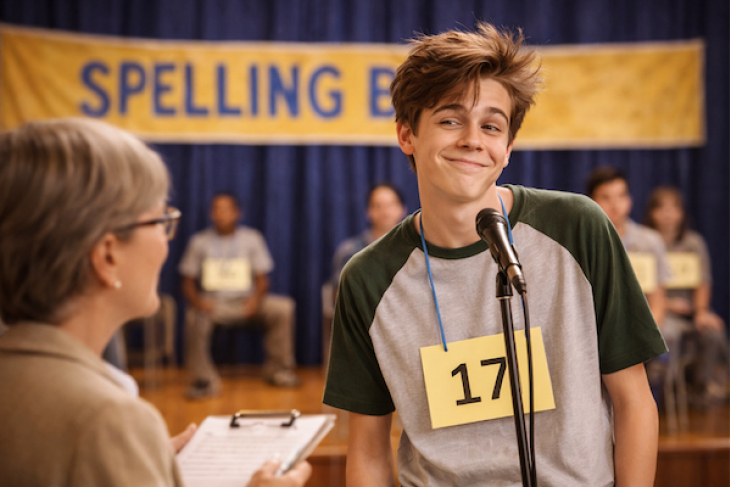
“Contestant number one, your word is chungus.”

“Can you please use it in a sentence?”

“Sure,” she says, holding back a laugh. “I love my big chungus life.”

This exchange, which might sound like a rogue group chat, signals a turning point in American literacy. Scripps National Spelling Bee has recently updated its official dictionary, adding words that are less Shakespearian and more Gen-Alpha. Among the new additions: mogging, rizz, bombastic, and, of course, big chungus.

Some may scoff, wondering how students will ever navigate a world where tradition takes a backseat to mogging. But the reality is simple: Language evolves, and literacy must evolve alongside it. Students today live in a landscape dominated by TikTok, memes, and viral slang. Mastery of this language is both cultural and functional. Misspelling body is teaaaa in a DM can cost social capital. Misunderstanding rizz in a group chat can result in existential embarrassment. The days where students need to spell psammophilous and bougainvillea are over.

Consider the educational value of a word like mogging. It conveys competition, dominance, and social hierarchy, concepts every high schooler intuitively understands. Or big chungus, which teaches students the art of hyperbolic self-assessment in just two words. 

Traditional words certainly have their place, but there is a growing gap between what students encounter in classrooms and what they navigate online. Schools can no longer just teach students how to spell, but how to survive social ecosystems governed by virality, relatability, and meme fluency.

So the next time someone asks if chungus is a real word, reassure them yes. They might just need to spell it to win a national competition.

Tags: Literacy TikTok
Jenn Alfah
Fordham Logo

© 2026 The Thomas B. Fordham Institute
Privacy Policy
Usage Agreement

National

P.O. Box 110
Burke, VA 22009

202.223.5452

[email protected]

Ohio

P.O. Box 82291
Columbus, OH 43202

614.223.1580

[email protected]

Sponsorship

130 West Second Street, Suite 410
Dayton, Ohio 45402

937.227.3368

[email protected]