
Mobile Navigation

  • National
    • Policy
      • High Expectations
      • Quality Choices
      • Personalized Pathways
    • Research
    • Commentary
      • Gadfly Newsletter
      • Flypaper Blog
    • Events
    • Scholars Program
  • Ohio
    • Policy
      • Priorities
      • Media & Testimony
    • Research
    • Commentary
      • Ohio Education Gadfly Biweekly
      • Ohio Gadfly Daily
  • Charter Authorizing
    • Application
    • Sponsored Schools
    • Resources
  • About
    • Mission
    • Board
    • Staff
    • Career
Home
Home
Advancing Educational Excellence

Main Navigation

  • National
  • Ohio
  • Charter Authorizing
  • About

National Menu

  • Topics
    • Accountability & Testing
    • Advanced Education
    • Career & Technical Education
    • Charter Schools
    • Curriculum & Instruction
    • ESSA
    • Evidence-Based Learning
    • Facilities
    • Governance
    • Personalized Learning
    • Private School Choice
    • School Finance
    • Standards
    • Teachers & School Leaders
    • Think Again
  • Research
  • Commentary
    • Gadfly Newsletter
    • Flypaper Blog
    • Gadfly Podcast
  • Events
  • Scholars Program

The Empirical Curriculum: Changes in Postsecondary Course-Taking, 1972-2000

Chester E. Finn, Jr.
5.5.2004

Clifford Adelman, Institute of Educational Sciences, U.S. Department of Education April 2004

Tireless data miner Clifford Adelman has written, and the Education Department has finally placed on its website (albeit in a hard to find location), this whopping companion to his "Principal Indicators of Student Academic Histories in Postsecondary Education, 1972-2000." (For a note on the earlier report, see http://www.edexcellence.net/gadfly/issue.cfm?issue=139#1718.) The executive summary terms it "a descriptive account of the major features of change in student course-taking in postsecondary contexts between 1972 and 2000, with an emphasis on the period 1992-2000." Sounds dull, yet K-12 reformers with an interest in teachers may want at least to check out part 4, which summarizes courses taken by those members of the high-school class of 1992 who were teaching school eight years later. Fifty-three percent of them majored in education and 80 percent earned their bachelor's degrees from non-selective colleges. The "course" they were most apt to take was "student teaching," which accounted for 5 percent of all credits earned - and an average 11 credits per person. There's much more here, not a lot of it encouraging at a time when "highly qualified" teachers are what we're supposed to be employing in U.S. schools. Check it out at http://www.ed.gov/rschstat/research/pubs/empircurric/index.html.
Tags: Institute of Education Sciences United States Department of Education

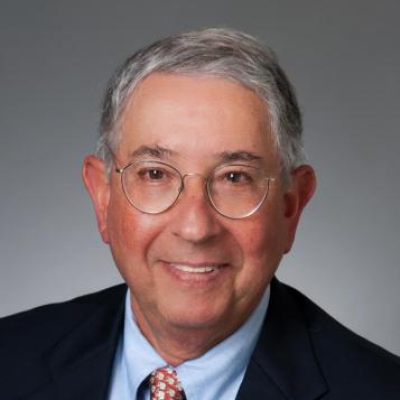
Chester E. Finn, Jr., scholar, educator and public servant, has devoted his career to improving education in the United States. At Fordham, he is now Distinguished Senior Fellow and President Emeritus. He’s also a Volker Senior Fellow at…

View Full Bio
Fordham Logo

© 2026 The Thomas B. Fordham Institute
Privacy Policy
Usage Agreement

National

P.O. Box 110
Burke, VA 22009

202.223.5452

[email protected]

Ohio

P.O. Box 82291
Columbus, OH 43202

614.223.1580

[email protected]

Sponsorship

130 West Second Street, Suite 410
Dayton, Ohio 45402

937.227.3368

[email protected]