
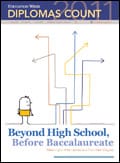
 As college graduates, many burdened by tens of thousands of dollars of debt, venture forth into the job market, they continue to be confronted by the painful reality that stimulating, well-paying jobs are hard to come by. (Indeed, there aren’t many of the other kind of jobs, either.) This truth has rekindled the “college-for-all vs. pathways to success” debate around college and career readiness. Which is to say, career readiness can surely follow from something less than a four year college degree—if it’s done right. As Arne Duncan explains, “There’s an urgent need to reimagine and remake career and technical education. CTE has an enormous, if often overlooked, impact on students, school systems, and our ability to prosper as a nation.” To that end, this year’s edition of “Diplomas Count” (the seventh annual) offers a detailed look at the space between high school diplomas and four-year college degrees, including community colleges, and early college and improved tech-ed programs at the high school level. (It also reports a national high-school graduation rate for the class of ’08 of 72 percent—the highest it’s been since the 1980s.) It examines a number of initiatives and offers thoughtful commentary on the career-readiness debate. One article, exampling the partnership between a school district and a health network in Michigan, showcases how programs can simultaneously guide students toward well-paying jobs while providing local businesses with a needed workforce. Other articles focus on collaborations between districts and community colleges, which provide support to school counselors and students as they navigate their post-high-school options. Two main threads emerge from the report as a whole. They’re obvious yet worth repeating: To be successful, career- and technical-education programs must be rigorous and relevant. And students must be made aware of all options available to them—basic information too often not afforded today’s high schoolers, who are either pushed onto the four-year college track, or left to flounder in “general education.” There’s got to be a better way.
