
Tonight’s debate will be an historic occasion, with two Roman Catholic candidates for national office squaring off against each other for the first time. The fact that this development has gone mostly unnoticed is a sign of just how far America—and Catholics—have come since John F. Kennedy broke the religion barrier fifty-two years ago.
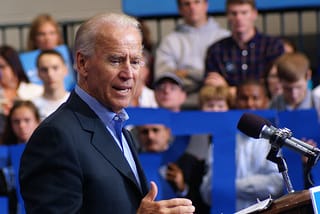 Catholic schools' history of producing leaders will be on display at tonight's vice presidential debate. Photo by Marc Nozell. |
But it’s not just Vice President Joe Biden and Congressman Paul Ryan who have ascended to the heights of our political system. Six of our Supreme Court justices are Catholic (the other three are Jewish); both Speaker of the House John Boehner and Minority Leader Nancy Pelosi are Catholic, too.
How to explain this sudden Catholic prominence in our political and legal systems? Consider one more fact: Almost all of these officials, including Biden and Ryan, attended Catholic schools for at least part of their youth.
As scholars of education have long known, Catholic schools are national treasures—highly effective at turning out academically prepared youngsters. But they clearly excel at producing effective leaders, too.
Uncovering the reasons isn’t rocket science: As the revered sociologist James Coleman found decades ago, these institutions possess high levels of social capital and boast strong school cultures. Expectations for students are uniformly high; character development isn’t treated as an afterthought; clear guidelines for good behavior and mutual respect are communicated and enforced.
But here’s the tragedy: The Catholic schools that produced so many members of our current leadership corps are rapidly going away. The number of Catholic schools reached its peak of 13,000 in 1960; since then, more than 5,000 of them have been closed. Over the same period, enrollment has plummeted by more than half, from 5.2 million to 2.3 million.
The causes for the decline are myriad. It started with rising staff costs as schools replaced nuns with lay teachers. Then many Catholics moved from urban centers to the suburbs, leaving diminished parishes (and parish schools) behind. The clergy sex-abuse scandal—and its financial fallout—served as the knockout blow. And yes, many Catholic students have migrated to (free) charter schools, as a recent Cato Institute study found.
Some archdioceses are starting to address the decline, occasionally with success. Philadelphia recently announced a plan to outsource the governance of many of its schools to an independent foundation run by business leaders. Chicago Catholic schools, aided by an aggressive fundraising push, are experiencing something of a resurgence. But in most communities, the disappearance of these vital institutions has been met with nothing but hand-wringing and nostalgia.
Stemming the decline is going to take leadership—and it’s clear that this is not going to come from the Obama administration. The president has opposed one of the few federal social programs that have shown evidence of effectiveness—the voucher initiative in Washington, D.C., which allows 2,000 desperately poor children to attend private schools, mostly Catholic. And Obama’s education secretary, Arne Duncan, has done everything he can to block Catholic schools from applying for federal “innovation” grants.
Mitt Romney presents a clear alternative. As he said in last week’s debate, he would allow federal dollars to “follow the child and let the parent...decide where to send their student.” While this wouldn’t immediately help Catholic schools everywhere, in states that already have serious school-voucher programs in place (like Mitch Daniels’s Indiana, John Kasich’s Ohio, and Bobby Jindal’s Louisiana), it could go a long way.
Catholic schools have a proud history of producing leaders, such as the two men who will be debating tonight in Danville, Kentucky. But if Catholic education’s long decline continues, Biden and Ryan will be among the last Catholic-school alumni to achieve national prominence.
A version of this editorial was published by the National Review Online.
