
I know it's an article of faith in the school-reform community that we should "differentiate" among teachers and pay them "differentially" too. Highly effective teachers should get paid more than mediocre ones; individuals willing to work in poor schools should get bigger paychecks than those serving the well-to-do; those in high-demand fields (like math and science) should get more than their peers. I get all of that, and generally agree.
I also understand that the "single-salary schedule" is seen as the nemesis to smart teacher policy. And that's also true. But what makes the single schedule so pernicious isn't just its uniformity; it's its growth curve. Twenty-five years veterans are paid a lot more than five-year veterans even though, on average, they are equally effective. Changing that curve is at least as important as introducing more differentiation in pay.
This isn't my idea, or a new idea. Two years ago, Duke economist Jacob Vigdor published an excellent article in Education Next, "Scrap the Sacrosanct Salary Schedule." His analysis can be summed up in the graphic below.
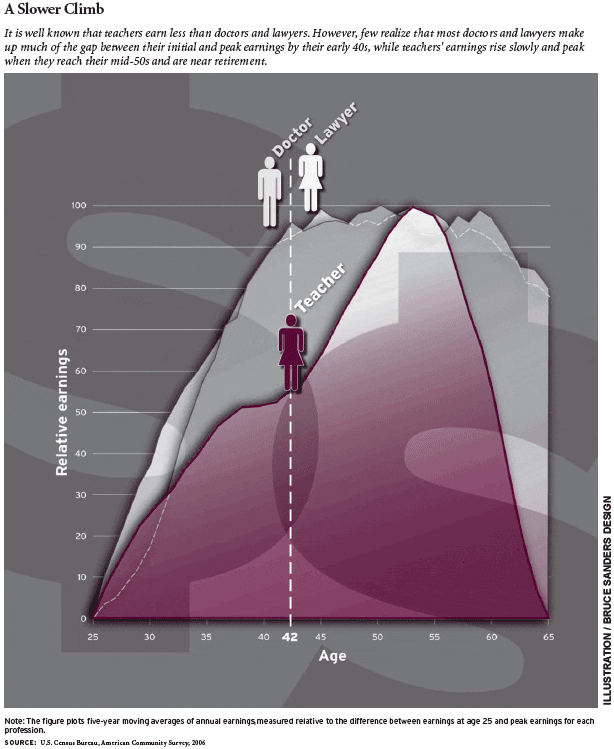
In all professions, new hires get paid significantly less at the start. But in fields like medicine and law, pay rises rapidly--as soon as employees boost their effectiveness and productivity from on-the-job experience. In education, on the other hand, pay rises slowly, even though teachers' effectiveness plateaus after as little as two (and no more than five) years on the job. (The same goes for pension wealth, as Chris explained yesterday.) In short, Vigdor argues,we should pay young teachers more, and older teachers less, than we do now. In other words, we should make their pay more alike.
If we had such a system now, the debate around "last in, first out" would take on a completely different tone. No longer would older teachers be worried that districts, undeterred by LIFO rules, would get rid of the most veteran, most expensive teachers?because the veterans wouldn't be any more expensive than most of their peers. And if we had a different pension system?one that allowed teachers to build pension wealth throughout their careers and take it with them whenever they left?then they wouldn't be worried about losing their big payout by getting fired a few years before retirement.
Seniority rights are a big deal right now because older teachers have a lot to lose: higher salaries that they've reached after a lifetime of anemic ones; and significant pension wealth if they make it to retirement. If we compressed the salary schedule and moved to a cash-balance pension system, we could eliminate these perverse dynamics. And we'd make teaching a lot more attractive to young people, to boot.
?Mike Petrilli
