On Wednesday, the American Federation for Children sponsored and cohosted with the Seventy Four a first-of-its-kind summit at which six Republican presidential candidates talked about American education. They discussed hot-button K–12 education issues—Common Core, teachers’ unions, school choice—but struggled to name the exact role a president should play in that arena.
“A president can do many things; it doesn’t mean it should,” former Hewlett-Packard CEO Carly Fiorina said.
Most candidates questioned the purpose of the Department of Education and favored state control of schools. Fiorina said the amount of money flowing through Washington does not correlate with student improvements.
“The federal government is the last place in the world I want holding states and local school districts accountable,” said Wisconsin Gov. Scott Walker. But when pressed by Seventy Four editor-in-chief and summit host Campbell Brown, candidates agreed that presidential influence is the most useful tool for a president to move the needle on education.
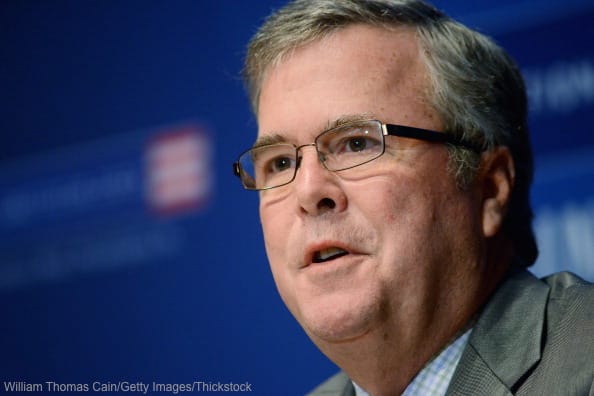
“The bully pulpit needs to be used,” former Florida Governor Jeb Bush said. “This is crisis. Hundreds of thousands of kids can’t get jobs because of the skills gap….This has got to be the highest priority for the next president of the United States. That’s my pledge to everybody in this room.”
Ohio Governor John Kasich suggested a more hands-on approach, saying that the president should address the legislature, be a presence in schools, and “sit down in the mud puddle with [teachers] and listen.”
At least four candidates promoted a more minimalist view of presidential latitude on the issue of standards, reserving special disdain for Common Core. They approved of high standards, just not federally mandated ones.
“I liked the concept of what we thought Common Core was going to be,” said Louisiana Governor Bobby Jindal. “Voluntary, locally controlled high standards.” Jindal is one of several candidates who switched stances on Common Core, partially due to negative feedback from teachers and parents. Bush supports Common Core for setting a high achievement bar but agreed that the federal government should have nothing to do with setting standards.
Public support for Common Core fell from 63 percent in 2013 to 49 percent in 2015. Democrats remain more supportive than Republicans, according to an EdNext poll.
The candidates also pointed to teachers’ unions as a road block in the education system. The Supreme Court will review the Friedrichs v. California case on the constitutionality of mandatory union fees for non-members, and Governor Chris Christie said that the end of unions may be near. “That would be a good thing for this country,” Christie said. “Yes, [teachers’ unions] need a political punch in the face.”
The candidates agreed that school choice works and should be expanded. After Hurricane Katrina, New Orleans restructured its education system so that the majority of its students now attend charter schools. Jindal said that this reduced the portion of the city’s students enrolled in failing schools from 60 to 10 percent.
“It doesn’t take a Katrina to cause us to be able to do education reform,” Jindal said.